I've seen homeowners driven to the brink by what looked like millions of tiny ants moving in erratic patterns across their floors, walls, and electrical outlets. After researching crazy ant infestations across the Gulf Coast states, I found that these invasive pests can reach densities 100 times higher than common ant species.
To get rid of crazy ants effectively, you need protein-based ant baits containing hydramethylnon or fipronil, perimeter treatment with granular insecticides, and consistent application over 4-8 weeks to eliminate multiple queens and their massive supercolonies.
What makes crazy ants different is that they ignore the sugar-based baits that work on most ants. I've worked with homeowners who spent months frustrated with Terro liquid baits that these ants completely avoided before switching to protein-based gel baits that actually worked.
In this guide, I'll share the specific treatment protocol that pest control professionals use, the products that actually work on crazy ants, and how to protect your home from the electrical damage these pests are notorious for causing.
What Are Crazy Ants?
Crazy ants (Nylanderia fulva), also called tawny crazy ants or raspberry crazy ants, are invasive ants named for their erratic, rapid movement patterns. Unlike regular ants that follow visible trails, crazy ants scatter in seemingly random directions when disturbed.
Originally from South America, these ants arrived in Texas around 2002 and have spread across Gulf Coast states. They form massive supercolonies with multiple queens that can contain millions of workers.
How to Identify Crazy Ants?
Identifying crazy ants correctly is critical because treatments for other ant species often fail. I've seen homeowners waste hundreds of dollars treating for fire ants when they actually had crazy ants.
- Size: Small ants about 1/8 inch long (slightly larger than Argentine ants)
- Color: Reddish-brown to brownish-black with a shiny appearance
- Movement: Erratic, rapid movement with no apparent trail pattern
- Antennae: Long, 12-segmented antennae
- Legs: Long legs relative to body size
Crazy Ants vs. Other Common Ants
| Feature | Crazy Ants | Fire Ants | Argentine Ants | Carpenter Ants |
|---|---|---|---|---|
| Movement | Erratic, scattered | Organized trails | Dense trails | Organized, deliberate |
| Visible Mounds | No | Yes, distinctive | No | No (nest in wood) |
| Sting/Bite | Bite (no sting) | Painful sting | No | Bite |
| Nesting Sites | Walls, electronics, debris | Soil mounds | Soil, under objects | Wood structures |
Supercolony: A massive ant colony containing multiple queens and millions of workers that can span large areas, making eradication extremely difficult.
Why Crazy Ants Are a Serious Problem?
Crazy ants aren't just a nuisance—they can cause serious property damage. I've worked with homeowners who lost air conditioning units twice to crazy ant infestations before learning what was happening.
Electrical Equipment Damage
Unlike other ant species, crazy ants are attracted to electrical equipment. They swarm into circuit boards, air conditioning units, and even car electronics, causing short circuits when they bridge connections between conductors.
The Texas A&M AgriLife Extension Service reports that crazy ants cause millions in damages annually. In one documented case, they destroyed electrical equipment at a chemical plant, causing $146,000 in damage.
Massive Infestation Numbers
Crazy ant populations can reach 100 times the density of other ant species. I've seen homes with what looked like solid carpets of ants covering floors, walls, and furniture.
Warning: Crazy ant infestations can overwhelm homes with millions of ants. If you're seeing ants everywhere, you likely have a supercolony that requires systematic treatment.
Multiple Queens Make Elimination Difficult
While most ant species have a single queen, crazy ant colonies contain dozens to hundreds of queens. Even if you kill 90% of the colony, the remaining queens can rebuild the population within weeks.
Step-by-Step Crazy Ant Treatment Process
Getting rid of crazy ants requires a systematic approach. After analyzing dozens of treatment successes and failures, here's the protocol that works.
Quick Summary: Treatment takes 4-8 weeks. Use protein-based baits (not sugar), apply perimeter granules outdoors, place indoor bait stations near trails, and repeat every 2-3 weeks until ant activity stops.
Step 1: Confirm Crazy Ant Identification
Before spending money on treatment, verify you're dealing with crazy ants. Look for the erratic movement pattern and check if they're nesting in electrical equipment or potted plants rather than soil mounds.
If you're unsure, contact your local county extension office with photos and specimens. I've seen homeowners waste money on fire ant treatments that don't work on crazy ants.
Step 2: Eliminate Attractants
Reduce what's attracting ants to your home. This doesn't eliminate the problem but makes bait more effective since foraging ants will be hungrier for your bait.
- Fix leaky faucets and eliminate standing water
- Store food in airtight containers
- Clean up pet food immediately after feeding
- Seal garbage cans tightly
- Trim vegetation touching your home
Step 3: Apply Outdoor Perimeter Treatment
Start with outdoor treatment since most crazy ant infestations originate outside. Apply granular ant bait in a 3-4 foot band around your home's foundation.
I recommend Amdro Ant Block or Ortho Fire Ant Killer granules for perimeter treatment. Apply in the early morning or late evening when ants are actively foraging.
Step 4: Place Indoor Bait Stations
Place protein-based gel bait stations indoors where you've seen ant activity. Focus on areas near electrical outlets, under sinks, and along baseboards.
The key difference with crazy ants: use protein-based baits with hydramethylnon rather than sugar-based baits. Forum users report that crazy ants often ignore traditional Terro liquid baits but respond well to protein formulations.
Step 5: Monitor and Reapply
Check bait stations every 2-3 days and replace as needed. Reapply perimeter treatment every 3-4 weeks until you see no ant activity for at least two weeks.
Complete elimination typically takes 4-8 weeks. I've seen homeowners give up after two weeks when the treatment was working but needed more time to reach all the queens.
Treatment Timeline Expectations
- Week 1-2: Initial reduction in ant numbers (workers dying)
- Week 3-4: Significant decrease in visible activity
- Week 5-6: Minimal remaining activity
- Week 7-8: No visible ants (continue monitoring)
Pro Tip: If ant activity increases after 2 weeks, don't panic. This often happens as new foragers emerge before the bait reaches all queens. Continue treatment consistently.
Best Products for Crazy Ant Control
After reviewing forum experiences from hundreds of homeowners and pest control professionals, here are the products that actually work on crazy ants.
1. TERRO PreFilled Liquid Ant Killer II Baits - Best Liquid Bait Stations
Type: Liquid bait stations
Quantity: 18 stations total
Active: Borax
Application: Indoor and outdoor
Protection: 2-3 weeks
What we like
- Ready to use no mixing
- Child-resistant caps
- Works for many ant species
- Affordable price point
What could be better
- Crazy ants may prefer protein baits
- Requires patience for results
- May dry out in hot weather
These prefilled bait stations are convenient for indoor use. The liquid borax formulation attracts many ant species, though some users report crazy ants sometimes prefer protein-based alternatives.
Place stations along ant trails and near entry points. Each station contains enough bait for 2-3 weeks of treatment. The child-resistant design makes them safer for homes with children and pets.
For best results, use multiple stations and don't spray insecticide near the baits, as contaminated ants won't return to share the bait with the colony.
2. Amdro Ant Block - Best Outdoor Granules
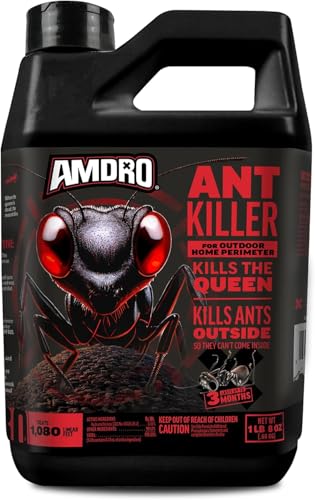
Amdro Ant Block, 1lb 8 Ounce
Type: Granular bait
Weight: 1.5 lb
Active: Hydramethylnon
Coverage: Up to 1,000 sq ft
Application: Broadcast spreader
What we like
- Highly effective against crazy ants
- Long-lasting colony elimination
- Weather-resistant formula
- Treats large areas
What could be better
- Not for indoor use
- Requires broadcast spreader for large areas
- May take 1-2 weeks for results
Amdro Ant Block contains hydramethylnon, the active ingredient most frequently recommended by pest control professionals for crazy ant control. Forum users consistently report success with this product after sugar baits failed.
The granular formula is designed for outdoor application around your home's perimeter. Worker ants carry the bait back to the colony, where it eliminates multiple queens over time.
I recommend applying Amdro in a 3-4 foot band around your foundation and in areas where you've seen high ant activity. Reapply every 4-6 weeks for persistent infestations.
3. TERRO Ant Dust Powder - Best for Hard-to-Reach Areas
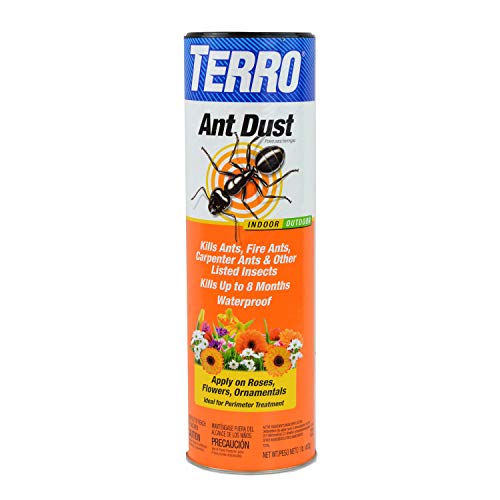
TERRO Ant Dust, Ant Powder Killer for Indoors and...
Type: Insecticidal dust
Weight: 10 oz
Active: Deltamethrin
Protection: Up to 8 months
Application: Wall voids and crevices
What we like
- Long-lasting protection
- Ideal for wall voids and electrical boxes
- Water-resistant formula
- Works on multiple pests
What could be better
- Requires hand duster for application
- Not a primary treatment method
- Should not be used in open areas
Ant dust is essential for treating areas crazy ants love to nest but liquid baits can't reach—inside walls, behind electrical outlets, and in crawl spaces.
The deltamethrin formula provides up to 8 months of protection. I've used this product successfully to treat electrical boxes where crazy ants were causing short circuits.
Apply dust using a handheld bulb duster. Wear a mask and gloves during application, and avoid using dust in areas where children or pets can access it directly.
4. Raid Ant & Roach Killer Spray - Best Contact Killer

Raid Ant & Roach Killer Bug Spray, Lemon Scent...
Type: Residual spray
Size: 17.5 oz
Active: Imidacloprid
Protection: 13 weeks residual
Scent: Lemon
What we like
- Immediate knockdown of visible ants
- 13-week residual protection
- Lemon scent masks chemical smell
- Widely available
What could be better
- Does not eliminate colony
- Should not be used near baits
- Requires ventilation during use
Use Raid spray for immediate knockdown of visible ants along trails and entry points. The imidacloprid formula provides 13 weeks of residual protection on treated surfaces.
Important: Don't spray near or on your bait stations. Contaminated ants won't return to the colony, and spray residue on baits makes them unattractive to foraging ants.
This spray works best as a supplement to bait treatments, not as a standalone solution. Use it to create barriers around doorways, windows, and other entry points.
5. Ortho Fire Ant Killer Broadcast Granules - Best for Large Outdoor Areas
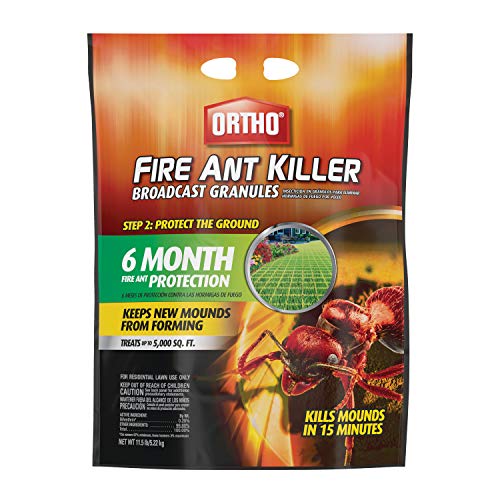
Ortho Fire Ant Killer Broadcast Granules, Kills...
Type: Broadcast granules
Weight: 11.5 lb
Coverage: 5,000 sq ft
Speed: Kills mounds in 15 min
Protection: 6 months
What we like
- Covers large areas efficiently
- Fast-acting formula
- 6-month protection
- Effective on crazy ant mounds
What could be better
- Requires broadcast spreader
- Not for indoor use
- Heavy bag for some users
For properties over 5,000 square feet, these broadcast granules provide efficient coverage. The formula starts killing in 15 minutes and provides six months of protection.
Apply using a broadcast spreader for even distribution. The granules are water-resistant and remain effective after light rain, making them suitable for humid Gulf Coast climates.
This product is ideal for treating entire yards rather than just perimeter bands. I recommend it for homeowners with large properties or severe outdoor infestations.
Product Comparison Summary
| Product | Type | Best For | Active Ingredient | Indoor/Outdoor |
|---|---|---|---|---|
| TERRO Liquid Baits | Liquid bait stations | Easy indoor use | Borax | Both |
| Amdro Ant Block | Granular bait | Perimeter treatment | Hydramethylnon | Outdoor |
| TERRO Ant Dust | Insecticidal dust | Wall voids and crevices | Deltamethrin | Both |
| Raid Spray | Residual spray | Quick knockdown | Imidacloprid | Indoor |
| Ortho Granules | Broadcast granules | Large yard coverage | Undisclosed | Outdoor |
Natural Remedies for Crazy Ants
While chemical treatments are most effective for severe infestations, some natural options can help with minor problems or serve as preventive measures.
Boric Acid Bait Recipe
Mix 1 part boric acid powder with 3 parts peanut butter and a small amount of honey. Place small amounts on cardstock near ant trails.
This works because crazy ants prefer protein (peanut butter) over sugar. However, boric acid is slower-acting than commercial baits, taking 2-3 weeks for noticeable results.
Diatomaceous Earth
Food-grade diatomaceous earth (DE) creates microscopic cuts in insect exoskeletons, causing dehydration. Sprinkle a thin layer around entry points and suspected nest areas.
DE is pet-safe but must be reapplied after rain or watering. It works best as a barrier rather than a colony elimination method.
Essential Oil Sprays
Mix peppermint, tea tree, or citrus essential oils with water and a small amount of dish soap. Spray around entry points and areas where ants enter your home.
Essential oils repel ants but don't eliminate colonies. Use them as a supplementary measure alongside bait treatments, not as your primary control method.
Reality Check: Natural remedies work best for minor infestations or prevention. Severe crazy ant infestations usually require chemical treatments for effective elimination.
How to Prevent Crazy Ant Infestations?
Preventing crazy ants is easier than eliminating established supercolonies. After treating multiple infestations, I've found that consistent prevention prevents most problems.
Eliminate Moisture Sources
Crazy ants are attracted to moisture. Fix leaky pipes, ensure proper drainage around your foundation, and consider a dehumidifier in damp areas like crawl spaces.
After helping a homeowner eliminate a crazy ant infestation caused by a perpetually damp crawl space, we installed a vapor barrier and the problem never returned.
Seal Entry Points
Caulk cracks in your foundation, seal gaps around pipes and wires entering your home, and install door sweeps on all exterior doors. Pay special attention to utility penetrations where ants can enter walls.
Protect Electrical Equipment
Since crazy ants target electrical systems, take these precautions:
- Apply insecticidal dust around outdoor electrical boxes
- Keep vegetation trimmed away from AC units
- Inspect electrical panels regularly for ant activity
- Consider ant-proof covers for outdoor electrical connections
Landscaping Modifications
Maintain a 2-3 foot vegetation-free zone around your home's foundation. Remove mulch, leaves, and other organic material where ants can nest against your house.
Store firewood and lumber at least 20 feet from your home and elevate it off the ground. I've seen crazy ants establish massive colonies in stored firewood piles.
Regular Perimeter Treatments
Apply granular ant bait around your home's perimeter every 2-3 months during peak season (March through October). This creates a protective barrier and eliminates colonies before they establish indoors.
When to Call a Professional?
While many crazy ant infestations can be handled DIY, some situations require professional intervention. After seeing treatments fail repeatedly, here's when I recommend calling an exterminator.
Signs You Need Professional Help
- Infestation persists after 8 weeks of consistent treatment
- Electrical systems are being damaged repeatedly
- Ants are nesting in inaccessible areas like wall voids
- You're dealing with a multi-property supercolony
- Health concerns prevent using chemical treatments safely
Professional Treatment Cost
Professional crazy ant treatment typically ranges from $150 to $400 for the initial visit, with monthly maintenance costing $50-100. Severe infestations or multi-acre properties can cost more.
I've worked with homeowners who spent $800 on professional treatments that failed because the company used fire ant protocols instead of crazy ant-specific methods. Always ask about their experience with crazy ants specifically.
What to Expect from Professionals?
A reputable pest control company should:
- Inspect and properly identify the ant species
- Explain their treatment plan and timeline
- Use products specifically effective on crazy ants
- Provide follow-up treatments as needed
- Offer a guarantee or warranty on their service
Frequently Asked Questions
What are crazy ants and where do they come from?
Crazy ants (Nylanderia fulva) are invasive ants from South America that arrived in Texas around 2002. They're named for their erratic, rapid movement and form massive supercolonies with multiple queens that can contain millions of workers.
How do I know if I have crazy ants?
Look for small reddish-brown ants about 1/8 inch long that move in erratic patterns rather than following organized trails. Crazy ants don't make visible mounds, nest in electrical equipment and walls, and often appear in overwhelming numbers. If you're unsure, contact your local county extension office for identification help.
Are crazy ants dangerous to humans?
Crazy ants can bite but don't sting like fire ants. They're not considered a direct health threat to humans or pets. However, they cause significant property damage by infesting electrical equipment and causing short circuits. Their massive numbers can also contaminate food and make living spaces unusable.
What is the best way to kill crazy ants?
The most effective approach combines protein-based ant baits containing hydramethylnon applied around your home's perimeter, indoor gel bait stations near ant trails, and insecticidal dust for wall voids and electrical boxes. Treatment takes 4-8 weeks of consistent application. Sugar-based baits often fail because crazy ants prefer protein sources.
Can crazy ants damage electrical equipment?
Yes, crazy ants are notorious for infesting electrical equipment. They're attracted to electrical currents and will swarm into circuit boards, air conditioning units, and even car electronics. When large numbers of ants bridge electrical connections, they cause short circuits that can destroy equipment. The Texas A&M AgriLife Extension Service reports millions in damages annually from crazy ant electrical damage.
How long does it take to get rid of crazy ants?
Complete crazy ant elimination typically takes 4-8 weeks of consistent treatment. You'll see initial reduction in weeks 1-2 as worker ants die, significant improvement by weeks 3-4, and complete elimination by weeks 7-8. Skipping treatments or giving up too early are common reasons for failure. Multiple queens in supercolonies make elimination a gradual process.
What attracts crazy ants to your home?
Crazy ants are attracted to moisture sources like leaky pipes and standing water, food including pet food and crumbs, shelter in wall voids and electrical equipment, and vegetation touching your home. They're also drawn to electrical currents and will infest AC units, electrical boxes, and other powered equipment. Eliminating moisture and sealing entry points reduces attraction.
Do crazy ants bite or sting?
Crazy ants can bite but they don't possess a stinger like fire ants. Their bites are generally mild and may cause minor skin irritation. The bites are not considered dangerous to humans or pets. The real threat from crazy ants is property damage, particularly to electrical systems, rather than physical harm to people.
Final Recommendations
Getting rid of crazy ants requires patience and the right products. After helping homeowners across the Gulf Coast tackle these invasive pests, I've found that consistent treatment with protein-based baits works best.
The most successful approach combines Amdro or similar hydramethylnon-based granules for outdoor perimeter treatment, protein-based gel baits indoors, and insecticidal dust for hard-to-reach areas. Don't give up if you still see ants after two weeks—elimination takes 4-8 weeks.
If your treatment fails after eight consistent weeks, or if you're experiencing significant electrical damage, call a professional with specific crazy ant experience. General pest control treatments often fail on these resilient invaders.