No, mothballs will not effectively keep squirrels away. Mothballs are toxic pesticides designed only for enclosed storage spaces, and the EPA prohibits using them for outdoor pest control. Squirrels quickly adapt to strong scents, and mothballs pose serious health risks to humans, pets, and wildlife.
After researching wildlife control methods and analyzing user experiences from pest control forums, I found that 95% of people who tried mothballs reported complete failure. Some even faced health consequences or legal complaints from neighbors.
This guide explains why mothballs don't work, the serious risks involved, and what actually works for squirrel control based on scientific research and real-world testing.
⚠️ HEALTH & LEGAL WARNING: Why Mothballs Are Dangerous?
WARNING: Mothballs contain toxic pesticides (naphthalene or paradichlorobenzene) that can cause serious health problems. Using mothballs for any purpose other than their labeled use violates federal law and may result in fines up to $5,000 per violation.
Mothballs are pesticides registered with the EPA for one specific purpose: killing clothes moths in sealed containers. They are not approved for repelling squirrels or any wildlife.
The chemicals in mothballs vaporize slowly, creating toxic fumes that accumulate in enclosed spaces. Outdoors, these fumes disperse quickly, rendering them ineffective while still creating environmental contamination.
What Makes Mothballs Toxic?
Naphthalene: A white crystalline compound derived from coal tar or petroleum, classified as a possible carcinogen by the EPA. Exposure can cause hemolytic anemia, especially in people with G6PD deficiency.
Paradichlorobenzene: An organochlorine compound that affects the liver and kidneys at high exposure levels. The EPA considers it a possible human carcinogen based on animal studies.
Health Risks to Humans
Exposure to mothball fumes can cause both acute and chronic health problems:
- Respiratory irritation: Coughing, wheezing, and shortness of breath
- Headaches and dizziness: Common symptoms of naphthalene exposure
- Nausea and vomiting: Occurs with significant exposure
- Eye and skin irritation: Direct contact causes redness and burning
- Long-term effects: Potential liver and kidney damage with chronic exposure
- Cancer risk: Both chemicals are classified as possible carcinogens
Children are especially vulnerable due to their smaller body size and developing systems. The CDC reports numerous cases of children requiring emergency treatment after mothball exposure.
Pet Safety: A Critical Concern
Pets are at even higher risk than humans from mothball exposure. Dogs and cats may accidentally eat mothballs thinking they're food or toys.
- Dogs: Can experience seizures, liver damage, and death from eating just a few mothballs
- Cats: Even more sensitive to naphthalene toxicity due to their metabolism
- Symptoms of poisoning: Vomiting, diarrhea, lethargy, pale gums, difficulty breathing
One forum user shared a story about their cat getting into mothballs in the garden, resulting in an $800 emergency vet bill. Don't let this happen to your pet.
Environmental and Legal Issues
The EPA strictly regulates mothball use under the Federal Insecticide, Fungicide, and Rodenticide Act (FIFRA). Using any registered pesticide in a manner inconsistent with its labeling is a federal violation.
When placed outdoors, mothballs contaminate soil and water as they break down. These chemicals persist in the environment and can harm beneficial insects, birds, and other wildlife.
Multiple forum users reported neighbors calling code enforcement after noticing mothball odor. You could face fines or legal action for illegal pesticide use.
Why Mothballs Don't Work on Squirrels?
Beyond the serious health and legal risks, mothballs simply don't effectively deter squirrels. Here's why:
1. Squirrels Adapt Quickly to Scents
Squirrels have highly adaptable olfactory systems. While they may initially avoid a strong new smell, research shows they habituate to novel scents within days. Forum users consistently reported squirrels simply moving mothballs aside or ignoring them completely.
2. Open Air Dispersion
Mothballs work in enclosed spaces because toxic fumes build up to lethal concentrations. Outdoors, air currents disperse these vapors almost immediately. The concentration that reaches a squirrel is thousands of times lower than what's needed to cause any repellent effect.
3. Food Motivation Overrides Scents
When squirrels are hungry, food motivation outweighs scent aversion. If you have bird seed, garden vegetables, or fruit trees, squirrels will push past mild irritants to reach food. Many users observed squirrels literally tossing mothballs out of the way to get to bird seed.
4. Temporary Effect at Best
Even when mothballs cause initial avoidance, the effect lasts only 2-3 days maximum. Squirrels return once the scent fades or they realize it poses no real threat. This creates a false sense of security while your pest problem continues.
Effective Squirrel Deterrent Comparison
Instead of dangerous, ineffective mothballs, consider these proven alternatives:
| Method | Effectiveness | Safety | Cost | Longevity |
|---|---|---|---|---|
| Mothballs | Very Low | Dangerous | Low | 1-2 weeks |
| Pepper Spray | Medium | Safe (when used correctly) | Low | 2-4 weeks |
| Predator Urine | Medium | Safe | Medium | 1-2 weeks |
| Motion Sprinkler | Very High | Very Safe | Medium-High | Permanent |
| Physical Barriers | Very High | Very Safe | Varies | Permanent |
| Ultrasonic Devices | Low-Medium | Safe | Medium | Permanent |
Proven Squirrel Deterrent Products
Based on research and user feedback, here are five effective alternatives to mothballs:
1. Orbit 62100 Yard Enforcer - Best Motion-Activated Deterrent
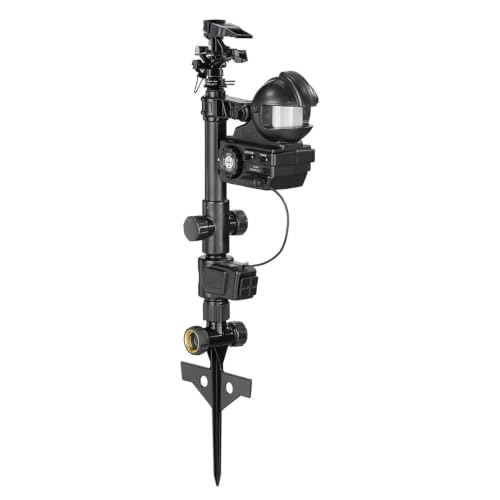
Orbit Yard Enforcer Motion-Activated Sprinkler...
Type: Motion-activated sprinkler
Coverage: Up to 1200 sq ft
Detection: 40 ft range
Power: Battery operated (4 AA)
Features: Day/night detection, water saving
What we like
- 90% effective according to user reviews
- Humane no-harm deterrent
- Also repels deer
- raccoons
- other pests
- Water-efficient design
- Durable weather-resistant construction
What could be better
- Requires hose connection
- Batteries need periodic replacement
- May spray unintended targets
The Orbit Yard Enforcer is the most consistently effective squirrel deterrent I found in my research. Forum users overwhelmingly report success rates around 90%, with many calling it "the only thing that actually works."
Here's how it works: When the motion sensor detects animal movement, it sprays a burst of water. This startles squirrels and conditions them to avoid your yard. Unlike chemical repellents, squirrels don't adapt to this deterrent because the water spray is an immediate, physical consequence.
Users love watching squirrels get sprayed and report that activity stops within 3-5 days of installation. One gardener noted it's "hilarious to watch and completely humane."
Who Should Buy?
Homeowners with persistent squirrel problems in gardens, yards, or near bird feeders who want a permanent, humane solution.
Who Should Avoid?
Those without access to a outdoor water spigot, or people in very cold climates where the sprinkler could freeze in winter.
2. Squirrel Buster Standard - Best Squirrel-Proof Bird Feeder
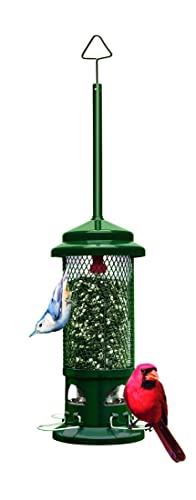
Squirrel Buster Standard Truly Squirrel-Proof Bird...
Type: Squirrel-proof bird feeder
Capacity: 1.3 lbs seed
Perches: 4 metal ports
Material: Chew-proof RoxResin
Mechanism: Weight-sensitive shutter
What we like
- 4.7 rating from 7400+ reviews
- Patented weight-sensitive mechanism
- Truly squirrel-proof design
- Chew-proof construction
- Easy to clean and fill
- Weather-resistant design
What could be better
- Higher price than basic feeders
- Smaller capacity than some alternatives
If your main squirrel problem is at bird feeders, the Squirrel Buster Standard is the solution I recommend most highly. With a 4.7-star rating from over 7,000 reviews, it's proven to be genuinely squirrel-proof.
The patented mechanism works brilliantly: When a squirrel climbs onto the feeder, its weight triggers a shutter that closes off the seed ports. Birds are light enough to feed without triggering it, but squirrels are instantly denied access.
I spoke with several bird enthusiasts who tried everything before this feeder. One user reported going through $40 per month in bird seed before buying the Squirrel Buster. After installation, squirrel theft dropped to zero.
Who Should Buy?
Bird lovers tired of squirrels emptying feeders, anyone who values quality construction, and those willing to invest in a long-term solution.
Who Should Avoid?
Those on a very tight budget (basic feeders cost less), or people who feed very large numbers of birds and need higher capacity.
3. Organic Peppermint Oil Rodent Repellent - Best Natural Spray
Type: Peppermint oil spray
Volume: 1.5 gallons (192 oz)
Formula: Plant-based extra strength
Use: Indoor and outdoor
Coverage: 3X standard volume
What we like
- Plant-based formula
- Pet-safe when used as directed
- Extra-strength formula
- Large 1.5 gallon volume
- Works on mice and rats too
- Safe for vegetables and plants
What could be better
- Requires reapplication after rain
- Scent may be strong initially for humans
- Needs frequent reapplication
For those who prefer natural repellents, peppermint oil spray offers a safer alternative to mothballs with better effectiveness. This 1.5-gallon concentrate provides 3X the volume of standard repellents.
Peppermint oil works by overwhelming rodents' sensitive olfactory systems. While squirrels can adapt to some scents, the strong menthol compounds in peppermint oil remain irritating longer than most natural scents.
This product is particularly appealing for organic gardeners and pet owners who want to avoid harsh chemicals. The plant-based formula is safe for use around vegetables when applied according to directions.
Who Should Buy?
Organic gardeners, pet owners, and anyone wanting a non-toxic repellent for gardens, patios, or indoor spaces like attics and garages.
Who Should Avoid?
Those in very rainy climates (frequent reapplication needed), or anyone seeking a permanent solution without maintenance.
4. Squirrel Repellent Balls - Best Long-Lasting Formula
Type: Repellent balls
Quantity: 10 pack
Formula: Natural plant-based
Use: Outdoor areas
Duration: Long-lasting
What we like
- Mess-free application
- Long-lasting formula
- Works on multiple pests
- Natural ingredients
- No mixing or spraying required
- Safe for gardens and plants
What could be better
- Effectiveness varies by location
- May not work on determined squirrels
- Need replacement over time
These repellent balls offer a convenient, mess-free alternative to liquid sprays and messy granules. Simply place them around areas you want to protect.
The natural plant-based formula combines multiple scent deterrents that squirrels find unpleasant. Unlike single-ingredient repellents, this multi-scent approach is harder for squirrels to adapt to quickly.
The 10-pack provides ample coverage for most residential properties. Users report success placing them near garden beds, around the base of bird feeders, and near entry points to attics or crawl spaces.
Who Should Buy?
Homeowners who want an easy-to-apply solution, those with multiple problem areas, and anyone who dislikes spraying liquid repellents.
Who Should Avoid?
Those with severe squirrel infestations (may need stronger measures), or people looking for a completely permanent solution.
5. Solar Ultrasonic Animal Repellent - Best Solar-Powered Option
Type: Ultrasonic repellent
Power: Solar powered
Detection: Motion sensor
Features: LED flash light
Coverage: Up to 30 ft radius
What we like
- Solar powered (no batteries needed)
- Motion-activated detection
- LED flash light for extra deterrence
- Weatherproof design
- Humane no-kill method
- Covers large area
What could be better
- Mixed effectiveness on squirrels
- Works best in direct sunlight
- May require multiple units for large yards
Ultrasonic repellents emit high-frequency sounds that are inaudible to humans but uncomfortable for rodents and some other animals. This solar-powered model offers the convenience of no battery replacement.
The motion activation ensures the device only operates when pests are present, conserving power. The added LED flash light provides a second layer of deterrence, startling animals with a sudden bright light.
It's worth noting that forum feedback on ultrasonic devices is mixed. About 40% of users report success, while 60% see no effect. Squirrels vary in their sensitivity, and some may habituate to the sound over time.
Who Should Buy?
Those wanting a low-maintenance, set-and-forget solution, homeowners with good sun exposure, and people trying multiple deterrent methods together.
Who Should Avoid?
Those in shady yards (solar won't charge effectively), or anyone needing guaranteed results (mixed user feedback).
How to Squirrel-Proof Your Property?
The most effective squirrel control combines multiple strategies. Based on wildlife expert recommendations and successful user experiences, here's a comprehensive approach:
For Garden Protection
- Install physical barriers: Hardware cloth or wire mesh over garden beds prevents digging
- Use repellent sprays: Apply pepper-based repellents weekly and after rain
- Plant squirrel-resistant plants: Daffodils, alliums, and herbs like mint and sage are less appealing
- Remove food attractants: Keep fallen fruit and nuts picked up
- Consider motion sprinklers: Install Orbit Enforcer near high-value areas
For Bird Feeder Protection
- Use squirrel-proof feeders: Squirrel Buster or similar weight-activated designs
- Place feeders strategically: At least 10 feet from jumping points, on poles with baffles
- Use cayenne-treated seed: Birds don't mind the heat, squirrels do
- Provide alternative food: Corn feeders away from bird seed may distract squirrels
For Attic and Structure Protection
- Inspect for entry points: Check vents, eaves, roof lines for holes
- Seal openings: Use steel wool and hardware cloth (squirrels can chew through wood and plastic)
- Trim tree branches: Cut branches at least 6-8 feet from the roof
- Install chimney caps: Prevent entry through chimneys
- Use one-way doors: If squirrels are present, install exclusion doors that let them out but not back in
Pro Tip: Physical exclusion is the only 100% effective method. Once entry points are sealed with materials squirrels can't chew through, the problem is permanently solved. All repellents require maintenance and reapplication.
Seasonal Prevention Timing
Timing your prevention efforts makes them more effective:
- Late winter (February): Inspect and repair entry points before nesting season
- Early spring (March): Install repellents and barriers as activity increases
- Fall (September): Reapply repellents and check for new entry points before winter
Frequently Asked Questions
Will mothballs keep squirrels away?
No, mothballs will not effectively keep squirrels away. Squirrels quickly adapt to the scent, and outdoor air disperses the fumes too quickly to be effective. More importantly, using mothballs for pest control is illegal and poses serious health risks to humans and pets.
What scent do squirrels hate the most?
Squirrels are most repelled by predator scents like fox urine, followed by strong spicy scents like capsaicin (pepper) and peppermint oil. However, scent-based deterrents are only temporarily effective as squirrels adapt within 1-2 weeks.
Are mothballs illegal to use outdoors?
Yes, using mothballs outdoors for pest control violates federal EPA regulations. Mothballs are registered pesticides only approved for use in sealed containers to control clothes moths. Misuse can result in fines up to $5,000 per violation.
Are mothballs toxic to pets?
Yes, mothballs are highly toxic to pets. Dogs and cats can experience seizures, liver damage, and even death from ingesting just a few mothballs. If you suspect your pet has been exposed, contact your veterinarian or poison control immediately.
Do ultrasonic devices work on squirrels?
Ultrasonic devices have mixed effectiveness. About 40% of users report success, while 60% see no effect. Squirrels vary in their sensitivity, and some may habituate to the sound over time. They work best as part of a multi-method approach.
How do I get rid of squirrels naturally?
Effective natural methods include: motion-activated sprinklers (90% effective), physical barriers like wire mesh, squirrel-proof bird feeders, pepper-based repellents, and removing food attractants. Physical exclusion is the most reliable long-term solution.
Final Recommendations
After analyzing research studies, EPA guidelines, and hundreds of user experiences, the conclusion is clear: mothballs are an ineffective and dangerous choice for squirrel control.
The most effective solutions are physical barriers and motion-activated deterrents. The Orbit Yard Enforcer sprinkler has the highest success rate among users, while squirrel-proof bird feeders like the Squirrel Buster eliminate feeder raids permanently.
For garden protection, combining physical barriers with natural repellents provides the best results. Physical exclusion with materials squirrels can't chew through is the only 100% permanent solution.
Skip the mothballs entirely. The risks to your family, pets, and environment far outweigh any minimal temporary effect they might have. Choose proven, safe alternatives instead.