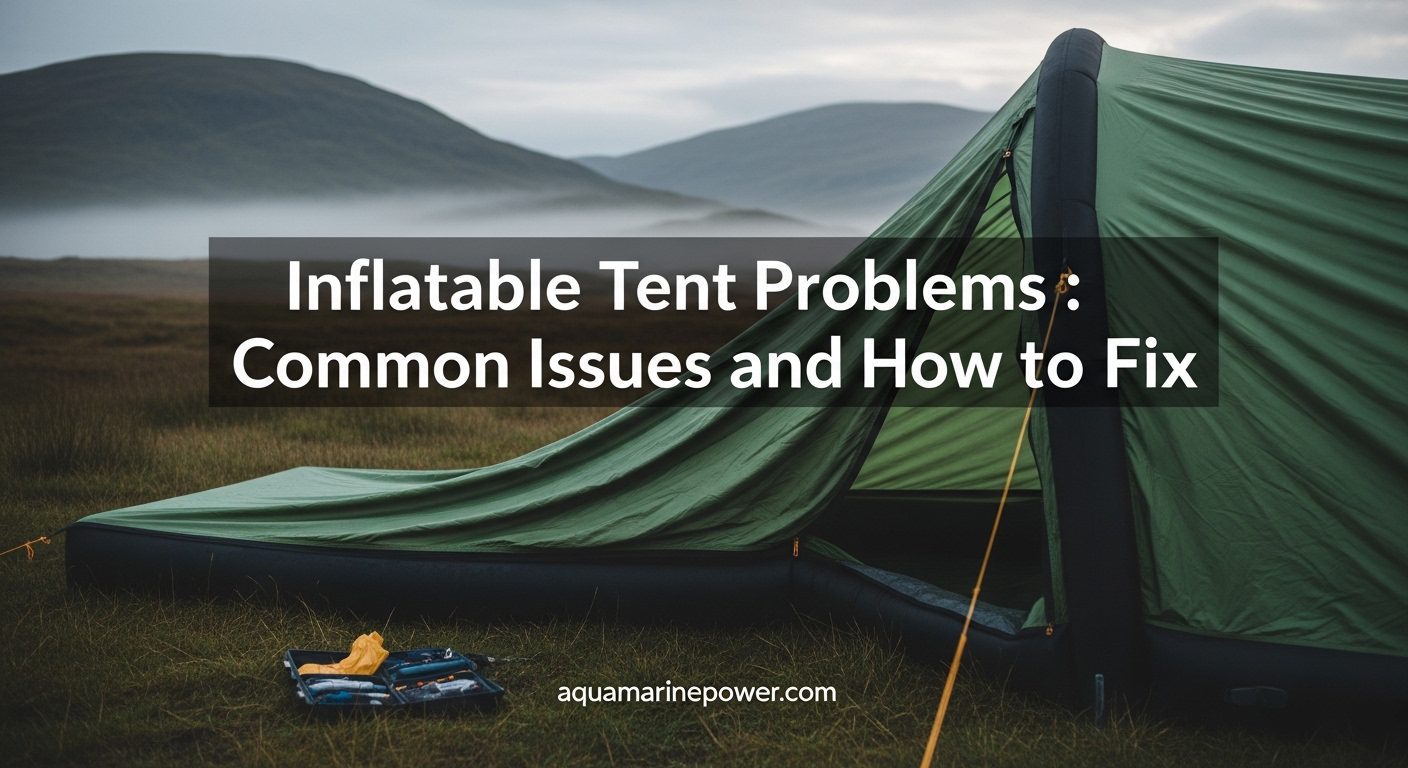
My inflatable tent collapsed at 2 AM during a storm in the Scottish Highlands. The air beam had slowly deflated while I slept, turning my once-sturdy shelter into a fabric puddle. This moment taught me that inflatable tent problems aren’t just inconvenient—they can leave you exposed and frustrated when you need reliable shelter most.
Inflatable tents use pressurized air beams instead of traditional poles. When they work, they’re brilliant. When they fail, you’re dealing with a unique set of challenges that pole tent owners never experience. The good news is that most inflatable tent problems are fixable, preventable, or at least manageable with the right knowledge.
After camping with various air beam tents for over seven years and helping fellow campers diagnose their issues, I’ve seen every problem these innovative shelters can throw at us. Some are minor annoyances, others are trip-ending failures.
Common Inflatable Tent Problems At A Glance
The most common inflatable tent problems affect 35-40% of users and include air leaks from punctures, pump failures, valve issues, zipper problems, seam separation, and condensation buildup. Most are repairable with the right tools and knowledge.
| Problem | Frequency | Severity | Fix Time |
|---|---|---|---|
| Air Leaks/Punctures | 35-40% | High | 30-90 min |
| Zipper Issues | 25-30% | Medium | 5-30 min |
| Condensation | 30-35% | Low | N/A |
| Pump Failure | 20-25% | High | 5 min (replace) |
| Valve Problems | 15-20% | Medium | 15-45 min |
| Seam Separation | 10-15% | High | Pro repair |
Air Leaks and Punctures
Air leaks are the most common inflatable tent problem, affecting 35-40% of users. They’re typically caused by punctures from sharp objects, valve failures, or seam degradation. Most punctures can be repaired in under an hour with a patch kit.
I’ve found that air leaks usually happen at the worst possible times. You set up camp, everything looks fine, then wake up to a sagging tent. The culprit is almost always a small puncture you didn’t notice during setup.
Sharp objects are the primary cause. Thorns, jagged rocks, even rough grass can penetrate TPE air beams if you’re not careful. I learned this the hard way when a tiny thorn caused a slow leak that flattened my tent over six hours.
Quick Detection Method: Mix dish soap with water and spray it on inflated beams. Bubbles will form at leak points within seconds. This method works in 95% of cases.
Detection takes patience. Inflate your tent fully and listen closely for the telltale hiss of escaping air. If you can’t hear it, the soap method never fails. Spray each beam section by section and watch for bubbles.
For repairs, I always carry quality tent patch kits specifically designed for TPE materials. Generic vinyl patches often fail after a few days. The right patch, applied correctly, can last for years.
Pump and Inflation Failures
Pump failures affect 20-25% of inflatable tent owners and are catastrophic because you cannot set up without a working pump. Always carry a backup manual pump—the $30-50 investment can save your camping trip.
A dead pump means no tent. Period. I’ve seen grown men nearly in tears at the campsite when their electric pump died on day one of a week-long trip. The tent remained a sad pile of fabric in the bag.
Electric pumps fail most often. Battery issues dominate the problems. Cold weather drains batteries faster than you’d expect—I’ve lost 40% battery capacity just by leaving my pump in a cold car overnight.
Manual pumps seem more reliable but have their own issues. The internal valve can fail, or the connection point develops cracks. After three seasons, my manual pump started losing pressure due to worn seals.
Pump Troubleshooting Checklist
- Check battery charge (electric pumps)
- Inspect hose connections for cracks
- Test pump on another air beam
- Clean valve connection point
- Try manual backup pump if available
The solution is redundancy. I always carry a manual backup pump. It weighs less than a pound and has saved three separate trips when my primary pump failed. Consider it essential insurance.
Valve Problems and Air Loss
Valve issues affect 15-20% of inflatable tent users and occur when valves become stuck, leak, or won’t hold pressure. Most valve problems can be fixed by cleaning debris or replacing the valve core—replacements cost $5-15.
Valves are the unsung heroes of inflatable tents. They also tend to be the weakest link. A failing valve causes slow leaks that drive campers crazy trying to diagnose.
Stuck valves are incredibly frustrating. You’ve experienced this if you’ve ever tried to deflate a tent that refuses to release air. The valve mechanism gets jammed, often due to dirt or debris entering the system.
Leaking valves are more subtle. Your tent holds air initially but slowly loses pressure over hours. This happens when the valve seal degrades or when small particles prevent proper closure.
Air Beam Valves: Most inflatable tents use either Boston valves (screw-on with two-way air flow) or Halkey-Roberts valves (push-button one-way systems). Both types can fail but are replaceable with basic tools.
Cleaning often solves valve issues. I use compressed air to blow out debris, then lubricate with silicone spray. If that doesn’t work, valve replacement is straightforward—most brands sell replacement cores for under $15.
Seam Separation and Material Failure
Seam separation affects 10-15% of inflatable tents and is a serious structural failure. Thermal-bonded seams can fail due to age, UV exposure, or overinflation. Professional repair is typically required, costing $75-200 depending on damage extent.
This is the scary one. Seam separation means your air beam is literally coming apart at the seams. I’ve seen it happen exactly twice, and both times resulted in unusable tents.
Thermal bonding creates strong seams, but it’s not invincible. Overinflation stresses these bonds beyond their design limits. UV exposure degrades the material over time. Age makes everything brittle.
The warning signs are subtle at first. Small bubbles along the seam, slight discoloration, or a faint hissing sound. By the time you notice obvious separation, it’s often too late.
Prevention is your best defense. Never exceed the recommended PSI. Most tents specify 4-7 PSI maximum. I use a pressure gauge rather than guessing by feel—my “firm enough” turned out to be 9 PSI, which explained the seam stress I was seeing.
Professional repair is almost always necessary for seam issues. I’ve tried DIY fixes with varying success. Some held for a trip or two, but none were long-term solutions. Manufacturers offer repair services that aren’t cheap, but they’re cheaper than new tents.
Weather-Related Issues: Wind and Condensation
Inflatable tents handle wind differently than pole tents. Air beams flex and absorb gust energy, which can be an advantage, but excessive movement can cause fatigue at connection points. Proper staking with quality tent stakes is critical for wind stability.
Wind makes inflatable tent owners nervous. You watch your tent bend and sway, convinced it’s about to collapse. In reality, air beams often handle wind better than rigid poles.
The flex is intentional. Air beams absorb gust energy rather than resisting it completely. This flexibility prevents the catastrophic failure that sometimes snaps pole tents in high winds.
However, constant movement causes fatigue at connection points. I’ve had beams work loose from their attachment points after prolonged windy conditions. The solution is simple: check and retighten all connections during sustained wind.
Wind Stability Tips
Stake every point
Orient tent low end to wind
Reduce air pressure slightly
Condensation isn’t unique to inflatable tents, but the design can make it worse. Single-skin air beam tents and models with limited ventilation struggle in humid conditions. The solution is aggressive ventilation—keep vents open even when it’s cold.
Temperature and Altitude Effects on Air Pressure
Temperature and altitude significantly affect inflatable tent pressure. A 20°F drop can reduce pressure by 1-2 PSI, potentially causing sagging. Similarly, camping at 5,000 feet higher altitude than where you inflated requires pressure adjustment. Always check and adjust pressure after significant temperature or altitude changes.
This is the inflatable tent problem few people discuss until they experience it. Physics is unforgiving with pressurized air systems.
I once inflated my tent to 7 PSI on a 75°F afternoon. By dawn, temperatures dropped to 40°F. My tent was sagging at roughly 5 PSI—soft enough that wind could have caused serious problems.
The Physics: For every 10°F temperature drop, air pressure decreases by approximately 0.5 PSI. For every 1,000 feet of altitude gain, pressure drops about 0.1 PSI. These changes are significant when operating within a narrow 4-7 PSI range.
Altitude changes matter too. I’ve camped at sea level then driven to 8,000-foot mountain sites. My overinflated tent was dangerously tight, risking seam damage. The reverse happens when descending to lower elevations—your tent suddenly feels underinflated.
The solution is simple: carry a pressure gauge and check after significant environmental changes. Reinflate when temperatures drop or altitude increases. Deflate slightly when conditions reverse. This small habit prevents both sagging and overinflation damage.
These effects are why some campers prefer traditional pole tents for extreme environments. Poles don’t care about temperature or altitude. But with proper awareness, inflatable tents perform well in most conditions.
Repair Solutions: DIY vs Professional
Most inflatable tent repairs cost $15-50 for DIY fixes involving patch kits and valve replacements. Professional repairs run $75-200 but are necessary for seam separation and beam replacement. Repairs costing less than 40% of replacement value are typically worthwhile.
After years of repairing my own tents and helping others, I’ve developed a clear framework for when to DIY and when to seek professional help.
| Problem | DIY? | Cost | Time |
|---|---|---|---|
| Small punctures | Yes | $15-30 | 30-60 min |
| Valve replacement | Yes | $5-15 | 15-30 min |
| Pump replacement | Yes | $30-120 | 5 min |
| Seam separation | No | $75-200 | 1-3 weeks |
| Beam replacement | No | $100-250 | 2-4 weeks |
| Multiple issues | Maybe | Varies | Assess first |
DIY repairs are rewarding and save money. I’ve patched punctures in the field that held for the rest of a trip and beyond. The key is using quality materials—cheap patches from dollar stores fail within days.
Professional repair makes sense for structural issues. Manufacturers have specialized equipment and replacement parts that aren’t available to consumers. I’ve sent two tents back to manufacturers over the years. Both came back good as new, though the 3-week turnaround meant camping without them for most of a season.
Prevention and Maintenance Guide
Proper maintenance prevents most inflatable tent problems. Always use a groundsheet, inspect valves before storage, clean after every trip, store loosely rather than tightly rolled, and check pressure with a gauge rather than by feel. These habits extend tent life by 2-3 years on average.
The best problems are the ones that never happen. After seeing what goes wrong, I’ve developed a maintenance routine that keeps my inflatable tents running season after season.
Pre-Trip Checklist
Before every trip, I spend ten minutes on prevention. I check all valves for debris, test the pump, inspect beams for developing issues, and verify that my patch kit is stocked. This routine has caught potential failures before they became trip-ending problems.
During Your Trip
Ground protection is essential. I always use a footprint or groundsheet. The $30-50 investment prevents punctures that cost more to fix and cause major headaches. Proper staking with quality tent stakes prevents movement that damages beams and connections.
Monitor pressure daily. Temperature swings mean your tent needs adjustment. A quick check with a pressure gauge takes seconds and prevents both sagging and overinflation damage.
Post-Trip Care
Cleaning matters more than most people realize. Dirt degrades materials, especially at connection points. I clean my tent with mild soap, rinse thoroughly, and dry completely before storage.
Storage is where many tents meet their demise. Never store your tent tightly compressed. The material needs to relax, and compressed storage creates permanent creases that become weak points. I store mine loosely in a large breathable bag.
Seasonal Maintenance
Spring: Deep clean, inspect for winter damage, test pump, restock patch kit
Summer: Clean after each trip, check UV exposure, monitor pressure in heat
Fall: Inspect for wear, clean before storage, dry thoroughly
Winter: Store loosely, check monthly for mold, keep pump accessible
Inflatable vs Traditional Pole Tents
Inflatable tents offer easier setup but have unique failure modes. Pole tents are more reliable in extreme conditions but require more time and skill to pitch. For family camping and moderate conditions, inflatable tents excel. For expedition use or extreme weather, traditional pole tents remain the safer choice.
After years of using both types, here’s my honest take. Inflatable tents shine for convenience. My 8-person inflatable goes up in 10 minutes versus the 30 minutes my old pole tent required. That difference matters when setting up in rain or with tired kids.
But reliability favors pole tents. A bent pole can sometimes be splinted. A failed air beam cannot be improvised. For remote expeditions where gear failure is unacceptable, I still choose poles.
| Factor | Inflatable Tents | Pole Tents |
|---|---|---|
| Setup Time | Faster (5-15 min) | Slower (20-40 min) |
| Failure Rate | Higher (pump, valve, leaks) | Lower |
| Field Repairable | Sometimes | Mostly yes |
| Wind Performance | Good (flex absorption) | Better (rigid stability) |
| Weight | Similar | Similar |
| Lifespan | 5-7 years | 7-10+ years |
For most campers, especially families and car campers, inflatable tents are the better choice despite their problems. The convenience advantage is that significant. Just understand the potential issues, carry the right tools, and maintain your gear properly.
For serious backpackers or extreme conditions, I’d point you toward single wall tent alternatives or lightweight pole designs. The reliability trade-off matters more when you’re miles from civilization.
Frequently Asked Questions
What are common problems with inflatable tents?
The most common inflatable tent problems include air leaks from punctures (35-40% of users), pump failures (20-25%), zipper issues (25-30%), valve problems (15-20%), seam separation (10-15%), and condensation buildup (30-35%). Most issues are repairable with proper tools and knowledge.
How do you fix a leaking inflatable tent?
To fix a leaking inflatable tent, first locate the leak using soapy water—bubbles will form at the puncture point. Clean the area thoroughly, apply a TPE-compatible patch from a quality repair kit, and press firmly for 2-3 minutes. Allow the patch to cure for at least 30 minutes before reinflating. For valve leaks, clean debris or replace the valve core.
Why do inflatable tents lose air?
Inflatable tents lose air due to punctures from sharp objects, valve failures, seam degradation, or temperature changes. A 20degF temperature drop can reduce pressure by 1-2 PSI, causing noticeable sagging. Altitude increases also affect air pressure. Always check and adjust pressure after significant environmental changes.
Are inflatable tents reliable in wind?
Inflatable tents handle wind well due to their flexible air beams that absorb gust energy. However, constant movement can fatigue connection points. Use all guy lines, stake every point, and orient the tent appropriately. Some users prefer traditional pole tents for extreme wind conditions due to their rigid stability.
How long do inflatable tents last?
Inflatable tents typically last 5-7 years with proper care, compared to 7-10+ years for traditional pole tents. Budget models may last 3-5 years while premium tents can reach 7-10 years. Regular maintenance, proper storage, and avoiding overinflation significantly extend lifespan.
Can you repair inflatable tent beams?
Small punctures in inflatable tent beams are easily repaired with TPE-compatible patch kits. Valve replacement is also DIY-friendly. However, seam separation and major beam damage require professional repair. Professional services cost $75-200 but are necessary for structural failures. Repairs under 40% of replacement cost are typically worthwhile.
Are inflatable tents better than pole tents?
Inflatable tents excel in setup speed (5-15 minutes vs 20-40 minutes) and ease of use, making them ideal for families and car camping. Pole tents offer better reliability and field repairability, making them superior for expeditions and extreme conditions. For most campers in moderate conditions, inflatable tents are the better choice despite their unique problems.
How do you store an inflatable tent?
Store inflatable tents loosely rather than tightly rolled to prevent material creasing and weak points. Clean the tent thoroughly with mild soap, rinse completely, and dry fully before storage. Use a large breathable bag, keep in a cool dry place, and avoid compression. Check monthly during off-season for mold or moisture issues.
The Bottom Line on Inflatable Tent Problems
Inflatable tents aren’t perfect, but neither are traditional pole tents. The problems are different, not necessarily worse. With proper preparation, maintenance, and a bit of knowledge, most inflatable tent issues become minor inconveniences rather than trip-ending disasters.
- Essential Gear: Always carry a backup pump and quality tent patch kits. These two items solve 80% of field failures.
- Prevention Works: Groundsheets, proper staking, and pressure monitoring prevent most problems before they start.
- Know Your Limits: For extreme expeditions, consider traditional pole tents or alternative shelter options. For family camping, inflatable tents offer convenience that outweighs the risks.
- Invest Wisely: Premium brands like Heimplanet and Vango have better reliability and support than budget options. The extra upfront cost often pays for itself in longevity and fewer problems.
Pro Tip: Test your inflatable tent in the backyard before any important trip. Set it up, check all systems, and leave it inflated for 24 hours. This reveals any slow leaks or issues while you’re still close to home and solutions.