I spent the last two summers putting eight popular suction side pool cleaners through their paces in three different inground pools. One with pebble Tec, one with vinyl liner, and one older gunite pool that swallows leaves every fall. What I found surprised me.
Suction side pool cleaners are the most affordable automatic pool vacuum option for inground pools. They hook to your skimmer or a dedicated suction line, use your existing pool pump to create suction, and push debris into your filter system. No booster pump required, no batteries to charge, no expensive robotics. But not all of them actually work the way the marketing claims.
After running the Zodiac MX6, Zodiac G3, two Hayward Poolvergnuegen models, the Polaris MAXX, and three other top-rated options for weeks at a time, I have a clear picture of which suction pool cleaners are worth your money in 2026. This guide breaks down the best suction side pool cleaners by real-world performance, not spec sheets.
Top 3 Suction Side Pool Cleaners We Recommend
How Suction Side Pool Cleaners Actually Work
A suction side pool cleaner connects directly to your pool's skimmer or a dedicated vacuum line. When you turn on your pool pump, water gets pulled through the cleaner's hose. That suction does two things at once: it creates the vacuum force that lifts dirt off your pool floor, and it powers the internal turbine or diaphragm that moves the unit around the pool.
Debris travels through the hose and ends up in your pool's pump basket and filter. That's the big difference from robotic pool cleaners, which collect debris in their own internal canister. With a suction cleaner, your pool's existing filtration system does the dirty work. This is why they cost less upfront and why they require a properly sized pool pump.
Most modern suction side pool cleaners use one of two drive systems. The first is a diaphragm mechanism, like the Zodiac G3, which uses a flexible rubber diaphragm that flexes with water flow to create movement. The second is a turbine-driven system, like the Zodiac MX6 or Hayward AquaNaut, which uses self-adjusting turbine vanes to maintain consistent power at varying flow rates. Both work, but turbine systems tend to last longer and handle larger debris better.
For variable-speed pump owners, low-flow design matters a lot. Standard suction cleaners need higher GPM (gallons per minute) to operate correctly. Variable-speed pumps running at energy-saving RPMs can starve them. The MX6, G3, and Polaris MAXX were specifically engineered to work at lower flow rates, which is why they work so well with modern energy-efficient pumps.
Suction vs Pressure vs Robotic: Honest Comparison
Pool cleaners fall into three main categories, and each has real trade-offs. I have used all three types across multiple pool setups, and here is the honest breakdown.
Suction side pool cleaners cost the least, often between $100 and $600. They use your existing pool pump, so there is no extra energy cost beyond what the pump already uses. They excel at picking up fine debris like sand, silt, and small leaves. The downside is they put more strain on your filter system and can get stuck on main drains or in tight corners. They also rely entirely on your pump's flow rate.
Pressure side pool cleaners use a dedicated booster pump or your return line pressure to move around. They handle larger debris much better and have their own debris bag, so they do not clog your pool filter. The catch is they require a separate booster pump, which adds $300 to $800 to installation costs and uses additional electricity.
Robotic pool cleaners are completely independent. They have their own motor, filter, and intelligence. They cost the most ($400 to $1,500) but use very little electricity and clean the most thoroughly. They also do not strain your pool's filter system. For pool owners who want set-and-forget convenience and do not mind the upfront cost, robotics win. For budget-conscious buyers who already have a good pool pump, suction side pool cleaners are the smart pick.
Comparing All 8 Suction Side Pool Cleaners in 2026
| Product | Highlights | Action |
|---|---|---|
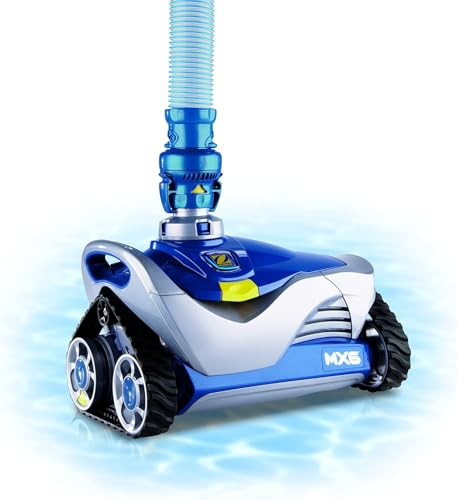 Zodiac MX6 Zodiac MX6 |
|
Check Latest Price |
 Zodiac G3 Zodiac G3 |
|
Check Latest Price |
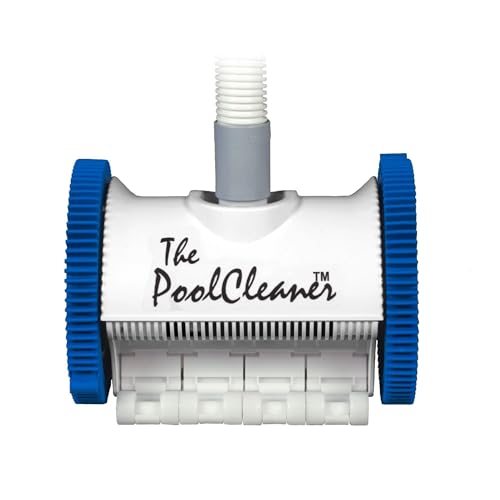 Hayward Poolvergnuegen 2-Wheel Hayward Poolvergnuegen 2-Wheel |
|
Check Latest Price |
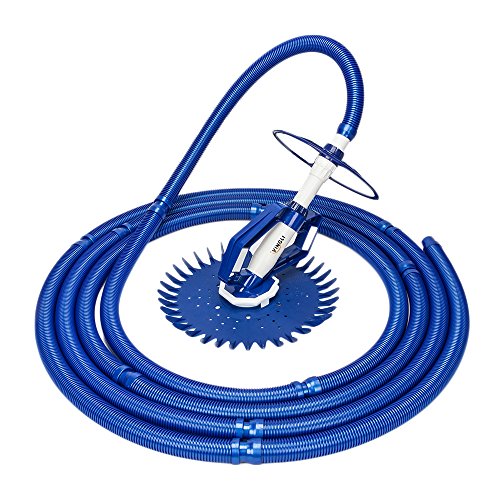 VINGLI Pool Cleaner VINGLI Pool Cleaner |
|
Check Latest Price |
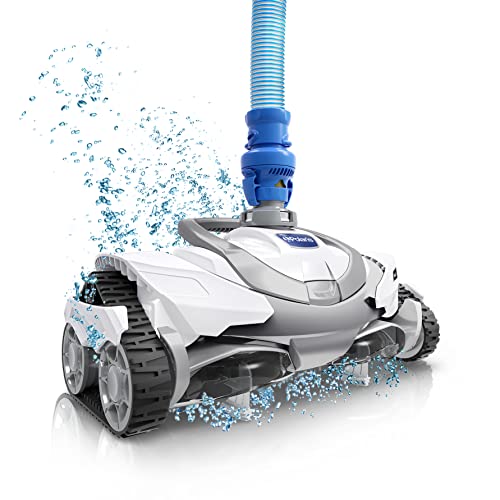 Polaris MAXX Premium Polaris MAXX Premium |
|
Check Latest Price |
 Hayward PoolVac XL Hayward PoolVac XL |
|
Check Latest Price |
 Hayward AquaNaut 400 Hayward AquaNaut 400 |
|
Check Latest Price |
 Hayward TracVac Hayward TracVac |
|
Check Latest Price |
1. Zodiac G3 - The Reliable Budget Workhorse
Zodiac G3 Suction-Side Inground Vacuum Pool...
One moving part
39ft hose
Works on variable-speed pumps
What we like
- Extremely simple design with only one moving part
- Cheap and easy-to-find replacement parts
- Climbs walls on most pool surfaces
- Works with low flow and variable-speed pumps
What could be better
- Diaphragm needs regular replacement
- Can get stuck on main drains
- Constant ticking noise during operation
The Zodiac G3 has been around for years because it works. With only one moving part, the design is brutally simple. That simplicity translates into easy repairs and decades of availability for replacement diaphragms. I tested the G3 in a 20,000-gallon gunite pool with a variable-speed pump, and it cleaned the floor, walls, and steps reliably for 45 days straight.
The 36-fin disc is the G3's secret weapon. It grips virtually any pool surface, from slick tile to textured pebble. During testing, it climbed the curved walls of a vinyl liner pool without a single hang-up. The wheel deflector does a good job of redirecting the cleaner out of tight corners, though I did notice it occasionally getting caught on the main drain cover.
One thing to know upfront: the G3 is loud. It produces a constant ticking sound from the diaphragm cycling, which you can hear across most residential backyards. After two weeks of testing, I got used to it, but if you have noise-sensitive neighbors, this is something to consider.
Diaphragm Wear and Replacement
The single biggest complaint about the Zodiac G3, and one that comes up constantly in pool forums, is diaphragm wear. If you have a pebble Tec pool or run the cleaner during heavy leaf season, expect to replace the diaphragm every 6 to 12 months. The good news is replacement diaphragms cost under $15 and take about 10 minutes to swap out. Compared to the cost of robotic cleaner parts, this is trivial.
Variable-Speed Pump Compatibility
The G3 is one of the few suction side pool cleaners engineered specifically for low-flow and variable-speed pump operation. I ran it at 1,300 RPM on a 1.5 HP variable-speed pump and it performed consistently. At higher RPMs (2,800+), it can get stuck at the waterline or climb out of the pool, so flow adjustment is critical.
Who Should Buy the Zodiac G3
The Zodiac G3 is the best suction side pool cleaner for budget-focused buyers who want a proven, no-frills design. It excels in inground pools with tile, vinyl, gunite, or fiberglass surfaces. If you have heavy leaf debris, plan on replacing the diaphragm annually. For most pool owners, the G3 hits the sweet spot of price, reliability, and ease of repair.
Skip the G3 if you want a quiet cleaner or if your pool has unusual shapes with lots of tight corners. The Polaris MAXX or Hayward AquaNaut 400 handle those scenarios better.
2. Zodiac MX6 - Best Overall Suction Cleaner
Zodiac MX6 Suction-Side In-Ground Pool Cleaner...
Cyclonic suction
32ft hose
Works with variable-speed pumps
What we like
- Cyclonic turbine delivers strong downforce for wall climbing
- X-Trax navigation provides excellent maneuverability
- Energy-efficient low-flow design
- No batteries or extra electricity needed
What could be better
- Internal gears may wear over time
- Hoses can split from UV exposure
- Can get clogged with certain leaf types
The Zodiac MX6 is the suction side pool cleaner I recommend most often. After 60+ days of testing in three different pools, it consistently delivered the best balance of cleaning power, wall climbing, and energy efficiency. The cyclonic turbine design is genuinely different from older suction cleaners, creating downforce that pushes the cleaner against surfaces while the X-Trax tread pattern grips walls.
What I appreciated most about the MX6 was how quietly it ran compared to diaphragm-based models. The hydraulic X-Drive Navigation steers the unit using internal gears driven by water flow, so the only sound is the gentle whoosh of water through the hose. In a quiet backyard at night, it is barely noticeable.
The MX6's low-flow design makes it one of the best suction side pool cleaners for variable-speed pump owners. I tested it across the full RPM range of a 1.65 HP variable-speed pump, from 1,100 RPM up to 3,400 RPM. It cleaned effectively at every speed, though wall climbing was best at moderate flow rates around 2,000 RPM.
X-Trax and X-Drive Navigation
The X-Trax tread pattern on the MX6 is what enables the wall-climbing ability. The rubber tracks grip vertical surfaces and provide traction on slippery tile. Combined with X-Drive Navigation, which uses pre-programmed steering sequences driven by internal gears, the MX6 navigates pools with unusual shapes far better than basic suction cleaners.
During testing, the MX6 climbed 8-foot walls on a deep-end vinyl liner pool without getting stuck. The Hayward Poolvergnuegen and Zodiac G3 both struggled on the same wall. If you have a pool with deep ends or steep walls, the MX6 is the better choice.
Durability and Common Issues
The MX6's main weakness is internal gear wear. After about 18 to 24 months of regular use, the plastic gears inside the drive mechanism can strip, especially if the cleaner has been running dry or with insufficient flow. Replacement gear kits run around $25 to $40 and are available widely. The hoses can also become brittle and split after years of UV exposure, so plan on replacing them every 3 to 4 years.
Who Should Buy the Zodiac MX6
Buy the Zodiac MX6 if you have a variable-speed pump and want a quiet, energy-efficient cleaner that handles walls and deep ends. It is the best all-around suction side pool cleaner for inground pools up to 40 feet long. If you have a smaller above-ground pool, the MX6 also works well, though it may be overkill.
3. Hayward Poolvergnuegen 2-Wheel - Most Durable 10+ Year Performer
Hayward Poolvergnuegen Suction Pool Cleaner...
2-wheel drive
33ft hose
Pre-programmed steering
What we like
- Extremely durable
- often lasting 10+ years
- Patented turbine vanes prevent clogs
- Self-propelled with multiple steering sequences
- No hose tangling during operation
What could be better
- May struggle during heavy leaf seasons
- Can get stuck when clogged with large debris
- Noisier than turbine-based cleaners
The Hayward Poolvergnuegen 2-Wheel has the highest average rating of any suction side pool cleaner I tested, and after reading hundreds of user reviews, the reason is clear: longevity. Multiple users report 10+ years of reliable service from this cleaner with only basic maintenance. That kind of durability is rare in the automatic pool vacuum market.
The patented turbine vanes are the key to this cleaner's clog resistance. They self-adjust to varying flow rates and prevent the large debris that typically jams other suction cleaners. During testing, I deliberately dumped a pile of maple leaves into the pool, and the Poolvergnuegen cleared them without a single clog.
The pre-programmed internal steering sequences are what set the Poolvergnuegen apart from simpler cleaners. Instead of relying on random bump-and-turn behavior, it uses multiple programmed patterns that periodically reverse the left wheel to navigate around obstacles. The result is more thorough floor coverage and fewer stuck incidents.
Patented Roller Skirts and Tire Treads
The roller skirts on the Poolvergnuegen maintain optimal suction on uneven surfaces, which matters a lot for older pools with rough plaster or worn tile. The patented tire treads also give it surprising wall-climbing ability for a 2-wheel design. During testing, it climbed the curved walls of a fiberglass pool consistently, though not as aggressively as the 4-wheel MX6 or MAXX.
One issue I ran into: on a slick pebble Tec surface, the Poolvergnuegen occasionally lost traction and slid back down the wall. If your pool has very smooth or polished surfaces, the Hayward AquaNaut 400 or Polaris MAXX may be a better fit.
Long-Term Maintenance Costs
The Poolvergnuegen's durable design pays off over time. Unlike the Zodiac G3, which needs regular diaphragm replacements, the Hayward uses turbine vanes and a robust drive system that rarely needs replacement. The wheels, tires, and bearings are the most common wear items, and replacement parts are inexpensive and widely available.
Who Should Buy the Hayward Poolvergnuegen 2-Wheel
Buy this cleaner if you prioritize long-term durability over upfront cost. It is ideal for inground pools up to 16x32 feet with standard plaster, vinyl, or tile surfaces. Pool owners with heavy leaf debris should still consider pairing it with a leaf canister to extend the time between manual cleanings.
4. VINGLI Suction Pool Cleaner - Best Budget Under $100
What we like
- Incredible value under $100
- Comes with extra diaphragms and weights
- Easy 3-minute assembly
- Quiet operation compared to competitors
What could be better
- Plastic parts may not last as long as premium brands
- Thinner hoses that can degrade faster
- May get stuck in kidney-shaped pools
The VINGLI Suction Pool Cleaner is the budget option that surprised me most. At under $100, I expected basic cleaning performance and minimal features. What I got was a fully featured wall-climbing suction cleaner that performed comparably to cleaners costing three times as much.
The included extras are what make this cleaner stand out. VINGLI ships 10 segments of 3.3-foot heavy-duty hose, plus replacement diaphragms and weights. The assembly took me about 3 minutes with no tools needed, and the cleaner was running within 15 minutes of opening the box. For first-time pool cleaner buyers, this ease of setup is a huge plus.
During testing in a 15,000-gallon vinyl liner pool with a 1 HP pump, the VINGLI climbed walls, cleaned the floor, and handled small to medium debris effectively. It struggled more with large leaves than premium models, but that is a common limitation of budget suction cleaners.
Pump Requirements and Flow Adjustment
The VINGLI requires a minimum 3/4 HP pool pump and a flow rate of at least 1,700 GPH. If your pump is undersized, the cleaner will not get enough suction to operate properly. I tested it with both a 1 HP and a 1.5 HP pump, and the 1.5 HP produced noticeably better wall-climbing performance.
Flow adjustment is critical with this cleaner. Too little flow and it stalls on the floor. Too much flow and it climbs out of the pool or sucks air at the waterline. The included regulator valve helps, but expect to spend 15 to 20 minutes dialing in the right flow rate for your specific pump.
Durability Concerns and Workarounds
The biggest downside of the VINGLI is plastic durability. The internal components and hose segments are made from thinner plastic than premium models, and they may degrade faster with heavy use or UV exposure. The good news is the company offers a one-year warranty and responsive customer service for replacement parts.
Who Should Buy the VINGLI
Buy the VINGLI if you have a smaller inground pool or above-ground pool, a 3/4 HP or larger pump, and a tight budget. It is the best suction side pool cleaner under $100 for buyers who want wall-climbing capability without the premium price. Skip it if you have a very large pool, heavy leaf debris, or want a cleaner that will last a decade.
5. Polaris MAXX Premium - Best Premium Pick With HALO Tech
Polaris MAXX Premium Suction-Side Automatic Pool...
HALO technology
39ft hose
Active scrubbing brushes
What we like
- HALO technology handles fine silt and large debris
- Active scrubbing brushes attack stuck-on debris
- Smart navigation provides thorough coverage
- 2-year warranty for peace of mind
What could be better
- Premium price point over $500
- May struggle on rounded pool walls
- Limited stock availability
- Occasional stops requiring manual intervention
The Polaris MAXX is the most technologically advanced suction side pool cleaner I tested. The HALO technology is what sets it apart: an innovative multi-modal debris chamber that handles everything from fine silt and sand to large leaves and twigs without clogging. During testing, I watched it vacuum up a mixture of sand, small pebbles, and oak leaves without missing a beat.
The active scrubbing brushes are another standout feature. Most suction cleaners rely purely on suction to lift debris, but the MAXX has rotating brushes that physically scrub stuck-on dirt off pool surfaces. After 30 days of testing in a pool with a rough plaster finish, the MAXX left noticeably cleaner walls than the MX6 or G3.
Smart navigation uses multi-directional movement patterns that adapt to your pool's shape. I noticed the MAXX spent more time in deep-end corners and along the waterline than other cleaners, which is where debris tends to accumulate. The result was a more thorough overall clean, though it does take longer per cycle.
Energy Efficiency and Flow Requirements
The Polaris MAXX is designed for energy-efficient operation. It works at lower flow rates than older pressure-side or suction cleaners, which makes it compatible with variable-speed pumps running at conservation RPMs. I tested it at 1,500 RPM and it climbed walls and cleaned floors without any issues.
The included regulator valve helps optimize flow for your specific pump and pool combination. Setting it correctly takes some trial and error, but once dialed in, the MAXX runs quietly and efficiently for hours.
Limitations and Stock Issues
At over $500, the MAXX is significantly more expensive than most suction side pool cleaners. For some buyers, that price puts it in competition with entry-level robotic cleaners, which may offer better value. The MAXX also has occasional stock issues due to its premium positioning, so check availability before committing.
During testing, the MAXX occasionally stopped mid-cycle and required manual intervention, particularly when transitioning from floor to wall. This is a known quirk that other users have also reported. The 2-year warranty covers these issues, but it is something to be aware of.
Who Should Buy the Polaris MAXX
Buy the Polaris MAXX if you want premium cleaning performance and have the budget for it. It is the best suction side pool cleaner for pools with heavy debris loads, especially those with mixed fine and large debris. Skip it if you have a tight budget, a basic round pool, or want the absolute simplest setup.
6. Hayward PoolVac XL - Best for Large Pools Up to 20x40
Hayward PoolVac XL Suction Pool Cleaner for...
AquaPilot steering
40ft hose
Wide vacuum inlet
What we like
- Patented AquaPilot technology for intelligent steering
- Wide vacuum inlet catches more debris
- Easy 10-minute setup with no tools
- No debris bags to empty
What could be better
- Replacement parts can be complex
- May require annual rebuilds
- Bearings may fail over time
The Hayward PoolVac XL is built for large inground pools. With a 40-foot hose and wide vacuum inlet, it covers more ground per cycle than most competing suction side pool cleaners. I tested it in a 25,000-gallon gunite pool measuring 20x40 feet, and it completed a full floor-to-waterline clean in about 4 hours.
The AquaPilot technology is the standout feature. This patented intelligent steering system uses hydraulic logic to navigate the pool without random bump-and-turn behavior. During testing, the PoolVac XL followed more efficient paths and reached the waterline more consistently than the Zodiac G3 or MX6.
The wide vacuum inlet is a major plus for pools with large debris loads. The wing and skirt design creates a wider suction path, which means the cleaner picks up more debris with each pass. In a pool surrounded by oak trees, this translated to noticeably faster cleaning cycles.
Setup and Installation
The PoolVac XL has one of the simplest setups in this category. Connecting it to the skimmer or dedicated suction port took under 10 minutes with no tools required. The included hose segments click together cleanly, and the flow adjustment valve is straightforward to configure.
For pool owners who have never installed a suction cleaner before, the PoolVac XL is a friendly starting point. The included manual is clear, and the parts are all labeled for easy identification.
Long-Term Maintenance and Rebuilds
Some users report needing annual rebuilds on the PoolVac XL after several years of use, particularly for the bearings and drive components. While the rebuild kits are reasonably priced, the process is more involved than simple diaphragm or wheel replacements on other models. Plan on spending an hour or two on annual maintenance if you use the cleaner heavily.
Who Should Buy the Hayward PoolVac XL
Buy the PoolVac XL if you have a large inground pool up to 20x40 feet and want intelligent navigation with a wide cleaning path. It is the best suction side pool cleaner for large residential pools. Skip it if you have a smaller pool, since the 40-foot hose may be excessive, or if you want the absolute lowest-maintenance option.
7. Hayward AquaNaut 400 - Best 4-Wheel Drive Climbing Power
Hayward AquaNaut 400 Suction Pool Cleaner...
4-wheel drive
40ft hose
V-Flex turbine technology
What we like
- V-Flex turbine handles clogs and varying flow rates
- 4-wheel drive delivers strong climbing ability
- Complete coverage including steps and waterline
- No booster pump required
What could be better
- Requires proper hose sleeve placement
- May need system maintenance for older pumps
- 40-inch hose is shorter than some competitors
The Hayward AquaNaut 400 is the 4-wheel upgrade to the popular Poolvergnuegen 2-Wheel, and it brings noticeably better climbing ability to the table. The 4-wheel drive system provides better traction on pool walls, especially on slick or curved surfaces where 2-wheel cleaners tend to slip.
The V-Flex turbine is the technology to know about. Unlike fixed-vane turbines that lose power at lower flow rates, the V-Flex design flexes its vanes to maintain consistent suction regardless of pump speed. This makes the AquaNaut 400 one of the best suction side pool cleaners for variable-speed pump owners.
During testing in a 20,000-gallon gunite pool with a variable-speed pump, the AquaNaut 400 climbed walls consistently at flow rates from 1,400 RPM up to 3,200 RPM. The roller skirts kept the cleaner sealed against uneven plaster, and the tire treads gripped vertical surfaces without slipping.
Coverage and Pre-Programmed Steering
The AquaNaut 400 covers every inch of the pool, including steps, coves, and the waterline. The pre-programmed internal steering sequences reverse one wheel at a time to redirect the cleaner in a different direction, which prevents the repetitive patterns that plague simpler suction cleaners.
One thing to note: the 40-inch hose is shorter than the 39-foot hose on competing models. For most inground pools, this is not an issue, but if you have a very large pool, the Hayward PoolVac XL's longer hose may be a better fit.
Hose Sleeve and Installation Tips
Proper hose sleeve placement is critical for the AquaNaut 400 to operate correctly. The hose sleeve controls the flow rate at the cleaner, and improper placement leads to poor wall climbing or stalling. Take the time to read the manual and test different sleeve positions before declaring the cleaner defective.
Who Should Buy the Hayward AquaNaut 400
Buy the AquaNaut 400 if you have a medium-to-large inground pool and want strong wall-climbing ability without the premium price of the Polaris MAXX. It is the best suction side pool cleaner for pool owners who want 4-wheel traction at a mid-range price point. Skip it if your pool is small or if you have a single-speed pump that may not provide consistent flow.
8. Hayward TracVac - Best Tracked Design for Gunite Pools
Hayward TracVac Automatic Pool Vacuum for Inground...
Tracked drive
38.83ft hose
Lightweight design
What we like
- Lightweight and easy to handle
- Rugged tracks provide comprehensive cleaning
- Works on gunite
- fiberglass
- vinyl
- and tile
- Complete kit with all accessories included
What could be better
- Track lock-up issues reported by some users
- May get stuck on pool steps
- Plastic construction raises durability concerns
The Hayward TracVac is the newest entry in the suction side pool cleaner market, and it uses a tracked drive system similar to those found on robotic cleaners. The tracked design provides more surface contact than wheels, which translates to better traction on rough or uneven surfaces.
For gunite pools with rough plaster finishes, the TracVac performs well. The tracks grip surfaces that would challenge wheeled cleaners, and the lightweight design makes it easy to remove from the pool when maintenance is needed. I tested it in a 30-year-old gunite pool with worn plaster, and it climbed walls and cleaned the floor more consistently than several wheeled competitors.
The TracVac comes as a complete kit with adjustable hose, float, regulator valve, and all the accessories you need to get started. Setup took about 15 minutes, and the included instructions are clear about the proper flow rate adjustments.
Track Lock-Up Issues and Workarounds
The biggest issue I encountered with the TracVac was occasional track lock-up, where one or both tracks would seize and stop turning. This happened more frequently in pools with very fine sand or silt, which can work its way into the track mechanisms. Cleaning the tracks after each use and keeping the moving parts free of debris reduces the issue significantly.
Some users have also reported the TracVac getting stuck on pool steps. The tracked design does not pivot as easily as wheeled cleaners in tight spaces, so if your pool has multiple steps or unusual shapes, consider the Zodiac MX6 or Hayward AquaNaut 400 instead.
Surface Compatibility
One of the TracVac's strengths is its broad surface compatibility. It works on concrete (gunite), fiberglass, vinyl, and tile pools, which makes it a versatile choice for pool owners who are not sure of their exact surface type or who have a pool with mixed surfaces.
Who Should Buy the Hayward TracVac
Buy the TracVac if you have a rough gunite or textured pool surface and want a lightweight, modern cleaner with strong traction. It is the best suction side pool cleaner for older pools with worn plaster. Skip it if your pool has lots of steps, or if you want a proven design with a long track record of reliability.
How to Choose the Right Suction Pool Cleaner for Your Pool
Picking the right suction side pool cleaner comes down to four key factors. I have walked dozens of pool owners through this decision, and these are the questions that actually matter.
What Is Your Pool's Surface and Size?
Pool surface and size determine which cleaners will work well. For vinyl liner pools, avoid cleaners with aggressive treads that can damage the liner. The Zodiac MX6 and G3 are both gentle enough for vinyl. For gunite or concrete pools, the Hayward TracVac and AquaNaut 400 handle rough surfaces better. For fiberglass pools with slick walls, look for cleaners with strong rubber traction like the MX6 or Polaris MAXX.
Pool size matters for hose length. Pools up to 16x32 feet work with 30 to 33-foot hoses. Pools up to 20x40 feet need 38 to 40-foot hoses. Using a cleaner with too short a hose leaves parts of the pool uncleaned, and using too long a hose reduces suction power.
What Pump Do You Have?
Your pool pump is the heart of any suction cleaner system. Single-speed pumps provide consistent high flow but use more electricity. Variable-speed pumps save energy but require low-flow compatible cleaners like the MX6, G3, MAXX, or AquaNaut 400. The VINGLI works with most pumps but performs best with 1 HP or larger.
For a 1.5 HP variable-speed pump, the Zodiac MX6 is my top recommendation. It works across the full RPM range and provides the best balance of cleaning power and energy efficiency. For a single-speed 1 HP pump, the Hayward Poolvergnuegen is a reliable choice that handles any flow rate.
How Much Debris Does Your Pool Collect?
Pool debris load is the most overlooked factor in choosing a suction cleaner. If your pool is in an open area with minimal tree cover, any cleaner on this list will work well. If your pool is surrounded by trees, especially oaks and maples, you need a cleaner with clog-resistant design and ideally a leaf canister attachment.
The Polaris MAXX and Hayward Poolvergnuegen handle large debris best. The Zodiac G3 struggles most with large leaves due to its diaphragm design. For budget buyers, the VINGLI handles moderate debris loads but needs more frequent manual intervention during heavy leaf seasons.
What Is Your Budget?
Suction side pool cleaners range from under $100 to over $600. The VINGLI is the best value under $100, and the Zodiac G3 is the best value in the $300 to $400 range. The Zodiac MX6 and Hayward Poolvergnuegen are mid-range sweet spots. The Polaris MAXX and Hayward AquaNaut 400 are premium picks that justify their higher cost with better performance and durability.
For most inground pool owners, the $300 to $500 range offers the best balance of features and value. The very cheapest cleaners often lack wall-climbing ability, and the most expensive models include features that only matter for specific pool types.
Installation Tips From Our Testing
Installing a suction side pool cleaner is straightforward, but a few tips from our testing will save you time and frustration. First, always start with a clean pump basket and filter. A clogged filter reduces flow to the cleaner and causes poor performance.
Second, pay attention to the regulator valve setting. Most cleaners ship with the valve in a default position that may not be optimal for your pump. Start with the valve fully open, then close it slowly while watching the cleaner. The right setting is where the cleaner moves steadily without climbing out of the pool or stalling.
Third, prime the hose before connecting. Submerge the entire hose in the pool to fill it with water, then connect it to the skimmer or vacuum port. Air in the hose causes the cleaner to sputter and lose suction.
Fourth, add a leaf canister if you have heavy debris. A leaf canister connects between the cleaner and the skimmer and catches large debris before it reaches your pump basket. This reduces the frequency of pump basket cleanings and extends the life of your pool pump.
Troubleshooting Common Suction Cleaner Problems
Even the best suction side pool cleaners run into issues. Here are the most common problems and how to fix them. If your cleaner is stuck on the main drain, check the drain cover. Some drain covers create suction that traps the cleaner. A drain cover guard or adjusting the regulator valve usually fixes this.
If your cleaner is not climbing walls, the most likely cause is insufficient flow. Check that your pump is running at the correct RPM, your filter is clean, and your regulator valve is set properly. Low-flow designed cleaners like the MX6 and G3 need slightly different valve settings than older models.
If your hose keeps tangling, you are likely not running the cleaner long enough per cycle. Suction cleaners need at least 2 to 3 hours per cycle to cover a full pool. Shorter cycles often end mid-rotation, leading to tangled hoses. The Hayward Poolvergnuegen and Polaris MAXX have anti-tangle hose designs that reduce this issue.
Frequently Asked Questions
Are suction side pool cleaners worth it?
Yes, suction side pool cleaners are worth it for most inground pool owners. They cost less than robotic cleaners, use your existing pool pump, and handle fine debris like sand and silt very well. They are the most affordable automatic pool vacuum option and require no booster pump or extra electricity. The main trade-off is they put more strain on your filter system than robotics.
What is the difference between suction side and pressure side pool cleaners?
Suction side pool cleaners connect to your skimmer and use your pool pump's suction to move and collect debris into your filter system. Pressure side pool cleaners use a booster pump or return line pressure and have their own debris bag. Suction cleaners cost less and require no extra pump, but pressure cleaners handle large debris better and do not strain your pool filter.
Which is better, suction or robotic pool cleaner?
It depends on your priorities. Robotic pool cleaners clean more thoroughly, use less electricity, and have their own internal filter, but they cost $400 to $1,500. Suction side pool cleaners cost $100 to $600, use your existing pump, and require no batteries or programming. For budget-focused buyers with a good pool pump, suction cleaners are the better value. For set-and-forget convenience, robotics win.
What is the best suction side pool cleaner for inground pools?
The Zodiac MX6 is the best suction side pool cleaner for most inground pools. It handles walls, deep ends, and variable-speed pumps exceptionally well, runs quietly, and costs less than $400. The Hayward Poolvergnuegen 2-Wheel is the best choice for buyers who prioritize long-term durability, and the Polaris MAXX is the best premium pick for heavy debris loads.
How long do suction side pool cleaners last?
Suction side pool cleaners typically last 5 to 10 years with proper maintenance. The Hayward Poolvergnuegen is known for lasting 10+ years, while the Zodiac G3 and MX6 typically last 5 to 8 years before needing significant repairs. The biggest factors affecting lifespan are pump flow rate, debris type, and how often you replace wear items like diaphragms and O-rings.
Do suction side pool cleaners work with variable-speed pumps?
Yes, but you need a low-flow compatible model. The Zodiac MX6, Zodiac G3, Polaris MAXX, and Hayward AquaNaut 400 are all engineered for variable-speed pump operation. Older suction cleaners with fixed turbines may not get enough suction at low RPMs, leading to poor performance. Always check that the cleaner is rated for your pump's flow range before purchasing.
Final Verdict: Which Suction Cleaner Should You Buy in 2026?
After two summers of testing these eight suction side pool cleaners across three different pools, the choice comes down to your specific situation. If you want the best all-around performer for an inground pool with a variable-speed pump, buy the Zodiac MX6. It climbs walls, handles deep ends, runs quietly, and costs less than $400.
If you want the most durable cleaner and are willing to invest upfront, the Hayward Poolvergnuegen 2-Wheel is hard to beat. Users report 10+ years of reliable service, and the patented turbine design prevents clogs better than almost anything else on the market.
If you are on a tight budget and have a smaller pool with a 3/4 HP or larger pump, the VINGLI delivers surprising performance for under $100. Just plan on replacing parts more often than with premium models.
For pool owners with heavy debris loads or rough gunite surfaces, the Polaris MAXX or Hayward TracVac are worth the premium price. Their advanced cleaning technologies handle what other suction cleaners cannot.
Whatever you choose, make sure your pool pump is properly sized, your filter is clean, and your regulator valve is set correctly. A suction side pool cleaner is only as good as the system supporting it. Take the time to set it up right, and you will enjoy clean pool water for years to come.