Rosy Red Minnows have quietly become one of the most underappreciated gems in the aquarium hobby. Often dismissed as mere feeder fish destined for larger predators, these hardy little fish actually make exceptional pets in their own right. If you have ever wanted an aquarium that does not require heaters, filters running at full capacity, or constant monitoring, these might be the perfect addition to your home.
These fish thrive in conditions that would stress most tropical species. While other aquarists battle with heater malfunctions during winter power outages, Rosy Red Minnow owners watch their fish swim happily as temperatures drop. This resilience has earned them a devoted following among beginner fishkeepers and experienced hobbyists looking for cold water alternatives to traditional tropical setups.
In this comprehensive guide, we will explore everything you need to know about keeping Rosy Red Minnows successfully. From their fascinating Schreckstoff alarm system to their surprisingly devoted paternal breeding behavior, these fish offer far more than their humble origins as bait and feeder fish suggest. Whether you are setting up your first unheated tank or looking for the perfect dither fish for your goldfish aquarium, you will find actionable advice backed by scientific research and decades of practical experience.
Table of Contents
- Rosy Red Minnow: Species Summary
- Rosy Red Minnow: Food & Diet
- Rosy Red Minnow: Care
- Rosy Red Minnow: Aquarium Size
- Rosy Red Minnow: Water Parameters
- Filtration
- Heating
- Lighting
- Plants
- Co2 Systems
- Substrate
- Decorations
- Rosy Red Minnow: Other Tank Accessories
- Rosy Red Minnow: Keeping Them In Ponds
- Rosy Red Minnow: Water Changes
- Rosy Red Minnow: Cleaning The Tank
- Rosy Red Minnow: Cleaning The Filter
- Rosy Red Minnow: Testing The Water
- Rosy Red Minnow: Common Possible Diseases
- Rosy Red Minnow: Preventing Diseases
- Rosy Red Minnow: Treatment And Medications Of Diseases
- Rosy Red Minnow: Common Behavioral Problems
- Rosy Red Minnow: Preventing Behavioral Problems
- Rosy Red Minnow: Tank Mates
- Rosy Red Minnow: Fish To Avoid
- Advantages Of Having Rosy Red Minnow In Your Tank
- Disadvantages Of Having Rosy Red Minnow In Your Tank
- Frequently Asked Questions
- Are rosy red minnows good pets?
- How many rosy red minnows in a 10 gallon tank?
- How big do rosy red minnows get?
- Are rosy red minnows hardy?
- Are rosy red minnows easy to take care of?
- How many rosy red minnows in a 20 gallon tank?
- How to keep rosy red minnows alive?
- Do rosy red minnows need a heater?
- Can rosy red minnows live with goldfish?
- What do rosy red minnows eat?
- Conclusion
Rosy Red Minnow: Species Summary
| Scientific name: | Pimephales promelas |
| Other names: | Fathead Minnow, Rosy Reds, Tuffies, Common Minnow |
| Family: | Cyprinidae (Leuciscidae) |
| Size: | 2 to 3 inches (max 4 inches) |
| Lifespan: | 2 to 4 years |
| Origin: | Northeastern United States |
| Habitat: | Freshwater streams, ponds, and lakes |
| Behavior: | Schooling fish, peaceful community dwellers |
| Tank size: | 10 gallons minimum for 3-6 fish |
| Water temperature: | 50°F to 78°F (no heater required) |
| pH Range: | 6.5 to 8.0 |
| Water hardness: | 5 to 18 dGH |
| Water Type: | Freshwater cold water fish |
| Activity Level: | Moderate to active in groups |
| Compatibility: | Excellent for peaceful community tanks |
| Tankmates: | Goldfish, White Cloud Minnows, shrimp, snails |
| Care Level: | Easy - ideal beginner fish |
| Breeding: | Fractional spawner with paternal egg guarding |
| Diet: | Omnivorous - flakes, live foods, algae |
The scientific name for Rosy Red Minnows is Pimephales promelas. They belong to the Cyprinidae family, though recent classifications place them in Leuciscidae. These fish are also known as Fathead Minnows, Common Minnows, and affectionately called "Tuffies" by those who appreciate their toughness. The rosy red coloration is actually a xanthic strain, meaning these fish lack the dark pigments found in their wild-type Fathead Minnow relatives. This pinkish-orange coloration first appeared as a genetic mutation and has been selectively bred since the 1980s.
These fish are native to the Northeastern United States, where they inhabit slow-moving streams, ponds, and lakes. Their natural habitat features cool, well-oxygenated water with plenty of vegetation and hiding spots. Understanding their origins helps explain why they are such forgiving aquarium residents. Unlike tropical imports that demand stable heated conditions, Rosy Reds evolved to handle seasonal temperature swings from near-freezing winters to warm summer days.
Rosy Red Minnow: Appearance
The appearance of Rosy Red Minnows explains much of their popularity among aquarium enthusiasts. Their bodies display a striking pinkish-orange to golden-rose coloration that stands out against green aquatic plants and dark substrates. This rosy coloration is the result of xanthochromism, a genetic condition that suppresses melanin production, allowing the underlying red and yellow pigments to dominate.

These fish have a streamlined, torpedo-shaped body built for quick bursts of speed when escaping predators. They typically grow between 2 and 3 inches, though exceptional specimens may reach 4 inches in spacious aquariums with optimal nutrition. Their fins are generally clear or pale with a slight reddish tint, and their forked caudal tail provides excellent maneuverability for darting through vegetation.
One distinctive feature is their small head with a slightly protruding lower jaw. Their eyes sit on the sides of their heads, giving them excellent panoramic vision to spot threats from any direction. Juvenile Rosy Red Minnows often display a dark lateral stripe running along their flanks, which gradually fades as they mature and their characteristic rosy coloration intensifies.
Sexing Rosy Red Minnows: Tubercles and Breeding Characteristics
Distinguishing male from female Rosy Red Minnows becomes straightforward once you know what to look for. During breeding season, males develop remarkable secondary sexual characteristics that transform their appearance. The most obvious sign is the development of nuptial tubercles, small white spots that appear on the snout, behind the eyes, and sometimes across the body. These breeding tubercles help males maintain contact with females during spawning and may also serve as weapons in male-to-male combat.
The most dramatic male feature is a thickened, fleshy pad that develops across the nape of the head and back behind the eyes. This breeding pad, sometimes called a "fat pad," can become so prominent that it makes the male's head appear significantly larger than the female's. The pad darkens during breeding season, ranging from olive-gray to nearly black. This distinctive feature is the origin of their "Fathead Minnow" name.
Females lack these breeding structures entirely. Instead, when ready to spawn, females develop a visible ovipositor, a small tubular structure protruding from the vent used for depositing eggs. Their bodies remain more rounded and streamlined year-round, and their coloration stays relatively consistent rather than darkening like males during breeding.
Outside of breeding season, the sexes appear more similar. Males tend to be slightly more colorful with a pinker hue, while females often appear paler and slightly fuller in the body. Females may also grow slightly larger than males, reaching the upper end of the size range while males typically stay smaller and more compact.
Rosy Red Minnow: Size & Growth Rate
The typical Rosy Red Minnow size ranges between 2 and 3 inches when fully grown. Under optimal aquarium conditions with ample space, quality nutrition, and clean water, some individuals may reach 4 inches in length. However, most pet store specimens remain on the smaller side due to crowded holding conditions and limited feeding schedules.
These are fast-growing fish during their first months of life. Well-fed juveniles can grow approximately 1 inch per month under ideal conditions. This rapid growth rate is one reason they are popular as feeder fish, quickly reaching a size suitable for medium-sized predators. Growth slows significantly as they approach adulthood, with most reaching their full length by 6 to 8 months of age.
Genetics play a role in final size, with fish from certain bloodlines growing larger than others. Nutrition is equally important. Fish fed varied diets including live foods, quality flakes, and frozen options typically outgrow those subsisting on basic flake food alone. Water quality and space also impact growth. Fish kept in cramped quarters with poor water conditions often exhibit stunted growth regardless of age.
Rosy Red Minnow: Lifespan
The typical lifespan of Rosy Red Minnows ranges from 2 to 4 years in captivity when provided with proper care. This represents a significant improvement over their wild counterparts, which typically live only 1 to 2 years due to predation pressure and environmental challenges. The oldest documented aquarium specimens have reached 5 years under exceptional care conditions.
Lifespan varies considerably based on origin and care. Fish purchased as feeder fish often arrive stressed, parasitized, and underfed. These individuals may only survive 6 months to 1 year even with attentive care. Conversely, fish obtained from dedicated breeders or raised from fry can regularly exceed 3 years, with some keepers reporting 4+ year lifespans.
As Rosy Red Minnows age, they may become more susceptible to common fish diseases. Their colors might fade slightly, and activity levels typically decrease. Providing pristine water conditions, varied nutrition, and stress-free environments becomes increasingly important for senior fish. Regular water testing and maintenance help ensure these hardy fish live out their full potential.
Rosy Red Minnow: Behavior & Temperament
Rosy Red Minnows are peaceful, schooling fish that bring constant gentle activity to community tanks. Unlike some small fish that hide constantly or display territorial aggression, Rosy Reds spend their days in active groups, exploring every corner of their environment. This behavior makes them excellent dither fish, helping shy tank mates like goldfish feel secure enough to display natural behaviors.
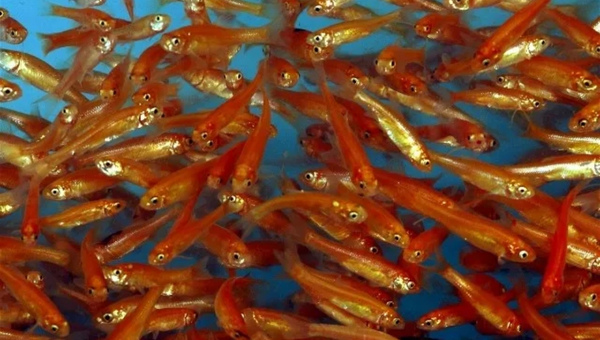
These fish are not known as fin nippers, though hungry individuals may occasionally sample the fins of slow-moving tank mates. This behavior is almost always food-motivated rather than aggressive. Providing adequate feeding and keeping them in proper schools of 6 or more significantly reduces any nipping tendencies.
Schooling behavior is one of their most appealing traits. When kept in groups, they swim in coordinated movements, creating a living pink cloud that moves through the aquarium. Solitary Rosy Reds become stressed and may hide constantly, exhibit faded colors, and refuse food. Never keep fewer than 6 individuals, and larger groups of 10 or more display the most impressive schooling behavior.
One fascinating behavioral trait involves their Schreckstoff alarm substance. When injured or stressed, Rosy Red Minnows release specialized chemicals from epidermal club cells in their skin. This alarm pheromone, called Schreckstoff (German for "fright substance"), triggers immediate flight responses in nearby minnows. This unique defense mechanism explains why sudden disturbances in the tank can send the entire school darting for cover simultaneously.
Rosy Red Minnow: Breeding
Breeding Rosy Red Minnows offers one of the most accessible entry points into fish spawning for beginner aquarists. Unlike many species requiring precise water chemistry manipulation or complex conditioning, these fish breed readily under standard care conditions. Their breeding behavior is particularly fascinating because it involves devoted paternal care, a rarity among fish species.
To set up a breeding environment, start with a dedicated tank of at least 10 gallons. A sponge filter provides gentle filtration without sucking up eggs or fry. Include plenty of spawning surfaces, males prefer flat rocks, clay pots, or broad plant leaves for egg deposition. Java Fern and Anubias work well as living spawning sites, while inverted terracotta saucers create ideal artificial caves.
Sexing your breeders is essential for success. Select males showing prominent tubercles on their snouts and a well-developed fleshy pad on their heads. These males should display darkened coloration, ranging from grayish-olive to nearly black on their heads and backs. Choose females with visibly rounded bellies indicating egg development, and look for the small ovipositor protruding from their vents when ready to spawn.
A typical breeding ratio uses one male with two to three females. The male will select and clean a spawning site, then actively court females by displaying his darkened breeding colors. When a female approaches, she will deposit adhesive eggs on the chosen surface while the male fertilizes them immediately. A single female may lay 200 to 400 eggs per spawning event, and because these are fractional spawners, they can deposit eggs multiple times over several weeks.
What happens next sets Rosy Red Minnows apart from most aquarium fish. The male assumes complete parental responsibility, guarding the eggs fanatically. He will chase away any intruders, including the female who laid the eggs. The male continuously fans the eggs with his fins, keeping them oxygenated and free of debris. This paternal care behavior is so dedicated that some aquarists have observed males guarding eggs to the point of exhaustion.
One fascinating aspect of their breeding biology is allopaternal care. Males will guard eggs regardless of whether they fathered them, sometimes caring for eggs from multiple females simultaneously. This behavior ensures high survival rates for fry but can create complications in the aquarium when males fight over breeding territories.
Eggs typically hatch in 3 to 5 days, depending on water temperature. Warmer water around 72°F to 75°F speeds development, while cooler temperatures below 65°F may extend incubation to a week. During this period, the guarding male becomes increasingly aggressive and will attack any fish that approaches his clutch.
Once the eggs hatch, the tiny fry remain attached to the spawning surface for another day, absorbing their yolk sacs. At this stage, they appear as barely visible specks, nearly transparent and extremely vulnerable. Once free-swimming, they immediately seek tiny food sources in the water column.
Fry development follows a predictable timeline. During their first week, fry measure just a few millimeters and require microscopic foods like infusoria, paramecium, or commercial liquid fry food. By two weeks, they grow large enough to accept newly hatched brine shrimp nauplii and microworms. At 16 days, well-fed fry typically reach approximately 1/4 inch and begin showing the first hints of their characteristic pink coloration. By one month, they approach 1/2 inch and can eat crushed flake food.
To maximize fry survival, most breeders remove the male once hatching occurs, as he may consume the newborn fry. Alternatively, provide dense vegetation or spawning mops where fry can hide from both parents and other tank inhabitants. Separating eggs for artificial rearing is another popular technique. Remove the spawning mop or stone to a separate container with gentle aeration, and treat with methylene blue to prevent fungal infections. This method eliminates predation risks and can yield survival rates exceeding 90 percent.
Cross-breeding between Rosy Red Minnows and wild-type Fathead Minnows produces interesting genetic results. The rosy coloration is a simple recessive trait, meaning crossing a rosy red with a normal fathead typically produces all normal-colored offspring carrying the rosy gene. Breeding these hybrid offspring together can produce both color variations in the next generation, following classic Mendelian genetics patterns.
Rosy Red Minnow: Food & Diet
Rosy Red Minnows are opportunistic omnivores with remarkably undemanding dietary requirements. In their natural habitat, they consume a varied diet of small invertebrates, zooplankton, insect larvae, algae, and organic detritus. This adaptability translates well to aquarium life, where they readily accept virtually any food offered.
High-quality commercial foods form the dietary foundation:
- High-quality flakes: Choose small-sized flakes appropriate for their mouth size. Spirulina-enriched formulas provide beneficial plant matter in their diet.
- Micro pellets: Sinking pellets work well for bottom-feeding behavior, though Rosy Reds feed throughout the water column.
- Algae wafers: These provide vegetable matter and can help prevent constipation issues common in fish fed only protein-rich foods.
Live and frozen foods boost health and coloration:
- Brine shrimp: Both adult and newly hatched brine shrimp provide excellent protein. Frozen adult brine shrimp make a convenient staple.
- Bloodworms: Frozen or freeze-dried bloodworms offer high protein content that promotes growth and enhances the rosy coloration.
- Daphnia: Live daphnia provide both nutrition and stimulation as the fish hunt these tiny crustaceans. The chitin in their exoskeletons aids digestion.
- Blackworms: Live blackworms are a favorite treat that drives feeding frenzies and promotes excellent condition in breeding fish.
- Mysis shrimp: Frozen mysis provide excellent nutrition without the disease risks associated with some live foods.
Vegetable supplementation supports overall health:
- Zucchini slices, blanched spinach, and peas provide fiber and micronutrients
- Spirulina-based foods offer concentrated vegetable nutrition
- Occasional fruit pieces like melon or cucumber serve as treats
Rosy Red Minnow: Diet Foods To Avoid
Despite their hardy nature, certain foods can harm Rosy Red Minnows. Bread, crackers, chips, and other human snack foods offer no nutritional value and can cause dangerous digestive blockages. These starchy foods expand in the gut and may kill fish that consume them regularly.
Avoid overfeeding fatty foods like beef heart or excessive amounts of bloodworms. While protein is important, too much fat leads to fatty liver disease and reduced lifespans. Similarly, feeder goldfish or live feeders from questionable sources can introduce parasites and diseases that overwhelm the minnows' immune systems.
Rosy Red Minnow: Feeding Schedule
Adult Rosy Red Minnows thrive on two to three small feedings daily. Each feeding should last approximately 2 minutes, with the fish consuming everything offered. This feeding frequency mimics their natural grazing behavior while preventing water quality issues from uneaten food accumulation.
Juvenile fish benefit from three to four daily feedings to support their rapid growth. Include protein-rich foods like baby brine shrimp or crushed flakes at each feeding. Fry require five to six daily feedings of microscopic foods, as their small stomachs empty quickly and they need constant nutrition for development.
One weekly fasting day benefits adult fish, mimicking natural conditions where food is not always available. This rest period helps clear their digestive systems and can actually improve long-term health. However, never fast growing juveniles or fry, as they require consistent nutrition for proper development.
Rosy Red Minnow: Care
Rosy Red Minnow care is remarkably straightforward, making these fish ideal for beginners and experienced aquarists seeking low-maintenance options. Their hardiness stems from their North American origins, where they evolved to handle temperature fluctuations, varying water chemistry, and seasonal changes that would kill less adaptable species.

Unlike many aquarium fish that demand precise parameters, Rosy Reds tolerate a wide range of conditions. This adaptability makes them perfect for cycling new tanks, as they can handle the ammonia and nitrite spikes that occur during the nitrogen cycle establishment. However, this hardiness should not excuse poor water maintenance. These fish display their best colors, most active behavior, and longest lifespans when kept in clean, stable conditions.
One critical aspect of Rosy Red Minnow care involves understanding their status as feeder fish in the aquarium trade. Fish purchased from feeder tanks at pet stores often carry parasites, bacterial infections, and stress-related conditions. These fish require quarantine and treatment before introduction to community tanks. Serious keepers should seek out specimens sold specifically as pets or pond fish, which typically receive better care and have lower disease loads.
Rosy Red Minnow: Aquarium Size
The minimum aquarium size for Rosy Red Minnows is 10 gallons, which comfortably houses a small group of 3 to 6 fish. Unlike some incorrect recommendations suggesting 10 gallons per fish, these small active swimmers actually do better in groups with adequate swimming space rather than oversized individual territories.
A 10-gallon tank works for a starter group, but a 20-gallon long aquarium provides significantly better conditions. The longer footprint creates more swimming room for their active schooling behavior. Larger tanks also maintain water stability more effectively, reducing the maintenance burden on the aquarist.
For larger schools of 10 or more fish, consider a 29-gallon or 40-gallon breeder tank. These larger volumes accommodate the increased bioload while providing the horizontal swimming space these fish prefer. The expanded water volume also reduces aggression during breeding season, as males can establish distinct territories without constant conflict.
Tank dimensions matter more than total volume for Rosy Reds. They prefer long, shallow tanks over tall narrow ones. A 20-gallon long measures 30 inches in length versus only 24 inches for a standard 20-gallon high, providing 25 percent more swimming space despite holding the same water volume. This preference reflects their natural habitat in shallow streams and ponds where they cruise along the bottom rather than occupying deep water columns.
Rosy Red Minnow: Water Parameters
Rosy Red Minnows are cold water fish that thrive in temperatures between 50°F and 78°F. This wide tolerance range reflects their natural habitat across North America, where they experience everything from near-freezing winter conditions to warm summer waters. Unlike tropical species that require heaters, Rosy Reds are perfect for unheated aquariums in climate-controlled homes.
The ideal temperature for general maintenance falls between 65°F and 72°F. Within this range, they display excellent appetite, active behavior, and normal growth rates. During breeding attempts, raising temperatures to the upper 70s can trigger spawning behavior, though successful breeding occurs across their entire temperature tolerance range.
Water chemistry requirements are equally forgiving. The ideal pH ranges from 6.5 to 8.0, with neutral to slightly alkaline conditions preferred. Water hardness can vary from soft (5 dGH) to moderately hard (18 dGH) without issues. These parameters align perfectly with typical tap water in most regions, eliminating the need for chemical adjustments.

While Rosy Red Minnows tolerate poor conditions better than most aquarium fish, maintaining good water quality ensures their best health and appearance. Regular water testing should show ammonia and nitrite at zero, with nitrates kept below 40 ppm through water changes. Sudden parameter swings stress fish more than stable suboptimal conditions, so any adjustments should happen gradually over days or weeks.
Filtration
Filtration for Rosy Red Minnows should provide gentle to moderate water flow while maintaining biological filtration capacity. A filter rated to process the tank volume at least 3 to 4 times per hour provides adequate circulation without creating strong currents these fish dislike.
Sponge filters make excellent choices for Rosy Red tanks, particularly those housing fry or breeding groups. The gentle filtration does not suck up eggs or tiny fry, while the massive surface area supports beneficial bacteria colonies. Additionally, sponge filters provide excellent mechanical filtration and can be rinsed in old tank water during maintenance without killing the bacterial colonies.
Hang-on-back filters work well for display tanks, though intake guards are essential to prevent small fish from being drawn into the impeller. Canister filters offer superior filtration for larger setups but require flow adjustment to prevent creating strong currents that stress these fish from still waters.
Heating
Rosy Red Minnows are cold water fish that do not require aquarium heaters in most home environments. Standard room temperatures between 65°F and 75°F fall perfectly within their comfort zone. This heater-free requirement makes them economical to keep and eliminates the risks of heater malfunctions that can kill tropical species.
Unlike tropical fish needing stable 75°F to 80°F temperatures, Rosy Reds can handle seasonal fluctuations. Many keepers successfully maintain them in unheated garages, basements, or even outdoor ponds through multiple seasons. They can survive temperatures down to 50°F indefinitely and tolerate brief exposures to even colder conditions.
The only scenario requiring heating involves maintaining breeding temperatures during winter months or keeping them in particularly cold rooms that regularly drop below 60°F. Even then, a small preset heater maintaining 65°F is sufficient, consuming far less electricity than tropical setups requiring 78°F to 80°F.
This cold water tolerance makes Rosy Red Minnows excellent alternatives for aquarists who cannot afford or do not want heated tanks. They pair perfectly with other cold water aquarium fish like White Cloud Mountain Minnows and various goldfish varieties, creating beautiful cool water communities without the expense and complexity of tropical setups.
Lighting
Standard aquarium lighting suits Rosy Red Minnows perfectly. They do not require intense illumination and actually prefer moderate lighting that mimics their natural shaded stream habitats. A basic LED or fluorescent fixture providing 8 to 10 hours of daily light supports both fish health and any live plants in the tank.
Full-spectrum lighting enhances their natural coloration, making the pink and orange tones appear more vibrant. However, avoid intense lighting without adequate plant cover or hiding spots, as these fish may become stressed and fade in color when exposed to bright open conditions.
Plants
Rosy Red Minnows appreciate planted tanks but are not demanding about their botanical surroundings. Live plants provide numerous benefits: hiding spots for shy fish, spawning sites for breeding, natural filtration that absorbs nitrates, and surfaces for beneficial microorganisms that fry feed upon.
Java Fern ranks among the best plant choices for Rosy Red tanks. Its broad leaves provide excellent spawning sites, while the dense growth offers refuge for fry. The plant thrives in the cool water conditions Rosy Reds prefer and requires minimal lighting or fertilization. Anubias and Hornwort serve equally well, creating thickets where fish can retreat when feeling threatened.
Floating plants like Water Sprite or Frogbit create shaded areas that help these fish feel secure. The dimmed lighting beneath floating plants mimics their natural stream environments while reducing algae growth that can plague brightly lit cool water tanks.
Co2 Systems
Rosy Red Minnows do not require CO2 injection systems. Their care level is beginner-friendly precisely because they thrive without complex supplementation. However, if you choose to keep live plants that benefit from CO2 enrichment, the fish will not be harmed by properly administered injection systems.
Many aquatic plants suitable for cool water tanks, including Java Fern, Anubias, and various mosses, grow excellently without CO2 supplementation. Focus on these low-tech plant options rather than investing in expensive injection equipment. The money saved on CO2 systems can be better spent on quality filtration or a larger tank for your school.
Substrate
Substrate choice for Rosy Red Minnows is largely an aesthetic decision, as these fish do not have specialized substrate requirements. Standard aquarium gravel in any color works well. Dark substrates actually enhance the appearance of these pink fish, creating visual contrast that makes their colors pop.
Sand substrates offer a more natural look that some aquarists prefer. Rosy Reds will occasionally sift through sand searching for edible particles, displaying natural foraging behavior. Choose smooth gravel or sand rather than sharp-edged substrates that could potentially injure these active bottom-oriented fish.
Avoid deeply layered substrates that can trap debris and create anaerobic pockets. A layer of 1 to 2 inches is sufficient for most setups. If keeping live plants, add root tabs beneath the substrate to provide nutrients without requiring water column fertilization.
Decorations
Decorations serve important functions in Rosy Red Minnow tanks, providing hiding spots, territorial boundaries for breeding males, and breaking up open swimming areas that make fish feel exposed. Driftwood, smooth rocks, and clay caves all work well in their setups.
Clay flowerpots and saucers deserve special mention for Rosy Red keepers. Inverted saucers provide ideal breeding caves that males will defend. Standard flowerpots laid on their sides create tunnels where fish can retreat. These inexpensive decorations are readily available and can be arranged in clusters to create interesting territories.
Avoid decorations with sharp edges, small holes that could trap fish, or materials that might alter water chemistry. Ensure all decorations are aquarium-safe and thoroughly rinsed before adding to the tank. When selecting decorations, prioritize items that create visual barriers while maintaining open swimming lanes for the schooling behavior these fish display.
Rosy Red Minnow: Other Tank Accessories
Beyond the basics, several accessories can improve your Rosy Red Minnow keeping experience. An aquarium thermometer is essential for monitoring the cool water temperatures these fish prefer, even though they do not require heaters. Choose a reliable digital thermometer for accurate readings.
An air pump with an air stone provides additional water movement and oxygenation, particularly beneficial in warmer water or heavily stocked tanks. The gentle bubbling also creates visual interest and can help break up surface film that might otherwise inhibit gas exchange.
A quality water test kit rounds out the essential accessories. While Rosy Reds are hardy, monitoring ammonia, nitrite, nitrate, and pH helps you maintain optimal conditions. Test weekly during the first months of a new tank, then monthly once the system is established and stable.
Rosy Red Minnow: Keeping Them In Ponds
Rosy Red Minnows excel as pond fish, bringing color and activity to backyard water features across much of North America. Their cold water tolerance allows them to survive winter conditions that would kill tropical species, making them true year-round pond residents in zones where ponds freeze over.
Pond stocking calculations differ from aquarium guidelines. A small group of 10 to 20 Rosy Reds livens up a modest 100-gallon pond without overwhelming the ecosystem. Larger ponds of 500 gallons or more can support substantial populations that breed naturally, creating self-sustaining colonies.
Depth considerations are important for pond success. While Rosy Reds survive in shallow water, providing zones of at least 18 inches depth helps them escape temperature extremes and predators. In regions with harsh winters, ensure portions of the pond remain unfrozen or provide a de-icer to maintain gas exchange through ice cover.
One major benefit of keeping Rosy Reds in ponds is their mosquito control capability. These fish eagerly consume mosquito larvae, helping reduce pest populations around your home. This natural pest control makes them valuable additions to any water feature in mosquito-prone areas. For more information on pond stocking options, explore our guide to the most popular pond fish species.
Pond Rosy Reds typically display more intense coloration than their aquarium counterparts. Natural sunlight, varied diet from insect falls and algae growth, and the spacious environment bring out their best qualities. However, provide floating plants or structures where fish can hide from predators like birds and raccoons.
Rosy Red Minnow: Water Changes
Regular water changes maintain the health of Rosy Red Minnows by removing accumulated nitrates and replenishing essential minerals. A weekly water change of 25 to 30 percent suits most established aquariums, while heavily stocked or breeding tanks may benefit from twice-weekly changes of similar volume.
Match the temperature of new water to the aquarium water as closely as possible. Because Rosy Reds are cold water fish, this usually means using room-temperature dechlorinated water rather than heated water. Sudden temperature swings stress fish and can trigger disease outbreaks.
During water changes, use a gravel vacuum to remove debris from the substrate without disturbing it too deeply. Clean glass walls with an algae scraper to maintain viewing clarity. These maintenance routines, performed consistently, prevent the gradual deterioration of water quality that leads to health problems.
Rosy Red Minnow: Cleaning The Tank
Beyond water changes, periodic deep cleaning keeps Rosy Red Minnow aquariums looking their best. Every few months, remove and scrub decorations that have accumulated algae. Rinse filter media in old tank water to preserve beneficial bacteria while removing debris that clogs flow.
Never remove all fish and completely break down the tank for cleaning unless absolutely necessary. This destroys the established biological filter and forces the tank to recycle, putting fish at risk from ammonia and nitrite spikes. Instead, perform partial cleaning during regular water changes, addressing different areas of the tank on different weeks.
Rosy Red Minnow: Cleaning The Filter
Filter maintenance keeps water flowing and biological filtration functioning. Clean mechanical filter pads or sponges monthly, or whenever you notice reduced flow. Always rinse filter media in old tank water or dechlorinated water, never in tap water, which kills the beneficial bacteria essential to your nitrogen cycle.
Biological filter media, such as ceramic rings or bio-balls, rarely needs replacement unless falling apart. Simply rinse gently to remove debris while preserving the bacterial colonies. Chemical filtration media like activated carbon should be replaced monthly as it becomes exhausted and stops adsorbing impurities.
Rosy Red Minnow: Testing The Water
Water testing ensures your Rosy Red Minnows live in safe conditions. Test for ammonia, nitrite, nitrate, pH, and temperature weekly in new setups and monthly in established tanks. Ammonia and nitrite should always read zero in healthy tanks. Nitrates should stay below 40 ppm, with lower being better.
Liquid test kits provide more accurate results than test strips and are worth the small investment for serious fishkeeping. Keep a log of your test results to identify trends over time. Gradually rising nitrates indicate increasing bioload or insufficient water changes, while pH shifts might signal substrate or decoration problems.
Rosy Red Minnow: Common Possible Diseases
Despite their hardiness, Rosy Red Minnows can contract diseases, especially when purchased from feeder fish tanks with poor conditions. Ich (White Spot Disease) ranks among the most common afflictions, appearing as tiny white dots across the body and fins. This parasitic infection responds well to elevated temperatures around 80°F combined with appropriate medication, though heat treatment alone is challenging for cold water fish.
Fin rot manifests as frayed, discolored fins that progressively deteriorate. This bacterial infection typically follows physical damage or poor water quality. Treatment involves improving water conditions, removing aggressive tank mates, and applying antibacterial medications if the condition does not resolve with clean water alone.
Internal parasites commonly affect feeder fish sourced from crowded holding systems. Signs include emaciation despite good appetite, stringy white feces, and lethargy. Treat with antiparasitic medications containing metronidazole or praziquantel. Prevention through quarantine and prophylactic treatment of new feeder fish is far more effective than curing established infections.
Fungal infections appear as cottony white growths on the body or fins. These secondary infections often follow injury or other disease. Aquarium salt and antifungal medications provide effective treatment, though addressing the underlying cause, whether poor water quality or physical damage, prevents recurrence.
Rosy Red Minnow: Preventing Diseases
Prevention always outperforms treatment when maintaining healthy Rosy Red Minnows. The single most important preventive measure is quarantine. New fish, particularly those purchased from feeder tanks, should spend 2 to 4 weeks in a separate quarantine tank before joining your main aquarium. During quarantine, observe for signs of disease and treat prophylactically for common parasites.
Maintaining excellent water quality prevents stress that opens fish to infection. Regular water changes, proper filtration, and avoiding overstocking create conditions where diseases struggle to gain footholds. Stress is the gateway to disease, and these management practices eliminate most stressors.
Feed high-quality varied diets to support immune function. Malnourished fish fall prey to diseases that well-fed fish shrug off. Include vitamin-rich foods and occasional garlic supplementation, which boosts immune response in many fish species.
Rosy Red Minnow: Treatment And Medications Of Diseases
When diseases strike, prompt treatment saves lives. Isolate affected fish in a hospital tank whenever possible. This prevents spreading disease to tank mates and allows concentrated medication without harming beneficial bacteria in your main filter.
Common medications for Rosy Red Minnow diseases include:
- Aquarium salt: Effective against external parasites and mild fungal infections. Use 1 tablespoon per 5 gallons for treatment levels.
- Ich-X or malachite green: Treat ich and other external parasites. Follow label directions carefully as these are potent chemicals.
- Methylene blue: Excellent for fungal infections and egg fungus prevention. Safe for most fish and beneficial for treating fry tanks.
- Antibacterial medications: Treat fin rot and bacterial infections. Products containing furan compounds or erythromycin work well.
- Antiparasitic medications: Praziquantel and metronidazole treat internal parasites effectively with minimal fish stress.
Always follow medication instructions precisely. Overdosing harms fish and crashes biological filtration. Underdosing creates resistant pathogens. Remove activated carbon during medication as it adsorbs treatments, rendering them ineffective.
Rosy Red Minnow: Common Behavioral Problems
Rosy Red Minnows generally display peaceful temperaments, but behavioral issues occasionally arise. Aggression between males during breeding season represents the most common problem. Territorial males chase rivals relentlessly, sometimes causing stress or physical damage. Providing multiple spawning sites and adequate space reduces this aggression.
Fin nipping occurs when fish are kept in insufficient numbers or underfed. These schooling fish need groups of 6 or more to display proper behavior. Small groups or solitary fish often nip fins out of stress or boredom. Increase group size and ensure adequate feeding to eliminate this behavior.
Hiding and color fading indicate stress from poor water conditions, inadequate hiding spots, or aggressive tank mates. Rosy Reds should display constant activity and bright coloration. Fish that hide constantly or appear pale require immediate attention to their environment.
Rosy Red Minnow: Preventing Behavioral Problems
Preventing behavioral issues requires understanding their causes. Maintain proper school sizes of 6 or more fish to spread aggression and encourage natural schooling behavior. Add visual barriers using plants and decorations to break up territories and provide escape routes from aggressive individuals.
Feed adequate amounts of varied foods to prevent food-related aggression. When fish are hungry, they become irritable and may nip at tank mates. Multiple small feedings daily keep fish satisfied and occupied, reducing aggressive tendencies.
Choose appropriate tank mates that will not bully or eat your Rosy Reds. Peaceful community fish of similar size create harmonious environments where natural behaviors flourish. Avoid large or aggressive species that view small minnows as snacks.
Rosy Red Minnow: Tank Mates
Selecting appropriate tank mates for Rosy Red Minnows requires choosing peaceful, similarly sized fish that thrive in cool water conditions. Their ideal companions share their non-aggressive temperament and can handle the same temperature range without heaters.
Excellent tank mates for Rosy Red Minnows include:
- Goldfish varieties: Fancy goldfish and smaller single-tail varieties make perfect companions. Both species prefer cool water and peaceful communities. Rosy Reds serve as excellent dither fish, helping shy goldfish feel secure.
- White Cloud Mountain Minnows: These fellow cyprinids share identical water requirements and active temperaments. The two species school together beautifully, creating stunning pink and silver displays.
- Dojo Loaches: Peaceful bottom dwellers that appreciate the same cool temperatures. Their active, quirky behavior complements the mid-water swimming of Rosy Reds.
- Bristlenose Plecos: These small, peaceful algae eaters stay out of the minnows' way while helping maintain tank cleanliness.
- Cherry Shrimp and Ghost Shrimp: These small invertebrates add interest to the lower regions of the tank. Ensure plenty of plant cover so shrimp can escape if fish show interest.
- Amano Shrimp: Larger and more active than dwarf shrimp varieties, these excellent algae cleaners rarely become snacks for adult minnows.
- Mystery Snails: These colorful snails add personality and help clean leftover food and algae. Avoid with very small fry that might be eaten.
- Hillstream Loaches: Perfect for tanks with moderate water flow, these interesting algae grazers appreciate cool, well-oxygenated water.
When stocking community tanks, add all fish simultaneously or introduce Rosy Reds to existing peaceful communities. Their active schooling behavior helps establish territories and reduces aggression from other species. Monitor new combinations closely for the first weeks to ensure compatibility.
Rosy Red Minnow: Fish To Avoid
Certain fish should never share tanks with Rosy Red Minnows due to size mismatches, aggression, or incompatible temperature requirements. Avoiding these combinations prevents stress, injury, and losses.
- Large predatory fish: Cichlids, large catfish, and predatory species view Rosy Reds as food. Even peaceful large fish like adult goldfish may consume small minnows.
- Fin nippers: Tiger Barbs, Serpae Tetras, and similar species will harass peaceful Rosy Reds, causing constant stress and physical damage.
- Tropical fish requiring heaters: Neon Tetras, Discus, Angelfish, and other warm-water species need temperatures that stress cold-adapted Rosy Reds.
- Aggressive invertebrates: Crayfish and some large crabs will catch and eat small fish given the opportunity.
- Pond snails: While not a direct threat to fish, these reproduce explosively and can overpopulate tanks, creating maintenance nightmares.
Advantages Of Having Rosy Red Minnow In Your Tank
Rosy Red Minnows offer numerous advantages that explain their growing popularity beyond their traditional role as feeder fish. Understanding these benefits helps aquarists appreciate why experienced keepers recommend them so enthusiastically.
Their hardiness tops the list of advantages. These fish tolerate conditions that kill less adaptable species, making them perfect for beginners learning the basics of fishkeeping. They survive the inevitable mistakes new aquarists make, from overfeeding to missed water changes, while teaching proper maintenance habits without punishing errors with immediate death.
No heater requirement provides both economic and practical benefits. Setting up a Rosy Red tank costs significantly less than tropical setups since you skip expensive heating equipment. You also avoid the risks of heater malfunctions that claim countless tropical fish lives each year. Power outages during winter pose no threat to cold water fish in insulated homes.
Their peaceful temperament makes them ideal community residents. Unlike aggressive cichlids or territorial bettas, Rosy Reds coexist happily with diverse tank mates. They do not bully smaller fish or challenge larger ones, occupying a peaceful middle ground that works in most community combinations.
Active schooling behavior brings constant motion and interest to aquariums. Their coordinated swimming patterns and group interactions provide endless fascination. Watching a school of pink fish navigate through plants and decorations never grows old, offering visual appeal that rivals more expensive species.
Breeding them offers accessible entry into fish reproduction. Their fascinating paternal care behavior provides unique observational opportunities not found in common livebearers. Successfully raising fry from eggs creates satisfaction and can supply free food for other pets or starter colonies for new tanks.
Their affordability deserves mention. Rosy Reds cost a fraction of fancy tropical fish prices, making them accessible to any budget. This low cost reduces the anxiety of keeping expensive fish and allows stocking larger schools for impressive displays without breaking the bank.
Disadvantages Of Having Rosy Red Minnow In Your Tank
Despite their many advantages, Rosy Red Minnows do present some challenges that potential keepers should consider. Understanding these limitations helps set realistic expectations and prepare appropriate accommodations.
Their origin as feeder fish creates disease risks. Pet store feeder tanks often maintain poor conditions where parasites and bacteria flourish. Fish purchased from these sources frequently carry illnesses that can spread to entire aquariums. Quarantine and treatment add time and expense before these fish join community tanks.
High waste production relative to their size challenges filtration and water quality. Active fish with good appetites produce considerable bioload. Smaller tanks require diligent maintenance to prevent parameter crashes. Underfiltered Rosy Red tanks deteriorate quickly without regular attention.
Breeding behavior creates temporary aggression that disrupts peaceful communities. Territorial males guarding eggs chase any fish approaching their chosen sites. In smaller tanks, this aggression spreads throughout the aquarium, stressing other inhabitants. Removing breeding pairs or providing very large tanks mitigates this issue.
Their small size makes them inappropriate for tanks with larger fish. Even peaceful large species like adult goldfish may consume minnows. This restriction limits community options to similarly sized peaceful species, excluding the most popular tropical community fish.
Shorter lifespans disappoint aquarists seeking long-term pets. While 2 to 4 years represents good value for their low cost, these fish will not live the decade-plus spans of goldfish or certain catfish. Expect to replace them periodically, especially when purchasing adult specimens.
Their constant activity may disturb shy or slow-moving tank mates. Some fish prefer calm environments, and the perpetual motion of an active Rosy Red school might stress these species. Careful consideration of community dynamics prevents compatibility issues.
Frequently Asked Questions
Are rosy red minnows good pets?
Yes, Rosy Red Minnows make excellent pets for both beginner and experienced aquarists. They are hardy cold water fish that do not require heaters, display beautiful pink coloration, and exhibit fascinating schooling behavior. Their peaceful temperament makes them ideal for community tanks with goldfish and other cool water species.
How many rosy red minnows in a 10 gallon tank?
A 10-gallon tank can comfortably house 3 to 6 Rosy Red Minnows. These are social schooling fish that should never be kept alone. For optimal health and behavior, keep at least 6 individuals together. A 20-gallon long tank provides even better conditions for a proper school of 8 to 10 fish.
How big do rosy red minnows get?
Rosy Red Minnows typically grow between 2 and 3 inches in length. Some well-fed individuals in spacious aquariums may reach up to 4 inches at maximum size. They are fast-growing fish, with juveniles capable of growing approximately 1 inch per month under optimal conditions.
Are rosy red minnows hardy?
Rosy Red Minnows are extremely hardy fish that tolerate a wide range of water conditions. They are cold water fish that can survive temperatures from 50°F to 78°F and handle pH levels from 6.5 to 8.0. This hardiness makes them excellent beginner fish and suitable for cycling new aquariums.
Are rosy red minnows easy to take care of?
Yes, Rosy Red Minnows are among the easiest aquarium fish to care for. They do not require heaters, accept a wide variety of foods, and tolerate less-than-perfect water conditions better than most tropical species. Their care requirements include regular water changes, proper filtration, and keeping them in groups of 6 or more.
How many rosy red minnows in a 20 gallon tank?
A 20-gallon tank can house 8 to 12 Rosy Red Minnows comfortably. The 20-gallon long format is particularly good, providing extra horizontal swimming space that these active fish appreciate. This size allows for proper schooling behavior and reduces aggression during breeding season.
How to keep rosy red minnows alive?
To keep Rosy Red Minnows alive and healthy, maintain water temperature between 50°F and 78°F, keep them in groups of 6 or more, perform weekly water changes, provide good filtration, and feed a varied diet of flakes and frozen foods. Quarantine new feeder fish before adding them to main tanks to prevent disease introduction.
Do rosy red minnows need a heater?
No, Rosy Red Minnows are cold water fish and do not require heaters. They thrive in room temperature water between 65°F and 72°F and can handle temperatures down to 50°F. This makes them perfect for unheated aquariums and cost-effective alternatives to tropical setups.
Can rosy red minnows live with goldfish?
Yes, Rosy Red Minnows make excellent tank mates for goldfish. Both species prefer cool water without heaters and have peaceful temperaments. Rosy Reds also serve as dither fish, helping shy goldfish feel secure enough to display natural behaviors. Ensure goldfish are not large enough to eat the minnows.
What do rosy red minnows eat?
Rosy Red Minnows are omnivores that eat high-quality flakes, frozen foods like bloodworms and brine shrimp, live foods including daphnia and blackworms, and vegetable matter such as spirulina and blanched vegetables. They accept virtually any food offered and benefit from dietary variety.
Conclusion
Rosy Red Minnows deserve far more recognition than they receive as mere feeder fish. These hardy cold water fish offer aquarists an affordable, beautiful, and fascinating alternative to high-maintenance tropical species. Whether you are setting up your first unheated aquarium or seeking the perfect dither fish for your goldfish tank, Rosy Reds deliver exceptional value and constant visual appeal.
Success with these fish requires understanding their core needs: keep them in proper schools of 6 or more, provide cool water between 50°F and 78°F without heaters, maintain basic water quality through regular changes, and choose peaceful tank mates of appropriate size. Follow these guidelines, and you will enjoy years of active, colorful behavior from fish that forgive the occasional beginner mistake.
Their devoted paternal breeding behavior, fascinating Schreckstoff alarm system, and willingness to thrive in simple setups make them educational as well as ornamental. Watching a male fan his eggs or a school coordinate their movements through planted aquascapes provides rewards that rival far more expensive species.
When sourcing your Rosy Red Minnows, consider purchasing from pond fish suppliers rather than feeder tanks to avoid disease issues. Alternatively, quarantine and treat feeder fish before introducing them to community aquariums. With proper sourcing and care, these underrated fish become long-term pets rather than short-lived feeder casualties.
I hope this guide has provided everything you need to keep Rosy Red Minnows successfully. Have you kept these fish before? Share your experiences and questions in the comments below. If you found this article helpful, please share it with fellow aquarists who might appreciate learning about these remarkable cold water fish.