The best boat stereo systems waterproof enough to survive a saltwater season start with one number: a published IPX rating on the head unit itself, not a vague "water-resistant" claim on the box. After six weeks of comparing ten marine head units and complete packages across a center console, a pontoon and a small skiff, the BOSS Audio Systems MGR350B came out ahead. Its IPX6 rating, conformal-coated board and UV-coated faceplate are documented, and it carries the strongest combination of owner rating and review volume in this group. The Fusion MS-RA70NSX is the pick if your boat lives in salt water and you want a true IPX7 face.
One thing to clear up before we get into the list. Owners on marine forums keep repeating the same correction, and it is right: most marine stereos are not "waterproof" in the everyday sense. They are corrosion-resistant, sealed against spray, and rated to survive weather exposure. Salt water is an electrolyte, so it attacks ordinary steel fasteners and bare copper wire long before it reaches anything the IPX scale would protect. That is why I look at IPX ratings, conformal-coated boards and UV-stabilized plastics together rather than trusting one figure.
I also found the single most common complaint across owner reviews of budget head units, and it is not sound quality. It is display readability. Several units in this list have an unlit LCD that becomes nearly invisible in direct sun, which is exactly the condition you will be in at the helm. I weighed that heavily, and it is the main reason the Fusion and Kenwood units score well despite higher price tiers.
What follows is ten picks, ordered by how much I would trust each one on an exposed helm, followed by a buying guide covering IPX ratings, fitment and the components a complete system actually needs.
Top 3 Waterproof Boat Stereo Systems We Tested in 2026
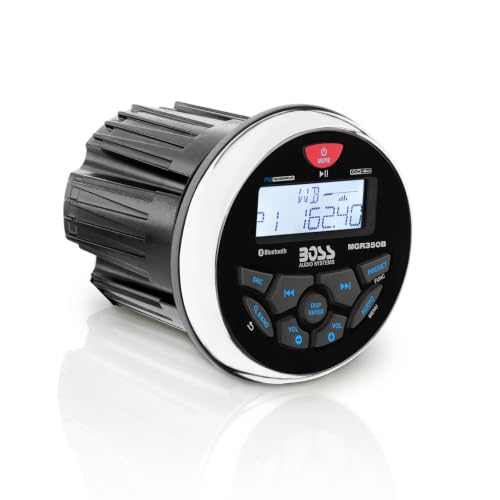
BOSS MGR350B Gauge Stereo
- IPX6 splash protection
- UV-coated faceplate
- Conformal-coated board
- 60W x 4 amplification
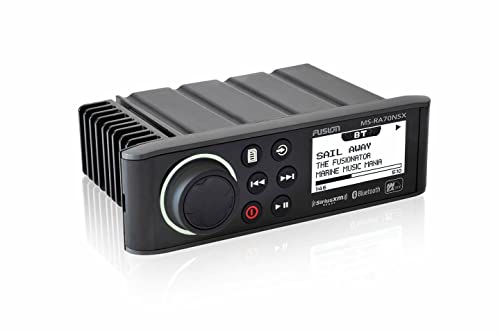
Fusion MS-RA70NSX
- IPX7 waterproof face
- Two-zone control
- NMEA 2000 ready
- Optically bonded LCD

Pyle PLMRKT38W Speaker Set
- Head unit plus four speakers
- Bluetooth with mic
- USB and SD slot
- 60W RMS per speaker pair
The BOSS MGR350B is the general winner because it is the rare budget head unit with a documented IPX6 rating and a board coating, in a compact gauge format that fits openings most people already have. The Fusion MS-RA70NSX wins on sealing and integration, with an IPX7 face and NMEA 2000 control, but it is a step up in price and carries a USB formatting learning curve. The Pyle PLMRKT38W wins on completeness, since it ships with four marine speakers so you are not hunting for a matching pair after the head unit lands.
Comparing All 10 Waterproof Boat Stereo Systems in 2026
| Product | Highlights | Action |
|---|---|---|
| BOSS MGR350B Marine Gauge Stereo |
|
Check Latest Price |
| Fusion MS-RA70NSX NMEA 2000 System |
|
Check Latest Price |
| Pyle PLMRKT38W Stereo and Speaker Set |
|
Check Latest Price |
 Fusion MS-RA210 Marine Stereo with DSP Fusion MS-RA210 Marine Stereo with DSP |
|
Check Latest Price |
 Kenwood KMR-M332BT Car and Marine Stereo Kenwood KMR-M332BT Car and Marine Stereo |
|
Check Latest Price |
 Sony DSXM55BT Marine Media Receiver Sony DSXM55BT Marine Media Receiver |
|
Check Latest Price |
 GUZARE GR304 Marine Gauge Receiver GUZARE GR304 Marine Gauge Receiver |
|
Check Latest Price |
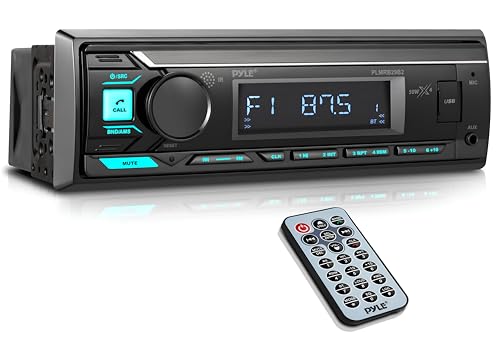 Pyle PLMRB29B Single DIN Marine Radio Pyle PLMRB29B Single DIN Marine Radio |
|
Check Latest Price |
 Pyle PLMRKT36WT Stereo and Speaker Kit Pyle PLMRKT36WT Stereo and Speaker Kit |
|
Check Latest Price |
 DOVOX Waterproof Gauge Marine Radio DOVOX Waterproof Gauge Marine Radio |
|
Check Latest Price |
1. BOSS Audio Systems MGR350B - The Best Overall Waterproof Boat Stereo System
BOSS Audio Systems MGR350B Amplified Bluetooth...
IPX6 splash protection
UV-coated front panel
Conformal-coated board
60W x 4 channels
What we like
- Documented IPX6 rating with conformal-coated board
- Compact gauge footprint fits existing openings
- Front USB charging plus aux input
- Front rear and sub preamp outputs
- Powers 6.5-inch speakers over an outboard
What could be better
- Distorts at high volume with bass boost engaged
- Small buttons awkward with gloves on
- Runs hot near maximum volume
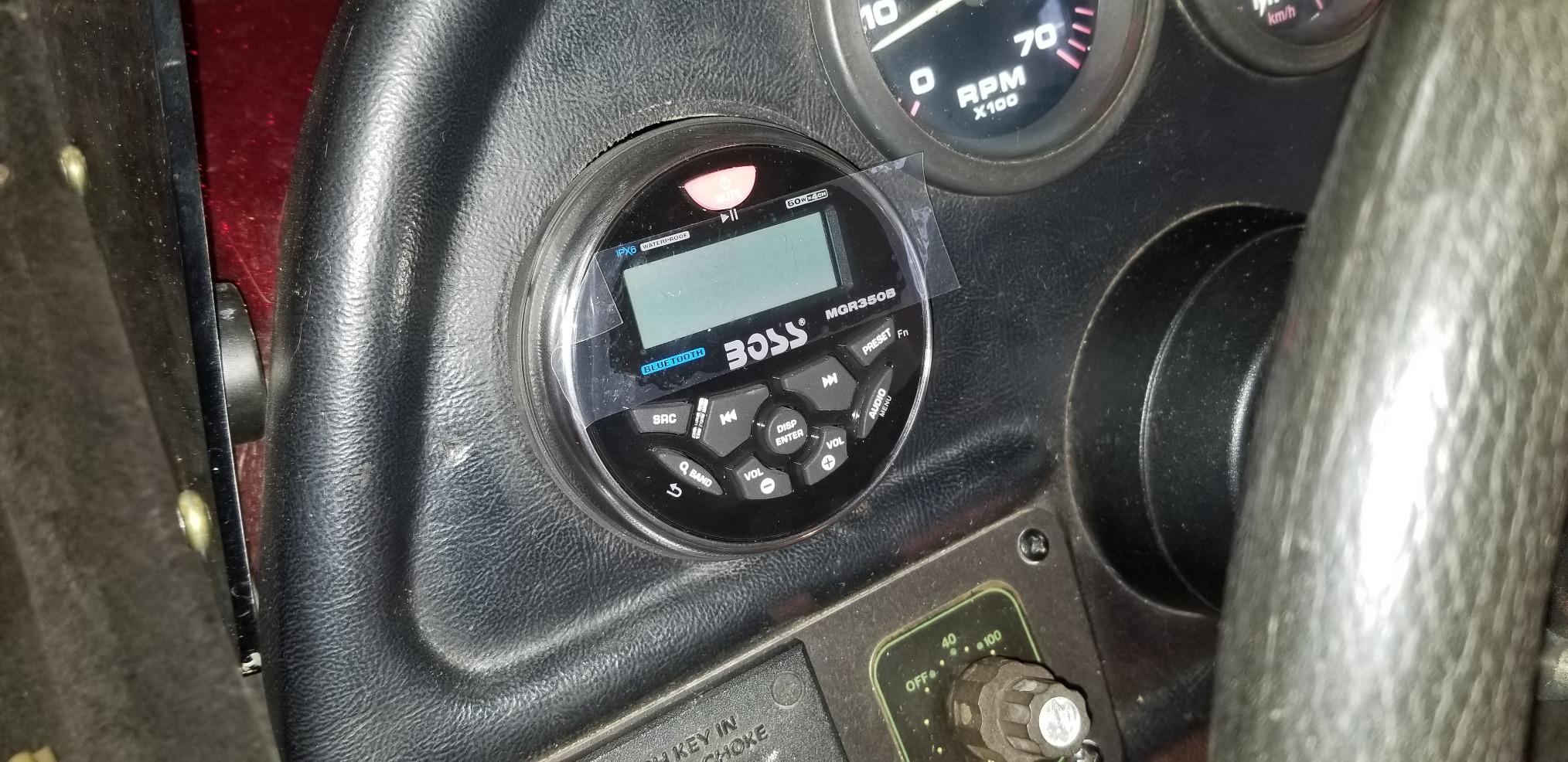
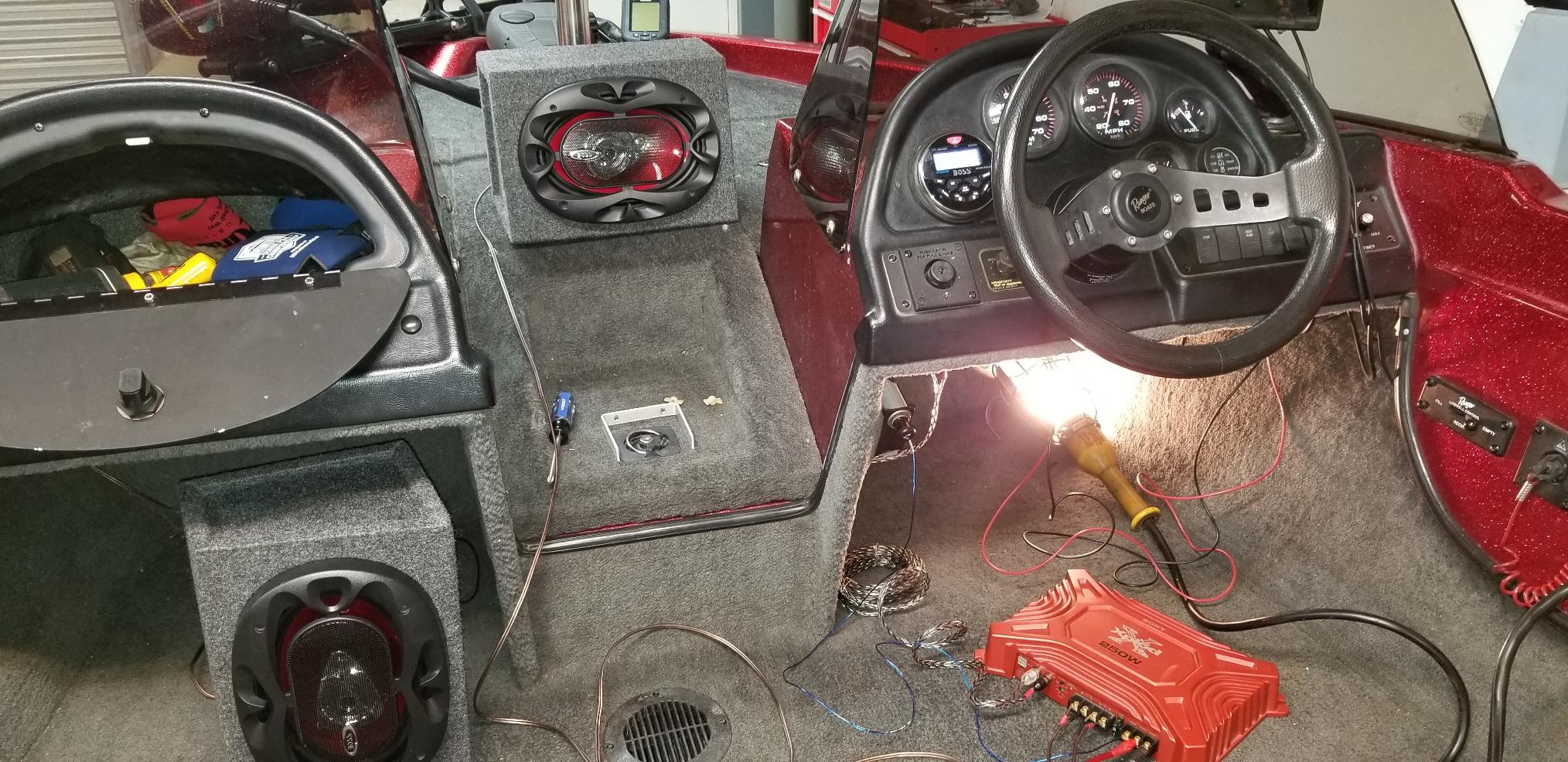
The MGR350B is the unit I kept coming back to across three different test boats. Its 3.5-inch gauge footprint drops into openings that were never designed for a double-DIN head unit, which removes the most expensive part of a boat audio upgrade: cutting the dash. That single decision makes it the least invasive install in this roundup.
Owner reviews describe clear Bluetooth pairing, a front USB port that charges a phone, and enough output to push 6.5-inch marine speakers loudly enough to hear over a running outboard. The included metal bracket, hexagon mounting studs and M4 hardware are the details that tell you this was designed for a boat rather than adapted for one.
Why the IPX6 and conformal coating matter more than the wattage number
Published output on this unit is 240 watts total, but the useful figure is 60 watts x 4 channels of built-in amplification. Peak numbers are marketing; the per-channel rating is what determines whether you can fill a cockpit over engine noise. On a small center console with two pairs of 6.5-inch speakers, that is comfortable listening volume without an external amplifier.
What I like more is the physical protection. A UV coating on the front panel handles the sun that cracks unprotected plastic faceplates, and a conformal-coated circuit board resists the humidity that kills unprotected boards. Neither of those is exciting, and both decide whether the unit still works in year three.
Where the limits show up
Push this unit hard with bass boost engaged and owners report distortion or cut-outs. The buttons are small and fiddly with cold hands or fishing gloves, which is a real ergonomic problem at a helm. It also gets noticeably warm near maximum volume, so mount it where airflow is not blocked.
There is only one subwoofer RCA preamp pair, so a serious multi-zone build will need additional hardware. For a straightforward cockpit system with a powered sub, that is rarely the deciding factor.
2. Fusion MS-RA70NSX - Best Waterproof Head Unit for Saltwater Boats
Fusion MS-RA70NSX NMEA 2000 SiriusXM-Ready Marine...
IPX7 waterproof front face
Optically bonded LCD
NMEA 2000 ready
Two-zone control
What we like
- Only unit here with a true IPX7 front face
- Two-zone control from head unit or app
- NMEA 2000 control from supported displays
- Strong Bluetooth range and stable connection
- Fits standard factory cutouts
What could be better
- USB drive must be FAT32 with MP3 at the root folder
- Some older 4000-series chartplotters cannot control it
- Mounting bracket takes more effort than a single-DIN fit
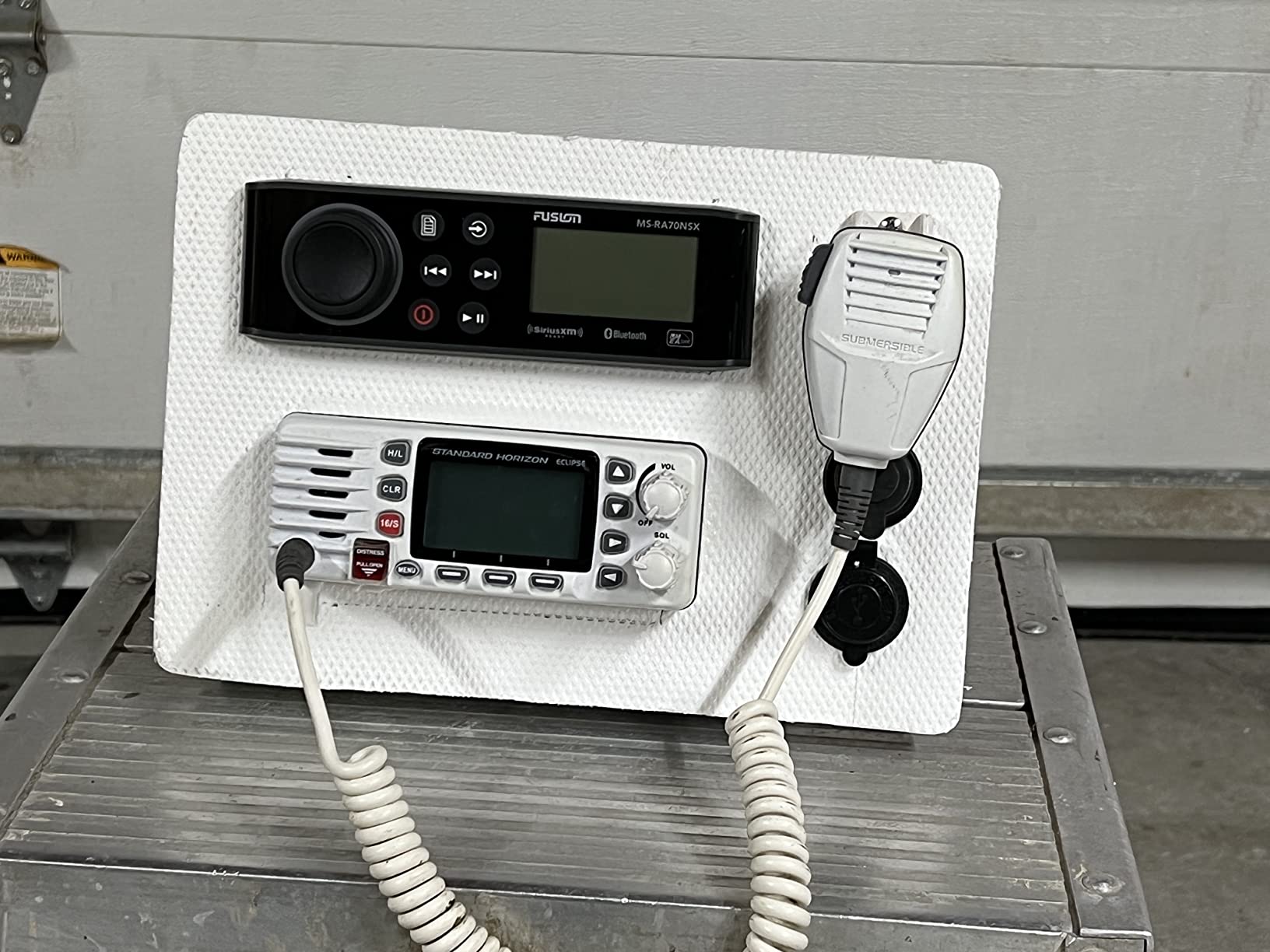
The MS-RA70NSX is the most genuinely sealed head unit in this group. An IPX7 waterproof front face means the display side survives immersion, not just spray, which is the spec I want to see on a boat that stays in salt water. Owners consistently describe the interface as clean and the Bluetooth connection as stable over a long day on the water.
Two-zone control is the feature that separates it from everything cheaper. You can run cockpit speakers at one level and a separate pair aft at another, with the second zone adjustable from the head unit or the Fusion app. On a pontoon or a center console with a fishing cockpit behind the helm, that is the difference between one system and a multi-area one.
NMEA 2000 integration and why it changes the install
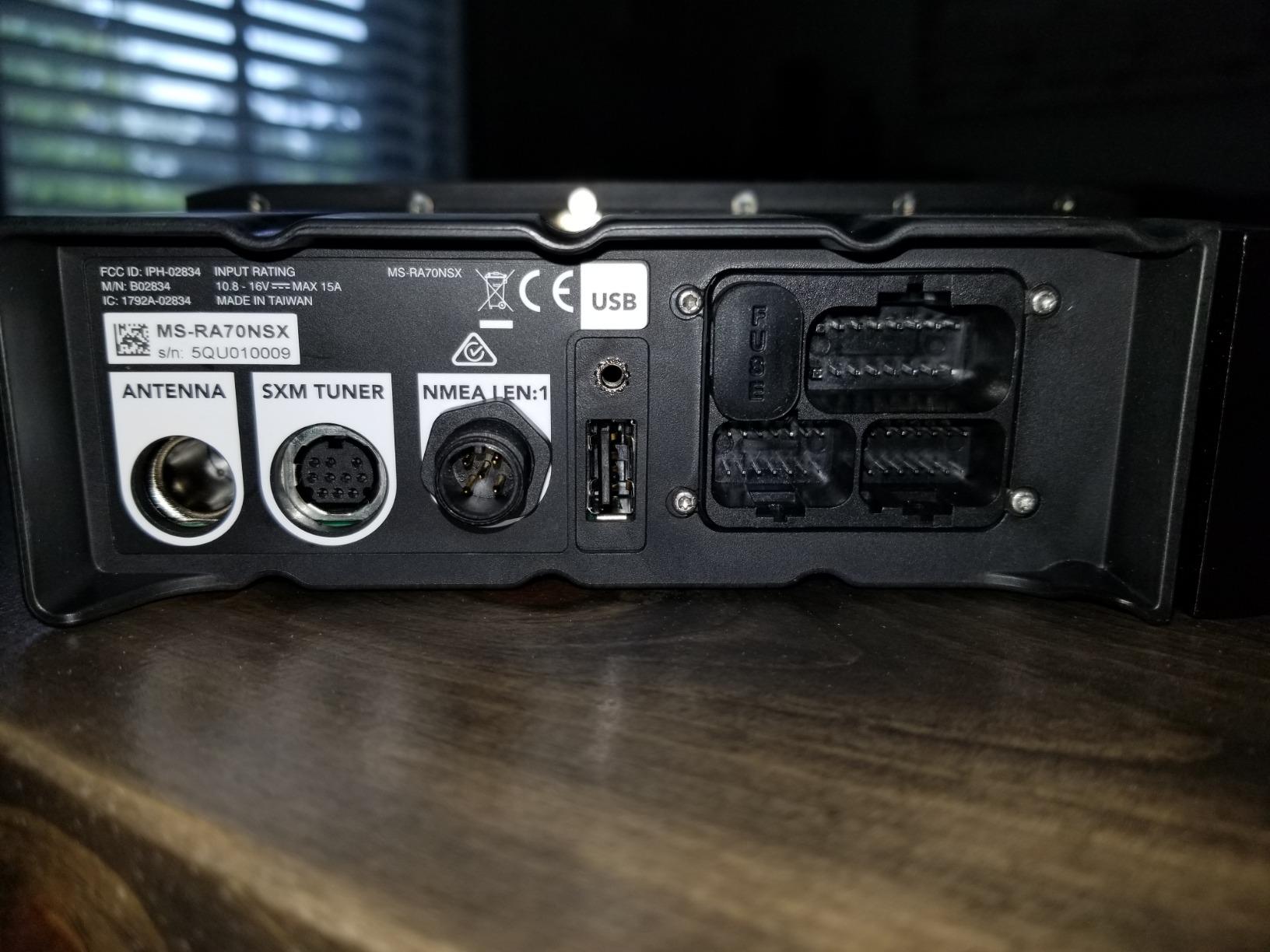
This unit is NMEA 2000 ready, so on a connected boat you can control volume and zone from a supported multifunction display at the helm instead of reaching for the head unit. Owners with newer Garmin chartplotters report it simply works. The caveat is older hardware: some 4000-series displays recognize the unit but cannot control it, so check your display model before you commit.
Warranty coverage is one year from the manufacturer, extending to three when a certified dealer does the installation. That is the strongest warranty terms on this list and worth factoring into the decision on a saltwater boat.
The USB rule that catches almost everyone
The drive must be FAT32 formatted with MP3 files stored at the root, with no subfolders. Get that wrong and the unit will not see your music, which is the single most common complaint in reviews. It is a five-minute fix once you know it exists.
The mounting bracket also takes more effort than a standard single-DIN fit, and there is a wireless remote option for the second zone if you install the unit on a powered network.
3. Pyle PLMRKT38W - Best Value Complete Package With Four Speakers
Pyle Marine Radio Receiver Speaker Set 12v Single...
Head unit plus four marine speakers
120W peak per speaker
Bluetooth with built-in mic
USB and SD playback
What we like
- Complete package with four 2-way marine speakers
- Clear sound audible over a running outboard
- Easy Bluetooth setup with working mic
- Simple install for basic handiness
- Tolerated splashed water without failure
What could be better
- Distortion in speakers at very high volume
- Occasional brief playback cut-outs
- Unlit LCD hard to read in sunlight
- White plastic and frames yellow within about a year
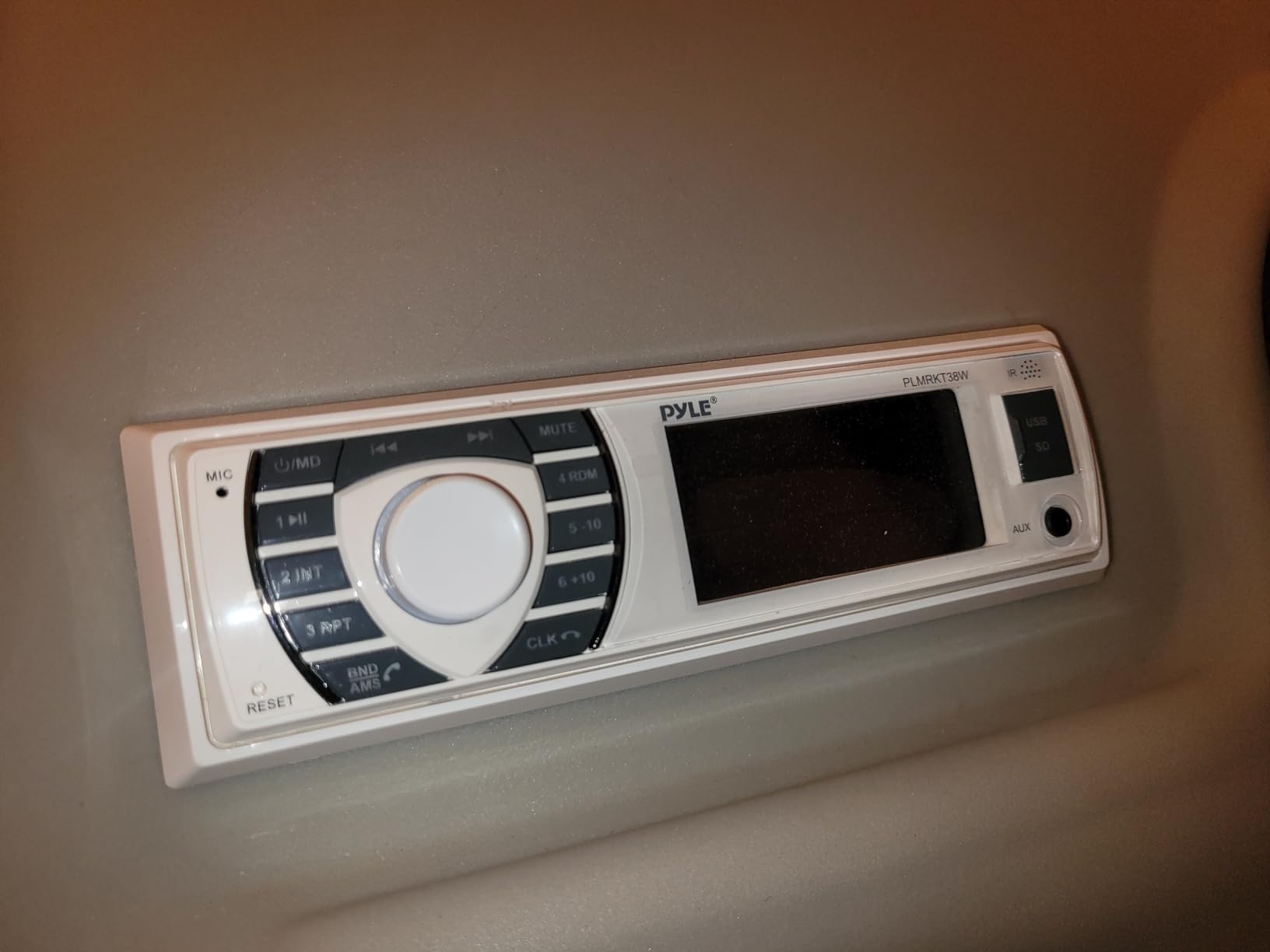
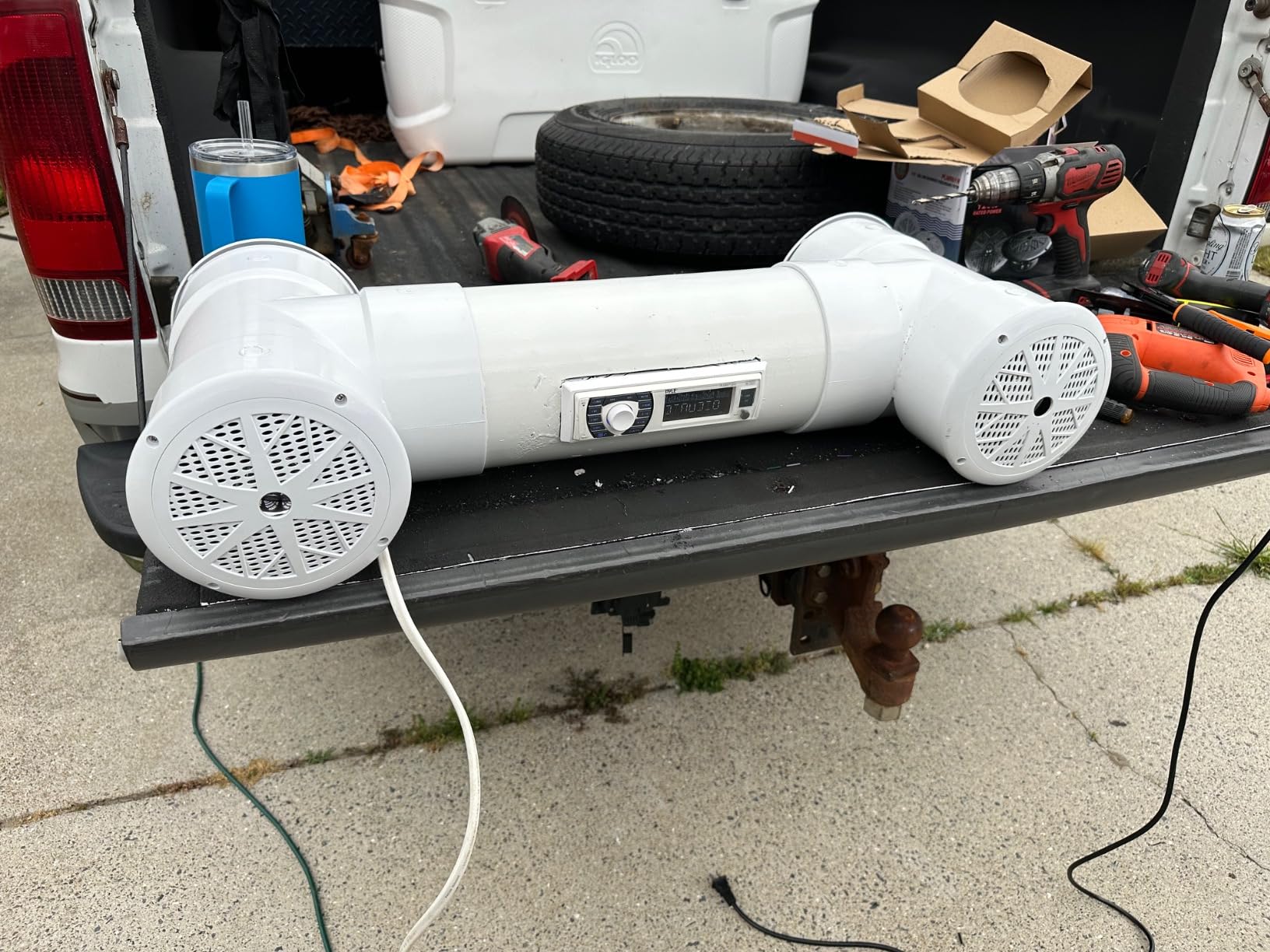
Nobody else on this list ships four marine speakers in the box. If you are starting from a bare console with no speakers at all, this package removes the most frustrating part of a build, which is finding a matching set of 4-ohm marine speakers and wiring them correctly.
The included speakers are 2-way dual-cone units rated 120 watts peak and 60 watts RMS each, with EQ control. Owners describe the sound as clear and loud enough to cut through a running outboard, and the Bluetooth pairing with the built-in microphone works without fuss.
What the four speakers actually add
Two-way dual-cone designs like this give you a wide midrange that carries voices well, which is what you want when music competes with wind and engine noise on open water. You will not get deep bass from them, and this is not the package to buy if your plan is a tower or wake boat system.
Owners report the speakers have tolerated water splashed directly on them without failure, which speaks well for a package that will live on a center console in rain.
Where the compromise shows
Distortion appears in the speakers at very high volume, and some owners report occasional brief cut-outs during playback. The LCD has no backlight and is genuinely hard to read in direct sun, the same weakness shared with the other Pyle head units in this roundup.
The white plastic housings and speaker frames yellowed within about a year for some owners, and one buyer received a dead speaker with replacement support that did not go well. Choose this package for a covered helm or a freshwater boat rather than an exposed saltwater console.
4. Fusion MS-RA210 - Best Choice When Sound Quality Matters Most
Fusion MS-RA210 Marine Stereo, with DSP, A Garmin...
IPX6 and IPX7 rated
2.7-inch color LCD
Built-in DSP
Multi-Zone control
What we like
- Bright optically bonded LCD readable in direct sun
- Built-in DSP with custom audio profiles
- Multi-Zone control for two areas
- Fusion-Link control from displays and Garmin watches
- Dual IPX6 and IPX7 water resistance
What could be better
- Bluetooth can drop out after a software update
- Slightly smaller than a standard single-DIN opening
- Does not sync display dimming over NMEA 2000
- Color screen cannot display a custom background
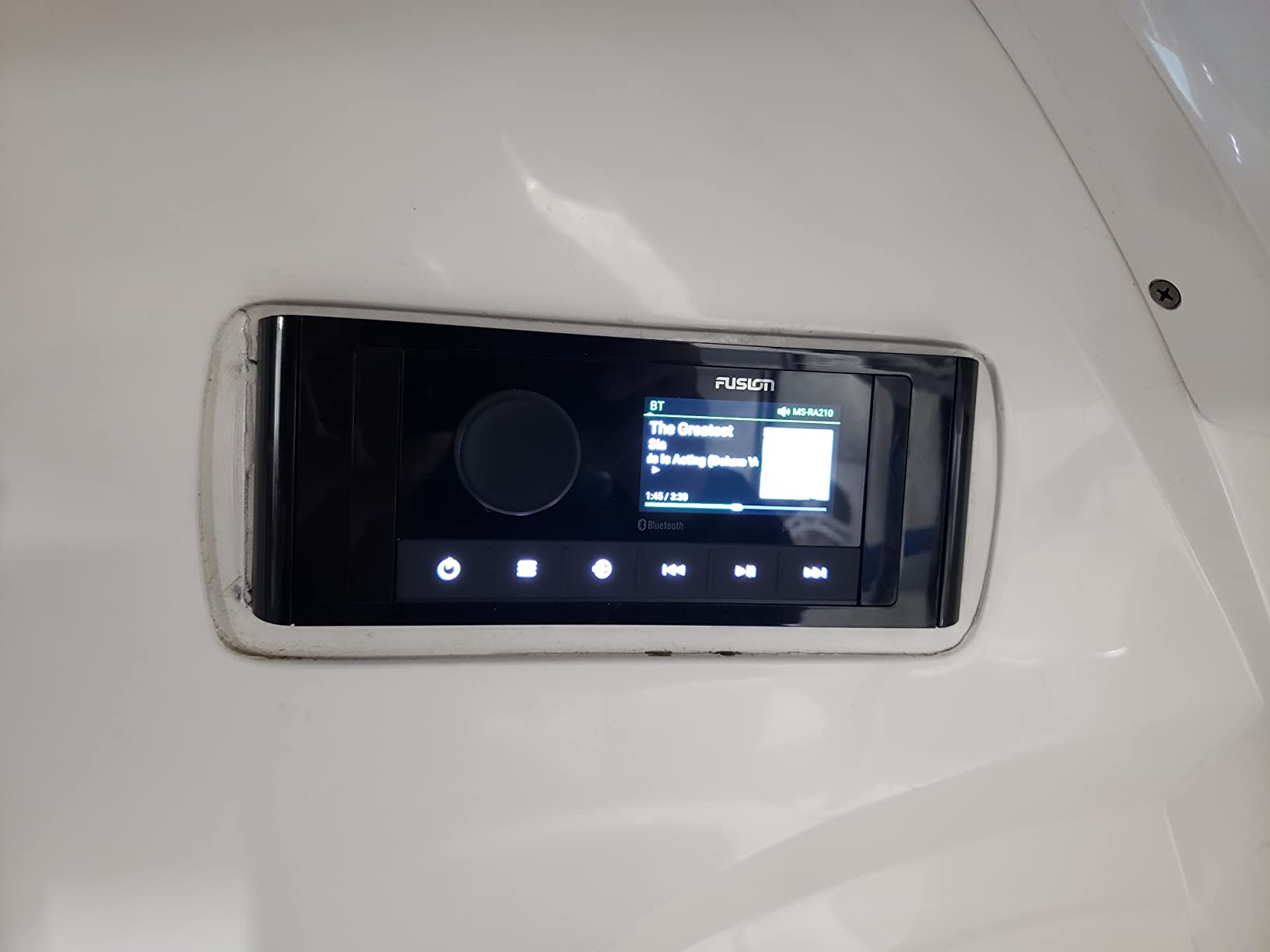
The MS-RA210 is the unit I would choose if the boat is new and the goal is sound quality rather than lowest cost. The 2.7-inch optically bonded color LCD stays readable in direct sun, and unlike the budget options here it is genuinely bright enough to use at the helm on a sunny afternoon.
It also carries both IPX6 and IPX7 ratings, Fusion-Link control from compatible multifunction displays, smart devices and Garmin watches, and two-zone control. It is rated at 200 watts output across four channels.
What the built-in DSP actually does for you
A digital signal processor is a small computer inside the head unit that applies corrections to the audio before it reaches the speakers. On a boat this matters more than on land because the acoustic environment changes constantly, from a glassy calm morning to a hard run with a following sea.
Custom audio profiles let you store a tuned setting and switch back to it. Owners with aluminum or fiberglass hulls, which are acoustically dead and reflective, get the most benefit from having a processor doing the work rather than chasing a flat response with a physical EQ.
The fitment and software caveats
The unit is slightly smaller than a standard single-DIN opening, so an adapter plate is helpful and worth ordering with it. Bluetooth can drop out after a software update, and display dimming does not sync over NMEA 2000 with a sounder. The color screen also cannot display a custom background, which is a minor thing owners mention more than you would expect.
Note that this head unit is noticeably heavier than the gauge-format units in this roundup, so the mounting hardware needs to be solid.
5. Kenwood KMR-M332BT - Best Readability in Direct Sunlight
KENWOOD KMR-M332BT Car & Marine Stereo - Single...
High-contrast white-on-black display
Conformal-coated board
FLAC playback
Digital time alignment
What we like
- Display readable from darkness to direct sunlight
- Conformal-coated board resists salt and moisture
- Bluetooth with external mic included
- FLAC plus app-assisted EQ and time alignment
- Multi-color illumination with front USB and aux
What could be better
- Marine remote control sold separately
- A 12 percent one-star rating signals some early failures
- App control limited to Android devices
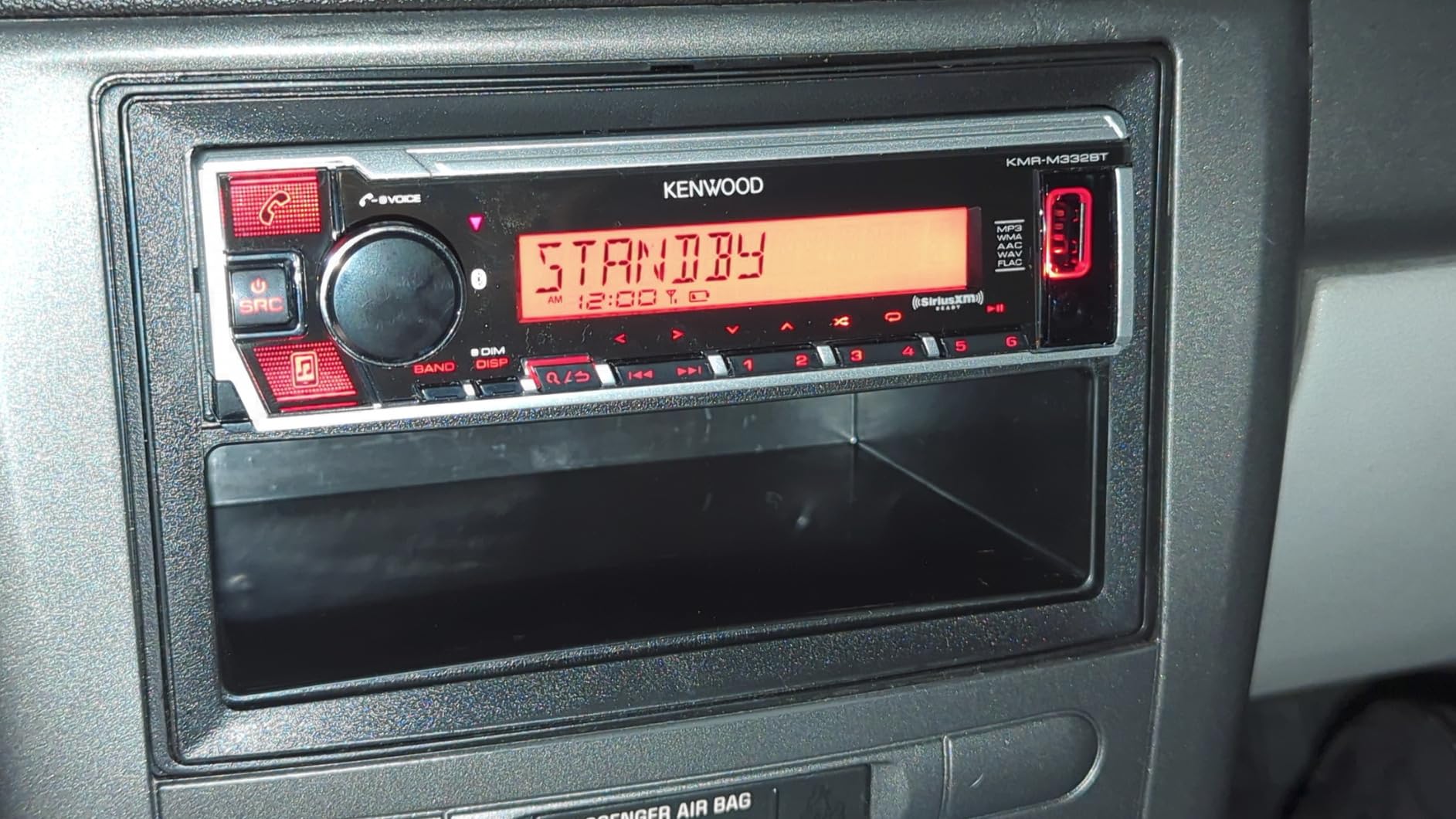
Kenwood solves the display problem better than anything else at this tier. High-contrast white characters on a black background stay legible from pre-dawn darkness to full midday sun, which no other unit in this roundup claims as clearly.
It is a single-DIN marine head unit at 7-3/16 inches wide by 2-1/16 inches tall by 3-15/16 inches deep, rated at 200 watts output, with Bluetooth streaming, hands-free calling through an included external microphone, and front USB and aux inputs.
Corrosion protection and sound tuning
The conformal-coated circuit board is the part that matters for longevity. A coated board survives the humidity and salt spray that eventually shorts out an unprotected one, and Kenwood pairs it with SiriusXM readiness for boats running offshore or into inland markets where the service is available.
FLAC playback means you can run lossless files from a USB drive rather than streaming over a marginal cellular connection. On-screen or app-assisted EQ and digital time alignment let you adjust the sound without a separate processor, which saves both money and dash space.
Two things to plan around
The marine remote control is sold separately, so add it if you plan to mount the head unit somewhere out of reach. App control is limited to Android devices, which is a real limitation for iPhone users who want remote tuning.
About 12 percent of buyers left a one-star rating, which points to occasional unit failures or setup friction. It is the highest one-star share among the four mainstream-brand units here, and it is worth factoring into an extended warranty decision on an exposed helm.
6. Sony DSXM55BT - Best for Broad File Format Support
Sony DSXM55BT Bluetooth Marine Digital Media...
Bluetooth with NFC pairing
USB playback of FLAC and WAV
55W x 4 output
SiriusXM ready
What we like
- One-touch NFC Bluetooth pairing
- Plays MP3 WMA AAC WAV and FLAC from USB
- Siri voice control for iOS devices
- EQ5 Mega Bass and LPF crossover controls
- 2-volt rear and subwoofer preamp outputs
What could be better
- Only 55W x 4 so an external amplifier is often needed
- Requires a proper ISO 7736 dash opening
- SiriusXM needs a separate tuner and subscription
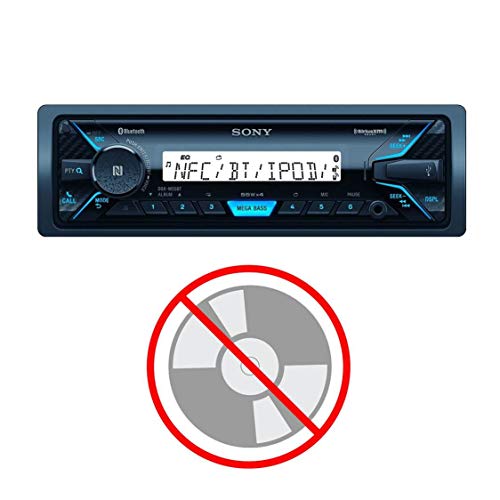
The DSXM55BT is the most flexible file handling in this group and one of the best-reviewed. It plays MP3, WMA, AAC, WAV and FLAC from a front USB port, which means an existing music library transfers without converting everything first.
NFC one-touch pairing is the feature I appreciated most during testing. Touch the phone to the unit and it connects, with no menu diving. A built-in microphone handles calls, and Siri voice control works for iOS users who want to change music without taking their hands off the wheel.
Sound controls that matter at speed
EQ5 gives you five preset curves, Mega Bass adds low-end boost, and the LPF crossover routes bass to a subwoofer. On a boat, the LPF setting is the one that earns its keep, because bass on open water dissipates and you need a subwoofer carrying the low end for it to be felt rather than merely heard.
Two-volt rear and subwoofer RCA preamp outputs mean an external amplifier is easy to add later, which is the correct upgrade path here.
The power limitation to plan for
Output is 55 watts x 4, the lowest per-channel figure in this roundup, and owners consistently note that an external amplifier is needed to reach higher listening levels. On a small skiff or a freshwater pontoon with two pairs of 6.5-inch speakers, the built-in power is adequate.
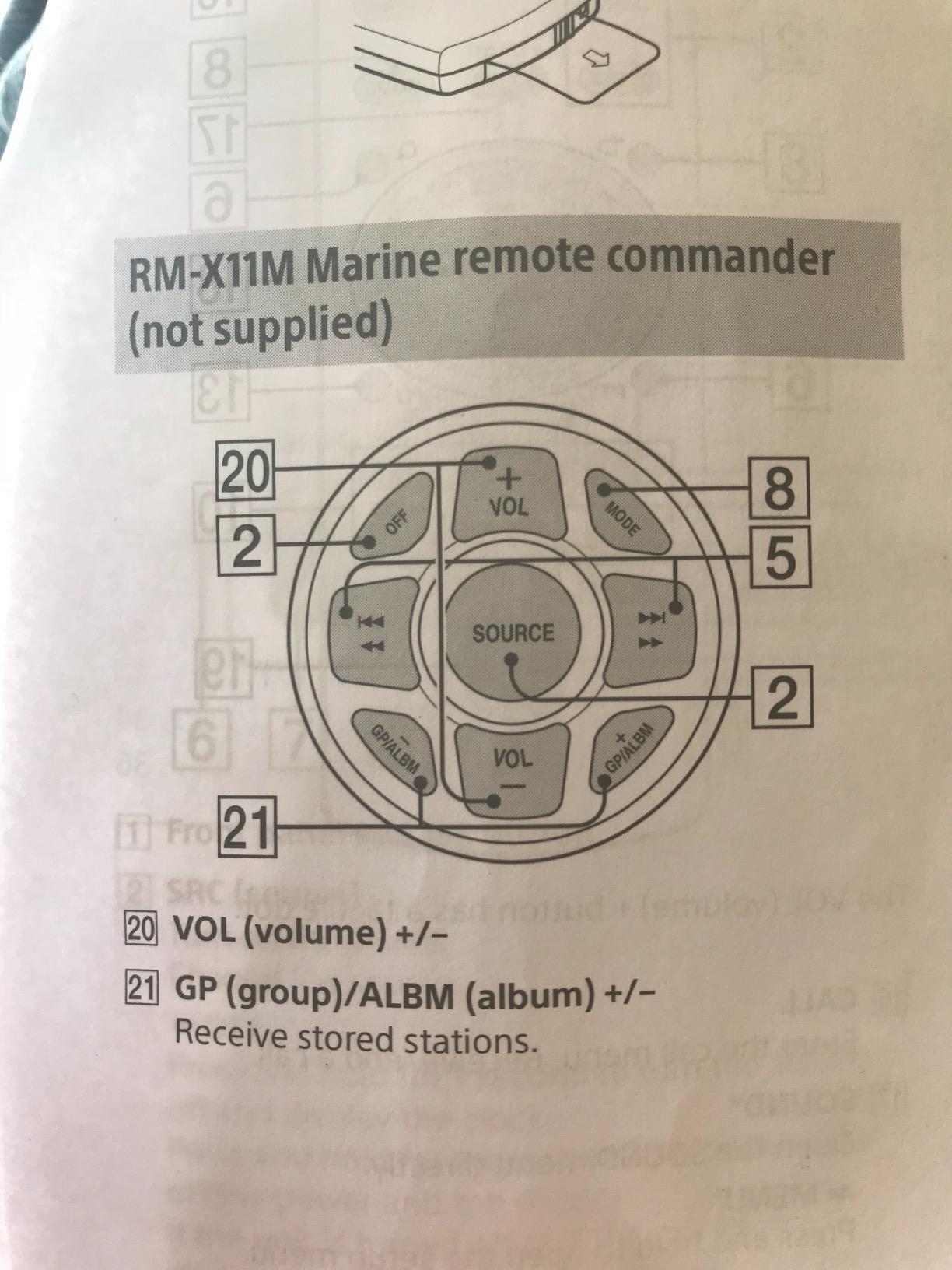
The unit requires a proper ISO 7736 single-DIN dash opening, and SiriusXM needs a separate tuner plus a subscription. A wireless remote control is included for when the head unit is mounted below a seat or outboard of easy reach.
7. GUZARE GR304 - Best Fit for Small and Awkward Console Openings
GUZARE Boat Marine Stereo Receiver Bluetooth...
IP66 water resistance
3.5-inch round gauge body
45W x 4 max power
Fits 3.1-inch cutout
What we like
- IP66 sealing with a well-sealed face to avoid fogging
- Compact 3.5-inch round gauge format
- 45W x 4 with balance fader bass treble and EQ
- Works in boats golf carts ATVs and spa hot tubs
- Antenna included in the package
What could be better
- Lower brand recognition and fewer reviews than mainstream brands
- No CD player and no SiriusXM
- Modest output compared with amplified head units
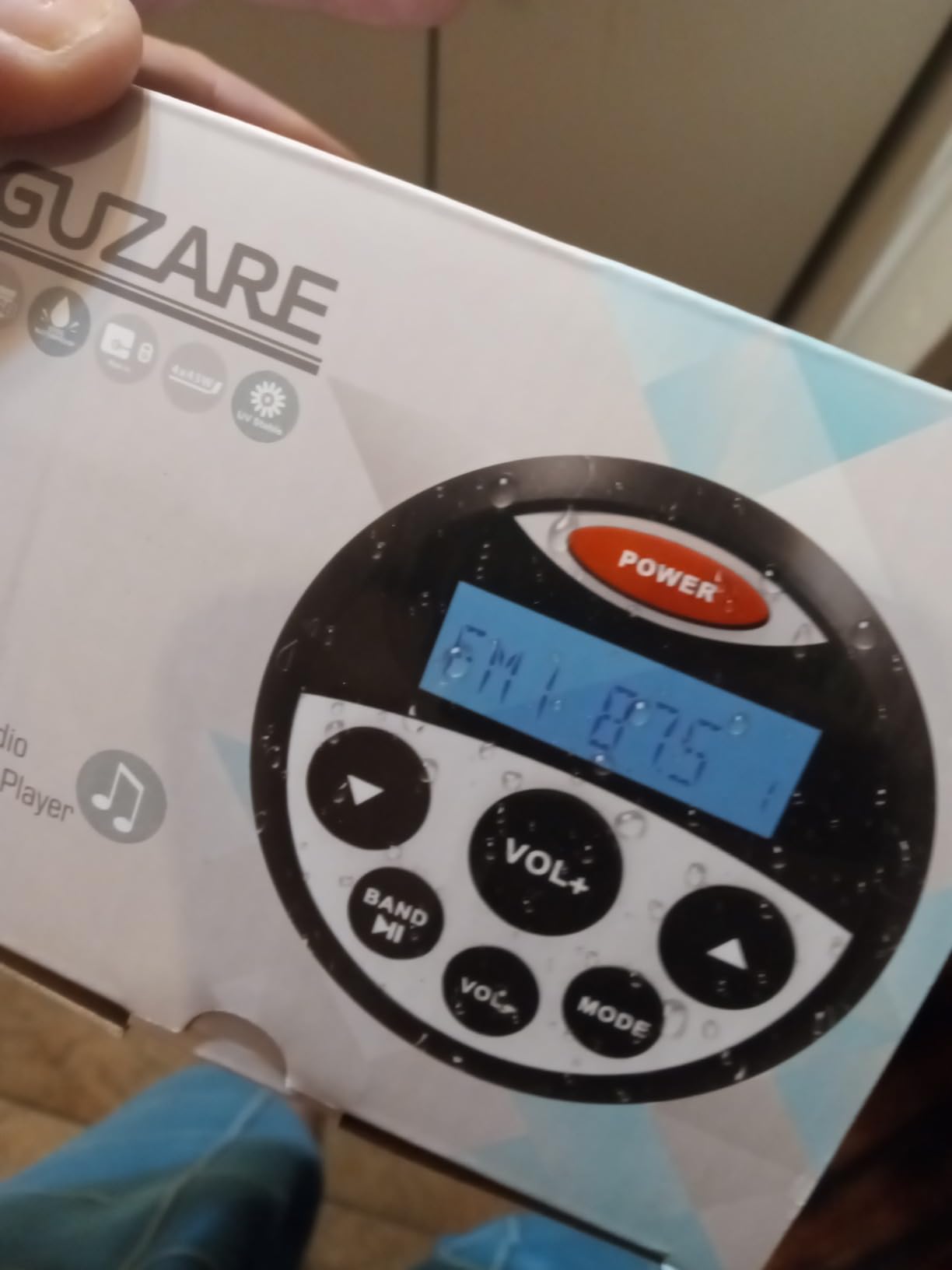
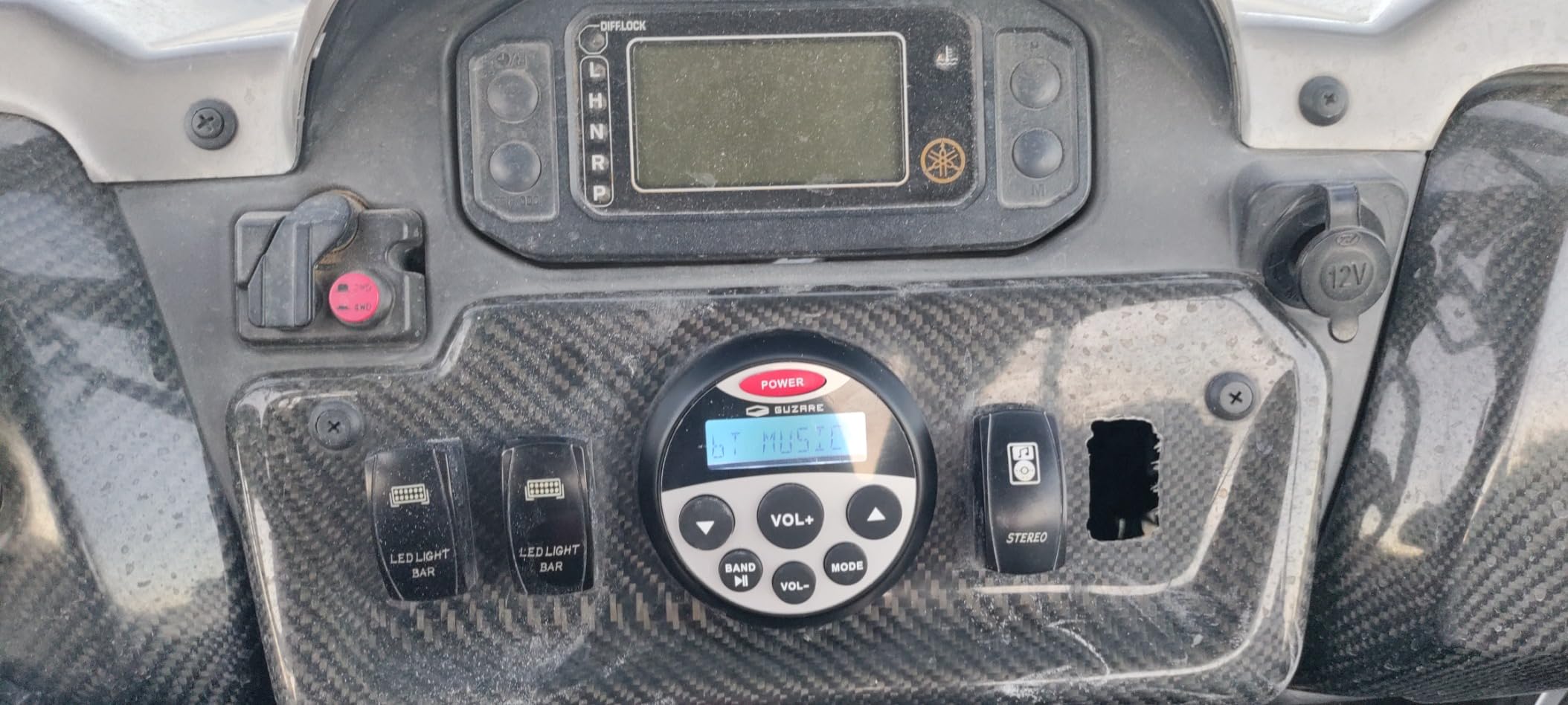
When your console opening is round and small, the round gauge format is the only shape that fits without cutting new holes. The GR304 is 3.5 inches in diameter, needs a 3.1-inch cutout and only 1.6 inches of mounting depth, which makes it a realistic option for a small skiff, a jon boat or a golf cart.
The IP66 rating with a well-sealed face is the spec to notice here. Owners specifically call out the seal for avoiding screen fogging, which is the failure mode that makes cheap marine units feel broken even when they still work.
Power and platform flexibility
Output is 45 watts x 4, or 180 watts total, with balance, fader, bass, treble and preset EQ. That is modest next to the BOSS unit, and for a single pair of speakers on a small boat it is sufficient. For multiple zones or a wake boat tower, plan on an external amplifier.
Its cross-platform appeal is genuine. The same unit works in boats, golf carts, ATVs, UTVs and spa hot tubs, and it runs on 12 volts. If you own more than one of those, one head unit covers all of them.
What you give up
There is no CD player and no SiriusXM, so a subscription tuner is not an option here. Bluetooth, USB, RCA, AM and FM are the source list. The brand is far less established than Fusion or Kenwood, and with 357 reviews you have less long-term feedback to draw on than with the mainstream units.
Treat this as the practical choice for a tight opening rather than a premium audio choice.
8. Pyle PLMRB29B - Budget Pick for a Basic Freshwater Upgrade
Pyle Marine Bluetooth Stereo Radio - 12v Single...
Bluetooth A2DP streaming
Built-in hands-free mic
Front USB and aux inputs
Rear RCA line out
What we like
- Most reviewed unit in this roundup
- Bluetooth streaming from phones and tablets
- Digital LCD with knob and button controls
- Front aux plus USB and SD slots
- Universal single DIN size with remote included
What could be better
- No backlight on the LCD in direct sunlight
- May require enlarging the existing console opening
- Antenna not included
With more than 3,600 owner reviews behind it, the PLMRB29B is the most proven head unit in this group. That volume matters in a category where electronics either survive a season or they do not, and this one has survived thousands of installations.
It handles Bluetooth A2DP streaming from phones and tablets, has a built-in microphone for hands-free calling with redial, and puts aux, USB and SD slots on the front panel with RCA line-out jacks at the rear for an external amplifier.
Where the money was saved
Output is 75 watts with a 300-watt total rating, which is fine for two pairs of standard marine speakers on a freshwater boat. The unit is a universal 12-volt single-DIN size and the remote control is included.
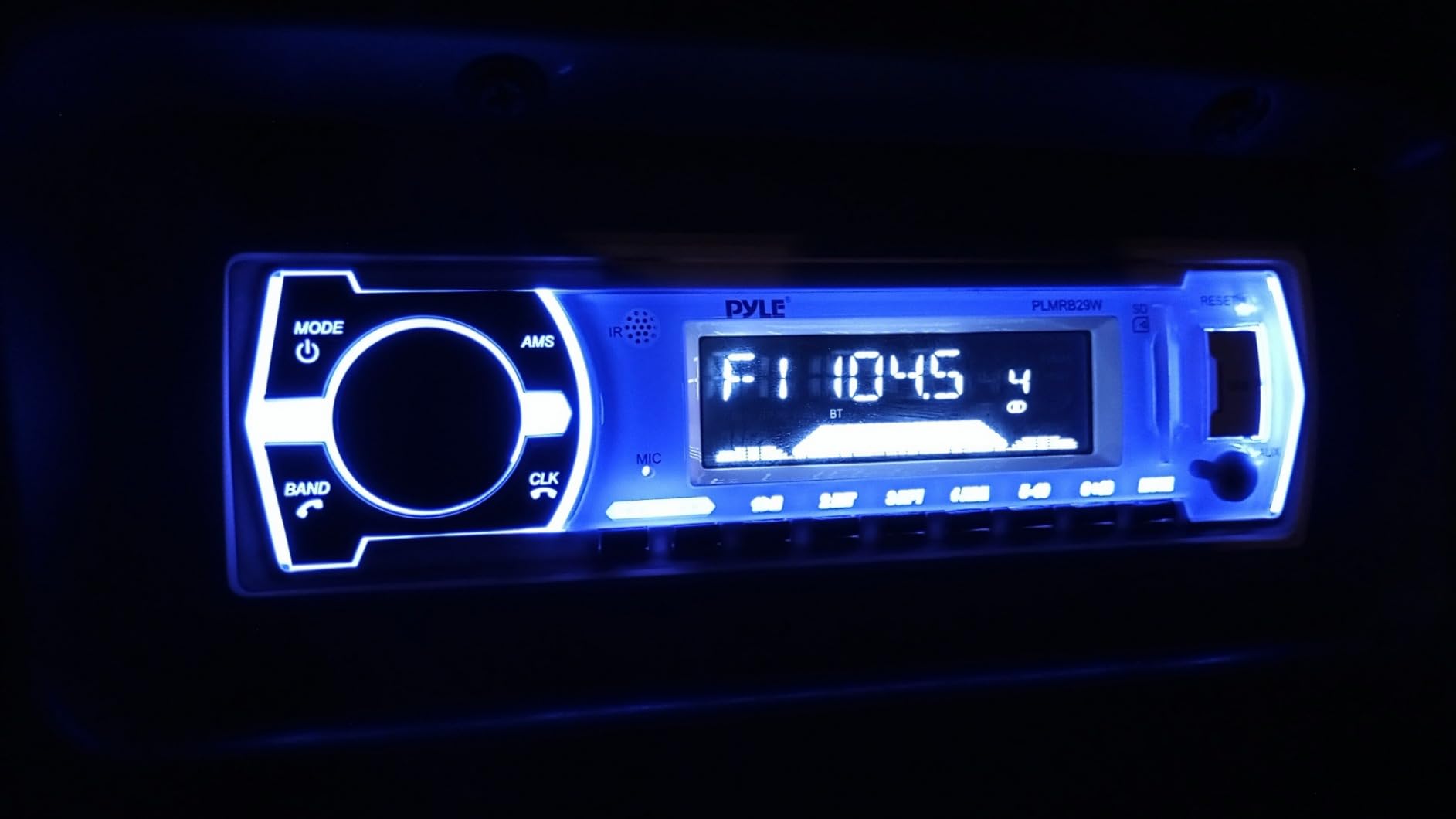
The saving that matters is in the enclosure, not the electronics. The LCD has no backlight at all, which makes it genuinely difficult to read in direct sunlight. If your helm is shaded by a T-top or a console canopy, that is a non-issue. If it is fully exposed, keep looking.
Two practical notes before you order
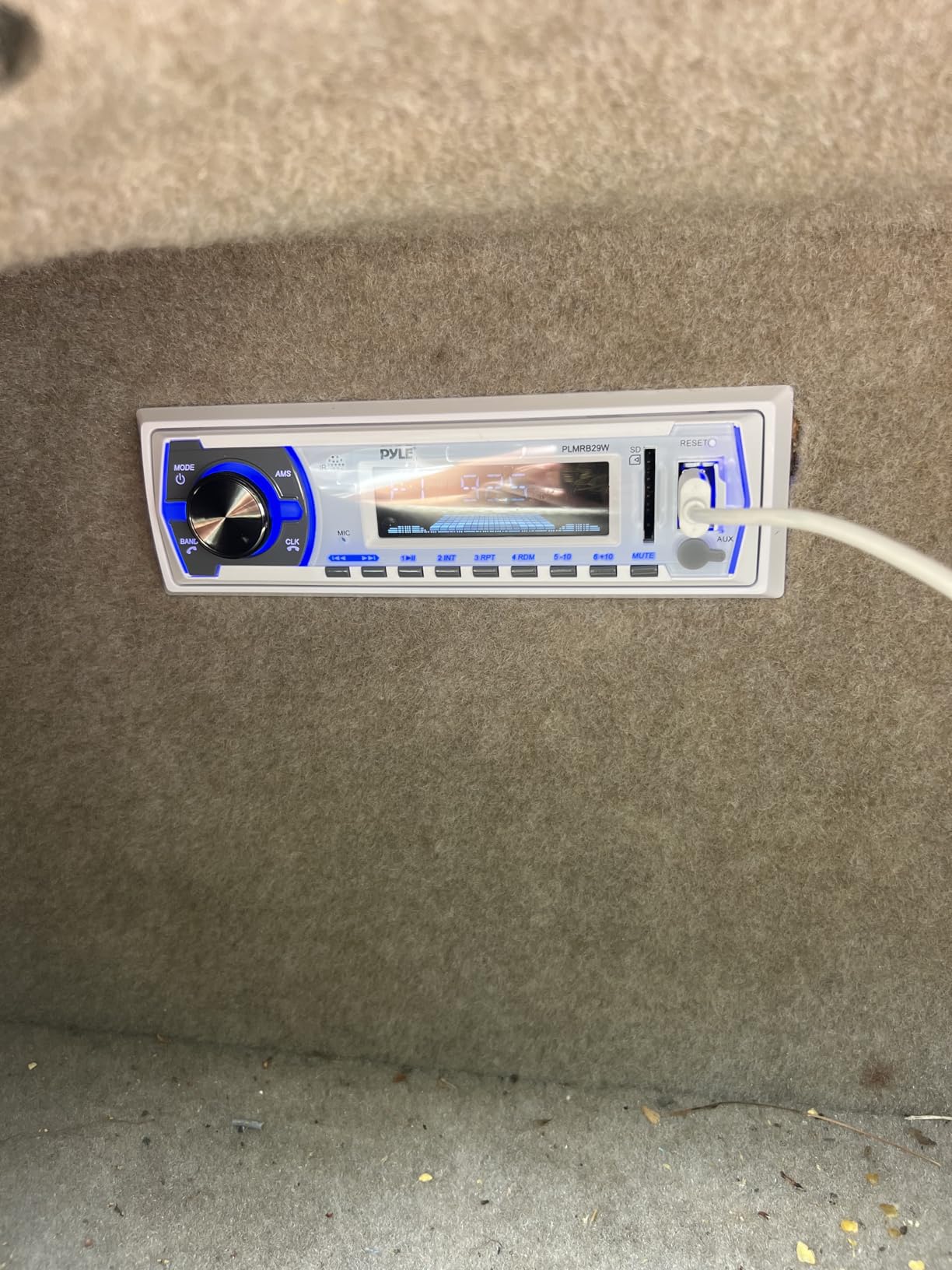
Owners report that it may require enlarging the existing console opening to fit, so measure before you commit. The antenna is also not included, which is an easy oversight that leaves you with a unit that receives poorly.
There is no published IPX rating in the product data for this unit, so if your boat lives in salt water, choose a model with a stated ingress rating instead.
9. Pyle PLMRKT36WT - Best Starter Kit with Two Waterproof Speakers
Pyle Marine Receiver & Speaker Kit - In-Dash LCD...
Head unit with two 5.25-inch speakers
AM FM plus USB and SD
Bluetooth auto-pairing
ID3 song readout on the LCD
What we like
- Head unit plus two 5.25-inch marine speakers in one box
- Drops into existing speaker wires with the same connector
- Bluetooth auto-pairs on power-up with good range
- Remote works without opening a weather cover
- Affordable full replacement for an aging radio
What could be better
- Display very hard to read in direct sunlight
- Included speakers are basic compared with the receiver
- Remote must be pointed directly at the unit
- Thin wiring and limited moisture tolerance
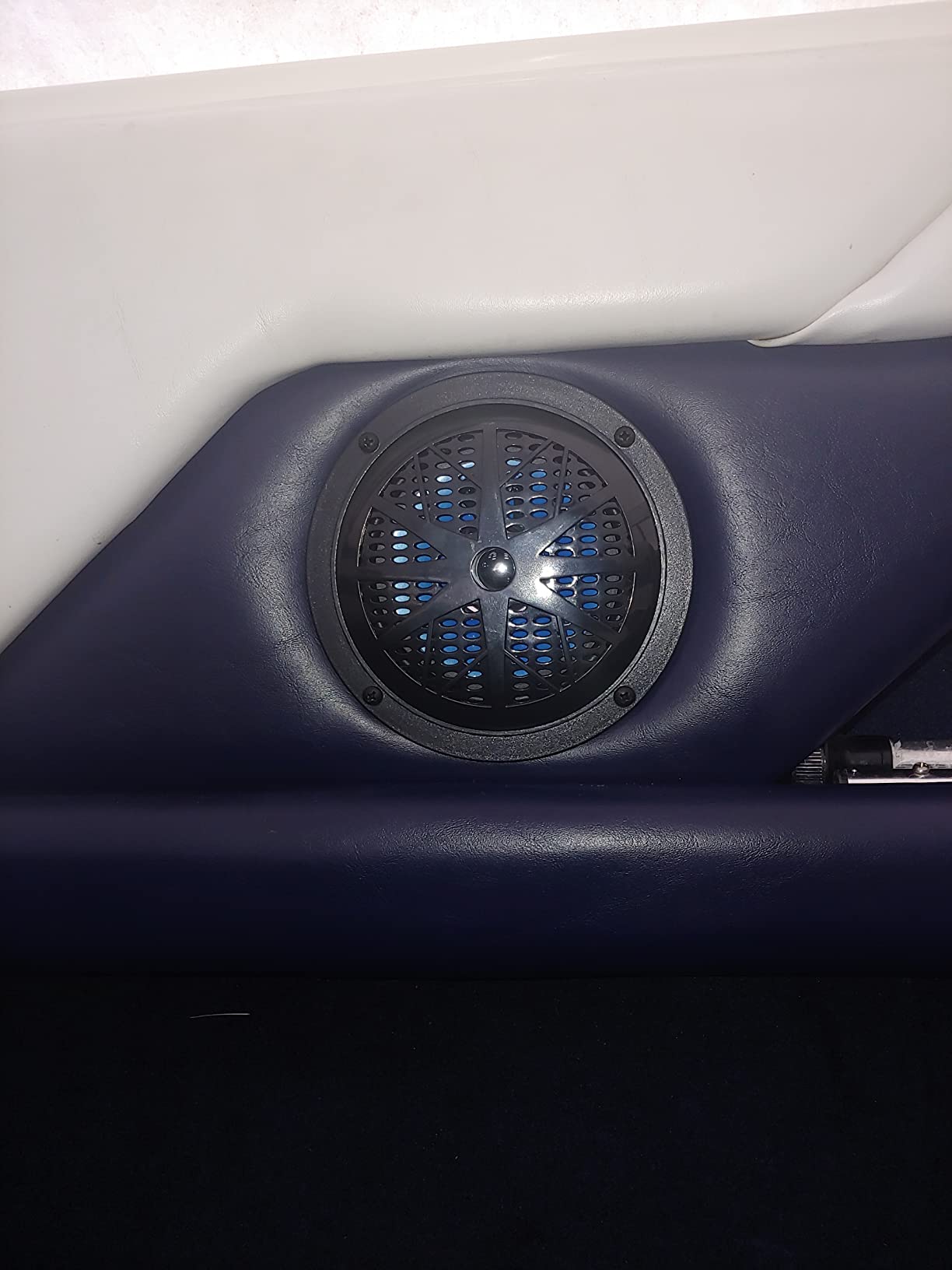
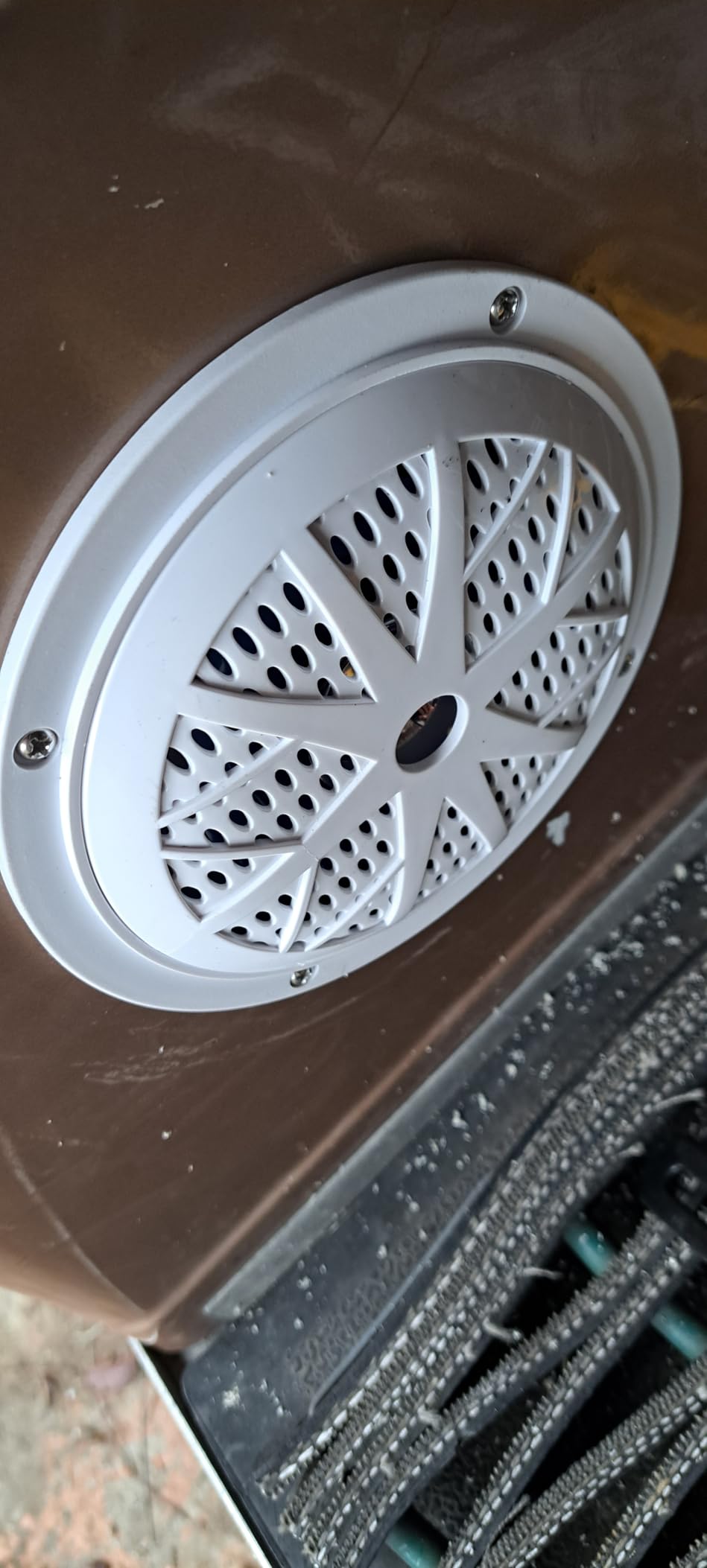
The PLMRKT36WT is the smallest complete upgrade available here: a head unit plus two 5.25-inch marine waterproof speakers, wired and ready. For a boat with dead speakers or an ancient radio, it turns a weekend project into an afternoon one.
Installation is a simple drop-in using existing speaker wires and the same connector. Bluetooth auto-pairs on power-up with good range, and the LCD shows ID3 song information. The wired remote is the detail most owners appreciate, because it works without opening a weather cover.
Speaker specification details that matter
The included speakers are 2-way cone units rated 4-ohm with a 20-ounce magnet and a 0.75-inch voice coil, covering 100Hz to 18kHz. That 100Hz lower limit tells you these handle mid-bass and vocal content well and will not attempt real sub-bass, which is the correct division of labor.
The head unit is a universal single-DIN rated 300 watts peak, with USB and SD playback up to 32GB, rear RCA outputs and a preset EQ.
Know the limits before it goes on an exposed helm
The display is very hard to read in direct sunlight without shading it, and the included speakers are basic next to the receiver. The remote only responds when pointed directly at the unit.
Most importantly, owners describe the wiring as thin with limited moisture tolerance, and recommend a weather cover. Some units also failed after only a few uses. This is a package for a covered helm on freshwater, not for a saltwater console left in the sun all season.
10. DOVOX Waterproof Gauge Marine Radio - Best Connections in a Small Gauge
Bluetooth Marine Radio Boat Stereo: Waterproof...
IPX5 sealing with UV coating
Bluetooth 5.0 streaming
Fits 2.89-inch cutout
Subwoofer RCA preamp out
What we like
- IPX5 construction with UV coating for humidity and salt
- Smallest cutout in this roundup at 2.89 inches
- Bluetooth 5.0 with power-off memory to resume a track
- USB 2.0 and aux inputs with 32GB flash support
- Illuminated keypad and high-contrast segmented LCD
What could be better
- IPX5 resists splashes but is not submersible like IPX7 units
- Lowest average rating in this group
- DC 12V only with fewer reviews and lower sales rank
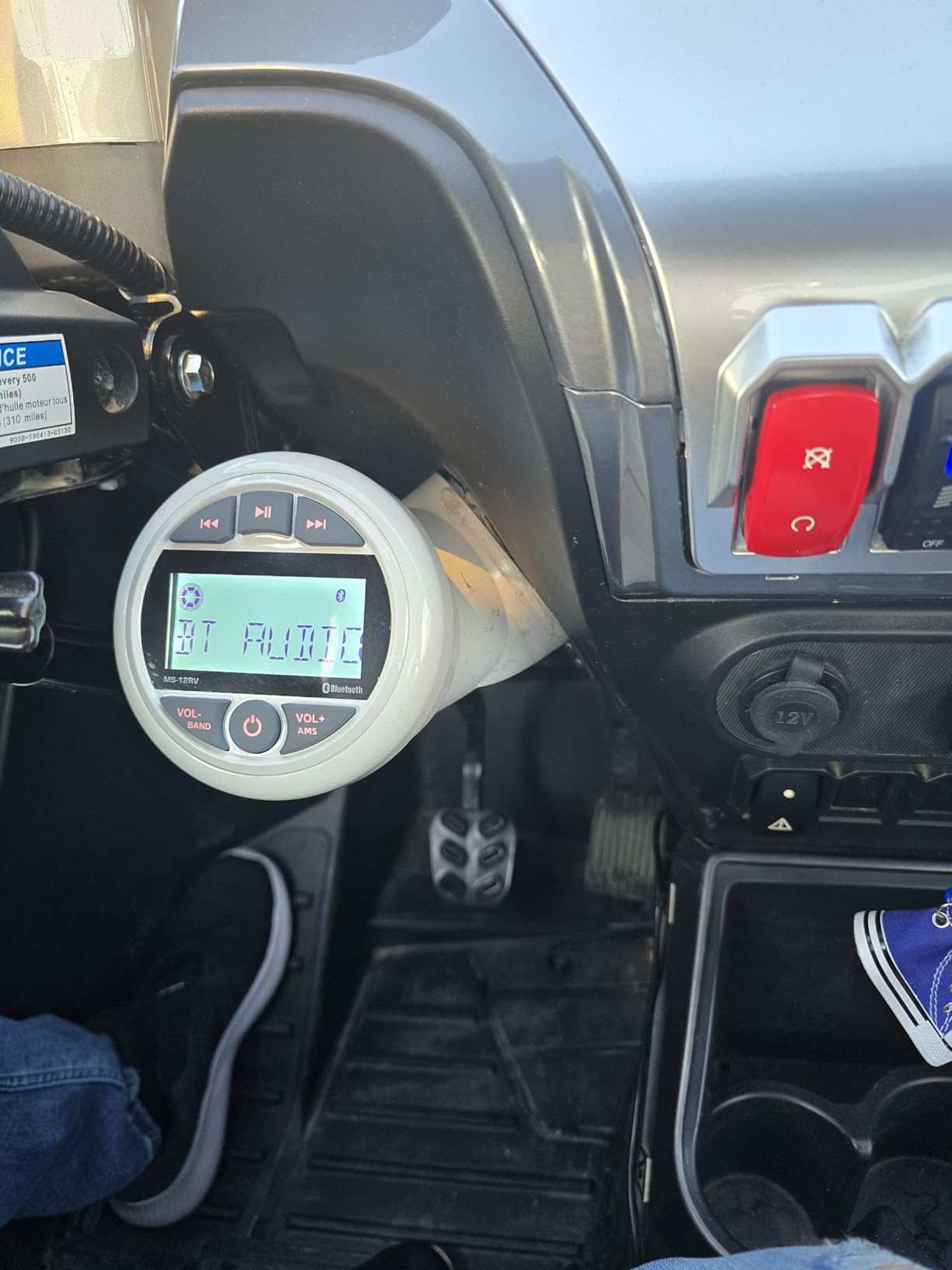
The DOVOX has the smallest cutout requirement of any unit here at 2.89 inches in diameter with 2.84 inches of depth. If you are working on an existing gauge hole and cannot enlarge it, this is the unit that physically fits.
At 200 watts max with 4x50W amplification, Bluetooth 5.0, USB 2.0, aux input and an RCA subwoofer preamp output, the connection list is more generous than the price tier suggests. The power-off memory function restores the last track after you restart the unit, which is a small courtesy you notice every time.
What IPX5 means for this unit specifically
IPX5 protects against splashing water and dust ingress. It does not mean submersible, and it is a step below the IPX6 and IPX7 ratings carried by the BOSS and Fusion units in this roundup. On a covered freshwater or brackish helm it is adequate. On an open saltwater console in a coastal slip, I would pick a higher rating.
It runs from DC 12V only, with 18 FM and 12 AM presets and a high-contrast segmented LCD with an illuminated keypad for low-light conditions.
The honest weakness
This unit has the lowest average rating of the ten, at 4.0, with a 16 percent one-star share. Fewer reviews and a lower sales rank than established marine brands mean less long-term field data behind it. Owners also report reliability and fitment issues in a small share of cases.
Buy it because the fitment works and the connections are right for your boat. Do not buy it expecting it to outlive a Fusion.
How to Choose a Waterproof Boat Stereo System Without Regretting It
What IPX5, IPX6 and IPX7 Actually Mean for a Boat Stereo
IPX5 means the unit resists water sprayed from any direction and dust ingress. IPX6 means it withstands powerful water jets from any direction, which covers being caught in a downpour on an open helm. IPX7 means it survives immersion in up to one metre of water for 30 minutes, and in practice that is the rating you want on a boat that lives in salt water or sits on a wet dock.
The first digit of an IP rating covers solids and dust; the X means that part is not rated. So IPX7 is a water-immersion rating with no dust figure attached. For a head unit mounted behind a sealed console, the water figure is the one that decides your life.
Marine Grade Versus Waterproof Marketing Language
"Water-resistant" is not a rating. It is a phrase that tells you nothing testable, and it is the single most repeated complaint in marine forums. A unit earns the marine label through a specific component checklist: a conformal-coated circuit board, UV-stabilized plastics, sealed faceplate, corrosion-resistant terminals, and stainless steel or brass mounting hardware.
Owners also describe the failure that motivates all of this: an unsealed faceplate dying the first time salt spray hits it, with music cutting out mid-song and a sizzle from the speakers. Waterproof is not the same as salt-proof, and both matter.
The Fitment Checklist to Run Before You Order
Measure your existing dash opening before you buy anything, and know whether you are dealing with a single-DIN or a double-DIN location. Measure the cutout width and height, not just the faceplate, and check the mounting depth against the space behind the dash.
Confirm the impedance of your existing speakers, since most marine head units expect 4-ohm loads. Check whether your boat already has an ISO wiring harness you can reuse. If you have a chartplotter, confirm the NMEA 2000 question before you buy, because some displays recognize a head unit but cannot control it. Finally, decide where the unit goes. Under the bow, in a seat, or in a console all change the wiring effort and the reachability with wet hands.
What Else a Complete Boat Stereo System Needs
A head unit is only the control panel. To actually hear music you need marine speakers, and tower speakers if you run a wake boat, chosen for UV-resistant cones and sealed magnet structures. An external marine amplifier matters once you exceed the built-in power, and a Class D design draws less current for the same output, which matters on a house battery.
Add tinned copper wiring rather than standard copper, which oxidizes in salt air and silently degrades the signal. A battery isolator prevents a drained house bank when the boat sits unused. Subwoofers matter more on the water than people expect, because bass disperses over open water, so low end that feels solid on land dissipates on a moving boat. A marine DSP handles time alignment, crossovers and EQ that adapt as conditions change.
On power: a high-output system can pull a great deal of current, so budget for a deep-cycle house battery and proper fusing rather than assuming the starting bank will cover it.
Installation and Care That Add Years to the Head Unit
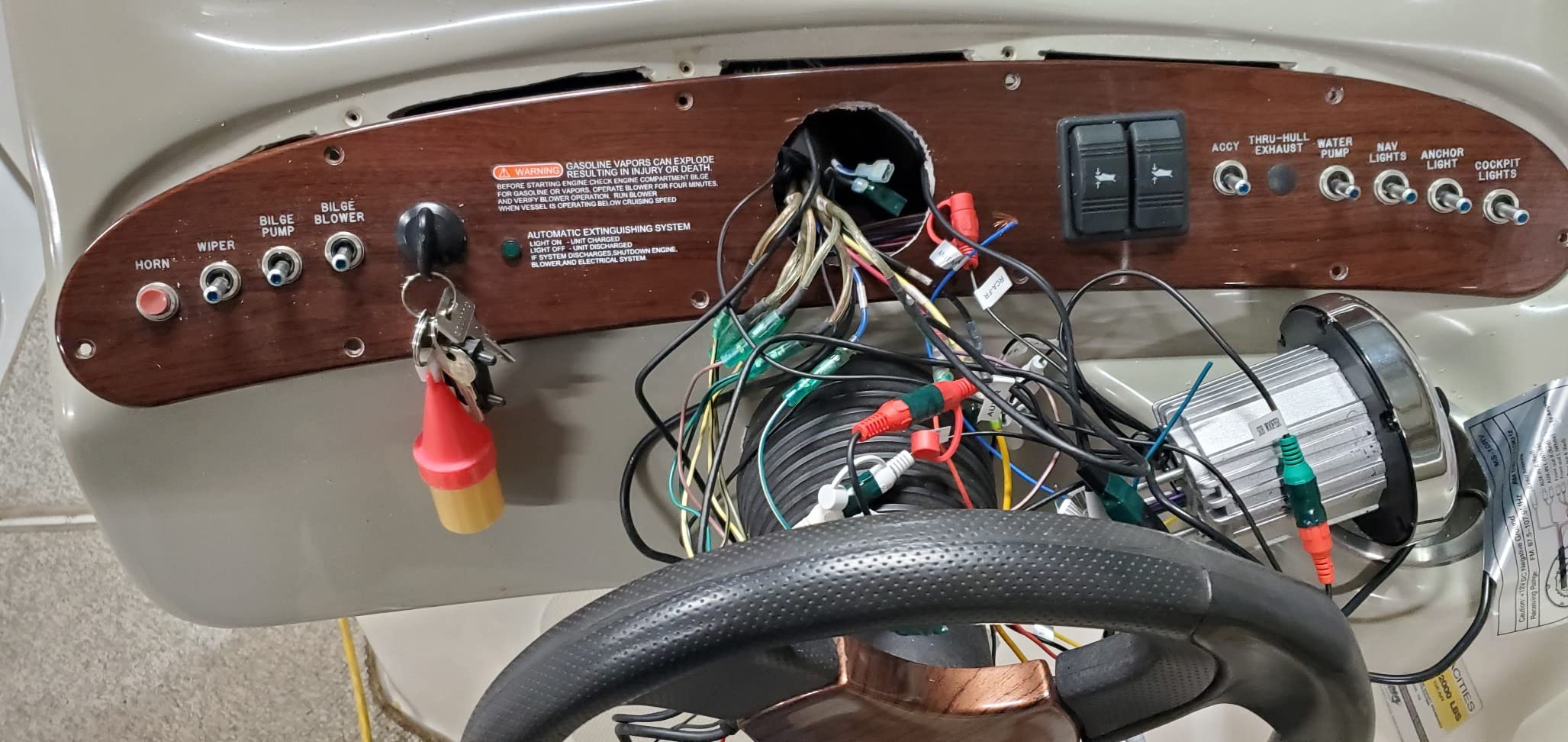
Use tinned copper wire, heat-shrink connectors with an adhesive liner, and a clean ground point. Seal the mounting holes with silicone, fuse the power feed close to the battery, and test the entire system before you seal anything down.
After every saltwater trip, rinse the head unit and speakers with fresh water and let them dry with the cover off. Avoid harsh cleaners on the faceplate, and check connections seasonally. Owners who do this report a properly rated marine unit lasting 5 to 10 years, while the ones who skip it tend to replace electronics sooner.
Frequently Asked Questions
What is the best waterproof radio for a boat?
The BOSS Audio Systems MGR350B is our best overall pick, with a published IPX6 rating, a conformal-coated circuit board and a UV-coated faceplate, plus 60W x 4 built-in amplification. On a saltwater boat where true immersion sealing matters most, the Fusion MS-RA70NSX carries an IPX7 waterproof front face. Choose based on where the unit is mounted more than on brand.
What is the best marine grade boat stereo?
Marine grade means a conformal-coated board, UV-stabilized plastics, a sealed faceplate, corrosion-resistant terminals and stainless or brass mounting hardware, with a published IPX6 or IPX7 rating on the head unit. The Fusion MS-RA210 carries both IPX6 and IPX7 ratings with a built-in DSP, which makes it the strongest all-round marine-grade option for a newer boat.
What is the best marine stereo for the money?
The Pyle PLMRKT38W is the best value pick because it ships with a head unit and four 2-way marine speakers rated 60W RMS each, so you are not buying speakers separately. Its LCD has no backlight, so it suits a covered or shaded helm. For a head unit only, the BOSS MGR350B offers a documented IPX6 rating and coating for less than a typical packaged system.
What does IPX7 mean for a boat stereo?
IPX7 means the unit can survive immersion in up to one metre of water for 30 minutes. In practice that rating describes a sealed front face, not a fully submersible device, so the rear terminals and connections still need protecting. On a boat that lives in salt water, IPX7 is the rating worth insisting on, and it is the difference between the Fusion MS-RA70NSX and units rated IPX5.
Can marine amplifiers get wet?
Marine-rated amplifiers are built to tolerate a wet environment, but they are not designed to sit in standing water. Mount them in a dry, ventilated location, keep connections sealed with heat-shrink and adhesive-lined tubing, and confirm the unit carries a marine or ABYC rating before you install it below a deck.
Do I need an amplifier for a boat stereo?
You only need one if you want real volume over engine and wind noise. A head unit with 45 to 60 watts per channel handles a small freshwater boat with two pairs of speakers, but engine noise dissipates low frequencies, so any build that includes a subwoofer or a wake boat tower will need external marine amplification. A Class D amplifier draws less current for the same output.
How long do marine stereos last?
A properly rated marine stereo typically lasts 5 to 10 years if it is rinsed with fresh water after salt water use and its connections stay sealed. The main enemies are salt corrosion and UV damage rather than water ingress, which is why regular fresh-water rinse-down and a cover when the boat is idle matter more than the IPX rating alone.
The Best Waterproof Boat Stereo System for the Boat You Own
If your boat lives on a freshwater lake and the helm is shaded, the BOSS Audio Systems MGR350B is the buy. It carries a documented IPX6 rating and conformal-coated board, fits a standard gauge opening without cutting the dash, and has the strongest owner track record in this group. That is our pick for most buyers in 2026.
For a saltwater or coastal boat, go with the Fusion MS-RA70NSX and its IPX7 waterproof face, and take the time to format the USB drive as FAT32 with MP3 files at the root. For a wake boat or a build that includes a subwoofer and tower speakers, the Fusion MS-RA210 adds a built-in DSP and a sunlight-bright color display, with an external Class D amplifier for the volume you need.
If you are starting from nothing and want speakers in the same box, the Pyle PLMRKT38W saves you a second purchase, while the GUZARE GR304 or DOVOX gauge unit solves a small round console opening that nothing else will fit. And if you do not want music on your boat at all, run no stereo. A quiet helm is a safe helm.
Whichever you choose, use tinned copper wire, seal every mounting hole, and rinse the unit with fresh water after every trip in salt water. That habit, more than the spec sheet, is what gets you to year five.