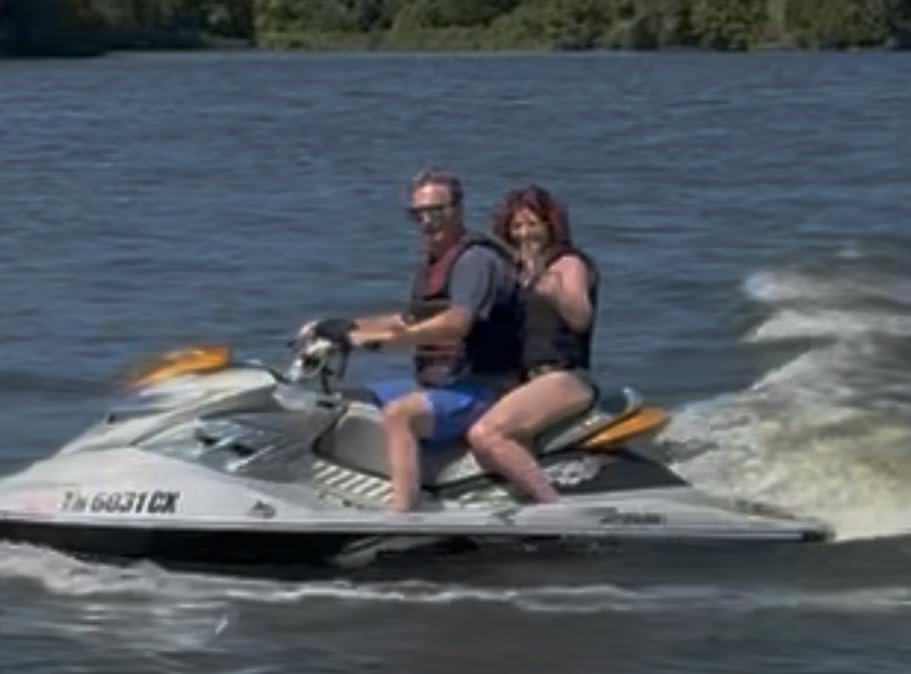
The best jet ski life jacket is a USCG-approved Type III (Level 70) personal flotation device made of non-inflatable foam — neoprene, ecoprene or nylon — with a D-ring for your engine cut-off lanyard. My team has been riding and reviewing PWC safety gear for years, and every one of the ten vests below is written from that spec sheet and real owner feedback, not marketing copy.
That single sentence disqualifies more jackets than most riders expect. Inflatable belt packs, swim vests, impact-only water-ski vests and youth models are all sold right next to legitimate PWC flotation devices in the same search results, and several of them will not keep your head above water after a high-speed ejection.
We compared ten popular models on approval status, flotation material, entry style, closure security, adjustability, weight and rider feedback volume. What stood out was that fit matters more than any feature list. A vest that rides up over your chin in the water is the single most common complaint in every PWC forum we checked, and no amount of padding fixes it.
Throughout this guide I explain how to verify a US Coast Guard approval label in four steps, how to measure your chest and run the lift test, and which materials stay cool in summer heat. No competitor page on this topic does all three, and the difference matters when you are far from shore at speed.
Our Top 3 Jet Ski Life Jackets for 2026

O'Neill Men's SuperLite
- USCG Type III approved
- Lightweight polyethylene foam core
- Four quick-release buckles
- Quick-dry polyester shell
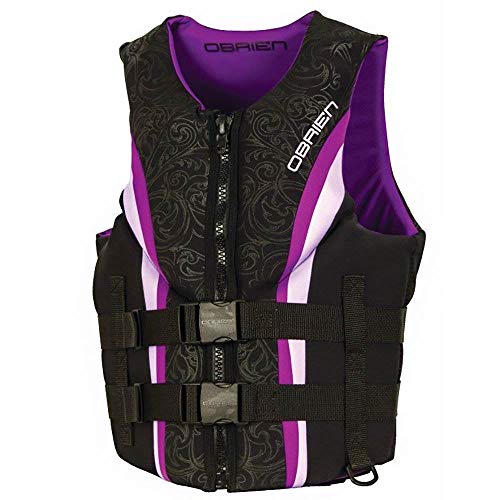
O'Brien Impulse Women's Vest
- USCG Type III approved
- Women-specific tailored cut
- Premium neoprene
- Front zipper closure
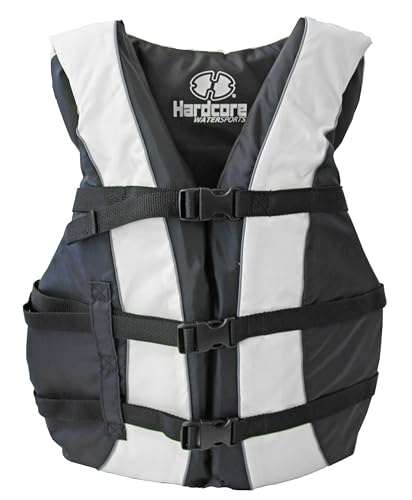
Hardcore Paddle Vest
- USCG Type III and UL listed
- Cordura polyester
- Closed cell PE foam
- One inch webbing straps
Comparing the Best Jet Ski Life Jackets in 2026
One note before the table: the O'Neill Slasher Comp Vest is included because it appears constantly in jet ski searches, and its own specification sheet states it is not US Coast Guard approved. It is a competition waterski vest. It does not belong on a personal watercraft, and we explain why below.
| Product | Highlights | Action |
|---|---|---|
| O'Neill Men's SuperLite |
|
Check Latest Price |
| O'Brien Impulse Women's Vest |
|
Check Latest Price |
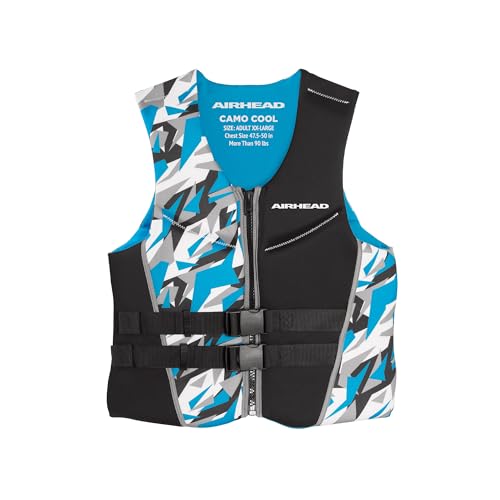 Airhead CAMO Cool Kwik-Dry Airhead CAMO Cool Kwik-Dry |
|
Check Latest Price |
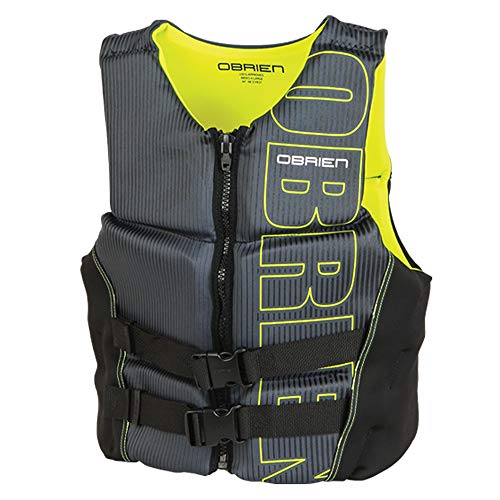 O'Brien Flex V-Back O'Brien Flex V-Back |
|
Check Latest Price |
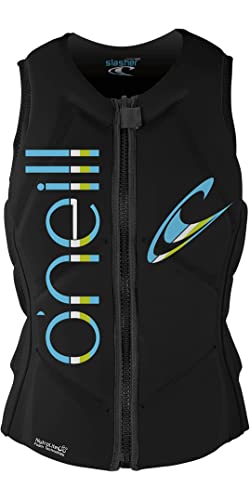 O'Neill Slasher Comp Vest O'Neill Slasher Comp Vest |
|
Check Latest Price |
 O'Brien Traditional Neoprene O'Brien Traditional Neoprene |
|
Check Latest Price |
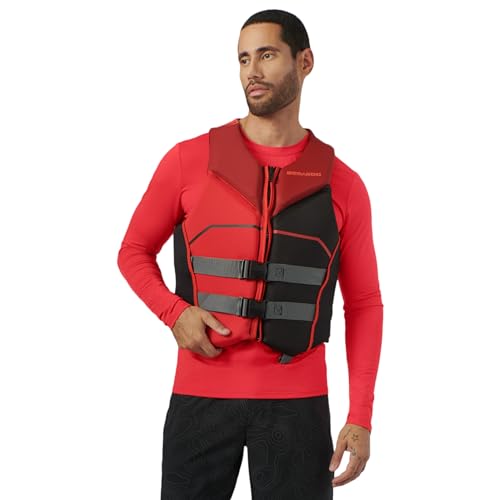 Sea-Doo Freedom PFD Sea-Doo Freedom PFD |
|
Check Latest Price |
| Hardcore Paddle Vest |
|
Check Latest Price |
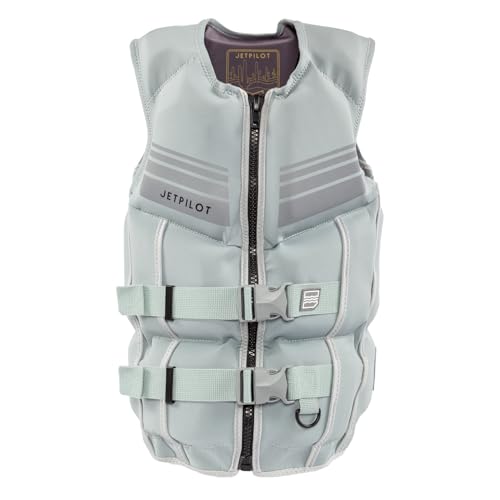 Jetpilot Shaun Murray Neoprene Jetpilot Shaun Murray Neoprene |
|
Check Latest Price |
 Jettribe Black Out Side-Entry Jettribe Black Out Side-Entry |
|
Check Latest Price |
How We Picked These Vests
Every candidate had to clear the legal bar before we scored anything else. A vest without a legible USCG approval label, without inherent foam flotation, or without a working lanyard attachment point was disqualified no matter how well it scored on comfort. That single filter removed several popular search results outright.
Among the survivors we weighted the criteria this way:
- Fit and sizing adjustability — 30%. Does the vest stay down when you are in the water, and can you pull the side belts tight without cutting off your arms?
- Flotation and approval status — 25%. Type III or Type 5, inherent foam, stated buoyancy level, and a lanyard D-ring at the front or shoulder.
- Comfort and mobility — 20%. Weight, armhole cut, back panel shape, and how the vest sits in a forward-leaning seated posture.
- Construction and closure security — 15%. Number of encircling closures, zipper brand, stitching, and shell material.
- Features and storage — 10%. Pockets, drainage, reflective elements, goggle loops, and anything that actually gets used.
Feedback volume mattered as a tie-breaker only. Three of our picks carry fewer than 120 reviews, and we flag that clearly so you know you are buying on spec sheet rather than on a long owner history.
1. O'Neill Men's SuperLite - Editor's Choice for Everyday PWC Riding
O'Neill Men's Superlite USCG Life...
USCG Type III
Nylon and polyester shell
Polyethylene foam
1.3 lb
Four quick-release buckles
What we like
- Lightweight polyethylene foam core
- Quick-dry polyester shell
- Engineered drain holes
- Four quick-release buckles
- Sizing runs S to 4XL
What could be better
- Snug fit means sizing up per the manufacturer chart
- Limited color options in some sizes
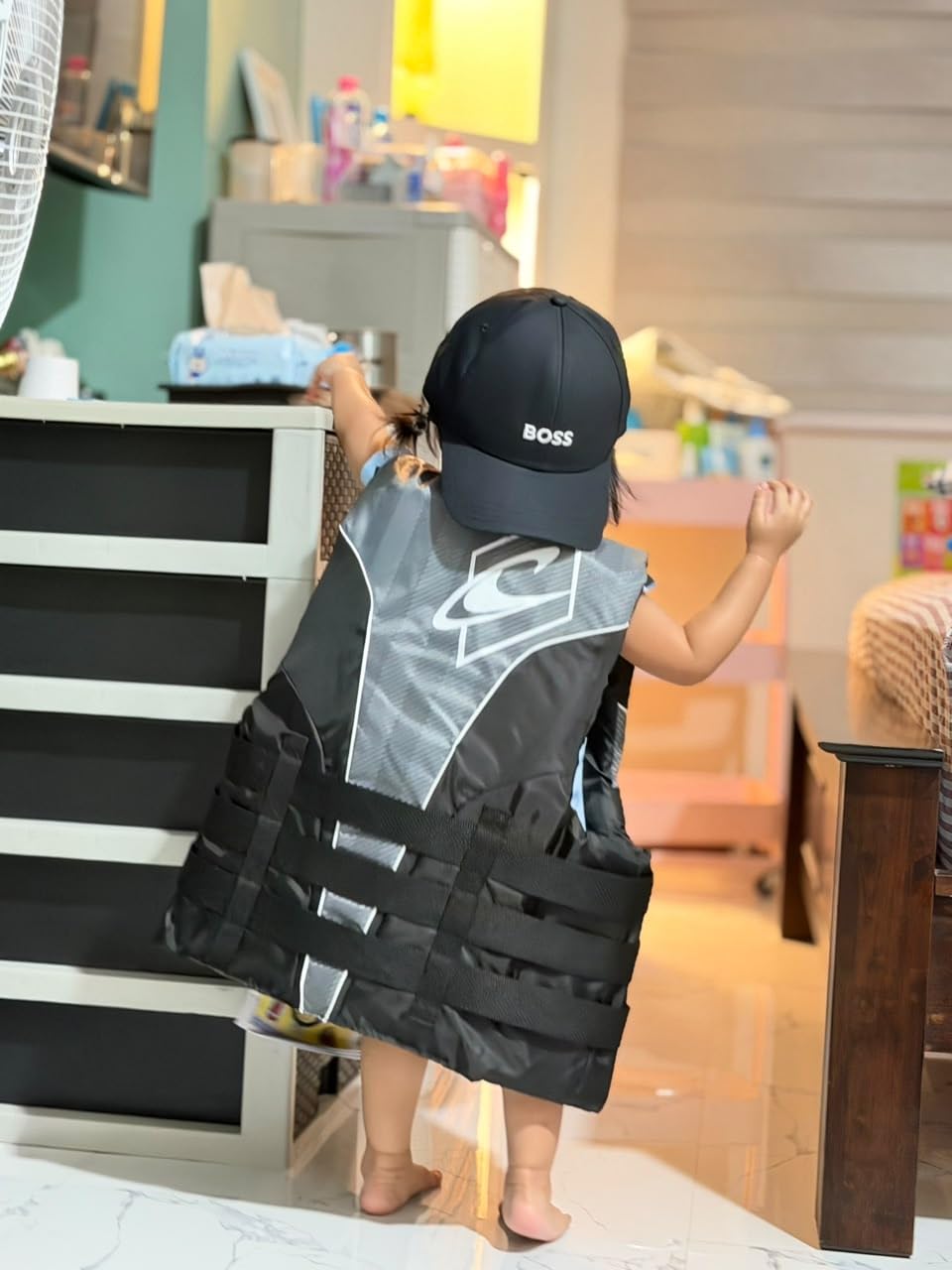
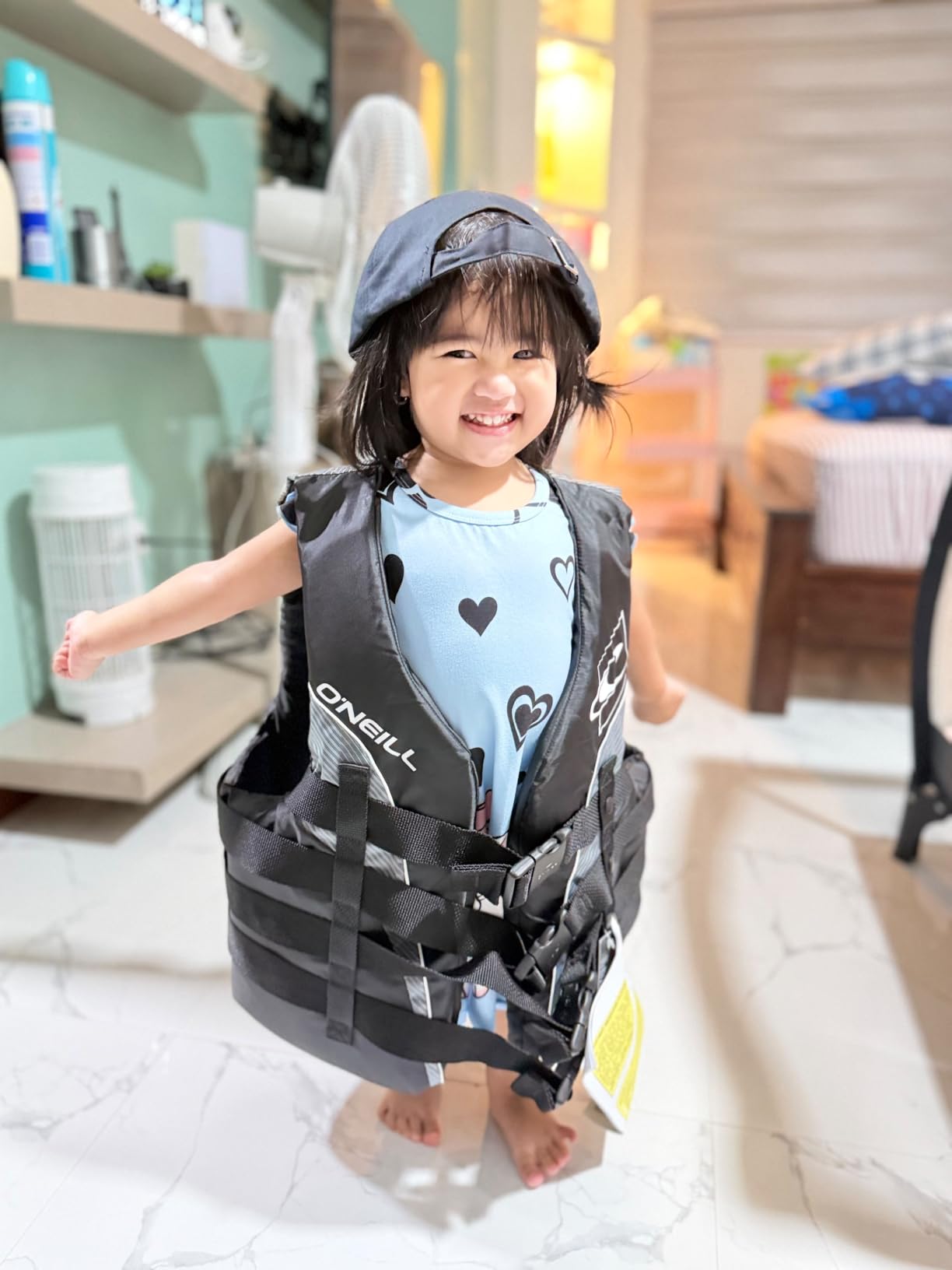
The SuperLite is the default recommendation for a reason: 4.7 stars across more than 9,000 owner reviews, a USCG Type III label, and a shell that drains instead of holding water. It weighs 1.3 pounds, which is light enough to forget you are wearing it and heavy enough to keep a 300-pound adult on the surface.
Four quick-release buckles is more closure security than most vests in this category, and on a personal watercraft that is not a luxury. You are dealing with spray, sun, a moving handlebar and a body that wants to move, and every buckle you have reduces the chance of the vest shifting at speed.
Why four buckles matter more than a padded back
Riders on r/jetski consistently ask for one strap, two straps and as little bulk as possible. The SuperLite answers that with closures rather than padding — the front panel is flat, and the security comes from the belt system wrapping the torso twice. That is a better trade in a seated, forward-leaning posture where a thick back cushion pushes your shoulder blades into the rear of the saddle.
The engineered drain holes are a quiet feature until you are out of the water. Water leaves the vest in seconds rather than pooling against your lower back, which matters on a long day where you are launching and recovering repeatedly.
Neoprene and nylon, and where this vest sits
This is a nylon-covered foam vest, not neoprene. In Florida and the Gulf Coast heat, that distinction is the whole conversation: the long-running PWC community at GreenHulk has argued both sides for years, with neoprene described as cushy and soft but hot compared to a nylon-covered vest. Riders on long summer days tend to land on nylon. Riders in cold spring water tend to land on neoprene.
The armhole sizing is described as strategic rather than generous, and the fit type is listed as snug. Owners frequently note that they size up one step, which is normal for this construction and not a defect. Follow the chart in the listing, measure your actual chest girth, and do not use your shirt size.
Who should buy the SuperLite
This is the right pick for adult drivers and passengers who ride most weeks of the year, in warm water, without needing competition features. It is also the safest default recommendation in this guide for anyone who has never inspected their current vest's approval label.
It is less suited to cold-water immersion, where a thin nylon shell over foam gives up comfort quickly, and to riders who need a zippered pocket large enough for a phone — a feature r/jetski users request often and this vest does not offer.
2. O'Brien Impulse Women's Vest - Best Cut for Shorter Torso Riders
O'Brien Women's Impulse Neo Life Vest, Purple...
USCG Type III
Neoprene build
Women-specific cut
1.7 lb
Front zip with adjustable straps
What we like
- Women-specific tailored fit
- Shorter cut suits seated riding
- Premium neoprene construction
- Adjustable straps for a custom fit
- Rated 4.7 across 4316 reviews
What could be better
- Neoprene runs hot out of the water
- Sizing runs small so follow the chart closely
- Higher cost than basic nylon vests
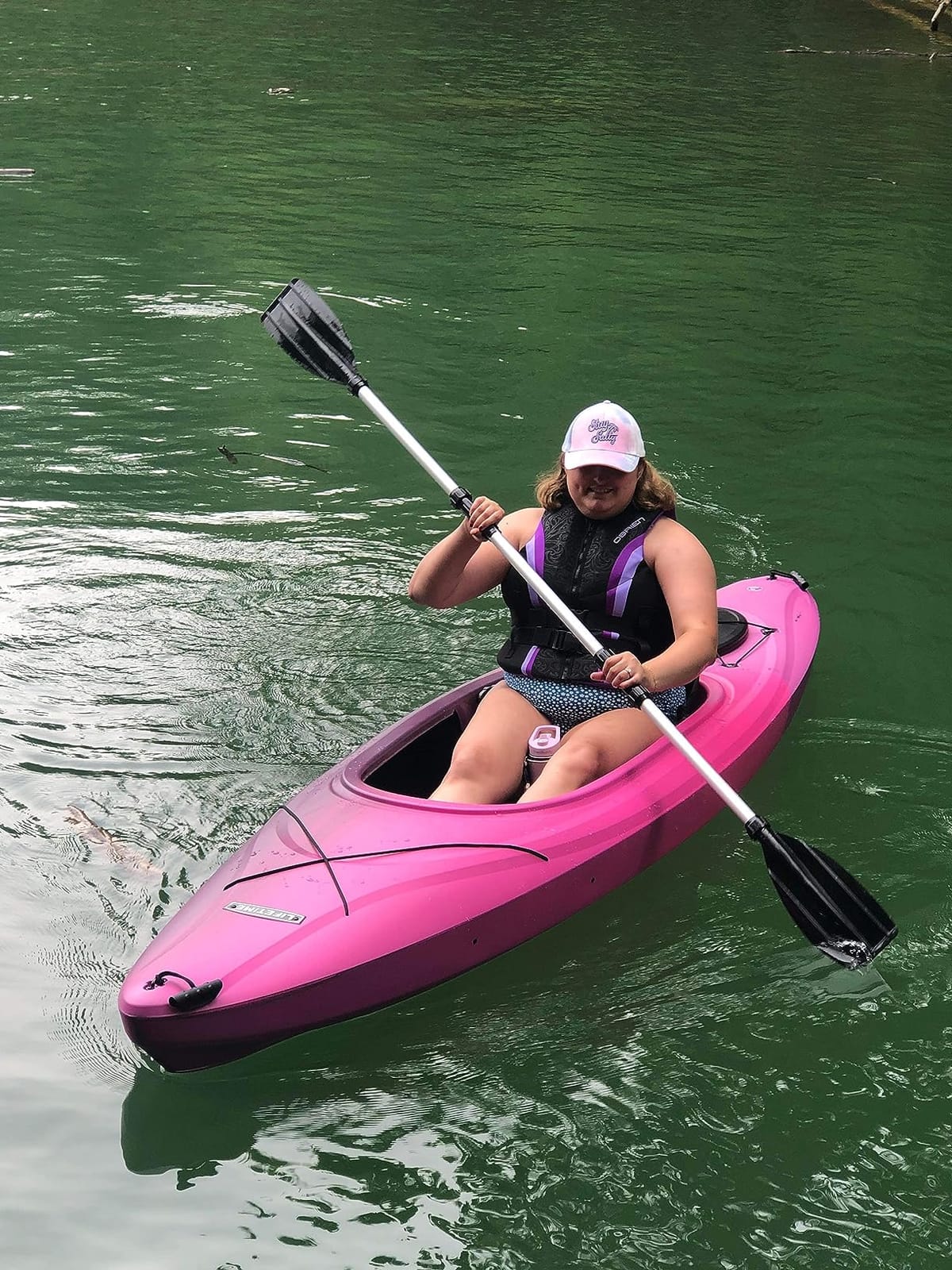
Many women's flotation devices are men's vests scaled down. The Impulse is not — it is cut for a women's chest, and the shorter body length is the detail that matters most when you are seated on a personal watercraft rather than standing on a dock.
At 4.7 stars with more than 4,300 reviews, it is also the second most validated vest in this roundup, which gives you a much larger owner base to draw sizing advice from than any newer racing-cut model offers.
Why the shorter cut changes everything when seated
A vest that is anatomically correct while standing can ride up badly the moment you slide into a saddle and lean forward over the handlebars. Extra length at the bottom of a full-cut vest ends up bunching under your ribs or pushing the front panel up toward your chin — and riding up toward the chin is the exact failure riders describe over and over on the forums.
The Impulse's neoprene lining and tailored chest accommodation keep the front panel flat against the torso, which is exactly what stops that upward creep. The neoprene lining is a small detail with a real effect: it grips rather than slides.
Sizing advice that actually applies here
Owner feedback on this model is unusually consistent about one thing — sizing runs small, and the manufacturer chart is accurate. Do not order your usual clothing size. Measure your chest and compare it to the chart, and expect to move up a step if you are between ranges.
Who should buy the Impulse
Buy this if you are a woman rider or passenger who spends time in a seated position, values a low-profile fit, and rides in water that is not so hot that neoprene becomes a problem. The neoprene construction is warmer out of the water than the O'Neill SuperLite's nylon shell, so riders on Florida summer afternoons may prefer the lighter fabric.
Skip it if your priority is a front pocket, a racing cut, or the lowest possible weight under 1.5 pounds.
3. Airhead CAMO Cool Kwik-Dry - Best All-Round Unisex Fit
Airhead Men's US Coast Guard Approved CAMO COOL...
USCG Type III
Neolite quick-dry neoprene
PE foam buoyancy
2.1 lb
Belt closures
What we like
- Quick-dry Neolite neoprene fabric
- Less bulky for a wider range of motion
- Multiple adjustable belts
- Unisex sizing from XS to XXL
- Built for men and women
What could be better
- Heavier at 2.1 pounds than most rivals
- Sizing follows the USCG chart not clothing sizes
The Airhead vest is the compromise pick for a household with two different body types sharing one ski. It carries a USCG Type III approval, uses quick-dry Neolite neoprene, and runs from XS to XXL in a single unisex pattern rather than a men's and a women's pattern.
At 2.1 pounds it is the second-heaviest approved vest we carried, and the weight shows on a long day. What you get in return is a noticeably less bulky front panel than most neoprene vests, which is where the mobility claims come from.
The quick-dry argument in real conditions
Neolite is a neoprene fabric treated for faster water shedding and drying. In practice, that means less water weight carried between rides and a vest that does not feel like a wet towel hanging off your shoulders while you eat lunch on the dock. For riders launching and recovering all day, that is a real quality-of-life difference rather than a spec-sheet line.
The trade-off is weight. At 2.1 pounds this is not the vest you choose to minimise load on your shoulders during long tow sessions. If you are on the water specifically for tubing and wakeboarding for six hours, something lighter is a better match.
Multiple belt closures and a wide size range
Closed sides with several adjustable belt closures give you more adjustment range than a two-buckle design, which is helpful when your chest measurement lands near the top of a size bracket. Quick-release buckles let you bail out of the vest in seconds, which is the correct instinct in shallow water.
The listing rates it for riders between 50 and 300 pounds. Again, follow the USCG sizing chart rather than a clothing size, and if you fall between two chart entries, size to the upper one — a vest that fits loose will ride up.
Who should buy it
This is the vest for a shared ski, a mixed-size couple, or a family that wants one approved model instead of three. It suits riders who want neoprene comfort without committing to a women's-specific or men's-specific cut.
It is the wrong choice for anyone chasing a featherweight race fit or a heavy cold-water layer.
4. O'Brien Flex V-Back - Best for Mobility and Warm Water
O'Brien Men's Flex V-Back Life Jacket, Yellow...
USCG and Transport Canada approved
BioLite construction
V-back panel
1.5 lb
PWC lanyard ring
What we like
- V-back stretch panel hugs the body
- Segmented panels with hinge points
- Concealed internal belts
- Includes a PWC lanyard ring
- Dual USCG and Transport Canada approval
What could be better
- Smaller review base than category leaders
- Limited color options in yellow and orange
The Flex V-Back is built around one idea: make the vest move with you instead of against you. The V-shaped back panel is stretch material, and the front is broken into segmented panels with multiple hinge points, so twisting to look behind you or bracing against a wave does not fight the foam.
It carries dual USCG and Transport Canada approval and an explicit PWC lanyard attachment ring, which is the spec line we look for first on any vest intended for a personal watercraft.
BioLite is the real story here
BioLite is a neoprene alternative — soft, light and breathable, without the rubber base layer that traps water and heat. The same GreenHulk thread that praises neoprene as the only comfortable option also contains the counterpoint that these vests run hot against nylon. BioLite sits in between, and for many riders in humid climates that middle ground is the answer.
At 1.5 pounds it is lighter than the Airhead vest and heavier than the O'Neill SuperLite, and it is the only approved neoprene-alternative construction in this roundup that also carries a V-back stretch panel.
Concealed belts keep the profile clean
Two adjustable belts are routed internally behind the front panel rather than sitting across it. That keeps the front surface flat, which matters for two reasons: it reduces snagging on tow handles, and it stops hardware from pressing into your sternum when you lean forward.
The trade-off is that concealed adjustments are slower to change. If you are adding or removing layers between a cold morning and a hot afternoon, expect to spend longer getting the fit right than you would with exposed buckles.
Who should buy the Flex V-Back
Pick it if you ride in warm or temperate water, twist and reach constantly, and want a PWC-specific vest with an obvious lanyard attachment. The 4.7 rating is strong, but with 512 reviews you are working from a smaller evidence base than the top two picks.
5. O'Neill Slasher Comp Vest - Why This Competition Vest Is Not Legal on a Jet Ski
O'Neill Women's Slasher Comp Vest, Black/Black, 4
Competition vest only
NOT USCG approved
NytroLite foam
1 lb
Front zip entry
What we like
- Weighs about 1 pound
- Absorbs 15 to 20 percent less water
- Segmented foam with anatomical flex points
- Front zip for fast entry and exit
What could be better
- Not US Coast Guard approved
- Competition waterski and wakeboard use only
- No adjustable straps
- Smaller review base
We are including this vest because it ranks in jet ski searches constantly, and leaving it unmentioned would be a disservice. Its own technical specification sheet states it is a competition waterski and wakeboard vest only and is not US Coast Guard approved. Do not ride a personal watercraft in it.
The engineering is genuinely impressive. NytroLite foam is described as three times lighter than PVC, 10 percent more buoyant, and absorbing 15 to 20 percent less water. At one pound it is the lightest vest in this roundup, and the segmented core with anatomical flex points moves better than anything else here.
Why a competition vest is not a PWC vest
Waterski and wakeboard competition is judged on a body of water with marshals, a boat, and a defined throw zone. A USCG Type III approval is a different standard entirely: it certifies a minimum buoyancy level and a floatation position for a person in the water, with no assumptions about rescue arriving within minutes.
Beyond the label, the construction choices are wrong for a PWC. There are no adjustable straps, so there is no way to cinch the vest against a torso that is being thrown around at speed, and a front zip alone is the weakest possible closure for a high-speed ejection. Every US state requires a non-inflatable USCG-approved PFD with a working engine cut-off switch attachment point, and this vest is built to fail that standard on paper.
Where the Slasher Comp is genuinely the right call
If you are competing in waterski or wakeboard events where approved vests are not required, this is an excellent piece of kit. The 4.4 rating reflects a specific use case well, and the 305 reviews are consistent about comfort and flexibility rather than about flotation performance.
It is also worth understanding the general rule: if a product page does not show a USCG approval label, treat it as disqualifying. Impact vests, swim vests and pull buoys all look like flotation devices, and none of them are approved personal flotation devices.
6. O'Brien Traditional Neoprene - Best for Long Days On the Water
O'Brien Men's Traditional Neoprene USCGA Life...
USCG and Transport Canada approved
BioLite neoprene
1.6 lb
Zip plus two belts
PWC lanyard ring
What we like
- Dual USCG and Transport Canada approval
- Wide armholes for mobility
- Zip closure backed by two adjustable belts
- BioLite breathes better than rubber
- PWC lanyard attachment ring included
What could be better
- Snug fit needs careful sizing
- Newer model with a smaller review base
This is the traditional watersports vest shape updated with modern foam chemistry, and it remains the most sensible default for a family that cruises, tows a tube, and spends a full Saturday on the lake.
The wide armholes are the detail that separates it from bulkier neoprene vests. On a PWC you need to reach forward to the handlebars and twist your torso constantly, and a tight armhole chafe is the fastest way to end a ride early. The zip plus two adjustable belts gives you three encircling closures, which is the configuration that keeps a vest from creeping upward.
BioLite against a hard shell
The outer material here is BioLite, a breathable neoprene alternative, with a neoprene lining. Compared with a nylon-covered vest it is warmer and softer; compared with traditional neoprene it drains and dries faster. For a mid-season rider in temperate water that middle position is usually the right one.
At 1.6 pounds it sits in the middle of the weight range in this roundup, which is a reasonable trade for a vest that stays comfortable through hour three.
Fit is snug by design
The fit type is listed as snug, and owners do report needing to think about sizing. For a snug vest the adjustment order matters: tighten the two side belts first, check that the front panel sits flat, and only then consider the shoulder area. Loose chest fasteners are the most common reason a vest rides up in the water.
Who should buy it
Choose this vest for casual family cruising, towable sports, and riders who want a dual-certified PFD with a lanyard ring and wide armholes in a mid-weight build. It is a strong pick for a passenger as well as a driver, since the wide armholes do not fight a seated posture.
7. Sea-Doo Freedom PFD - Best Brand-Specific Fit With Real Padding
Sea-Doo New OEM, Unisex Extra Small Freedom...
USCG approved
Ecoprene shell
Foam inserts
4.5 lb
YKK zipper and D-ring
What we like
- Rubber-free Ecoprene shell
- Lumbar comfort zone with extra padding
- Mesh drainage panel
- Stretch side panels
- YKK front zipper with a lanyard D-ring
What could be better
- Heaviest vest in the roundup at 4.5 pounds
- Only 117 reviews so far
- Listed under powersports categories
The Sea-Doo Freedom PFD is the only fully OEM-branded vest in this group, and it brings something none of the others do: a lumbar comfort zone with extra foam padding at the lower back, plus a mesh panel for drainage and thermal regulation.
That lumbar padding is the reason this vest earns its place for full-day riding. If you tow a tube for three hours, sit through a long lake crossing, or run a river stretch repeatedly, lower-back support is not a luxury. The trade is weight — 4.5 pounds makes this the heaviest approved vest we carried, and you will notice it on your shoulders by the fourth hour.
Ecoprene, and why it is worth the weight
Ecoprene is a rubber-free foam material, and the outer shell is stretch lining fabric with PVC and polyethylene foam inserts. The practical benefit is breathability: the mesh panel moves water and heat away from the core, which is what keeps a padded vest tolerable in warm conditions.
The rest of the feature list is unusually complete for a PFD — large armholes for riding comfort, stretch side panels, a YKK front zipper rather than a generic coil, a D-ring for your key lanyard and a back neck loop for goggles. That last detail is small but tells you the designers actually rode the thing.
About Sea-Doo-branded vests in general
Owners on the Sea-Doo forums tend to treat the brand name as secondary to the fit, which matches what we see in the ratings: this vest holds a 4.7, but on a small sample. Our advice is to buy the brand for the lumbar padding and the accessories, not for the logo, and to confirm your chest measurement against the chart before ordering.
Who should buy it
This is the pick for a rider who spends entire days on the water, values a padded lumbar zone, and likes the goggle loop and lanyard D-ring. It suits an adult rider rather than a youth, given its weight and full cut.
8. Hardcore Paddle Vest - Budget Pick and Best Backup Vest
Hardcore Life Jacket Paddle Vest; Coast Guard...
USCG Type III and UL listed
Cordura polyester
Closed cell PE foam
13.76 oz
What we like
- Cordura polyester shell
- Closed cell PE foam flotation
- One inch adjustable webbing
- Quick-release buckles
- Lightest at about 14 ounces
What could be better
- Rated only to 90 pounds of body weight
- No lanyard attachment ring
- One size adult only
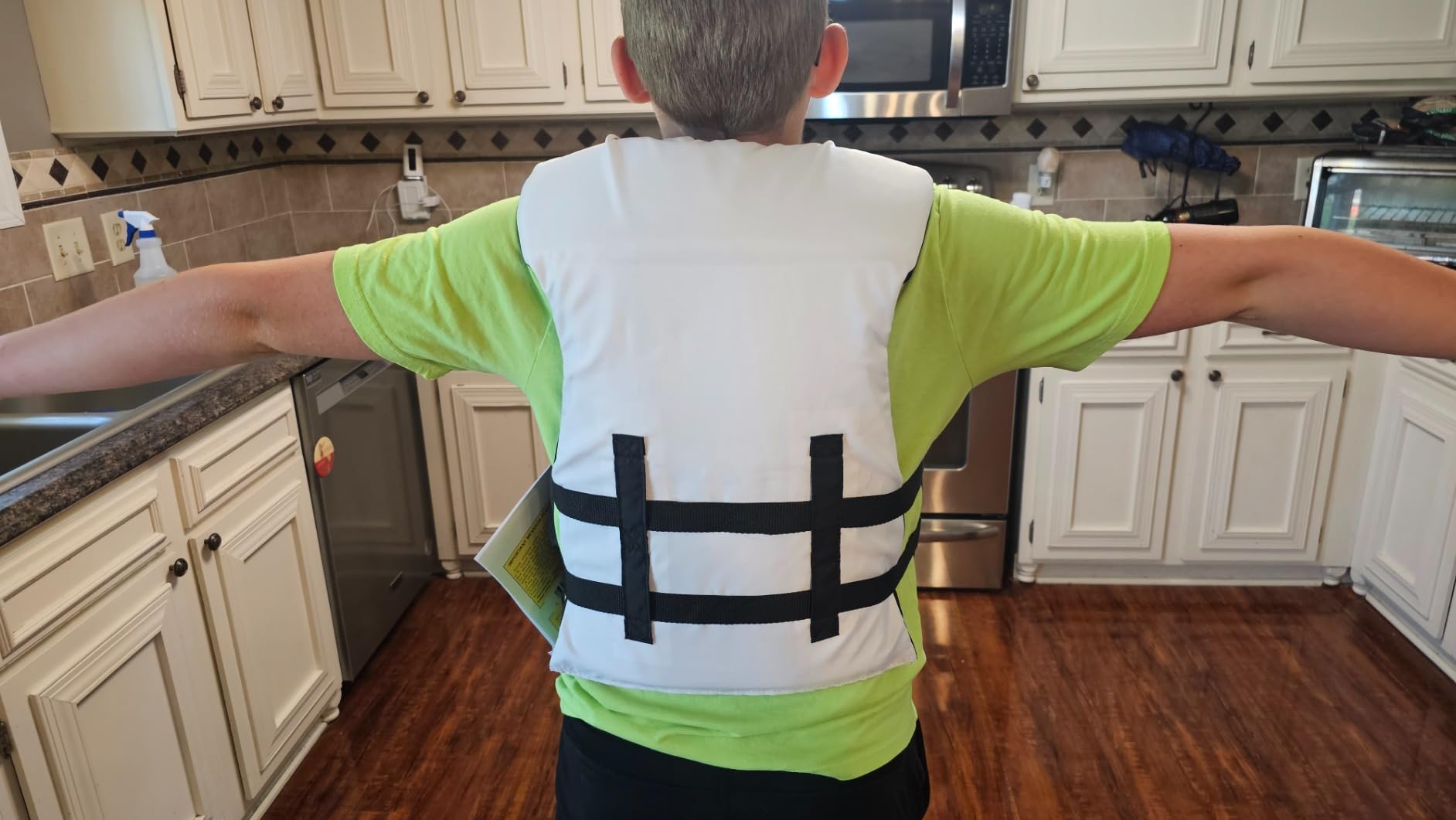
At 13.76 ounces, this is the lightest approved vest we carried, and it is the most straightforward design in the group, which makes it the obvious pick as a second vest on a pontoon, a guest vest, or a backup you leave in the tow vehicle.
It is US Coast Guard Type III approved and UL listed, built from 100 percent polyester Cordura with closed cell PE foam and one inch adjustable webbing with quick-release buckles. That is a straightforward, durable recipe that does not try to be anything other than a flotation device.
The 90-pound weight limit is the deciding factor
The listed maximum weight recommendation is 90 pounds, and there is a single one-size adult option. That number is far below the 300-pound rating on most vests in this guide, and it makes the sizing question simple: if you are an adult over 90 pounds, this is not your riding vest.
It is designed to hold a stable face-up position in calm water, which is exactly the right behaviour for a passenger lounging on a pontoon, a child learning to swim, or an angler who wants a spare. On a fast-moving PWC in open water it is legal and certified, but the limited adjustability gives you less control over fit than a belted vest.
No lanyard ring is a real gap on a jet ski
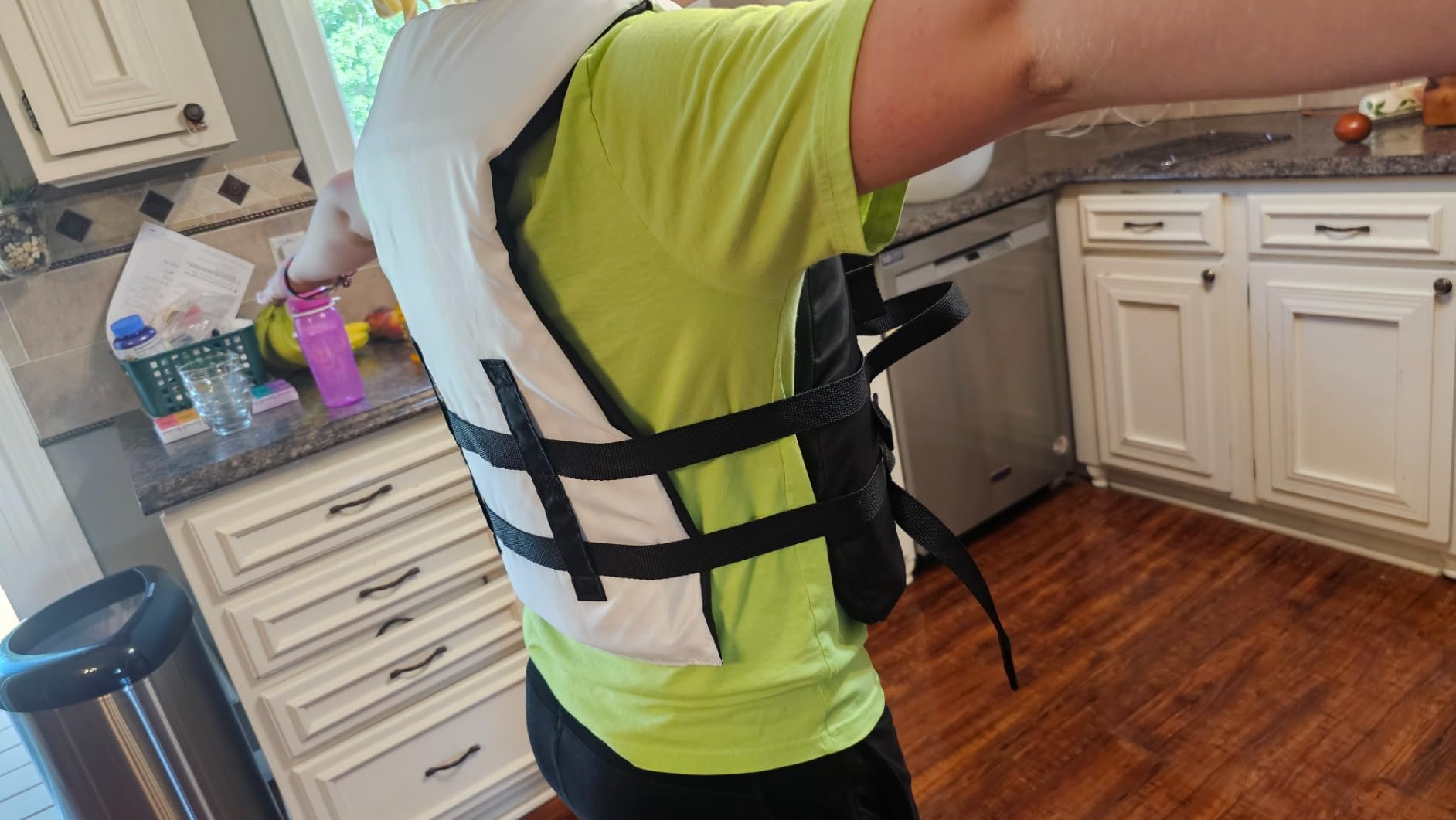
This vest has no attachment ring for the engine cut-off lanyard. Your ski's lanyard still clips to the red switch on the handlebar itself, so the engine-stop function works, but you lose the ability to run the safety lanyard through your vest, which many riders prefer so the tether is at chest height and stays out of the spray.
Who should buy it
Buy it as a second, spare, or guest vest, or for smaller adults and older teens within the weight rating. Skip it as your primary riding vest, and skip it entirely if your body weight is above 90 pounds.
9. Jetpilot Shaun Murray - Best Rated Performance Vest for Freeride Riders
Jetpilot Shaun Murray Neoprene Coast Guard...
USCG and Transport Canada approved
Aero-Jet performance foam
19-panel fit
YKK self-locking zipper
What we like
- 19-panel anatomical fit
- Internal dual buckles reduce snagging
- Aero-Jet foam stays soft and light
- YKK self-locking zipper
- Dual USCG and Transport Canada approval
What could be better
- Premium price point
- Only 102 reviews so far
- Limited color variants
Jetpilot is the brand with the longest PWC-specific pedigree in this group — its own spec sheet dates it to 1986 — and the Shaun Murray model is its signature piece. It carries a 4.9 rating — the highest of any vest we evaluated — on 102 reviews.
The construction is where the money goes. Nineteen panels are shaped to the anatomy of a rider in a tucked, forward-leaning stance, Aero-Jet performance foam is described as soft and light with reduced water absorption, and the Flex-Lite Superstretch neoprene shell flexes with the panels rather than resisting them.
Internal buckles are the quiet engineering win
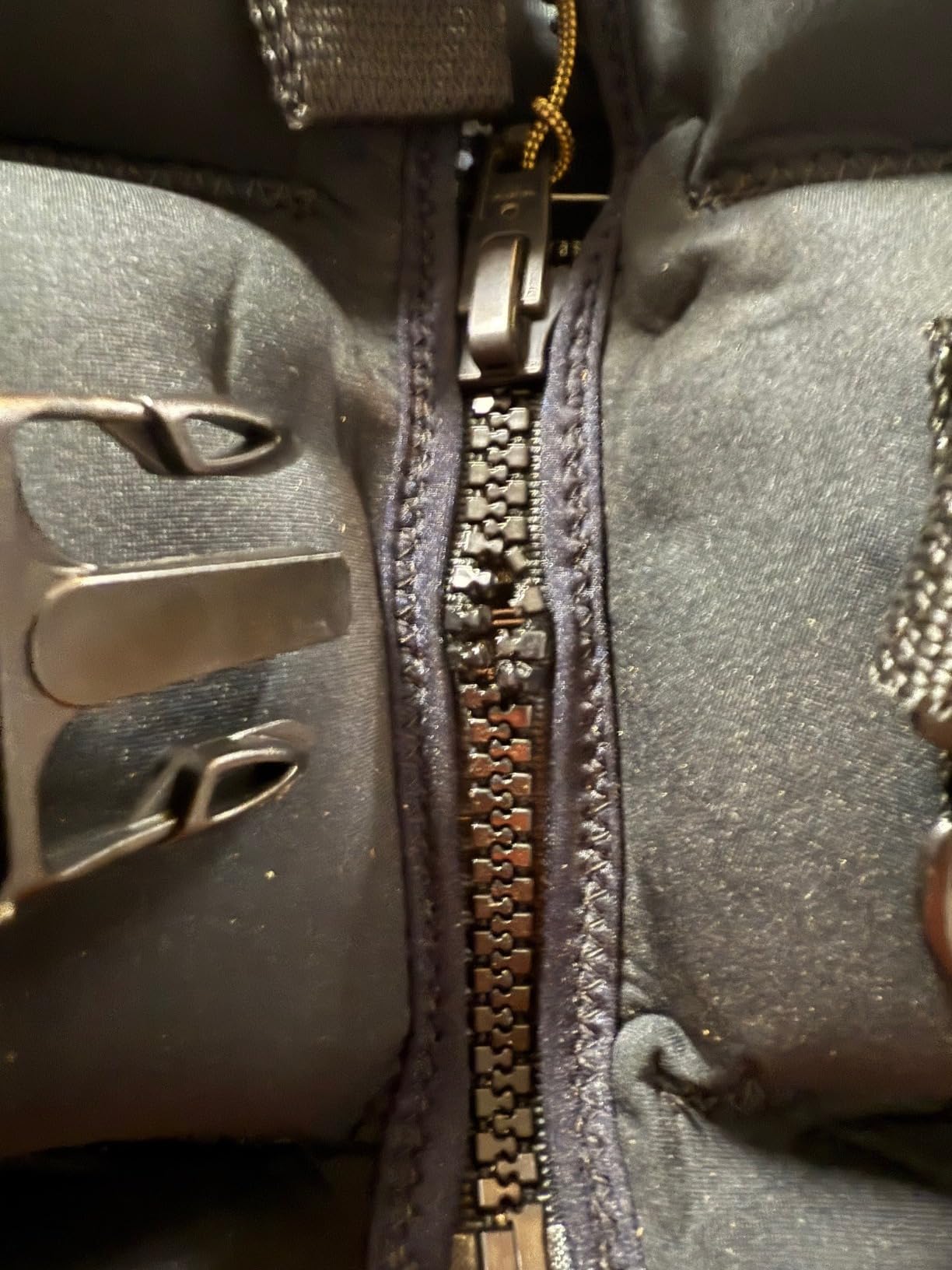
Most vests put their two side buckles on the outside of the front panel, where they can catch a tow rope, press into your sternum, or snag a handlebar. This one routes the dual-buckle system internally, so nothing protrudes on the front face and the closure load is spread across the panel seams.
The YKK self-locking front zipper is a genuine upgrade over a generic coil. On a salt-water ski with a misaligned buckle, a self-locking zipper is the difference between a vest that stays closed and a vest that opens at the worst moment.
Performance foam versus standard foam
Aero-Jet foam is designed to resist the two things that ruin a neoprene vest: stiffening and waterlogging. When a conventional foam panel soaks and dries repeatedly it stiffens, and a stiff panel is exactly what pushes a vest up under the chin when you hit a wave.
Because this is a genuinely premium build with a small review base, treat the 4.9 as encouraging rather than proven. If you are spending at this level, the practical move is to buy through a seller with a straightforward return policy and try it in your own riding position before the season.
Who should buy it
This is the pick for a serious rider who spends hours in the tuck, values minimum water absorption and maximum mobility, and treats a life jacket as equipment rather than a mandatory accessory. It is also the most sensible choice to grow into if you are moving from casual cruising toward freeride or race formats.
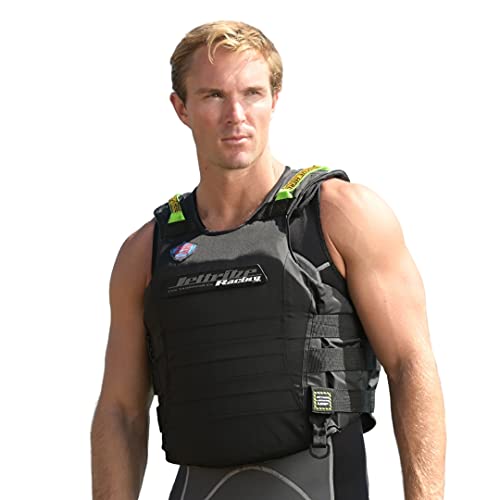
10. Jettribe Black Out - Best Side-Entry Design for Race Day
Jettribe US Coast Guard Life Vest - Black Out...
USCG Type 3 certified to 100 MPH
Side-entry design
Nylon shell
IJSBA race legal
What we like
- USCG Type 3 certified and rated to 100 MPH
- Side entry keeps the arms completely free
- IJSBA global race legal
- Neon green rescue handles
- Upgraded lanyard loop and custom back plate
What could be better
- Single size variant
- Loose fit will not suit everyone
- Buckle closure with no zipper
- Only 54 reviews
The Jettribe Black Out is the only true race-legal PWC vest in this roundup, and the only side-entry design. It is certified by the Coast Guard as a Type 3 PFD rated for speeds up to 100 MPH, and it carries IJSBA global race approval.
Side entry is a genuinely different entry strategy from a front zip. Instead of pulling a wet vest up over your head and shoulders with your arms already pinned, the side panels open and the vest wraps around you. On a dock, in the dark, with a full tank of fuel and two people holding the ski steady, that difference is significant.
Open sides for ventilation and mobility
The open sides mean less trapped air and less contact area against your torso, which translates into freedom of movement in a race crouch. Riders on PWCToday describe Jettribe vests as tough, lightweight and forgiving across sizes, and that reputation is the main reason to consider this model despite its limited review count.
The trade-off is structure. A side-entry vest with buckle-only closure and no zipper gives you fewer points to cinch, and the listed fit type is loose. On a race hull that is fine because you want range of motion; on a family cruise it can feel imprecise.
Rescue handles and the 100 MPH rating
The neon green rescue handles at the shoulders are a detail you will be glad about rather than think about. In open water, a marshall or a fellow rider approaching a flipped ski wants something obvious and bright to grab. The upgraded lanyard loop at the front is a clear improvement over the older versions riders replaced.
With 54 reviews, this is the least validated vest in the group. Judge it on its certification, which is specific and verifiable, rather than on owner ratings.
Who should buy it
Buy the Black Out if you race or freeride competitively, or if you are a larger-framed rider who finds front zips restrictive. Check the single size variant against your chest measurement before ordering.
Jet Ski Life Jacket Buying Guide: What Actually Matters
How to read a USCG approval label in four steps
The label inside your vest tells you everything. Look for these four things, in this order:
- Find the certification mark and the approval number. A legitimate USCG-approved PFD carries a mark and an approval number stamped or printed on the label, along with the manufacturer's name.
- Read the type and the level. Type III (Level 70) is the standard for general watersports and personal watercraft. Type V (Level 50) is an offshore rescue device designed to be thrown to a person in the water — it is not a substitute for a riding vest.
- Check the icons for towable sports and watersports. Label iconography shows which activities a device is approved for. If a device is not approved for towable sports or watersports, the icon is crossed out, and that is disqualifying for jet skiing.
- Confirm the buoyancy material is inherent foam. Foam panels that float you without any activation, not a bladder you have to pull or a cartridge you have to arm.
If a product page or a physical label does not show a USCG approval mark, stop there. A vest with no label is not a PFD, no matter what shape it is or what the listing claims.
Sizing and the lift test
Measure your chest girth in inches across the fullest part, usually just under the armpits, with a tape measure held level. Do not use your shirt size and do not use body weight. Most manufacturers print a USCG chest range, and the range is the only number that matters.
Then run the lift test. Hook your thumbs under the shoulder straps and pull upward. If the vest rides up over your chin or ears, it is too large or too loose. If you cannot lift it at all and your arms cannot move freely, it is too small or strapped too tight.
If your vest still creeps upward in the water, work through the adjustment order we see recommended on the PWC forums: tighten the side buckles first, then the shoulder area, and only revisit the chest range last. Most riding-up complaints are a strap problem, not a sizing problem.
Neoprene vs ecoprene vs nylon
Neoprene is the warmest and softest. Riders who prioritise cushioning over heat generally choose it, and it holds water that adds weight over a long session.
Ecoprene and BioLite style materials sit in the middle: rubber-free, more breathable than neoprene, more comfortable than a nylon shell, and they dry faster. This is the best compromise for most temperate-water riders.
Nylon is the coolest option and drains fastest, which makes it the classic warm-climate pick. It is also the least forgiving of a poor fit, because a hard shell shows every gap. If you ride in cold water, note that a thin nylon float vest is a comfort choice, not a hypothermia strategy — for cold immersion, look at a full-coverage approved PFD with more material instead.
Entry style: front zip, side entry or pullover
A full front zip is the easiest to adjust and the easiest to put on over dry clothes, and it is the most common configuration. It also has the most hardware on the front face, which is the snag and pressure-point risk on a tow rope.
A side entry wraps around the torso and keeps the front completely clear. It is simpler to get into with wet hands, allows a wider range of motion, and suits race-style crouching. Adjustability is typically coarser.
A pullover is the least common option in this category and the hardest to put on, but it distributes pressure most evenly across the torso.
Driver vs passenger
Drivers sit forward, lean into corners, and need shoulder and arm freedom for handlebar control. Passengers sit back or recline and need a vest that does not slide forward when they do.
A driver is best served by wide armholes, a low-profile front panel, and minimal back padding that will not press into the spine. A passenger can often get away with a slightly bulkier, more padded cut — and in the case of a family cruiser, may be the one wearing a more relaxed vest without any safety loss.
PFDs that are NOT approved for jet skiing
Five categories disqualify a vest from a personal watercraft:
- Inflatable belt packs and hybrid PFDs. They are USCG approved as wearable devices, but many carry a 16-and-over restriction and are explicitly not for sports where immersion is expected. An impact at speed can damage or prematurely trigger the bladder.
- Swim vests and pull buoys. These keep a head above a flat surface in a swimming pool. They are not personal flotation devices.
- Impact or competition vests with no USCG label. Built for tow sports where flotation levels are not the standard.
- Type V offshore rescue vests. Designed to be thrown to a person in the water from a distance, not worn by the rider.
- Children's-only vests. A youth vest has a lower buoyancy level and a lower weight rating. Adults should never substitute one for an adult PFD.
One more disqualifier is easy to miss: no lanyard attachment point. A Type III vest without a D-ring for the engine cut-off lanyard is approved flotation, but it is a poor match for a PWC.
Care, storage and when to replace a vest
Rinse the vest in fresh water after every saltwater session, and always after a submerged fall. Salt crystallises in the foam and stitching and slowly degrades both the material and the closures.
Hang it to dry on a wide hanger rather than a single hook, out of direct sunlight. A sun-bleached neoprene panel goes stiff, and stiffness is exactly what causes riding-up problems. Never leave a PFD in a hot vehicle or a garage locker over summer.
On replacement interval, neoprene vests that feel hard, thin out at the edges, or no longer pass the lift test are done regardless of age. Foam degrades from heat, sun and compression, not from a calendar. Buyers on the ski-vest longevity forums generally treat three to five seasons of regular use as the practical limit, and closer to two for a rider who stores the vest in a hot trailer.
Finally, a rental-fleet vest is a poor long-term choice. It has been worn by dozens of people, the foam has been compressed, the labels are often missing, and the sizing was never yours. Use it to learn, then buy your own.
Frequently Asked Questions
What life jacket do I need for a Jet Ski?
You need a US Coast Guard-approved Type III (Level 70) personal flotation device made of non-inflatable inherent foam such as neoprene, ecoprene or nylon. It must float you without any activation, have two or more encircling buckle closures plus a zipper, and include a D-ring for clipping your jet ski's engine cut-off lanyard. Inflatable belt packs and swim vests do not qualify.
What PFD is not approved for jet skis?
Five categories are not approved for jet skiing: inflatable belt packs and hybrids, which are not intended for sports where immersion is expected; swim vests and pull buoys; impact or competition vests with no USCG approval label; Type V offshore rescue vests meant to be thrown to a person in the water; and children's-only vests, which carry a lower buoyancy level and weight rating than an adult needs.
How do I know if a PFD is Coast Guard approved?
Look inside the vest for a label with a USCG certification mark and approval number, the type and level (Type III or Level 70 for general watersports), the activity icons including a crossed-out icon if the device is not approved for towable sports or watersports, and confirmation that the flotation is inherent foam. If any of those elements are missing, the vest is not an approved PFD.
What type of life jacket is best for jet skiing?
A Type III vest with inherent foam flotation, a PWC lanyard D-ring, and a cut that suits a seated forward-leaning riding position. For drivers that means wide armholes and a low-profile front panel; for passengers a slightly padded cut is fine. Neoprene suits cooler water, nylon suits hot climates, and ecoprene-style materials sit in between. Match the chest range to a measured chest girth, never to a clothing size.
How do I know if a life jacket is sized correctly?
Measure your chest girth in inches across the fullest part and compare it to the USCG chest range printed on the label, then run the lift test. Hook your thumbs under the shoulder straps and pull up. If the vest rides up over your chin or ears it is too large, and if you cannot lift it or move your arms freely it is too small. If it still creeps up in the water, tighten the side buckles before adjusting anything else.
Conclusion: Which Jet Ski Life Jacket Should You Buy?
If you ride most weeks in warm water and want the safest, most validated general-purpose option, buy the O'Neill Men's SuperLite. It is our Editor's Choice for a reason: USCG Type III approval, four quick-release buckles, a 1.3 pound weight, and more than 9,000 owner reviews backing the rating.
If you are a woman rider or passenger, the O'Brien Impulse's shorter, tailored cut solves a problem a scaled-down men's vest cannot. If you share one ski between two different body types, the Airhead CAMO Cool runs unisex from XS to XXL with several belt closures. If you ride in warm water and twist constantly, the O'Brien Flex V-Back gives you a segmented, hinge-point front panel that moves more freely than a solid one.
If you tow tubes for hours, the Sea-Doo Freedom's lumbar padding is worth its heavier build. If you want a second, spare or guest vest under 90 pounds, the Hardcore Paddle Vest is the budget pick. If you freeride seriously, the Jetpilot Shaun Murray has the highest rating in the group and the most purpose-built panel work. If you race, the Jettribe Black Out is the only IJSBA-legal, 100 MPH-rated vest here, and its side entry solves a real dock problem.
And if you were considering the O'Neill Slasher Comp because it shows up in jet ski searches, skip it. Its own specification sheet says it is not US Coast Guard approved, and no rating compensates for that.
Whatever you pick, verify the label before the first ride of 2026, measure your chest, run the lift test in shallow water, and check the buckle order the first time it rides up. Those five minutes will do more for your safety than any feature on this list.