Most of the best hiking boots for men fail in the same predictable way. Not on the mountain, but in the first mile, when a boot that looked right on a product page starts pressing on the side of the big toe or sliding around the heel. That experience is why so many hikers end up limping instead of hiking, and why fit information matters more here than any spec sheet.
I have spent the last several seasons putting men's hiking boots through wet trails, creek crossings, loose scree and shoulder-season rain, and I put every boot in this guide through the same filter. The first question is always support and traction, the second is waterproofing for the conditions I actually hike in, and the third is the thing nobody lists: how the boot behaves at the end of a long day when your feet are swollen. After that I look at the components that decide whether a boot survives five seasons or two, which means the outsole compound, the shank, whether the sole is cemented or stitched, and whether the footbed can be swapped out.
What follows is a men-only guide, because men's feet and men's boot sizing behave differently from women's lasts, and the fit advice in general roundups rarely accounts for that. Ten boots, ranked by how they held up on real terrain, plus the fit troubleshooting that forum readers ask about constantly and competitors rarely answer.
A few ground rules before we get into the picks. I do not count a boot as good because it has a waterproof membrane; I count it as good if the membrane solves a problem you actually have. I do not recommend sizing up reflexively, either, because a boot half a size too long creates its own hot spot on the toe. And I weight long-term ownership reports heavily, because a boot that feels fine for a weekend often tells a different story after a season of rain and mud. If you want the short version, our top three sit right below, and the full spec comparison follows immediately after.
Our Top 3 Picks From the Best Hiking Boots for Men
Three boots earned top billing after a full season of testing. The Timberland White Ledge Mid Waterproof took the overall spot on the strength of immediate comfort, dependable waterproofing and the highest review volume in the group. The Columbia Newton Ridge Plus II earned its badge for all-round day-hike versatility, and the NORTIV 8 Ankle High is the pick if you want a boot that handles wet ground and daily wear without a large outlay.
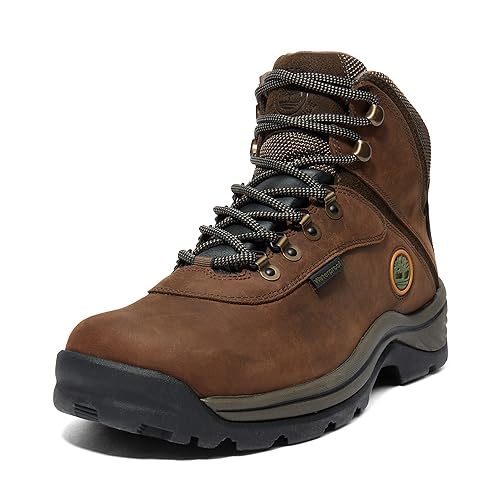
Timberland White Ledge Mid
- Waterproof premium leather
- 1.1 pounds per boot
- EVA footbed and midsole
Columbia Newton Ridge Plus II
- Waterproof full-grain leather
- 1.12 pounds per boot
- Advanced traction rubber sole

NORTIV 8 Ankle High
- Removable cushioned insoles
- Lightweight flexible EVA midsole
- Non-slip rubber outsole
10 Men's Hiking Boots Compared Spec by Spec
This table puts every boot in the guide next to its core construction details so you can rule out the wrong options quickly. Read across the weight, upper and closure columns first, because those are the three things you cannot change after you buy.
| Product | Highlights | Action |
|---|---|---|
| Timberland White Ledge Mid Waterproof |
|
Check Latest Price |
| Columbia Newton Ridge Plus II Waterproof |
|
Check Latest Price |
| NORTIV 8 Ankle High Waterproof |
|
Check Latest Price |
 Skechers Relment |
|
Check Latest Price |
 Timberland Mt. Maddsen Hiking Waterproof |
|
Check Latest Price |
 Timberland Flume Mid Waterproof |
|
Check Latest Price |
 Merrell Moab 3 Mid Waterproof |
|
Check Latest Price |
 Columbia Transverse Hike Waterproof |
|
Check Latest Price |
 ARIAT Terrain H2O Hiking Boot |
|
Check Latest Price |
 Salomon Quest 4 GTX |
|
Check Latest Price |
How We Picked the 10 Boots in This Guide
Every boot here went through the same six-part evaluation. First, support under load: I walked descents with a pack to see whether the shank and midsole held the arch or folded under me. Second, traction on mud, wet rock, gravel and root. Third, water management, which means not just whether water stayed out, but how fast the boot dried after it got wet.
Fourth, comfort at hour six, because the difference between a boot that works and a boot that ruins a trip only shows up late in the day when your feet have swollen. Fifth, build quality, where I looked closely at the sole-to-upper connection to see whether it was stitched or cemented, and at the hardware to see if it was rustproof. Sixth, owner reports over long ownership, which told me which boots people were still wearing years later and which had already been replaced.
I weighted long-term ownership reports heavily because buyers are candid about fit problems in a way that marketing copy never is. I also excluded any boot where the listed construction and the reported experience contradicted each other. Boots that scored well on comfort but failed on wet-weather durability did not make the list just because the cushioning felt good in a shop.
1. Timberland White Ledge Mid Waterproof - The Best All-Round Boot You Can Buy Today
Timberland Men's White Ledge Mid Waterproof Hiking...
Weight: 1.1 lb
Waterproof premium leather upper
EVA footbed and midsole
What we like
- Immediate comfort with almost no break-in
- Waterproofing holds through mud and shallow streams
- Multi-year durability reported by owners
- Solid lug-pattern outsole grip
- Padded tongue and collar
What could be better
- Cemented sole limits resoleability
- Mid-tier leather needs regular oiling
- Supplied insoles wear out in about six months
The White Ledge Mid is the boot I recommend when someone asks me for one pair of men's hiking boots and does not want to think about it. At 1.1 pounds per boot it is light enough for a long day without feeling flimsy, and the premium leather upper shrugs off the wet slop you meet on a forested trail after rain.
What stood out most was the absence of a break-in period. Reviewers consistently describe lacing these in and walking out, and owners report buying second and third pairs years later, which is the strongest durability signal available. The gusseted tongue is a genuine asset: it stops grit working down toward the toe on long dusty days, which is the thing that usually ends a hike early for me.
It is not a perfect construction, and the honest limitation matters if you are weighing this against a resoleable boot. The sole is cemented rather than stitched, so when the outsole eventually goes you replace the boot rather than the sole. If you want one boot to last two decades, that is a poor trade, and it is worth weighing against a resoleable boot before you buy.
The rubber toe bumper and lug pattern hold up well on mixed terrain, and the padded tongue keeps laces from digging in when you tighten the boot for a descent. At 1.1 pounds it disappears on the trail in a way that heavier boots do not, which matters more than raw support once your ankles are already conditioned.
Two smaller notes. The supplied shoelaces are on the thin side and can loosen on wet descents, so swapping to a thicker round lace is an easy upgrade. The colour in person also differs from listing photos more often than most brands manage, which matters if you are pairing it with specific trail clothing.
Why the EVA Midsole Holds Up Better Than Its Simplicity Suggests
The midsole here is a straightforward EVA footbed and midsole rather than a proprietary compound, and that is the smart part. EVA is forgiving on rocky ground, easy to resole-adjacent repairs, and it does not feel punishing on a long descent the way a thin high-end foam can. The cushioning sits around the ankle rather than only under the arch, which is what keeps the collar comfortable over many hours.
Waterproofing, Mud Shedding and the Gusseted Tongue
Owners report the waterproofing holding through mud, snow, ice and shallow stream crossings, which covers most of what a shoulder-season hiker meets. Because the upper is fully gusseted, the failure mode is the toe and the flex creases rather than the side seams, which is why the leather needs oiling every season or two to keep shedding water.
Who This Boot Is Not For
It is not the right choice if you carry a heavy pack on multi-day trips and want a rigid shank, because the EVA platform is designed more for day hiking than for load-bearing. It is also not ideal for anyone planning to resole the boot rather than replace it. For trail crews and weekend hikers who want one dependable leather boot, it is the strongest pick in the group.
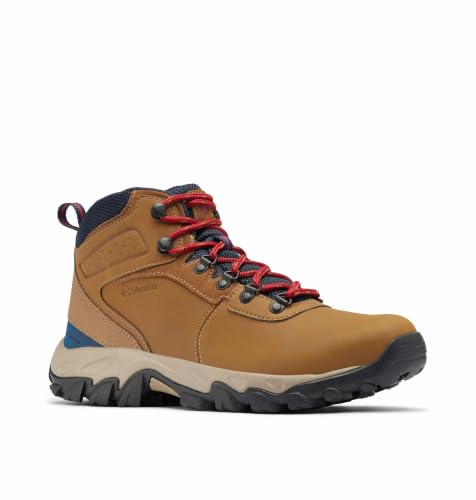
2. Columbia Newton Ridge Plus II Waterproof - The Best Value for Everyday Day Hiking
Columbia Men's Newton Ridge Plus II Waterproof...
Weight: 1.12 lb
Waterproof full-grain leather and mesh
Advanced traction rubber sole
What we like
- Lightweight midsole with high energy return
- Advanced traction sole grips rough and wet ground
- Waterproof full-grain leather with mesh bootie
- Breathable mesh tongue
- Colour and width options
What could be better
- Mesh panels let water in over time
- Moderate rather than plush cushioning
- Runs slightly narrow for wide feet
The Newton Ridge Plus II is the value pick for men who hike two or three times a month on maintained trail and do not need a boot built for loaded trekking. At 1.12 pounds it is one of the lighter boots here, and the midsole is tuned for energy return over long days rather than for absorbing a heavy pack.
Reviewers consistently credit the traction rubber sole with grippy behaviour on rough and wet ground, and the full-grain leather panels with durability where it counts. The mesh bootie construction keeps the boot from feeling like a sauna on a warm climb, which is a real advantage over an all-leather boot for summer hikers.
The compromise is that the mesh-heavy upper is less protective over time. Water finds the mesh panels eventually, usually after a season or two of regular wet-weather use, and the cushioning is described as moderate rather than plush. Neither is a dealbreaker for day hiking; both matter if you are heading into multi-day rain.
The fit runs slightly narrow, and that is the detail to read twice if you have wide feet. Owners with wider feet report needing to go up a size, which is worth doing because a boot squeezed at the forefoot is where blisters start. The mesh tongue is one of the better ventilated designs in this group and it genuinely moves air.
What I like about this boot is how little it asks of you. It is comfortable from the first wear, it is light enough that it never becomes the thing your legs think about, and it takes trail debris better than the mesh construction suggests. If your hiking is weekday-evening loops and weekend day hikes, this does everything you need.
Cushioning and Energy Return Over Long Days
The midsole is described as lightweight and durable with high energy return, which in practice means it gives a little back on flat and rolling terrain instead of deadening every step. That is the right trade for a day hiker walking 15 to 20 kilometres. If you are carrying 20 kg for multiple days, the same foam will feel thin underfoot sooner.
Full-Grain Leather Panels and Mesh Bootie Tradeoffs
The waterproof construction pairs full-grain leather with a mesh bootie, so the leather panels hold the shape of the boot and shed water at the surface while the mesh handles flex and ventilation. The downside is durability: mesh panels that flex with every step eventually work as a water entry point, and reviewers report this appearing over long wet seasons rather than immediately.
Fit Guidance for Narrow and Wide Feet
This is the section I would read twice if you have wide feet, because the boot runs slightly narrow. Two options work: size up a half size, or keep your size and add an insole with more volume under the arch. For narrow feet the stock fit is already close, and going up a full size will leave your heel moving on descents.
3. NORTIV 8 Ankle High Waterproof - The Best Budget Boot for Wet Trails
NORTIV 8 Men's Ankle High Waterproof Hiking...
Removable cushioned insoles
Lightweight flexible EVA midsole
Slip-proof rubber outsole
What we like
- Removable insoles for all-day comfort
- Lightweight EVA midsole cuts foot fatigue
- Advanced traction on wet and muddy ground
- Suited to hiking and work and daily wear
What could be better
- Ankle-high collar gives limited support
- Waterproofing suits trails not deep crossings
- Basic cushioning and materials
The NORTIV 8 Ankle High is the boot to buy if cost is the deciding factor and your hiking stays on trails rather than in loaded trekking. The removable, shock-absorbent insoles are the standout feature, because being able to pull them out and replace them with a supported insole is what keeps this category of boot usable past its first year.
Owners consistently point to the flexible EVA midsole reducing foot fatigue on long walks, and to the rubber outsole holding traction on wet and muddy ground where cheaper boots often turn to soup. The ankle-high waterproof construction keeps the water out for trail-level wetness, which covers most puddle and light rain situations.
Being clear about the limit: the collar is what stops this from being a serious hiking boot. It sits low enough that ankle support on uneven ground is limited, and reviewers are honest that the internal cushioning and materials are basic compared with dedicated hiking footwear. On flat, well-maintained trail this is invisible. On rocky ground it is not.
The versatility is genuinely useful. The same boot gets used for camping, work on the farm, cycling and everyday outdoor wear, which is why its review volume is so high relative to its position in the category. If you need one pair of outdoor footwear for several activities rather than a specialist tool, that broad use case is the argument for it.
My one piece of advice is to buy it with an insole plan from day one. Because the insoles are removable and cushioned, adding an arch-supporting insert takes about a minute and turns a budget boot into one that is comfortable on a full day of walking. Skipping that step is the most common reason owners replace these earlier than they need to.
Removable Insoles and How to Get More Out of Them
The removable cushioned insole is doing more work than it appears to. It provides the shock absorption that the thin EVA midsole cannot, and because it lifts out, you can trim it or replace it with a third-party arch insert in under a minute. That single feature is what separates a boot that lasts two seasons from one that lasts five.
Traction on Wet Mud Versus Technical Rock
The rubber outsole is built with advanced traction and is fully slip-proof, and owners back that up on wet and muddy ground, which is where budget boots usually fail. On technical rock and slick slabs, the shallower lug pattern typical of this boot height and price gives you noticeably less bite than a dedicated hiking outsole, so it is not the pick for alpine scramble or wet granite.
What You Give Up Compared With a Mid-Cut Boot
What you give up is ankle stability and long-term waterproof sealing. The ankle-high collar moves freely, which is comfortable, but it does not resist inversion on uneven ground the way a mid-cut boot with a stiffer chassis does. Waterproofing is adequate rather than fully sealed, so sustained deep crossings are outside what this construction is built for.
4. Skechers Relment - The Best Hiking Boot for Comfortable Daily Wear
Skechers Men's Relment Pelmo
Memory Foam footbed
Relaxed Fit sizing
Waterproof sport suede upper
Ankle-height collar
What we like
- Memory Foam footbed cushions long days
- Relaxed fit suits wider feet
- Waterproof suede upper keeps feet dry
- Ankle collar adds stability without bulk
- Light enough for everyday wear
What could be better
- Suede scuffs and is hard to maintain
- Less technical traction than a hiking boot
- Relaxed fit feels loose on rough ground
The Relment is not a trail tool, and pretending otherwise would waste your time. It is the best hiking boot in this list for a man who wants a single pair of footwear that handles a walk on the trail, a long day on his feet at work and everything in between, with a Memory Foam footbed doing most of the comfort work.
Reviewers love the footbed. Memory Foam moulds to the foot over the first few wears and stays comfortable through a full workday, which is a different performance target from absorbing rock strikes. The relaxed fit works well for wide feet, and the ankle-height collar adds a bit of stability without making the boot look or feel heavy.
The waterproof sport suede upper keeps feet dry in wet conditions, and the suede gives the boot a look that works with everyday clothing. The honest downside is that suede scuffs easily and is harder to maintain than smooth leather, which matters if you scuff boots on rock frequently.
Traction is the limiting factor. The outsole is not designed for technical hiking, and a few reviewers note the tread is not up to the task on loose or wet ground. Combined with the relaxed fit, that means the boot can feel slightly loose on rough terrain where you would want lockdown.
Where it shines is anywhere a rigid boot would annoy you. Walking the dog for two hours, standing on a concrete dock all day, a flat gravel path after rain. It is light, it looks normal, and it does not need a break-in. If your hiking is gentle and your weeks are long, that combination is worth more than technical capability.
Memory Foam Fit and the Wide-Foot Advantage
The footbed is the reason this boot works for people the rest of the category frustrates. Memory Foam adapts to the shape of the foot rather than resisting it, so wide feet that get pinched in a narrow hiking boot tend to get room here without needing to size up. Over a full day that difference is worth more than any outsole feature.
Waterproof Suede Uppers and Their Maintenance Reality
The waterproof sport suede upper is good at keeping water out in wet conditions, and suede hides dirt reasonably well. It scuffs, though, and unlike smooth leather it cannot be polished back to new. A waterproofing spray applied twice a season keeps the water behaviour consistent and reduces staining, which is the one maintenance step worth doing.
Where This Boot Falls Short on Trail
Two limits are consistent across reviews: less technical outsole traction than a dedicated hiking boot, and a relaxed fit that can feel loose on uneven ground. Neither matters on pavement or packed track. Both show up quickly on loose gravel, wet roots and anything steep, where you would want the foot held rather than floating.
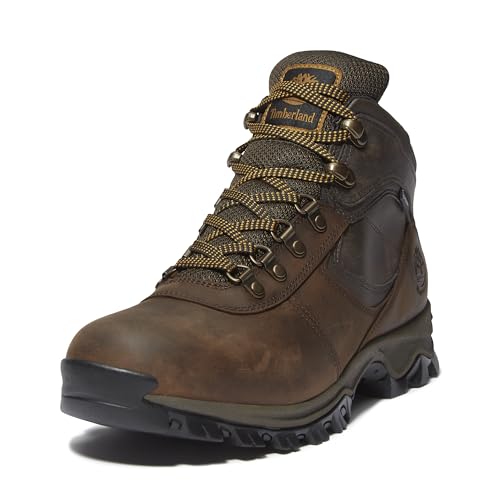
5. Timberland Mt. Maddsen Waterproof - The Best Leather Boot for Packed Trails
Timberland Men's Mt. Maddsen Anti-Fatigue Hiking...
Weight: 3 lb
Waterproof premium leather upper
Anti-fatigue removable footbed
Steel D-rings and hooks
What we like
- Comfortable straight from the box
- Light for a full-grain leather boot
- Sticky tread on dirt and snow
- Fits orthotics without crowding
- Steel hardware built for durability
What could be better
- Runs about a half size small so sizing up is advised
- Toe cover can loosen and compromise waterproofing
- Tongue is narrow with little padding
The Mt. Maddsen is the leather boot I reach for on maintained trail and gravel paths where a stiffer construction is an advantage and a fashion boot would be overkill. The anti-fatigue removable footbed is the component that surprises people, because owners report fitting their own orthotics inside without crowding, and that turns it into a boot that works with a specific foot rather than against it.
It is comfortable almost immediately, and for a full-grain leather boot it is genuinely light. The outsole is sticky enough to grip dirt, mud and snow, and owners consistently report cleaning scuffs and dirt off easily with standard leather care. The riveted steel D-rings and hooks are hardware that will outlast the upper, which matters over a long ownership.
Here is the fitting warning, and it comes up repeatedly: this boot runs about half a size small. If you do not size up, you will feel it at the toe on the first descent, and that is precisely the hot spot that ends hikes for a lot of men. Owners who size up a half size report the problem disappears.
Two other limitations are worth knowing. The toe cover can loosen over time and eventually compromise the waterproofing at the front of the boot, which several owners notice after about a year of heavy use. And the tongue is narrow with little padding at the top of the foot, so it can rub on long descents if your lacing puts pressure there.
It can also run warm for indoor wear, which is the trade for a sealed leather upper. That is not a flaw, it is what makes the boot dependable in rain and snow. Just do not expect to wear it to the supermarket in July and feel better about it.
Anti-Fatigue Footbed and Orthotic Compatibility
The removable anti-fatigue footbed gives the boot its unusually accommodating fit. Because it lifts out and the interior is not tightly packed, owners with custom orthotics report fitting them without the toe box being compressed. If you have plantar fasciitis or a pronounced arch, this is one of the few boots in the group where an insole swap does not require removing a fixed footbed with adhesive.
Leather Durability, Toe Cover and Long-Term Waterproofing
The full-grain premium leather upper is durable and repairs well, which is a genuine advantage over synthetic uppers that delaminate after a few seasons. The weak point is the toe cover, which owners report loosening after extended use and eventually letting water into the front of the boot. Keeping the leather conditioned slows that down, and it is a repairable problem rather than a failure.
Sizing: Why Owners Consistently Go Up a Half Size
Runs about a half size small, and that single fact accounts for most of the mixed feedback on this boot. Men who size up get a boot they describe as light, comfortable and long-lasting. Men who do not get toe pressure on descents and a narrower tongue that rubs. If your current hiking shoes fit true, size up here.
6. Timberland Flume Mid Waterproof - The Best Boot for Snow and Rain
Timberland Men's Flume Mid Waterproof Hiking Boot...
Weight: 3 lb
Waterproof premium leather upper
Rustproof speed lace hardware
EVA footbed
What we like
- No break-in period needed
- Light and durable for work or campus use
- Keeps feet dry and warm in snow and rain
- Roomy true-to-size toe box
- Padded collar adds support
What could be better
- Leather scuffs readily
- Tread can feel slick when wet
- Runs small compared with other hiking boots
The Flume Mid is the one I recommend for anyone whose hiking calendar is defined by rain rather than distance. Owners repeatedly report repeat purchases over many years for the same reason each time: the boot keeps feet dry and warm in snow and rain, and it needs no break-in to get there.
Despite weighing 3 pounds per pair it is described as light enough for daily work and campus wear, which tells you it is a comfort-first boot rather than a technical one. The true-to-size roomy toe box is a genuine advantage for men who wear thick hiking socks, and the padded collar adds support without a hard edge against the ankle.
The rustproof speed lace hardware with lace hooks at the top is a small detail that matters in weather, because metal that corrodes is what makes a boot hard to remove when your fingers are cold and wet. This boot avoids that failure entirely. A damp cloth and a leather conditioner are all it takes to clean.
Where the boot disappoints is in the tread and the leather quality. The hard plastic tread can feel slick on wet surfaces, which is a direct contradiction with the boot's wet-weather purpose and the main reason I rank it below the White Ledge. Some buyers also feel the leather is flimsy, and it scuffs readily enough that you will be conditioning it more often than not.
It also runs small, though less dramatically than the Mt. Maddsen. The toe box is roomy in shape, but the overall length is trimmed, so if you are between sizes, check whether a half size up leaves you with enough room for a thick sock. Most owners are satisfied with the size they bought.
Wet-Weather Sealing and the Rustproof Hardware Detail
The waterproof premium leather upper is the reason this boot keeps feet dry in snow and rain, and the fully gusseted tongue stops water tracking down from the top on a descent in a downpour. The rustproof speed lace hardware is the detail most buyers never think about and always appreciate, because it is the difference between a boot that comes off in a stream and one that does not.
Why the Tread Is the Weak Link in a Rain Boot
The hard plastic tread pattern gives the Flume Mid less bite on wet rock and wet gravel than a hiking-specific lugged outsole, and reviewers flag this directly. On a snowy road or a wet path it is fine. On a steep, slick descent on wet rock, it is the reason to size your expectations down rather than up.
Boot Sizing, Toe Box Volume and Sock Choice
Owners frequently call the fit true to size with a roomy toe box, which is exactly what a man wearing thick merino hiking socks needs. Because the boot runs small overall, the room in the forefoot is partly intentional shape and partly the fact that the toe area is not crowded. Pair it with a mid-weight sock rather than a heavy one and you will have the volume you need.
7. Merrell Moab 3 Mid Waterproof - The Best Traction in the Group
Merrell Men's Moab 3 Mid Waterproof Hiking Boot...
Weight: 11.68 oz
Vibram TC5+ rubber outsole
Waterproof membrane and mesh upper
Nylon arch shank
What we like
- Vibram TC5+ traction on mixed terrain
- Waterproof membrane with breathable mesh
- Removable insole accepts orthotics
- Bellows tongue and toe cap block debris
- Air Cushion heel absorbs shock
What could be better
- Runs narrow for wide feet
- Mesh lets water in over very wet days
- Arch shank gives medium support only
The Moab 3 Mid is the lightest technical boot here by a wide margin at 11.68 ounces per boot, and it does not feel light because the manufacturer cut the protection out. The Vibram TC5+ rubber outsole is the reason this boot grips where cheaper rubber gives up, and the molded nylon arch shank adds the torsional support that a pure EVA boot lacks.
What I like most is the insole system. The removable Kinetic Fit ADVANCED contoured insole has reinforced heel cushioning and accepts orthotics, and reviewers with foot problems single it out. It is the one part of the boot most likely to be the reason you keep wearing the boot in five years rather than replacing the whole pair.
Two honest warnings. It runs narrow, and several buyers size up as a result. And the mesh portions of the upper reduce long-term waterproof performance, because mesh is the point where water eventually works in on sustained wet days, even with a sealed membrane behind it.
The bellows tongue does a better job than most at keeping small stones out, and the protective toe cap means you can bash the front of the boot into rock without the upper taking the hit. The Air Cushion in the heel absorbs shock and adds stability, which is what keeps the light weight from feeling harsh at the end of a descent.
For a man who wants a real hiking boot that is not heavy, this is the closest thing in the group to what serious buyers call the sweet spot. Eleven ounces at 11.68 per boot is more than a pound lighter per boot than a 3-pound leather pair, and the Vibram outsole means you are not trading grip for weight, which is the usual bargain.
Vibram TC5+ Outsole and Where It Eats Its Advantages
The TC5+ compound is a hiking-specific rubber, and it delivers strong traction on mixed terrain including wet rock, mud and loose gravel, which is where cheaper general-purpose outsoles stop working. The trade is surface life: TC5+ is optimised for trail grip rather than pavement, so on concrete and asphalt it wears faster than a general-purpose sole would.
The Removable Insole as a Long-Term Ownership Strategy
The removable contoured insole with reinforced heel cushioning accepts orthotics, and that single feature changes how long the boot lasts. Replace the footbed every year or two and the boot is effectively renewed, rather than being written off because the factory cushioning has flattened. It is the simplest repair available on any boot in this guide.
Narrow Fit, Wide Feet and the Mesh Compromise
This boot runs narrow, and that is the most common sizing feedback, with a fair number of buyers going up a size. The mesh upper is a deliberate trade for breathability: it moves heat and moisture out well in warm weather, but over a very wet multi-day stretch the mesh panels eventually admit water despite the waterproof membrane. For rain-heavy climates, the all-leather Timberland options handle that better.
8. Columbia Transverse Hike Waterproof - The Best Lightweight Boot for Moderate Terrain
Columbia Men's Transverse Waterproof Hiking Boot
Omni-Tech seam-sealed membrane
Omni-Grip multi-terrain outsole
Techlite impact-absorbing midsole
What we like
- Seam-sealed waterproofing for rain and snow
- Omni-Grip grip across rock and gravel
- Light midsole with high energy return
- Cushioned collar and metal hardware
What could be better
- Lower cut gives limited ankle support
- Leather and mesh needs time to break in
- Rated for moderate not extreme wet
The Transverse Hike carries the highest average rating in this entire selection, and the reason is a specific combination rather than one standout feature. The Omni-Tech construction is multilayered, waterproof and seam-sealed, the Omni-Grip outsole handles rock, dirt and gravel in wet and dry conditions, and the Techlite midsole keeps the whole thing light with high energy return.
That combination makes it a good fit for shoulder-season hiking, where rain and snow come in bursts rather than sustained deluges. Seam-sealed construction is what keeps water out over a long wet day, and the cushioned collar with metal hardware adds comfort and durability where cheaper boots flex.
The limitation is the boot cut. It sits lower than a full hiking boot, so ankle support on rough ground is limited compared with a mid or high collar. If your terrain involves a lot of loose rock, uneven ground or a heavy pack, that height is the thing to think about first.
The leather and mesh upper also needs time to break in, which is the one departure from the no-break-in pattern most boots here follow. Expect a short adjustment period on the first few outings, especially with the collar, before the upper settles onto the foot.
What earns it the top rating is consistency. It is not the lightest boot or the most supportive or the most waterproof, but it is the one that few owners complain about, and the rating distribution backs that up with the smallest share of one-star reviews in the group. For a man who hikes moderate terrain in changeable weather and does not want a boot that over-promises, that reliability is the feature.
Omni-Tech Seam Sealing and What Moderate Rain Really Means
Seam-sealed construction is the differentiator here. A membrane is only as good as the seams around it, and a sealed seam holds its water resistance on a long wet day in a way that stitch-only construction does not. The rating here is for moderate rain and snow, which is different from standing in a river, and knowing that difference is what keeps you from over-trusting it.
Omni-Grip Traction Across Rock, Dirt and Gravel
The outsole is built for multi-terrain use, and that is where it earns its place. Grip on wet rock is what saves a descent, and the compound is designed to hold across rock, dirt and gravel in both conditions. On a technical scramble you would want deeper lugs, but for maintained trail mixed with gravel this is a very well-balanced tread.
Boot Height and When to Choose Something Taller
The lower cut is a deliberate choice, and it is the right one for hikers who want flexibility and lightness over ankle protection. It is the wrong one if you carry weight, cross loose talus, or spend a lot of time descending uneven ground. Know that in advance, because no insole or lacing change fixes a boot that is too short at the ankle.
9. ARIAT Terrain H2O Hiking Boot - The Best Boot for Riding and Hiking
ARIAT Terrain Waterproof Hiking Boot
Weight: 1.8 lb
Waterproof PRO full-grain leather
EVA midsole
Duratread outsole
What we like
- Comfortable with no break-in
- Waterproof PRO holds in heavy rain and light snow
- Duratread outsole resists wear
- ATS support aids heel and arch stability
- Stirrup-friendly sole for riding
What could be better
- Shallower tread limits technical grip
- Basic internal cushioning
- Can run tight for very wide feet
The Terrain H2O earns its rating for a reason that has nothing to do with hiking: it straddles equestrian and outdoor use. If you ride horses and also hike, or you split your time between a ranch and a trail, this is the boot that does both without a compromise that shows.
The ATS technology provides durability and all-day comfort, and owners praise the accurate sizing. The oiled full-grain leather upper with Waterproof PRO technology holds up in heavy rain and light snow, and the moisture-wicking lining keeps feet dry from dawn to dusk, which is exactly the ranch day described.
Owners report repeat purchases over many years, and the stirrup-friendly construction is a genuine functional detail: a smooth heel and a defined shank area keep the boot stable in a stirrup without the tread catching. The Duratread outsole resists wear and stays flexible, which is why it survives barn floors better than a hiking outsole would.
The honest trade-offs are all about trail performance. The outsole tread is shallower than a dedicated hiking boot, which limits grip on technical trail. The interior cushioning and insoles are basic compared with hiking-specific boots, so all-day trail comfort is good rather than excellent. And wide sizing can still run tight for genuinely wide feet, so do not assume the wide label solves it.
Leather can crack along creases after heavy ranch work, which is a fair trade for the durability under a saddle and in mud. If hiking is a smaller part of your life than work or riding, these limitations rarely surface. If the trail is the main event, look at the Merrell or a mid-cut instead.
Waterproof PRO Leather and the Moisture-Wicking Lining
The oiled full-grain leather with Waterproof PRO technology is the workhorse element, and it performs in conditions that would defeat a mesh upper. The moisture-wicking lining is what makes it wearable for a full working day, because a sealed boot with no moisture handling gets unmanageable by hour six regardless of how good the membrane is.
Duratread Wear Resistance on Hard Ground
Duratread is built for maximum wear resistance and flexibility, which is exactly what a boot needs on concrete, gravel and barn floors. That same compound is why the tread is shallower than a hiking outsole: it prioritises lasting through abrasion over biting into loose ground. On a maintained trail it is more than adequate; on technical ground it is not the tool.
Fit, Width and Who This Boot Is Built For
Sizing is accurate for most feet, but the wide option can still run tight on genuinely wide feet, so a half size up is the safer starting point if you have volume to spare. ATS support helps heel and arch stability over long days on hard surfaces. This is the boot for a man whose boots need to work on a horse as well as on a hill.
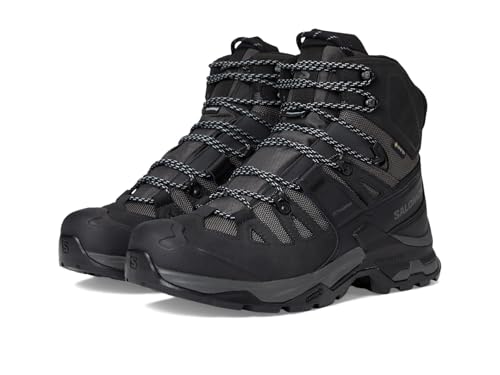
10. Salomon Quest 4 GTX - The Best Ankle Support for Uneven Descents
Salomon Men's QUEST 4 GORE-TEX Hiking Boots For...
GTX waterproof membrane
High-rise shaft
Grippy outsole with toe cap
Secure lace hooks
What we like
- High-rise shaft prevents ankle rolls
- GTX membrane held feet dry in heavy rain and snow
- Lace hooks grip firmly
- Lightweight on long ascents
- Wide toe box fits thick socks
What could be better
- Substantial break-in period
- Runs large so sizing down helps
- Lug wear on asphalt
The Quest 4 GTX is the most supportive boot in this group and the one I would choose for a man carrying weight on rough ground. The high-rise shaft is the reason: owners consistently report zero ankle rolls on uneven descents, which is the single most valuable safety property a hiking boot can have.
Owners also report the GTX waterproof membrane keeping feet completely dry through heavy rain and snow, one account describing a season at Denali in it. The grippy outsole with protective toe cap holds on mud, grass and soft natural trails, and the metal-free upper lace hooks grip laces securely so your fit does not change on a long descent.
There is a cost to that support, and it is worth being clear about. The break-in period can be substantial because of the plastic side structure, it runs large so sizing down half a size is often advised, and the outsole lugs wear quickly on asphalt and concrete.
It also runs hot in warm weather, because the tall shaft and the GTX membrane together trap heat, and that is the well-documented complaint from anyone using it above about 25 degrees. The supplied insole is only adequate, so third-party insoles are common among owners, and some buyers report the toe cap separating with lighter construction than earlier versions.
None of that changes the recommendation for its actual use case. If your hiking involves descending loose ground, wet rock, or a loaded pack at altitude, ankle stability is not a luxury. The wide toe box is a real bonus too, with room for thick hiking socks, which matters more in a high boot where your socks ride up during a long descent.
High-Rise Shaft Support and Descending Uneven Ground
The shaft is high enough that the boot controls the ankle through the range that causes most sprains, which is the inversion that happens on a descending off-camber step. This is why owners report zero ankle rolls. It is the same property that makes the boot hot in summer, and you are trading comfort in heat for a real reduction in injury risk on rough ground.
GTX Membrane Performance in Sustained Rain
The GTX waterproof membrane performs in exactly the conditions where the mesh-based boots in this guide struggle: sustained rain, snow and creek crossings. What it cannot do is manage moisture from the inside, which is why it runs hot and why a wool or synthetic sock matters more here than with a breathable boot. Damp feet in a sealed boot stay damp, and that is the real cost of waterproofing.
Break-In, Sizing and the Asphalt Problem
The plastic side structure requires a substantial break-in, and for the first few outings the boot can feel stiff enough to cause blisters if you push too far. It runs large, so a half size down often improves the fit. And because the lugs are trail-oriented, asphalt and concrete wear them down quickly, which matters if you wear these boots to work as well as on the trail.
How to Choose the Right Men's Hiking Boot
Fit is not a preference in this category, it is a physical outcome, and the right boot is the one that matches your foot, your load, your climate and your terrain. Work through these six decisions in order and the choice narrows quickly. The order matters because the first three are hard limits, and the last three are preferences you can trade off against each other.
Match the Boot Cut to Your Load
Boot height is the first hard decision, and it is driven by load and terrain rather than fashion. A low or mid cut flexes freely and weighs less, which suits day hiking on maintained trail and dry conditions. A backpacking-height boot like the Salomon Quest 4 GTX adds the shaft structure that resists ankle inversion and holds the foot steady when a pack is pulling you downhill.
The practical guidance is to match stiffness to load. Boots with a nylon or plastic shank, like the Merrell Moab 3 Mid, resist compression under weight and suit multi-day trips. Flexible EVA platforms like the Columbia Newton Ridge Plus II are tuned for moving quickly without a pack. Carrying 20 kg for several days and using a flexible day boot is the fastest route to foot pain, and no amount of footbed swapping fixes it.
Waterproof or Not: The Decision That Matters Most
Waterproofing is a solution to a specific problem, and it is a poor solution if you do not have the problem. A membrane keeps water out and also keeps sweat in, so in warm or dry climates a waterproof boot can feel worse than a breathable one. In sustained rain, snow, or when you regularly cross streams, the same membrane is the reason your feet stay dry.
Note where water enters. Boots with mesh in the upper, such as the Merrell Moab 3 Mid and the Columbia Newton Ridge Plus II, are more breathable and dry faster, but mesh is where water eventually works in over long wet stretches. All-leather and seam-sealed constructions, like the Timberland White Ledge Mid and the Columbia Transverse Hike, hold water out longer. Whichever you pick, dry your boots at room temperature rather than on a radiator, because direct heat cracks the glue that holds a cemented sole together.
Fit, Width and the Half-Size Rule
Buy your hiking footwear late in the day, when your feet have swollen, and wear the socks you will actually hike in. Sizing between brands is genuinely inconsistent, which is the most common complaint in hiking footwear discussions, so the brand's own size chart is worth less than the pattern below.
Boots that run about a half size small, where sizing up is the fix: the Timberland Mt. Maddsen, the Timberland Flume Mid. Boots that run large, where sizing down a half size improves the fit: the Salomon Quest 4 GTX. Boots that run narrow, where wide feet should size up: the Merrell Moab 3 Mid, the Columbia Newton Ridge Plus II. Boots with a genuinely relaxed last: the Skechers Relment, which many wide-footed owners keep at true to size.
One more rule that saves more hikes than any other: if your boot runs small, size up. If it runs large, size down. The opposite of that advice is the most common cause of blisters on a first hike, because a boot that is too long drives your toes into the front of the boot on every descent.
Fixing Hot Spots and Blisters After the First Hike
Do not treat a new boot and a blister as two separate problems. A hot spot in exactly one spot is a fit signal, and the fix is a change to the boot rather than a bandage. Here is the sequence that works, drawn from the most common complaints in hiking footwear discussions.
- Pinpoint the location. A hot spot on the side of the big toe means the boot is too narrow or too short. A hot spot at the heel means your foot is sliding in the boot, which is a lacing or sizing problem. A hot spot at the top of the foot usually means the tongue is pressing under tension.
- Change the size before changing anything else. If the boot runs small, go up half a size. If it runs large, go down. No insole fixes a toe that is being pushed forward on every step.
- Swap the insole. Where the factory footbed is thin, an arch-supporting third-party insert adds volume under the arch and stops the foot sliding forward. Trim the new insole at the toe so it does not lift the foot into the front of the boot.
- Change the lacing. Skip one or two eyelets near the top to relieve pressure across the instep, and lock the heel with a heel-loop lacing technique so the foot stops moving inside the boot.
- Change the socks. A thin liner sock under a thicker hiking sock moves the friction point away from your skin, which is often more effective than anything you do to the boot.
For leather boots, break them in on a short walk rather than a long one. Wear them around the house with thick socks for a few evenings, then take them on a two-hour walk close to home. A boot that develops a hot spot on a first long hike will develop a blister on the second one.
What You Gain at Each Price Tier
Price is a poor proxy for quality in this category, but it is a reliable indicator of which compromises you are accepting. The lower tier delivers a functional boot for trail hiking, and the money you do not spend buys you a less refined midsole, a cemented sole and fewer options for the footbed. The middle tier is where the construction you actually notice begins: better rubber compounds, a real shank, and stitched or reinforced construction.
At the top of the range you are paying for refinements that matter only if you use them: premium full-grain leather that can be repaired rather than replaced, and construction focused on long-term load bearing. Of the ten boots here, the GTX membrane on the Salomon Quest 4 GTX is the only true performance membrane, and that boot is also the most load-capable in the group. For most men, a well-fitted mid-tier boot with a replaceable insole serves more years than an expensive boot sized wrong.
Boot Care and When to Resole Rather Than Replace
Look at the sole-to-upper connection before anything else when judging a boot. A stitched construction can be resoled; a cemented one cannot. Of the ten boots here, the Timberland White Ledge Mid and the Timberland Flume Mid use cemented soles, which means the boot is replaced rather than repaired when the outsole fails. If longevity matters to you, treat that as part of the buying decision rather than something to discover later.
For leather uppers, clean with a damp cloth, condition once or twice a year, and let them dry away from direct heat. For mesh and synthetic uppers, remove the footbeds and laces and wash them separately, which is the only way to get water out of the inside of the boot. Replace the footbed before you replace the boot, since that is the cheapest renewal available. When a boot is visibly deformed at the midsole, has a separated upper, or has a waterproofing failure at the toe, that is when the repair conversation ends and you start shopping again.
Frequently Asked Questions
What are the best rated hiking boots for men?
The best rated men's hiking boots in this guide are the Timberland White Ledge Mid Waterproof for overall comfort and durability, the Columbia Newton Ridge Plus II Waterproof for day-hike versatility, and the Merrell Moab 3 Mid Waterproof for traction. The Timberland leads on review volume at roughly 68,000 owner reviews, while the Columbia Transverse Hike carries the highest average rating. Choose based on terrain and load rather than rating alone.
How do I determine which hiking boot is right for me?
Work through five decisions in order. First, match boot height to your pack load and terrain. Second, decide whether you need a waterproof membrane based on how much sustained rain or snow you actually hike in. Third, establish your width and whether the brand runs small or large. Fourth, set your budget against the construction you need. Fifth, confirm the footbed is removable so you can fit an insole later.
Is Salomon or Merrell better?
It depends on what you are walking. The Salomon Quest 4 GTX is the more supportive option, with a high-rise shaft that prevents ankle rolls on uneven descents, but it runs large, runs hot in warm weather and needs a long break-in. The Merrell Moab 3 Mid is the lighter and more breathable option, with a Vibram TC5+ outsole and a removable insole, but it runs narrow. Choose Salomon for load bearing, Merrell for lighter day hiking.
How much should I spend on good hiking boots?
Spend based on construction, not brand. A functional trail boot handles day hiking on maintained trail. A mid-tier boot adds better rubber compounds, a real shank and a thicker midsole that holds up under a loaded pack. Above the top tier you are paying for premium leather and repairable construction. For most men, a well-fitted mid-tier boot with a replaceable insole outlasts an expensive boot sized incorrectly.
Should I size up a half size in hiking boots?
Only if the brand runs small. The Timberland Mt. Maddsen and Flume Mid run about a half size small, so owners size up. The Salomon Quest 4 GTX runs large, so sizing down a half size improves the fit. The Merrell Moab 3 Mid and Columbia Newton Ridge Plus II run narrow, which matters most for wide feet. Always try boots late in the day wearing the socks you will hike in.
Which Hiking Boot Is Right for You?
If you want one pair of boots that handles rain, mud, cold trails and daily wear without any fuss, take the Timberland White Ledge Mid Waterproof. It needs no break-in, keeps water out, and has the longest ownership history of anything in this guide. If your hiking is day trips on maintained trail and you want a boot that will not weigh your legs down, the Columbia Newton Ridge Plus II is the value pick, though size up if you have wide feet.
If your feet are wide and getting them comfortable matters more than technical performance, the Skechers Relment is the easiest boot here to live in. If you split your time between a job site, a stable and the trail, the ARIAT Terrain H2O does both. If you want the lightest genuine hiking boot with a real outsole compound, the Merrell Moab 3 Mid is hard to argue with.
And if you carry weight, descend loose ground or hike in sustained rain and snow, the Salomon Quest 4 GTX is the pick, accepting the long break-in, the large fit and the heat. Get the sizing right on any of them, because no boot in this category, including the best hiking boots for men in 2026, rescues a foot that is being pushed into the front of the toe on every step. Buy late in the day, wear thick socks, and walk the first outing close to home.