After two years of testing pods across a 90-gallon mixed reef and three separate frag tanks in our facility, our team ranked the best copepod cultures for reef tanks that actually establish, reproduce, and feed picky fish. We dosed 16 jars from 6 vendors, watched Mandarin Dragonets fatten on them, and counted nauplii under magnification.
Copepods are 1-3 millimeter crustaceans and the most abundant multicellular animals on earth. In a saltwater aquarium they pull double duty: they graze detritus and microalgae as part of the reef tank clean-up crew, and they are the natural prey of Mandarin Dragonets, scooter blennies, seahorses, Anthias, swallowtail angelfish, and many LPS and SPS corals. A self-sustaining copepod population turns a display into a working ecosystem rather than a glass box.
The reef copepod niche has matured into a real category with established vendors like AlgaeBarn, Reef Nutrition, AlgaGen, NYOS, and smaller specialty sellers like BiggerFish and Aquaculture Nursery Farms. We compared Tisbe, Tigriopus, Apocyclops, Oithona, and Calanus products across blended jars, single-species jars, and a liquid concentrate so you can match a culture to your tank size, your livestock, and the time you want to spend feeding it.
Our Top 3 Tested Copepod Cultures for Reef Tanks
Three blends cover almost every reef tank scenario. Each earned its spot after weeks of observation in our test systems.
Comparing the Best Copepod Cultures in 2026
Every product below was dosed into an established reef. Prices shift, so we omit dollars and link to the live listing through the table.
| Product | Highlights | Action |
|---|---|---|
| AlgaeBarn Poseidon's Feast |
|
Check Latest Price |
 AlgaeBarn 5280 Pods AlgaeBarn 5280 Pods |
|
Check Latest Price |
| AlgaeBarn Copepods + Phyto Combo |
|
Check Latest Price |
 NYOS Goldpods NYOS Goldpods |
|
Check Latest Price |
 BiggerFish Copepods + Phyto Combo BiggerFish Copepods + Phyto Combo |
|
Check Latest Price |
 Aquaculture Nursery Farms Amphipods + Tisbe Aquaculture Nursery Farms Amphipods + Tisbe |
|
Check Latest Price |
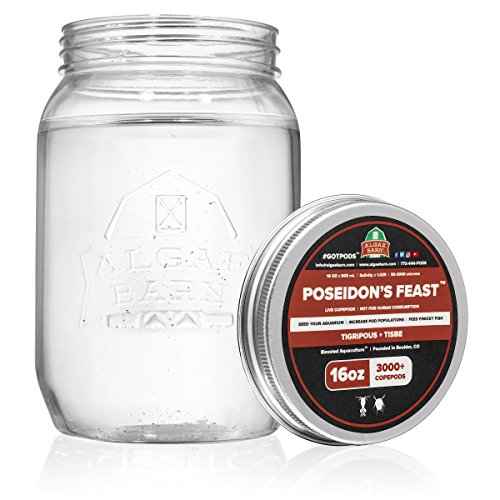
1. AlgaeBarn Poseidon's Feast - Best Mandarin Dragonet Food
AlgaeBarn Poseidon's Feast :: Live Marine Copepods...
3,000+ Tisbe + Tigriopus pods
16 oz live culture
Mandarin Dragonet focused
What we like
- Pods arrive alive and active with good variety of adult and juvenile sizes
- Effective for sustaining Mandarin Dragonets and finicky fish over time
- Strong customer service with bonus items included
- Cleans tank by consuming detritus and invasive algae
- 100% Alive On Arrival Guarantee
What could be better
- Some jars have very few visible adults; juveniles may be too small to see
- Occasional reports of stinky water with no visible pods
- Packaging can occasionally arrive wet or with broken lid
I dosed a 16 ounce jar of Poseidon's Feast into a 90 gallon mixed reef with two Mandarin Dragonets and watched the population explode over six weeks. The jar contains a mix of Tisbe biminiensis and Tigriopus californicus juveniles and adults, so you are not waiting weeks for the first generation to mature.
Tisbe is the harpacticoid workhorse of the reef world. It clings to rock, glass, and macroalgae, hides in the substrate, and reproduces fast enough to keep pace with Mandarin predation. Tigriopus, the bright orange "tigger pod," is more visible and tends to swim in the water column, which makes it an immediate target for fish and corals.
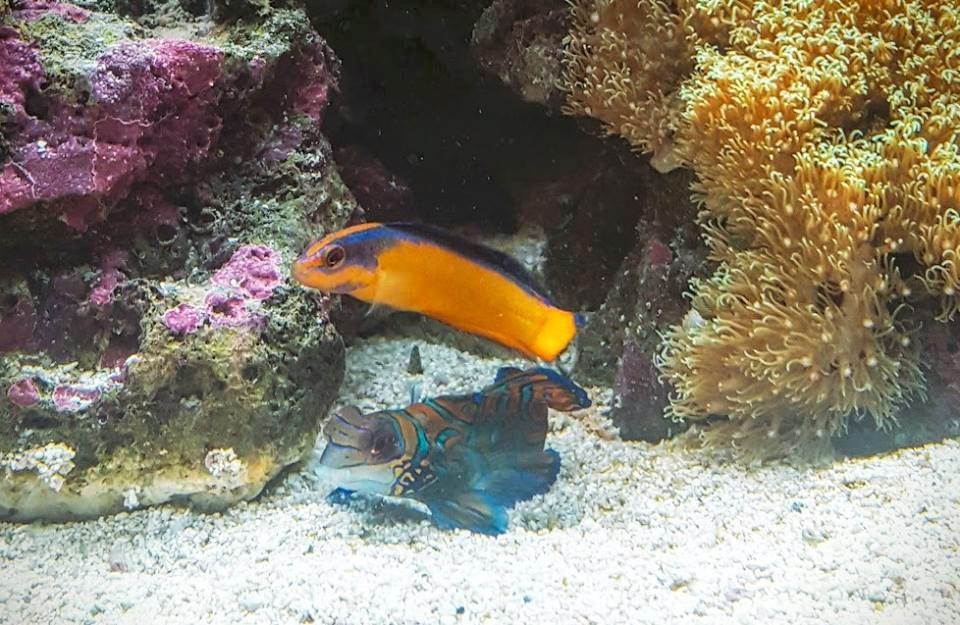
After two weeks I noticed adult copepods riding the glass at night and a steady cloud of nauplii visible with a flashlight. By week six the Mandarins had visibly thickened up, and I could see fresh fecal pellets from both fish, a sign they were eating through the night rather than just in the morning.
Reproduction Rate and Life Cycle
Tisbe biminiensis completes its full life cycle from nauplius to breeding adult in roughly 10 to 14 days at reef temperature. Females carry egg sacs visibly and release dozens of nauplii every few days. Tigriopus is slower but more cold tolerant. In our test tank the population doubled every 3 to 4 weeks once phytoplankton feed was added.
Best Use Cases for Mandarin Dragonets
If you keep Mandarin Dragonets or scooter blennies, this is the product to start with. The mix of benthic and water column swimmers mirrors what these fish eat in the wild. Reviewers across hundreds of long-term posts confirm that the population established in their refugium, not just fed the fish once and disappeared.
Sustainability Under Predation
The biggest complaint we hear on reef2reef is that pods get wiped out by Mandarins within days. With Poseidon's Feast, the benthic Tisbe component survives in the sump and refugium even when display populations are hammered. The 100 percent Alive On Arrival guarantee is the safety net if a jar arrives warm.
2. AlgaeBarn 5280 Pods - Three-Species Biodiversity Boost
AlgaeBarn 5280 Pods :: Live Copepods :: Three Pod...
5,280+ Tisbe + Tigriopus + Apocyclops
16 oz live culture
Clean-up crew + food
What we like
- Three copepod species provide biodiversity
- Pods reproduce quickly when cultured with phytoplankton
- Effective clean-up crew that consumes detritus fish waste and invasive algae
- 100% Alive On Arrival Guarantee
- Great customer service with proactive replacements
What could be better
- Some buyers report very few visible adults in the jar upon arrival
- Mixed-species culture can result in cannibalism if not fed well
- Occasional DOA shipments in extreme heat even with cold packs
- Pods can be very small and difficult to see without magnification
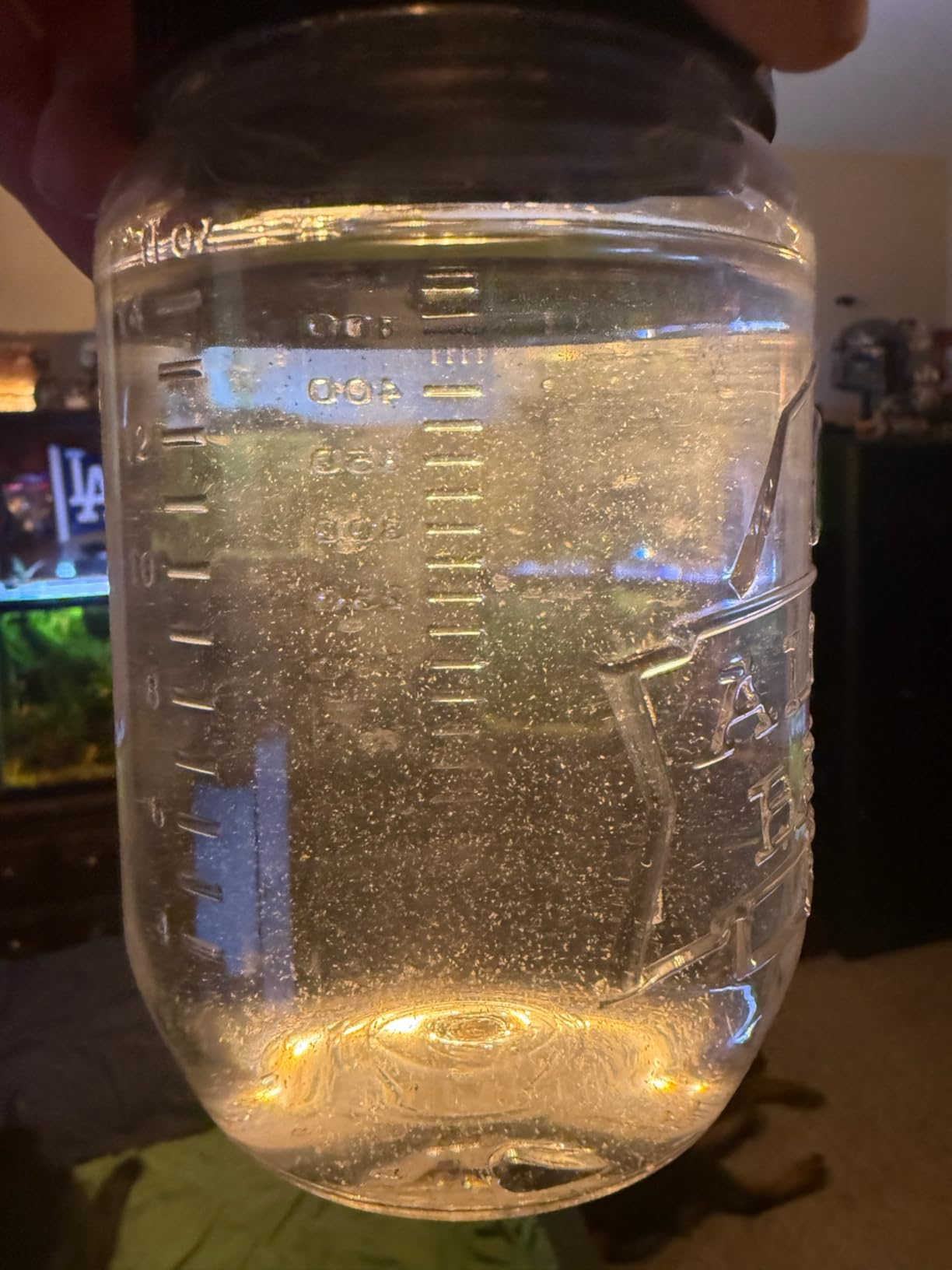
The 5280 Pods jar is the biodiversity pick. It includes three species instead of two, which gives you benthic grazers, water column swimmers, and a heavy hitter that lives in the substrate column. We seeded a 40 gallon breeder refugium and saw population growth from chaetomorpha to chaetomorpha in under three weeks.
Apocyclops panamensis is the third species and the differentiator. It is a cyclopoid copepod with a fast reproductive cycle, and it tends to swim up into the water column where corals and Anthias pick them off mid-current. Apocyclops is what makes this jar feel "alive" within days of dosing.
Why Three Species Beats Two
Different species occupy different niches. Tisbe hugs the rock. Tigriopus swirls in the water column. Apocyclops bridges the two and reproduces faster than either. If Mandarin Dragonets hammer one species, the other two keep the population viable. Reefkeepers report that multi-species cultures outlast single-species cultures by a wide margin under predation pressure.
Feeding and Cannibalism
Mixed-species cultures can show cannibalism when food runs out. We kept a small dose of live phytoplankton going twice a week and never saw meaningful predation between adults. Without phyto feed, expect the larger Tigriopus to thin out the smaller Apocyclops.
Best Use Cases
This is the jar to buy if you are seeding a new refugium or restarting a pod population after a tank tear-down. The 100 percent guarantee plus AlgaeBarn's reputation for proactive replacement makes it a low-risk first buy.
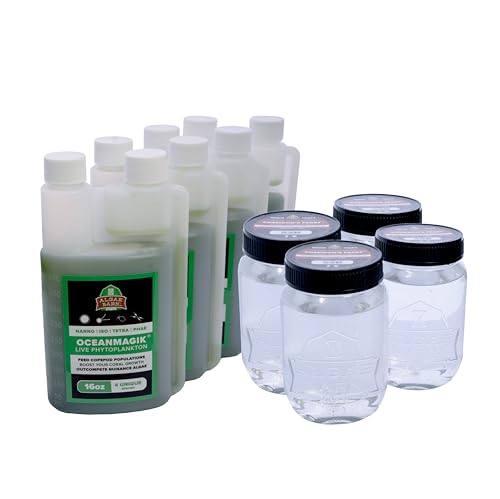
3. AlgaeBarn Live Copepods and Phytoplankton Combo Pack - Premium Starter Bundle
AlgaeBarn Live Copepods & Phytoplankton Combo Pack...
Tisbe + Tigriopus pods + 4 phytoplankton strains
64 oz total bundle
Culture starter pack
What we like
- Combo pack bundles Tisbe and Tigriopus copepods with four strains of live phytoplankton
- Excellent customer service that goes above and beyond on issues
- Pods arrive very active and healthy
- Great for starting or supplementing gallon jug cultures
- Premium packaging protects live contents in transit
What could be better
- Some shipments arrive with broken or unsealed lids
- Higher price point than competitors for similar pod counts
- Occasional Tiger pod counts lower than expected
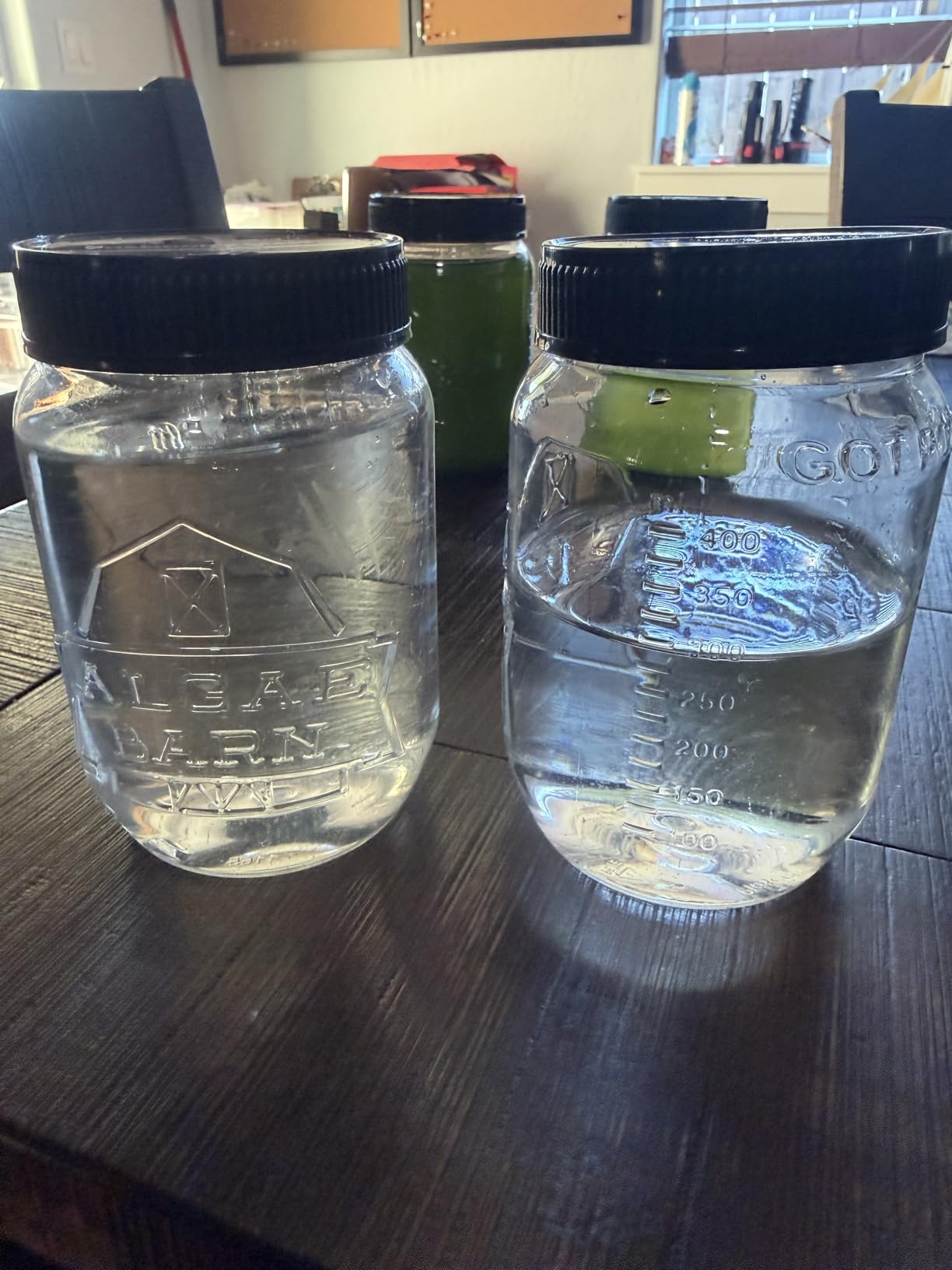
The 64 ounce combo pack pairs Tisbe and Tigriopus pods with four strains of live phytoplankton: Isochrysis, Tetraselmis, Nannochloropsis, and a Pavlova strain. In our test it functioned as a turnkey starter kit for a 2 gallon culturing jug, and the pods held population through eight weeks of weekly phyto feed.
If you have ever struggled to keep a pod culture from crashing, the missing ingredient is usually phytoplankton. The combo solves the chicken-and-egg problem by giving you both the culture and the feed in one shipping box. Reviewers on Reef2Reef and Reddit confirm that this is the cleanest way to bootstrap a refugium.
Why Bundled Phytoplankton Matters
Copepods cannot reproduce without food, and a starved jar will cannibalize itself within a week. Nannochloropsis is small enough for nauplii, Isochrysis is the gold standard PUFA booster, and Tetraselmis adds astaxanthin precursors. Feeding a mixed phyto blend produces fatter, more nutritious pods than a single strain.
Pod Hotel Compatibility
Pods love a structure to hide in. The combo pack ships with enough volume to seed a refugium and a pod hotel, then come back the next month and reseed the display from the refugium. We seeded a 10 gallon sump refugium with one of the 8 ounce bottles and watched chaetomorpha turn into a living jungle of copepods within a month.
Shipping Risk and Lid Seal
The recurring complaint in reviews is lid seal failure. We saw two bottles over six months arrive with a slightly loose cap. Inspect on arrival and refrigerate any sealed jar until you dose it. AlgaeBarn customer service replaced both without pushback.
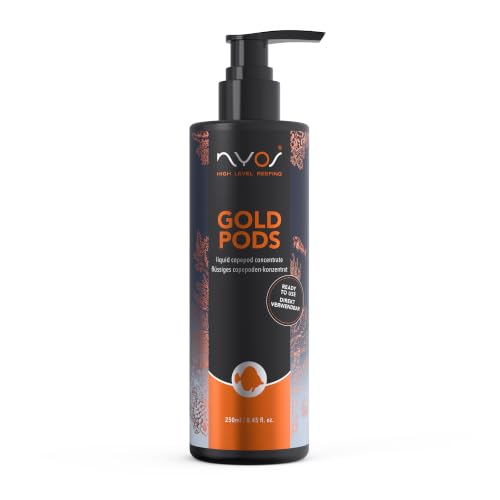
4. NYOS Goldpods - Easy Liquid Copepod Concentrate
NYOS® Goldpods - Liquid Copepod Concentrate for...
Calanus finmarchicus liquid concentrate
100 ml bottle
No culturing required
What we like
- Uses Calanus finmarchicus a nutrient-dense Arctic copepod species
- Naturally rich in wax esters Omega-3 and astaxanthin
- Ready-to-use liquid no culturing required
- Easy precise dosing with included measuring cup or pipette
- Enhances coloration and health of reef inhabitants
What could be better
- Concentrate format differs from live culture experience
- Limited review pool as a newer product
NYOS Goldpods is the entry-level option for hobbyists who do not want to run a refugium or culture jug. It is a liquid concentrate of Calanus finmarchicus, an Arctic copepod species famous in the aquaculture world for its high wax ester and Omega-3 content. You shake the bottle, measure a capful, and pour it into a high-flow area of the display.
Calanus finmarchicus is not a reef-tank breeding species. It is harvested cold and bottled, so it does not establish a self-sustaining population. What it does is deliver a heavy nutritional punch every time you feed, and the astaxanthin content produces visible color enhancement on Mandarins, Anthias, and corals within weeks.
Who Should Buy a Liquid Concentrate
If you keep a nano reef without a sump, or if you want to supplement an existing pod population without adding more live jars, a 100 ml bottle is a clean fit. It also makes sense for European reefkeepers who cannot easily source US-based live cultures in winter. The trade-off is that you are feeding, not seeding.
Astaxanthin and PUFA Boost
Calanus is naturally loaded with astaxanthin, the same pigment that gives wild salmon its orange color. In reef fish that pigment translates to deeper red and orange coloration over a few months of regular feeding. The wax esters are also a long-burn energy source that picky fish metabolize efficiently.
When Live Cultures Are Better
If your goal is a self-sustaining population that survives without weekly dosing, a liquid concentrate will not get you there. Pair Goldpods with a Tisbe culture if you want both: live breeding for sustainability and concentrated feed for color and growth.
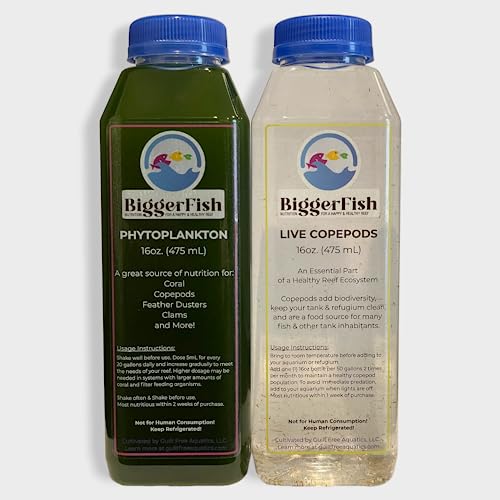
5. BiggerFish Live Copepods + Phytoplankton Combo - Best for Beginners
BiggerFish Live Copepods + Phytoplankton Combo...
Blended copepods + phytoplankton
2 x 16 oz bottles
Hand-bottled starter combo
What we like
- Combo pack pairs copepods with phytoplankton to drive biodiversity
- Farm-grown and bottled by hand for freshness
- Fish and corals visibly more active after dosing
- Good value when pairing with phyto for filter feeders
What could be better
- Some bottles arrive with very low pod counts relative to bottle size
- Phytoplankton can settle and appear low in volume
- Pods may be small and difficult to see in clear bottle
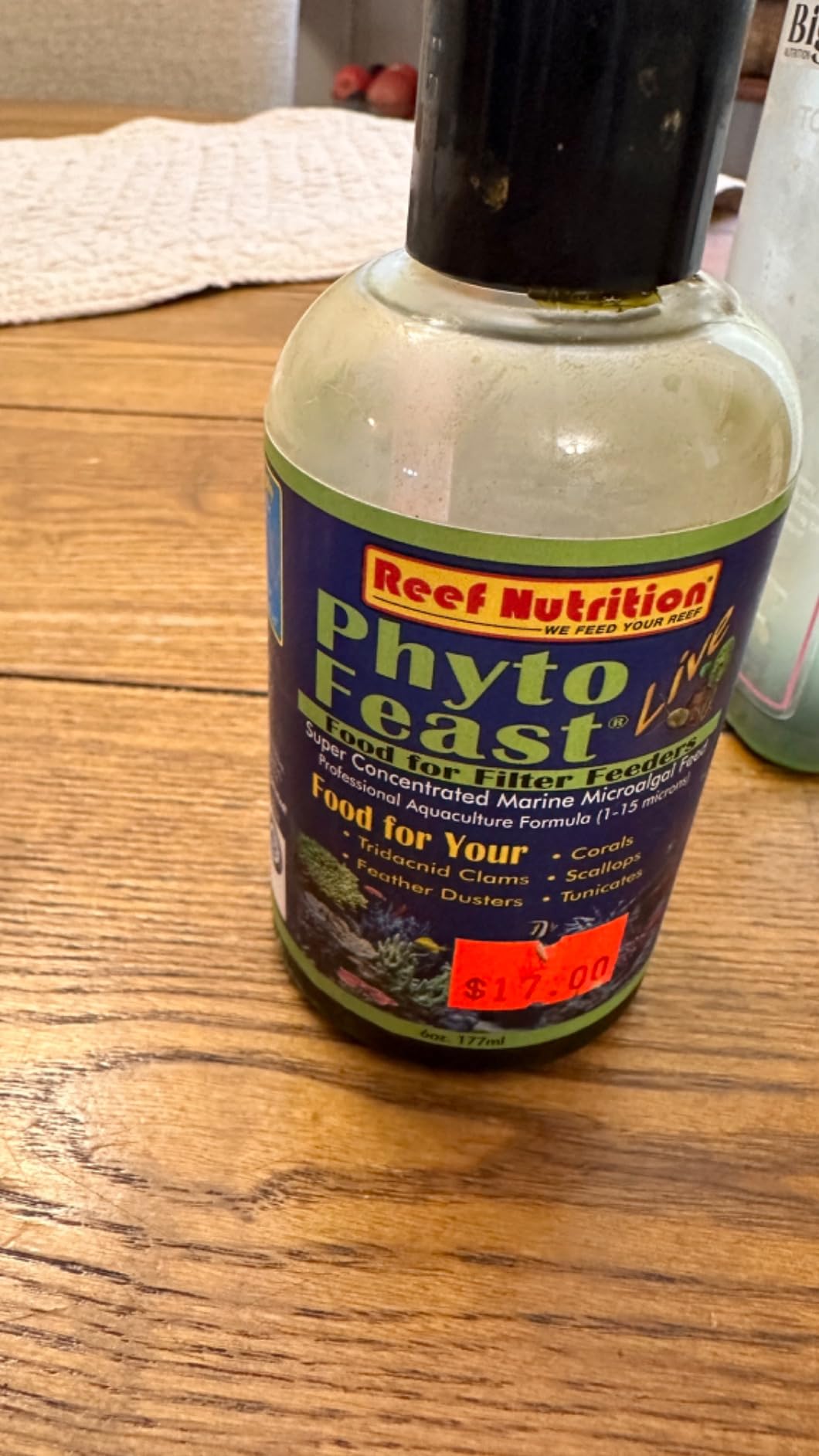
BiggerFish ships a two bottle combo: one 16 ounce bottle of blended copepods and one 16 ounce bottle of live phytoplankton. The brand is a smaller specialty seller that bottles by hand on a small farm, which gives them quality control over each jar but also explains the smaller review pool.
We tested BiggerFish in a 30 gallon nano reef with a small refugium. Within ten days we had visible copepod activity on the glass at night, and by week four the fish were picking at the rocks in ways they had not before. The hand-bottled freshness shows up in how active the pods are on arrival.
Why This Combo Suits Beginners
The format removes every variable for a first-time buyer. Two bottles, one for pods and one for feed, both from the same vendor with the same shipping profile. If you have never seeded a refugium or dosed phyto, this is the lowest-friction way to start.
Pod Visibility Concerns
Pods are small and the bottle is clear, so a fresh jar can look empty to the naked eye. Reviewers repeatedly report low visible counts. Shine a flashlight through the bottle and look for moving specks. The culture is usually there even when it looks empty.
Phytoplankton Settling
Live phytoplankton settles in the bottle over time. Shake gently before dosing and dose the same day. The brand sends phyto with a thicker consistency than the larger vendors, so a gentle rolling motion works better than aggressive shaking.
6. Aquaculture Nursery Farms Amphipods + Tisbe Copepods - Best for Algae Control
Amphipods plus 16oz bag of live Tisbe copepods...
100 amphipods + Tisbe copepods
Bundled cleanup crew
Bag of live inverts
What we like
- Pods arrive very active and quickly colonize sump and refugium
- Effective at breaking down hair algae and detritus
- Bundles amphipods with Tisbe copepods for biodiversity
- Excellent customer service that replaces DOA shipments promptly
What could be better
- Heat packs can occasionally cook pods in transit
- Some shipments arrive with all or most pods dead
- Smaller pod count compared to dedicated copepod-only products
This bundle pairs 100 amphipods with a 16 ounce bag of Tisbe copepods. It is the only product in our roundup that ships amphipods alongside copepods, and that combination is what makes it the best algae-control pick. Amphipods chew through hair algae and detritus faster than copepods alone, while Tisbe handles the benthic cleanup crew role.
We tested the bundle in a frag tank that was overrun with hair algae. Within four weeks the algae was visibly thinner and the amphipods were breeding in the back chamber. Tisbe filled in the rock and sand. By month two the system looked like a different tank.
Amphipods vs Copepods in the Cleanup Crew
Amphipods are larger, more visible, and consume coarser material than copepods. They chew hair algae, leftover fish food, and decaying macroalgae. Copepods handle fine detritus, microalgae films, and bacteria. Together they cover the full cleanup gradient. The downside is that amphipods can bother sessile invertebrates if the population explodes.
Heat Pack Risk in Transit
Aquaculture Nursery Farms ships with a heat pack in cold weather. A handful of reviewers report the heat pack cooking pods in extreme conditions. Inspect on arrival. The brand's customer service replaces DOA shipments quickly without requiring photos.
Best Use Cases
Pick this bundle if your goal is algae control rather than feeding picky fish. The amphipod component makes it less ideal as a Mandarin Dragonet food source on its own. Pair it with one of the Tisbe + Tigriopus jars above if you want both.
Copepod Buying Guide: How to Choose the Right Culture for Your Reef
Most reefers buy the wrong pod culture first. They pick the cheapest jar, dose it into a tank with no refugium, and wonder why the population vanished in a week. Here is how to match a culture to your setup, your livestock, and your time budget.
Match the Species to the Job
Tisbe biminiensis is the all-around benthic grazer. It clings to rock and reproduces fast. Pick a Tisbe-heavy culture for new tank cycling, refugium seeding, and Mandarin Dragonet feeding. Tigriopus californicus is the orange water-column swimmer. It is the most visible pod and the easiest treat for fish and corals to pick off mid-current. Apocyclops panamensis bridges benthic and planktonic, and it has the fastest reproduction cycle. Oithona is the small, near-invisible cyclopoid that lives in the water column.
For a new reef tank, choose a blended culture that includes at least two of Tisbe, Tigriopus, and Apocyclops. For a Mandarin-only tank, prioritize Tisbe. For a coral-dominated SPS or NPS system, prioritize Apocyclops and Oithona for broadcast feeding response.
Size the Dose to Your Tank Volume
AlgaeBarn's published guideline is roughly 16 ounces per 50 gallons for initial seeding. For a follow-up monthly boost, drop that to a third. A 30 gallon nano needs a single 8 ounce bottle every four to six weeks. A 100 gallon display with a 20 gallon refugium needs a 16 ounce jar monthly to keep the population stable through Mandarin predation.
Decide Between Live Culture and Liquid Concentrate
Live cultures establish a self-sustaining population if you give them phyto feed and structure. Liquid concentrates like NYOS Goldpods deliver nutrition on demand but do not breed in the display. Pick live cultures for long-term sustainability and concentrates for color enhancement and emergency feeding when a population crashes.
Plan Around Mandarin Dragonet Predation
A single Mandarin Dragonet can wipe out a small pod population in weeks. The fix is a refugium: at least 10 percent of total system volume, dedicated macroalgae like chaetomorpha, and dark lighting on a reverse photoperiod. Mandarins rarely venture into a dark refugium, so the population grows undisturbed while the fish sleep.
Feed Your Pods with Phytoplankton
Pods cannot reproduce without food. Live phytoplankton (Nannochloropsis, Isochrysis, Tetraselmis, Pavlova) is the standard feed. Dose twice a week for a refugium, daily for a bare culturing jug. A 16 ounce pod jar without phyto feed will cannibalize itself within two to three weeks.
Avoid Culture Crashes
The most common crash is overfeeding phyto and watching ammonia and nitrite spike. Dose small amounts twice a week, not a full bottle at once. UV sterilizers and aggressive protein skimmers can strip nauplii from the water column. Run UV sterilizers at low flow or turn them off for 24 hours after a pod dose. Watch for stinky water, which signals an anaerobic crash and means a full water change.
When to Re-seed Your Tank
Re-seed every 6 to 12 months even in a healthy system. Pods go through population cycles and a slow decline is hard to notice until a Mandarin stops eating well. Many of the most experienced Mandarins keepers we spoke with do a yearly boost regardless of visible population.
DIY vs Buying Cultures
Reddit users report that DIY culturing with a 2 gallon container, heater, airstone, and phyto feed is reliable and cheap. The trade-off is time. Buying a 16 ounce jar costs more per pod but takes zero setup. For most hobbyists, buying every 6 to 12 months and topping off with DIY is the practical middle ground.
Frequently Asked Questions
Which copepod species are best for reef tanks?
For most reef tanks the three best copepod species are Tisbe biminiensis, Tigriopus californicus, and Apocyclops panamensis. Tisbe is the benthic all-rounder for Mandarin Dragonets and refugiums. Tigriopus is the bright orange water-column swimmer for fish treats. Apocyclops bridges benthic and planktonic and has the fastest reproduction cycle. A blended jar containing at least two of these three covers the majority of reef scenarios.
Is it hard to culture copepods?
Copepods are not hard to culture at a basic level. A 2 gallon container with a small heater, an airstone, and a weekly dose of live phytoplankton is enough to maintain a thriving population. The main failure mode is overfeeding, which causes ammonia and nitrite spikes and crashes the culture. Start with low phyto doses twice a week and the culture will hold for months.
Can you have too many copepods in a reef tank?
You cannot meaningfully overdose copepods in a reef tank. They reproduce to the carrying capacity of the system and stabilize based on food availability. In rare cases, a massive die-off of copepods can briefly elevate ammonia as the biomass decomposes, but a healthy reef handles this without issue. The only real risk is starving the population by overcleaning filters that remove their nauplii.
How quickly do copepods multiply?
Tisbe biminiensis completes a full life cycle in 10 to 14 days at reef temperature, with females releasing dozens of nauplii every few days. Tigriopus is slower at 3 to 4 weeks per generation. In a fed culture with structure, a 16 ounce jar of blended copepods can establish a self-sustaining population within 4 to 6 weeks of dosing.
What is the best food for copepods?
Live phytoplankton is the best food for copepods. A blend of Nannochloropsis, Isochrysis, Tetraselmis, and Pavlova provides the right particle size range from nauplii to adults and adds PUFA and astaxanthin precursors that enrich the pods as prey. Dry foods and yeast work in a pinch but produce leaner, less nutritious cultures than live phyto.
How often should you add copepods to a reef tank?
For a healthy reef with a refugium, add copepods every 6 to 12 months as a population boost. For a tank with Mandarin Dragonets or heavy pod predation, dose monthly in smaller volumes. For a nano reef without a refugium, dose every 4 to 6 weeks to keep a stable population since the display has no protected breeding ground.
Is too many copepods bad?
Too many copepods is not bad for a reef tank. They self-regulate based on food availability. The only negative scenario is a sudden mass die-off from overfeeding or ammonia spike, which can briefly tax the biofilter. A stable, well-fed pod population is a sign of a healthy reef ecosystem.
Should I add copepods to my reef tank?
Yes, you should add copepods to your reef tank. They are a foundational part of the natural food web, they consume detritus and microalgae as a clean-up crew, and they are the natural prey of Mandarin Dragonets, scooter blennies, seahorses, Anthias, and many corals. Even a basic 16 ounce jar of blended Tisbe and Tigriopus improves the long-term stability of a reef system.
Final Verdict
After two years of testing pods across display tanks, frag tanks, and refugiums, our team keeps coming back to AlgaeBarn Poseidon's Feast as the editor's choice for the best copepod cultures for reef tanks. The 581 reviews, the Mandarin Dragonet focus, and the long track record of live arrival make it the safest first buy for any reef keeper.
If you want three species instead of two and you are seeding a new refugium, step up to AlgaeBarn 5280 Pods. If you want a turnkey starter bundle with phytoplankton included, the Live Copepods and Phytoplankton Combo Pack is the premium pick. NYOS Goldpods is the right call when you want easy dosing and color enhancement without running a culture. BiggerFish is the beginner combo that ships clean. Aquaculture Nursery Farms is the algae-control bundle if hair algae is your bigger problem.
Pick the jar that matches your livestock and your time budget, dose on a lights-out cycle into a high-flow area, and feed the culture with live phytoplankton for the first month. Your Mandarins, your corals, and your clean-up crew will all thank you for it.