A 5-gallon tank sits at the absolute minimum threshold for keeping fish humanely. While larger aquariums are always preferable, many aquarists work within space or budget constraints that make a nano setup the only viable option. The key is choosing species that remain small, produce minimal waste, and thrive in compact environments without feeling cramped.
The best fish for 5 gallon tanks share three critical traits: they stay under 2 inches as adults, they tolerate the rapid water parameter shifts common in small volumes, and they do not require extensive swimming space to display natural behaviors. Most beginners mistakenly stock these tanks with fish that quickly outgrow the bioload capacity or suffer from stunted development.
This guide covers 18 suitable species for 5-gallon aquariums, including nano fish, invertebrates, and the specific combinations that work without overwhelming your filtration. Each entry includes care difficulty ratings, schooling requirements, and realistic stocking numbers.
Table of Contents
- 18 Best Fish For 5 Gallon Tanks in 2026
- 1. Betta Fish (Betta splendens)
- 2. Chili Rasbora (Boraras brigittae)
- 3. Celestial Pearl Danio (Danio margaritatus)
- 4. Neon Tetra (Paracheirodon innesi)
- 5. Sparkling Gourami (Trichopsis pumila)
- 6. Pygmy Corydoras (Corydoras pygmaeus)
- 7. White Cloud Mountain Minnow (Tanichthys albonubes)
- 8. Dwarf Pea Puffer (Carinotetraodon travancoricus)
- 9. Clown Killifish (Epiplatys annulatus)
- 10. Harlequin Rasbora (Trigonostigma heteromorpha)
- 11. Endler's Livebearer (Poecilia wingei)
- 12. Emerald Dwarf Rasbora (Microrasbora erythromicron)
- 13. Glass Catfish (Kryptopterus vitreolus)
- 14. Phoenix Rasbora (Boraras merah)
- 15. Scarlet Badis (Dario dario)
- 16. African Dwarf Frog (Hymenochirus boettgeri)
- Invertebrates for 5 Gallon Tanks
- Species to Avoid in 5 Gallon Tanks
- 5 Gallon Tank Stocking Combinations
- Frequently Asked Questions
- Conclusion
18 Best Fish For 5 Gallon Tanks in 2026
Below is the complete list of fish and invertebrates suitable for a 5-gallon nano aquarium. Each species has been selected based on adult size, bioload production, and compatibility with limited swimming space.
1. Betta Fish (Betta splendens)

- Scientific Name: Betta splendens
- Adult Size: 2.5 inches
- Lifespan: 3-5 years
- Care Difficulty: Easy
- Temperament: Solitary; males aggressive toward other bettas
- Water Temperature: 76-82°F (24-28°C)
- pH Level: 6.5-7.5
- Hardness: Soft to moderately hard (3-15 dGH)
- Diet: Carnivore; betta pellets, frozen bloodworms
- Stocking: 1 fish per 5 gallons (no tank mates recommended)
Betta fish remain the most popular choice for 5-gallon setups, and for good reason. These labyrinth fish breathe atmospheric air, making them less susceptible to oxygen depletion in small volumes. A single male betta thrives in a planted 5-gallon with a gentle sponge filter and heater.
Their long-flowing fins and vibrant coloration provide visual impact without requiring additional tank mates. Many keepers add a few shrimp as cleanup crew, though bettas may view them as snacks. Choose a plakat (short-finned) variety if you want better swimming capability and reduced fin rot risk.
2. Chili Rasbora (Boraras brigittae)
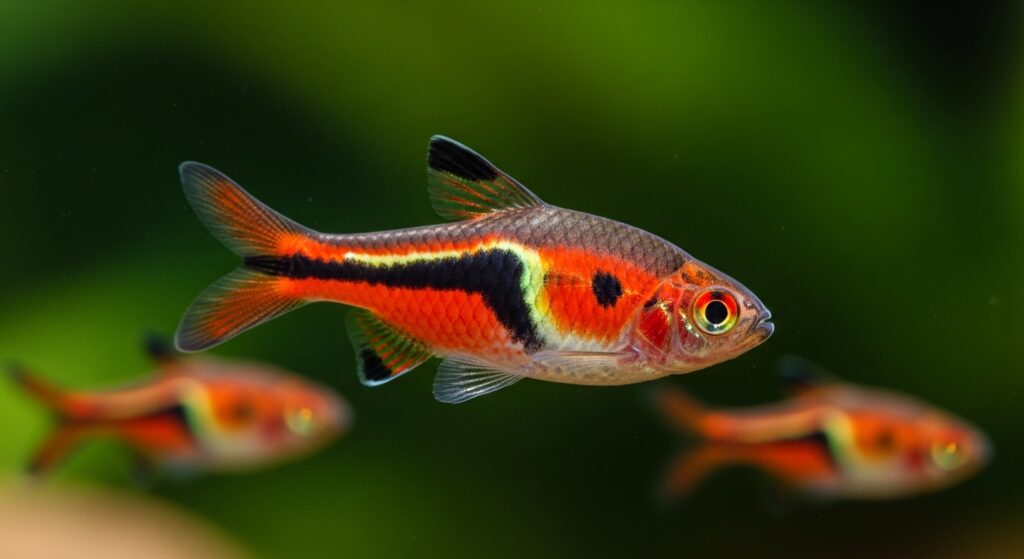
The chili rasbora represents the gold standard for nano schooling fish. At barely 0.8 inches fully grown, these micro rasboras display intense scarlet coloration that intensifies under proper lighting. They originate from blackwater peat swamps in Indonesia and prefer soft, acidic water with tannins.
- Scientific Name: Boraras brigittae
- Adult Size: 0.8 inches
- Lifespan: 4-6 years
- Care Difficulty: Intermediate
- Temperament: Peaceful, schooling
- Water Temperature: 72-82°F (22-28°C)
- pH Level: 4.0-6.5
- Hardness: Very soft (1-5 dGH)
- Diet: Micro predator; baby brine shrimp, crushed flakes
- Stocking: 8-10 fish per 5 gallons
These fish demand stability. Their tiny size makes them vulnerable to ammonia spikes, so a fully cycled tank is essential before introduction. Keep them in groups of eight or more to reduce skittishness and encourage schooling behavior.
Feeding presents the primary challenge. Their mouths are too small for standard flake food. Offer baby brine shrimp, microworms, or finely crushed high-quality flakes. A heavily planted tank with leaf litter mimics their natural habitat and reduces stress significantly.
3. Celestial Pearl Danio (Danio margaritatus)

- Scientific Name: Danio margaritatus
- Adult Size: 1 inch
- Lifespan: 3-5 years
- Care Difficulty: Intermediate
- Temperament: Peaceful, somewhat shy
- Water Temperature: 72-76°F (22-24°C)
- pH Level: 6.5-7.5
- Hardness: Soft to moderately hard (3-12 dGH)
- Diet: Omnivore; accepts most small foods
- Stocking: 6-8 fish per 5 gallons
Once known as the galaxy rasbora, this species has become a staple in the nano aquarium hobby. Their pearl-spotted bodies with bright orange fins create a striking visual against dark substrate and dense planting. They prefer cooler temperatures than many tropical species.
Males display intense coloration and engage in harmless sparring behavior. Provide plenty of visual barriers using driftwood and stem plants to break up territories. They are mid-water swimmers that appreciate gentle filtration and subdued lighting.
Unlike some nano fish, celestial pearl danios adapt well to standard community water parameters. They readily accept commercial flake and pellet foods, making them more forgiving for beginners than chili rasboras. Keep them in groups of six or more to encourage active schooling throughout the water column.
4. Neon Tetra (Paracheirodon innesi)
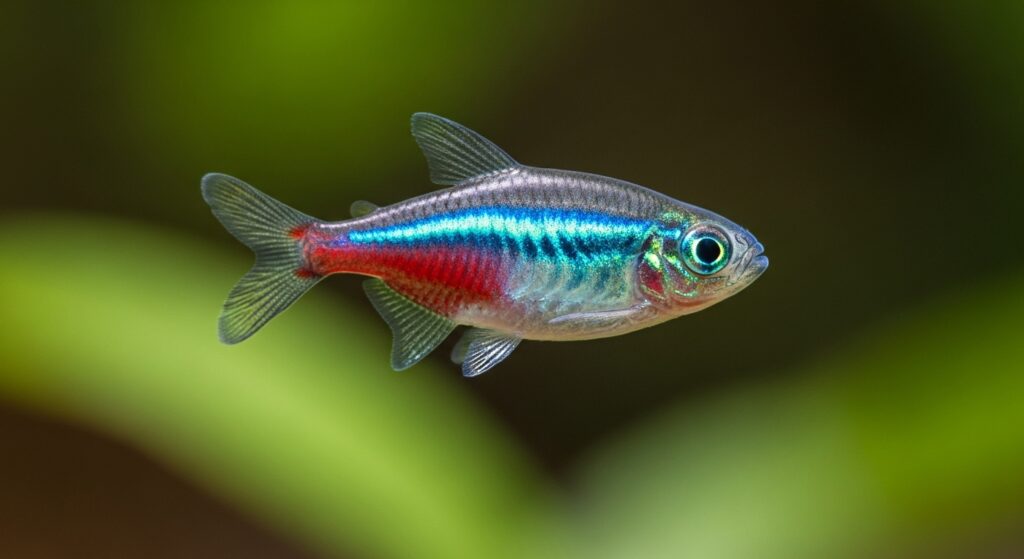
Neon tetras bring iconic electric blue and red striping to small aquariums. Despite their popularity, they present challenges in 5-gallon setups due to their active nature and schooling requirements. Success demands careful filtration and pristine water conditions.
- Scientific Name: Paracheirodon innesi
- Adult Size: 1.5 inches
- Lifespan: 5-8 years
- Care Difficulty: Intermediate
- Temperament: Peaceful, active schooling
- Water Temperature: 72-76°F (22-24°C)
- pH Level: 5.0-7.0
- Hardness: Soft (2-10 dGH)
- Diet: Omnivore; flakes, micro pellets, frozen foods
- Stocking: 5-6 fish per 5 gallons (minimum group size)
These fish require the minimum group size of five to display natural behaviors. In smaller numbers, they become stressed and lose their vibrant coloration. Their horizontal swimming pattern demands open swimming space, so avoid overcrowding with excessive hardscape.
Water quality is paramount. Neon tetras are sensitive to nitrate accumulation and will develop fin rot or neon tetra disease in poor conditions. Perform 25% water changes weekly and maintain stable parameters without fluctuations.
5. Sparkling Gourami (Trichopsis pumila)

- Scientific Name: Trichopsis pumila
- Adult Size: 1.5 inches
- Lifespan: 4-5 years
- Care Difficulty: Easy
- Temperament: Peaceful, slightly territorial
- Water Temperature: 72-78°F (22-26°C)
- pH Level: 6.0-7.5
- Hardness: Soft to moderate (5-15 dGH)
- Diet: Micro predator; small live and frozen foods
- Stocking: 1 pair per 5 gallons
The sparkling gourami offers the labyrinth fish experience in a truly nano-appropriate size. Their iridescent green and blue speckling catches light beautifully, and males produce audible croaking sounds during courtship. They are surface dwellers that appreciate floating plants for cover.
Unlike their larger relatives, sparkling gouramis remain peaceful in small spaces. A single pair works perfectly in a 5-gallon planted tank. Males build bubble nests and defend small territories, but serious aggression is rare with adequate plant cover.
These fish prefer smaller food items. Offer frozen daphnia, baby brine shrimp, or crushed flake food. They will hunt microfauna among plants and accept algae-based foods when animal protein is scarce. Their adaptability makes them excellent beginner fish for nano setups.
6. Pygmy Corydoras (Corydoras pygmaeus)
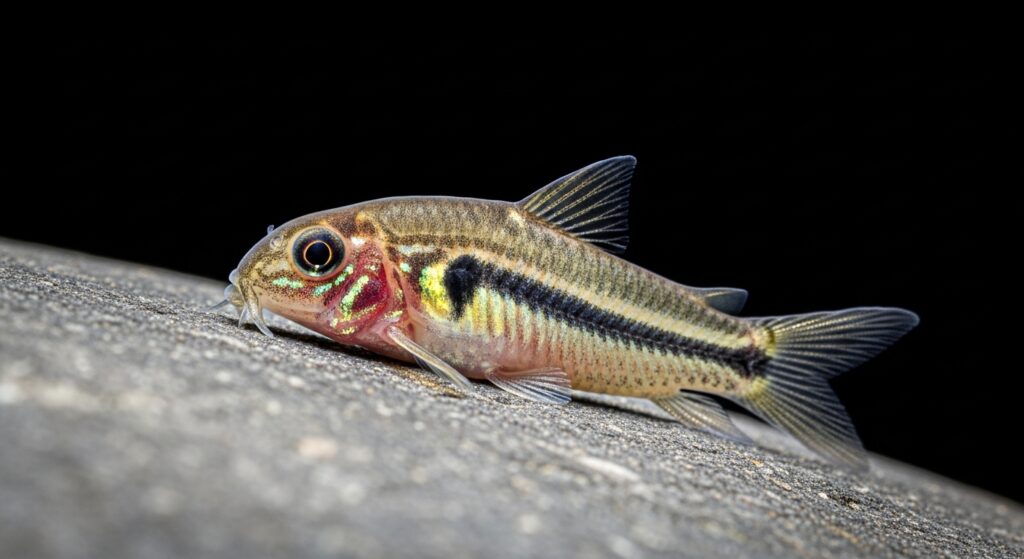
Standard cory catfish grow too large and active for 5-gallon tanks, but pygmy cories stay under 1 inch and school in mid-water rather than remaining strictly bottom-bound. These miniature catfish add movement and serve as effective cleanup crew for uneaten food.
- Scientific Name: Corydoras pygmaeus
- Adult Size: 1 inch
- Lifespan: 3-5 years
- Care Difficulty: Intermediate
- Temperament: Peaceful, schooling
- Water Temperature: 72-78°F (22-26°C)
- pH Level: 6.0-7.5
- Hardness: Soft to moderate (2-15 dGH)
- Diet: Omnivore; sinking pellets, frozen foods
- Stocking: 6-8 fish per 5 gallons
Pygmy cories behave differently than larger corydoras. They swim throughout the water column in tight groups rather than remaining glued to the substrate. This mid-water schooling adds activity to the middle zone of your tank that many nano setups lack.
Provide gentle filtration to avoid blasting these small fish around the tank. A sponge filter works perfectly. Offer sinking foods that reach the substrate quickly, as they are less adept at surface feeding than other species. Sand substrate protects their delicate barbels from abrasion.
7. White Cloud Mountain Minnow (Tanichthys albonubes)

- Scientific Name: Tanichthys albonubes
- Adult Size: 1.5 inches
- Lifespan: 5-7 years
- Care Difficulty: Easy
- Temperament: Peaceful, active schooling
- Water Temperature: 60-72°F (16-22°C)
- pH Level: 6.0-8.0
- Hardness: Soft to hard (5-20 dGH)
- Diet: Omnivore; flakes, small pellets, live foods
- Stocking: 5-6 fish per 5 gallons
White Cloud Mountain minnows are the ideal cold water fish for unheated nano tanks. Their metallic gold and red coloration rivals tropical species, yet they thrive at room temperature without expensive heating equipment. This makes them perfect for office environments or dorm rooms.
Their tolerance for cooler temperatures extends their acceptable range well below tropical standards. However, avoid temperature swings exceeding 5 degrees daily. Keep them in groups of five or more to encourage the tight schooling behavior that makes them visually appealing.
These minnows are remarkably undemanding regarding water chemistry. They accept standard flake foods eagerly and will consume small insects or insect larvae when available. Their hardiness makes them excellent starter fish for cycling new tanks, though they should still be added only after the nitrogen cycle establishes.
8. Dwarf Pea Puffer (Carinotetraodon travancoricus)
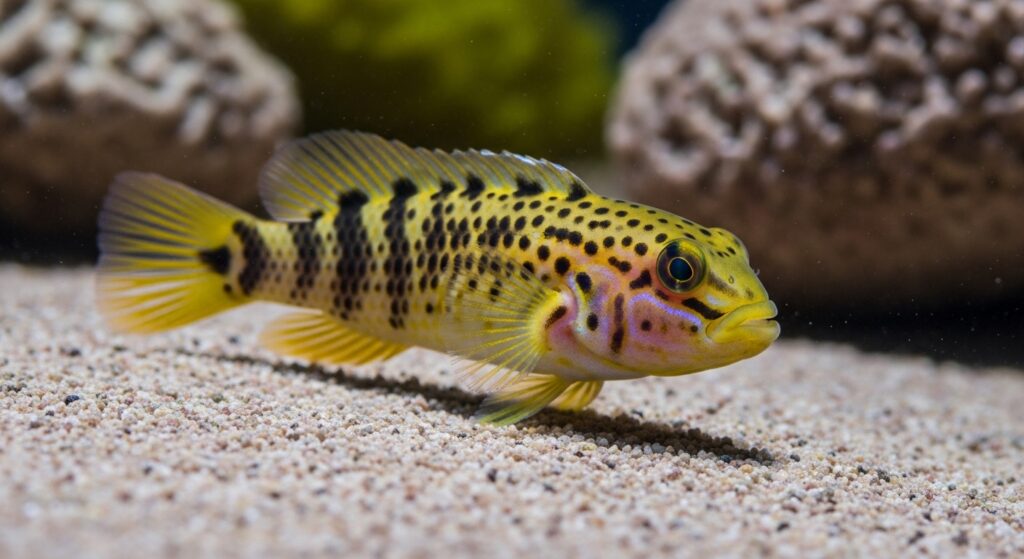
The dwarf pea puffer delivers maximum personality in a minimum package. These tiny puffers reach just 1 inch but pack intelligence and attitude exceeding their size. Their beady eyes and rapid movements make them endlessly entertaining to observe.
- Scientific Name: Carinotetraodon travancoricus
- Adult Size: 1 inch
- Lifespan: 4-5 years
- Care Difficulty: Intermediate
- Temperament: Aggressive, territorial
- Water Temperature: 74-82°F (23-28°C)
- pH Level: 7.0-8.0
- Hardness: Moderate to hard (5-25 dGH)
- Diet: Carnivore; snails, frozen bloodworms, live foods
- Stocking: 1 fish per 5 gallons (species-only)
Pea puffers are not community fish. Their aggressive nature and fin-nipping tendencies make them unsuitable for mixed tanks. A single puffer in a 5-gallon planted tank makes the ideal setup. The dense planting provides territory markers and reduces aggression expression.
Feeding requires dedication. These fish rarely accept dry foods and demand protein-rich frozen or live offerings. Snails form a crucial component of their diet, helping wear down their ever-growing beaks. Malaysian trumpet snails or bladder snails make excellent live food sources and can be cultured separately.
Water quality must remain pristine. Puffers are sensitive to ammonia and nitrite, requiring fully cycled tanks and regular maintenance. Their high metabolism produces significant waste relative to their size. Weekly 50% water changes are standard practice for keeping these fish healthy long-term.
9. Clown Killifish (Epiplatys annulatus)

- Scientific Name: Epiplatys annulatus
- Adult Size: 1.5 inches
- Lifespan: 2-3 years
- Care Difficulty: Intermediate
- Temperament: Peaceful, surface-oriented
- Water Temperature: 68-79°F (20-26°C)
- pH Level: 6.0-7.5
- Hardness: Soft to moderate (2-15 dGH)
- Diet: Carnivore; small live and frozen foods
- Stocking: 1 pair or trio per 5 gallons
Clown killifish are surface-dwelling specialists that spend their time hunting microorganisms near the water line. Males display spectacular tail extensions with alternating red and blue bands that wave gracefully as they swim. Their unusual body shape and finnage make them stand out among nano fish.
These fish require tight-fitting lids. Their jumping ability is legendary, and they will escape through the smallest opening to meet an unfortunate end. Floating plants like red root floater or water lettuce provide security and encourage natural hunting behavior.
Feeding presents challenges. They rarely accept flake foods and prefer live or frozen options. Fruit flies, springtails, and vinegar eels make excellent food sources for dedicated keepers. Their short lifespan means successful breeding is essential for maintaining a colony long-term.
10. Harlequin Rasbora (Trigonostigma heteromorpha)

- Scientific Name: Trigonostigma heteromorpha
- Adult Size: 2 inches
- Lifespan: 5-8 years
- Care Difficulty: Easy
- Temperament: Peaceful, active schooling
- Water Temperature: 72-79°F (22-26°C)
- pH Level: 6.0-7.5
- Hardness: Soft to moderate (2-12 dGH)
- Diet: Omnivore; flakes, pellets, frozen foods
- Stocking: 4-5 fish per 5 gallons
Harlequin rasboras push the upper size limit for 5-gallon tanks, but their relatively sedate swimming style makes them workable in small groups. The distinctive copper body with black wedge marking has made them a hobby staple for decades.
Keep groups small but cohesive. Four to five individuals maintain the minimum social structure without overwhelming the bioload capacity. Their mid-water swimming preference complements surface and bottom-dwelling tank mates when carefully stocked.
These rasboras adapt readily to standard community water parameters. They are not demanding regarding flow or lighting, though subdued conditions encourage bolder coloration. Regular water changes are essential given their size relative to the water volume.
11. Endler's Livebearer (Poecilia wingei)
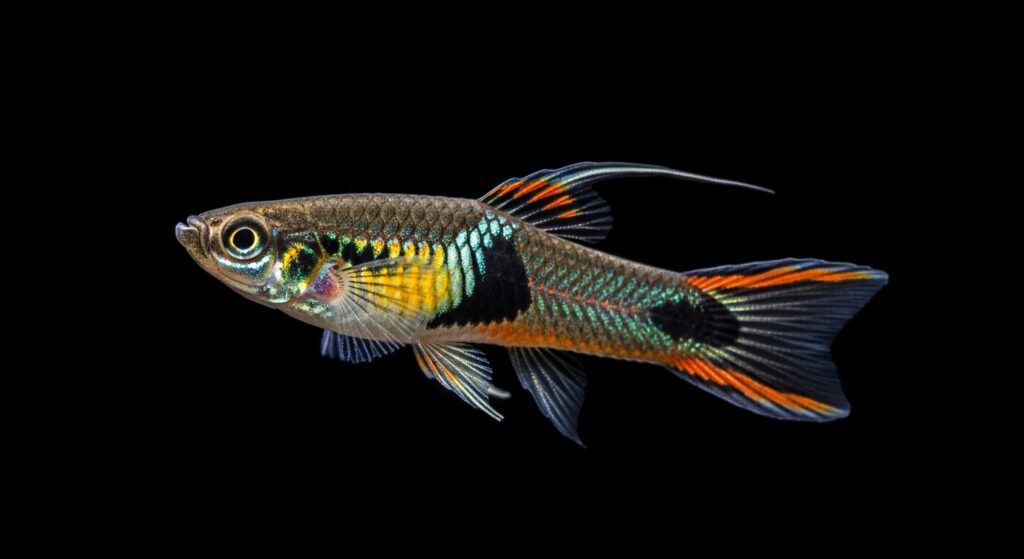
Endler's livebearers are smaller and more colorful than common guppies, with males displaying neon patterns that seem almost artificially bright. Their compact size and hardy nature make them excellent nano candidates when kept in appropriate gender ratios.
- Scientific Name: Poecilia wingei
- Adult Size: 1 inch (males), 1.5 inches (females)
- Lifespan: 2-3 years
- Care Difficulty: Easy
- Temperament: Peaceful, active
- Water Temperature: 72-82°F (22-28°C)
- pH Level: 7.0-8.5
- Hardness: Moderate to hard (10-30 dGH)
- Diet: Omnivore; flakes, pellets, frozen foods
- Stocking: 3 males or 1 male + 2 females per 5 gallons
Population control is the primary challenge. These fish breed continuously, and a 5-gallon tank quickly becomes overcrowded without intervention. Stock only males for a hassle-free display, or maintain a single male with two females if breeding is desired (with plan for fry removal).
Endlers prefer harder, more alkaline water than many nano species, making them compatible with livebearers but potentially mismatched with soft-water specialists like chili rasboras. Their adaptability extends to temperature, allowing unheated tanks in appropriate climates.
These fish appreciate dense planting to hide fry and reduce aggression. Floating plants work particularly well, diffusing light and providing grazing surfaces for microorganisms. Their constant activity throughout all water layers keeps the tank visually engaging.
12. Emerald Dwarf Rasbora (Microrasbora erythromicron)

- Scientific Name: Microrasbora erythromicron
- Adult Size: 1 inch
- Lifespan: 3-5 years
- Care Difficulty: Intermediate
- Temperament: Peaceful, schooling
- Water Temperature: 68-76°F (20-24°C)
- pH Level: 6.5-7.5
- Hardness: Soft to moderate (3-15 dGH)
- Diet: Omnivore; small pellets, frozen foods
- Stocking: 6-8 fish per 5 gallons
Also known as the emerald dwarf danio, this Myanmar native displays stunning green and red coloration when properly maintained. They prefer cooler temperatures than many tropical nano fish, making them excellent candidates for unheated setups in climate-controlled spaces.
These rasboras establish clear pecking orders within their groups. Males spar harmlessly for dominance while displaying their brightest colors. Provide plenty of visual barriers using driftwood and planting to prevent any single individual from being bullied excessively.
Their preference for cooler water overlaps with White Cloud Mountain minnows, allowing compatible stocking combinations that avoid expensive heating equipment. They are somewhat shy initially but become bold once acclimated to their environment.
13. Glass Catfish (Kryptopterus vitreolus)

- Scientific Name: Kryptopterus vitreolus
- Adult Size: 2.5 inches
- Lifespan: 6-8 years
- Care Difficulty: Advanced
- Temperament: Peaceful, delicate, schooling
- Water Temperature: 75-80°F (24-27°C)
- pH Level: 6.0-7.0
- Hardness: Soft (2-10 dGH)
- Diet: Carnivore; frozen foods, live foods
- Stocking: 3-4 fish per 5 gallons
Glass catfish are not beginner fish despite their availability in chain pet stores. Their completely transparent bodies reveal internal organs and swimming muscles, creating an otherworldly appearance that fascinates observers. However, their fragility demands advanced care.
These catfish are highly sensitive to water quality fluctuations. They require stable, pristine conditions with zero ammonia or nitrite tolerance. Their scaleless bodies are vulnerable to medications and sudden parameter shifts. Only add them to well-established tanks with mature filtration.
They are strict schoolers that become stressed in small numbers. Three individuals represent the absolute minimum group size, with larger groups preferred. Their shy nature requires dense planting and subdued lighting. They rarely accept dry foods and need frozen or live offerings exclusively.
14. Phoenix Rasbora (Boraras merah)
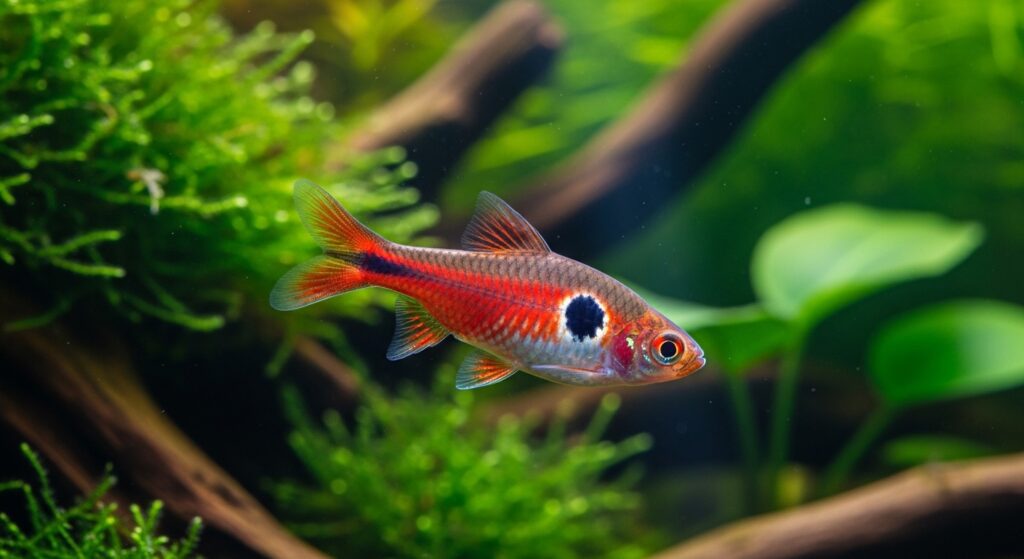
Closely related to chili rasboras, phoenix rasboras display more reddish-brown coloration with smaller size. They are often confused with their more famous cousins but deserve recognition as a distinct species with unique qualities for nano tanks.
- Scientific Name: Boraras merah
- Adult Size: 0.7 inches
- Lifespan: 4-6 years
- Care Difficulty: Intermediate
- Temperament: Peaceful, schooling
- Water Temperature: 72-79°F (22-26°C)
- pH Level: 4.0-6.5
- Hardness: Very soft (1-5 dGH)
- Diet: Micro predator; tiny frozen and live foods
- Stocking: 8-10 fish per 5 gallons
Phoenix rasboras are smaller and slightly more delicate than chili rasboras. Their care requirements mirror their cousins almost exactly, demanding soft, acidic water with tannins and minimal current. They are ideal for dedicated blackwater nano setups with leaf litter and driftwood.
Their diminutive size allows larger schools in the same footprint, creating impressive shoaling displays as they move through the water column in unison. Their subtle coloration catches light differently than chili rasboras, offering variation for those keeping multiple nano tanks.
As with all Boraras species, feeding requires attention to particle size. Standard flake foods are too large; seek out powdered fry foods or culture live microfoods. Their tiny mouths and specialized dietary needs make them intermediate-level fish despite their peaceful nature.
15. Scarlet Badis (Dario dario)
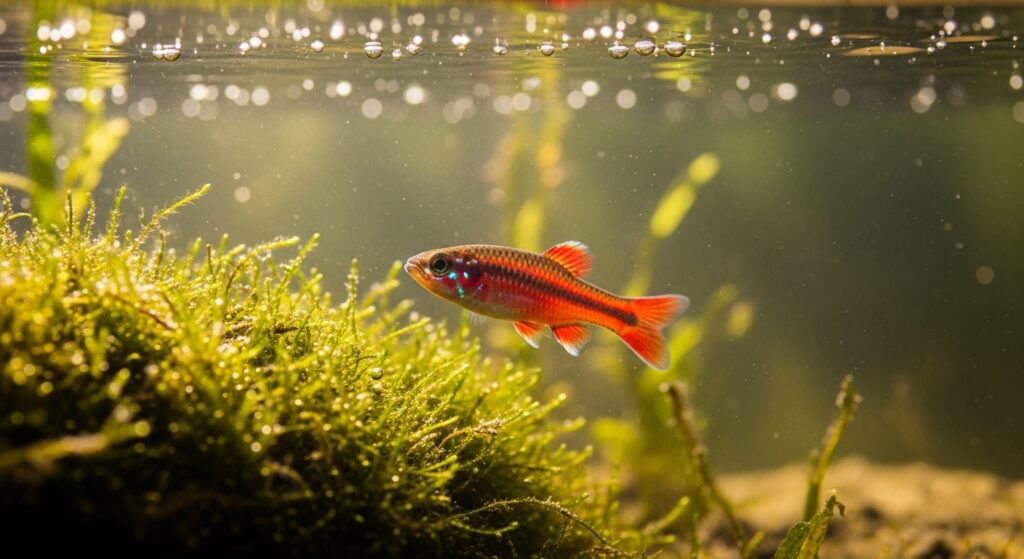
The scarlet badis is a tiny predator with spectacular coloration and fascinating hunting behavior. Males develop intense red and blue vertical striping that rivals much larger cichlids. Their deliberate movements and stalking behavior make them captivating to observe.
- Scientific Name: Dario dario
- Adult Size: 0.8 inches
- Lifespan: 4-6 years
- Care Difficulty: Advanced
- Temperament: Peaceful but predatory; solitary
- Water Temperature: 72-78°F (22-26°C)
- pH Level: 6.0-7.5
- Hardness: Soft to moderate (2-12 dGH)
- Diet: Carnivore; live and frozen foods only
- Stocking: 1 male with 2-3 females per 5 gallons
Scarlet badis are micro predators that refuse prepared foods entirely. They require live or frozen offerings exclusively, with a strong preference for moving prey. Culturing live foods or purchasing frozen options regularly is essential for their survival.
Males are intensely territorial despite their size. A single male occupies a 5-gallon tank comfortably, with females added only if adequate hiding places exist. Multiple males will fight to the death in confined spaces. Their aggression is silent but deadly.
These fish are not community-safe with shrimp. They will hunt and consume cherry shrimp and similarly sized invertebrates relentlessly. Their predatory nature extends to any tank mate small enough to fit in their mouths. Species-only tanks work best for displaying their full behavior.
16. African Dwarf Frog (Hymenochirus boettgeri)

- Scientific Name: Hymenochirus boettgeri
- Adult Size: 2.5 inches
- Lifespan: 5-8 years
- Care Difficulty: Intermediate
- Temperament: Peaceful, clumsy, slow
- Water Temperature: 72-78°F (22-26°C)
- pH Level: 6.5-7.8
- Hardness: Soft to moderate (5-20 dGH)
- Diet: Carnivore; sinking pellets, frozen bloodworms
- Stocking: 1-2 frogs per 5 gallons
African dwarf frogs offer an alternative to fish for aquarists seeking something different. These fully aquatic frogs remain underwater constantly, surfacing only to breathe at the water line. Their clumsy swimming and comedic feeding attempts provide endless entertainment.
These frogs are not strong swimmers. They require gentle filtration and easy access to the surface for breathing. Tall decorations or dense floating plants can trap them underwater if they cannot find clear paths upward. Keep water level slightly below the rim to prevent escape attempts.
Feeding requires target feeding. These frogs have poor eyesight and locate food primarily by smell. Sinking pellets or frozen foods placed directly before them ensure they receive adequate nutrition. Fast-moving fish will outcompete them for food, making species-only or carefully selected community setups essential.
Invertebrates for 5 Gallon Tanks
Invertebrates offer excellent alternatives to fish in nano aquariums. They produce minimal waste, consume algae and detritus, and add fascinating behavior without the bioload concerns of vertebrates. Many aquarists run successful invert-only 5-gallon tanks indefinitely.
17. Cherry Shrimp (Neocaridina davidi)
- Scientific Name: Neocaridina davidi
- Adult Size: 1.5 inches
- Lifespan: 1-2 years
- Care Difficulty: Easy
- Temperament: Peaceful, scavenging
- Water Temperature: 65-78°F (18-26°C)
- pH Level: 6.5-8.0
- Hardness: Moderate to hard (6-20 dGH)
- Diet: Omnivore; algae, biofilm, shrimp pellets
- Stocking: 10-15 shrimp per 5 gallons
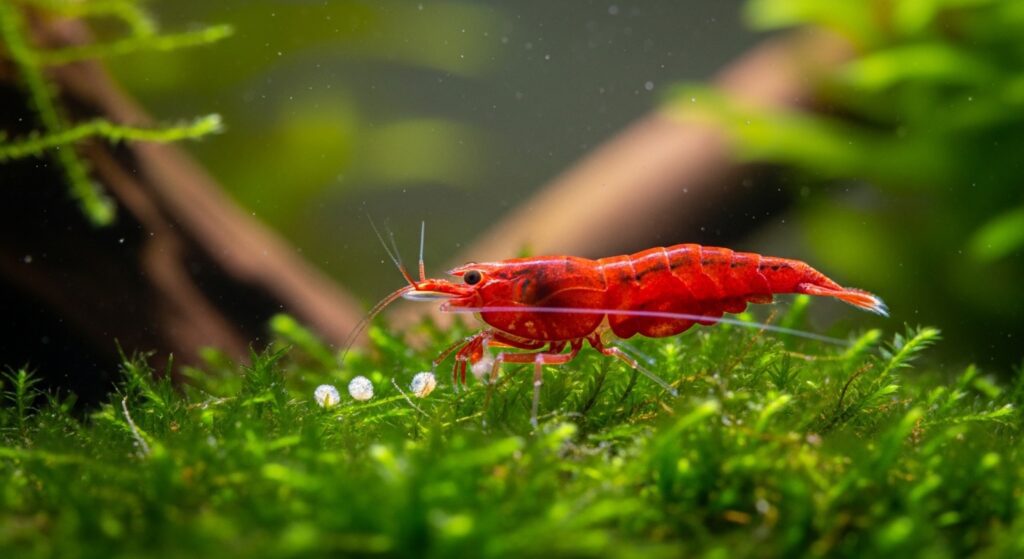
Cherry shrimp are the gateway invertebrate for nano aquariums. Their bright red coloration varies from pale pink to deep scarlet depending on grade, with higher grades commanding premium prices. They breed readily in freshwater, allowing populations to establish quickly.
These shrimp are algae-eating machines that constantly graze surfaces for biofilm and detritus. A healthy colony keeps glass and decorations remarkably clean. Supplement their diet with specialized shrimp pellets containing calcium for proper shell development.
Copper is lethal to shrimp at any concentration. Avoid medications, plant fertilizers, or tap water treatments containing copper. Their sensitivity extends to ammonia and nitrite, requiring fully cycled tanks before introduction. Once established, they are surprisingly resilient.
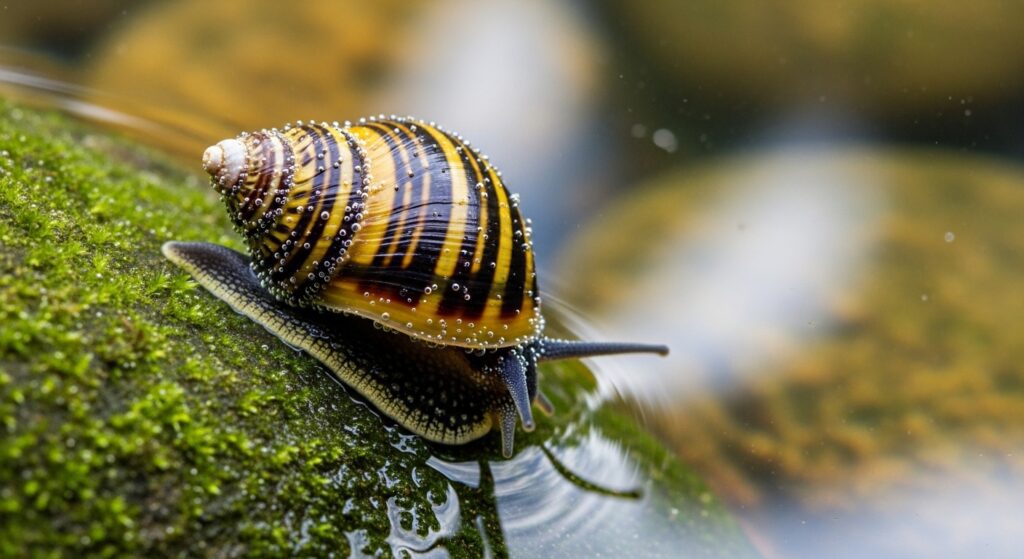
18. Nerite Snail (Neritina natalensis)
- Scientific Name: Neritina natalensis (various species)
- Adult Size: 1 inch
- Lifespan: 2-3 years
- Care Difficulty: Easy
- Temperament: Peaceful, algae-focused
- Water Temperature: 72-78°F (22-26°C)
- pH Level: 7.0-8.5
- Hardness: Moderate to hard (8-20 dGH)
- Diet: Herbivore; algae exclusively
- Stocking: 2-3 snails per 5 gallons
Nerite snails are algae-eating specialists that cannot reproduce in freshwater, preventing the population explosions common to other snail species. Their patterned shells and thorough cleaning habits make them ideal for nano tanks with algae concerns.
These snails are escape artists. They will exit the water entirely if given the opportunity, often drying out on tank rims or nearby surfaces. Maintain water levels at least an inch below the rim and check for missing snails regularly.
Nerites require adequate food sources. In pristine, algae-free tanks they may starve without supplemental feeding. Blanched vegetables like zucchini or specialized algae wafers sustain them when natural food is scarce. Their calcium requirements demand moderately hard water to prevent shell erosion.
Species to Avoid in 5 Gallon Tanks
Understanding which fish do not belong in 5-gallon tanks is as important as knowing suitable candidates. Many commonly sold species are marketed as appropriate for small aquariums when they require significantly more space. Avoid these problematic choices regardless of pet store recommendations.
Goldfish (Carassius auratus)
Goldfish are pond fish that grow to 12 inches or larger. The myth that they grow to the size of their container is false; their bodies are stunted while their organs continue growing, leading to premature death. A single fancy goldfish requires 20 gallons minimum, with 40+ gallons for common varieties.
Common Pleco (Hypostomus plecostomus)
These algae eaters reach 18-24 inches as adults and produce enormous waste loads. They are sold as juveniles under 2 inches to unsuspecting beginners. Even smaller pleco species like the bristlenose require 20+ gallons due to their activity levels and waste production. Explore appropriate pleco alternatives for larger tanks.
Red-Eared Slider Turtle (Trachemys scripta elegans)
Aquatic turtles require basking areas, powerful filtration, and massive tanks. A single red-eared slider needs 10 gallons of water per inch of shell length, meaning adults require 100+ gallon tanks. They are not fish tank inhabitants under any circumstances.
Mollies and Platies (Poecilia spp.)
While smaller than goldfish, these livebearers grow to 3-4 inches and require 10-20 gallon minimums. Their active swimming style and continuous breeding make them unsuitable for 5-gallon confinement. Endler's livebearers are the only acceptable alternative in this family.
Barbs (Puntius spp., Pethia spp.)
Cherry barbs, tiger barbs, and their relatives are active schooling fish that require 20+ gallons for proper movement. They grow to 2-3 inches and display fin-nipping tendencies when crowded. Their high activity levels create stress in confined spaces.
Most Tetras (Hyphessobrycon spp., Hemigrammus spp.)
Cardinal tetras, black skirt tetras, and similar species require 10-20 gallon minimums due to adult size and schooling requirements. Only neon tetras, ember tetras, and a few micro species are appropriate for 5-gallon tanks when kept in small groups.
5 Gallon Tank Stocking Combinations
Knowing individual species is only half the equation. Successful nano tanks require compatible combinations that do not exceed bioload limits. The following stocking plans represent safe, proven combinations for 5-gallon setups with appropriate filtration and maintenance.
Combination 1: Solo Showpiece
- Centerpiece: 1 Male Betta OR 1 Dwarf Pea Puffer
- Cleanup Crew: 3-5 Nerite Snails
- Total Bioload: Light
- Maintenance: Weekly 25% water changes
This combination focuses on a single personality fish with minimal supporting cast. Both bettas and pea puffers display territorial behavior that makes additional fish problematic. Nerite snails handle algae without adding significant waste or risking fin nipping.
Combination 2: Schooling Nano Community
- Schooling Fish: 6-8 Chili Rasboras OR 6 Celestial Pearl Danios
- Cleanup Crew: 5 Cherry Shrimp
- Total Bioload: Moderate
- Maintenance: Weekly 30% water changes
A tight schooling group creates impressive visual impact without the aggression concerns of single specimen tanks. Choose one schooling species only; mixing different schools overcrowds the limited space. Cherry shrimp handle detritus without competing for swimming room.
Combination 3: Cold Water Trio
- Schooling Fish: 5 White Cloud Mountain Minnows
- Bottom Dwellers: 6 Pygmy Corydoras
- Total Bioload: Moderate
- Maintenance: Weekly 25% water changes, no heater required
This combination eliminates heating costs while creating a multi-level community. White clouds occupy the upper water column while pygmy cories swim mid-level and occasionally touch down on the substrate. Both species tolerate cooler temperatures and harder water than tropical options.
Combination 4: Invert-Only Ecosystem
- Shrimp: 10-12 Cherry Shrimp
- Snails: 2 Nerite Snails
- Total Bioload: Very Light
- Maintenance: Bi-weekly 20% water changes
An invertebrate-only tank represents the lowest maintenance option. Cherry shrimp breed readily, replacing individuals that die naturally. The tank becomes a self-sustaining ecosystem with minimal intervention. Heavy planting creates grazing surfaces and biofilm support.
Frequently Asked Questions
What fish would thrive in a 5 gallon tank?
Betta fish, chili rasboras, celestial pearl danios, and cherry shrimp thrive in 5-gallon tanks when properly maintained. These species remain small, tolerate limited swimming space, and do not produce excessive waste. Avoid active swimmers or fish exceeding 2 inches in adulthood. Success requires appropriate filtration, heating when necessary, and regular maintenance regardless of stocking choice.
How many fish can I put in a 5 gal tank?
A 5-gallon tank supports 1 centerpiece fish like a betta, 6-8 micro schooling fish like chili rasboras, or 10-15 cherry shrimp. The general rule of 1 inch of fish per gallon does not apply to nano tanks due to waste concentration. Stock conservatively and prioritize water quality over quantity. Overstocking causes rapid parameter crashes and fish death.
Can fish recognize their owners?
Yes, many fish recognize their owners through visual and auditory cues. Betta fish, pea puffers, and cichlids often swim to the front glass when their regular feeder approaches. This recognition is associative learning rather than emotional bonding; they associate the human presence with food rewards. Fish lack the neural complexity for genuine affection but can distinguish familiar humans from strangers.
Do I need a heater for a 5 gallon tank?
Heaters are required for tropical species like bettas, tetras, and rasboras that need temperatures between 74-82°F. Cold-water species like White Cloud Mountain minnows and certain shrimp tolerate room temperature without heating. Consider your ambient room temperature; if it drops below 70°F regularly, heating becomes necessary for most fish. Always use adjustable heaters rather than preset models for precise temperature control.
What fish can live with shrimp in 5 gallons?
Small peaceful fish like chili rasboras, celestial pearl danios, pygmy cories, and Endler's livebearers coexist with shrimp in 5-gallon setups. Avoid dwarf pea puffers, bettas, and scarlet badis, as they hunt and eat shrimp. Provide dense planting and hiding places so shrimp can avoid occasional harassment. Start with shrimp before adding fish to establish hiding spots and territory.
How often should I change water in a 5 gallon tank?
Perform 25-30% water changes weekly in 5-gallon stocked tanks. Heavy stocking or sensitive species like pea puffers may require 50% changes weekly. Test water parameters regularly using liquid test kits to determine exact maintenance needs. Smaller tanks require more frequent maintenance than larger aquariums because waste concentrates faster in limited water volumes.
Conclusion
Stocking a 5-gallon tank successfully requires accepting its fundamental limitations. This volume represents the absolute minimum for ethical fishkeeping, not an ideal environment. Every species selection must prioritize small adult size, low waste production, and compatibility with confined swimming space.
The best fish for 5 gallon tanks in 2026 remain bettas for single-specimen displays, chili rasboras and celestial pearl danios for schooling nano communities, and cherry shrimp for invert-focused setups. These choices reflect years of hobbyist experience and biological research regarding appropriate welfare standards.
Beginners should seriously consider 10-gallon tanks as their starting point if space permits. The additional water volume provides stability margins that forgive learning mistakes and support more diverse communities. However, when 5 gallons is the only option, careful species selection and diligent maintenance create thriving nano ecosystems that bring years of enjoyment.
Research your chosen species thoroughly before purchase. Understand their social requirements, dietary needs, and environmental preferences. A well-planned 5-gallon tank rewards its keeper with concentrated beauty; a poorly planned one leads to disappointment and unnecessary fish mortality. Choose wisely, maintain diligently, and enjoy the unique challenges of nano aquarium keeping.