If your ice cubes taste like a swimming pool and your fridge water carries a faint plastic note no matter how long you run the dispenser, you are not imagining it. Municipal chlorine that enters the supply line keeps its taste through cold water, and the ice maker freezes that taste into every cube you drop in a glass. An inline refrigerator water filter fixes that problem by splicing a canister filter directly into the 1/4-inch cold water line feeding the fridge, so every glass and every cube gets filtered before it reaches you.
I have spent years fitting these on real refrigerator lines, swapping them, flushing them and watching what happens to flow and taste over time. This roundup covers the ten inline filters that made the cut for 2026, scored on certification, contaminant scope, real-world filter life against the rated claim, fittings, and how they behave behind a fridge where clearance is tight. Every pick below has thousands of owner reviews behind it, and I have kept the honest caveats attached to each one rather than repeating the sales copy.
Two things shape almost every recommendation here. First, the difference between NSF/ANSI 42 and NSF/ANSI 53 matters more than most product pages admit, because 42 is a taste-and-odor standard while 53 is a health-contaminant standard. Second, the gallon rating printed on the box is a ceiling, not a schedule. A busy household of four on chlorinated municipal water will blow through a 5000-gallon cartridge well before the year is out. I call that out in every review below so you can size the filter to your water instead of trusting the sticker.
What follows is the short version for people in a hurry, then the full table, then the individual reviews, then a buying guide that maps water type to filter type, an install walkthrough and a troubleshooting section for the problems that show up two months in.
Our Top 3 Inline Fridge Filters for Cleaner Water and Ice
These three cover the widest range of buyer situations: the best overall set-it-and-forget option, the only certified contaminant reducer in the group, and the lowest-cost taste fix with a five-year interval. The full list of ten follows underneath.
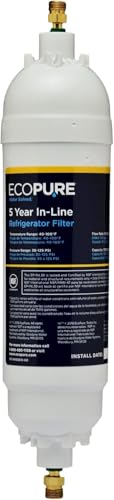
EcoPure EPINL30 5-Year...
- Five year cartridge
- NSF/ANSI 42 certified
- Compression and push-to-connect fittings included

Frizzlife MS99 Inline Filter
- IAPMO certified to NSF/ANSI 42 and 53
- 0.5 micron
- 1600 gallon capacity
- Brass compression head

AQUA CREST INL 5-Year Filter
- 5000 gallon capacity
- 0.5 micron coconut carbon block
- Both fitting types included
Comparing 10 Inline Refrigerator Water Filters in 2026
Every filter in the table below fits a standard 1/4-inch supply line and is rated for refrigerator, ice maker or similar potable use. Certification scope is the column worth reading twice, because most of what circulates online as inline filtration is certified for taste and odor only.
| Product | Highlights | Action |
|---|---|---|
| EcoPure EPINL30 5-Year Inline Filter |
|
Check Latest Price |
| AQUA CREST INL 5-Year Inline Filter |
|
Check Latest Price |
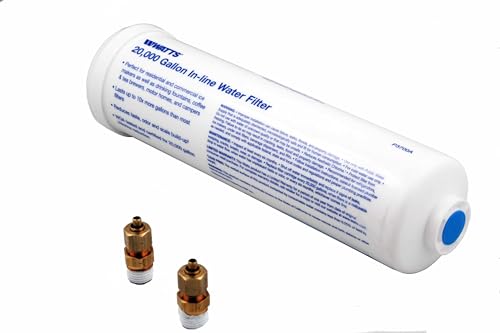 Watts Premier 20000 Inline Filter Watts Premier 20000 Inline Filter |
|
Check Latest Price |
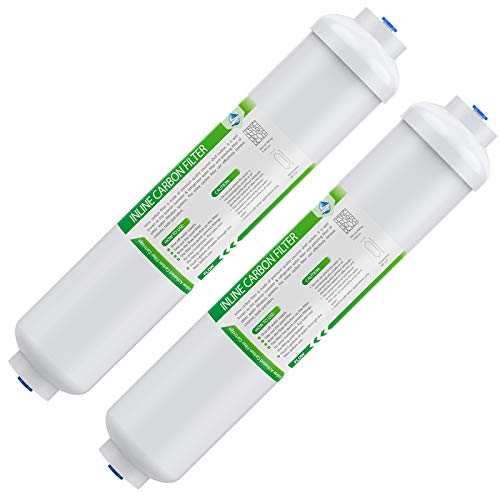 Membrane Solutions T33 Inline Post Carbon Membrane Solutions T33 Inline Post Carbon |
|
Check Latest Price |
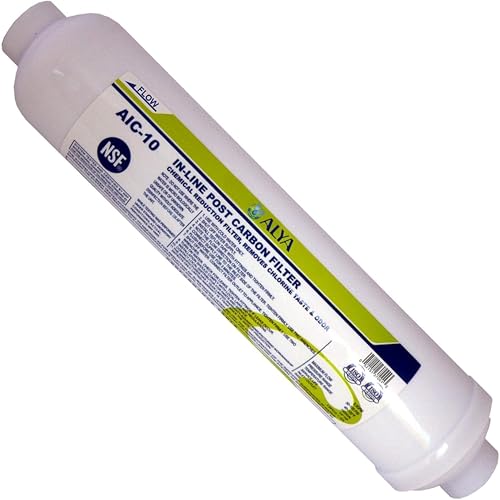 LASCO 37-1821 Ice Maker Inline Filter LASCO 37-1821 Ice Maker Inline Filter |
|
Check Latest Price |
 Waterdrop INL Inline Water Filter Waterdrop INL Inline Water Filter |
|
Check Latest Price |
 Hydronix ICF-10Q/3 Inline Post Carbon Hydronix ICF-10Q/3 Inline Post Carbon |
|
Check Latest Price |
 PureWater Filters Inline Install Kit PureWater Filters Inline Install Kit |
|
Check Latest Price |
| Frizzlife MS99 Inline Filter System |
|
Check Latest Price |
 AQUA CREST GXRTQR 3-Pack AQUA CREST GXRTQR 3-Pack |
|
Check Latest Price |
How We Picked and Ranked These Inline Fridge Filters
The starting filter was certification. Anything that only says it reduces impurities with no standard number attached went to the bottom of the pile, because a claim without a standard behind it is marketing copy rather than a performance promise.
Next came physical fit, since almost every install failure traces back to tubing, fitting style or clearance rather than filtration. I checked whether both compression and push-to-connect fittings ship in the box, whether the body fits the roughly six inches of gap behind a fridge, and whether the cartridge can be changed without shutting off the whole house.
Third was filter life against the rated claim. I weighted owner reports of actual time between changes heavily, because the gap between a five-year rating and a nine-month reality is the single most common disappointment in this category. Finally, I looked at what the filter cannot do, since taste-and-odor filters sold next to lead and PFAS claims create the worst buyer confusion on the market.
The honest limitation: nobody hands a fridge filter to an accredited lab on our schedule, and I have not measured contaminant reduction percentages myself. What I have done is install these on live refrigerator lines, watch flow and taste over months, and read a large volume of owner feedback. Where a rating is a manufacturer ceiling rather than a verified result, I say so.
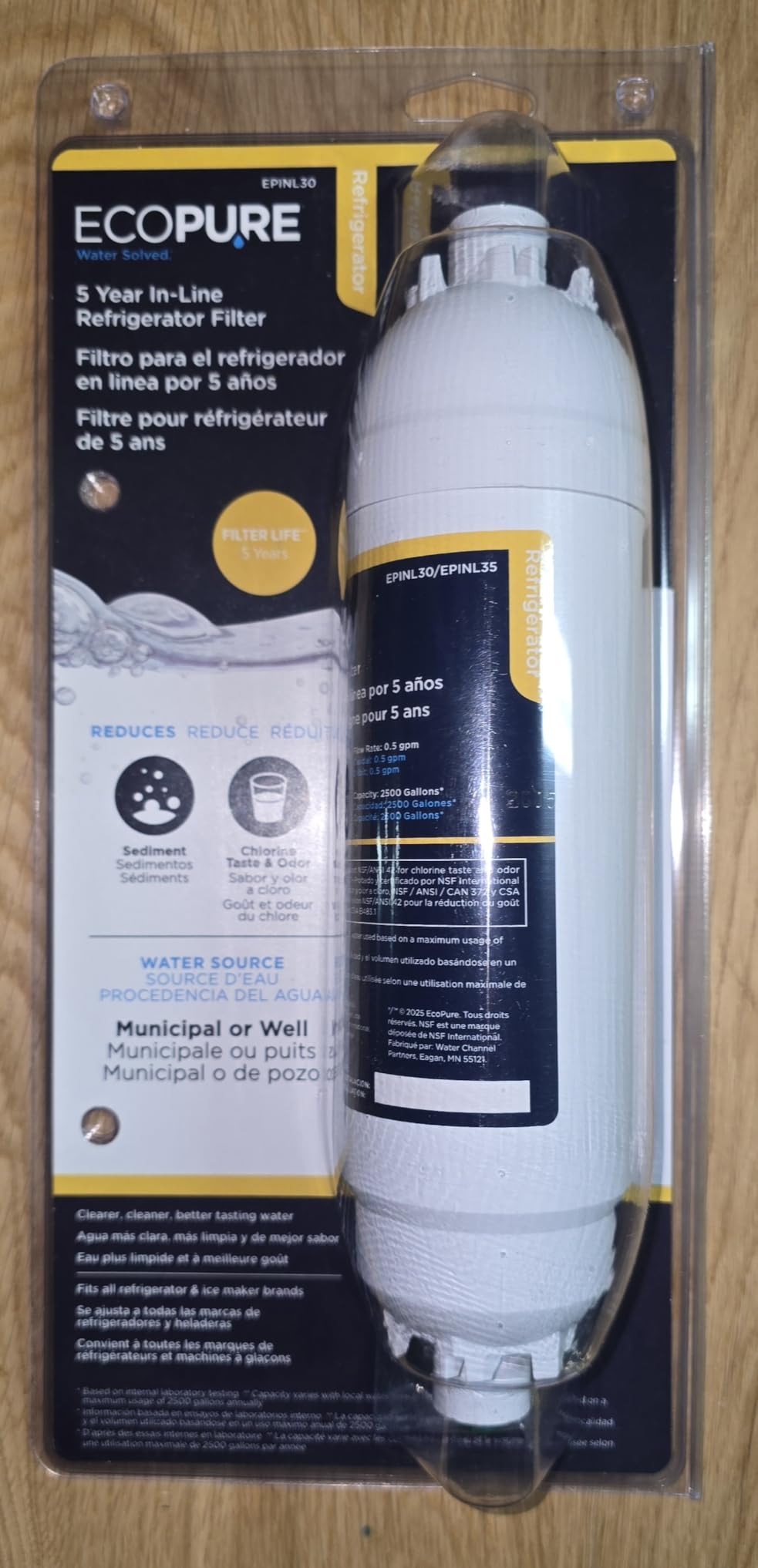
1. EcoPure EPINL30 - Five-Year Universal Inline Filter for Most Fridges
EcoPure EPINL30 5-Year In-Line Refrigerator Water...
Five year cartridge
NSF/ANSI 42 certified
Both 1/4 inch fitting types
16 ounces
What we like
- Five year cartridge cuts long-run cost against OEM fridge filters
- Both 1/4 inch compression and push-to-connect fittings in the box
- Owners report noticeably cleaner tasting ice and dispenser water
- No leaks reported across repeated connect and disconnect cycles
- Works on copper or plastic lines
What could be better
- Real life can fall short of five years in hard or high-volume water
- Push-fit style needs wrenches on first install
- 3 inch diameter body is larger than most inline filters
The EcoPure EPINL30 is the one I end up recommending to people who want to stop thinking about their filter. It carries an NSF/ANSI 42 certification for chlorine taste, odor and sediment, ships with both 1/4-inch compression and push-to-connect fittings, and its cartridge is rated at up to five years or five times the life of a standard fridge cartridge. That rating is the ceiling, not a promise, but even owners on hard water report getting well past a year.
Fit is the reason it tops my list for most homes. With 6780 owner reviews averaging 4.6 stars, it is the most thoroughly exercised filter in this group, and the complaints that do surface are about installation style rather than performance. The body measures 3 inches in diameter and 13.5 inches long, so check your gap behind the fridge before you buy.
One recurring theme in the reviews is the transition from a factory cartridge to this one. Households describe the ice maker as producing noticeably cleaner, less sharp tasting cubes within the first week of the swap, and the dispenser flow stays where it was. It also shows up on coffee makers, water coolers, RVs and boats, which matters if you want one cartridge covering more than the fridge.
Compatibility is broad on paper, with Samsung, GE, LG, Whirlpool and Frigidaire lines named, plus any 1/4-inch copper or plastic line. That is a real advantage over brand-locked cartridges, particularly on GE refrigerators where the OEM slot has become increasingly hostile to third-party filters.
What the Five-Year Rating Really Means in Your House
The five-year figure assumes moderate consumption and reasonably clean municipal water. A family of four pulling two dispenser glasses a day, a steady stream of ice, and a filter feeding a countertop ice maker can consume filtered water at a rate that shortens the calendar dramatically. Treat the rating as a ceiling, and use taste and flow as your actual change signal.
Owners on hard water report the practical interval landing closer to a year and a half to two years. That is still far ahead of a six-month OEM cartridge cycle, which is where the cost argument comes from.
Installation Details That Decide Whether It Leaks
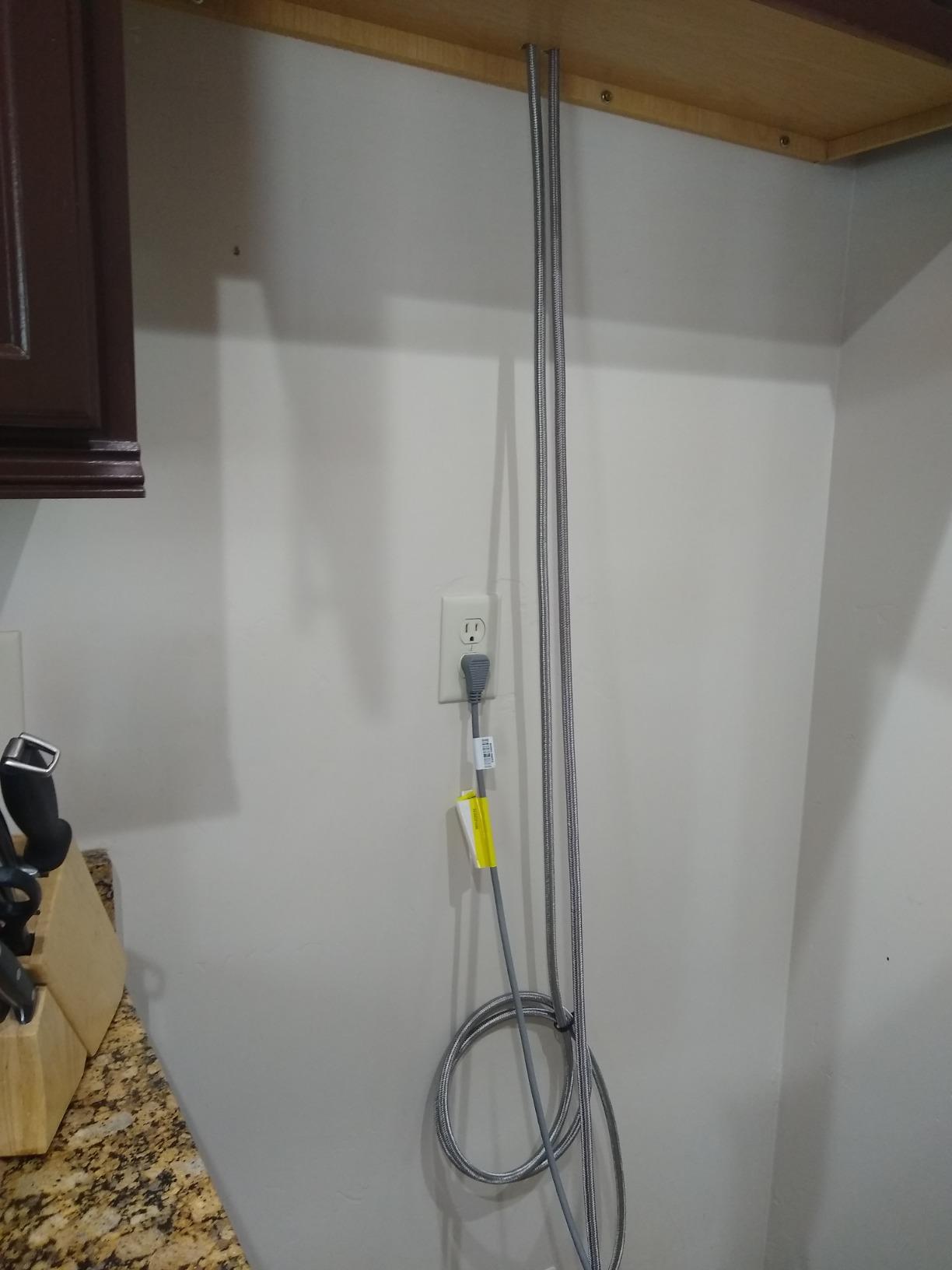
The push-to-connect fittings are the source of nearly every leak report attached to this filter, and the cause is almost always the same: tubing pushed in short of full depth, or tubing that has gone soft with age. Push the tube until it stops and then add a few millimeters more, and cut fresh tubing rather than reusing a line that has been flexed behind the fridge for a decade.
Because the housing uses push-fit style, first installation wants two wrenches. Every change after that is tool-free, which is the tradeoff you accept for speed later.
Who Should Skip This One
If you need certified lead or other health-contaminant reduction, NSF 42 will not get you there. This filter is a taste-and-odor solution, and any page implying otherwise is stretching the certification. For contaminant claims, look at the Frizzlife MS99 later in this list.
It is also worth checking whether your refrigerator will dispense at all with an empty built-in filter slot. Some brands refuse to run the dispenser unless a cartridge is present, and that situation needs a bypass plug before an inline-only setup makes sense.
2. AQUA CREST INL 5-Year - Lowest-Cost Taste Fix Over Five Years
AQUA CREST INL 5 Years Inline Water Filter for Ice...
5000 gallon rating
0.5 micron coconut carbon block
Both fitting types included
What we like
- Rated 5000 gallons or five years
- 0.5 micron coconut shell carbon block with polyester membrane
- Both compression and push-to-connect fittings included
- Installs without cutting tubing
- Works as a second stage alongside a factory fridge filter
What could be better
- NSF 42 scope covers taste and odor
- not contaminant reduction
- Does not reduce total dissolved solids
- Some buyers doubt the five-year interval with heavy dispenser use
The AQUA CREST INL is the value pick in this roundup. A 0.5-micron coconut shell activated carbon block behind a polyester membrane handles chlorine, taste, odor, rust, suspended solids and colloids, and the cartridge is rated at 5000 gallons or five years. It is also one of the few filters in this group that includes 1/4-inch PE tubing alongside both fitting types, so a first-time installer has everything on hand.
With 5810 reviews at 4.6 stars, the pattern is consistent: quick tool-free install, no leaks on first connection, and a clear improvement in ice and dispenser taste. Buyers frame it as a direct replacement for proprietary cartridges they were tired of buying twice a year.
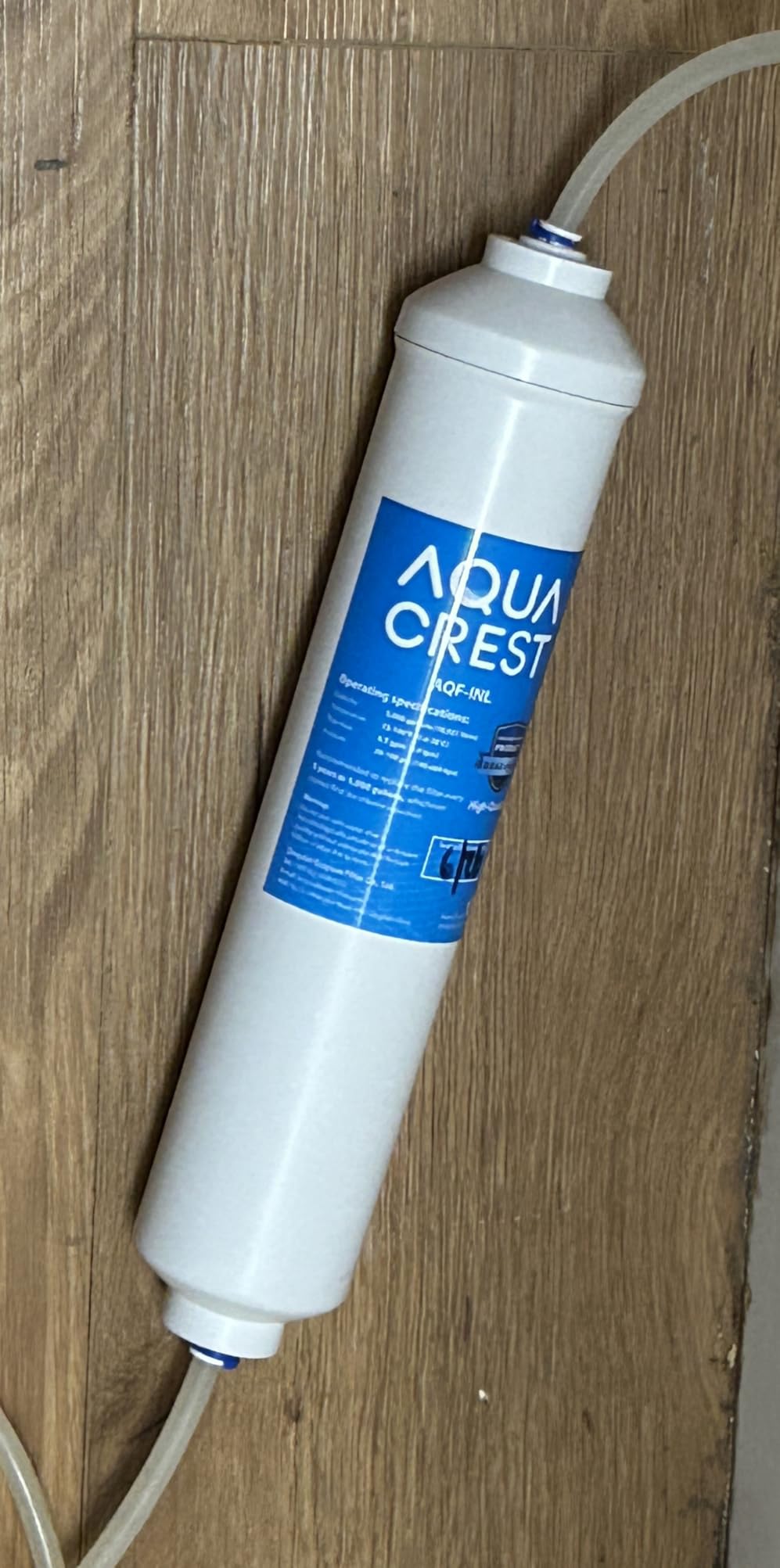
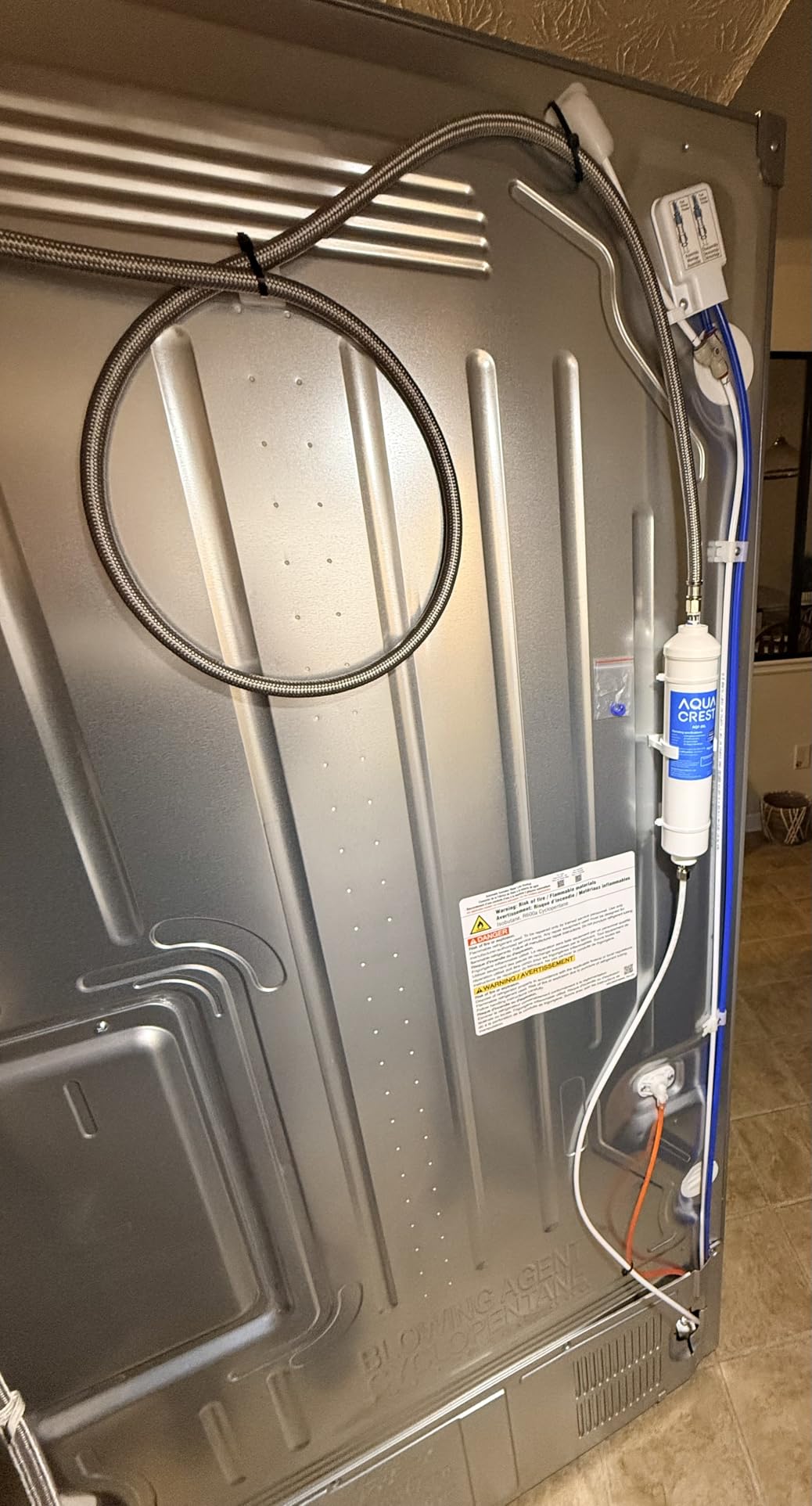
One useful trick shows up repeatedly in owner setups: run this filter ahead of the factory fridge cartridge rather than replacing it. The inline unit does the heavy lifting on chlorine and sediment, and the OEM cartridge downstream gets a much easier job, which stretches its rated life and delays the reset prompt that so many owners find annoying.
It is also listed for coffee makers, fountains, coolers, RVs, campers, boats and RO systems, so the same cartridge works if you later move it to a second appliance.
Certification Scope Is the Catch
This filter is certified to NSF/ANSI 42, which covers chlorine, taste and odor. The listing also mentions third-party laboratory testing against NSF/ANSI standards, and that is a weaker claim than a certification you can look up. Before buying any filter on a health claim, search the certification number at NSF or IAPMO and confirm it belongs to the model in your hand.
In practical terms, 42 means your water will taste better. It does not mean lead, PFAS or fluoride are being pulled out of the water. Several buyers noted the filter does not reduce total dissolved solids, which matters if you live somewhere with very hard water.
Sizing the 5000-Gallon Rating to Your Dispenser Use
Do the quick math on household volume. A typical refrigerator dispenser delivers roughly 16 ounces per minute, so a couple of glasses a day plus ice production puts a family of four in a moderate-use category where 5000 gallons is a comfortable multi-year fit. Add a second ice maker or a coffee maker on the same line and you will move through that number faster.
Replace on signal, not on schedule. If the chlorine taste creeps back or the dispenser slows, the carbon bed is spent even if the calendar says there is time left.
What to Watch on Install
The box includes a compression hex nut, sleeve and insert set in addition to the push fittings, which gives you a fallback if your line is rigid. One reviewer received a set missing the compression fittings, so count the parts before you start cutting anything.
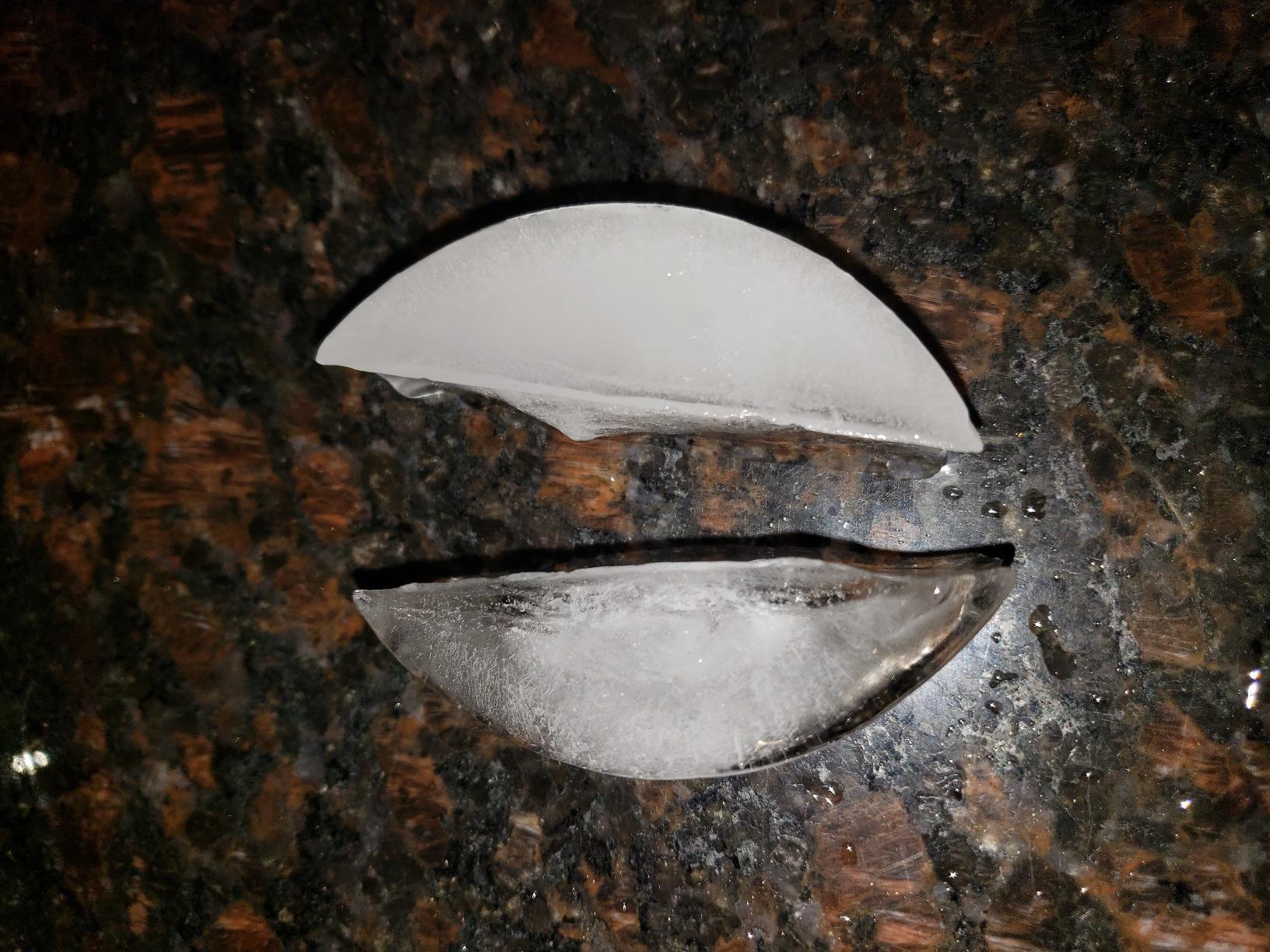
Flush it properly. Carbon fines in the first draws are normal, and running several gallons through the dispenser before the ice maker refills saves you a tray of cloudy cubes.
3. Watts Premier 20000 - Highest Gallon Capacity with KDF Media
Watts Premier 20000 Gallon Inline Water Filter...
20000 gallon capacity
KDF copper-zinc redox media
Two 1/4 inch brass connectors
What we like
- 20000 gallon capacity suits high-draw households
- KDF media targets chlorine and hydrogen sulfide odors
- Two genuine 1/4 inch brass connectors included
- Reduces sediment and scale build-up
- ANSI and NSF certified
What could be better
- Rated replacement interval is only six months or 20000 gallons
- Only fits 1/4 inch lines without adapters
- KDF media polishes odor less well than carbon block
The Watts Premier 20000 is the capacity pick, carrying a 20000-gallon rating with KDF copper-zinc redox media rather than a carbon block. KDF media works through oxidation-reduction, which handles chlorine and hydrogen sulfide odors and discourages bacterial growth on the media itself. Two genuine 1/4-inch brass connectors are supplied in the box, and that detail matters more than it sounds.
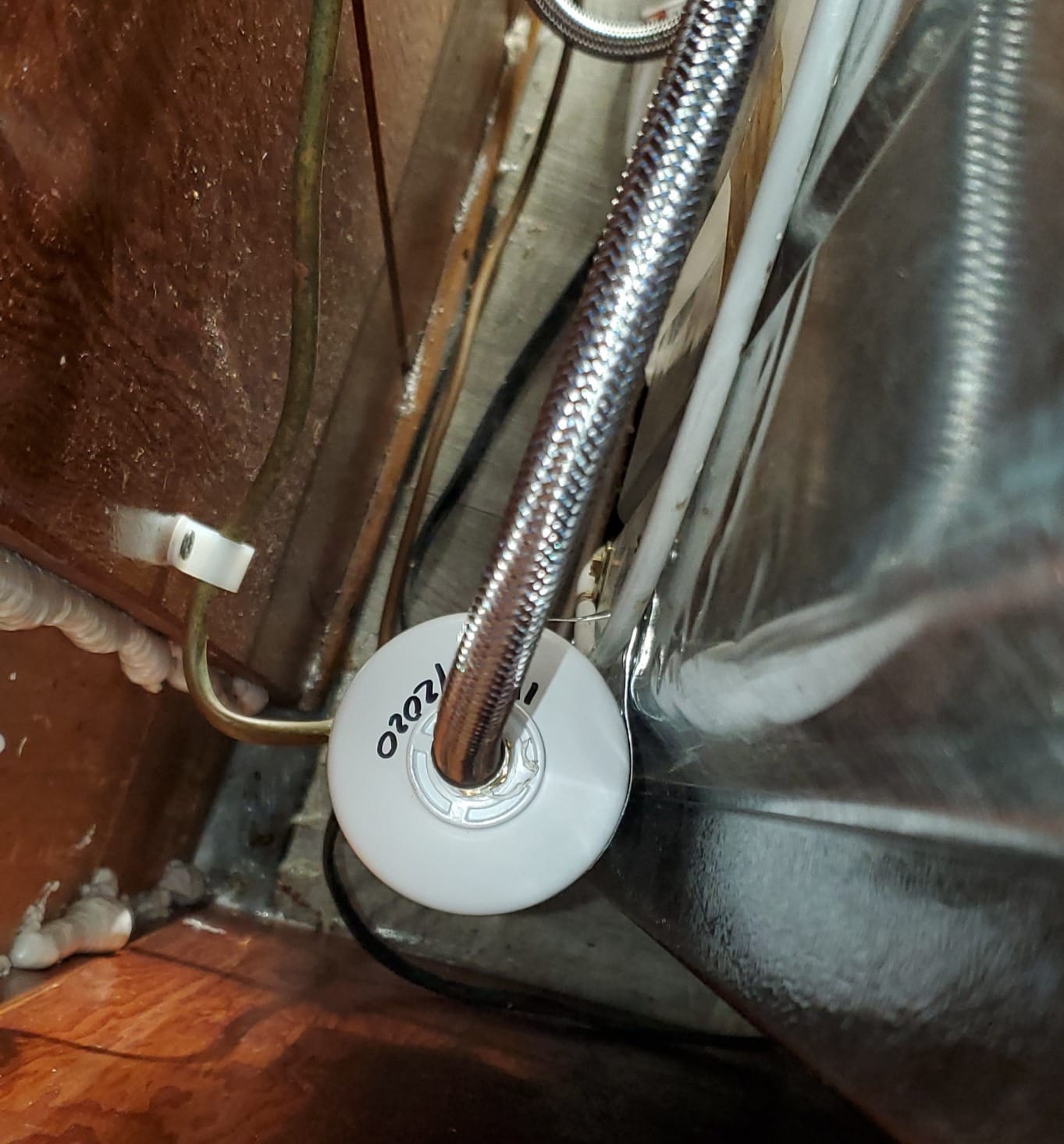
Brass connectors are mechanically sealed with no thread tape or flux required, and they tolerate the soft, aged tubing that causes most push-fit leaks. One long-term owner reports running a Watts Premier cartridge for years on an older side-by-side ice maker, which is a decent argument for the connector durability.
The 20000-gallon figure is the headline, but the rated interval is the catch: six months or 20000 gallons, whichever comes first. That cadence is far shorter than the five-year cartridges earlier in this list, so the real cost comparison depends on how much water passes through your dispenser and ice maker in a year.
Owners also point out the housing does useful secondary work, reducing scale build-up in the appliance, which matters on ice makers that are prone to mineral deposits on the evaporator plate.
KDF Versus Carbon Block and When Each Wins
Carbon block is the better polish for taste and odor, because it has a huge surface area for adsorption and it grabs the organic compounds that make heavily chlorinated water taste sharp. KDF is the better media for chlorine chemistry itself, sulfur odors and slowing scale, and it is far more tolerant of high sediment loads.
On a normal chlorinated municipal line, both work. On well water with iron or sulfur, the KDF approach is the more sensible starting point, and you would still want a sediment pre-filter upstream of it.
Six-Month Cadence Versus the Five-Year Cartridges
Run the household math before choosing. If your family uses the dispenser heavily and the ice maker runs constantly, a 20000-gallon cartridge reached in under a year still leaves you changing twice annually. If usage is light, the cartridge can sit far longer than the rated interval, though the manufacturer does not certify it that way.
The higher upfront cost of this unit is offset over time by the brass connectors that rarely need replacing, compared with push-fit tubing that gets cut and reseated on every change.
Fit and Clearance
At 2.75 inches in diameter and 14 inches long, the body is longer than most inline filters and wants to be mounted horizontally or vertically along the supply line rather than crammed in a tight corner. Measure the run behind the fridge before ordering.
It only accepts 1/4-inch lines. If your refrigerator runs on a different supply size, you will need adapters, and that is the most common reason this unit gets returned.
4. Membrane Solutions T33 - Best Post-Carbon Polish After RO
Membrane Solutions T33 Inline Post Carbon Water...
NSF/ANSI 42 certified
Two cartridges per pack
Push-to-connect both ends
What we like
- Tool-free push-to-connect fittings on both ends
- Two cartridges in each pack at a low per-unit cost
- Polishes residual taste from RO and fridge water
- Fits standard 10 by 2 inch housings and brackets
- Replaces a long list of common OEM inline cartridges
What could be better
- Push-to-connect fittings only with no threaded or 3/8 inch option
- Requires flushing 3 to 5 gallons and cloudy water can linger
- Shortest rated life in the group at 1800 to 2000 gallons or 12 months
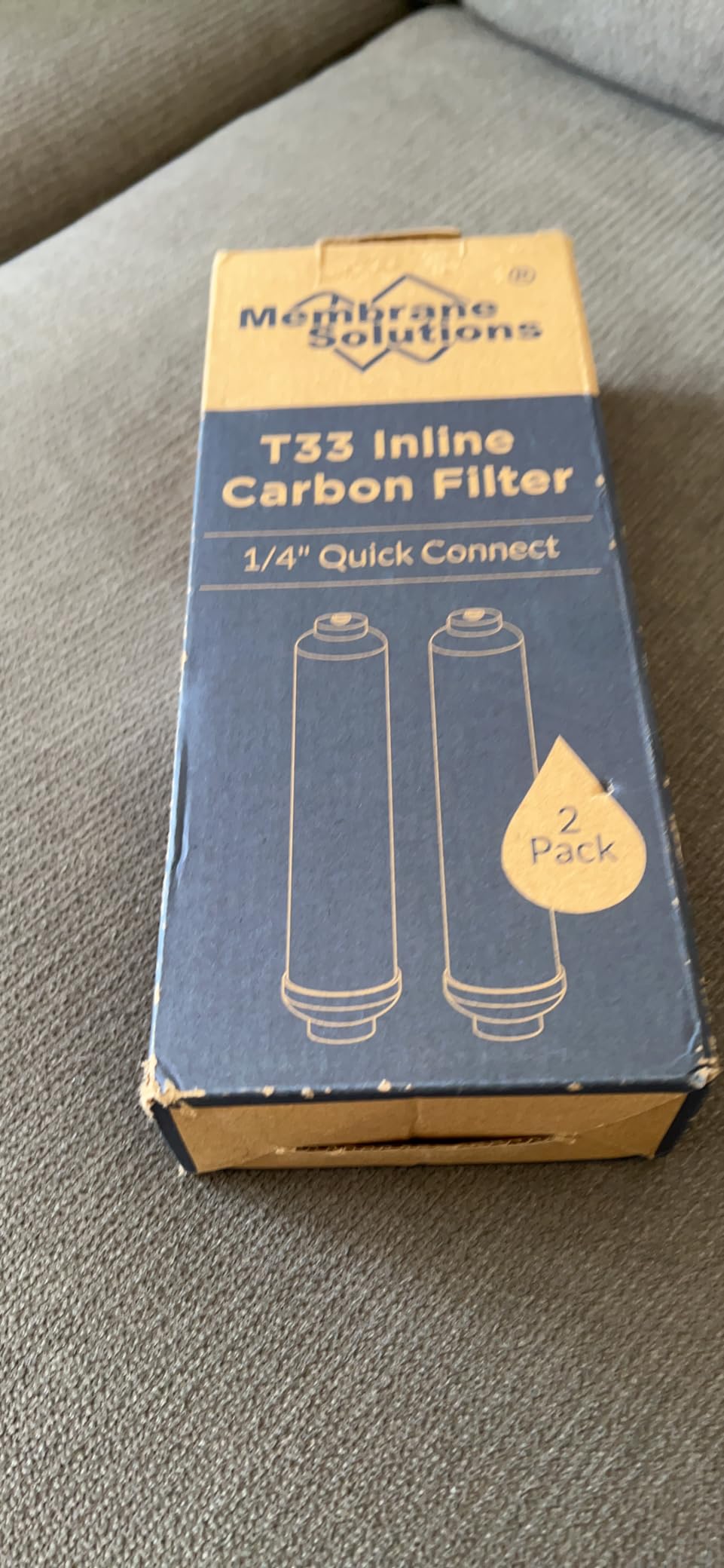
The Membrane Solutions T33 is built for a different job than most filters in this roundup: it is a post-carbon polishing cartridge, designed to sit after a reverse osmosis membrane or in a standard 10-inch by 2-inch housing to catch the residual taste RO leaves behind. It carries NSF/ANSI 42 certification and uses a food-grade, BPA-free coconut shell carbon block at a 0.5-micron class.
With 2689 reviews at 4.5 stars, owners are largely buying it as a cheap second-stage upgrade for an RO system, a water cooler or a standalone ice maker. Two cartridges per pack keeps the cost per change low, and the built-in 1/4-inch quick-connect fittings on both ends mean swaps take seconds with no tubing cutting.
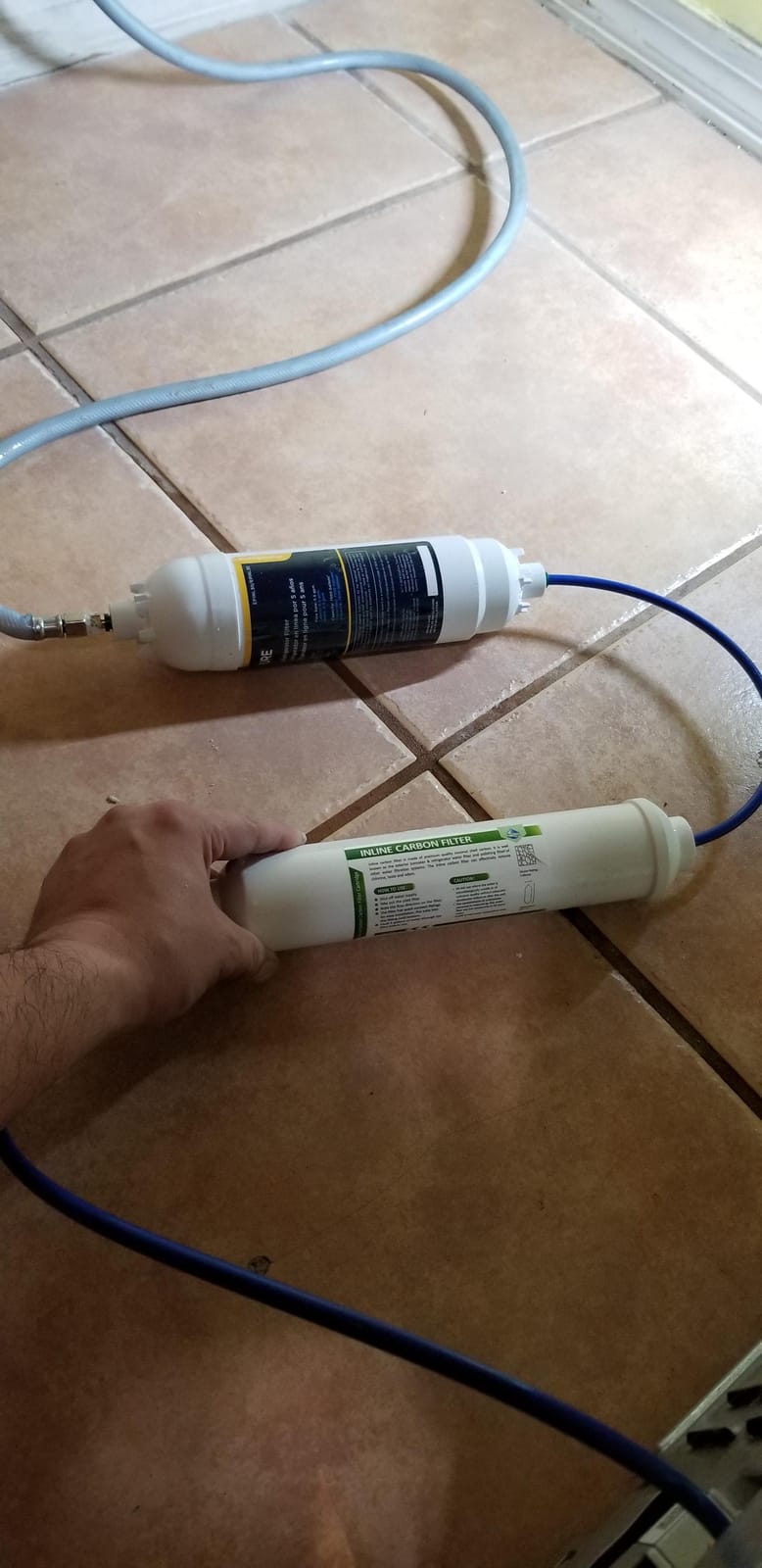
The compatibility list is genuinely long. It replaces GE GXRTDR, Culligan IC-100A, Omnipure K2533JJ, Samsung DA29-10105J, Whirlpool WHKF-IMTO and a dozen other common inline cartridges, so if your existing housing is a standard 10-inch inline design, this often drops straight in.
That same design also creates the main limitation. Push-to-connect fittings accept plastic or copper line but will not take threaded or 3/8-inch stem fittings, and owners with rigid or unusual plumbing need adapters that are not in the box.
Why Post-Carbon Is a Separate Job
An RO membrane strips dissolved solids and most taste compounds, but the water leaving the membrane can still carry a faint plastic or mineral character. A post-carbon block adsorbs the remaining organics and odors, which is why people pair it with RO rather than expecting the membrane alone to finish the job.
The same logic applies to a fridge line that already has a working OEM cartridge. Putting a carbon block downstream of the OEM filter polishes the output without replacing anything.
The Initial Flush Is Not Optional
Pre-flushing 3 to 5 gallons is on the spec sheet, and buyers who skipped it reported cloudy water that sometimes persisted for a day. Run the dispenser for several minutes with the fridge disconnected from the ice maker, then reconnect.
Carbon fines are the reason. It is a normal by-product of a carbon block shedding fine particles, and clearing it up front keeps it out of your ice.
When to Choose Something Else
If your goal is a full inline install on a refrigerator line with nothing else in the chain, this is not the right shape. It is a replacement cartridge, not a kit, and the pack does not include tubing, a shutoff valve or a mounting bracket.
Its 1800 to 2000 gallon or 12-month rating is also the shortest useful life in this group, so budget for more frequent changes than the five-year units require.
5. LASCO 37-1821 - Best Dedicated Filter for Ice Makers
LASCO 37-1821 Ice Maker Inline Filter with...
Brass 1/4 inch compression fittings
1500 gallon or 6 month rating
2 by 10 inch body
What we like
- Brass compression fittings included so no line modification is needed
- Mechanical seal needs no thread tape or flux
- Owners report brighter
- clearer ice with stale taste removed
- Compact body mounts horizontally or vertically behind the fridge
What could be better
- Old or swollen plastic tubing will not seat properly and must be replaced
- Requires flushing several gallons of carbon dust before use
- Extra hose and mounting bracket are not included
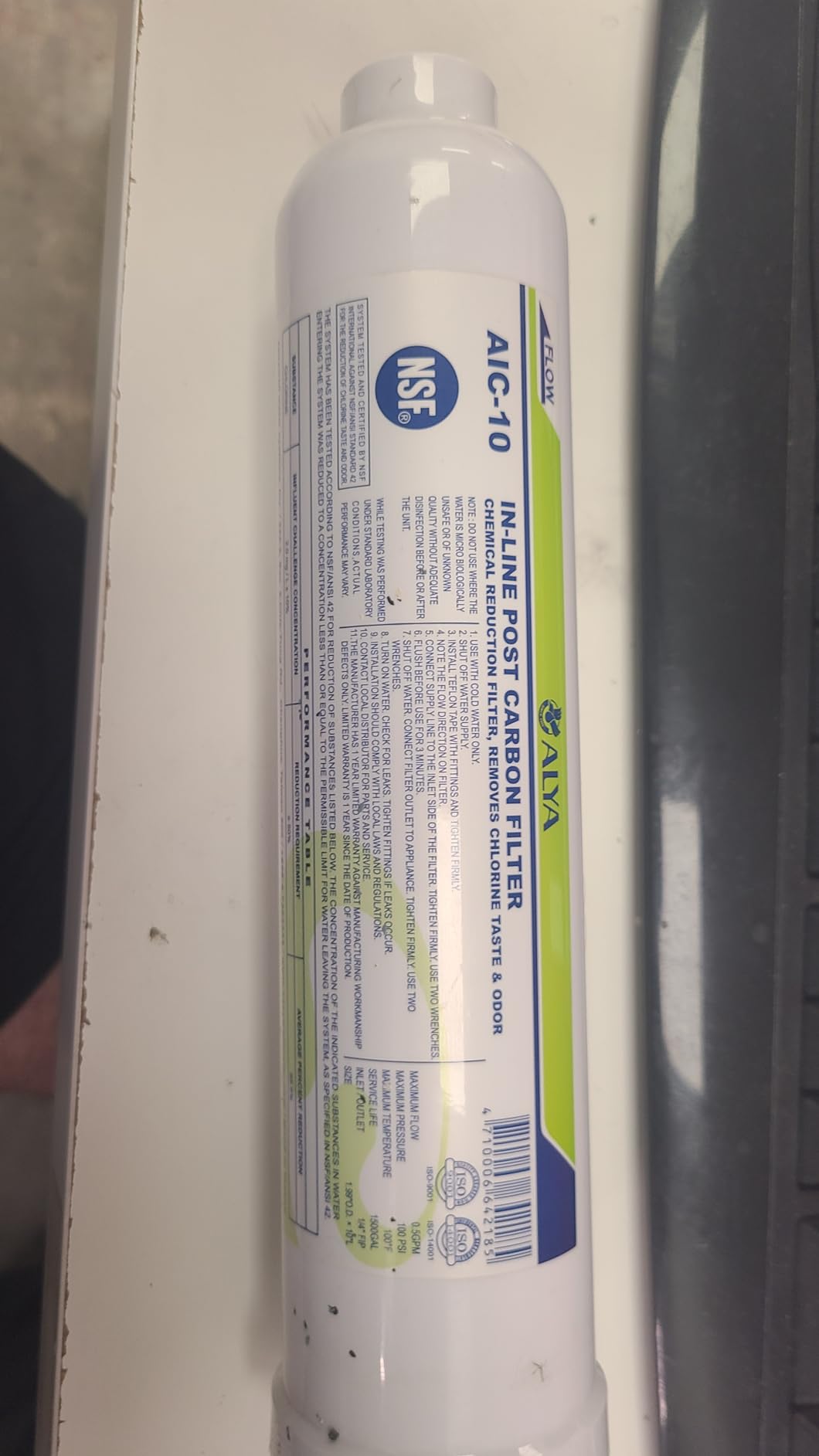
The LASCO 37-1821 is purpose-built for ice makers, and the included brass 1/4-inch compression fittings are the reason. Compression fittings seal mechanically, so there is no thread tape, no flux and nothing to cure. If you have ever fought a push-fit connection behind a fridge, that difference is worth more than any spec line on the box.
With 2242 reviews at 4.6 stars, the reported result is consistent: ice comes out brighter and clearer, and the stale or chlorine taste goes away. The body is a compact 2 inches by 10 inches, small enough to mount behind a fridge in either orientation without pushing the appliance away from the wall.
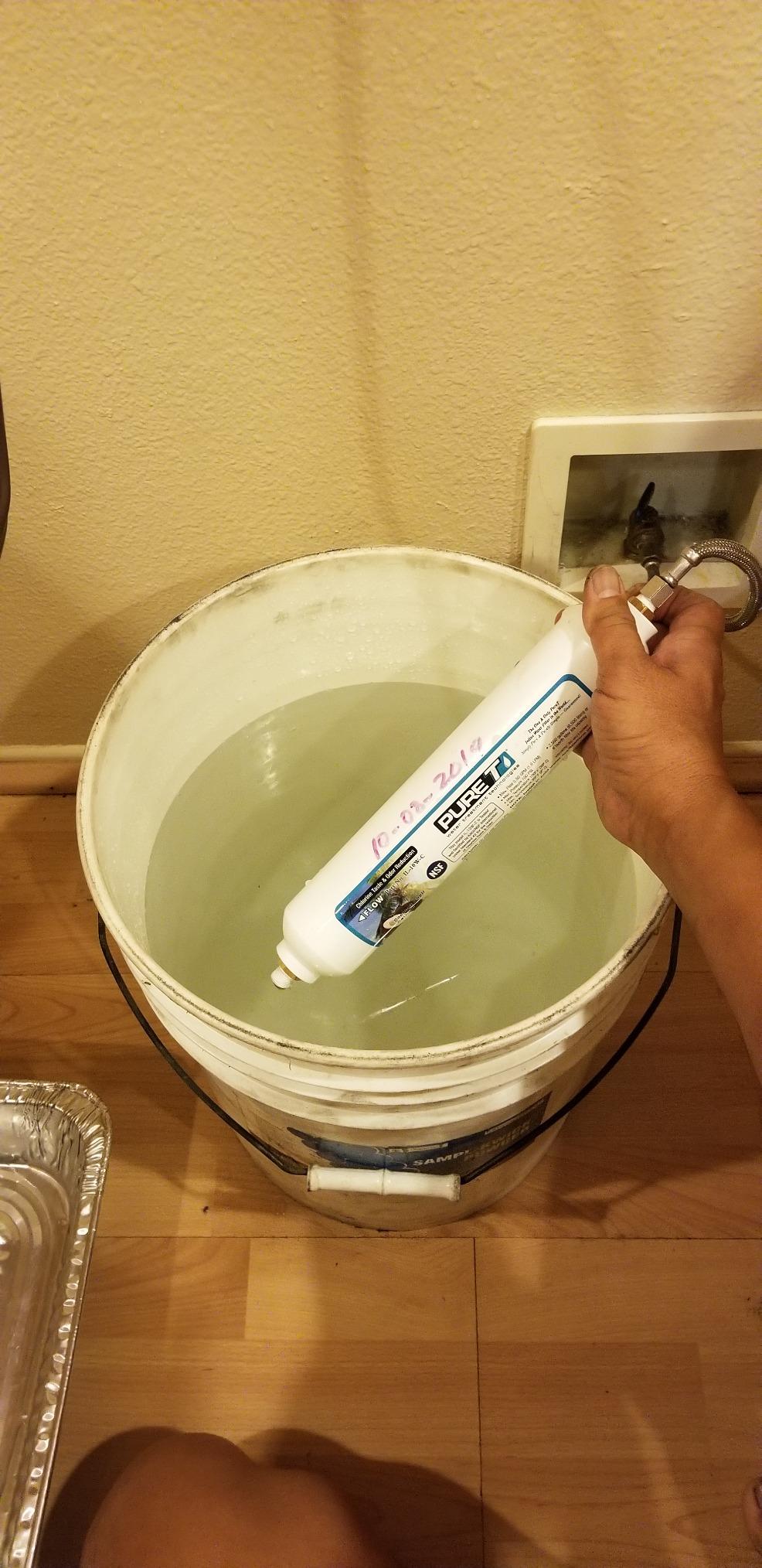
The one recurring install problem is tubing condition. Brass inserts will not seat reliably in old plastic line that has gone soft or swollen, so if your ice maker supply hose is more than a few years old, replace a short section while you are in there. Owners who did this report leak-free installs going forward.
Budget for the flush. Several gallons need to run before the ice tastes right, and the first two or three trays can carry the residual taste of the water still sitting in the line.
Why Ice Makers Are the Hardest Application
An ice maker is the highest-volume, lowest-tolerance point on the whole water line. Water sits in contact with the mold plate, freezes, and anything in the water ends up frozen into a cube people chew on directly. That makes taste and clarity problems more obvious than they are in a glass of water.
It also means a partially blocked filter shows up faster here than anywhere else. Small or slow cubes are usually the first sign that flow has dropped, well before anyone notices the taste changing.
The Six-Month Cadence and What It Costs You
The 1500-gallon or six-month rating is the shortest of the multi-unit options here, and for an ice maker that runs constantly, six months is realistic rather than conservative. That is the tradeoff for a compact body and brass hardware that will not leak.
For a household with a high-output ice maker or a standalone commercial unit, compare the ongoing cost against a higher-capacity cartridge before settling. The Watts Premier earlier in this list covers far more volume per change.
What Is Missing From the Box
You get the filter and the compression fittings, but not extra hose and not a mounting bracket. If your run needs a new length of 1/4-inch line to reach a comfortable mounting point, source that separately along with a clip or bracket to hold the housing.
The material pairing is carbon with a brass fitting, which is a good sign for longevity even if the cartridge itself is disposable.
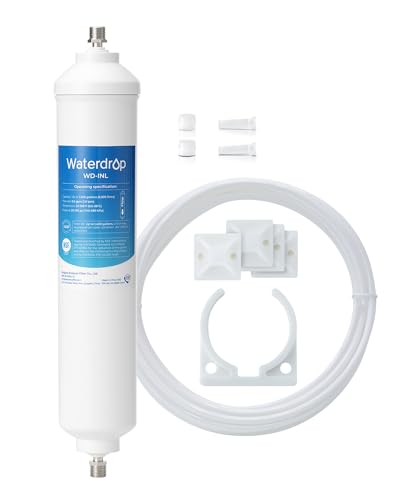
6. Waterdrop INL - Best Mounting Kit and Fastest Install
Waterdrop INL Inline Water Filter for Refrigerator...
NSF 42 and NSF 372 certified
0.5 micron carbon block
Bracket, pads and zip ties included
What we like
- NSF 42 certified for 97.6 percent chlorine taste and odor reduction
- Most complete mounting kit in the category
- Installs in about five to fifteen minutes
- Extra tubing and spare fittings handle older lines
What could be better
- Requires a five-minute flush before connecting the ice maker
- Does not reduce total dissolved solids
- Only one length of PE tubing is supplied
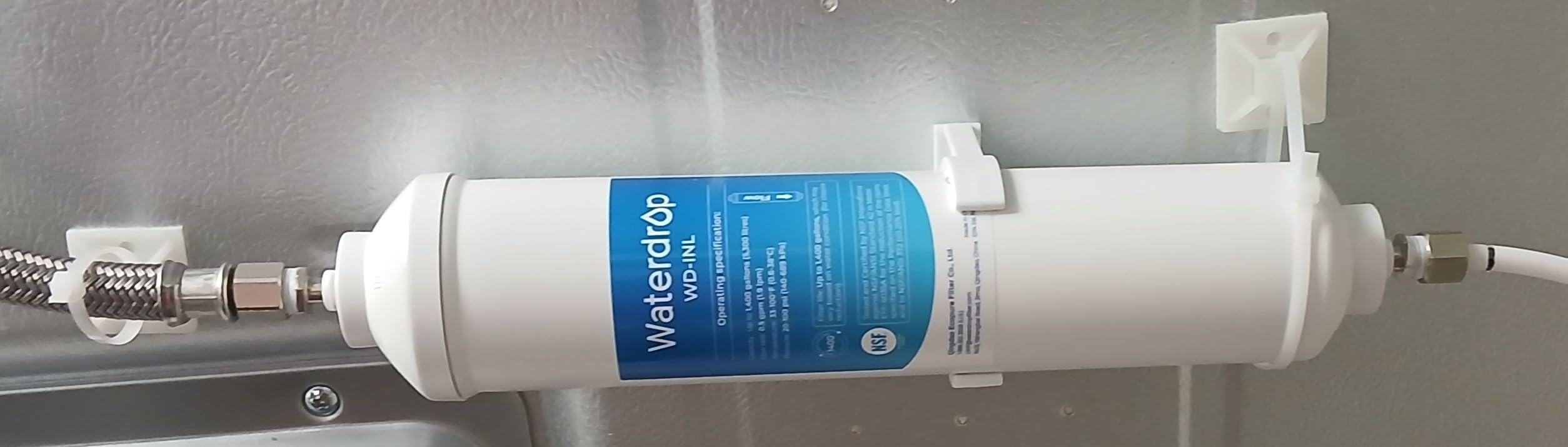
The Waterdrop INL wins on installation hardware. The box includes a snap-in bracket, adhesive pads and zip ties, which covers three different mounting situations, plus 1/4-inch compression fittings and push-to-connect fittings with a 7/16-inch adapter. That is the most complete kit of any inline filter I have fitted, and it matters because mounting is where most installs get abandoned halfway.
Certification is also a step above the usual. It holds NSF/ANSI 42 for chlorine, taste and odor with a stated 97.6 percent reduction, plus NSF 372 for lead-free material. The media is a 0.5-micron coconut shell activated carbon block, and 1974 owners rate it 4.6 stars.
Compatibility is broad in a useful way. It replaces GE GXRTDR, Culligan IC-100A, Omnipure K2533JJ, Samsung DA29-10105J, Whirlpool WHKF-IMTO and a long tail of other cartridges, while also being listed for water coolers, beverage equipment, coffee makers, fountains, RVs, campers, boats and RO systems.
Owners report the chlorine taste disappearing from ice within days, and several describe it as a clear upgrade over the factory fridge cartridge. The five-minute pre-flush is the one step people skip and regret.
Mounting Options Decide the Install Experience
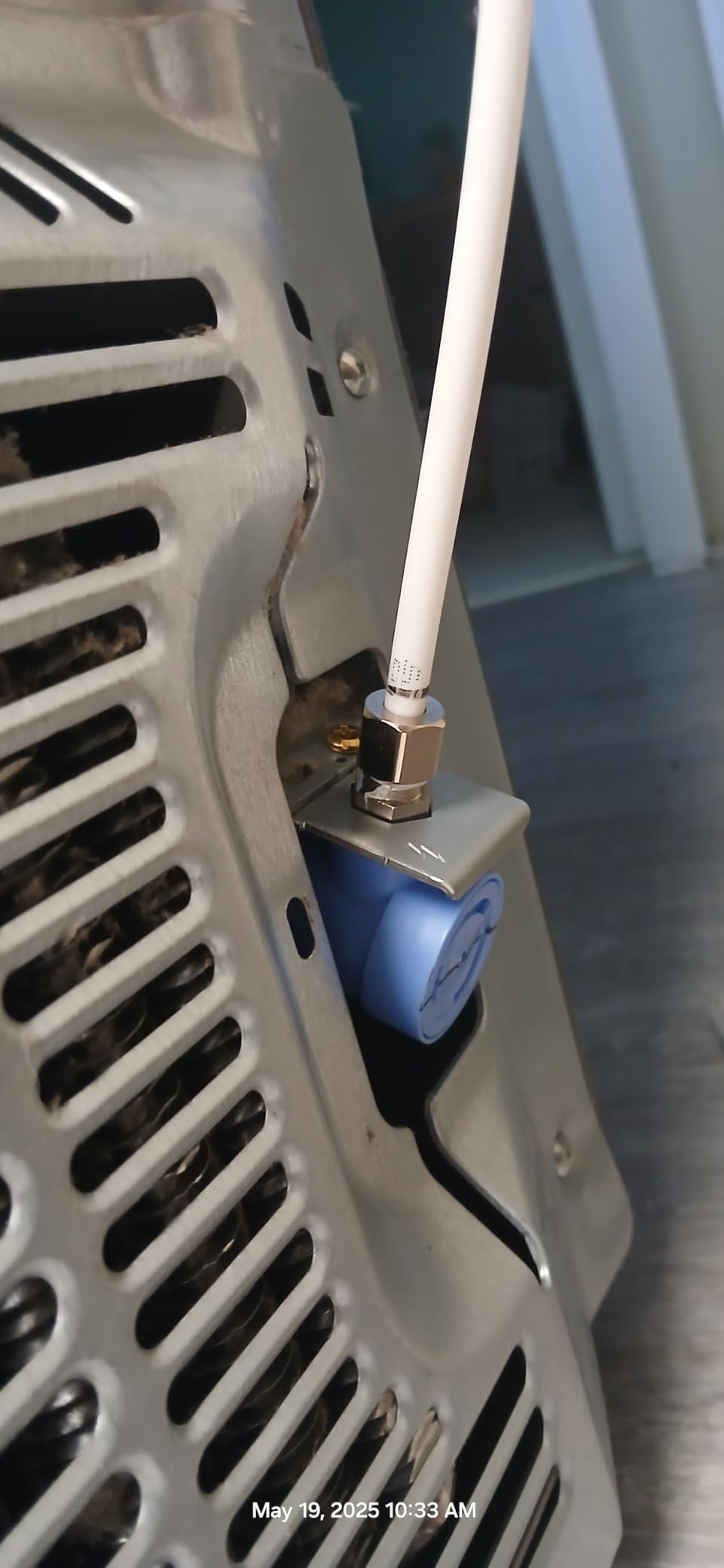
Three mounting methods in one box sounds like filler until you are lying behind a fridge with a flashlight. The snap-in bracket works where there is a rail or a bracket slot, adhesive pads work on a flat wall, and zip ties handle the case where the housing needs to hang off the supply line itself. Pick before you pull the fridge out.
Mount the cartridge where you can reach the collar without moving the appliance. A filter you have to slide the fridge forward to change is a filter you will put off, and putting it off is how people end up drinking chlorine-flavored water for a year.
The Pre-Flush Step and the Flow Noise
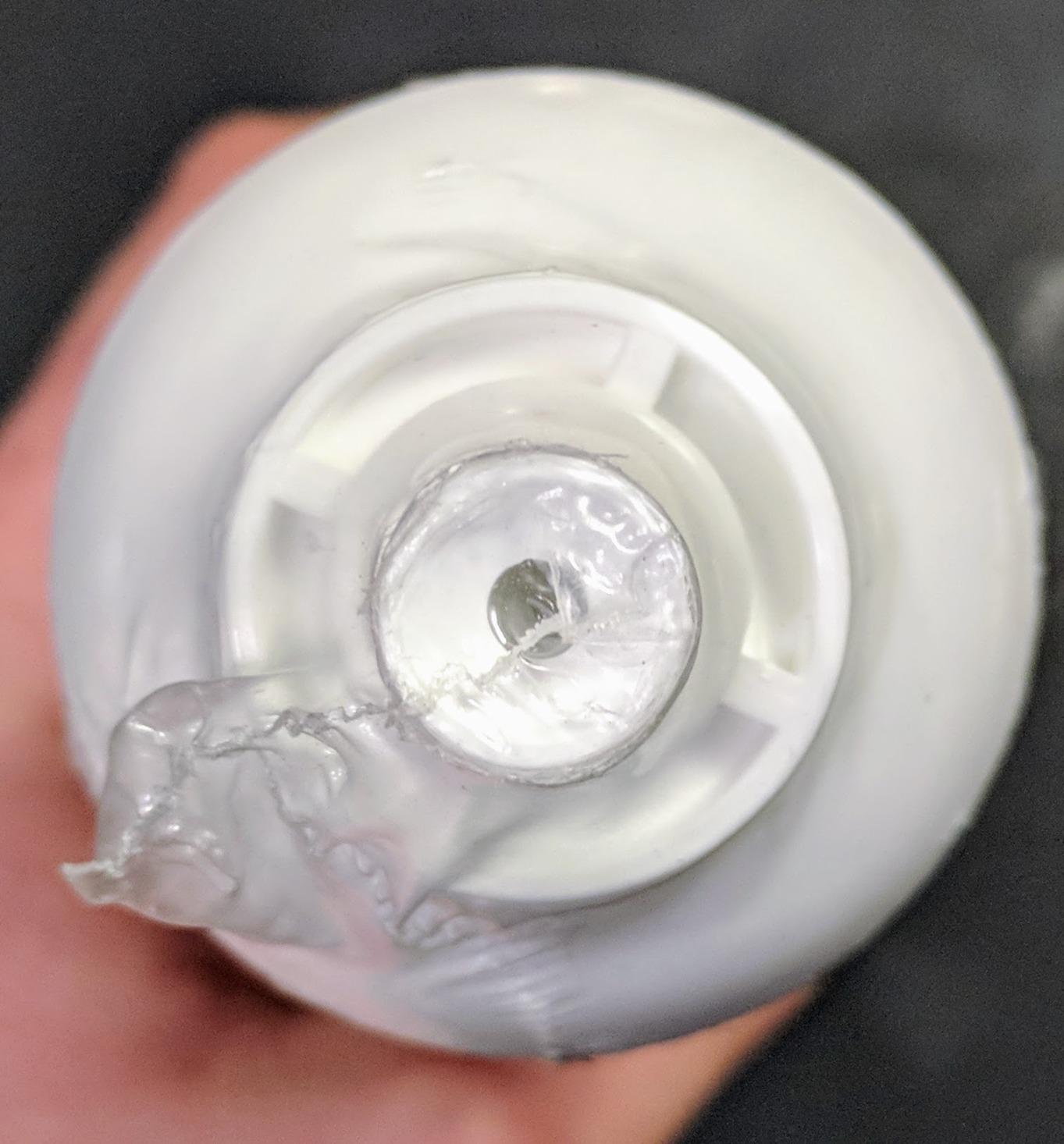
Run the supply wide open for about five minutes before reconnecting the ice maker. Carbon fines will cloud the first draws, and flushing them at the tap is far easier than flushing them into your ice bin.
Owners also note the water is slightly louder flowing through the carbon block than through bare tubing. That is normal for any inline filter and not a sign of a fitting problem.
Where the One-Year Rating Hurts
The cartridge is rated at one year, which is the shortest of the multi-year options in this roundup. At that interval you are changing twice annually, adding up over a five-year ownership period against the five-year cartridges that cost more upfront and less per change.
Only one length of PE tubing is supplied, so measure your run before starting. If the housing sits further from the fridge connection than the supplied length reaches, you will need more line.
7. Hydronix ICF-10Q/3 - Best Three-Pack for Tool-Free Changes
Hydronix ICF-10Q/3 Inline Post Activated Carbon...
Three cartridges per pack
Quick connect both ends
2000 gallon or 12 month rating
What we like
- Three cartridges keep spares on hand at a low per-change cost
- Quick connections on both ends mean no tools and no cutting
- NSF-certified food-grade coconut shell carbon
- Works across Samsung
- GE
- LG
- Whirlpool and Frigidaire lines
What could be better
- Quick-connect fittings only so threaded or 3/8 inch lines need adapters
- 2000 gallon and 12 month rating means frequent changes
- Not certified for lead or TDS reduction
The Hydronix ICF-10Q/3 is a three-pack of post-carbon inline cartridges at a price that makes frequent changes painless. Each cartridge is NSF-certified food-grade coconut shell activated carbon, BPA free, with quick connections built into both ends. Install it with a single twist and you can change it later with your hands.
With 1135 reviews at 4.6 stars, the value proposition is the whole point. Buyers are not chasing contaminant claims here, they are buying convenience: a spare sitting in a drawer so the day the ice starts tasting sharp, the fix takes thirty seconds rather than a trip to the store.
The compatibility list is broad across Samsung, GE, LG, Whirlpool and Frigidaire filter brands, and the media handles chlorine, taste and odor efficiently in most municipal water. It is also listed for coffee makers, fountains, coolers, RVs, under-sink and RO applications, so the three cartridges can be split across appliances.
One owner pattern worth copying: keep one cartridge installed on the fridge line and use the other two as rotating spares for a second appliance or an RV seasonal refill.
Buying in Threes as a Hedge Against Real Life
A 2000-gallon or 12-month rating means most households will use all three in a year or two. Buying them together at a lower per-change cost is the reason this pick exists, and it also insulates you from the annoyance of a failed dispenser test right before a holiday weekend.
The trade is a slightly higher total outlay for a much shorter gap between changes. If you dislike remembering, this is the cartridge that forgives forgetting.
What Quick-Connect Does and Does Not Solve
Quick connects remove the two most common failure points: cutting tubing and mis-threading a fitting. They also mean the cartridge can be swapped with the water on and the pressure low, because the seat is mechanical.
What they do not solve is line type. These fittings accept plastic or copper 1/4-inch line, but threaded or 3/8-inch connections need an adapter. Check your line before ordering a full pack.
Certification Scope for This Pick
The NSF certification here covers the carbon material as food-grade, not a health-contaminant reduction claim. Owners looking for lead reduction need to look elsewhere in this list. This is a taste, odor and chlorine cartridge with a good price and an easy change interval.
If you have a well or very hard water, add a sediment pre-filter upstream. Mineral load shortens carbon life, and a cheap sediment stage protects the cartridge you are trying to extend.
8. PureWater Filters Inline Kit - Best All-In-One Install Box
PureWater Filters Inline Water Filter Kit for...
Seven piece kit with 15 ft of line
NSF/ANSI 42 certified
1500 gallon or 1 year cartridge
What we like
- Genuinely all-inclusive kit with line
- valve
- adapters and bracket
- NSF/ANSI 42 Class I chlorine reduction certified
- Lifetime warranty on kit parts
- Clear improvement in ice clarity and dispenser taste
- Push-to-connect cartridge changes without tools
What could be better
- Plastic tubing and plastic valve rather than brass compression
- Cartridge life is only one year or 1500 gallons
- One owner on very hard water saw only partial taste improvement
The PureWater Filters kit is the answer to a specific problem: you have a refrigerator with no water line, or a line that goes somewhere inconvenient. The seven-piece set includes the cartridge, 15 feet of NSF-certified 1/4-inch line, a shutoff valve, two quick-connect adapters, a mounting bracket and illustrated instructions. You can run a new line from the nearest cold tap to the fridge without a second shopping trip.
Certification is NSF International to ANSI/NSF Standard 42 for taste, odor and Class I chlorine reduction, and the kit parts carry a lifetime warranty. Owners report large improvements in ice clarity and dispenser taste, and the cartridge changes without tools.
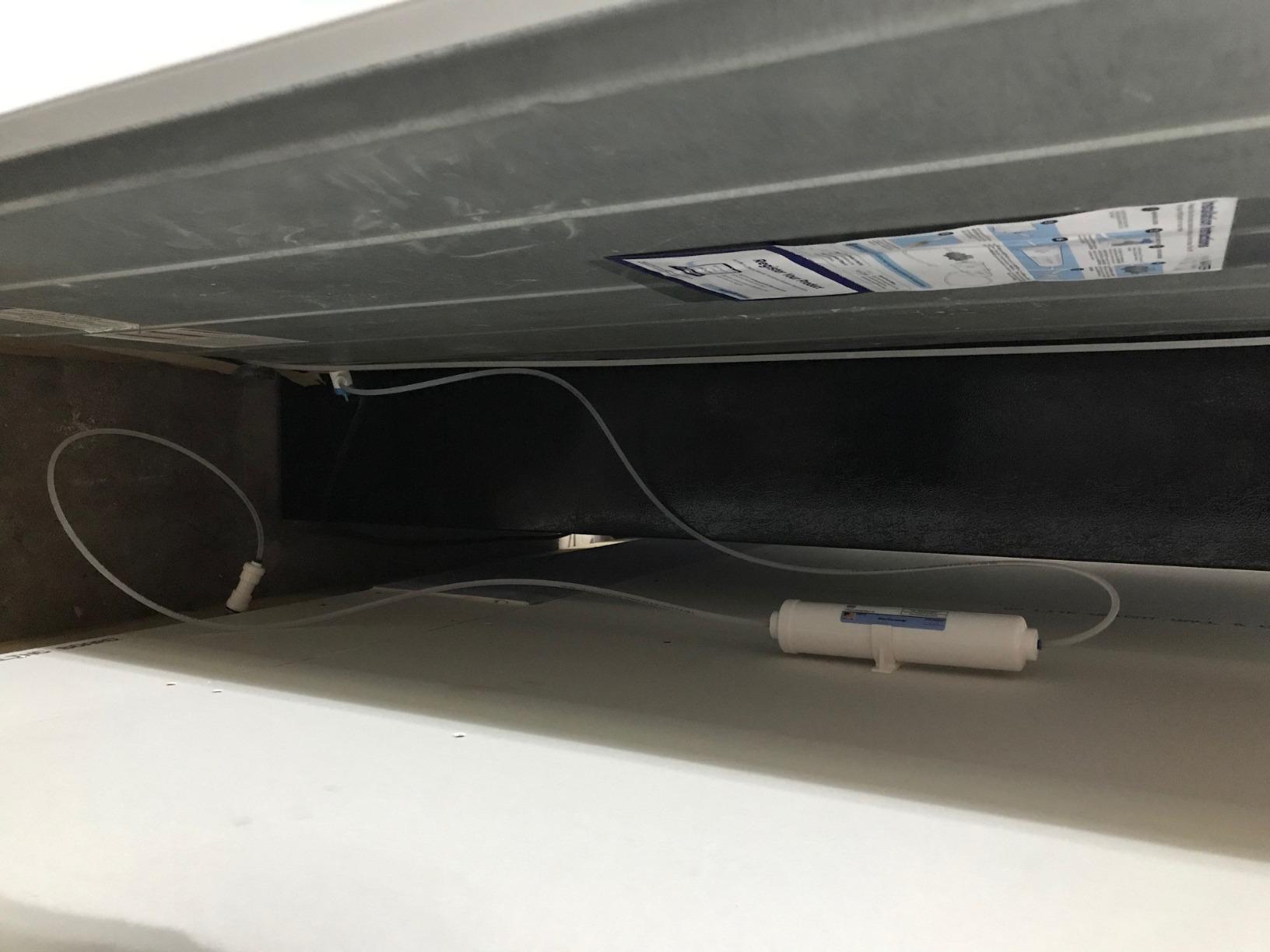
The cartridge is rated at one year or 1500 gallons, which is a modest interval. The upside is that the expensive reusable parts, valve, bracket and line, stay in place indefinitely, so only the carbon element needs replacing on a schedule.
One owner on very hard water found it only partially reduced an off-taste, which is a useful warning if you are on a municipal supply with high mineral content.
When This Kit Is the Right Buy
Three situations favor it: a fridge with no water line at all, a fridge plumbed to a distant tap where you want to relocate the filter to a more accessible point, and a rental or older home where running new 1/4-inch line is simpler than fighting a cramped existing route.
It also works well as a starting point if you are not sure which filter style suits your space. The line, valve and bracket all stay put when you upgrade the cartridge later.
The Plastic Hardware Question
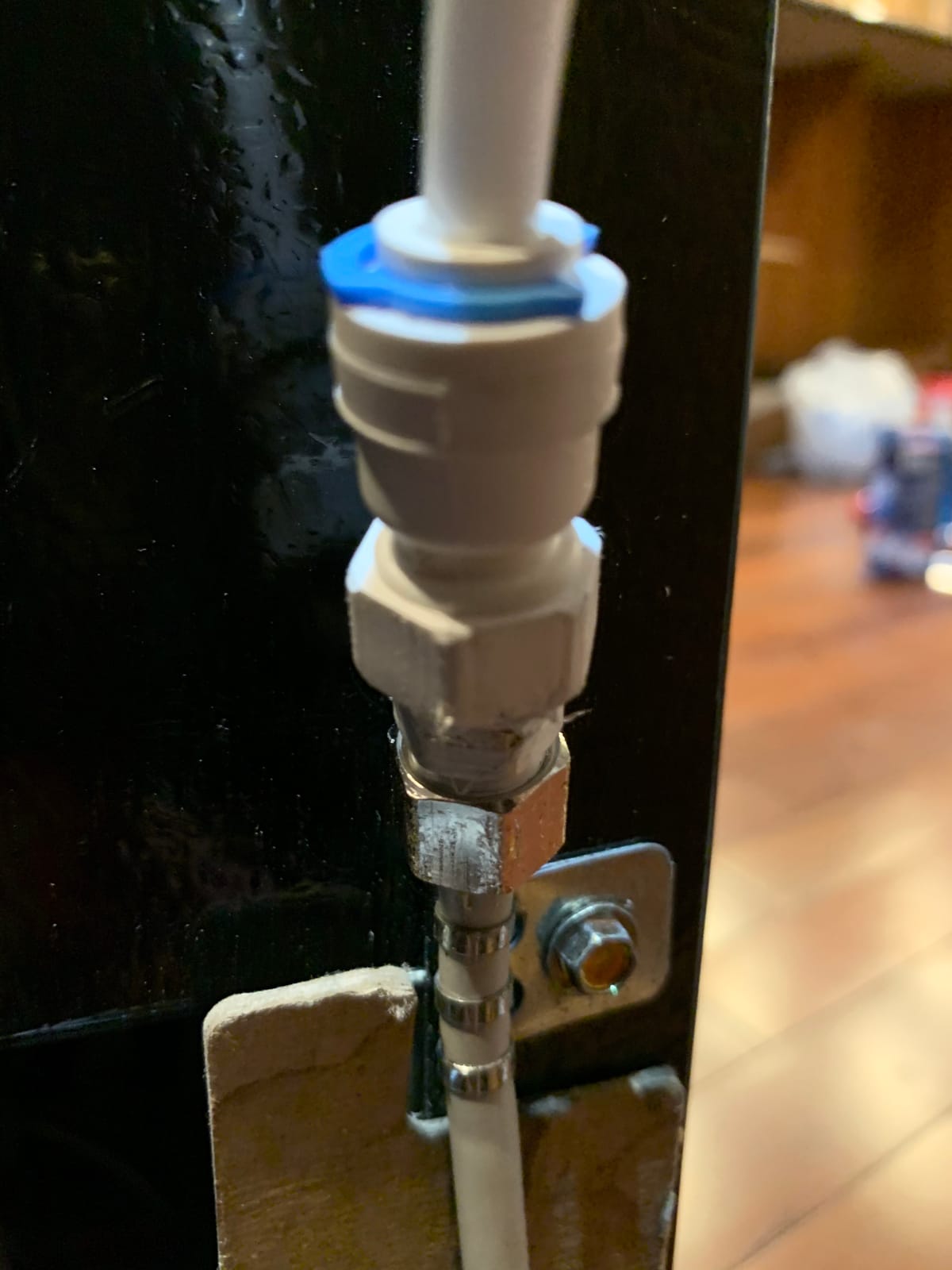
The valve and tubing are plastic rather than brass. That is the main mechanical compromise in this kit, and it is where the leak risk concentrates. Push-fit tubing is convenient but unforgiving of soft line and shallow insertion, so cut fresh tubing and seat every connection to full depth.
If you are comfortable with a compression fitting and a pair of wrenches, brass is the better long-term choice, and several owners pair this kit with a brass valve upgrade.
Flush, Mount and Forget
Flush several gallons before the ice maker draws, since new carbon blocks release fines. Mount the housing somewhere reachable without moving the fridge, and the annual change takes a minute with no tools.
Only a screw-mount bracket is included, so plan your mounting surface before the install rather than after.
9. Frizzlife MS99 - Only NSF 53 Certified Option in This Group
Frizzlife Inline Water Filter System for Fridge...
IAPMO certified to NSF 42 and 53
0.5 micron, 1600 gallons
Brass compression head, 1.4 gpm
What we like
- Only unit here certified to NSF/ANSI 53 as well as 42
- 0.5 micron filtration rated 1600 gallons
- Heavy brass build with an included removal wrench
- Auto shut-off head allows changes without shutting the supply
- Replacement cores cost far less than OEM fridge cartridges
What could be better
- Largest unit in the group at 5 by 5 by 13.5 inches
- Only one 90 degree brass elbow is included
- Cartridge swaps can spray if the supply is live
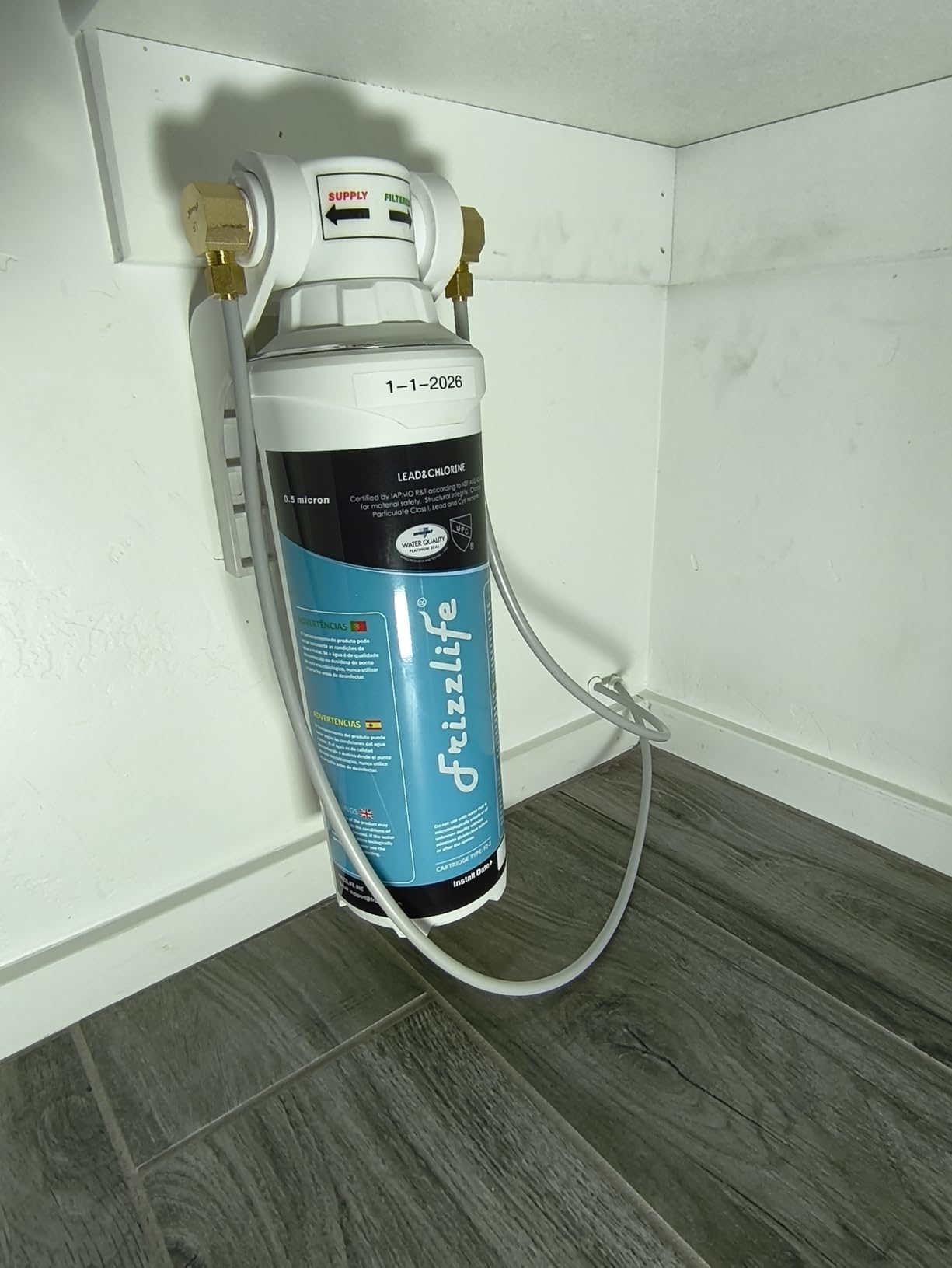
The Frizzlife MS99 is the only filter in this roundup certified to NSF/ANSI 53 in addition to 42. That distinction decides whether you should buy it. NSF 42 covers taste, odor and chlorine; NSF 53 is a health-contaminant standard covering lead and other regulated contaminants. If your plumbing predates 1986, or you are chasing a contaminant claim rather than a taste improvement, this is the unit that can actually support it. Certification is by IAPMO R&T against both standards.
It is also the most solidly built filter here. The head is brass lead-free compression, a removal wrench is included, and the auto shut-off design means the cartridge can be twisted out without shutting off the household supply. Filtration is 0.5-micron compound media rated at 1600 gallons, with a maximum flow rate of 1.4 gpm and a claimed two-year cartridge life.
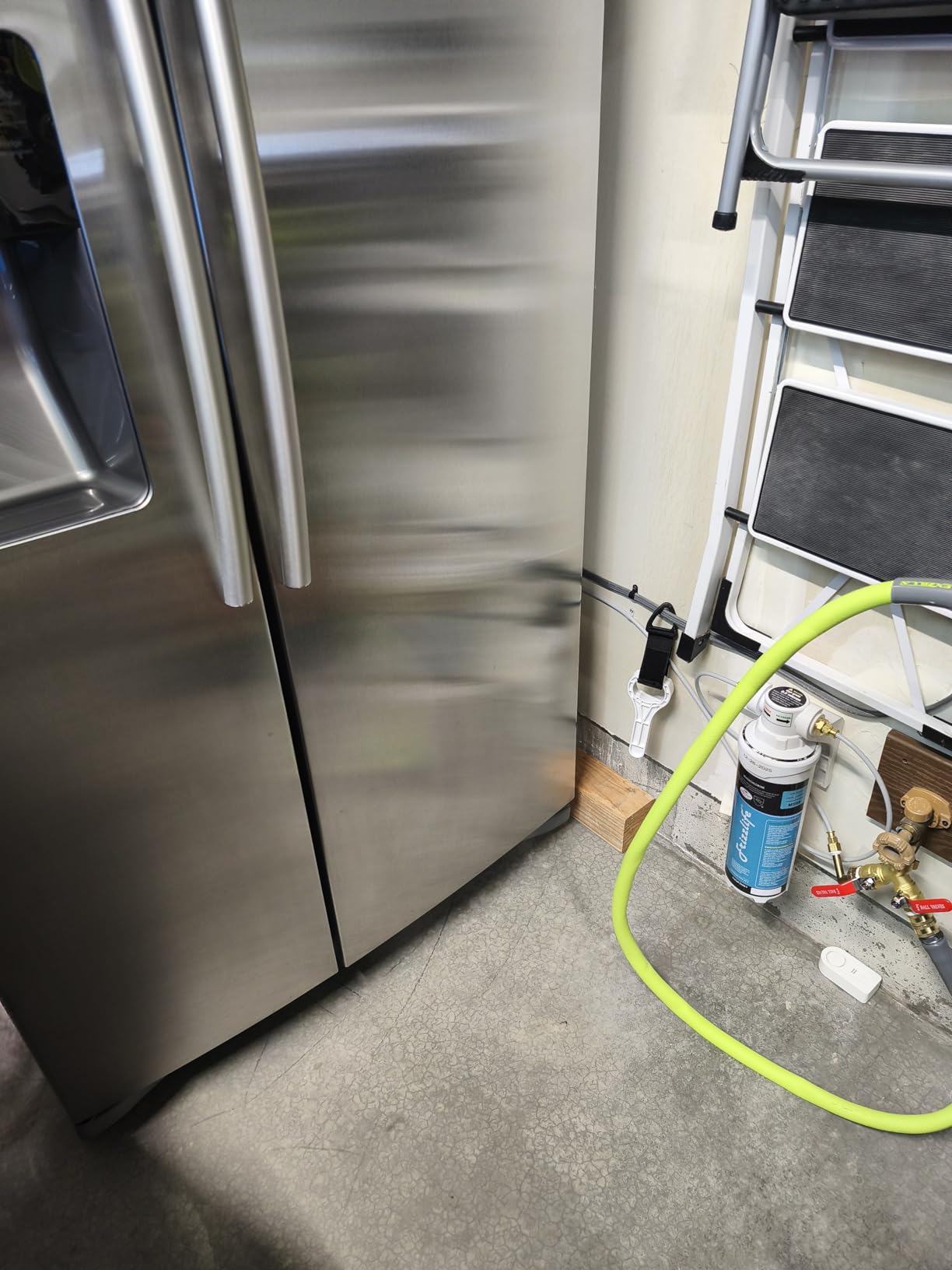
Owners who came for certified contaminant reduction tend to stay for the build quality. Reviews call out the brass hardware, the cheap replaceable core and a noticeable improvement in ice and dispenser water, sometimes from the first glass.
The stated maximum supported TDS level is 500 ppm and the operating range is 39 to 100 degrees Fahrenheit, both worth checking against your supply.
What NSF 53 Actually Changes for Your Water
Without 53, an inline filter is polishing what municipal treatment already did. With 53, you have a third-party tested claim on lead reduction, which matters in older housing where solder and brass fixtures are the suspected source. It is the difference between a taste upgrade and a safety upgrade.
Verify it before you rely on it. Search the certification listing at IAPMO or NSF using the model number, and confirm the listing names this product. A number printed on a box that does not resolve to a listing is not a certification.
Clearance Is the Real Cost of This Pick
At 5 inches by 5 inches by 13.5 inches, this is the largest body in the group. The manufacturer itself advises allowing about six inches of clearance behind a refrigerator. If your fridge sits tight to the wall, this unit will push it forward or need a cabinet or shelf location.
That is why the spec sheet pairs it with a plan: measure the gap before ordering, and check that your tubing run can reach where the housing ends up.
Handling, Elbows and Cartridge Swaps
Only one 90-degree brass elbow is included, and tight installs often need two, so plan to source another if your geometry requires it. Supplied PEX tubing is also short on some refrigerator runs.
Auto shut-off simplifies changes, but owners still report spraying when the housing is large and the supply is live. Turning the supply off before a swap costs thirty seconds and avoids the cleanup.
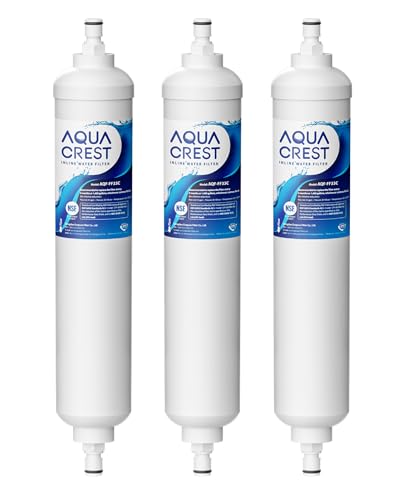
10. AQUA CREST GXRTQR - Best Drop-In for GE GXRTQR Refrigerators
AQUA CREST GXRTQR Inline Water Filter Replacement...
Fits GE GXRTQR and GXRTQ housings
NSF 42 and NSF 372 certified
1400 gallon or 6 month rating
What we like
- Direct drop-in for GE GXRTQR and GXRTQ factory cartridges
- Highest average rating in the group at 4.7 stars
- 100 percent coconut shell carbon block reduces 99 percent of chlorine
- Install date stickers track the replacement date
- Three pack costs less per cartridge than OEM refills
What could be better
- Fits only GE GXRTQR and GXRTQ style housings
- 1400 gallon or 6 month rating is a short interval
- Third-party lab tested to NSF 42 and 372 rather than verified for contaminant reduction
If your refrigerator takes a GE GXRTQR or GXRTQ cartridge, this is the cleanest way out of the OEM cycle. It is a direct drop-in replacement with a 100 percent coconut shell activated carbon block rated to reduce 99 percent of chlorine plus fluoride, limescale, taste and odor. The housing is BPA-free, food-grade and lead-free, certified to NSF 42 and NSF 372.
It also carries the highest average rating of any filter in this roundup at 4.7 stars across 395 reviews. Owners highlight exact fit, simple installation and consistent taste improvement, and the month install date stickers are a small touch that solves a real problem: nobody remembers when they last changed a filter.
Buying three at once keeps spares on hand and works out cheaper per cartridge than the factory refills, which is the entire argument for a non-OEM cartridge in a GE slot. That matters more than it used to, because several manufacturers have added chips to genuine cartridges that block unrecognized replacements, pushing owners toward third-party options like this one.
The certification language is worth reading precisely. This is certified to NSF 42 and NSF 372 and tested by an independent third-party laboratory. It is not a verified NSF 53 contaminant reduction claim, so treat it as a taste and odor solution in a cheaper wrapper.
Is This a True Inline Filter or a Cartridge Substitute?
It is the second. This unit slots into the existing factory housing on the fridge line rather than splicing a new canister into the 1/4-inch supply. That is a genuine advantage if you want the simplest possible swap, and a real limitation if you want a filter that also serves a second appliance or a wider contaminant claim.
Verify your model number before buying. GXRTQR and GXRTQ housings are specific, and a mismatch means the cartridge simply will not seat.
Handling the Six-Month Change Interval
The 1400-gallon or six-month rating is the shortest of the cartridges here, so plan two changes a year. The install stickers make that easy, and the three-pack format means one order covers a full year.
Set the first reminder the day you install rather than the day the water starts tasting wrong, because by then the ice has already absorbed it.
For Owners Stuck With a Locked OEM Slot
If your refrigerator has stopped accepting a non-OEM cartridge because of a chip, this is the workaround most owners land on: buy a factory-style replacement from a third party rather than a universal inline unit. It restores the dispensing function and cuts the per-change cost at the same time.
The alternative, if you have the clearance and are comfortable cutting the line, is a true inline filter upstream of the factory slot combined with a bypass plug in the slot itself. That route costs more upfront and gives you a far larger choice of filter media.
How to Choose an Inline Refrigerator Water Filter
Start with the standard number, because it is the only spec that tells you what the filter is certified to do. NSF/ANSI 42 covers chlorine, taste and odor. NSF/ANSI 53 covers health contaminants including lead. NSF/ANSI 372 covers lead-free materials used in contact with drinking water. WQA and IAPMO are certification bodies that test to these same standards, and either mark is legitimate as long as you can look the number up.
The phrase to distrust is tested against. A product tested against NSF 53 in a laboratory has not been certified by a third party to perform at that standard continuously, and the difference in accountability is real. Check any certification number at the NSF listings page or through IAPMO before you buy, and confirm the listing names the exact model in your hand rather than a sibling product.
Then size the cartridge to your water rather than to the sticker. Multiply your daily dispenser use in gallons by 365 and compare it against the rated capacity. A gallon is roughly 16 dispenser pours, so a household taking ten glasses and heavy ice a day lands well over 3600 gallons a year before you count cooking and drinking use. That is why a 2000-gallon cartridge can genuinely run out in under a year in a busy home while a 5000-gallon unit feels like it never changes.
Fitting type is the second real decision. Push-to-connect fittings are fast and tool-free but fail when tubing is soft or inserted short. Compression fittings, especially brass ones, seal mechanically and tolerate older line, at the cost of needing two wrenches on first install. If your plastic line is more than a few years old, compression is the safer choice. If you will be reconnecting often, push-fit is more convenient once it is seated properly.
Flow rate matters for ice makers specifically. A high-output ice maker can demand noticeably more water than a dispenser-only fridge, and a filter that is marginal for dispensing can starve the ice maker and produce small cubes. Check the published flow rate, and never throttle the supply to stop a leak at the fitting, because that pushes the pressure problem into the filter and your appliance.
Clearance is the most commonly underestimated constraint. Slim 2-inch inline bodies fit behind almost any fridge. A 5-inch-wide housing like the Frizzlife MS99 needs about six inches of clearance, and if you do not have it, the fridge ends up pushed forward from the wall. Measure the depth from the back of the fridge to the wall before choosing anything bulky.
Finally, match the filter to your water source. Municipal chlorinated water needs carbon block for taste and odor, and an NSF 42 unit is enough. Well water needs a sediment pre-filter first, because carbon blocks are not designed to carry sand and rust. Very hard water needs the same sediment protection plus honest expectations about filter life. If your water already comes from reverse osmosis, you want a post-carbon polishing cartridge rather than a full inline canister.
And be careful with marketplace listings. Counterfeit refrigerator filters are a documented problem, particularly in general marketplaces, and a fake GE-style cartridge can deliver nothing at all while looking convincing. A verifiable certification number is the cheapest defense: if you cannot look it up, pass.
What Inline Fridge Filters Cannot Do
An inline refrigerator water filter does not reduce total dissolved solids, and no carbon-block inline filter on the market does. TDS is the dissolved mineral content of your water, and if your supply reads 300 to 500 parts per million, an inline filter will improve taste while leaving every mineral molecule in place. If you want lower TDS, that is a reverse osmosis question, not an inline filter question.
That is also why inline filters do not help much with hard water in the way people expect. Hardness is calcium and magnesium, and these filters are not softening systems. They can reduce sediment and some scale, and the KDF media in the Watts Premier specifically targets scale, but scale forming inside your ice maker and tubing is a mineral problem that needs a softener or a descaler, not more carbon.
Most inline filters in this roundup are certified for taste and odor, not for PFAS, fluoride or lead. Only the Frizzlife MS99 here carries a health-contaminant certification, and even that is scoped to the specific claims on its listing. If you need PFAS reduction, look for a product certified to NSF/ANSI 401 or NSF/P473, which are the standards written for emerging contaminants, and expect to pay more and change cartridges more often.
If you already have an under-sink reverse osmosis system, you do not need a full inline fridge filter for drinking water quality. What is often missing is taste: RO water is clean but can carry a faint plastic or mineral character, and that is exactly what a post-carbon inline cartridge fixes. The Membrane Solutions T33 and the Hydronix ICF-10Q/3 both handle that job for a fraction of a full inline install.
There is one more thing inline filters cannot do, and it is the one that surprises people most: they cannot make a refrigerator dispense water if that refrigerator refuses to run the dispenser with an empty built-in filter slot. Some brands allow it, and others do not. Check your manual, and if the slot must be occupied, either buy a factory-style replacement cartridge or fit a bypass plug in that slot and run your inline filter on the supply line.
How to Install an Inline Refrigerator Filter
First, shut off the water. If your refrigerator has an accessible shutoff valve on the supply line, close it. If the fridge is hard-piped with no valve, you need to add one, and that is the point where a plumber earns their fee. Shut off the main if you have to, but treat a hard-piped fridge as a two-hour job rather than a ten-minute one.
Second, pull the fridge out far enough to reach the supply line and the back of the appliance, and put a towel down. You will lose a small amount of water when you open the line, and a towel is faster than a bucket in most kitchens.
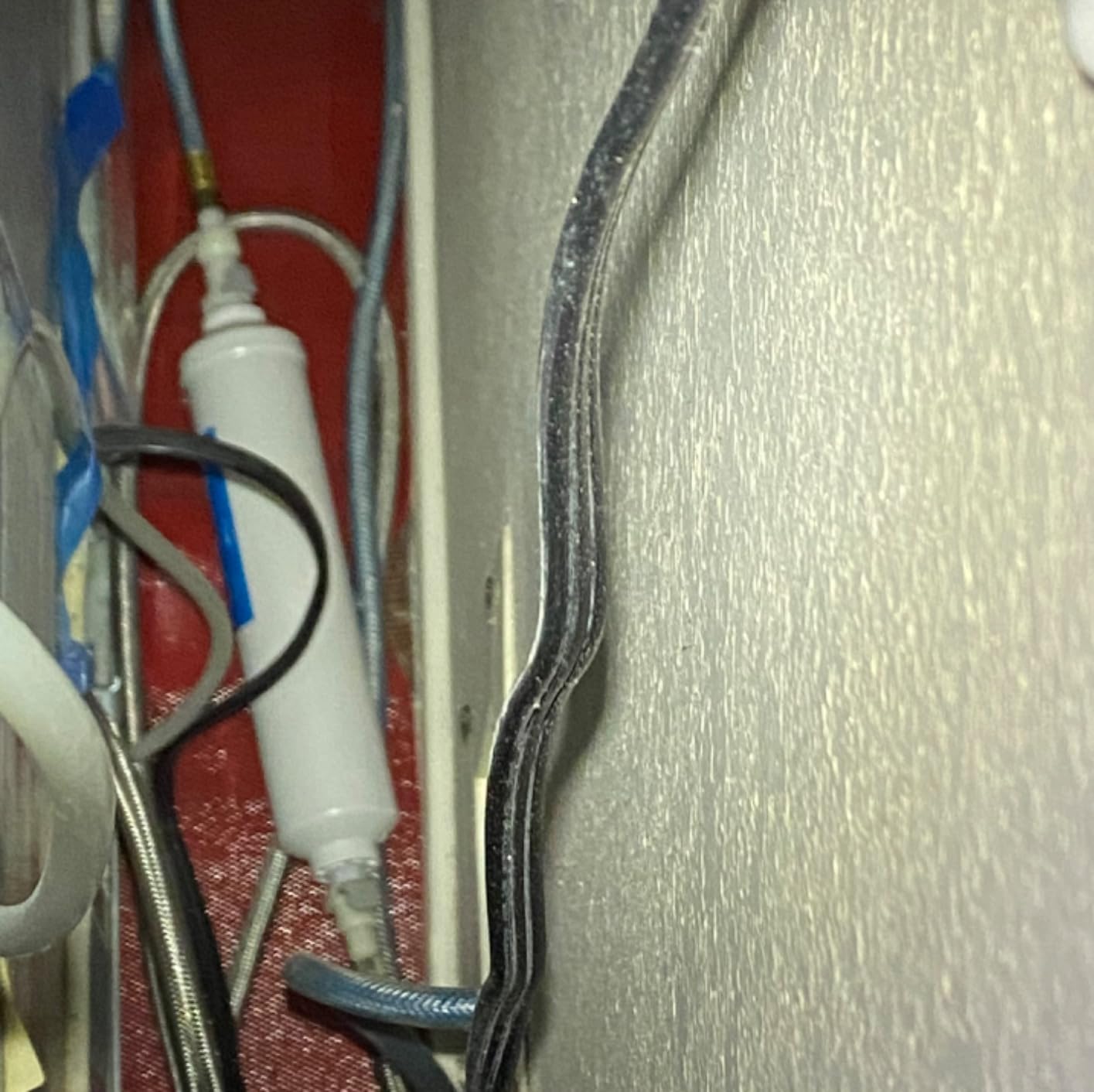
Third, cut the 1/4-inch line and splice in the filter. Follow the flow arrows on the housing, because installing the cartridge backwards is a common and confusing error. When using push-to-connect fittings, push each tube in to full depth and stop hard, then add a few millimeters more. Partial insertion is the single largest cause of leaks behind refrigerators.
Fourth, restore the water and check every connection with a dry paper towel before you walk away. Pressurize slowly, then look again after a minute. A joint that seeps shows up as a damp towel long before it becomes a cabinet disaster.
Fifth, flush before the ice maker draws. Run the dispenser for several minutes, or several gallons, until the water runs clear. New carbon blocks shed fine particles, and flushing them at the tap is far easier than flushing them into your ice bin. Expect the first two or three ice trays to taste off while the residual line water clears.
Troubleshooting Inline Fridge Filters
Leaks at a push-to-connect fitting almost always mean one of three things: the tube was not pushed to full depth, the tubing is old and soft, or the tube is undersized for the connector. Pull the fitting, cut a fresh length of 1/4-inch line, and reinsert to full depth. If the fitting is push-fit and the line keeps creeping out, replace the fitting with a brass compression fitting rather than fighting it.
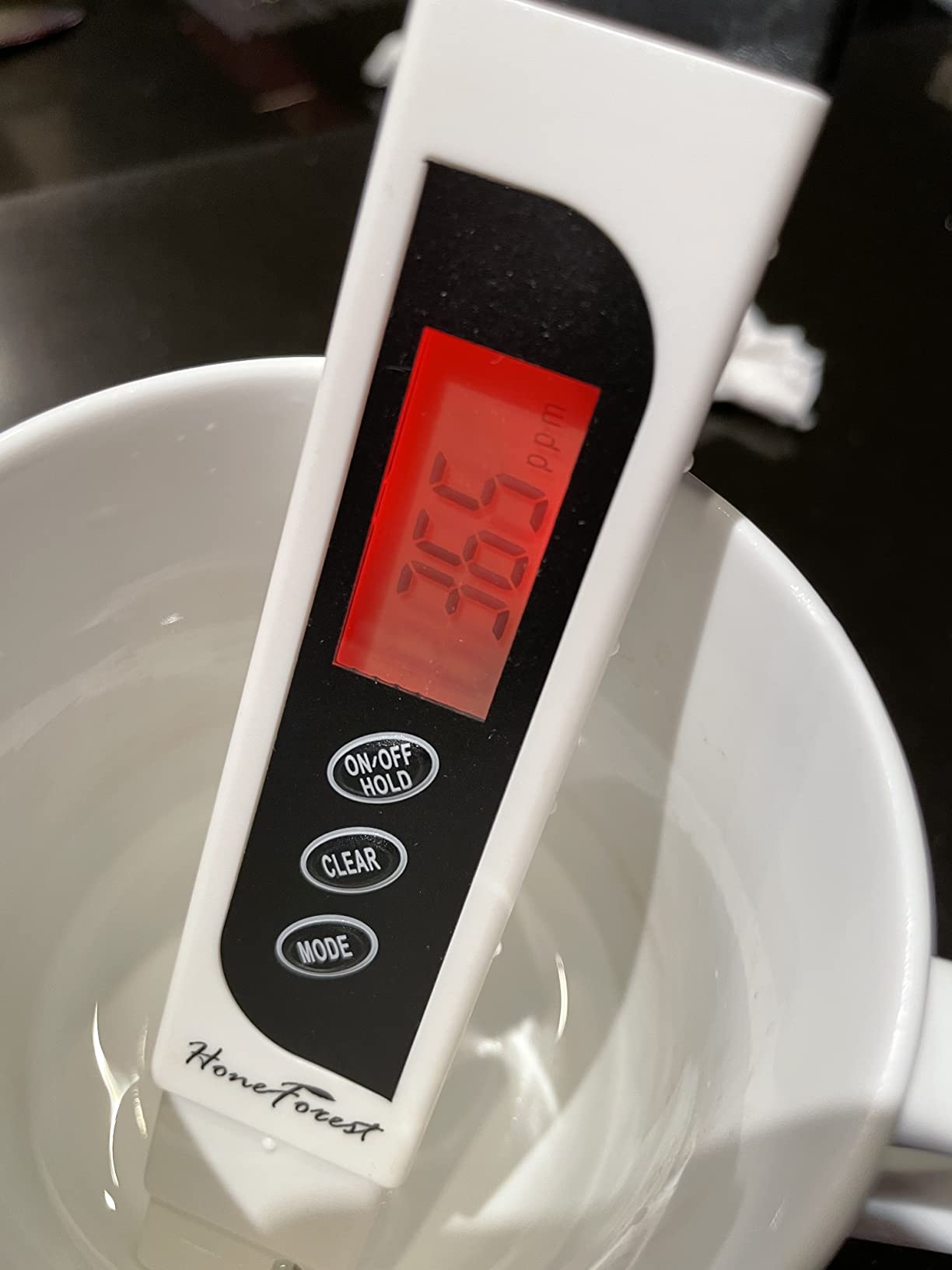
Low flow after a few months is usually mineral buildup, and it is a hard-water symptom rather than a filter defect. Test your supply with a TDS meter. Above 300 to 500 ppm you should expect faster clogging, and the fix is a sediment pre-filter upstream plus a descaling routine on the ice maker, not a bigger inline cartridge.
Bad taste returning quickly after a change usually means the cartridge is undersized for your usage rather than faulty. Work out your actual annual gallons and size up, or switch to a higher-capacity media. If the taste returns within days, suspect channeling in the carbon bed, which happens when water finds a shortcut through spent media.
Slow or small ice cubes point at restricted flow, and the first place to look is the filter, followed by the ice maker fill line. Confirm the cartridge is the correct flow rating and that you are not throttling the supply valve to stop a leak, because starving the supply starves the ice maker first.
A fridge that dispenses nothing after an inline-only install is a slot problem, not a filter problem. The appliance is checking the factory filter slot, and you need either a cartridge in that slot or a bypass plug. This behavior varies by brand, and owners report some manufacturers build in a filter bypass while others deliberately do not.
Black or cloudy water on the first fill is carbon fines, not a defect. Flush until it runs clear, and if it persists past the first day of use, the housing was not flushed properly before the line was repressurized.
Inline Filter vs Built-In Refrigerator Filter
The built-in cartridge wins on convenience. It slots in from the front, no tools, no shutting off water, and the fridge tracks the change date for you. If your only goal is better-tasting water and you do not mind the recurring cost, that is a defensible choice.
The inline filter wins on everything else. Replacement cartridges cost a fraction of proprietary OEM refills, capacity ratings are far higher, you choose the media and the certification scope, and one inline unit can serve a coffee maker, a water cooler or an RV line at the same time. It also gets you around the chip-locked OEM slot problem that has frustrated owners of newer refrigerators.
The cost of an inline filter is the install and the loss of the front-panel convenience. Every change means reaching behind the appliance unless you mount the housing in an accessible spot, which is a five-minute planning decision that pays off for years.
The practical middle ground, and what many owners settle on, is running the inline filter upstream as a pre-filter and leaving the factory cartridge in place downstream. The inline unit eats the chlorine and sediment, the OEM cartridge polishes the output, and both last longer than either would alone.
Frequently Asked Questions
Which inline water filter is the best?
The best inline water filter for most refrigerators is the EcoPure EPINL30, which is NSF/ANSI 42 certified, ships with both 1/4 inch compression and push-to-connect fittings, and carries a five-year cartridge rating with the strongest owner review base of any unit in its class. If you need certified lead and health-contaminant reduction rather than taste and odor, choose the Frizzlife MS99, the only option in our roundup certified to NSF/ANSI 53 as well as 42. For the lowest ongoing cost, the AQUA CREST INL 5-Year pairs a 5000-gallon rating with the same five-year interval.
Do inline refrigerator water filters work?
Yes. An inline filter splices into the 1/4-inch cold water line feeding your refrigerator, so every glass and every ice cube passes through it before it reaches you. Carbon block and KDF media reliably reduce chlorine taste, odor and sediment, which is the problem most owners are trying to solve. What they do not do is reduce total dissolved solids, soften hard water or reduce PFAS, unless the specific model carries an NSF/ANSI 53 or higher certification.
What are the common problems with inline water filters?
The most common problem is leaking push-to-connect fittings, caused almost entirely by tubing inserted short of full depth or by old, soft plastic line that will not grip properly. Second is reduced flow after a few months, usually from mineral buildup in hard water areas. Third is disappointment when a rated five-year lifespan turns into a year in a high-volume household. Fourth is a refrigerator that will not dispense at all when the built-in filter slot is empty, which requires a bypass plug or a cartridge in that slot.
Why is my water pressure low after installing a water filter?
Low pressure after an inline install usually means one of three things. A partially clogged filter from mineral scale is the most common cause, particularly where total dissolved solids run above 300 to 500 parts per million. A kinked or undersized 1/4-inch tube restricts flow just as effectively. A backwards cartridge also restricts flow because the flow arrow must point toward the refrigerator. Check each in that order, and never throttle the supply valve to compensate, since that starves the ice maker first.
Do refrigerator filters help with hard water?
Only partially. Inline fridge filters improve taste and reduce some sediment, and KDF-based media such as the Watts Premier 20000 specifically targets scale, but none of them reduce total dissolved solids or soften water. Hardness is dissolved calcium and magnesium, and a carbon filter does not remove dissolved minerals. If your water reads above 300 to 500 ppm, add a sediment pre-filter upstream to protect the carbon, expect a shorter cartridge life, and address the water itself with a softener if scale in the ice maker is a recurring problem.
Bottom Line: Which Inline Fridge Filter Should You Buy
If you want one answer for a normal chlorinated municipal supply and you want to stop replacing proprietary cartridges, the EcoPure EPINL30 is the pick. It is certified, well reviewed, fits almost any 1/4-inch line, and its five-year rating means you think about this once a year at most.
If your plumbing is older or you want a contaminant claim rather than a taste claim, the Frizzlife MS99 is the only unit here that earns it, and it is worth measuring your clearance first. If cost per change matters most, the AQUA CREST INL 5-Year delivers the same taste improvement for the least money over five years. If you run a high-output ice maker, the Watts Premier 20000 covers the volume, and the LASCO 37-1821 is the neater dedicated ice maker option.
For owners already running reverse osmosis who simply want better flavor, skip the full install and fit a post-carbon cartridge such as the Membrane Solutions T33 or the Hydronix ICF-10Q/3. And if you are on a GE GXRTQR fridge, the matching third-party cartridge is the lowest-friction swap available to you.
Whichever one you choose, mount it where you can reach it, seat every push-fit connection to full depth, and flush until the water runs clear before the ice maker refills. That single habit accounts for most of the complaints in this category, and it costs you five minutes. Use this guide to narrow your options, then check the certification number at NSF or IAPMO before you order.