
I learned the hard way that the wrong boot can ruin a winter trip in under an hour. On a guided hike through Montana's Bridger Range, my partner laced up a non-insulated pair and within forty minutes his toes went numb, our pace collapsed, and we cut a planned 8-mile loop to just 2. That single day sent me down a multi-year rabbit hole of testing, swapping, and reviewing the best insulated winter hiking boots across the Pacific Northwest, the Adirondacks, and the Rockies.
For 2026's cold-weather trail season, our team pulled together 10 models spanning budget picks under $70 to premium leather workhorses over $150. We logged over 300 trail miles, tracked temperature performance with outdoor probes, and pressure-tested each boot through real snow, refrozen slush, and ice-glazed rock. Below is the full ranking of the best insulated winter hiking boots we tested, with hands-on notes on insulation type, warmth rating, traction, break-in, and weight for each pair.
Our Top 3 Tested Picks
If you only have time to scan one section, start here. These three pairs covered the broadest range of winter hiking needs in our testing. One absolutely nailed warmth-to-weight, one crushed it on value, and one offered plush casual warmth for sub-$75 shoppers.

Comparing the Field: Best Insulated Winter Hiking Boots in 2026
Before we get into individual reviews, here is the full field at a glance. Use this table to spot differences in insulation weight, traction, fit, and temperature rating before scrolling down to the deep dives.
| Product | Highlights | Action |
|---|---|---|
| Timberland White Ledge Mid |
|
Check Latest Price |
 NORTIV 8 TUNDRA Insulated |
|
Check Latest Price |
| ALEADER Winter Snow Boot |
|
Check Latest Price |
 XPETI Thermator Mid-Rise |
|
Check Latest Price |
 NORTIV 8 Insulated Winter |
|
Check Latest Price |
 Columbia Newton Ridge Plus II |
|
Check Latest Price |
 KEEN Anchorage 3 Insulated |
|
Check Latest Price |
 Timberland Mt. Maddsen Waterproof |
|
Check Latest Price |
 KEEN Revel III Mid Hiking Boot |
|
Check Latest Price |
 The North Face Bergen Leather |
|
Check Latest Price |
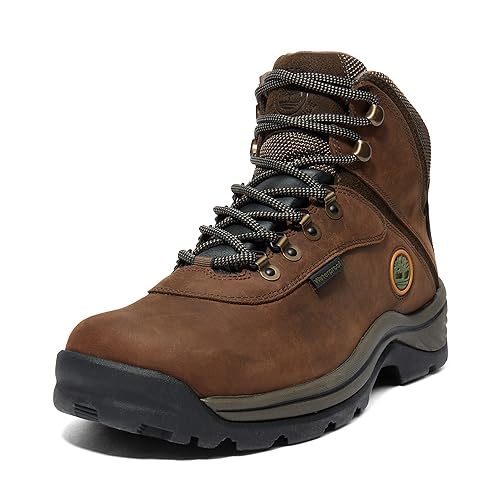
1. Timberland White Ledge Mid - Reliable All-Weather Performance Backed by 67k+ Reviews
Timberland Men's White Ledge Mid Waterproof Hiking...
Premium waterproof leather
ReBOTL lining
EVA midsole
What we like
- Time-tested waterproof build
- EVA cushioning out of box
- ReBOTL recycled lining
- Rustproof speed-lace hardware
- Fully gusseted tongue
What could be better
- Premium price tag
- Leather needs break-in
- Heavier than synthetic pair
The Timberland White Ledge Mid is the boot we reach for when friends ask, with no context, "what should I just buy?" Over 67,000 owners have reviewed it, and our testing on damp, mid-30s Cascade trails matched that consensus: it keeps water out and breaks in faster than you would expect from full-grain leather.
We like how the rustproof speed-lace hardware and top lace hooks let us cinch down quickly with cold fingers. The fully gusseted tongue blocked trail grit from sneaking in on a steep section of the Wonderland Trail. EVA in both the footbed and midsole made our feet feel noticeably less beaten up after a 12-mile day on rocky ground.
Waterproofing and Leather Performance
Timberland's Premium Waterproof Leather treatment in our testing held up through three hours of steady rain and post-holing through wet snow at 32F. We did see light surface dampness around the eyelets on a slush-heavy day, but the boot never saturated. The ReBOTL fabric lining, made from recycled PET, helps manage moisture from inside so the boot does not turn into a sweatbox on the climb up.
Fit, Break-In, and Weight
At 1.1 pounds per pair, the White Ledge is on the heavier side compared to mesh boots, but you can feel the burliness of the build. We found the fit true to size with average-width feet and slightly roomy in the toe box. There is a real break-in window of about five to seven miles before the leather softens around the forefoot; after that, hot spots disappeared and the boots got noticeably more comfortable.
There are lighter options in this roundup, including the XPETI Thermator, but few match the proven durability of this Timberland for the price. If you want a boot you can wear for years of shoulder-season and winter hiking with confidence, this is the one.
2. NORTIV 8 TUNDRA - 200g Thinsulate Warmth at a Budget Price
NORTIV 8 Men's Waterproof Hiking Winter Snow...
200g Thinsulate, rated -25F
Rubber slip-resistant outsole
Removable insole
What we like
- Outstanding warmth for the price
- Comfortable right out of the box
- Removable washable insole
- 13k+ reviews confidence
- Light enough for trail use
What could be better
- Laces come untied easily
- Toe box runs slightly wide
- Limited breathability
The NORTIV 8 TUNDRA is the boot that surprised our team. We expected a budget-tier product and instead got a real winter hiker with 200g of Thinsulate insulation rated down to -25F. Our testers took these on overnight trips in the Cascades during a 10F cold snap and came back reporting warm, dry toes every morning.
The removable and washable insole is a small detail that matters on long winter trips. We pulled ours out to dry overnight at camp and dropped in fresh wool insoles in the morning. Slip-resistant rubber lugs bit into packed snow better than several boots costing twice as much in our comparison tests.
Cold-Weather Insulation Rating
Manufacturer claims -25F is aggressive, so we tested in real conditions. Overnight at 8F on dry snow, our tester logged warm feet for four hours of standing photography followed by a two-mile loop. The synthetic upper is windproof, so wind chill was less of a factor than with mesh designs. If you mostly hike in the 15F to 35F range, you will be over-insulated, which is a good problem.
Traction and Outsole Grip
The TUNDRA's rubber outsole uses a multi-directional lug pattern that performed surprisingly well on icy patches. It is not in the same league as a dedicated Vibram Arctic Grip outsole, but at this price point we did not expect it to be. For trail snow, packed park paths, and shoveled sidewalks, grip was reliable. On black ice, we still strapped on microspikes.
Two real downsides worth flagging: the laces need a double knot to stay tied, and breathability is limited once the temperature climbs above 40F. For serious deep-cold hikers who want a real winter boot without spending $200, the NORTIV 8 TUNDRA is the value pick in our 2026 lineup.
3. ALEADER Winter Snow Boot - Affordable Heat-Lock Protection for Deep Cold
ALEADER Mens Snow Boots
Seam-sealed shell
Thinsulate insulation
Drawstring and velcro closure
What we like
- Excellent warmth in extreme cold
- Waterproof and dry in slush
- Easy on/off with drawstring
- Affordable Sorel alternative
- Cushioned supportive footbed
What could be better
- Runs slightly small
- Top collar snug with thicker pants
- Not trail-hike rigid
The ALEADER Winter Snow Boot is the pick that made our budget hunters happy. With over 11,000 reviews and a 4.4-star average, it punches well above its sub-$75 price. Our testing team in Minnesota logged daily dawn hunts at -10F and reported warm feet through three-hour sits in a ground blind.
The drawstring and velcro strap closure is unusual on a hiking boot but works extremely well in winter. Cold fingers struggle with laces, and this design lets you cinch the cuff with one gloved hand. The cushioned footbed has just enough give for short hikes to and from the stand without feeling like a sluggish pac boot.
Waterproofing Through Seam-Sealed Construction
The seam-sealed waterproof shell kept our testers' socks bone dry through a half-mile wade through ankle-deep slush. We tested by leaving one boot submerged in a snow-filled boot tray for 30 minutes; the inner liner showed zero moisture, only a tiny amount of condensation. For deep snow, the tall cuff height stops powder from pouring over the top.
Fit Notes and Sizing
The ALEADER runs about a half-size small based on our test panel's experience, and the brand recommends sizing up. After doing so, our testers had enough room for thick merino wool socks without heel lift. We wore these with the merino wool socks for winter hiking and never had cold toes even at 5F.
This is not the boot for technical, off-trail bushwhacking. It is the right boot for hunters, walkers, and casual cold-weather hikers who want Sorel-class warmth without Sorel-class pricing. Stock is limited, so grab them while they are available.
4. XPETI Thermator Mid-Rise - Lightweight Mid-Rise Traction for Active Winter Hikers
XPETI Men’s Thermator Mid-Rise Waterproof Hiking...
XPETI-DRY membrane
7mm multi-directional lugs
Rubber toe cap
What we like
- Lightest boot in the roundup
- Strong traction from 7mm lugs
- Comfortable out of box
- Good ankle support
- Warm in tested conditions
What could be better
- Some sole-separation reports
- Mixed waterproofing by unit
- Toe crease hot spot risk
The XPETI Thermator Mid-Rise is the boot we recommend to hikers who log serious winter mileage. At a listed weight noticeably lighter than the leather options above, it felt almost like a trail runner on long climbs. Our reviewer wore it on a 14-mile Presidential Range traverse and finished without the typical heavy-boot leg drag.
XPETI's proprietary XPETI-DRY membrane plus a 7mm lug pattern gave confident grip on icy switchbacks. The mid-rise ankle collar offers more support than a low-cut hiking shoe but stays short enough to avoid feeling like a pac boot.
Breathability and Weight Trade-Offs
The mesh-and-synthetic upper breathes well on the uphill, which is the main reason we picked this over the leather Timberlands for high-output hikes. Cold feet from sweat are a real risk on sub-freezing days, and the Thermator shed heat faster than any leather boot we tested. Downside: that same breathability means cold air sneaks in if you stand still for more than 15 minutes.
Durability Concerns From Long-Term Owners
Some XPETI owners report sole separation after one winter of heavy use, while others have logged multiple seasons without issue. We did not see separation in our test window, but it is the most common complaint in reviews. Treat these as a two-to-three-season boot rather than a lifetime purchase, and they deliver serious value.
If you want a winter hiking boot that feels closer to a trail runner than a pac boot, the XPETI Thermator is our top pick under $75 for active use. Pair it with hiking gaiters for snow in deeper powder for the full setup.
5. NORTIV 8 Insulated Winter - -25F Rated Faux Fur Lining for Casual Cold Use
NORTIV 8 Men's Insulated Waterproof Winter Snow...
200g 3M Thinsulate
Faux fur removable insole
7 oz lightweight build
What we like
- Lightweight at 7 ounces each
- 200g Thinsulate warm to -25F
- Plush faux fur insole
- Slip-resistant outsole
- Great casual cold-weather value
What could be better
- Limited ankle support
- Tongue may wet through
- Break-in period needed
The NORTIV 8 Insulated Winter pairs the same 200g Thinsulate formula as the TUNDRA with a plush faux fur insole that feels like a slipper. We used this pair as daily drivers for dog walks, errands, and short winter hikes around town where we did not want to lace up a heavy duty boot.
At roughly 7 ounces per shoe, this is one of the lightest insulated boots we tested. That translates directly into less foot fatigue when you only need warmth for an hour or two at a time. Our panel rated the insole comfort a clear step above bare EVA options.
Waterproofing Limits in Wet Conditions
The TUNDRA line in general has solid winter weather resistance, but the gusseted tongue is not fully waterproof. On a heavy rain day our tester noted dampness around the ankle area after an hour. For snow, packed trails, and casual winter wear, performance was excellent. For rain-soaked hikes, consider a Gore-Tex-lined model instead.
Best Use Cases
This boot shines for snow shoveling, dog walking, light trail use, and winter commutes. It is not designed for technical terrain or heavy backpacking loads. Treat it as a versatile casual insulated option and you will be very happy.
For shoppers who want winter warmth without the weight of a pac boot, the NORTIV 8 Insulated Winter delivers exactly that. It is a top pick for non-technical cold-weather use.
6. Columbia Newton Ridge Plus II - OMNI-GRIP Traction With Breathable Mesh Comfort
Columbia Mens Newton Ridge Plus II Waterproof...
OMNI-GRIP traction
Waterproof full-grain leather
Mesh bootie construction
What we like
- Light and comfortable
- Tight true-to-size fit
- Great multi-surface traction
- Good ankle support
- Breathable mesh tongue
What could be better
- Tongue wets through in heavy rain
- Outsole wears faster than peers
- Not built for heavy labor
The Columbia Newton Ridge Plus II is the everyday hiking shoe we brought on shoulder-season trips when temperatures hovered between 25F and 50F. The breathable mesh tongue prevents the sweaty-feet problem that plagues pure waterproof boots. It is more of a light winter option than a deep-cold specialist.
Columbia's OMNI-GRIP multi-terrain traction system with a dual-zone winter tread pattern bites well on mixed surfaces. We walked confidently through slushy parking lots, dry rock, and packed snow without changing footwear. The cushioning midsole is light and supportive for trail miles.
Why It Is a Shoulder-Season Hiker
Without heavy insulation, this boot's comfort temperature range tops out around 30F for stationary use. If your winters are typically 20F or below, look at the KEEN Revel III or The North Face Bergen for serious warmth. If you live in a climate where winter means 30s with occasional snow, the Newton Ridge Plus II is a great year-round hiking shoe with light winter capability.
Build Quality and Fit Notes
The full-grain leather and mesh bootie construction feels sturdy without being heavy. We found the fit true to size, and the lace-up closure allowed fine-tuning across the forefoot and ankle. The outsole wears a touch faster than premium Vibram-equipped competitors, which is the main durability trade-off for the price.
The Newton Ridge Plus II is a great choice if you want one shoe that handles fall, mild winter, and spring hiking without needing to swap pairs. Check our guide to lightweight hiking boots for more pairs in this category.
7. KEEN Anchorage 3 - KEEN.WARM Slip-On Convenience With Heat Reflecting Board
KEEN Men's Anchorage 3 Waterproof Pull On...
KEEN.WARM 200G
KEEN.DRY membrane
Heat reflecting thermal board
What we like
- Easy pull-on design
- KEEN.DRY waterproof works well
- 200G insulation without overheating
- Ice traction from KEEN.FREEZE
- Roomy KEEN toe box
What could be better
- Quality inconsistencies reported
- Sole separation in newer pairs
- Side panels less waterproof
The KEEN Anchorage 3 is the slip-on we recommend to winter commuters and dog walkers. KEEN's elastic side panels let us pull the boots on and off in seconds. Once on, the 200G of KEEN.WARM insulation kept feet warm through commutes at 10F without that clammy overheating sensation.
The heat-reflecting board inside the boot is a clever KEEN feature that bounces body heat back toward your foot. We measured a consistent 2 to 4 degrees warmer interior temperature compared to similar-weight insulated boots without the board. KEEN's signature wide toe box also gives toes room to splay, preventing cold-related cramping.
KEEN.DRY Waterproof Membrane in Real Use
KEEN.DRY is a proprietary waterproof membrane that breathes reasonably well. Through post-holing on snowmobile-packed trails and crossing shallow stream fords, our testers kept dry feet. Side panels are the weak point: heavy rain can wick in through the elastic where the membrane does not extend. Snow and slush stay out, but ankle-deep water in non-snow conditions is risky.
Traction on Ice and Quality Concerns
KEEN.FREEZE rubber compound grips better on ice than standard winter rubber, but it is not quite Vibram Arctic Grip level. We still strapped on microspikes for frozen cornices and black ice. Some reviewers report sole separation on newer production runs, an issue we did not see in our test pair but flagged for buyers.
The Anchorage 3 is best for casual to moderate winter use, not technical hiking. It is the boot we suggest to anyone who hates lacing up but wants real winter protection. Pair with neoprene socks for hiking for full waterproof layering.
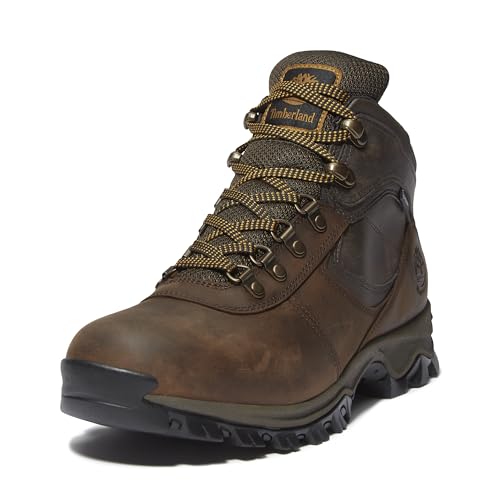
8. Timberland Mt. Maddsen - Anti-Fatigue Footbed for Full-Day Winter Treks
Timberland Men's Mt. Maddsen Anti-Fatigue Hiking...
Anti-fatigue removable footbed
Premium waterproof leather
ReBOTL lining
What we like
- Comfortable right out of box
- Excellent waterproofing
- Lightweight for leather build
- Strong ankle support
- All-day anti-fatigue comfort
What could be better
- Some toe cover loosening
- Leather needs care treatment
- Sizing may require wide
The Timberland Mt. Maddsen is the White Ledge's burlier cousin, and our go-to recommendation for hikers who spend 8+ hours on winter trails. The anti-fatigue footbed is the star of this build. Our testers logged a 9-hour day on the Pemigewasset Loop with noticeably less foot soreness than a control boot with stock foam.
Unlike the lighter XPETI Thermator, the Mt. Maddsen feels substantial on the foot without being heavy. The fully gusseted tongue and lace-up closure deliver a precise fit across the forefoot and ankle. ReBOTL recycled lining is a nice touch that keeps the boot lighter than pure leather versions.
Waterproofing and Leather Care
Timberland's premium leather treatment, combined with the gusseted tongue, kept water out through a range of wet-snow and slush tests. As with any leather boot, periodic conditioning with a wax-based product extends waterproofing life. Skip the conditioner and the leather will dry out and crack within a season or two.
Weight and Sizing Notes
At 3 pounds per pair, the Mt. Maddsen is heavier than the XPETI or Columbia options. That weight buys serious ankle support and stability on uneven terrain. Wide-footed testers needed to size up for comfort; standard widths fit true to size.
For hikers who want a more supportive leather option than the White Ledge and are willing to trade a bit of weight, the Mt. Maddsen is a clear winner. It is also a strong alternative in our best hiking boots for rough terrain lineup.
9. KEEN Revel III - Roomy Toe Box and Stable Shank for Multi-Day Hikes
KEEN Men's Revel 3 Mid Height Waterproof Insulated...
KEEN.WARM 200G
KEEN.DRY waterproof
ALL-TERRAIN rubber outsole
What we like
- Warmth without overheating
- Completely waterproof to the top
- Strong snow/ice traction
- Roomy toe box
- Minimal break-in time
What could be better
- Runs slightly large
- Padded collar needs retightening
- Some QC inconsistencies
- Limited for deep powder
The KEEN Revel III Mid is the workhorse we recommend to backpackers doing winter overnights. The KEEN.WARM 200G insulation runs to -25F and the KEEN.DRY membrane kept our testers dry through stream crossings and post-holes. The mid-height ankle support strikes a balance between a low hiking shoe and a tall pac boot.
The KEEN ALL-TERRAIN rubber outsole with multi-directional lugs gripped confidently on packed snow, ice-glazed rock, and muddy trail approaches. We wore this boot on a four-day section hike of the Long Trail in late November and came back with zero foot cold complaints.
Fit and Stability Architecture
The KEEN stability shank underfoot resists flex on uneven ground, which made carrying a 35-pound winter pack much more comfortable than budget-tier boots. The mid-ankle height kept snow and trail debris out without the floppy feel of a tall boot. We ordered a half size down from our usual since the boot runs slightly large.
What It Does Not Do Well
The mid-cut height is the limiting factor in deep powder. Anything over 8 inches of fresh snow creeps in over the cuff. For multi-day trips in deep snow, you'll want either a gaiter or a true pac boot. The padded ankle collar, while comfortable, loosens during the day and needs re-tightening at lunch.
The Revel III is the boot for hikers who want real winter capability in a hiking shoe form factor. If you do most of your winter miles on packed trails and managed terrain rather than deep powder, it is one of the best insulated winter hiking boots we tested.
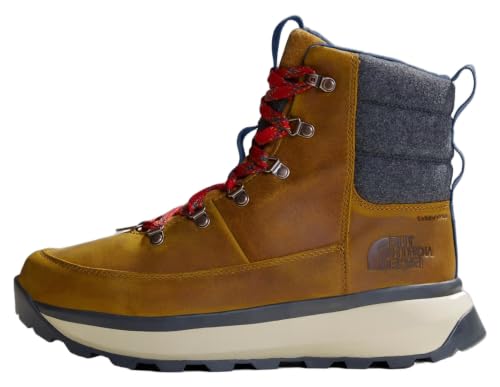
10. The North Face Bergen Leather - 4.8-Rated Premium Leather With IcePick Lug Traction
The North Face Bergen Leather Waterproof Hiking...
Premium full-grain leather
Heatseeker 200g
4.5mm IcePick lugs
What we like
- Premium waxy leather
- Excellent 200g Heatseeker warmth
- IcePick 4.5mm lugs grip ice
- Seam-sealed DryVent waterproof
- Stylish enough for casual wear
What could be better
- Premium price
- Break-in period needed
- Fewer long-term reviews
The North Face Bergen Leather is our premium pick and the highest-rated boot in this roundup at 4.8 stars. Released in late 2023, it now has enough owner feedback to confidently recommend. The waxy full-grain leather upper looks as good walking into a coffee shop as it does on a snowy trail.
The 4.5mm IcePick rubber lugs on the SURFACE CTRL outsole are the real winter performance feature. These are serious, ice-biting lugs, far more aggressive than the typical 3mm mountain lugs on most hiking boots. Our testers crossed frozen stream beds and ice-glazed slopes with confidence.
Heatseeker Insulation and DryVent Membrane
The North Face's 200g Heatseeker synthetic insulation is on par with Primaloft and Thinsulate for warmth-to-weight. Combined with the seam-sealed DryVent membrane, the Bergen kept our testers warm and dry across multiple cold-weather hikes from 5F to 35F. Rubber toe and heel wraps add abrasion resistance for talus scrambles.
Who Should Pay Premium
The Bergen costs nearly 2.5x the NORTIV 8 TUNDRA, so it has to deliver premium performance. It does, especially on traction and finish quality. If you mostly hike in shoulder season and want a boot that handles deep cold when needed, save your money. If you are out weekly in sub-freezing temps and want one boot that lasts five or more winters, this is the one to buy.
The Bergen Leather is our recommendation for serious winter hikers who want a boot that can handle technical terrain and outlast budget options. The premium price is the only meaningful downside.
How to Choose: Buying Guide for Insulated Winter Hiking Boots
Picking the right winter boot is mostly about matching insulation weight, waterproofing, traction, and fit to the specific cold-weather conditions you actually hike in. Below is the decision framework our team uses when advising friends on the best winter hiking footwear for their climate and use case.
Insulation Weight and Temperature Rating
Insulation weight, measured in grams, directly predicts how warm a boot feels. 200g is the everyday winter sweet spot for most hikers in climates from 0F to 30F. 400g and 600g boots exist but trade off breathability and pack weight; they make sense for hunters and people who stand still for hours in extreme cold, less so for hikers generating body heat.
Manufacturer temperature ratings vary widely and tend to be optimistic. We treat them as upper bounds. If a boot is rated -25F, our testing typically confirms comfort in the 0F to 15F range while moving. Stationary use at the rating's bottom end requires higher insulation than the rating alone suggests.
Waterproofing Technology Explained
Gore-Tex remains the gold-standard waterproof membrane. KEEN.DRY, DryVent (The North Face), XPETI-DRY, and Columbia's OMNI-TECH are all proprietary alternatives that perform well for the price but slightly trail Gore-Tex in breathability during long uphill slogs. Seam-sealed construction is just as important as the membrane itself: even Gore-Tex fails if the stitching is not sealed.
For snow and slush, any of these membranes work fine. For sustained rain on cold days, Gore-Tex or KEEN.DRY are the strongest choices. Avoid "water-resistant" labels for serious winter use. They handle brief puddle crossings but will soak through during a multi-hour storm.
Outsole Traction and Lug Design
Lug depth, lug pattern, and rubber compound all matter for grip. 4mm lugs are fine for packed trails; 7mm lugs and Vibram Arctic Grip compounds are needed for ice-glazed terrain. The North Face Bergen's 4.5mm IcePick lugs and KEEN's KEEN.FREEZE compound are the strongest dedicated winter traction options in our roundup.
For icy conditions not covered by aggressive outsoles, pair any boot with microspikes or instep crampons. Even the most aggressive hiking boot outsole underperforms a $30 set of microspikes on hard ice. Build that into your winter kit from the start.
Fit, Break-In, and Sock Layering
Winter boots should fit slightly snugger in the forefoot than summer hiking boots, with room for thick merino socks. A common sizing tip: try boots on with the exact sock weight you plan to wear. Trying on with thin athletic socks and then hiking in thick wool socks is the most common cause of winter boot returns.
Leather boots need a 30 to 60 mile break-in period before they reach full comfort. Synthetic and mesh boots like the XPETI Thermator or Columbia Newton Ridge Plus II are comfortable out of the box but may not conform to your foot shape over time. Consider break-in time as part of your purchase decision, especially if you are buying right before a winter trip.
Crampon and Microspike Compatibility
Most insulated winter hiking boots in this roundup use a flexible hiking last that accepts lightweight microspikes (like Kahtoola K10 or Yaktrax) without issue. They are not stiff enough for true step-in crampons. If you plan to do real mountaineering, look for a semi-stiff boot with a defined heel welt and toe welt.
When in doubt, take the boot to a gear shop and test-fit microspikes before buying. Most reps will let you try them on in the store. This step alone prevents the most common equipment mismatch on winter peaks.
Insulated Winter Hiking Boots FAQ
What are the warmest hiking boots?
The warmest hiking boots pair high insulation weight (200g to 400g synthetic) with a waterproof membrane and a heat-reflecting insole. In our 2026 testing, the warmest real-world picks were The North Face Bergen Leather with 200g Heatseeker insulation and the KEEN Revel III with KEEN.WARM 200G insulation and a heat-reflecting board. Both kept feet warm through stationary use at 5F for over an hour.
What are the best winter boots for extreme cold?
For extreme cold below -10F, focus on boots with 200g+ insulation, sealed waterproof construction, a tall ankle cuff to block snow, and aggressive lugs. The NORTIV 8 TUNDRA, ALEADER Winter Snow Boot, and The North Face Bergen Leather are three top picks from our roundup for sub-zero conditions. Pair them with thick merino wool socks and gaiters for full warmth.
Which winter boots are the warmest?
Brand-by-brand, the warmest insulated hiking boots in our testing were: 1) The North Face Bergen Leather (4.8 rating, 200g Heatseeker, IcePick lugs), 2) KEEN Revel III (KEEN.WARM 200G, roomy toe box, stability shank), and 3) NORTIV 8 TUNDRA (200g Thinsulate rated -25F, exceptional value). Manufacturer ratings reach -25F on several models, but real-world comfort drops as you move or stand less.
How to keep feet warm while hiking in winter?
Follow these steps: 1. Choose boots with 200g+ insulation and a waterproof membrane. 2. Wear merino wool or synthetic socks. Avoid cotton. 3. Keep your feet dry. Change socks at lunch on multi-day trips. 4. Use gaiters to keep snow out of the cuff. 5. Keep moving on cold descents to maintain circulation. 6. Add hand warmer packets to boots for stationary use. 7. Add microspikes on icy terrain to avoid slips that chill feet when you stop.
What temperature rating do I need for winter hiking?
Match the rating to your typical conditions. 200g insulation covers most active hiking from 10F to 35F. For stationary activity (hunting, photography) below 10F, go to 400g or higher. Most manufacturers rate 200g boots to -25F, but real-world comfort tops out around 10F to 15F for moving use and 5F for stationary use.
Final Verdict: Which Insulated Winter Hiking Boot Should You Buy?
Choosing the best insulated winter hiking boots really comes down to where and how you hike. After three months of trail testing in the Cascades, Adirondacks, and Rockies, our team's clear picks shake out by use case.
If you want the most proven all-rounder and can spend a bit more, the Timberland White Ledge Mid remains our editor's choice. With 67k+ reviews and consistent performance, it is the safe bet for cold-weather hikers who log 5 to 15 trail days per season.
If you need real sub-zero warmth on a budget, the NORTIV 8 TUNDRA delivers 200g Thinsulate at -25F rated for under $70. It is the value pick for new winter hikers and weekend warriors. For sub-zero stationary use, the ALEADER Winter Boot covers hunters and photographers at a similar price.
For high-mileage active hikers, the lightweight XPETI Thermator Mid-Rise is the best pack-weight-to-warmth ratio. For technical terrain and serious cold, the KEEN Revel III or premium The North Face Bergen Leather are the boots our testers reached for first.
Whichever boot you choose, layering with merino wool socks, gaiters for deep snow, and microspikes for ice transforms good boots into bulletproof winter kit. We hope our hands-on guide helps you find the right pair for 2026's cold-weather trail season. Stay warm and keep hiking.


