A jet ski left floating at a dock for a season picks up scum lines, water staining, algae in the intake grate and corrosion around the steering and trim hardware before most owners notice anything wrong. The fix is the same one the marine industry settled on decades ago: get the craft out of the water on a lift. But the word lift covers a lot of ground, from a dealer-installed powered dock lift that hauls your Sea-Doo six feet into the air to a hand-cranked cradle you assemble in a driveway. I spent several weeks working through the full range so you can pick the right one for the best jet ski lifts money can buy in 2026.
Here is the thing nobody tells you first. The powered cantilever and vertical lifts that dominate search results are almost never something you pick off a shelf and bolt to a dock. They come through boat lift dealers, they need a dock engineered to carry the load, and the quote that matters is the installed one, wiring and dock modification included. Forum threads are full of owners who accepted a headline number and then watched a dock modification land on top of it. That is exactly the trap a comparison can help you avoid.
So this roundup does something the dealer pages do not. I compared twelve directly purchasable lifting and storage products, weighed the capacity claims against real personal watercraft weights, and read the owner complaints rather than the marketing copy. The result covers the full path a ski actually travels: off the water, up a ramp or a hoist, onto a dolly, through a garage door, and finally onto a stand that keeps it upright while you drain the hull.
A note on how I picked: every capacity, dimension, weight, material and rating below comes from the manufacturer specification data and the owner review history for that exact product. Where reviewers report a problem, such as frame flex under heavy loads or missing assembly hardware, I have kept it in the cons list. Prices change daily, so use the Check Latest Price buttons rather than any number you may remember from an article like this one.
The 6 Types of Jet Ski Lifts, and Where Each One Fits
Before the individual reviews, here is the taxonomy that most buying guides get wrong by mixing products from different categories together. Six lift types cover essentially every personal watercraft lifting system on the market, and only two of them are things most owners buy directly.
Cantilever lifts swing the craft out over the dock
A cantilever arm pivots from a post set on the lakebed, swings horizontally over the dock, and lowers a cradle into the water. When you raise it, the whole assembly rotates back and the craft sits on the dock edge above the waterline, clear of the surface entirely. This is the most common dock-mounted configuration, and the one most often quoted by dealers.
Vertical and elevator lifts pull straight up on a track
A vertical lift runs a cable up a tall post anchored into the bottom, with rollers or bunks that travel up and down. An elevator lift is the enclosed version, usually with guides on a frame, and it raises the craft to a fixed high position that clears wave action entirely. Elevators cost more and need deeper water because the post has to reach past the deepest point of the craft at full travel.
Hydraulic lifts use cylinders instead of a winch
Where a winch lift stores energy in a cable drum, a hydraulic lift drives the cradle with fluid-filled cylinders. Fewer moving parts in the water means less to corrode and no cable to stretch, at the cost of higher purchase price and an eventual seal service. For a saltwater owner, the reduced number of submerged components is the deciding factor.
Platform and cradle lifts roll the craft on from below
A platform lift lowers a flat deck with rollers to water level, and you drive the ski aboard as you would onto a trailer. Cradle lifts work the same way with a narrower saddle. These are the easiest to reload, which owners on floating drive-on systems specifically call out as the reason they like them, but they need the most water depth in front of the ramp.
Dock-mounted lifts hang off the structure you already own
A dock-mounted lift bolts to existing dock framing or to a pile-mounted post, with an A-drive or direct drive winch sitting on the dock. It is the least expensive way to add powered lifting because the dock is already there, but it is only as strong as that dock is, and many older timber docks were never designed to carry the load.
Floating drive-on platforms do not need a dock at all
A floating lift is a raft with rollers that sinks under the craft's own weight. You ride the ski up onto it, and it stays out of the water only as high as the water lets it. It needs no power, no wiring, and no dock, which makes it the standard answer for a natural shoreline. What it gives up is total dry storage, because the platform is a floating object and the hull still sits in damp air.
Everything else in this roundup lives outside those six types on purpose. Dollies, jack stands, beach stands, hoists and slings are the hardware that makes a lift usable, and they are what a typical owner actually assembles in a driveway.
Comparing the Best Jet Ski Lifts We Reviewed in 2026
Three products stood out before we wrote a single spec comparison. The ECOTRIC dolly has the deepest owner history in the group, the JY PERFORMANCE dolly is the cleanest all-round build at a higher rating, and the AquaCart pairs the highest owner rating among the dollies with the thickest tubing in the group.
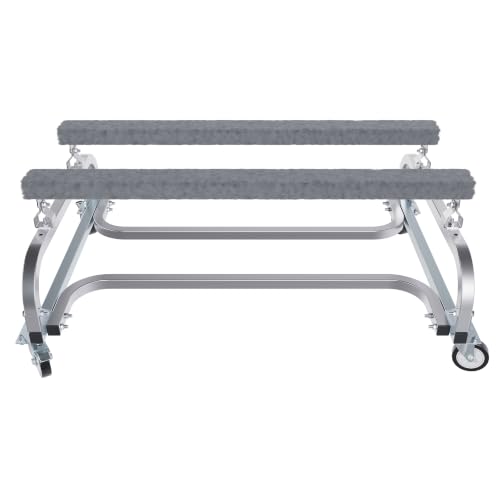
ECOTRIC 1000 lb PWC Dolly
- 1000 lb load capacity
- Galvanized steel frame
- Adjustable carpeted bunks
- 4 casters with dual brakes
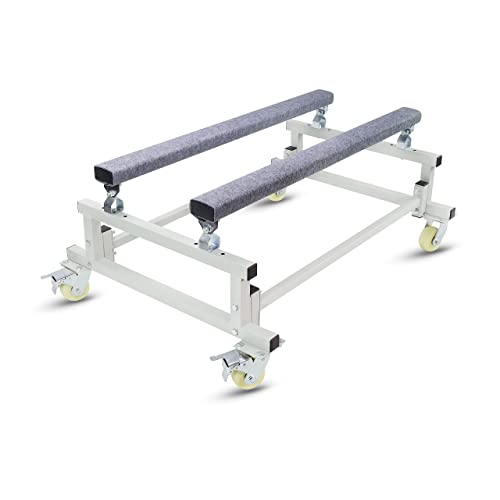
JY PERFORMANCE PWC Dolly
- 1000 lb capacity
- White-coated steel frame
- 4 casters with 2 brakes
- 46.5 in long
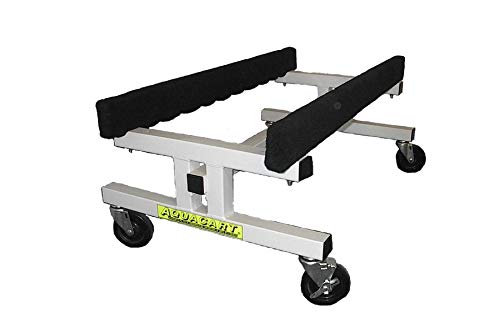
AquaCart AQ-19b PWC Dolly
- 1300 lb capacity
- Thick 2 in steel tubing
- 5 in locking casters
- Trailer-matched height
The full lineup sits below. The three picks above are the shortlist; everything else is included because it solves a specific problem well, and the buyer's guide further down explains where each one fits.
| Product | Highlights | Action |
|---|---|---|
| ECOTRIC 1000 lb PWC Dolly |
|
Check Latest Price |
| JY PERFORMANCE PWC Dolly |
|
Check Latest Price |
 HECASA 1000 lb PWC Dolly HECASA 1000 lb PWC Dolly |
|
Check Latest Price |
 SeaSense 300 lb PWC Jack Stand SeaSense 300 lb PWC Jack Stand |
|
Check Latest Price |
 XtremepowerUS 500 lb Hitch Hoist XtremepowerUS 500 lb Hitch Hoist |
|
Check Latest Price |
| AquaCart AQ-19b PWC Dolly |
|
Check Latest Price |
 VEVOR RYT-1300 PWC Dolly VEVOR RYT-1300 PWC Dolly |
|
Check Latest Price |
 MotoSport Scissor Beach Stand MotoSport Scissor Beach Stand |
|
Check Latest Price |
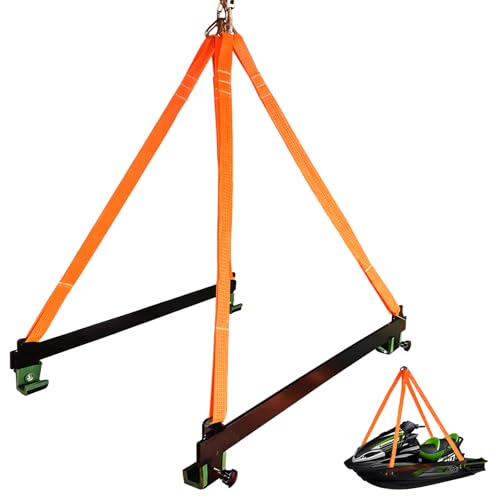 SUONE 2800 lb Lift Sling Pair SUONE 2800 lb Lift Sling Pair |
|
Check Latest Price |
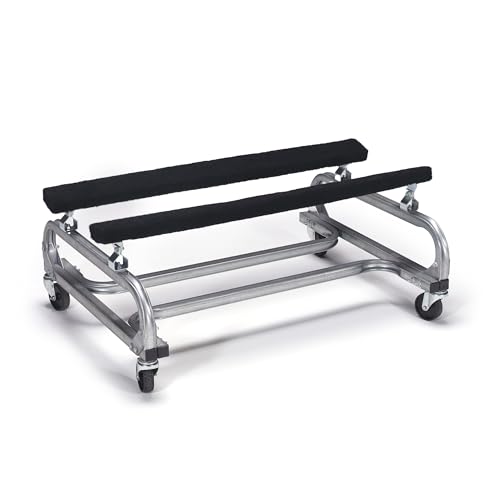 CE Smith 48 in PWC Dolly CE Smith 48 in PWC Dolly |
|
Check Latest Price |
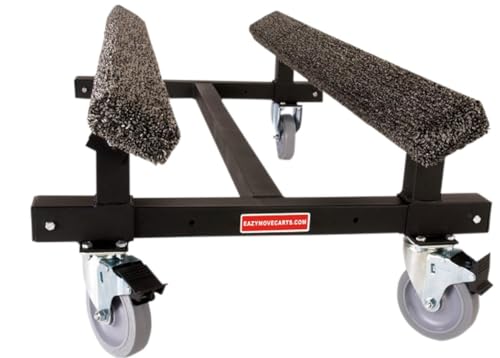 Eazymove PWC-STD Heavy Duty Stand Eazymove PWC-STD Heavy Duty Stand |
|
Check Latest Price |
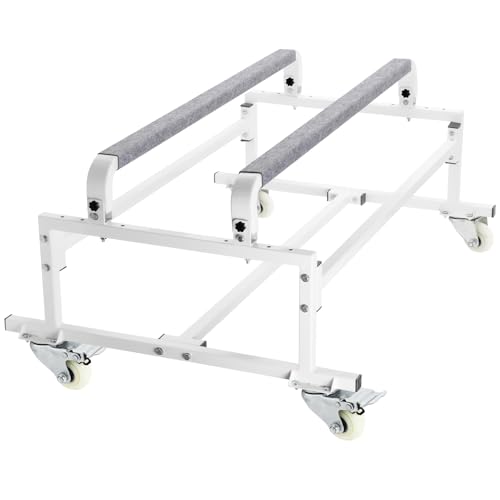 Eastrexon Jet Ski Dolly Eastrexon Jet Ski Dolly |
|
Check Latest Price |
1. ECOTRIC 1000 lb PWC Dolly - The Most Owner-Verified Way to Move a Jet Ski
ECOTRIC 1000 LBS Capacity Watercraft PWC Dolly...
1000 lb load capacity
46.7 x 33.7 x 20.5 in
10 kg
4 casters, 2 brakes
Adjustable bunks
What we like
- Holds 900 lb plus watercraft without complaint
- Large casters roll and brake well
- Adjustable bunk width fits several hull sizes
- Carpeted bunks protect the hull
What could be better
- Assembly instructions are widely criticized
- Missing nuts or hardware in some shipments
- Low bunk height versus many trailer tongues
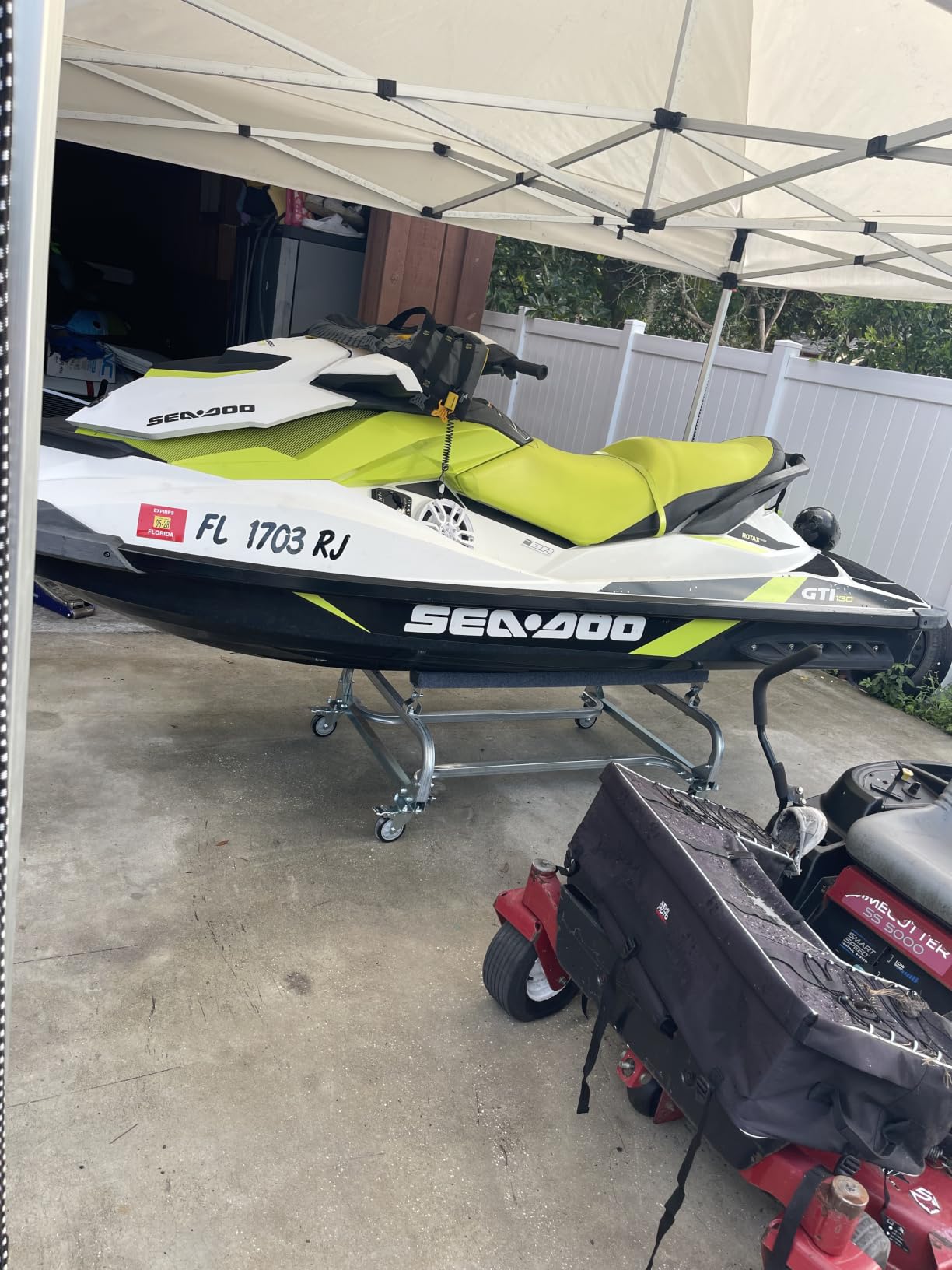
Six hundred and twenty-one owners have filed a review on this dolly, and when a product in a small category has that much history, its weaknesses become obvious rather than theoretical. This is the galvanized steel tubular cart with four casters, two of them braked, and a pair of carpeted bunks that slide in and out through three bracket positions per side. It is not clever hardware. It does one job, and the size of its review base is the argument for it.
What that review base actually says is consistent. Owners with heavy three-seat watercraft report the frame holds them without flex, the big casters roll across a driveway or garage floor loaded, and the brakes hold well enough to strap a trailer to the cart. The carpeted bunks come up repeatedly as the reason the hull has no scratches after a season of use, and the adjustable width means the same cart handles a lightweight two-seater and a wide three-rider.
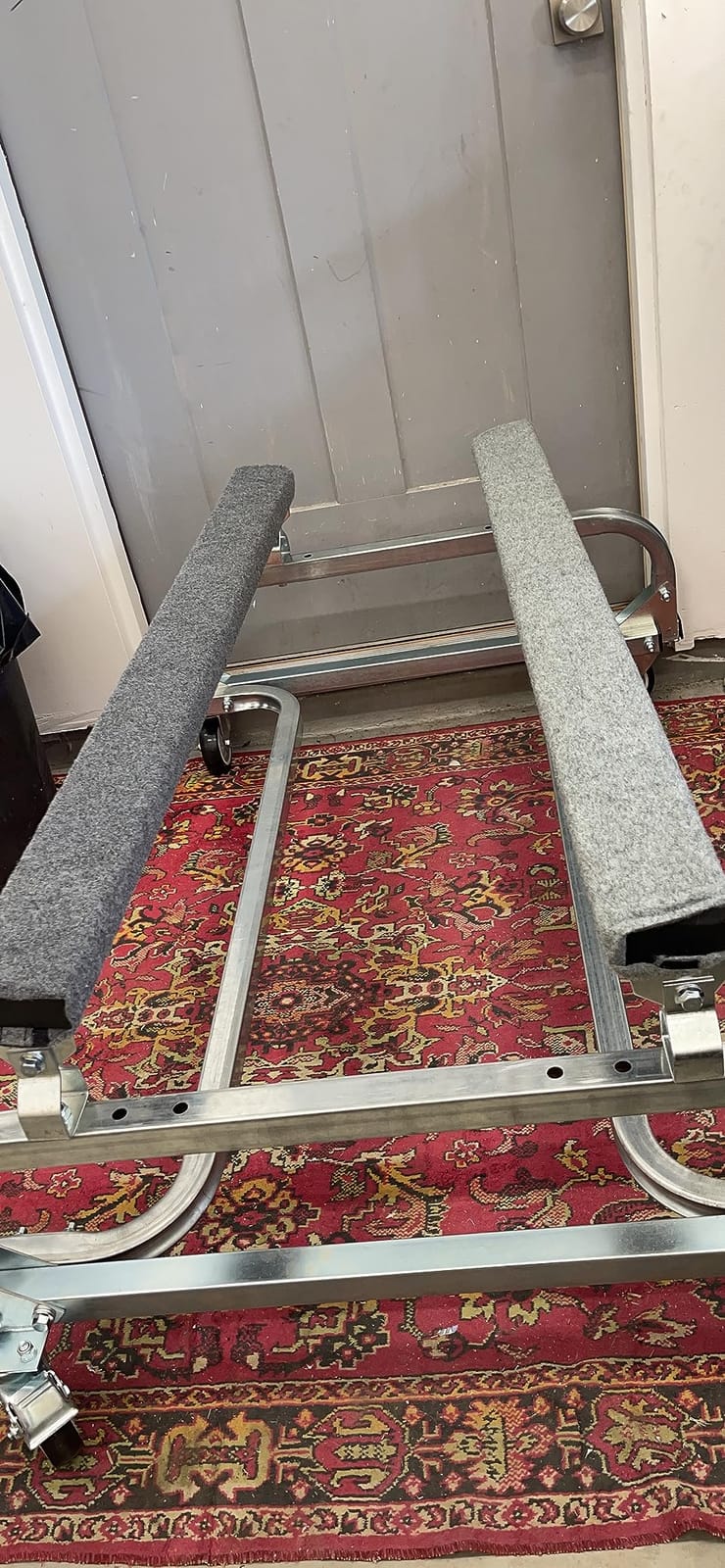
The two complaints that show up over and over are assembly and hardware. Owners describe the instructions as two faint diagrams on a single page, and some shipments have arrived missing nuts that need a hardware store run before the cart is usable. Neither issue affects how the dolly performs once it is built, and both are solved with a hex key set and an afternoon.
Capacity and the hulls it comfortably covers
The listed load capacity is 1000 lb, which is not a marketing number pulled from nowhere. Reviewers routinely load it with watercraft in the 900 lb range and report no flex, so it covers the heavy four-stroke three-seaters without being pushed to its rating on day one. That headroom matters more than the raw figure, because a cart sized exactly to the dry weight of your ski will feel every expansion joint and hull brace.
The bunks adjust through three bracket holes per side, so the usable width range covers a narrow stand-up hull and a wide three-rider. If you own something over 900 lb, owners add a cross brace for extra support, which is a small modification to an otherwise standard cart.
Bunk height and the trailer transfer problem
This is the detail most product pages skip, and it is where dock dollies earn their keep. The frame measures 46.69 inches long by 33.67 inches wide and 20.47 inches high, and that 20-inch bunk height sits lower than many trailer tongue heights. If your trailer bunks ride high, winching a ski from the dolly means tipping the craft down onto the trailer, or building a ramp.
Owners who pair this cart with a low bunk trailer report a clean straight-line transfer. Owners with a high trailer report adding a ramp or accepting the lift. Check your own trailer height before you commit, because it is the single most common surprise with this style of dolly.
Who should buy it and who should pass
Buy this if you want a straightforward rolling cart with the widest owner history in the category, and you are willing to spend ninety minutes on assembly with better instructions of your own. It suits garage storage, driveway maintenance days and moving a ski between a storage building and a launch ramp.
Pass if you carry a very heavy watercraft and need maximum rigidity, or if you need the cart to sit at trailer bunk height. For the first problem the Aquacart in position six is built heavier. For the second, a cart specified for trailer-matched height will save you a ramp.
2. JY PERFORMANCE PWC Dolly - The Cleanest Steel Build With a Better Rating
Jet Ski Dolly Cart, PWC Stand with Adjustable...
1000 lb load capacity
47 x 14 x 11 in
48 lb total weight
4 casters, 2 brakes
1 year warranty
What we like
- Sturdy white-coated steel frame
- Carpeted bunks protect the hull
- Bolt-on assembly with no special tools
- Compact 46.5 in length stores easily
What could be better
- Frame can flex under heavier watercraft
- Plastic caster wheels can slide on smooth floors
- Instructions unclear and hardware sometimes missing
This cart carries a 4.5 rating across 252 reviews, which is well above the category average for general-purpose dollies. It is a white-coated heavy-duty steel frame on four rugged casters with two brakes, and the 46.5 inch overall length is short enough to turn in a tight garage or roll down a narrow dock walkway. Owners mention the coating first when they explain why they like it.
Compared with the ECOTRIC, the difference is finish and proportions rather than capacity, since both are rated for 1000 lb. The white coating resists corrosion on a damp dock better than bare galvanized steel, and the narrower 14 inch width in the listed dimensions makes this the easier cart to move around a boat lift post. Bolt-on assembly with no specialized tools is another genuine advantage for anyone without a workshop.
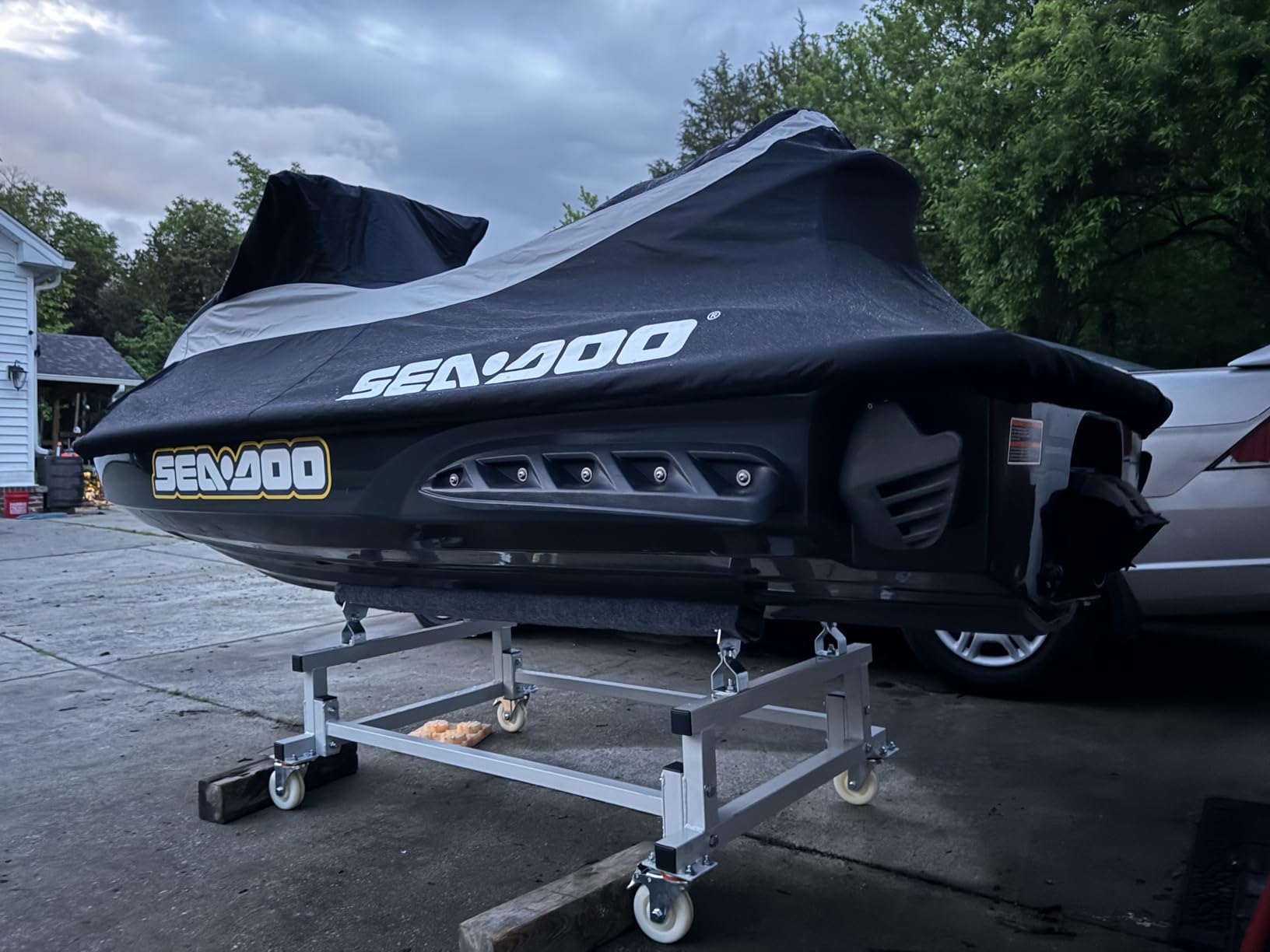
Two caveats surface in the reviews. Some owners with heavy watercraft report the frame flexing, and their fix is the same one people apply to the ECOTRIC, an added brace across the bunks. Others note that the plastic caster wheels can creep on smooth floors even when locked, so block the wheels if the cart sits on any kind of slope.
Frame rigidity versus the heavier carts
At 48 lb listed total weight, this is not a heavy cart, and that shows when you load something in the upper end of its range. Owners who do report flex generally pair it with a lighter hull and never notice a problem. If you own a large four-stroke or a three-rider near the capacity limit, spend the extra for a thicker-tubing cart rather than planning to brace this one.
For a two-person craft, a sit-down model in the mid-range, or a stand-up jet ski that never leaves the trailer, this frame is comfortably rigid. That is the majority of the PWC park.
Maneuverability and floor grip
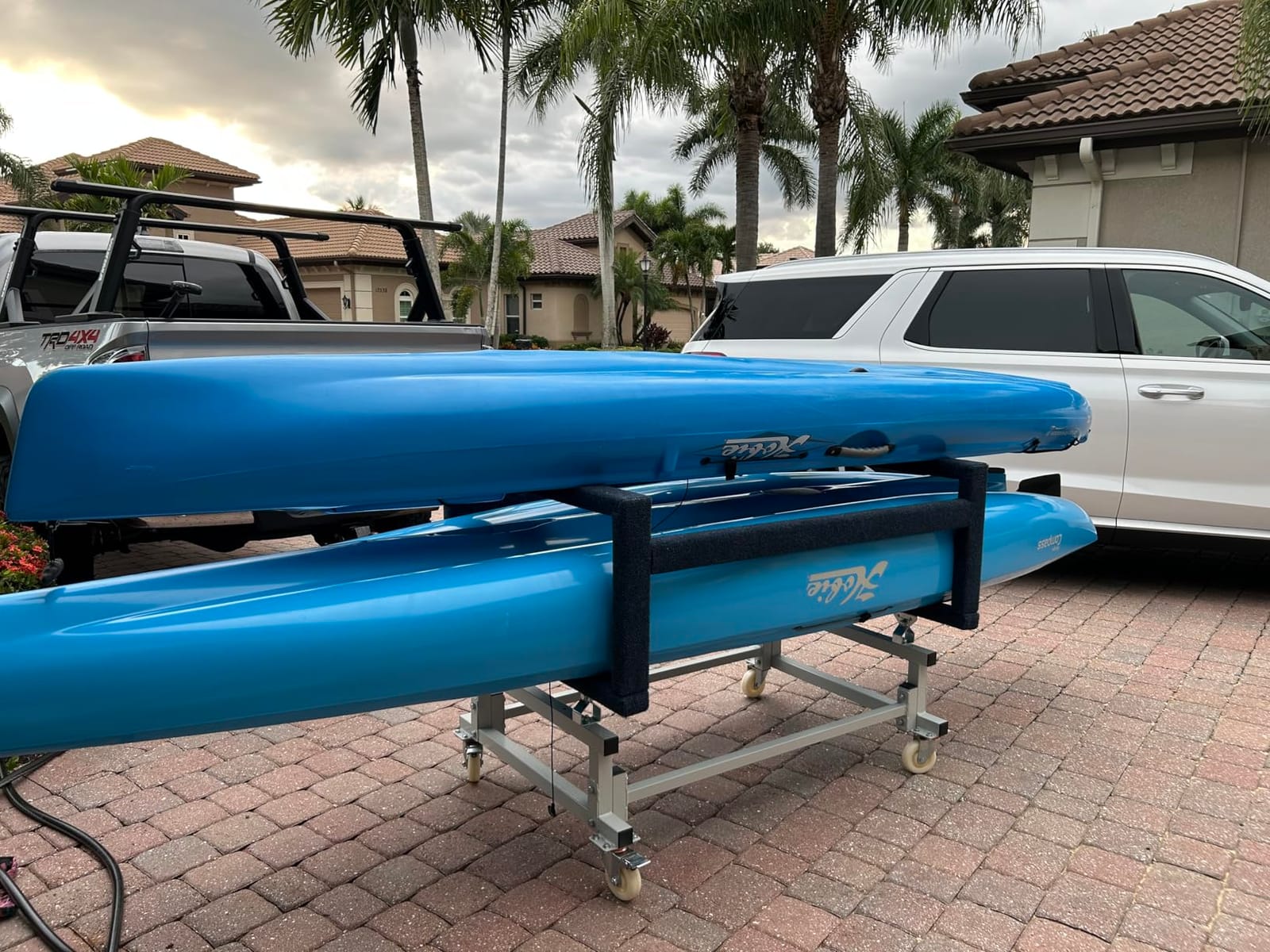
Four casters, two braked, is the sensible configuration for a cart that gets moved between a garage and a ramp. The swivel action handles uneven surfaces better than fixed wheels, and the brakes are enough to hold the craft while you strap down a cover or a tie-down.
The floor grip point is worth a sentence because it is the most common accident with this style of cart. On polished concrete or a smooth sealed floor, plastic wheels can slide even when the brake lever is down. Chocking the wheels takes seconds and prevents a loaded cart from drifting toward a dock edge.
Who should buy it and who should pass
Buy this dolly if you want a compact, coated steel cart for a mid-weight watercraft and a tight storage area. The rating is higher than the category leader's and the assembly is simpler, which is a good trade if you do not need maximum frame rigidity.
Pass if you regularly handle the heaviest watercraft in your fleet, or if you plan to use the cart as a permanent dock installation where corrosion is the main enemy. Powder-coated galvanized steel wins in both those cases.
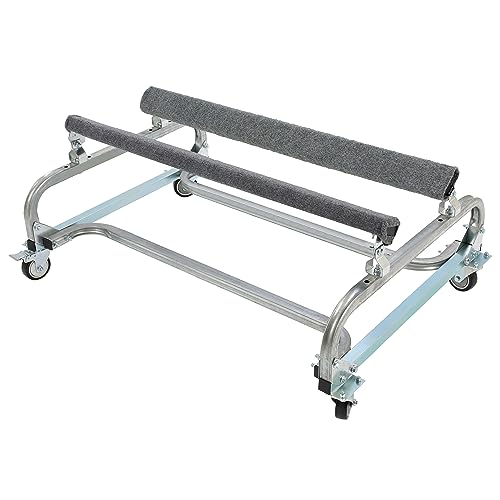
3. HECASA 1000 lb PWC Dolly - Best Working Height for Maintenance Days
HECASA Personal Watercraft Jet Ski Dolly Stand...
1000 lb capacity
46.1 x 33.6 x 20.5 in
5 in casters
High carbon steel
Adjustable bunks
What we like
- Sturdy frame holds heavy Sea-Doo models
- Large casters roll and lock securely
- Comfortable working height for hull work
- Pairs well with a hoist
What could be better
- Frame can flex near the 1000 lb limit
- Poorly written assembly instructions
- Missing hardware in some packages
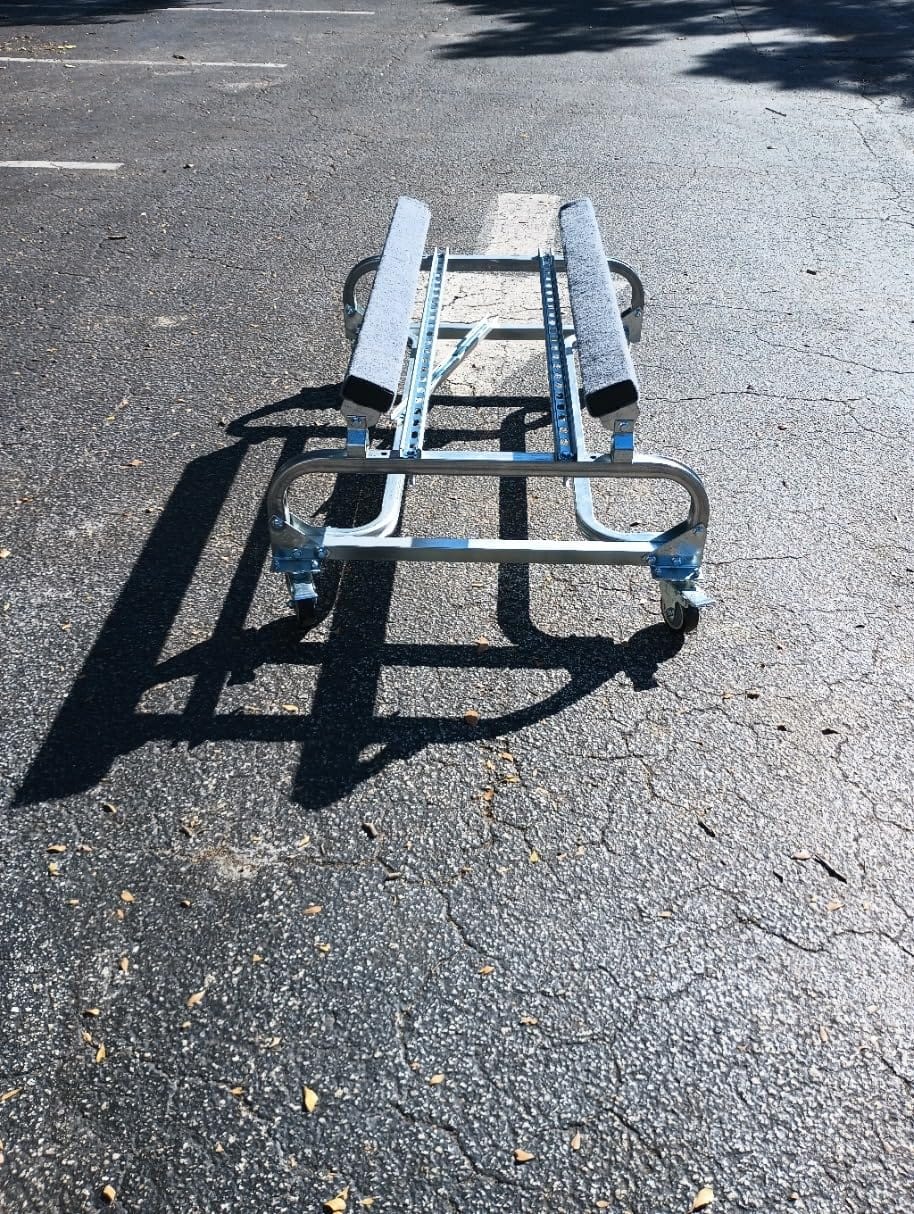
The HECASA is the one to consider if you actually work on your watercraft. At 20.5 inches tall, the deck puts the hull at roughly knee height when you are kneeling, which is a meaningful difference when you are cleaning an intake grate, checking a wear ring or rinsing salt off a hull. Most owners in the reviews describe the cart in exactly those terms, as a working stand first and a transport cart second.
The frame is high carbon steel rated to 1000 lb, on four 5-inch casters with two brakes. The listed footprint is 46.08 by 33.62 inches, which is close to identical to the ECOTRIC, so this is a like-for-like swap if you are choosing between them. The explicit note in the manufacturer data that it works with a hoist is what pushes it toward the maintenance role.
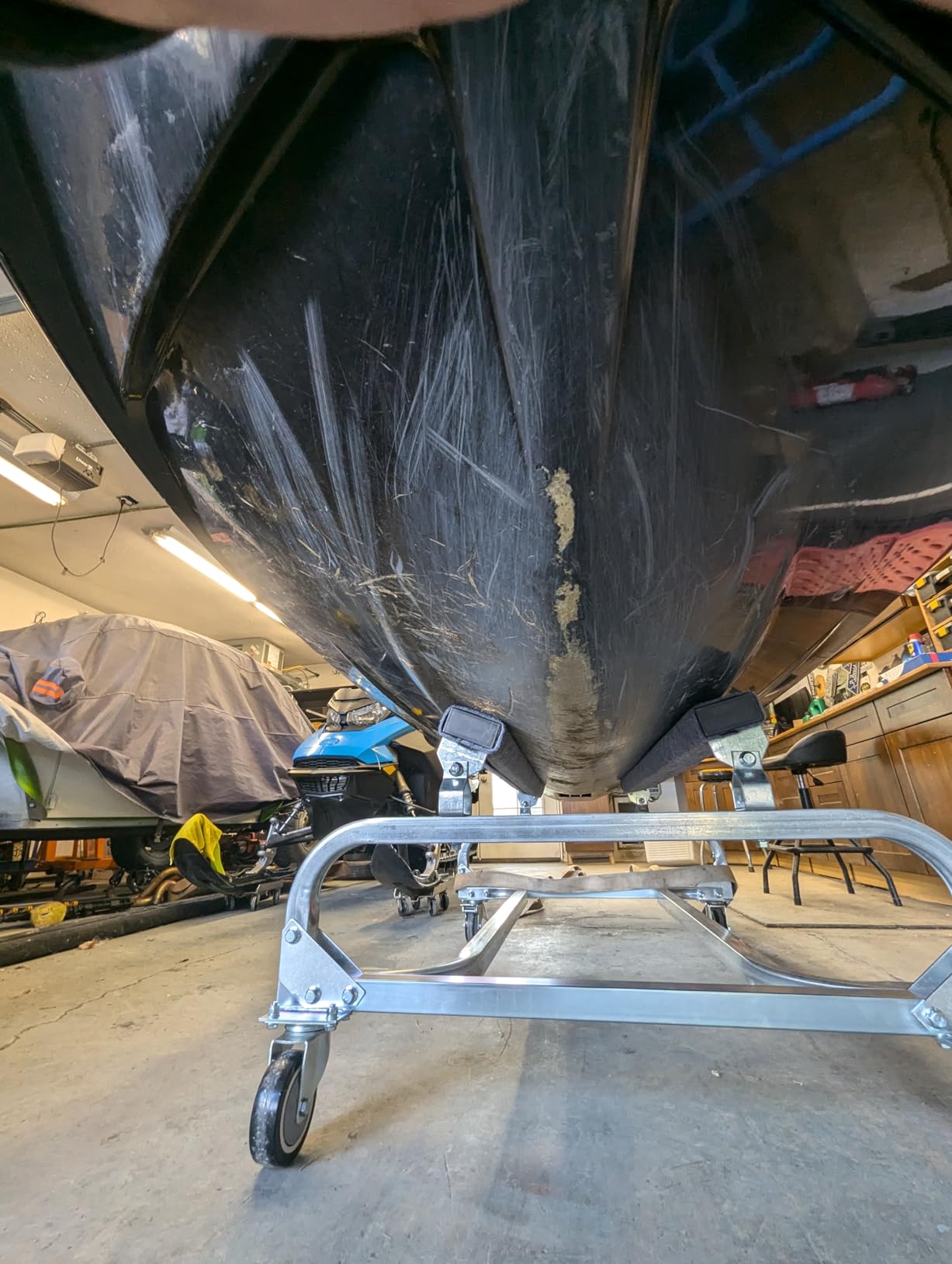
Compatibility is stated for Sea-Doo, Yamaha and Kawasaki personal watercraft, which covers essentially every mainstream hull on the water today. Adjustable carpeted bunks handle hull width, and owners consistently report the carpet preventing the marks that bare steel leaves on a gelcoat hull.
Where the frame bends, and how to avoid it
A recurring review note is that the frame flexes or bends when a heavy watercraft is loaded near the 1000 lb rating. This is a limit issue, not a defect. The cart is rated for 1000 lb, and owners reporting flex are usually running a hull plus fuel load close to that number with the load centred between the bunks.
The practical mitigation is simple: keep the craft centred, and add a cross brace between the bunks if you regularly handle something in the 900-plus range. Owners who do this report the flex disappears. If you would rather not modify anything, choose a cart with thicker tubing in the first place.
Working height and the hoist combination
The strongest use case we found for this cart is the pair of it with a hoist. Owners who rigged a lift above the deck report being able to lift a jet ski off the bunks with one hand and set it down again without dragging. For anyone doing hull work, that saves more time than any other single accessory in this roundup.
Be careful not to sit or climb on the watercraft while it is on the cart, though. Owners report bending the wheel mounting plate that way, and the plate is a structural point rather than a step.
Who should buy it and who should pass
Buy this stand if your priority is getting the hull to a comfortable working height, especially if you service your own watercraft or run a small repair side business. It is also the right pick for anyone pairing a cart with a hoist for easier lifting.
Pass if your watercraft sits near the top of the 1000 lb range and you want zero flex out of the box. The Aquacart uses 2-inch tubing and a higher rating for that reason.
4. SeaSense 300 lb PWC Jack Stand - The Trailer Part Almost Everybody Overlooks
Seasense PWC Jack Stand, 300 LB Zinc Plated
300 lb capacity
Zinc-plated steel
3 to 15 in height
12 oz unit weight
Fits 3 x 3 in tongues
What we like
- Compact swing-away footprint
- Mounts under the tongue so it cannot twist the beam
- Easy install on light trailers
- Effective spring locking mechanism
What could be better
- Fixed non-adjustable height limits compatibility
- Locking wheel can be stiff from the box
- 300 lb rating is modest for heavy tongue loads
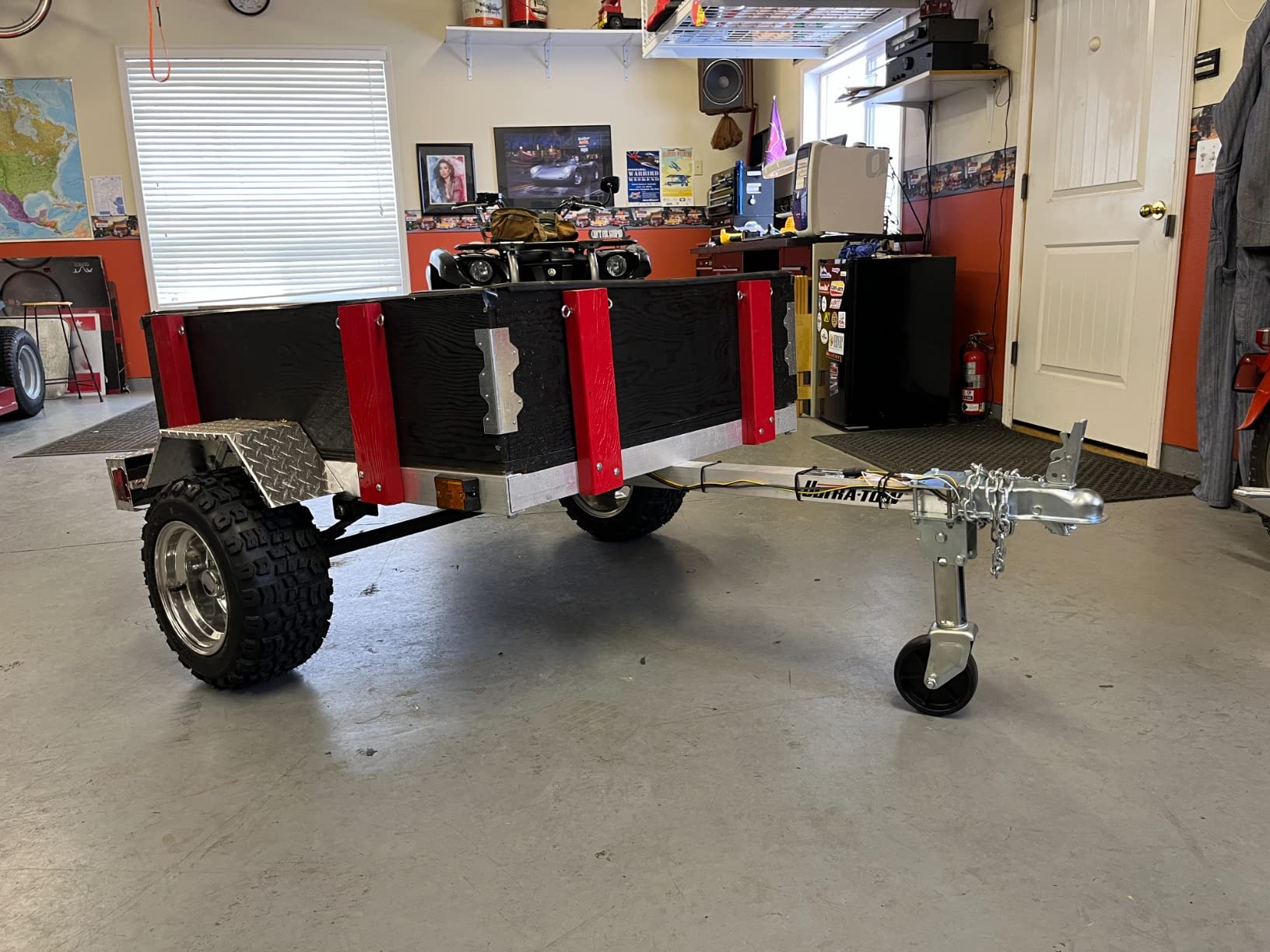
This is the one product in the roundup that is not a lift, a dolly or a stand for the hull, and it is included because trailering is half of what a jet ski lift system does. The SeaSense is a zinc-plated jack stand that mounts under a 3 by 3 inch trailer tongue and swings out of the way for hitching. At 12 ounces it costs nothing in effort to carry to a launch ramp.
Owners in the reviews care most about where it mounts. Because it tucks under the tongue rather than beside it on side wheels, it cannot twist or warp the trailer beam the way a side-mounted wheel can, and it stays out of the way of the winch post. The spring-loaded lock holds the stand vertically or horizontally, which is what lets it fold for storage.
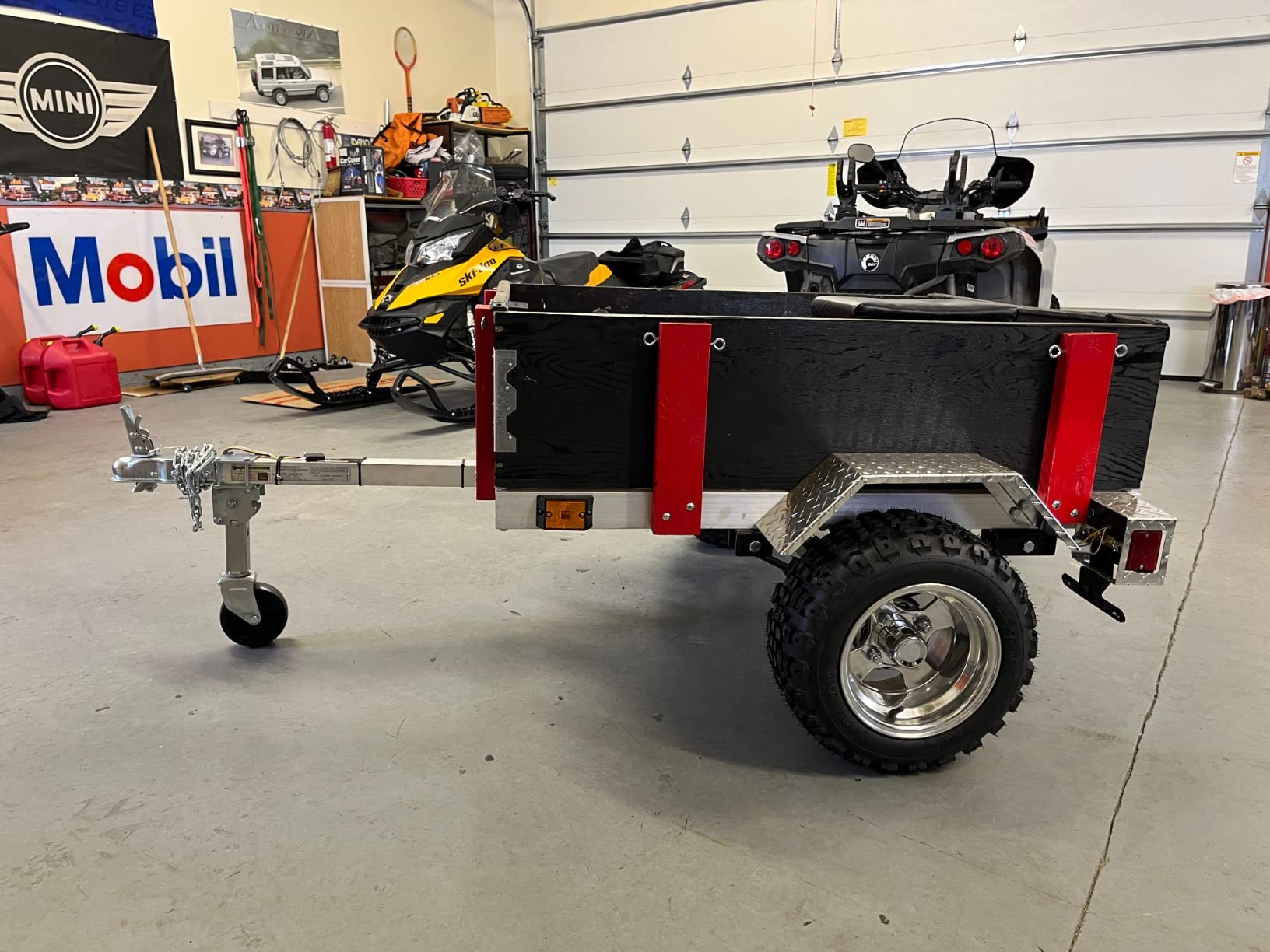
The fixed height is the trade-off, and it is a real one. With a 3 inch minimum and a 15 inch maximum, it suits smaller aluminium and light-duty trailers and works well with 12-inch trailer wheels, but it will not adjust to a taller tongue on a larger trailer. The locking wheel is also stiff straight out of the box and takes a few uses before it swings freely.
Why tongue weight support matters more than it sounds
A personal watercraft trailer is light, but the tongue load concentrates at one point. Owners who added a proper jack under the tongue report the trailer sitting level and stable while they winch a ski aboard, instead of leaning forward onto the coupler. On soft ground at a launch ramp that difference decides whether the trailer tips or stays put.
A 300 lb rating is modest compared with the watercraft weights in this roundup, but it is tongue weight, not boat weight. A trailer tongue carrying a 900 lb watercraft still typically presents a far lower load to the stand, which is why a 300 lb stand is a normal match for a PWC trailer.
Trailering, storage and the two-in-one case
The swing-away design earns its keep in two places. In the down position the solid wheel locks and holds the tongue. Swung out, the trailer becomes a flat-tow unit or fits in a garage with the tongue still fully assembled, which is exactly the situation PWC owners hit when they are not towing for a few months.
Because it is zinc-plated rather than painted steel, it also handles a wet launch ramp without the coating chipping the way bare steel does. Rinse it after a saltwater launch, as you would any exposed hardware.
Who should buy it and who should pass
Buy this jack stand if you tow a smaller PWC trailer and want a stable, compact tongue support that will not warp your beam. It is a small purchase that solves an annoying, recurring problem at the ramp.
Pass if your trailer has a tall tongue or a heavy tongue load, since the height here is fixed and the rating is limited. In that case, a telescopic jack with a crank handle is the right part.
5. XtremepowerUS 500 lb Hitch Hoist - Lifting a Jet Ski Into a Truck Bed Alone
XtremepowerUS 500Lb Pickup Truck Hydraulic Pwc...
500 lb capacity
72 lb unit weight
36.2-56.7 in boom
360 degree swivel
2 in hitch receiver
What we like
- Hydraulic lift works for one person
- Telescopic boom and swivel give good positioning
- Clears the tailgate on a standard receiver
- Support legs reduce hitch strain
What could be better
- No usable assembly instructions
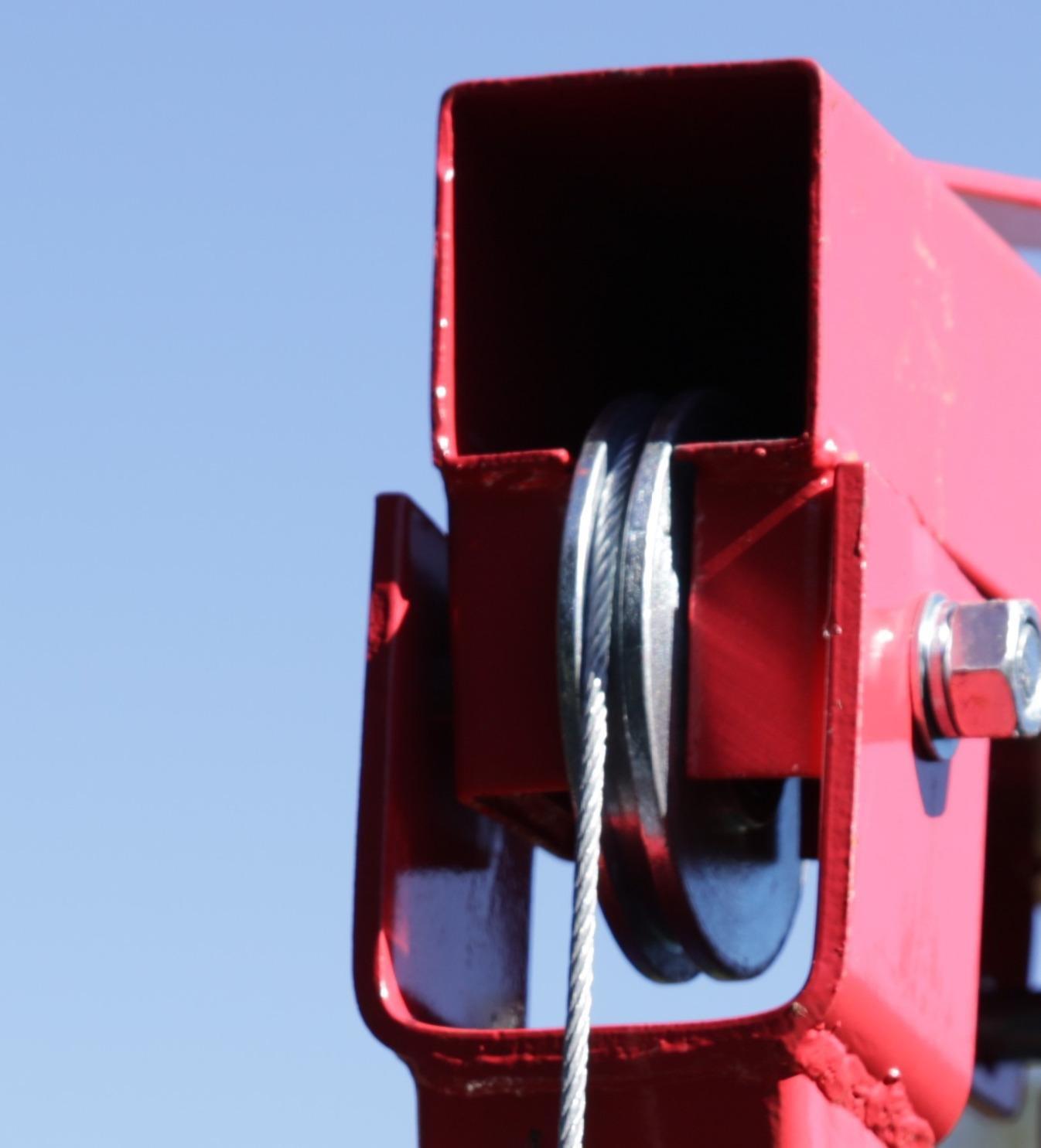
- Cable can jump the boom pulley
- Missing nylon spacers and hardware
- Side swing when lifting off-centre
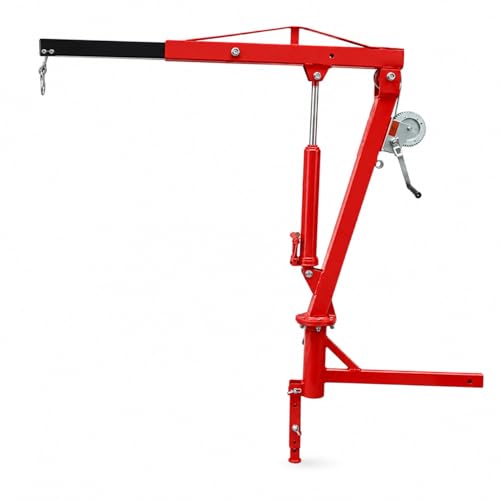
Every lift category in this roundup assumes you can get the craft to eye level. This hitch-mounted hoist is for the step before that, when the ski is still lying flat and the only realistic option is a winch, four strong friends or a crane. The 500 lb capacity, hydraulic cylinder and telescopic boom let one person lift a watercraft to truck-bed height without a second pair of hands.
The design is straightforward. It drops into a standard 2-inch trailer receiver, the boom extends from 36.2 to 56.7 inches, and a swivel plate lets the whole jib rotate for driver-side or passenger-side loading. The offset mounting is what clears the tailgate, and the adjustable support legs spread the load so the receiver is not taking the full reaction force.
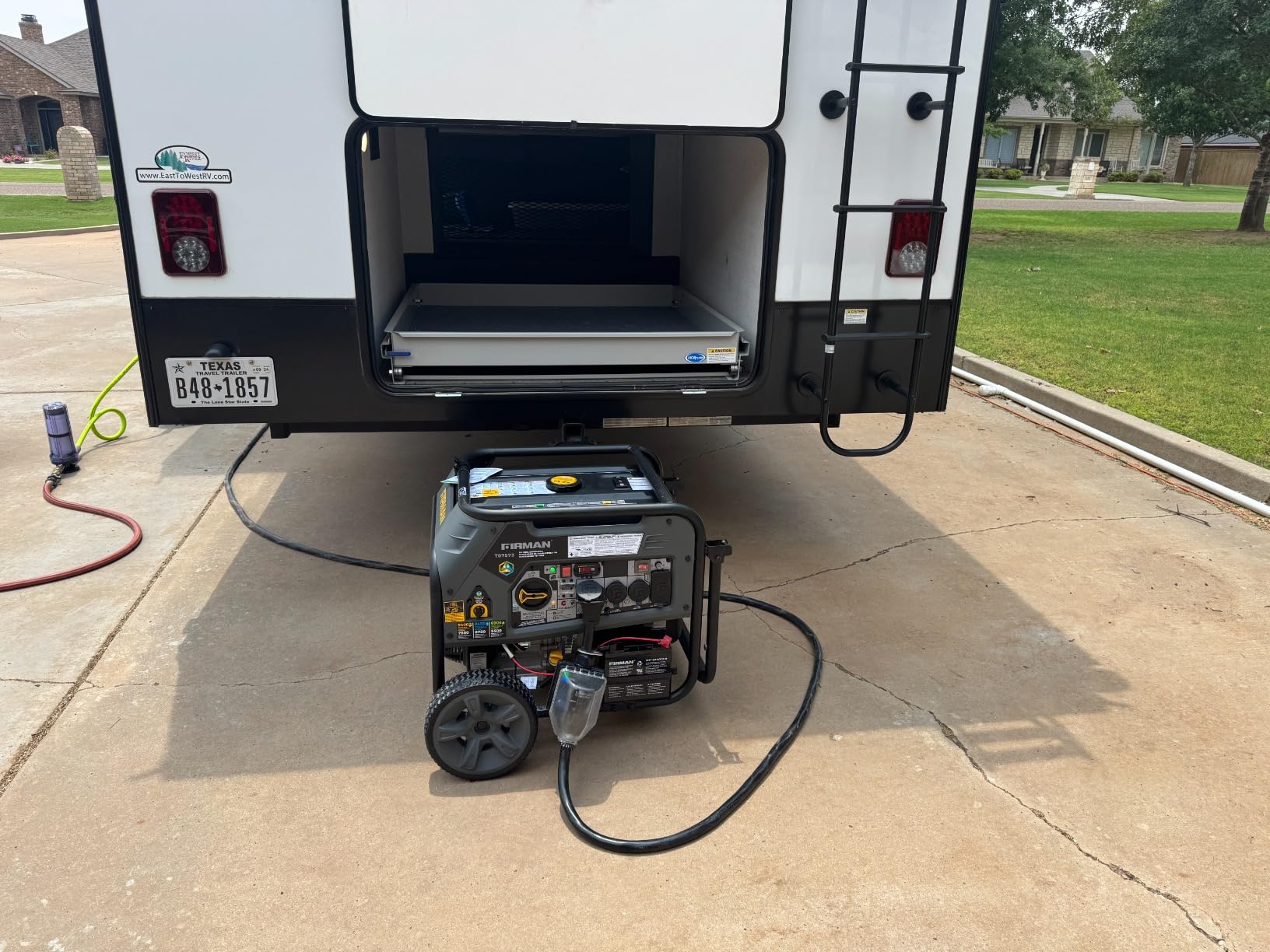
Reviewers use this hoist for more than watercraft. Engine swaps, loading a generator and fifth-wheel hitch installation all come up as jobs owners completed with it, which tells you something about how the 500 lb rating is actually perceived.
The cable and pulley are the weak point
The most repeated complaint is the cable jumping off the boom pulley when the load is off, and then kinking in the groove. It is a routing issue rather than a strength issue, but it costs time every session until you learn the correct path. Owners who get the routing right report no further trouble, and routing the line before the first lift is worth ten minutes.
Assembly is the other common thread. The documentation is a thin exploded diagram, so several owners had to work out which spacer went where, and some arrived missing nylon spacers and hardware. Budget an hour with the parts laid out, and check the bag of hardware before you start.
Off-centre lifting and the single stabilizer
There is one center support leg, and it does not stop the boom from swinging sideways when you lift a load that is not directly under the hook. Owners lifting a loaded watercraft from a trailer report keeping the load as close to the centerline as possible for exactly this reason. Heavier or awkward loads are better lifted with a chain than with the cable.
At 72 lb the hoist is heavy to swing by hand, which is a fair trade for the hydraulic assist. Mount it, use the legs, and let the cylinder do the work rather than muscling the boom around.
Who should buy it and who should pass
Buy this hoist if you regularly load a watercraft into a truck bed or trailer alone, or if you want a general lifting tool for engine work. The hydraulic assistance is the reason it earns its place in a lift roundup.
Pass if you only occasionally load a ski and already have a winch, or if you need fine control at very light loads where the hydraulic cylinder is overkill. A strap winch handles those cases more simply.
6. AquaCart AQ-19b - The Heavy-Duty Cart Built for the Biggest Four-Strokes
AquaCart AQ-19b- Heavy Duty- 30 Years of...
1300 lb capacity
55 lb unit weight
48 x 28 x 19 in
5 in locking casters
Made in USA
What we like
- Holds heavy Sea-Doo models without flexing
- Bunk height matches most trailers for easy winching
- Large locking casters roll and hold
- Responsive US customer service
What could be better
- Instructions could be clearer
- Heavy at 55 lb so transfers take two people
- Some units sit low for newer hulls
This is the cart I would put a heavy three-seat four-stroke on without thinking about it. The Aquacart AQ-19b is made in the USA from thick 2-inch steel tubing with a white powder coat, rated to 1300 lb, and it carries a 4.7 rating across 135 reviews. That is the highest rating among the general-purpose dollies in this roundup, and the capacity sits at the top of the range here.
Owners report it holding 800-plus-pound Sea-Doo models with no flex at all, which is the claim that separates it from the 1000 lb carts. The two 5-inch locking casters roll easily on hard surfaces and hold position, and the adjustable bunk spacing fits a wide range of hull widths.
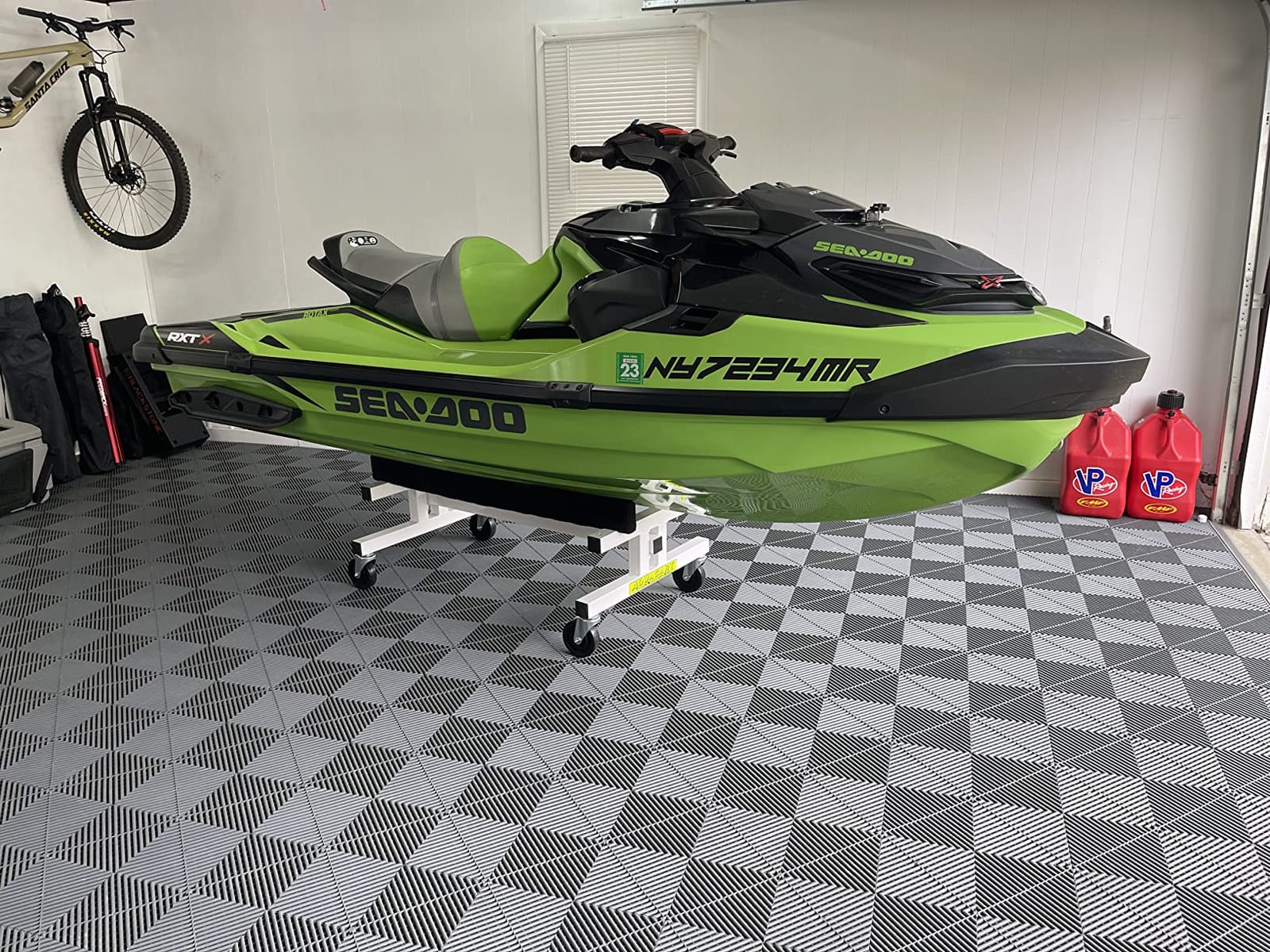
Assembly takes roughly 20 to 30 minutes by owner accounts, which is the fastest in the group, and the manufacturer service is reported as responsive. One owner describes a damaged part replaced at no charge, which is worth something on a product this heavy.
Trailer-matched height is the feature that pays for itself
The deck height is matched to most trailer bunks, and that single design choice removes the ramp problem entirely. Winching a watercraft from the cart straight onto a trailer becomes a level, straight pull instead of a tip and lower. Owners with a standard trailer cite this as the reason the cart is worth the step up in weight.
The tradeoff is size and mass at 55 lb and 48 by 28 by 19 inches. Transfers take more than one person, and if you have a compact garage this is a large object to park.
Where the extra capacity actually matters
The 300 lb of headroom over a standard 1000 lb cart is not marketing margin. Owners of large four-stroke models use it every time, and a cart that is not flexing at 900 lb is a cart that still tracks straight over uneven ground with a load aboard. Owners who moved up from a lighter cart report the difference in feel immediately.
One complaint does appear: some units sit slightly lower than ideal for newer hulls and need added spacers. If your watercraft has a deep hull, check the deck height against your trailer before ordering, or plan to add shims.

Who should buy it and who should pass
Buy the Aquacart if you own one of the heaviest four-stroke watercraft, if you winch between the cart and a trailer regularly, or if you simply want a cart that will not flex under anything you can buy. The trailer-matched height alone justifies it for owners with a standard trailer.
Pass if storage space is tight or if your watercraft is a light stand-up model. This cart is deliberately heavy, and that weight is wasted on a small hull.
7. VEVOR RYT-1300 PWC Dolly - Adjustable Bunk Geometry in a Newer Build
VEVOR Watercraft PWC Dolly, 1300 lbs Load...
I-beam steel base
1.4 in tube diameter
44.8 lb
47.2 x 28.4 x 20.1 in
Felt-wrapped bunks
What we like
- Reinforced I-beam base resists deformation
- Lockable nylon wheels with ball bearings roll smoothly
- Adjustable bunk spacing and angle
- Felt bunks add grip against slipping
What could be better
- Listing shows 1000 lb capacity despite 1300 lb class model name
- Hefty at 44.8 lb for two-person repositioning
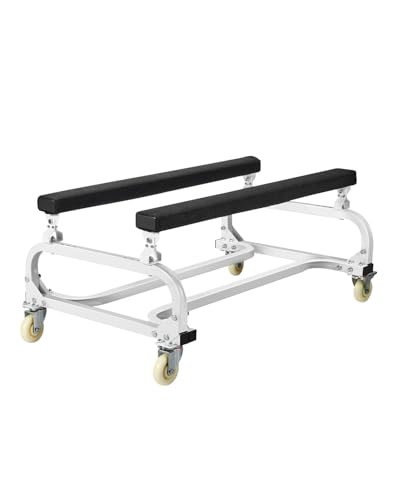
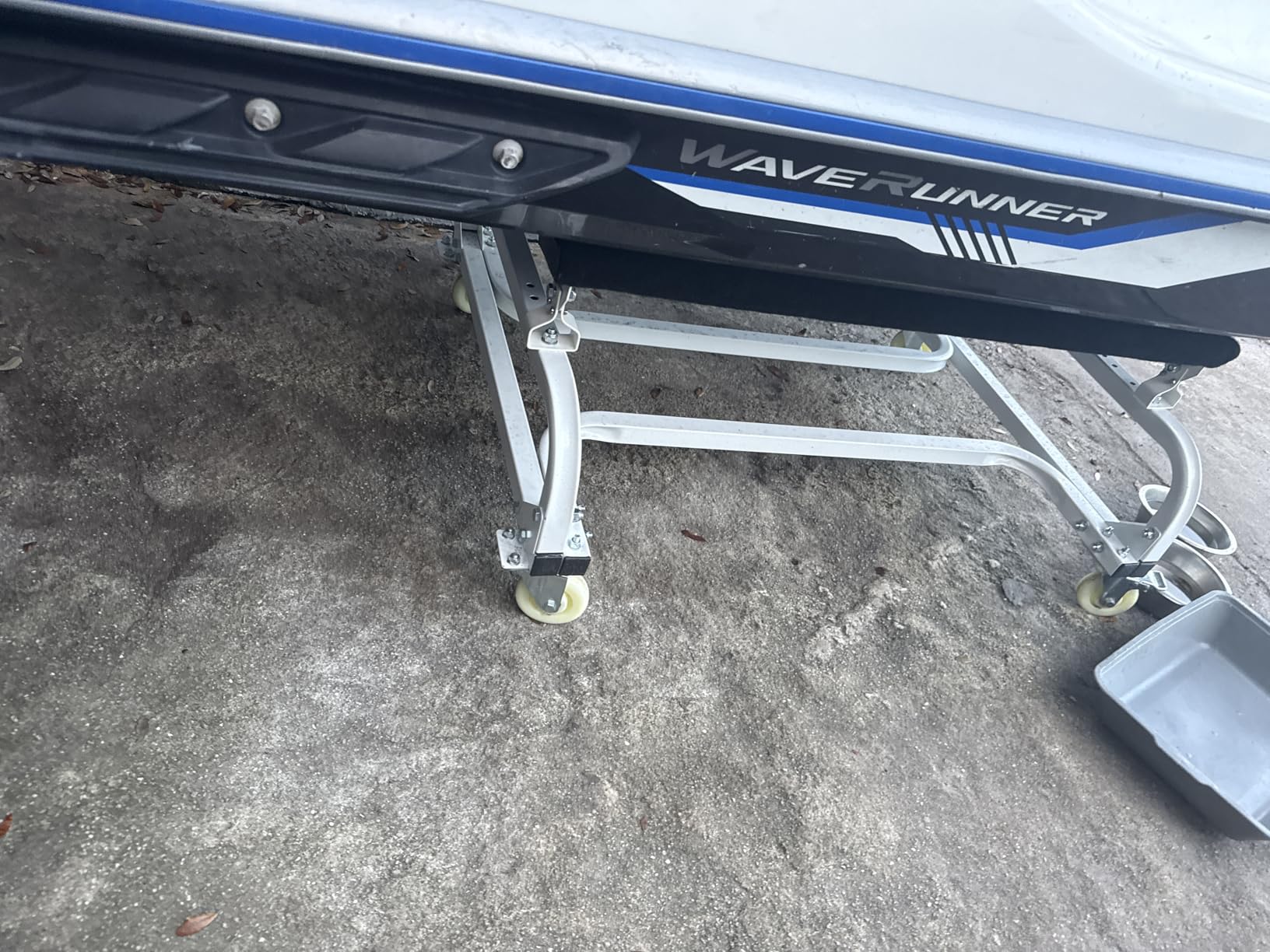
The VEVOR cart is the most carefully engineered specification sheet in this roundup, and it shows. The base is a steel I-beam with 1.4-inch thickened tube, the wheels are nylon with carbon steel brackets and ball bearings, and both bunk spacing and bunk angle adjust. Bunk angle matters more than most buyers expect, because it is what lets a cart support a deep-V hull properly rather than touching it at two points.
Buyers rate it favorably for stability, hull protection and the fact that it disassembles into a compact package for storage. The felt-wrapped bunk tubes do two jobs at once: they prevent scratches and they add friction, so a wet hull is less likely to creep while you winch.
There is one ambiguity worth raising rather than glossing over. The manufacturer data lists a load capacity of 1000 lb while the model is marketed in the 1300 lb class, and the two numbers are not the same. Plan on the conservative figure unless the manufacturer confirms otherwise for your region, because a cart that is overloaded bends at the bunks before anything else fails.
Bunk angle, spacing and hull geometry
Most carts let you change the distance between bunks. This one also lets you change the angle, which means a deep-V hull sits on the bunks rather than bridging between them. Owners with varied hull shapes cite the adjustability as the reason the cart works across a mixed fleet instead of needing a second cart.
The listed footprint of 47.24 by 28.35 by 20.08 inches is compact for a 1300 lb class cart, which is unusual, and the folded-down profile means it stores against a wall when the watercraft is on the water.
Wheels, hardware and what arrives in the box
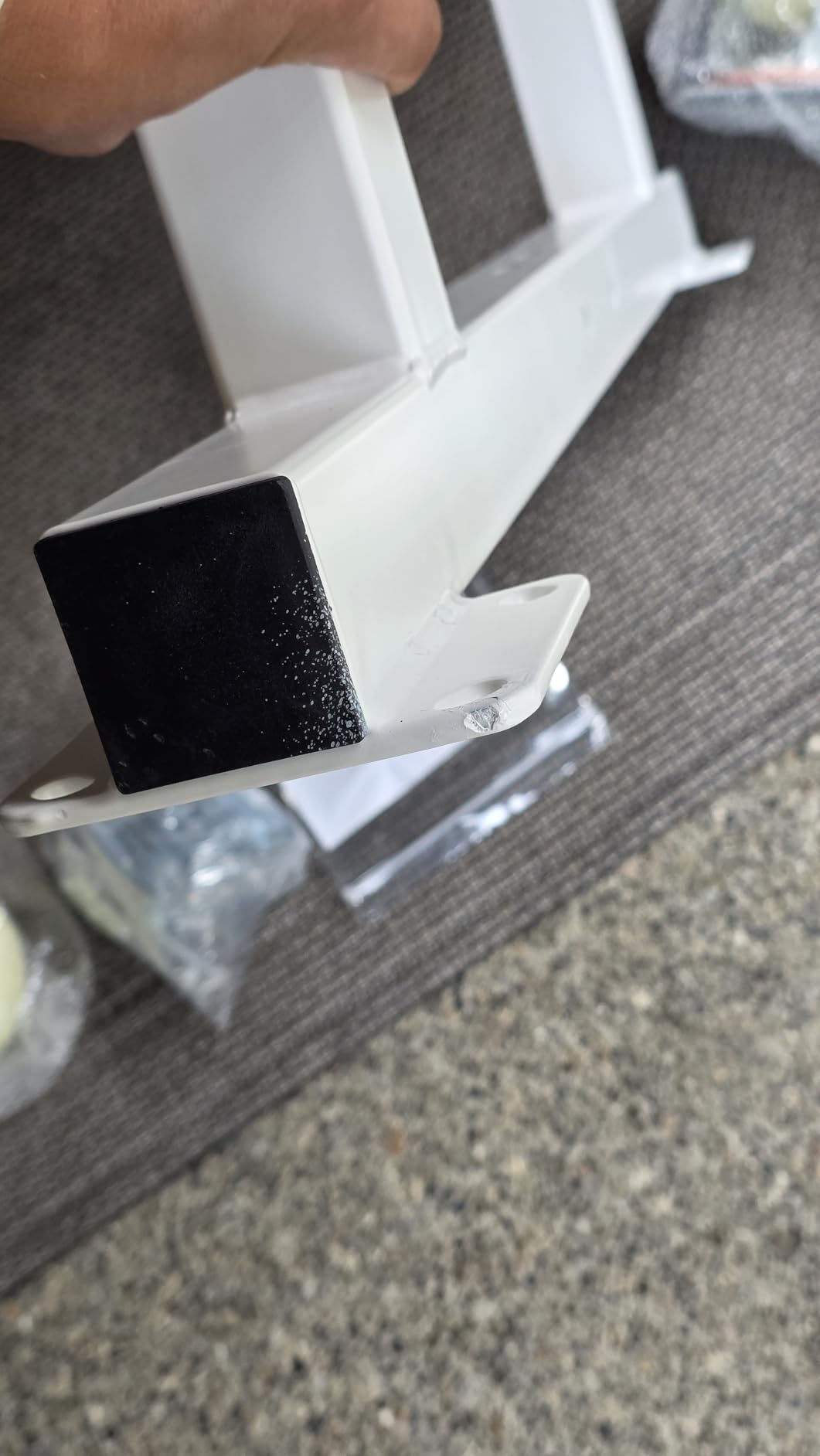
Ball-bearing nylon casters roll smoothly and lock for trailer connection, and this is the one cart in the roundup that explicitly ships with all installation hardware and instructions. That is a modest thing to praise and a genuine relief if you have assembled one of the other carts in this list.
At 44.8 lb it is a two-person lift when loaded, and it is not a small object in a garage. Owners moving it unloaded report it handles fine across a driveway and a ramp, which is where it does most of the travelling.
Who should buy it and who should pass
Buy this cart if hull variety matters, if you store more than one type of watercraft, or if you want the cleanest assembly experience in the group. The adjustable bunk geometry is the reason it stands out.
Pass if you need certainty on load capacity, because the published figures disagree and you will be the one guessing. If maximum rated capacity is your priority, choose a cart with one unambiguous number.
8. MotoSport Scissor Beach Stand - The Right Answer for a Sand Launch
JS SX SXI SXR 300 440 550 650 750 800 Stand Up Jet...
13.8 lb unit weight
37.1 x 21.7 x 6.1 in
Scissor frame
Fits 300-800 hp models
What we like
- Highest average rating in the roundup
- Stable scissor design on sand
- Light enough to carry to the shoreline
- Fits stand-up models from 300 to 800 hp
What could be better
- Only suits stand-up jet ski hulls
- Hand carry only
- so it does not roll a loaded craft
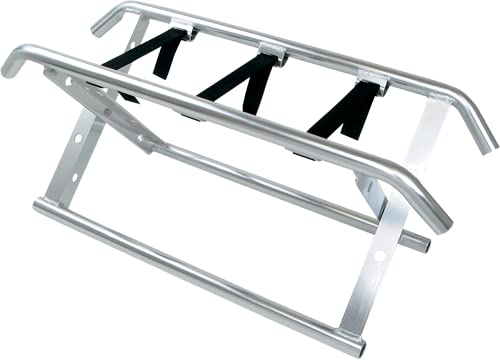
If you launch from a beach instead of a ramp, this is the product in the roundup that changes your day. The MotoSport scissor stand folds flat, weighs under 14 lb, and holds a stand-up jet ski upright on sand while you drain the hull or prepare to go. It carries the highest average rating of anything we reviewed, with owners reporting 90 percent five-star reviews and no one-star ratings at all.
Fitment is broad across stand-up models, covering JS, SX, SXI and SXR hulls in 300, 440, 550, 650, 750 and 800 hp trims. The scissor geometry is what makes it stable on loose sand, where a simple rack would sink or tip.
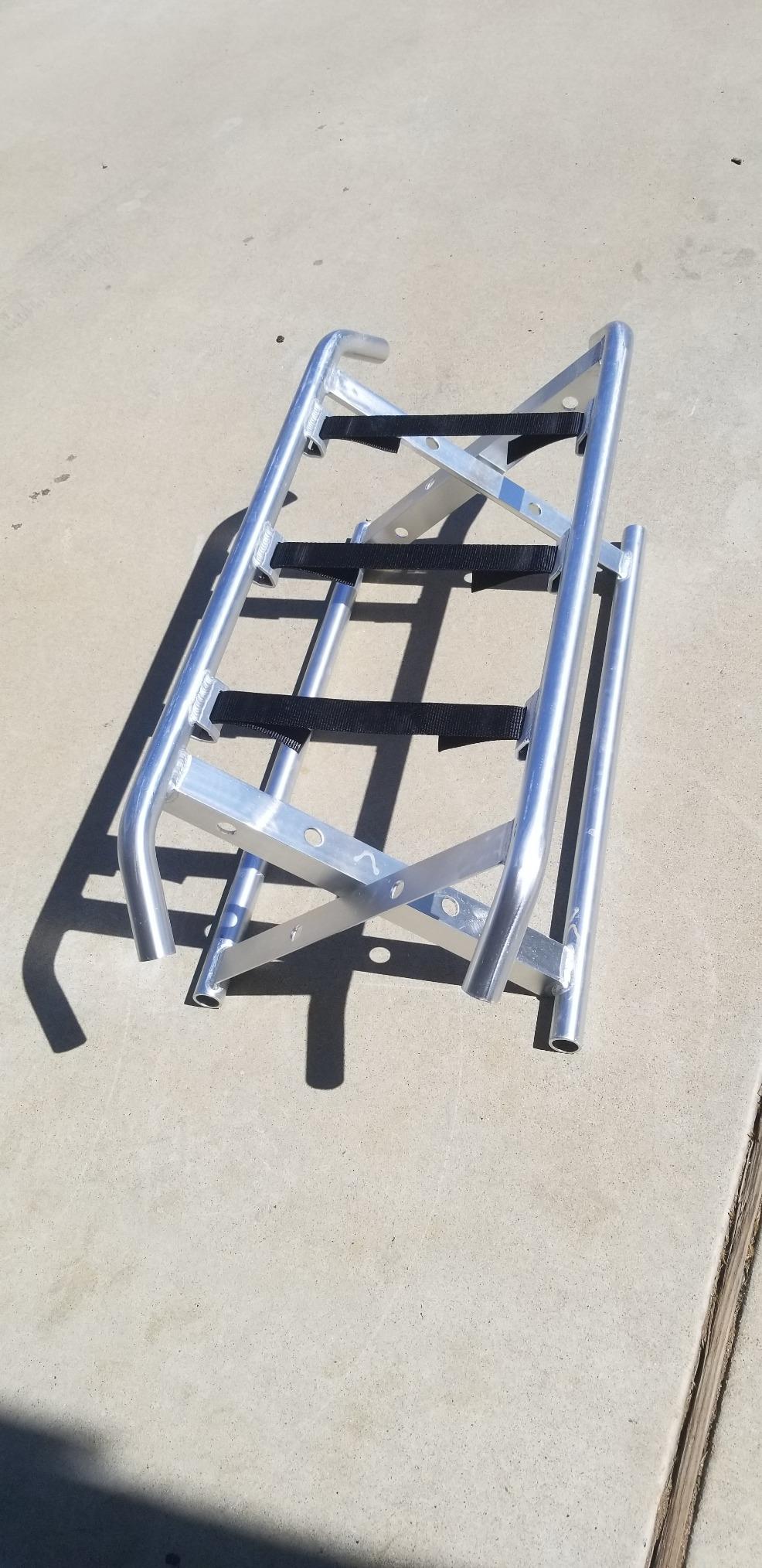
The limitation is obvious once you look at the fitment list, and it is not a fault. This is a stand-up jet ski beach stand. It is not intended for a three-seat sit-down hull, and it is not a cart, so you carry it rather than roll it.
Why beach owners need a different kind of stand
Beach launching inverts the usual problem. On sand you cannot winch anything, and the waterline moves as the tide comes in, so anything that relies on a winch or a fixed post is a poor fit. A folding stand that carries under one arm and holds the craft upright solves exactly that, and the scissor base spreads the load so the hull does not settle and dig in.
Owners also use it as a draining station, which is the step most people skip and then regret. Draining the intake grate and the bilge on sand takes minutes and prevents a plugged intake on the next launch.
Portability as a design feature
At 13.8 lb with folded dimensions of 37.08 by 21.73 by 6.14 inches, this is something you can carry from the vehicle to the waterline in one trip. Owners who keep a vehicle at a campground or a shared slip cite that as the deciding factor over anything with a steel frame.
Because it folds, it also lives in a vehicle permanently. There is no reason to leave a heavy cart on a beach overnight, and this stand solves the storage problem by disappearing.
Who should buy it and who should pass
Buy this stand if you launch a stand-up jet ski from sand, at a campground, or anywhere without a ramp. It is also a sensible second piece of gear for any owner who wants a draining station away from the dock.
Pass if you own a sit-down hull or if you need to move a loaded watercraft across a distance. A dolly in this roundup is built for that, and this stand is not.
9. SUONE 2800 lb Lift Sling Pair - Strong, Cheap Hoisting With One Weak Spot
Watercraft Lift Sling 2800lbs Capacity 43'' Never...
2800 lb pair capacity
43 in polyester slings
0.4 in steel plates
Stainless steel hardware
Includes rubber pads
What we like
- Thick steel plates handle heavy watercraft easily
- Quick to hook up at a trailer or dock
- Rubber pads prevent hull scratching
- Load tested well above any typical craft
What could be better
- Overbuilt and bulky for a small craft
- Rubber pad covers can slide off the side boards
- Supplied screws are short for the bracket
These are strap-style lifting slings, and the category has a bad reputation that is only partly fair. Owners describing strap lifts in forum threads call them unsecure and a challenge to use, and that criticism lands hardest on cheap webbing slings. This pair is the opposite of that: 0.4-inch thick steel plates with rubber grip pads, connected by 43-inch polyester rope slings, load tested to 2800 lb before shipping.
Owners report handling 800 lb Sea-Doo models without difficulty, and the rubber pads are specifically credited with keeping the hull scratch-free. The pair ships with stainless steel screws and rubber sleeves for fitting the pads.
The main complaint is that the whole assembly is overbuilt for a three-seat jet ski and bulky to handle, which is a strange thing to dislike but a real thing owners mention. The second is that the rubber pad covers can slide off the side boards because the supplied screws are thin and short for the size of the bracket.
When a sling makes sense and when it does not
A sling pair earns its place in a lift system when you already have a hoist or a davit and want the craft on a trailer or on a cart quickly. Hookup is fast, and there is no cradle to adjust. For a light craft, calm water, occasional use, this is a reasonable tool.
What a sling does not give you is the security of a cradle. There is no bow stop, no guide-on and no positive restraint, so the craft can shift in a wake. Owners with dual lifts on both sides of a slip note how little room there is to maneuver, and that lack of margin is exactly when a strap is a poor choice. Fix the pads with your own longer screws, and treat any sling as a short-distance lifting tool rather than a storage position.
Load rating versus real weight
The 2800 lb pair rating is far above any personal watercraft, and that gap is deliberate rather than a claim. It means the limit is never what fails first. What can fail is the fitting at the bracket, which is precisely the component the thin screws undermine.
For anything stored long-term, a cradle or platform with a bow stop is the safer answer. For a hoist-to-trailer transfer, this pair does the job at a fraction of the cost of a full cradle assembly.
Who should buy it and who should pass
Buy this sling pair if you already have lifting capacity on your dock or in your garage and want a fast, strong way to move a craft onto a trailer. Add your own hardware to the pads before first use.
Pass if you plan to leave the craft suspended or stored on the slings, or if you operate in wake conditions. A cradle with a bow stop is the right tool for storage, and a lift in this roundup will serve you better.
10. CE Smith 48 in PWC Dolly - The Best Cart for Mixed Dock Surfaces
CE Smith, Trailer Personal Watercraft (PWC) Dolly...
53.6 lb unit weight
48 x 34 x 19 in deck
4 in casters
Adjustable carpeted bunks
Galvanized steel
What we like
- Thick-gauge steel that owners say will not bend
- Casters roll easily over wood
- concrete and pavers
- Deck height close to trailer height
- Easy assembly at about an hour
What could be better
- Galvanized finish oxidizes near salt water
- Bunk width too narrow for some hulls at the widest hole
- No washers included
- Only two of four casters are braked
The CE Smith has been in the market since 2003, and the design has aged well because it does not try to be clever. Galvanized steel frame, adjustable 4-foot carpeted bunks, four rugged 4-inch casters, and a 48 by 34 inch deck at 19 inches high. It is also usable as a showroom display platform, which is a hint about how substantial it feels when you put your hands on it.
Owners value the thick-gauge steel most, reporting it does not bend. The casters are the other strength, rolling a loaded watercraft over mixed dock surfaces, which is the exact case that trips up small casters on a timber dock meeting concrete or pavers. The bunk height sits close to trailer height, so winching across is a straight pull.
Salt water is this cart's real weakness
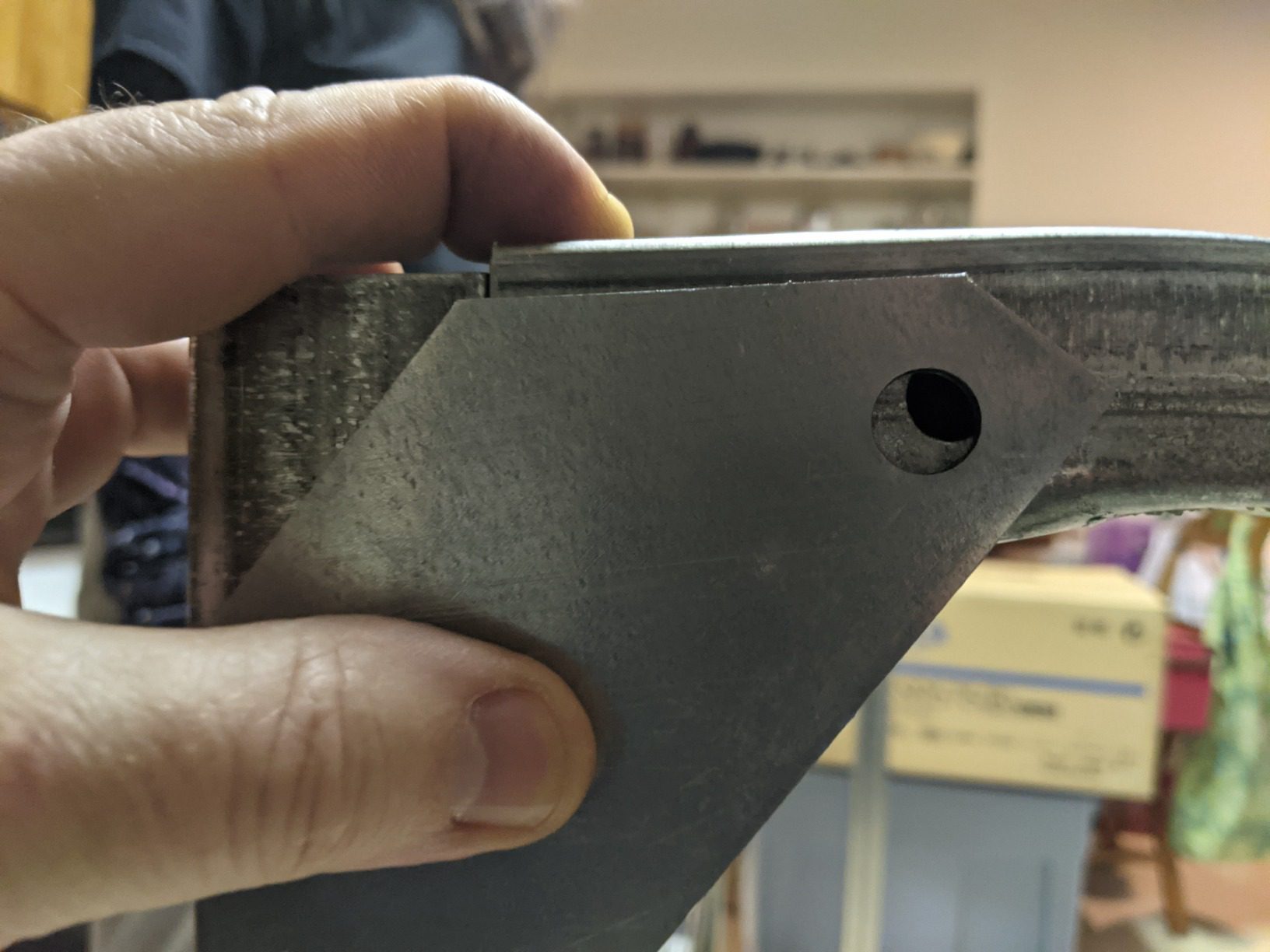
The galvanized finish is the recurring complaint, and it is specifically a salt water complaint. Owners report that the finish oxidizes despite rinsing, and several paint the frame to slow the rust. If your slip is salt or brackish, treat the frame as a consumable surface that needs annual inspection, or pick a powder-coated cart instead.
Freshwater owners will not run into the same problem. The galvanized coating is the right finish for a damp freshwater dock, which is where most of these carts live.
Bunk width, hardware and the braking setup
Two practical notes before you buy. Owners of wider WaveRunner hulls report the widest factory hole still being too narrow, and their fix is drilling new holes in the bunk supports, which is a ten-minute job with a drill. And no washers come with the hardware pack, so buy a small box before assembly.
Only two of the four casters have brakes. That is adequate on a level dock, but on a sloped surface you will want to block the wheels rather than rely on two brakes holding a loaded cart.
Who should buy it and who should pass
Buy this dolly if you move a watercraft across a dock with mixed surfaces, if you want a long adjustable bunk that supports a wide hull, or if you want something that doubles as a display platform at a shop or club event. Assembly at about an hour is the most straightforward in this group.
Pass if your slip is salt water and you want a frame you will never have to paint, or if you carry a hull wider than the factory bunk spacing allows.
11. Eazymove PWC-STD Heavy Duty Stand - The Garage-Storage Workhorse
Eazymove PWC-STD Heavy Duty Watercraft Stand
Heavy duty watercraft stand
42 lb unit weight
25 x 49 x 6 in
PWC-STD model
Standard PWC format
What we like
- Heavy duty construction for watercraft storage
- Standard format fits mainstream PWC shapes
- Compact flat footprint for a garage
- Rated 4.4 across its owner history
What could be better
- Published specification detail is limited
- so verify capacity before loading
- 49 in length takes real floor space
The Eazymove PWC-STD is the simplest object in this roundup: a heavy duty watercraft stand designed for storage. It weighs 42 lb, measures 25 by 49 by 6 inches, and it exists to hold a personal watercraft off the garage floor in a way that keeps the hull stable and the floor dry. It holds a 4.4 rating across 41 reviews, with owners crediting the heavy duty build.
That is a small review base compared with the dollies above, and the published specification detail is correspondingly thin. The product data carries the model number, the weight and the dimensions, but not a capacity figure in the same way the carts do. Confirm the rating for your specific craft before loading it.
Storage geometry is the whole point
A stand has one job: keep the watercraft stable and off the ground, and stop the hull from rocking onto one side over a long storage period. A wide, flat-footed stand with a full-length support surface does that without the rocking and hull damage that a pair of narrow blocks causes.
Owners report the flat 6-inch profile making it easy to move and easy to store out of the way, and the 49-inch length suits a full-size three-rider rather than a stand-up hull. The 42 lb weight is real, so plan the floor space before you buy.
When a stand beats a cart
A stand and a cart solve different halves of the same problem. The cart moves the watercraft; the stand holds it while it is not being moved. Owners with a long dry-storage period indoors describe a stand as the cheaper half of the system, because it never needs to roll and never needs working casters.
Where it does not help is launching. There is no handle, no casters and no adjustment range, so getting the craft back onto a trailer means a second piece of equipment. Pair it with a cart from this roundup and you cover storage and movement with two simple parts instead of one complicated one.
Who should buy it and who should pass
Buy this stand if you need a permanent, low-profile parking spot for a full-size watercraft in a garage or shed, and you already have a dolly to move it in and out.
Pass if you need a single product that both stores and transports, or if you want a published load capacity you can compare against your craft. A rolling dolly answers both needs better.
12. Eastrexon Jet Ski Dolly - The Widest Deck for Oversized Hulls
Eastrexon Updated Jet Ski Dolly, Heavy Duty PWC...
1000+ lb capacity
41 lb unit weight
53.1 x 34.3 x 23.4 in
Powder-coated steel
4 swivel casters
What we like
- Reinforcement plates at the joints add stability
- Powder coat resists rust in marine conditions
- Carpet-wrapped bunks adjust in width and angle
- Four swivel casters with two dual brakes
What could be better
- Mixed reviews
- with 18 percent one-star ratings
- Some durability complaints from owners
The Eastrexon is the largest cart in the roundup at 53.1 by 34.3 by 23.4 inches, and that size is the entire point. Owners of wide hulls, large three-seaters and anything that overhangs a standard bunk spacing use the extra deck to keep the craft properly supported. The height of 23.4 inches is also the tallest here, which puts more of the hull at working height.
Construction is high quality steel with reinforcement plates at the joints, a powder coat for marine conditions, and carpet-wrapped bunks adjustable in both width and angle. Four swivel casters, two with dual brakes, handle uneven surfaces better than fixed wheels.
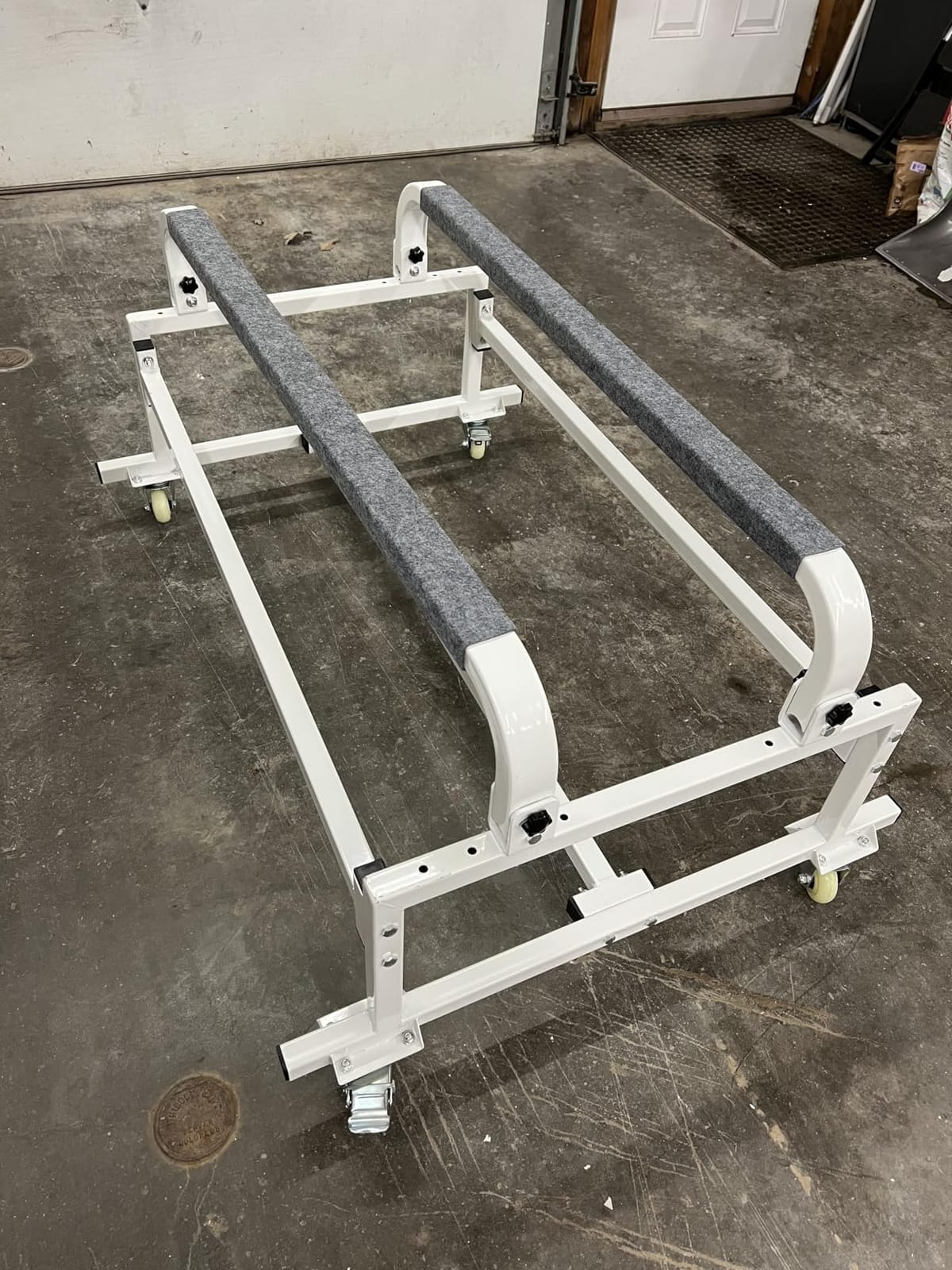
I am recommending this one with more caution than the others, and the review data is why. The 3.9 rating is the lowest in this roundup, and the distribution is bimodal: owners who are happy praise the load capacity and the maneuverability, while a notable share, 18 percent one-star reviews, report durability problems. That pattern suggests a build that is either right for your hull or not.
Where the extra deck size pays off
Bunk width is the practical limit on most carts. When a hull is wider than the available spacing, the supports sit outside the hull's planing surfaces and the craft rocks. A 34.3-inch-wide deck with multi-position brackets is what keeps a wide craft stable, and owners cite exactly that as the reason they chose this cart.
The 23.4-inch height is the other quiet benefit. On a hull with a deep keel, the higher deck means the craft is not touching the ground and the drain plug is reachable without crouching.
Durability reports and who should avoid it
The one-star reviews concentrate on quality rather than design, which means the failure is likely in finishing, hardware or welds rather than in the concept. If you already own a cart that has started to flex, do not replace it with this one hoping for better. Check the reviews for the failure mode that matches your experience.
For a wide-hull owner with patience for a potential hardware issue, the deck size is worth the risk. For everyone else, one of the better-reviewed carts earlier in this list is the safer buy.

Who should buy it and who should pass
Buy this dolly if your watercraft is genuinely oversized for a standard bunk width and you need a wide deck to support it properly. The adjustable carpet bunks and the taller platform are both useful for that case.
Pass if reliability is your first priority, or if your hull fits a standard 1000 lb cart comfortably. There are better-reviewed options in this roundup for those situations.
How to Choose a Jet Ski Lift: 7 Decisions That Matter
The twelve products above answer different parts of one problem, so the buying decision starts before any of them. Answer these seven questions in order and the right category picks itself.
1. How deep is your water, and how much does it change?
Water depth rules out entire lift types. A cantilever needs enough depth for the cradle to submerge and for the hull to float free underneath it. An elevator lift needs the most, because the post must reach below the craft at full travel. A platform or drive-on lift needs the most forward depth, since the ramp has to be reachable. A floating drive-on lift needs only enough depth for the hull to float onto the rollers, which is why it suits a shallow natural shoreline.
Then check the range. A lake that drops two or three feet between spring and late summer will strand a lift that was sized for the high-water mark. Owners on fluctuating lakes measure at the lowest point before they buy, not the highest.
2. What is your watercraft's real loaded weight?
Never size a lift on dry weight alone. Add the fuel load, and for a multi-person craft, add passengers and gear. Then buy the next capacity step up rather than matching the number exactly. A cart or lift with modest headroom will feel every wave and every hull brace, and owners report frame flex as the first symptom of a tight match.
The carts in this roundup are rated between 1000 and 1300 lb, which covers the heavy end of the mainstream market. If your craft sits near the top of that range, the 1300 lb options are the sensible target, and the widest deck is a bonus.
3. Do you have a dock, and can it carry the load?
A dock-mounted lift is only as strong as the dock. Many older timber docks were built for foot traffic, not for the reaction force of a loaded cantilever arm. If you own an existing dock of unknown vintage, have it inspected before you sign anything, because the lift is the least of the costs you may face.
Owners on forum threads push back hardest on quotes that exclude dock modification and wiring. Ask for the installed number, in writing, with the electrical work itemised.
4. Is there power at the dock?
Many shoreline owners have no electricity at the dock, and that single fact eliminates every powered lift. When there is no power, the realistic options are a manual hand-crank lift, a floating drive-on platform that needs no power at all, or a trailer and a jack stand. That is not a compromise, it is the correct answer for that setup.
Where power does exist, check whether it is 110 or 220 volt, how far the run is from the panel, and whether a licensed electrician is required. Owners who planned the electric hookup in advance describe it as unremarkable; owners who did not describe it as the most expensive part of the project.
5. Salt water or fresh water?
This changes the material decision. Galvanized steel works well in freshwater and degrades in salt or brackish water no matter how well you rinse, which is the specific complaint against the CE Smith cart in this roundup. In salt water, powder-coated aluminium or powder-coated steel is the better choice, and a freshwater-only galvanised frame is a consumable you will be painting annually.
Stainless cable and hardware matter more in salt water than anything else, because a cable that corrodes is a safety problem rather than an inconvenience.
6. Rotating, swing-away and multi-craft storage
If your slip is tight, a swing-away arm or a rotating cradle changes the entire layout, letting you move a craft out of the way of a second one. Some manufacturers build these with a bow or stern thruster that drives the platform, which is the specific category behind the question about lifts that rotate. Two PWC storage is a separate sizing problem: budget for a dual-capacity platform, and check the dock footprint, because a dual cantilever is roughly twice the width of a single.
Owners with lifts on both sides of a slip report there is not much room to maneuver either way. Twin storage is genuinely convenient and genuinely tight, and both things are true at once.
7. What are you storing it on, once it is out of the water?
This is where most guides stop and most owners make their next mistake. A lift puts the craft at working height; it does not store it. You need a dolly to move it, a stand to hold it, and in most cases a cover that fits.
Owners with powered lifts describe the actual benefit in one line: they drive up, press the remote, and put the cover on without ever getting wet. The remote control is the feature people mention unprompted, because it removes the reason they used to skip storage altogether.
Installation and Maintenance Basics
Whether you buy a lift or a dolly, the two things that decide whether it works are the installation and the six-month service. Neither is glamorous and both are where owners lose money.
Get the installed number, itemised
Ask a dealer for a written quote that separates the lift, the dock modification, the electrical hookup and any piling work. A headline figure that excludes dock work is the single most common complaint among owners in forum threads about this purchase. If a quote will not break those out, treat the low number as incomplete rather than as a deal.
For the products in this roundup, assembly is a different matter. The carts are bolt-together jobs, with assembly times reported from twenty minutes to about ninety minutes depending on how good the instructions are, and three of the twelve are specifically criticized for those instructions.
Service it on a schedule, not a symptom
Rinse the frame and bunks after every saltwater session, lubricate the moving parts, and check the fasteners and cable hardware twice a year. Owners report cables and hardware needing periodic inspection and replacement on a multi-year cycle, and a lift that is stored outside will tell you through noise or stiffness when something is going.
Check the bunks and rollers specifically. They are the wear items that protect the hull, and a bunk that has flattened or a roller that no longer turns is how a hull gets marked. Replace them rather than working around them.
Match the storage setup to the lifting setup
The most common practical mistake is buying a lift and then having nowhere to put the craft. Before the lift goes in, confirm where the watercraft will sit when it is not on the lift, and at what height you can work on it. Most of the carts in this roundup work best beside a driveway or a garage door rather than at the waterline.
A second mistake is unloading from a cart that sits lower than the trailer. If you winch between a cart and a trailer often, buy the cart matched to trailer bunk height and you will never build a ramp.
Frequently Asked Questions
Which jet ski lift is considered the best?
It depends on your setup rather than the brand. Dock owners with power should look at a cantilever or vertical lift; owners on a natural shoreline with no power are best served by a floating drive-on platform; owners who just need to move and store a craft are best served by a heavy-duty dolly. The heaviest four-strokes need the highest rated option, and lighter hulls are well served by a 1000 lb cart.
Do I actually need a lift for a jet ski?
You do not need one to keep using the craft, but you need dry storage to keep it in good condition. Floating a personal watercraft for a season causes water staining, algae in the intake grate and corrosion around steering and trim hardware. A lift, a floating platform or a dolly on dry land all solve that, and the floating option needs no power at all.
How deep does the water need to be for a jet ski lift?
It depends on the lift type. A cantilever needs enough depth for the cradle to submerge with the hull floating free underneath, an elevator lift needs the most because its post must reach below the craft at full travel, and a platform or drive-on lift needs the most forward depth so the ramp is reachable. A floating drive-on platform needs the least. Always measure at your lake's lowest level, not its highest.
Are hydraulic or electric jet ski lifts better?
Electric winch lifts are cheaper, simpler to service and easy to add a remote control to, which is why most owners choose them. Hydraulic lifts have fewer moving parts in the water, corrode less and need no cable replacement, but cost more and eventually need a seal service. On salt water the reduced number of submerged components is usually the deciding factor.
What size lift do I need for my jet ski?
Size on loaded weight, not dry weight. Add the full fuel load plus passengers and gear, then step up one capacity level rather than matching the number exactly. Most mainstream personal watercraft fall inside a 1000 lb cart or lift, and the heaviest four-stroke models are better served by an option rated to 1300 lb. A tight match is where frame flex comes from.
Can I install a jet ski lift myself?
A dolly, stand or hoist in this roundup is a bolt-together job, though several come with weak instructions and some shipments are missing hardware. A powered dock lift is not a DIY job, because it needs a dock engineered for the load, a post set on the lakebed and a licensed electrical hookup. If you are quoting a powered lift, get the dock work and the wiring itemised in writing.
Conclusion: Which Jet Ski Lift Fits Your Setup
If you want one recommendation from this roundup, take the ECOTRIC 1000 lb dolly. It has the deepest owner history here, it holds heavy watercraft without complaint, and it costs less attention than anything else we reviewed. For a mid-weight hull and a compact storage area, the JY PERFORMANCE cart is the cleaner build and carries a higher rating.
Match the rest to your situation. Own a heavy four-stroke and winch between a cart and a trailer? The AquaCart AQ-19b is built for that and rated to 1300 lb. Work on your own hull? The HECASA puts it at kneeling height. Launch from sand on a stand-up jet ski? The MotoSport scissor stand is the answer and nothing else substitutes for it. Load into a truck bed alone? The XtremepowerUS hitch hoist does it hydraulically. Need a trailer tongue support? The SeaSense jack stand. Want a fixed garage parking spot? The Eazymove stand. Moving a wide hull on a dock? The CE Smith rolls across mixed surfaces, though salt water owners should look at powder-coated steel instead.
And if you have a shoreline with no dock and no power, none of the twelve is the right purchase, because the right purchase is a floating drive-on platform. That is the setup most guides skip, and it is the answer for a large share of owners.
Whichever route you take, size on loaded weight rather than dry weight, and get the dock work and the electrical hookup written into the quote before you commit. The best jet ski lifts in 2026 are the ones matched to your water, your depth and your power, not the one with the longest specification list.