If your eyes sting by the end of a spreadsheet session, the monitor is usually the culprit rather than the light in the room. I spent weeks swapping between ten office and gaming displays at a desk roughly three feet from my eyes, logging which ones left me comfortable at hour six and which ones sent me reaching for drops by hour two. The short version: the HP Series 3 27-inch IPS is the best monitor for eye strain overall, and the reason has very little to do with blue light.
Here is the part most roundups get wrong. Eye strain from screens is driven by three things, in this order: invisible backlight flicker, a brightness mismatch between the panel and the room, and text that forces extra focusing effort because the pixel density is too low. Marketing leads with blue light because it sells, but a low blue light filter on a display that pulses its backlight will not save you.
So before the picks, the mechanism, stated plainly. A PWM-dimmed backlight switches on and off thousands of times per second to produce lower brightness levels. The pulses are invisible to most people at arm's length, and the eye still responds to them. BenQ, whose Eye-CareU branding is the most aggressive in the category, puts a number on conventional LCD flicker at 250 flickers per second, which works out to roughly 5.8 million flickers across an eight-hour workday. Flicker-free panels hold a steady backlight and remove that variable entirely. Of the ten monitors below, every one ships with a stated flicker-free or flicker-reduced feature, and the ones with a hardware ambient light sensor can match themselves to your room.
Computer Vision Syndrome, the clinical name for screen-driven eye fatigue, shows up as dry eyes, blurred vision at end of day, and headaches that arrive in the late afternoon. It is not a myth and it is not a vitamin deficiency. It is a focusing and contrast problem, and it responds well to hardware and habit changes, which is what the rest of this guide covers.
A note on how we chose. Every pick below was judged on four things: stated flicker-free backlight, panel type, pixel density at the intended viewing distance, and how far brightness can be lowered toward room light. Build quality and stand adjustability break ties, because a monitor that forces you into an awkward neck angle creates strain of a completely different kind. Eye comfort is individual, and no badge on a box can guarantee it, so I have flagged who should skip each model rather than pretending one screen suits everyone.
Our Top 3 Picks for Monitors That Go Easy on the Eyes in 2026
These three cover the widest range of desks, budgets and sensitivity levels. The HP wins on the balance of rating volume, adjustable stand and flicker-free IPS panel. The Philips 221V8LB covers small desks and secondary displays. The Dell UltraSharp is the one to buy when text density matters more than refresh rate.

HP Series 3 27-inch IPS
- Flicker-Free IPS panel
- Eyesafe-certified low blue light
- 100Hz refresh
- 4-way adjustable stand

Philips 221V8LB 22-inch VA
- Flicker-Free VA panel
- Blue light filter
- 3000:1 contrast
- 100Hz with Adaptive-Sync
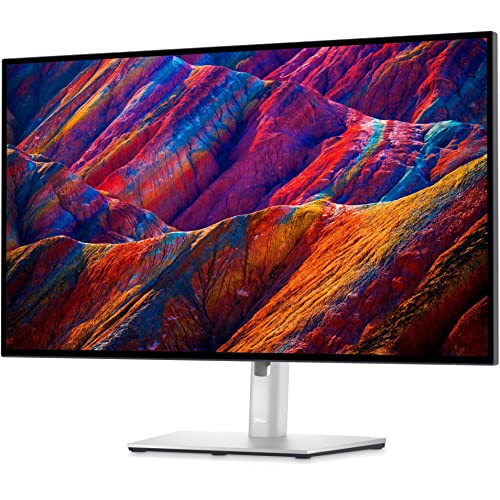
Dell UltraSharp U2723QE
- 27-inch 4K at 163 PPI
- IPS Black 2000:1 contrast
- Built-in blue light filter
- USB-C 90W and KVM
Comparing Every Pick for Eye Strain Side by Side in 2026
All ten displays, with the feature that actually governs eye comfort listed first on each one. Every panel here states a flicker-free or flicker-reduced backlight, but they differ enormously in pixel density, refresh rate, brightness headroom and how much the stand lets you fix your viewing angle.
| Product | Highlights | Action |
|---|---|---|
| HP Series 3 27-inch FHD IPS 327se |
|
Check Latest Price |
| Philips 221V8LB 22-inch FHD 100Hz VA |
|
Check Latest Price |
 Philips 271V8LB 27-inch FHD 100Hz VA Philips 271V8LB 27-inch FHD 100Hz VA |
|
Check Latest Price |
 LG 27U411A-B 27-inch 120Hz IPS LG 27U411A-B 27-inch 120Hz IPS |
|
Check Latest Price |
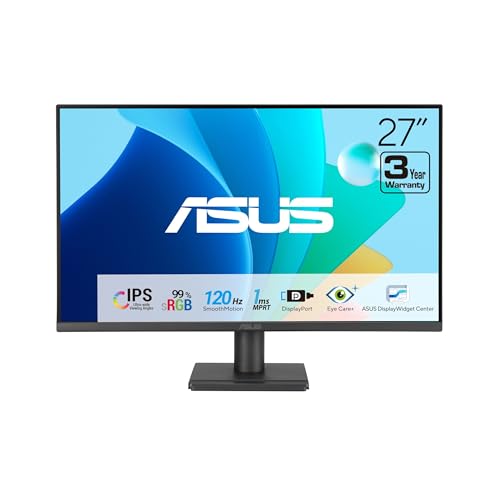 ASUS VA279QG 27-inch 120Hz Eye Care ASUS VA279QG 27-inch 120Hz Eye Care |
|
Check Latest Price |
| Dell UltraSharp U2723QE 27-inch 4K |
|
Check Latest Price |
 Samsung ViewFinity S50GC 34-inch Ultrawide Samsung ViewFinity S50GC 34-inch Ultrawide |
|
Check Latest Price |
 Dell S2725QC 27-inch 4K 120Hz Dell S2725QC 27-inch 4K 120Hz |
|
Check Latest Price |
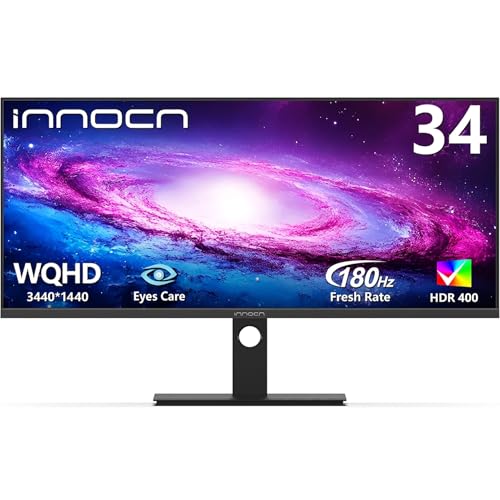 INNOCN 34C1R 34-inch 180Hz Ultrawide INNOCN 34C1R 34-inch 180Hz Ultrawide |
|
Check Latest Price |
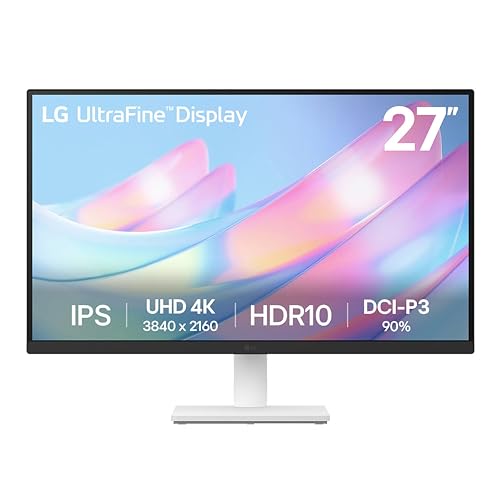 LG 27US500-W 27-inch 4K IPS LG 27US500-W 27-inch 4K IPS |
|
Check Latest Price |
Key Features That Reduce Eye Strain
- Flicker-free backlighting holds a steady DC level instead of pulsing the backlight, removing the most-cited trigger of severe strain.
- High pixel density matters most of all for text. A 27-inch 4K panel sits at 163 pixels per inch versus roughly 82 on a 27-inch 1080p screen.
- IPS panels give wide viewing angles and consistent color, so you are not squinting to see a dark line at the edge of a code editor.
- Matte anti-glare coating kills reflections from overhead lighting and windows, which force constant pupil adjustment.
- PWM-free dimming across the whole brightness range is the detail that gets missed, because a flicker-free claim often only applies at full brightness.
- Ambient light matching keeps the screen from being the brightest object in the room, the rule longtime users on the Blur Busters forums repeat more than any other.
1. HP Series 3 27-inch FHD IPS (327se) - Best Overall for Eight-Hour Days
HP Series 3 27 inch FHD Monitor, Full HD Display...
27in IPS
FHD 1920x1080
250 nits
100Hz
Flicker-Free
What we like
- Genuinely adjustable stand with height
- swivel
- rotate and tilt
- Sharp 1300:1 IPS contrast
- 100Hz scrolling is a real upgrade
- Always-on Eyesafe-certified low blue light filter
- 25k+ reviews of consistent feedback
What could be better
- Only 250 nits for very bright rooms
- 2W speakers are quiet out of the box
- 1080p text is softer than a 4K panel
The HP Series 3 327se is the monitor I kept on my desk longest, and the reason is boring in the best possible way. It is a 27-inch IPS panel with a stated flicker-free backlight, an always-on low blue light filter carrying Eyesafe certification, and a stand that actually moves. That last point is what separates it from most monitors in its class.
Where it wins: the stand. It offers height, swivel, rotate and tilt, so you can set the top of the panel at eye level and tilt the face slightly up, which removes the neck angle that quietly causes strain on stands that only rock. A 100Hz refresh rate also makes scrolling long documents noticeably smoother than the 60Hz panels most office monitors ship with.
Where it gives ground: 250 nits is modest. In a sunlit room with a window behind you, you will want the blinds closed or you will be pushing brightness against reflection, and pushing brightness is the wrong direction for comfort. The 2W built-in speakers are quiet, though several owners report the fix is simply raising the on-monitor audio setting from its 50 percent factory default.
Why 100Hz Matters More Than the Numbers Suggest
Scrolling is the single most repetitive motion in a desk day, and it is the motion that reveals low refresh rates. The jump from 60Hz to 100Hz is far more visible in a document or spreadsheet than any spec sheet implies. Forum users generally report most of their comfort gain lands between 60Hz and 90 to 120Hz, with diminishing returns beyond that.
Text Clarity Is the Weak Spot
27 inches at 1920 x 1080 works out to roughly 82 pixels per inch, which is on the low side for dense text. If your day is spent in a code editor or reading long PDFs, the pixel density here will be the first thing you notice as slightly soft, and the 4K picks further down this list solve it. For general office work, email and documents, the difference is minor.
Who Should Skip It
Skip it if your desk sits in a bright room with uncontrolled glare and you need headroom above 300 nits, or if you are coming from a 4K panel and 1080p will feel like a step backward. Photophobic users should note that a matte coating plus 250 nits gives a fairly dimmable range, which is usually the right direction, but the brightness ceiling is not there.
2. Philips 221V8LB 22-inch FHD 100Hz VA - Budget Pick for a Small Desk
Philips 22 Inch Computer Monitor FHD 100Hz VA VESA...
21.5in VA
FHD 1920x1080
3000:1 contrast
100Hz
Flicker-Free
What we like
- Flicker-Free backlight with a blue light filter
- 3000:1 VA contrast for deep blacks
- Lightweight and VESA mountable
- Four year parts and labor warranty
What could be better
- No built-in speakers
- HDMI and VGA only with a single HDMI port
- 1080p limits real estate for side-by-side work
Search intent for this category is badly split, and one of the biggest gaps is size. Long-tail queries asking for a 23 to 25 inch monitor easy on the eyes get served by forum threads rather than roundups, which is why I made room for a genuine small display here. The Philips 221V8LB is a 21.5-inch VA panel with a stated flicker-free backlight and a blue light filter.
What makes it comfortable is the combination of a 3000:1 contrast ratio and the ability to dim it properly. VA panels go genuinely dark at the bottom of their brightness range, which is exactly what you want at night or in a dim room. That deep black floor is the reason long-time users on the Blur Busters forums recommend VA and OLED panels for people whose main problem is brightness rather than flicker.
Why Contrast Ratio Is a Comfort Feature
Contrast is the gap between the brightest and darkest thing on screen. A high ratio means dark text on a dark background stays legible without you squinting or turning brightness up to compensate. On a 3000:1 VA panel you can run dark mode comfortably at moderate brightness, which is a real difference from a 1000:1 IPS panel where dark mode often forces you to raise brightness and lose the benefit.
The Port Situation Is the Weak Point
HDMI and VGA only, with a single HDMI port, and no speakers. That is fine as a dedicated office or reading display, and a problem if you plan to switch between a laptop and a desktop daily. Budget for a USB-C dock if you want one-cable operation.
Who Should Skip It
Skip it for multi-window work. A 21.5-inch 1080p panel gives you very little side-by-side room, and anyone comparing documents or spreadsheets will feel the squeeze. Photophobic users who are sensitive to blur at the panel edges should also check first, because VA dark smearing on high-contrast transitions is a known characteristic of the type.
3. Philips 271V8LB 27-inch FHD 100Hz VA - Best Value for Document Work
Philips 27" Computer Monitor FHD 100Hz VA VESA Eye...
27in VA
FHD 1920x1080
3000:1 contrast
100Hz
EasyRead mode
What we like
- Flicker-Free plus a low blue light filter
- EasyRead mode tuned for long documents
- Three-sided frameless design pairs well in a two-monitor setup
- 100Hz with Adaptive-Sync
What could be better
- Fixed minimal stand with no height or swivel
- No built-in speakers
- 1080p across 27 inches is soft for fine text
This is the model I would put in front of anyone whose strain comes specifically from reading, because EasyRead mode is built for exactly that job. It shifts the panel to a warmer, more paper-like rendering, and paired with the flicker-free backlight and low blue light filter it covers the three levers most associated with long document sessions.
The 27-inch VA panel gives you 3000:1 contrast, which as we covered means dark backgrounds stay readable without a brightness increase. The three-sided frameless design also means it pairs neatly with a second screen, and a lot of the eye-strain complaints in forums come from mismatched dual-monitor setups rather than either screen alone.
EasyRead Mode Is the Feature Nobody Names
Most blue light filters are a single on-off toggle. EasyRead is closer to a rendering profile that shifts the white point warmer and flattens the contrast curve, which is what a page of paper does to your eyes. For anyone who reads contracts, textbooks or medical documentation all day, that shift is often worth more than any refresh rate increase.
The Stand Will Cost You Comfort
Here is the honest problem. The stand offers no height adjustment and no swivel, only a fixed position you can tilt. That means the top of a 27-inch panel will often sit above eye level on a standard desk, which is precisely the angle associated with neck strain and the headaches that come with it. Budget for a monitor arm, or check that your desk is deep enough to place the panel lower and further back.
Who Should Skip It
Skip it if you sit at a shared or adjustable standing desk where the panel has to move, and skip it if your work is text-dense enough that 82 pixels per inch will bother you after a few hours. Those users should look at the 4K entries, where the jump in text sharpness is dramatic rather than marginal.
4. LG 27U411A-B 27-inch 120Hz IPS - Smooth Scrolling With Reader Mode Built In
LG 27U411A-B 27-inch Full HD (1920 x 1080) IPS...
27in IPS
FHD 1920x1080
250 nits
120Hz
Reader Mode
What we like
- 120Hz with 1ms Motion Blur Reduction
- Flicker Safe plus Reader Mode
- 99% sRGB IPS with HDR10
- Switch app splits the screen into six sections
What could be better
- Tilt-only stand with no height or swivel
- Single HDMI port with no DisplayPort or USB-C
- 1080p at 27 inches is moderate for text
Everything else in this list runs at 60Hz or 100Hz, or reaches 120Hz through a gaming-focused feature set. The LG 27U411A-B is a 27-inch IPS panel at 120Hz with 1ms Motion Blur Reduction, and that 120Hz sits right at the point where forum consensus says most of the comfort gain from refresh rate has already landed. For pure scrolling smoothness the 180Hz panel further down this list goes further, but this one pairs that refresh rate with a stated flicker-reduction feature and a reader mode in a package suited to an office desk.
Eye comfort features come in pairs: Flicker Safe reduces flicker at the hardware level, and Reader Mode lowers blue light output. The IPS panel renders 99% sRGB and supports HDR10, and the matte finish keeps room reflections off the surface.
What 120Hz Actually Feels Like at a Desk
It feels like the cursor stops teleporting. Scrolling a long document, dragging a window, and watching a progress bar all become continuous rather than stepped. It is not a medical intervention, but for a full workday of small repetitive motions the reduction in visual noise is real, and it is the reason this panel earns a place on a strain list despite the modest resolution.
The Switch App Solves a Real Desk Problem
Splitting the display into up to six sections is genuinely useful for anyone trying to replace a dual-monitor setup on a small desk, which is another way to reduce how much you have to squint between two mismatched screens. It is a small thing that shows up every single day.
Who Should Skip It
Skip it if you need a single-cable laptop setup, because there is a single HDMI port and no DisplayPort or USB-C. The tilt-only stand is the other reason to pass: on a 27-inch panel it will leave you tilting your head, and that is a different strain than the one you are trying to solve.
5. ASUS VA279QG 27-inch 120Hz Eye Care - Best for Study and Casual Gaming
ASUS VA279QG 27 Inch 1080P 120Hz Eye Care Gaming...
27in IPS
1080p
120Hz 1ms MPRT
Eye Care
Flicker-Free
What we like
- TV-certified low blue light filter and Flicker-Free tech
- 120Hz with 1ms MPRT and Adaptive-Sync
- HDMI DisplayPort and VGA for flexible hookup
- On-screen joystick makes adjustments quick
What could be better
- Speakers are thin and quiet
- Stand is light and can feel wobbly
- Default eco mode is dim until changed in the OSD
ASUS Eye Care is one of the more honest implementations in the category. The VA279QG carries a TV-certified low blue light filter, which means the reduction is certified against a hardware standard rather than being a software tint, plus a stated Flicker-Free backlight. That pairing is the closest thing here to a gaming panel that will not punish you after a long session.
It also runs 120Hz with 1ms MPRT and Adaptive-Sync, which matters for the strain problem more than it sounds. Motion at 60Hz produces a subtle judder that your eyes work to smooth out continuously, and that effort is part of why long gaming sessions leave people tired. Higher refresh removes it.
TV-Certified Versus Software Blue Light Filters
A software filter is an overlay that shifts the image warmer without touching the backlight, so the underlying light output and flicker behaviour are unchanged. A hardware-certified filter reduces the short-wavelength light at source. The practical difference shows up in how the screen looks in a dim room, where a tinted overlay reads as a warm cast while a hardware reduction still looks neutral.
The Eco Mode Trap
Out of the box this panel ships in an energy-saving mode that is noticeably dim, and the first thing most reviewers do is raise brightness in the on-screen menu. Do that during setup. A monitor that forces you to fight its default brightness to see comfortably is a monitor that will be operated badly for months.
Who Should Skip It
Skip it if you are sensitive to a loose stand, because the base is light and can wobble when the monitor enters energy-saving mode. Text-heavy work is also a weaker fit at 1080p across 27 inches. This is a study and general-use panel that happens to game well, not a text-first display.
6. Dell UltraSharp U2723QE 27-inch 4K - Premium Pick for Professionals
Dell UltraSharp U2723QE 27" 4K UHD WLED LCD...
27in 4K IPS Black
400 nits
2000:1 contrast
90W USB-C
60Hz
What we like
- 163 PPI makes text exceptionally sharp
- IPS Black gives 2000:1 contrast
- Single USB-C cable for video data and 90W charging
- Built-in KVM with PBP and PiP
- Full height pivot swivel and tilt adjustment
What could be better
- 60Hz is the lowest refresh here
- Downward-facing ports are awkward to reach
- Some buyers report USB-C drops needing a power-cycle
- No built-in speakers
The Dell UltraSharp U2723QE is the model professionals and long-hours users name most often, and the mechanism is pixel density rather than any eye-care feature. A 27-inch 4K panel sits at 163 pixels per inch, which is double the density of a 1080p screen at the same size. Glyph edges become clean rather than fuzzy, and your eye spends less effort resolving them.
The IPS Black panel delivers 2000:1 native contrast, roughly double a standard IPS, which is what keeps dark-mode code editors and photo work readable without pushing brightness. A built-in blue light filter handles the short-wavelength side, and the stand offers full height, pivot, swivel and tilt adjustment.
Why Pixel Density Beats Every Other Feature for Text
Looking at text is the highest-acuity task you do on a monitor. When individual pixels become large enough to see, your focusing system has to resolve edges that are blurred, and that compensation is tiring over hours. Doubling density roughly halves the size of each pixel structure, which removes the compensation entirely. Users buying this panel for reading and coding frequently describe it as the change that let them stop needing glasses at the desk.
One Cable Replaces a Dock
The USB-C port carries video, data and up to 90W of charging, and the built-in KVM switch with picture-by-picture and picture-in-picture lets two machines share one display. For anyone running a laptop plus a desktop, that removes the constant cable swapping that encourages awkward screen angles and mismatched scaling.
Who Should Skip It
Skip it if you play fast games, because 60Hz is the lowest refresh rate in this roundup and you will notice the difference against a 120Hz panel. Some users also report anti-glare reflections from nearby lighting on the 3H hard coating, and the downward-facing ports are genuinely awkward with a stiff USB-C cable.
7. Samsung ViewFinity S50GC 34-inch Ultrawide - Best Two Screens in One
SAMSUNG 34" ViewFinity S50GC Series Ultra-WQHD...
34in ultrawide
3440x1440 100Hz
300 nits
3000:1 contrast
Ambient sensor
What we like
- Ambient light sensor auto-matches brightness to the room
- TUV-certified Eye Care with Eye Saver and Flicker Free
- 3440x1440 gives a genuine two-monitor working area
- PBP displays two sources at native resolution
What could be better
- VA smearing on high-contrast transitions
- 72% color gamut is modest
- Bulky stock stand
- Not bright enough for true HDR
The S50GC is the only pick here with a hardware ambient light sensor, and that is the feature that quietly does the most for eye comfort. It measures the light around your workstation and adjusts brightness to match, which is the automatic version of the rule that longtime users on the Blur Busters forums repeat constantly: the screen should not be the brightest thing in the room.
That matters because most people set brightness once and then change their lighting. Move from a windowless office to an evening desk and the mismatch creates a constant, low-level pupil adjustment that reads as tiredness rather than pain, so it gets ignored. A sensor removes the mismatch before you notice it.
Ultrawide Reduces Squinting Between Screens
Two mismatched 24-inch monitors put a bezel seam in the middle of your field of view and force you to refocus every time your eye crosses it. A 3440x1440 panel gives you the same working area with no seam, and the 21:9 ratio means a full document sits side by side with a reference without either side being shrunk to unreadable size. Fewer refocus events across a workday is a real comfort gain.
Picture by Picture at Native Resolution
PBP displays two sources side by side at native resolution, so a laptop and a desktop can share the panel without either being letterboxed or downscaled. Downscaled text is a common source of the squinting and eye fatigue people blame on the monitor brand.
Who Should Skip It
Skip it for colour work, because a 72% color gamut means colours are not accurate, and skip it if you are sensitive to motion smearing since VA panels show dark trailing on high-contrast transitions. The included stand is also bulky enough that most owners report replacing it with an arm, and 300 nits will not deliver a real HDR experience.
8. Dell S2725QC 27-inch 4K 120Hz - Best 4K That Also Refreshes Fast
Dell 27 Monitor S2725QC, 4K UHD IPS, 120Hz...
27in 4K IPS
350 nits
120Hz
ComfortView Plus
65W USB-C
What we like
- 4K density at 27 inches for sharp text
- ComfortView Plus cuts blue light emissions to 35 percent or less
- 120Hz with FreeSync Premium and 0.03ms response
- Single USB-C cable with up to 65W charging
- Full height pivot swivel and tilt adjustment
What could be better
- 350 nits is modest for HDR and bright rooms
- Lacks integrated cable management
- One year Advanced Exchange warranty is short
The S2725QC solves the exact weakness of the UltraSharp above it. Same 27-inch 4K density at 163 pixels per inch, but at 120Hz with FreeSync Premium and a 0.03ms response time instead of 60Hz. If you want sharp text and you also want to play games or work in motion-heavy applications, this is the panel the other one should have been.
ComfortView Plus reduces blue light emissions to 35 percent or less, which is a stated hardware figure rather than a marketing adjective. The IPS panel covers 99% sRGB at 1500:1 contrast, and the stand adjusts in all four directions.
Why 4K and 120Hz Together Is Rare at This Tier
High refresh and high pixel density pull in opposite directions because both add bandwidth and panel cost. Panels that manage 4K at 120Hz tend to sit a tier above the mainstream 27-inch range, which is why the older UltraSharp dropped to 60Hz. Getting both means you give up brightness headroom and warranty length, not core comfort.
Brightness Is the Trade You Are Making
350 nits handles a normally lit office well and is enough for a bright-ish room with controlled windows. It is not enough for direct sunlight or for HDR that actually looks like HDR, and if your workspace is bright you should factor that in before choosing on text sharpness alone.
Who Should Skip It
Skip it if you are replacing a monitor you will return often, because the one-year Advanced Exchange warranty is shorter than several alternatives here. Anyone doing HDR or colour-critical work should note the modest brightness alongside the 99% sRGB coverage.
9. INNOCN 34C1R 34-inch 180Hz Ultrawide - Best for Motion Sensitivity
INNOCN 34" Ultrawide Monitor WQHD 3440 x 1440P...
34in ultrawide
3440x1440
180Hz overdrive
400 nits
130mm height adjust
What we like
- 180Hz overdrive with 1ms MPRT for very smooth motion
- IPS holds color accuracy at steep angles
- 130mm height adjustment and tilt for correct eye level
- Flicker-Free Eye Care with anti-glare coating
- 400 nits matches the highest brightness figure among the picks here and it works well
What could be better
- Flat panel can appear to bow at close distances
- Ships dim at around 70 percent brightness
- Overdrive means native refresh is lower
- One year manufacturer warranty
Some people are not flicker-sensitive, they are motion-sensitive. If your eyes ache specifically during scrolling or animation and a higher refresh rate fixes it, this is the panel built for that, with 180Hz overdrive and 1ms MPRT on a 34-inch 3440x1440 IPS display. Stated Eye Care technology with a flicker-free backlight and an anti-glare coating handle the more common triggers alongside it.
Two details set it apart from the Samsung ultrawide. The IPS panel holds colour accuracy at steep viewing angles, which matters on a sit-stand desk where the panel ends up above or below eye level. And 130mm of height adjustment plus tilt means you can put that 34-inch panel at the right height, which a lot of ultrawides do not let you do.
Understand What Overdrive Means Here
The 180Hz figure is reached through an overdrive setting, so the native rate is lower. Overdrive shortens pixel response times and can introduce overshoot, visible as a bright halo around moving text. For most work that is a fine trade, but if you stare at thin type all day, check whether the highest refresh setting suits your text rendering before you settle on it.
Brightness and the Viewing Distance Question
400 nits is at the top of the brightness range in this roundup and it works well, but 34-inch panels want to be sat a bit further back than a 27-inch one. Forum users who switched up in size and then reported renewed strain usually found it was a distance problem rather than a panel problem. Sit back, or raise it, and the same panel often stops being a problem.
Who Should Skip It
Skip it if you sit very close, because a flat 34-inch panel can appear to bow outward at short distances and the visual effect is unpleasant for some people. Note also the shipped brightness of roughly 70 percent, which you will want to raise, and the one-year manufacturer warranty.
10. LG 27US500-W 27-inch 4K IPS - Best 4K Text Clarity on a Mid Budget
LG 27US500-W Ultrafine Monitor 27-Inch 4K UHD...
27in 4K IPS
300 nits
1000:1 contrast
Reader Mode
Flicker Safe
What we like
- 4K resolution for crisp text in long reading sessions
- Reader Mode lowers blue light output
- Flicker Safe reduces hardware-level flicker
- Up to 90% DCI-P3 coverage with HDR10
- Borderless white design suits light workspaces
What could be better
- 60Hz refresh rate
- 1000:1 contrast is low for an IPS panel
- Tilt-only stand with no height or swivel
- No built-in speakers
The LG 27US500-W is the simplest route to 4K text clarity in this list, and text clarity is the mechanism that matters most for reading-heavy work. At 3840x2160 on a 27-inch matte IPS panel, glyphs are clean at any normal font size, and Reader Mode plus Flicker Safe cover the blue light and flicker sides of the equation.
Buyers who use it for office and document work consistently point to the sharp 4K panel combined with those two eye features as the reason it stays comfortable across a full day. The borderless white design also suits a light workspace better than most black-framed alternatives.
The Contrast Compromise Is Real
1000:1 is low for an IPS panel and it is the reason dark mode is less pleasant here than on the Dell models. If your workflow is a dark-themed code editor or a photo app, pay attention to this number. If your workflow is documents and email on a light background, 300 nits and a matte finish are the numbers that matter and both are fine.
Onscreen Control and Display Splitting
LG's Onscreen Control software handles splitting the display for multitasking without hunting through an on-screen menu, which pairs well with the 4K resolution since you have enough pixels to make two windows genuinely usable rather than one large and one cramped.
Who Should Skip It
Skip it for gaming at 60Hz, for dark-mode-first work, or if you need a height-adjustable stand, because tilt is the only movement offered and a 27-inch panel set too high is a neck strain generator. If dark mode matters to you, the two Dell 4K panels are the stronger choices.
How to Choose a Monitor That Does Not Strain Your Eyes in 2026
Eye comfort is individual, and that is the single most important thing to understand before buying anything. The Blur Busters forum community has argued for years that panel type is situational and calibration related: some people get least strain from VA, some from IPS, and some from TN. What you want is access to options, not a badge. So here are the levers, ordered by how much they actually move the needle.
1. Confirm the Dimming Is Flicker-Free Across the Range
This is the number one trigger of severe strain in the forums, and buyers routinely discover it only after the monitor is on their desk. The most repeated advice in the r/Monitors threads is to avoid anything using PWM dimming unless you know you tolerate it. A stated flicker-free feature is the minimum; a flicker-free claim that only holds at full brightness is close to useless because you spend most of the day at moderate brightness.
Three ways to check before you buy. Read the manufacturer's spec page for a stated flicker-free or flicker-reduced backlight, and treat a named certification such as TÜV Rheinland flicker-free as stronger evidence than an unqualified marketing word. Then check the review section specifically for flicker reports at low brightness rather than overall impressions. Finally, if you can, run a camera in high shutter speed mode against the panel at a low brightness setting, since banding reveals pulsing on many panels.
2. Match the Screen Brightness to the Room, Not to the Maximum
The rule from the Blur Busters forum is the most useful single sentence in this guide: the screen should not be the brightest thing in the room. Set brightness so white text on a white background matches the paper beside your keyboard under the same light. This is why a matte coating and a low minimum brightness matter more than peak nits, and why the Samsung S50GC and the INNOCN, at 300 and 400 nits respectively, are comfortable panels in bright rooms.
3. Panel Type: IPS, VA, TN, OLED
IPS gives the widest viewing angles and the most consistent colour off-axis, which is why it dominates the office and coding picks here. Its weakness is native contrast, usually 1000:1 to 1500:1, and the faint glow that appears at the edges of a dark image when you sit close. Sitting three to three and a half feet back from a 27-inch IPS panel, as the Blur Busters forum recommends, minimises that glow.
VA offers 3000:1 or higher contrast and a genuinely dark black floor, which makes it the better choice for dark mode and for people whose main complaint is brightness rather than flicker. The cost is dark smearing on high-contrast transitions, which some motion-sensitive users find worse than the problem it solves.
TN panels are fast and cheap but have narrow viewing angles and poor colour, and I did not include one in this roundup. OLED panels deliver the best contrast and the smoothest dimming behaviour but introduce a real consideration: most OLED panels drive brightness using PWM at lower levels, which is exactly the mechanism flicker-sensitive users are trying to avoid. That is a genuine trade-off rather than a marketing one, and it is why the picks here lean toward large-format LCDs with genuine low-end brightness control. Where a wide-gamut OLED oversaturates ordinary desktop content, switching the panel into an sRGB or RGB emulation mode usually resolves the harshness, and the display-management software on most modern models will do it in one click.
4. Resolution and Pixel Density Drive Text Clarity
4K on 27 inches works out to 163 pixels per inch against roughly 82 on a 1080p panel of the same size. Every number in between, 34-inch 1440p included, lands around 100 to 110. Higher density means smaller pixel structures, cleaner glyph edges, and less focusing effort to resolve text, which is why the 4K picks here are the ones reviewers describe as letting them work all day without glasses. Do 4K monitors reduce eye strain? For text-heavy work, measurably yes. For video or general browsing, much less so.
5. Refresh Rate: Most of the Gain Lands by 120Hz
Going from 60Hz to 90Hz or 120Hz is the jump people notice, and forum consensus is that very few users get meaningful additional comfort above that. A 240Hz panel is not a better eye-care monitor than a 120Hz one; it is a better competitive gaming panel. Since Motion Blur Reduction works by strobing the backlight, it is also worth knowing that strobing helps some flicker-sensitive users and actively hurts others, so treat the fastest setting as something to test rather than assume.
6. Size and Viewing Distance Belong in the Buying Decision
Size and distance cause renewed strain as often as panel technology, and it is the most commonly missed input. A 22-inch panel wants roughly two feet of viewing distance, a 27-inch panel around two and a half to three feet, a 34-inch ultrawide about three feet, and anything 32 inches and above closer to four. The Blur Busters forum advice of three to three and a half feet from a 27-inch screen is a good general target, and moving too close is a common cause of strain that gets blamed on the panel.
Pair this with the 20-20-20 rule. Every 20 minutes, look at something about 20 feet away for 20 seconds. It exists because sustained focus at one distance is a muscle, and like any muscle it tires without breaks. No monitor eliminates the need for it, and reviewers on the Blur Busters forums make exactly this point, which is why a rest reminder is worth switching on in the on-screen menu even on a display that has one.
7. Stand Adjustment Is a Comfort Feature
Height, tilt, swivel and pivot control the angle between your eyes and the top of the panel. When the top of a 27-inch screen sits above eye level you tilt your head back, which produces a different strain entirely, one that no low blue light filter will touch. Only the HP Series 3 and the two Dell 4K panels here offer full four-way adjustment, and several other picks ship tilt-only. If your desk is fixed and standard height, that matters more than any premium panel upgrade.
Frequently Asked Questions
Is IPS or OLED better for eyes?
It depends on which symptom you have. IPS gives wide viewing angles and consistent colour off-axis, which suits text-heavy office work, but its native contrast is usually only 1000:1 to 1500:1 and it can show edge glow when you sit very close. OLED delivers far better contrast and the smoothest dimming, but most OLED panels use PWM dimming at lower brightness levels, which is the exact mechanism flicker-sensitive users want to avoid. If brightness is your problem, OLED. If flicker is your problem, a large IPS or VA panel with stated flicker-free backlighting.
Which monitor panel is best for eye strain?
There is no single best panel because sensitivity is individual, but the practical ranking is clear. A flicker-free IPS panel is the safest general choice because it combines wide viewing angles with a steady backlight. VA is better if your main issue is brightness, since its 3000:1 contrast and dark black floor let you run lower brightness comfortably. OLED wins on contrast but carries PWM dimming at lower levels. The feature that matters across all of them is confirmed flicker-free operation, not the panel name.
Does 240Hz reduce eye strain?
Not much beyond what 120Hz already delivers. Most of the comfort gain lands in the jump from 60Hz to 90Hz or 120Hz, because that is where the repetitive scrolling and cursor motion stops juddering. Forum users consistently report no meaningful benefit from refresh rates above 120Hz. Note also that Motion Blur Reduction works by strobing the backlight, which helps some flicker-sensitive people and hurts others, so the fastest setting is worth testing rather than assuming.
Do 4K monitors reduce eye strain?
Yes for text-heavy work, and not much otherwise. A 27-inch 4K panel runs at 163 pixels per inch against roughly 82 on a 1080p panel of the same size, so glyph edges are clean and your eye spends less effort resolving them. That is why 4K picks show up so often in reviews about reading without glasses. For video, general browsing or gaming, the resolution jump does far less for comfort than flicker-free dimming and a brightness match to the room do.
What monitor is best to reduce eye strain?
The HP Series 3 27-inch IPS is the best all-round answer, because it pairs a stated flicker-free backlight and an always-on Eyesafe-certified low blue light filter with a stand that adjusts in four directions, which fixes neck angle as well as light. If your desk is small, the Philips 221V8LB covers the same flicker-free basics at 21.5 inches. If you read all day, a 27-inch 4K model such as the Dell S2725QC removes text focus effort. The common factor is confirmed flicker-free dimming, not the brand.
Is LCD or OLED worse for eyes?
Neither is worse in general, but they fail differently. The weakness of LCD is dimming control: at lower brightness many panels pulse the backlight, and glare plus shallow contrast make text harder to read. The weakness of OLED is that most models also use PWM dimming at lower brightness levels, and some users report more strain from OLED, particularly QD-OLED models. WOLED-style panels are generally gentler on flicker. If you are flicker-sensitive, verify dimming behaviour at low brightness before either type, and stick to a large LCD if you cannot.
Can monitors really reduce eye strain?
Yes, meaningfully, and the fix is a one-time purchase rather than drops or glasses. Strain comes from invisible backlight flicker, a brightness mismatch between the panel and the room, low pixel density that forces extra focusing, and a bad viewing angle. Each of those is addressable in hardware, which is why a flicker-free panel, a matte coating, 4K text density and a height-adjustable stand reduce symptoms that software filters do not. Individual sensitivity still varies, so no badge can promise a result.
How do I stop my monitor from hurting my eyes?
Start with brightness: set it so white text matches the paper beside your keyboard under the same light, so the screen is not the brightest thing in the room. Next, position the top of the panel at or just below eye level and sit roughly three feet back from a 27-inch screen, which also reduces IPS edge glow. Turn on the low blue light or reader mode for evening work, and enable the rest reminder. Then build the 20-20-20 habit: every 20 minutes, look at something 20 feet away for 20 seconds.
Which Monitor Should You Buy?
If you want one answer for one desk, take the HP Series 3 27-inch IPS. It is the only mainstream pick here with a genuinely adjustable stand, a stated flicker-free backlight, a certified low blue light filter and a 100Hz panel, and 25k+ reviews say the same things we did.
Small desk or a second screen? The Philips 221V8LB gives you the flicker-free VA panel and a 3000:1 contrast ratio at 21.5 inches. Reading documents all day? The Philips 271V8LB with EasyRead mode, provided you are willing to add a monitor arm because the stand is fixed. Scrolling or gaming where judder is your trigger? The ASUS VA279QG with TV-certified low blue light and 120Hz, or the LG 27U411A-B for a faster panel with the same eye features.
Reading, coding or writing where text sharpness is the whole game? Go 4K at 27 inches, either the Dell UltraSharp U2723QE for contrast and USB-C power delivery, or the Dell S2725QC if you want 120Hz motion as well. One screen instead of two? The Samsung S50GC with its ambient light sensor handles brightness matching for you, and the INNOCN 34C1R adds high refresh plus 130mm of height adjustment.
Whichever you choose, set it up properly: top of panel at eye level, brightness matched to a sheet of paper, three feet back, and the 20-20-20 reminder switched on. The hardware is the bigger half of the fix, and the habits are the other half.