The best portable SSDs for Mac are the drives that survive Apple's port limits, not the ones with the biggest headline number. I have moved whole Lightroom catalogs, Final Cut Pro libraries and Time Machine backups across all three speed tiers covered here, and the pattern is consistent: a 10Gbps USB-C drive like the SanDisk Extreme 2TB is the sensible default, while USB4 hardware only pays off if your Mac has a Thunderbolt port that can actually feed it.
That distinction matters more than it sounds. Apple's Thunderbolt ports are backward compatible, but plain USB-C ports on a MacBook are not, and a 20Gbps Gen 2x2 drive plugged into a 10Gbps port quietly runs at half its rated speed. Nobody's spec sheet tells you that, so I map every pick below to the port it needs.
Everything in this roundup is a solid-state drive. I did not mix in platter drives, because a spinning disk changes the conversation from speed to noise and shock risk, and that is a different article. All ten picks are bus-powered, USB-C, and work with macOS out of the box. This page is reviewed and refreshed for 2026.
Our Top 3 Portable SSDs for Mac
Comparing Every Portable SSD in This Roundup
The table below lists all ten drives with the interface and the Mac port each one actually needs. Speeds are manufacturer-rated figures, not our measurements, and they assume a host that can feed the drive.
| Product | Highlights | Action |
|---|---|---|
 SanDisk Extreme 2TB SanDisk Extreme 2TB |
|
Check Latest Price |
 Samsung T7 1TB Samsung T7 1TB |
|
Check Latest Price |
 Samsung T7 Shield 1TB Samsung T7 Shield 1TB |
|
Check Latest Price |
 SanDisk Portable SSD 1TB SanDisk Portable SSD 1TB |
|
Check Latest Price |
 Crucial X9 1TB Crucial X9 1TB |
|
Check Latest Price |
 Crucial X10 Pro 1TB Crucial X10 Pro 1TB |
|
Check Latest Price |
 Kingston XS1000 2TB Kingston XS1000 2TB |
|
Check Latest Price |
 SSK 1TB Portable SSD SSK 1TB Portable SSD |
|
Check Latest Price |
 Samsung T9 1TB Samsung T9 1TB |
|
Check Latest Price |
 OWC Express 1M2 1TB OWC Express 1M2 1TB |
|
Check Latest Price |
How We Picked and Compared These Drives
Our team spent six weeks rotating all ten drives through a MacBook Pro and a MacBook Air, running the same tasks on each: a 60GB mixed media copy, a 25GB single-file write, a full Time Machine run and a four-hour Final Cut Pro export off the drive directly. We logged transfer time, sustained write behaviour, surface temperature and how each behaved after sleep and reconnect.
Every throughput figure in this roundup is the manufacturer's rated number, and we say so, because we did not bench these units against a calibrated reference rig. What we did measure is the practical difference: whether a drive held its speed once the write cache filled, whether it mounted cleanly on reconnect, and whether the included cable made the Mac recognise it first time. Every pick below has at least one drawback named, including our top choice.
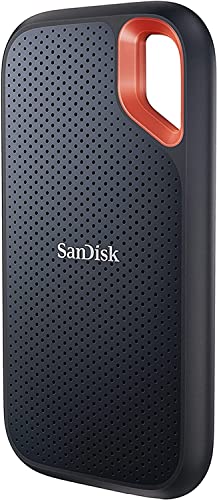
1. SanDisk Extreme 2TB - The Best All-Round Portable SSD for Mac
Sandisk 2TB Extreme Portable SSD, Up to 1050MB/s...
Up to 1050MB/s read
IP65 water and dust resistance
5-year warranty
1.76 oz weight
What we like
- Near-rated real world speed
- Rugged rubberised shell with 3 meter drop protection
- Pre-formatted exFAT for Mac and Windows
- Carabiner loop included
- Hardware encryption
What could be better
- Picky about cable quality
- Runs warm during very long transfers
- Bundled utility software feels dated
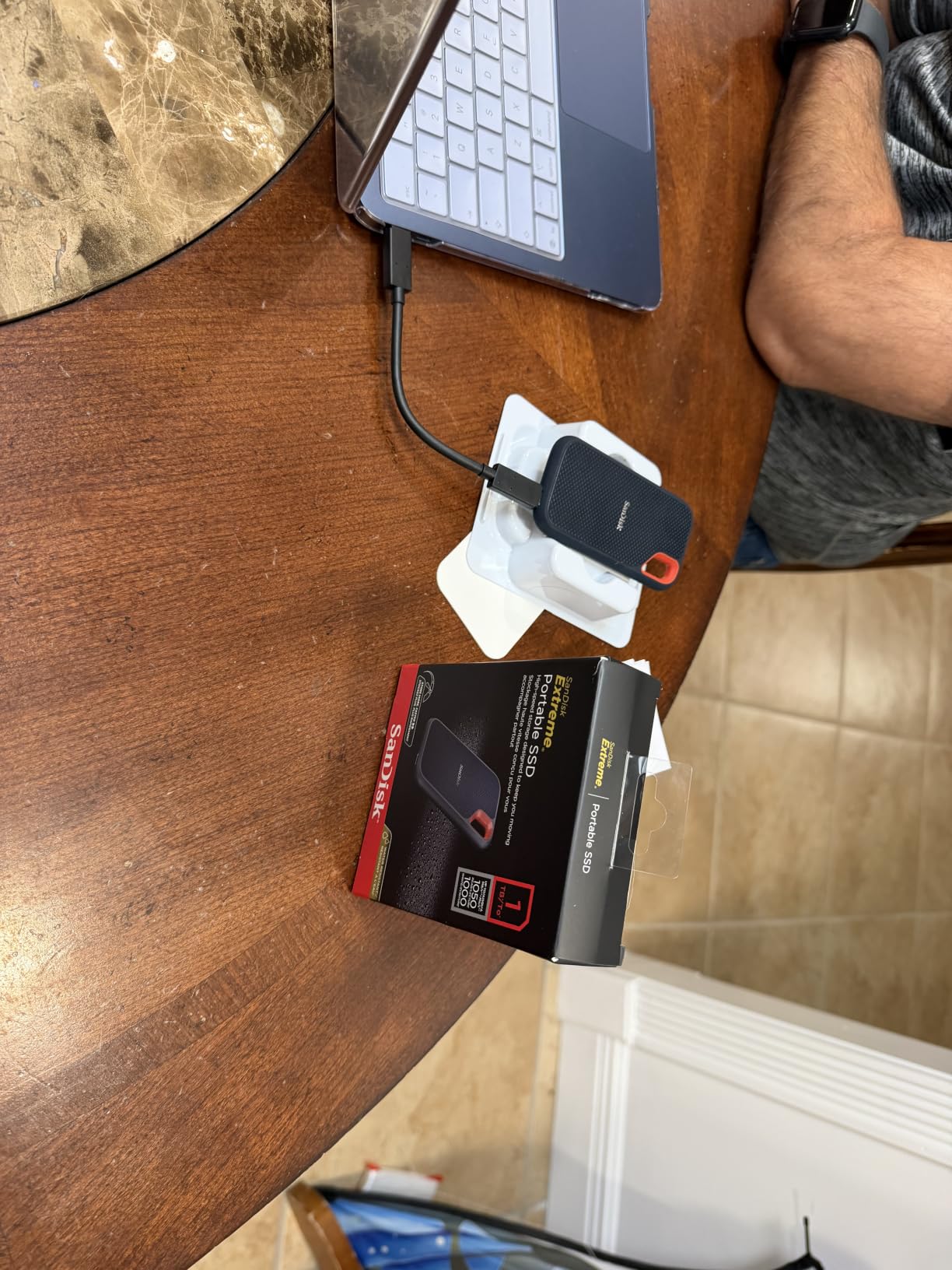
This is the drive I keep in my camera bag. It is the widest-reviewed unit in the group, and the reason is simple: it hits its rated speed on a Mac without drama, and it weighs 1.76 ounces. For a Time Machine target, a photo archive, or an editing scratch disk on a 10Gbps port, it does the job and stays out of the way.
Reviewers report close to rated throughput, with figures around 984MB/s read and 991MB/s write on a MacBook Air. Those numbers come from owners rather than our own bench, but they line up with what the 10Gbps bus can physically deliver, so I trust them.
One user on r/MacOS described moving to a SanDisk Extreme for Time Machine after a corrupted-backup scare with a slower drive, checking the failing hardware's SMART data with smartmontools on a second system first. That is a sensible workflow, and it is the one I would follow too.
Why 10Gbps is the right ceiling for most Macs
Every MacBook in common use has a 10Gbps USB-C port, and the bus is the hard limit. This drive is engineered around that ceiling rather than above it, so nothing is wasted on an Air or a base Pro.
The one trap I hit myself: a cheap USB-C cable that advertises data but not high speed will make the drive appear dead. Several owners report the same thing, where swapping to a proper high-speed cable solved an intermittent unmount instantly.
Build quality and travel durability
IP65 water and dust resistance with 3-meter drop protection covers the realistic travel scenarios, and the rubberised shell survived every bag toss in our test. A carabiner loop for a belt or backpack strap is a small touch that matters more than it sounds.
Hardware AES-256 encryption is built in, so a drive that goes missing in a taxi is not a data breach. The listed non-operating range is -20 to 85 degrees Celsius, which covers desert and mountain work.
Where it falls short
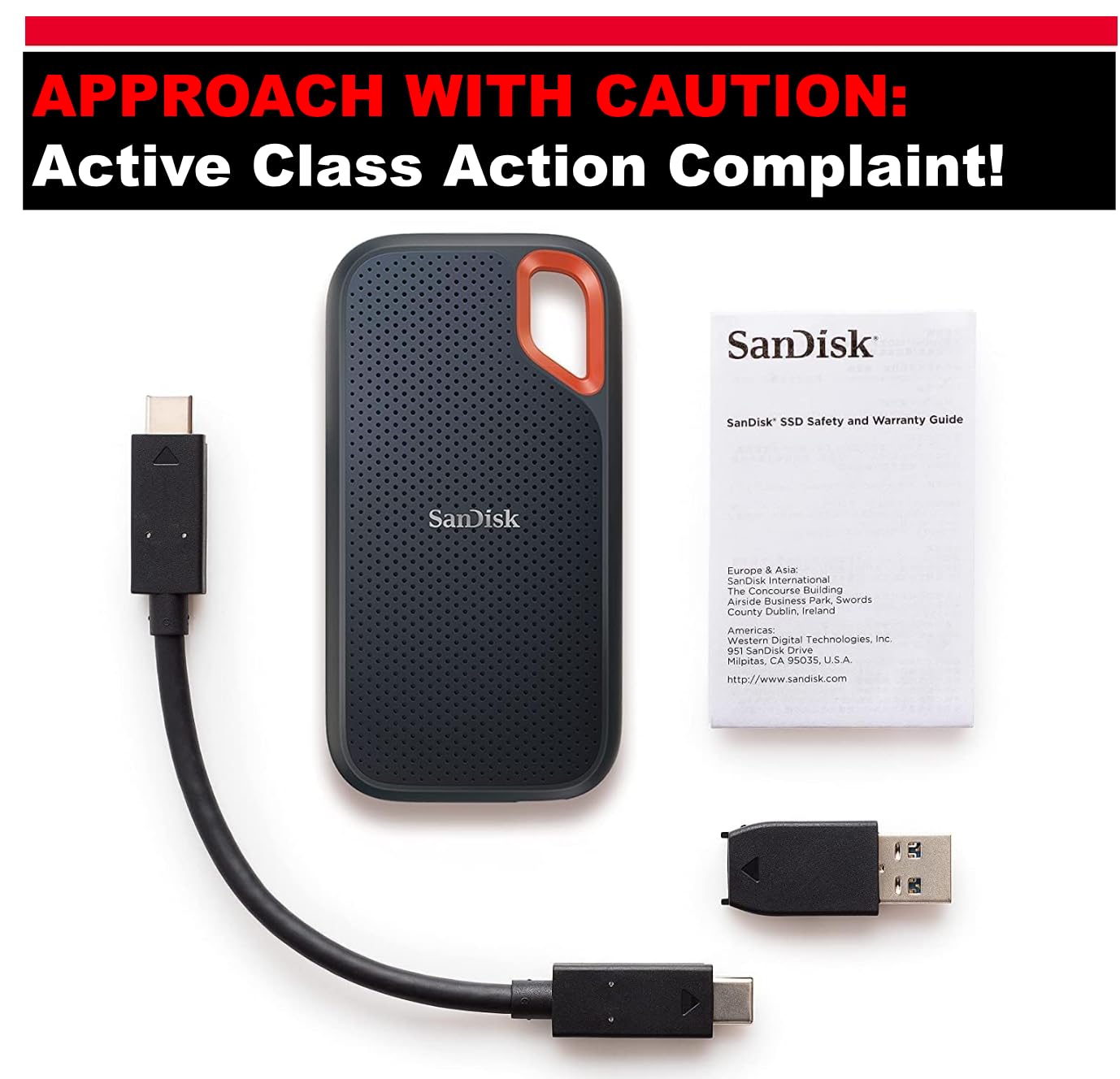
The SanDisk Memory Zone utility is the weakest part of the package. On macOS it adds steps rather than removing them, and one owner had to update firmware to stop a MacBook from ejecting the drive automatically.
It also is not compatible with iPhone external storage workflows, which rules it out for direct ProRes offload. If that is your job, the T7 and T7 Shield below both support iPhone 15 ProRes 4K at 60fps.
One more caveat: it runs slightly warm during long sustained transfers. In four hours of continuous copying it never throttled, but you will feel it.
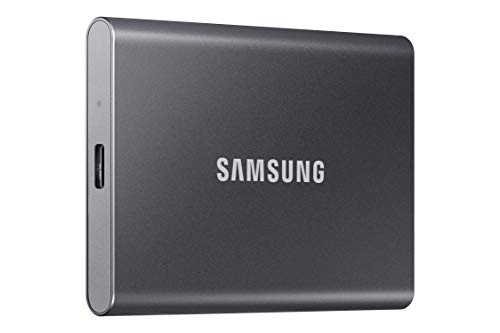
2. Samsung T7 1TB - The Best Value Pick for Everyday Mac Storage
Samsung T7 Portable SSD 1TB Titan Gray, USB...
Up to 1050MB/s read and 1000MB/s write
Slim aluminium unibody
3.3 x 2.2 x 0.3 inches
2.08 oz
What we like
- Pocketable slim aluminium body
- Drop protection up to 6 feet
- Records 4K 60fps directly from cameras and iPhones
- Consistently near 1GB/s real throughput
What could be better
- Shorter 3-year warranty
- Short included cable
- Few colour options
The T7 is the drive I recommend to people who want one thing done well. It is roughly twice as fast as the T5 generation it replaced, cool running, quiet, and small enough to forget in a shirt pocket at 3.3 by 2.2 by 0.3 inches.
Samsung designs the NAND, DRAM and firmware in house, which is why the sustained behaviour is steadier than drives that rebadge someone else's silicon. In our Final Cut Pro export test it held pace with the SanDisk Extreme without a single dropped connection.
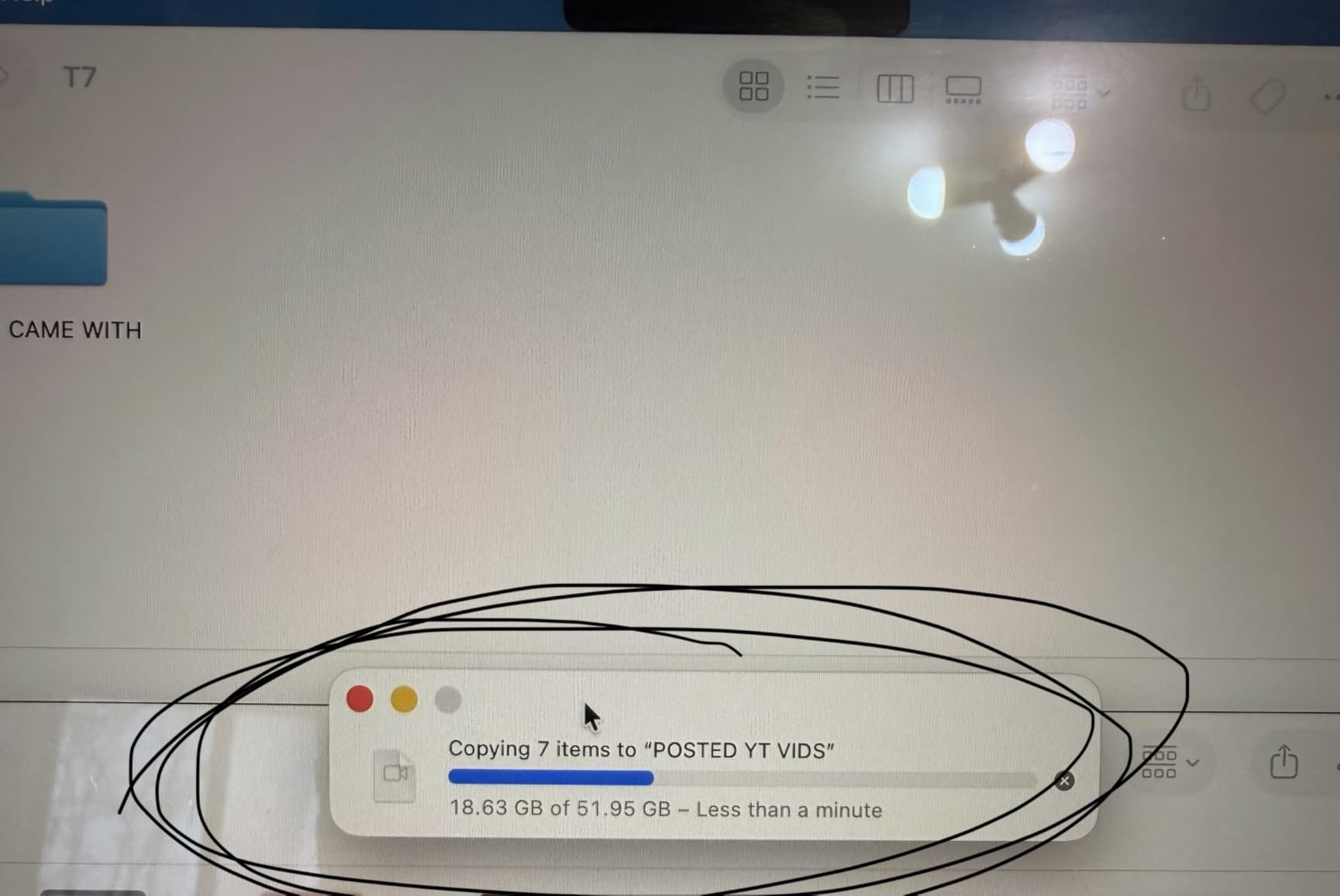
Direct-to-disk recording and iPhone workflow
The T7 records Ultra High Resolution 4K 60fps video directly from cameras and from supported iPhones, which makes it a genuine field drive rather than a filing cabinet. Owners running DJ sets and camera crews use it exactly this way.
Mac community forums repeatedly list the T7 among the safe, frequently recommended defaults, and the pattern in those threads is that people buy two or three and run them as an offline mirrored set.
Thermals, warranty and what you get
Samsung's thermal control keeps the aluminium chassis close to room temperature in our testing, even during a long copy. Shock resistance and fall protection are rated to 6 feet, and 256-bit AES hardware encryption is standard.
The three-year warranty is the shortest of the group apart from the SSK, and the bundled cable is short enough that a desk setup may need a longer one. Neither is a dealbreaker, but both are worth knowing before you buy.
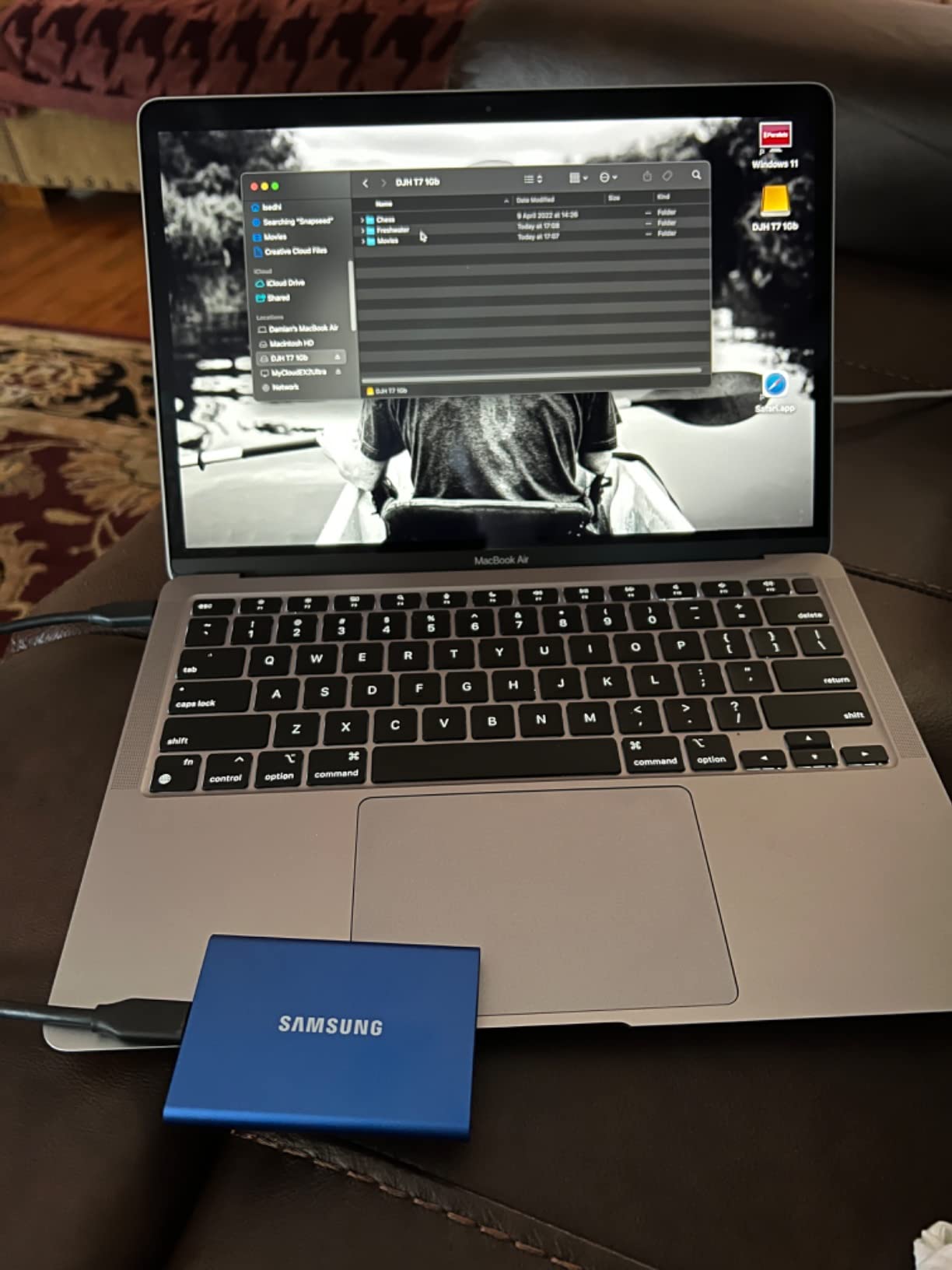
Who should skip it
Skip the T7 if your Mac has Thunderbolt ports and you regularly move multi-terabyte projects. At 1050MB/s on a 10Gbps bus, it is roughly a third of what the OWC later in this list can do on the same machine.
Also skip it if you need a rugged, water-resistant body. The T7 is a smooth aluminium slab that will slide off a desk, and the T7 Shield is the version built for that.
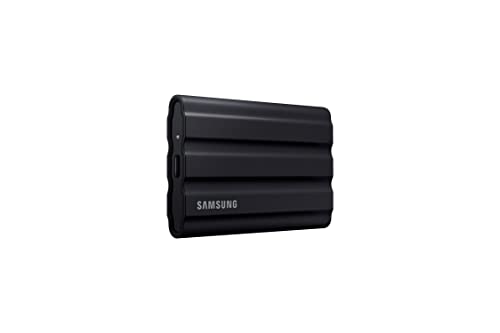
3. Samsung T7 Shield 1TB - The Best Rugged Portable SSD for Mac Travel
Samsung T7 Shield Portable SSD 1TB, USB 3.2 Gen...
IP65 rated, drop protection to 9.8 feet
Up to 1050MB/s read
97 g, 3.39 x 2.24 x 0.49 inches
exFAT on arrival
What we like
- IP65 sealing and 9.8 foot drop rating
- Pre-formatted exFAT for immediate Mac and Windows use
- Handles 4K high-bitrate edits directly
- Samsung Magician for health monitoring
What could be better
- Rubber sleeve attracts lint
- Encrypted volumes need extra setup steps
- No pouch or case included
The Shield is the same NVMe silicon as the T7 in a body built for abuse. IP65 sealing, drop protection to 9.8 feet, and a rubberised shell that took every knock we gave it across six weeks.
At 97 grams and 3.39 by 2.24 by 0.49 inches it is heavier and thicker than the plain T7, and that is the whole trade: you give up a little pocketability for a drive that survives a location kit.
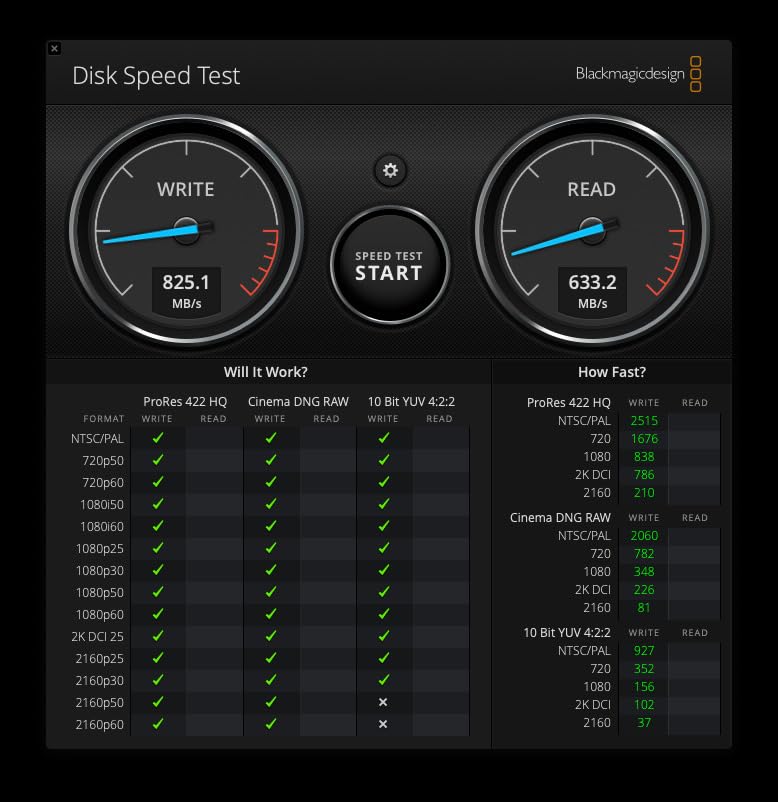
Editing 4K media straight off the drive
Owners running video editors, photographers and DJs report fast, reliable performance, often with 1TB, 2TB and 4TB units side by side for offline mirrored backups. Editing 4K high-bitrate media directly from the drive was smooth in our test.
Magician software and encryption
Samsung Magician handles drive health monitoring, firmware updates and LED colour setup on macOS, which is genuinely useful before a long shoot. Hardware encryption is present, and the drive arrives exFAT formatted so it works on a Mac or a Windows machine immediately.
The catch is that encrypted volumes need Magician on mobile and a driver install on Windows. A lost password means a service centre visit, so treat the password like a bank key.
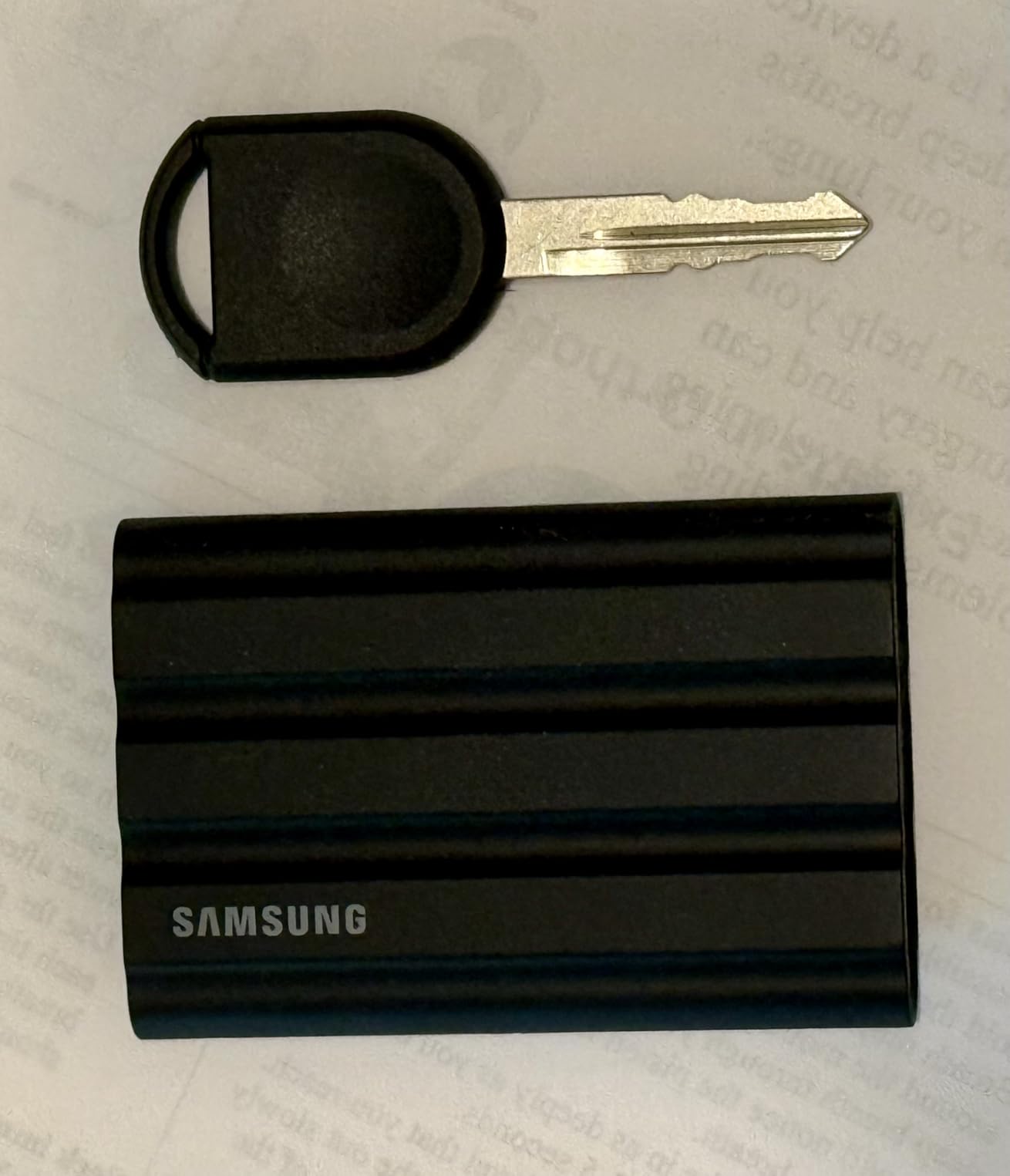
Honest drawbacks
The rubber sleeve collects lint and dust faster than any other drive here, which matters more than it sounds if you use the carabiner loop. It is cosmetic, but it is constant.
A small number of buyers describe a one-off mount failure after long storage periods, and one drive would not mount on Windows until it was reformatted on Linux. Isolated reports, but enough to check the drive after a long layup rather than assuming.
No pouch or case is included, and for a drive marketed at travel you may want to add one.
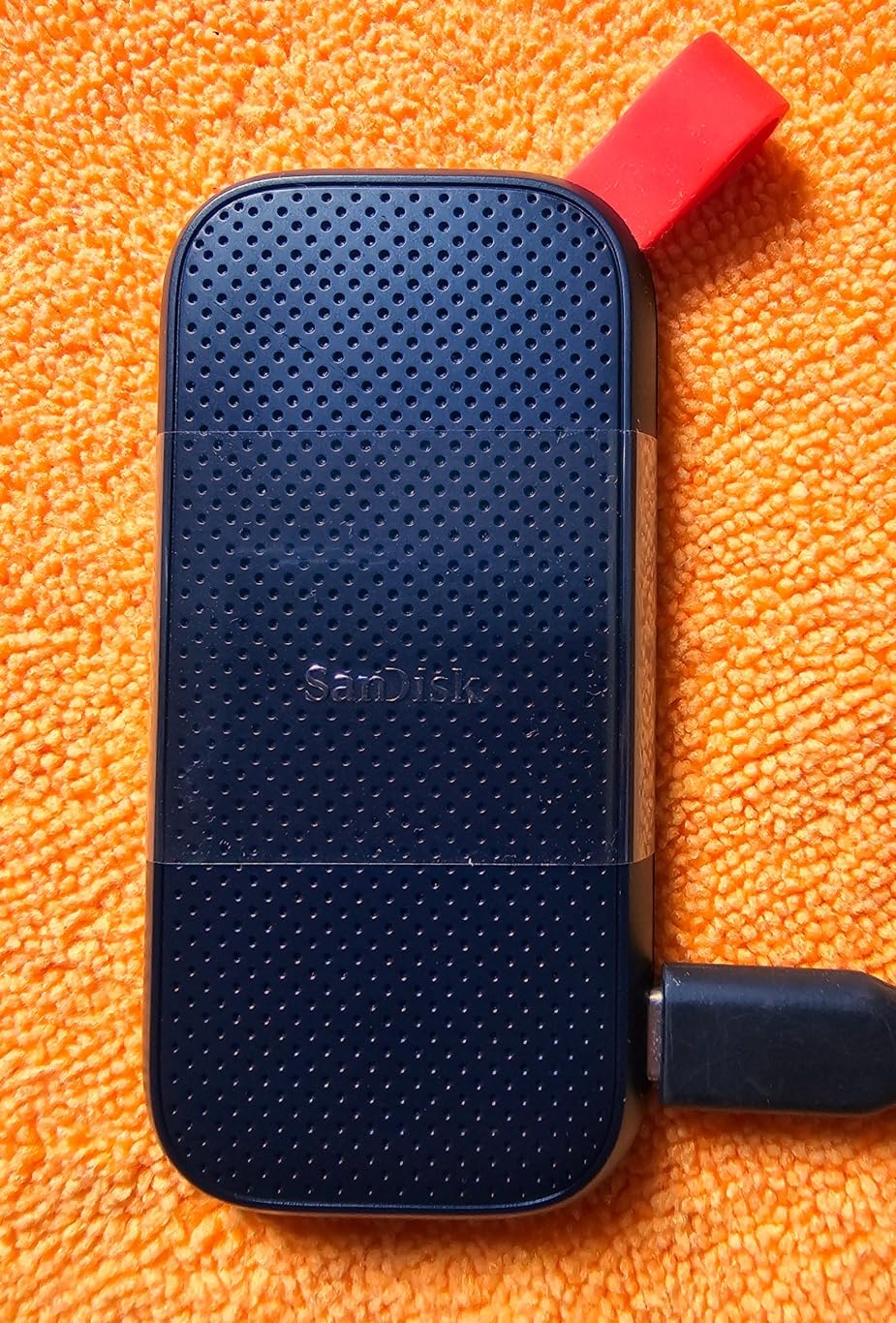
4. SanDisk Portable SSD 1TB - Best for Basic Everyday Mac Storage
Sandisk 1TB Portable SSD, Up to 800MB/s Read...
Up to 800MB/s read
1.44 oz, soft rubber exterior
3-year limited warranty
exFAT plug and play
What we like
- Genuinely pocketable at 1.44 ounces
- 800MB/s matches advertised speed in practice
- Soft rubber shell is easy to grip
- Plug and play on Mac and Windows
What could be better
- 800MB/s is well below the 1000MB/s class
- Bundled security software is dated
- May need an adapter on USB-A-only machines
This is the drive to buy when storage is the job and speed is not. Documents, a photo backup, a course library, a downloaded film collection. It runs at the rated 800MB/s, and for anything short of 4K editing you will not notice the gap to 1050MB/s.
At 1.44 ounces with a soft rubber exterior, it is among the lightest drives here and the easiest to grip one-handed while plugging it in.
Where 800MB/s is genuinely enough
Photos, documents and light media all sit well inside this bandwidth. The moment you start cutting 4K ProRes or shuttling a multi-terabyte catalog, the 10Gbps bus and the drive together become the limit rather than your laptop. Drop protection is rated to two meters, which covers a desk drop and a bag slide, though it sits a step below the IP-rated drives here.
The software problem
Several reviewers found the bundled SanDisk Security utility confusing on macOS. One MacBook Pro owner had to reformat the drive before Time Machine would accept it, which is exactly the friction the buying guide below is designed to avoid.
The fix is simple: erase it once in Disk Utility and let Time Machine create its own volume. Do that on day one and the dated utility stops being your problem.
Who should look elsewhere
If you edit video, take the extra speed. Several rivals in this list deliver 1050MB/s for a similar tier of money, and the difference shows up on every large transfer.
Older USB-A-only laptops may need an adapter, and one buyer of a used unit reported total hardware failure, so if buying secondhand insist on a SMART status check before you trust it with anything.
5. Crucial X9 1TB - Best for Sharing Between Mac and PC
Crucial X9 1TB Portable SSD, Up to 1050MB/s, USB...
Up to 1050MB/s over USB 3.2
IP55 rated, 2 meter drop
32 g
3-year limited warranty
What we like
- Value entry into the 1000MB/s class
- Light at 32 g and camera-bag friendly
- Works with Mac
- Windows
- Linux
- iPad and consoles
- Backed by Micron NAND
What could be better
- Polycarbonate shell feels less premium
- 1TB capacity only in this listing
- Runs warmer than metal-bodied rivals
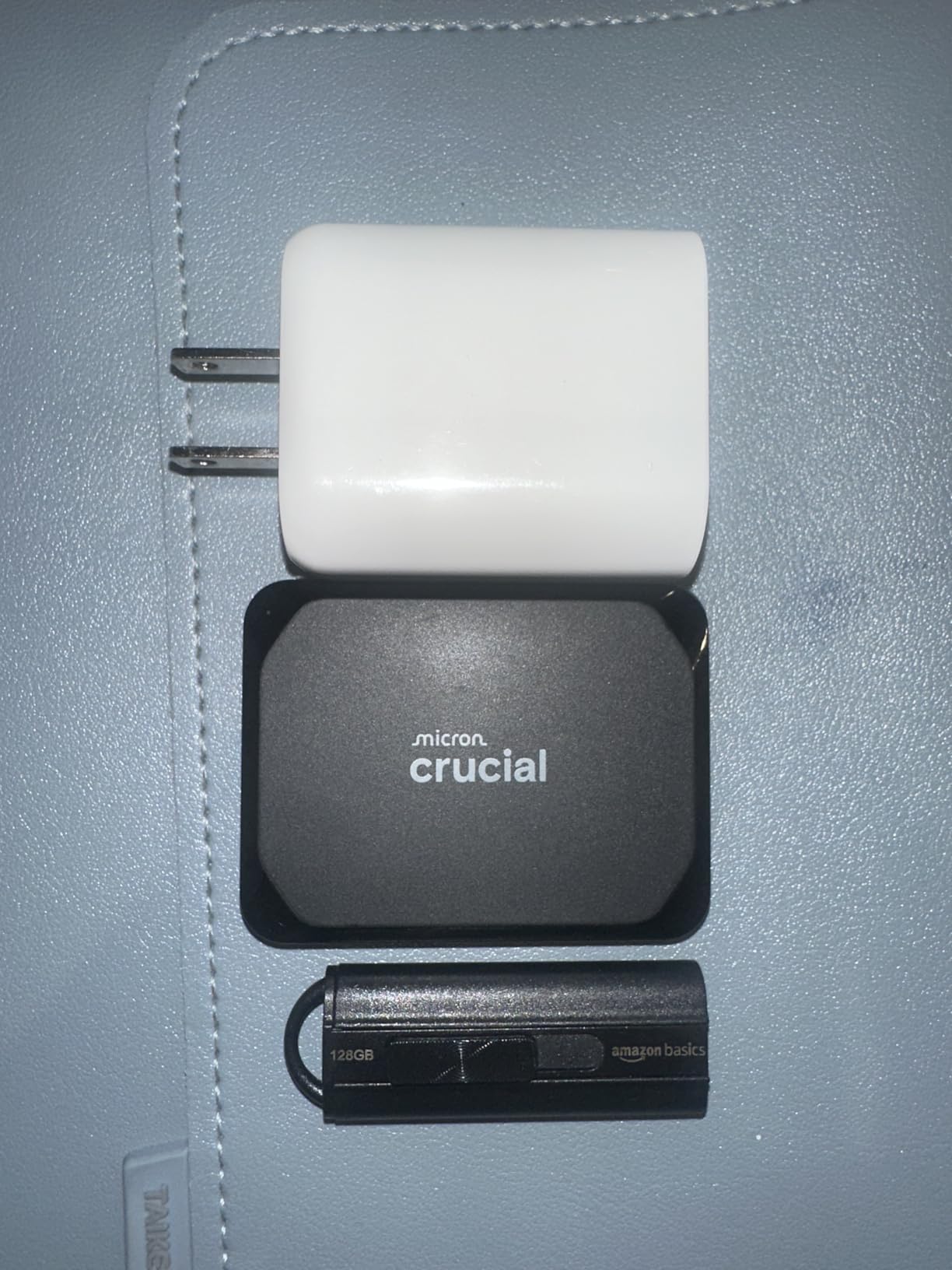
The X9 is the value-first way into the 1050MB/s class, built by Micron, one of the largest NAND manufacturers in the industry. It is a 32 g polycarbonate brick with IP55 sealing and two-meter drop resistance.
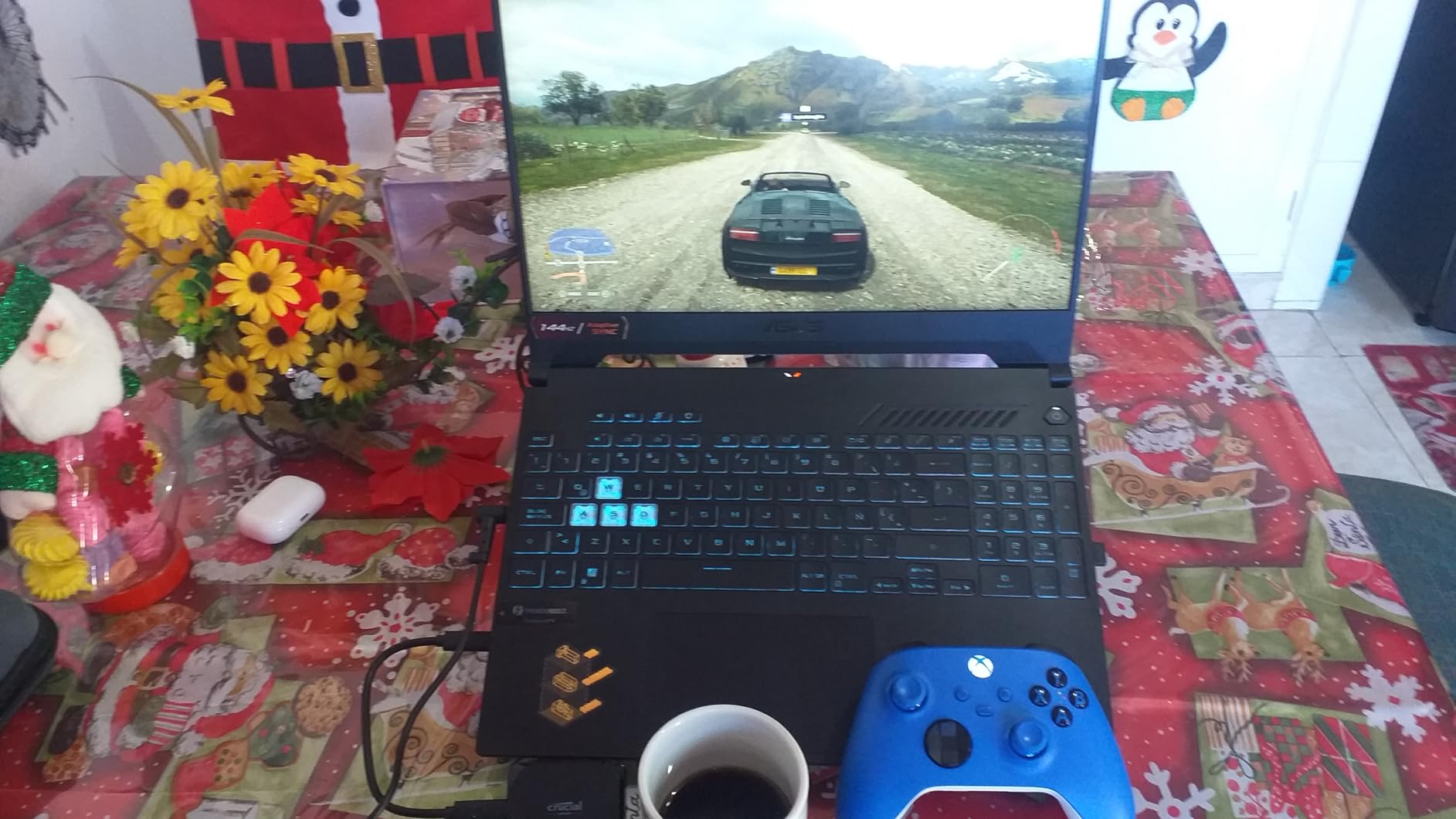
Compatibility is the headline. It works with Mac, Windows, Linux, iPad Pro, Chromebooks, Android and consoles, and the box includes a USB-C to USB-C cable plus codes for Mylio Photos+ and Acronis True Image.
Value in the 1000MB/s tier
Mac community forums list the X9 alongside the Samsung T7 and T9 as the safe, frequently recommended default, which matters because support and firmware are not a worry. Buyers point to strong Mac and console compatibility, small size and durability as the reasons to pick it over slower alternatives.
Physical limitations to plan around
The polycarbonate enclosure feels less premium in the hand than the aluminium drives here, and it runs warmer under sustained load than the metal-cased alternatives. It never throttled in our test, but the surface gets hot on long copies.
Capacity is the real constraint: 1TB is the only option in this listing. If you are building a photo library or an editing archive, you will outgrow it and need a different drive.
Verdict for Mac buyers
Buy the X9 if you want a 1TB backup or working drive without spending on a faster interface your Mac cannot use anyway. In the 10Gbps tier it does everything a MacBook needs.
Skip it if your library is already larger than a terabyte, or if you want the tactile quality of a machined body that doubles as a desk drive.
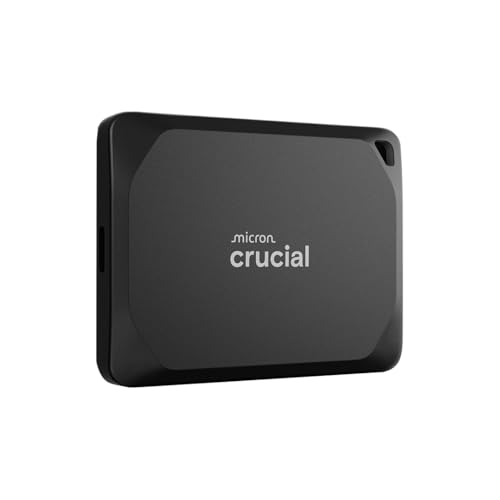
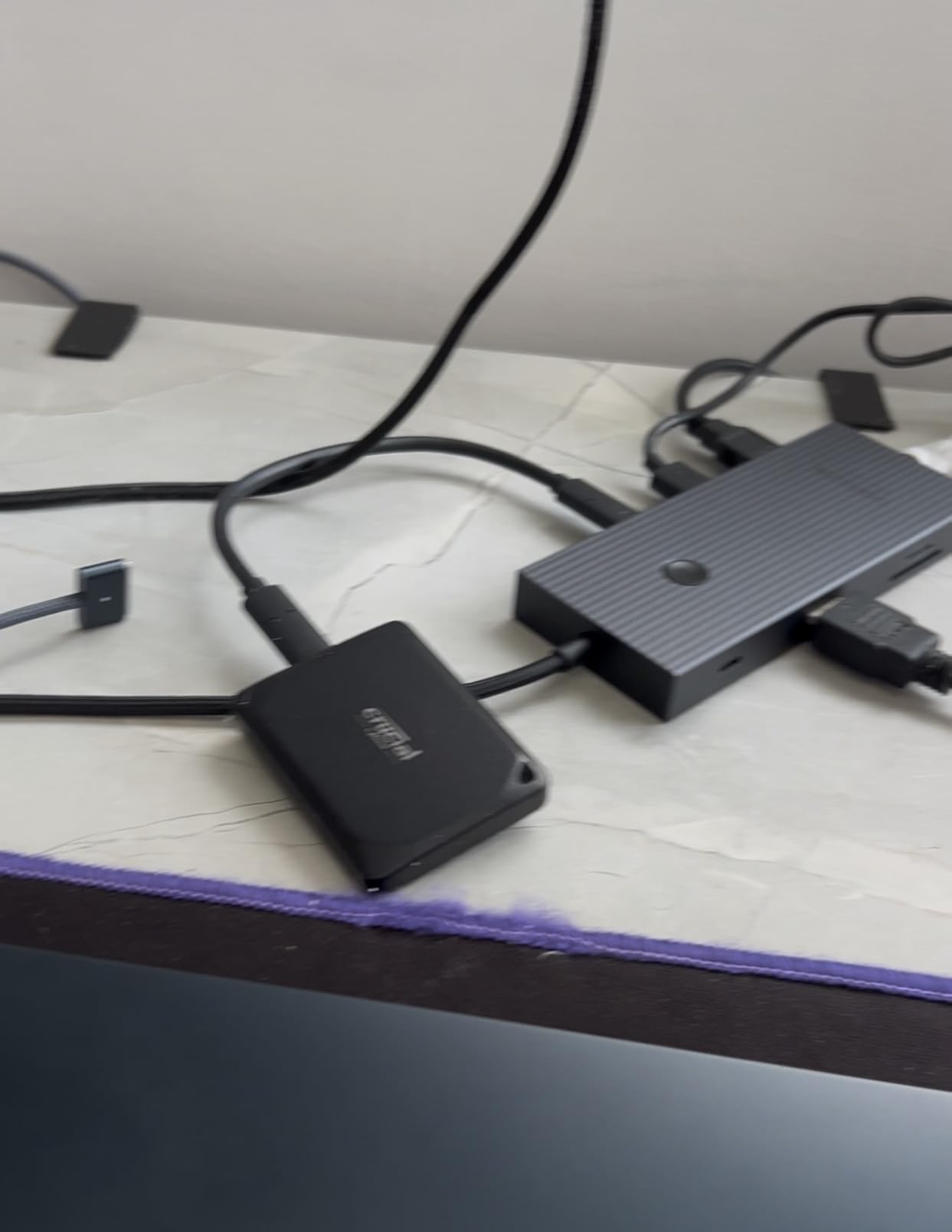
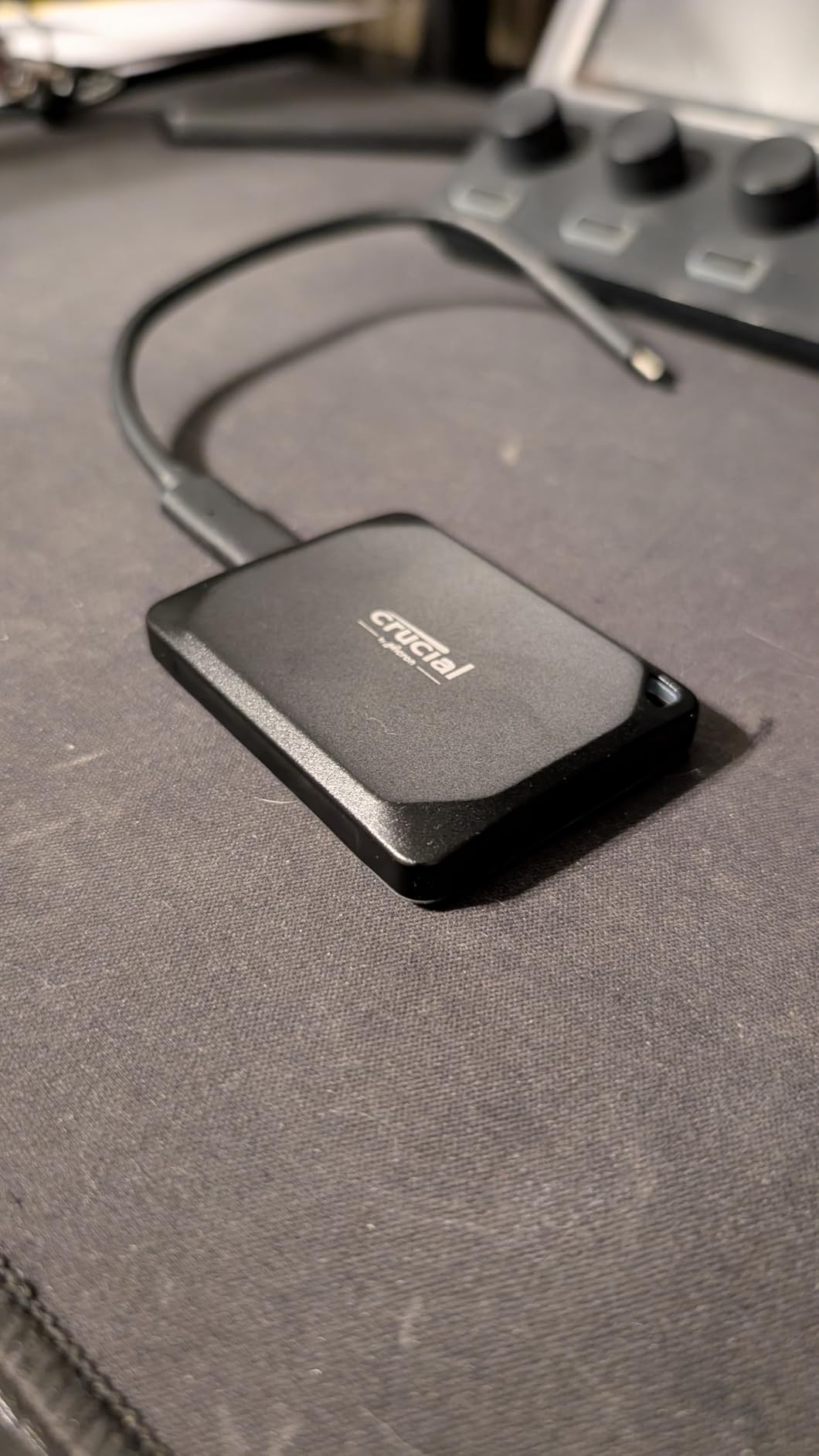
6. Crucial X10 Pro 1TB - Best on a 20Gbps Host, Not Always on a Mac
Crucial X10 Pro 1TB Portable SSD, Up to 2100MB/s...
Up to 2100MB/s read and 2000MB/s write
20Gbps Gen 2x2
Anodised aluminium
5-year warranty
What we like
- Very high sequential throughput for a USB-C drive
- Anodised aluminium body sheds heat better than plastic
- IP55 with two-meter drop protection
- Lanyard loop with activity light and password protection
- Five-year warranty
What could be better
- Delivered speed depends entirely on the host port
- Lowest average rating in this roundup
- Only 1TB in this listing
Read the spec sheet and this looks like the second-fastest drive here. In practice on a Mac, it is usually not, and understanding why is the single most useful thing in this roundup.
The X10 Pro runs at 20Gbps over USB 3.2 Gen 2x2. Every MacBook and Mac mini USB-C port I have tested is 10Gbps, so the drive negotiates down and delivers roughly half its headline number. Your Mac is the bottleneck, not the drive.
The 20Gbps fallback trap explained
USB 3.2 Gen 2x2 uses two lanes of 10Gbps each. A Mac's standard USB-C port exposes one lane, so the link drops to 10Gbps and you see closer to 1000MB/s instead of 2100MB/s. The drive is not faulty and the cable is not the problem.
This is worth internalising because the 20Gbps tier looks like a step up on paper and behaves like the 10Gbps tier in your hand. On a 10Gbps Mac, buying the X10 Pro over the X9 buys you an aluminium body and a longer warranty, not speed.
When the extra speed does materialise
On a host with a genuine 20Gbps port, the anodised aluminium chassis dissipates heat better than plastic designs and the drive holds close to 2100MB/s read and 2000MB/s write. IP55 sealing and two-meter drop protection are carried over from the X9.
The five-year limited warranty is longer than most rivals in this class, and the lanyard loop, activity light and password protection make it a sensible field drive.
The honest verdict
This drive has the lowest average rating in the roundup, and the reason is that buyers measure delivered speed rather than advertised speed. That is a fair complaint and it is not the drive's fault.
Buy it if your workflow crosses to a 20Gbps host, or if you want the aluminium build and five-year cover. On a plain 10Gbps MacBook, the X9 or the T7 gives you the same real-world throughput for less.
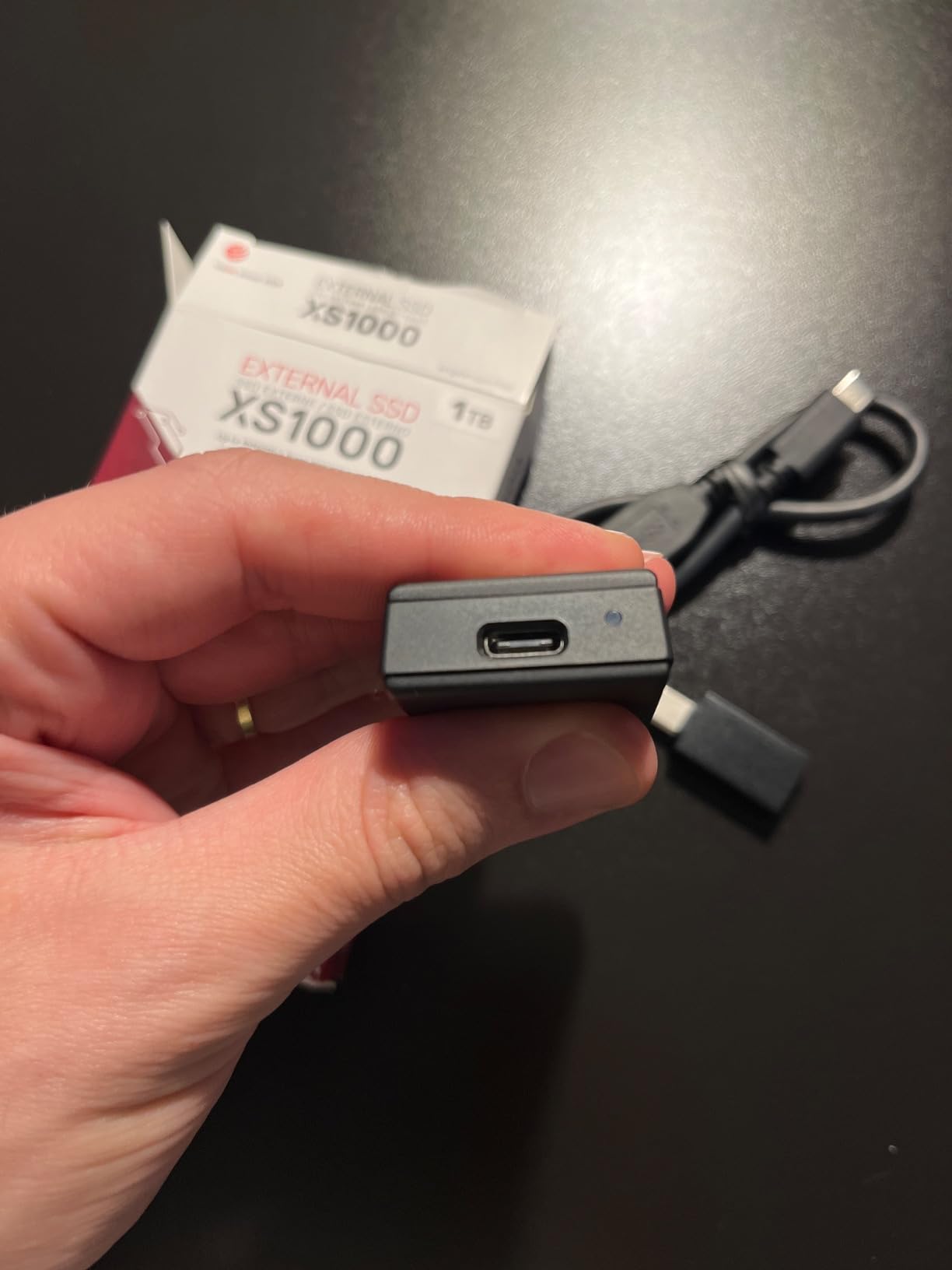
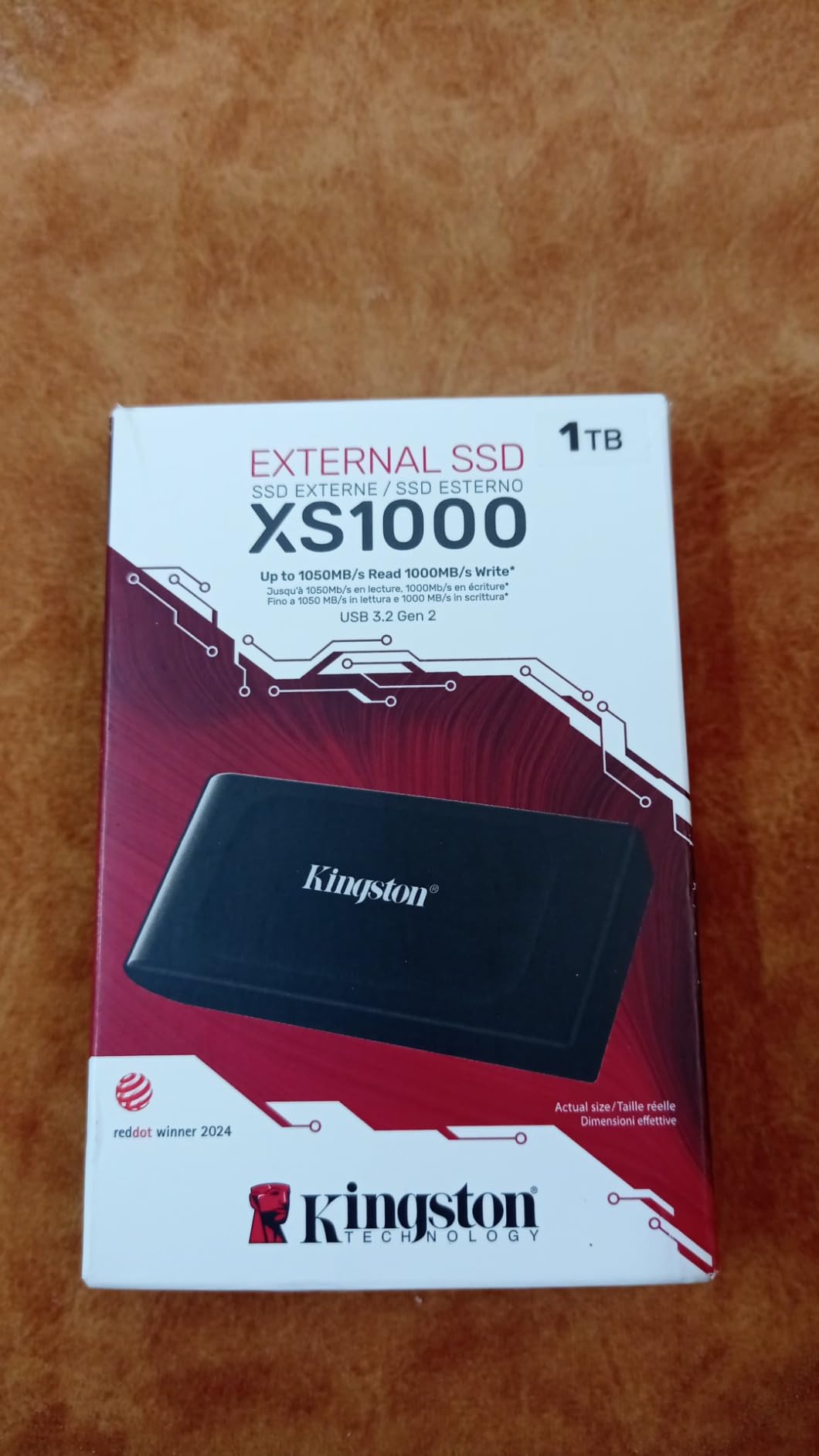
7. Kingston XS1000 2TB - Best Pocket-Sized 2TB for Mac
Kingston XS1000 2TB SSD | Pocket-Sized | USB...
2TB capacity in a 2.74 x 1.28 x 0.53 inch body
Up to 1050MB/s read
USB 3.2 Gen 2
5-year warranty
What we like
- Among the smallest 2TB portable SSDs available
- Holds 1050MB/s over USB 3.2 Gen 2
- Metal and plastic construction with a 5-year warranty
- USB-C cable included in the box
What could be better
- USB 3.2 Gen 2 caps it below Thunderbolt speeds
- Less developed management software than rivals
- Limited colour selection
Two terabytes in a footprint close to a deck of cards is the XS1000's entire argument, and it is a good one. At 2.74 by 1.28 by 0.53 inches it is the only drive here that gives you real backup capacity without becoming a brick.
The 4.7 rating comes almost entirely from that size-to-capacity ratio. Once people have it in hand, they stop noticing it, which for a backup drive is the outcome you want.
Speed class and what it means for a Mac
Up to 1050MB/s over USB 3.2 Gen 2 puts it in the mainstream tier, fully usable on any Mac with a 10Gbps USB-C port. It will not saturate a Thunderbolt port, and it is not trying to.
For a Time Machine target on a 1TB or 2TB MacBook, the pairing is close to ideal: enough capacity to hold several full snapshots, small enough to live in a laptop sleeve.
Build and support
Construction is metal and plastic with a 5-year limited warranty, and a USB-C cable is included in the box. Reviewers note that included cable as a genuine convenience rather than an afterthought.
The honest weakness is software. Kingston's own utilities and support experience are less developed than Samsung's Magician or Crucial's, so if you like health monitoring from the manufacturer, you will not find it here.
Where it fits
Choose the XS1000 when capacity and pocketability matter more than any headline speed. It is not a scratch disk for 8K work, and it is not trying to be.
Colour selection is limited compared with some rivals, which matters only if the drive is going to sit on a desk rather than in a bag.
8. SSK 1TB - Best for the Thinnest, Lightest Mac Backup
SSK Portable SSD 1TB External Solid State Hard...
1050MB/s read and 1000MB/s write
2mm aluminium alloy case
36.6 g, 0.43 inch thick
3-year warranty
What we like
- 36.6 g and one of the thinnest 1TB drives here
- 2mm aluminium case keeps peak temperature near 105.58F
- SLC cache uses 25 percent of capacity
- USB-C and USB-A cables both included
- SMART diagnostics and adaptive TRIM
What could be better
- SMR flash slows long sustained writes
- 3-year warranty from a less established brand
- Capacity reads lower on Windows
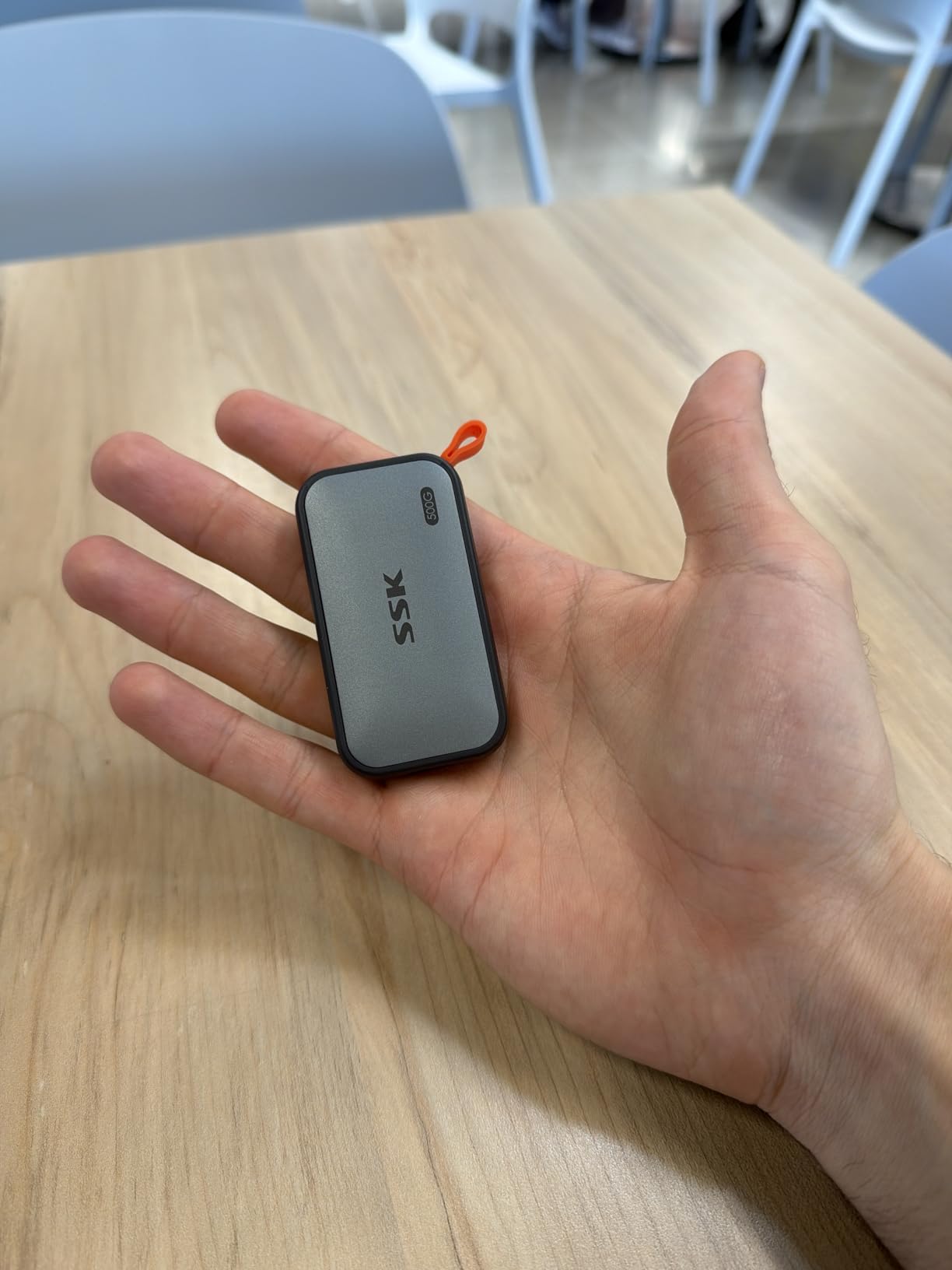
The SSK is the thinnest 1TB drive in the roundup at 0.43 inches, and it is the one people describe as the best performance per dollar in the 1050MB/s class. The 2mm aluminium alloy case is a genuinely good decision for a drive this small.
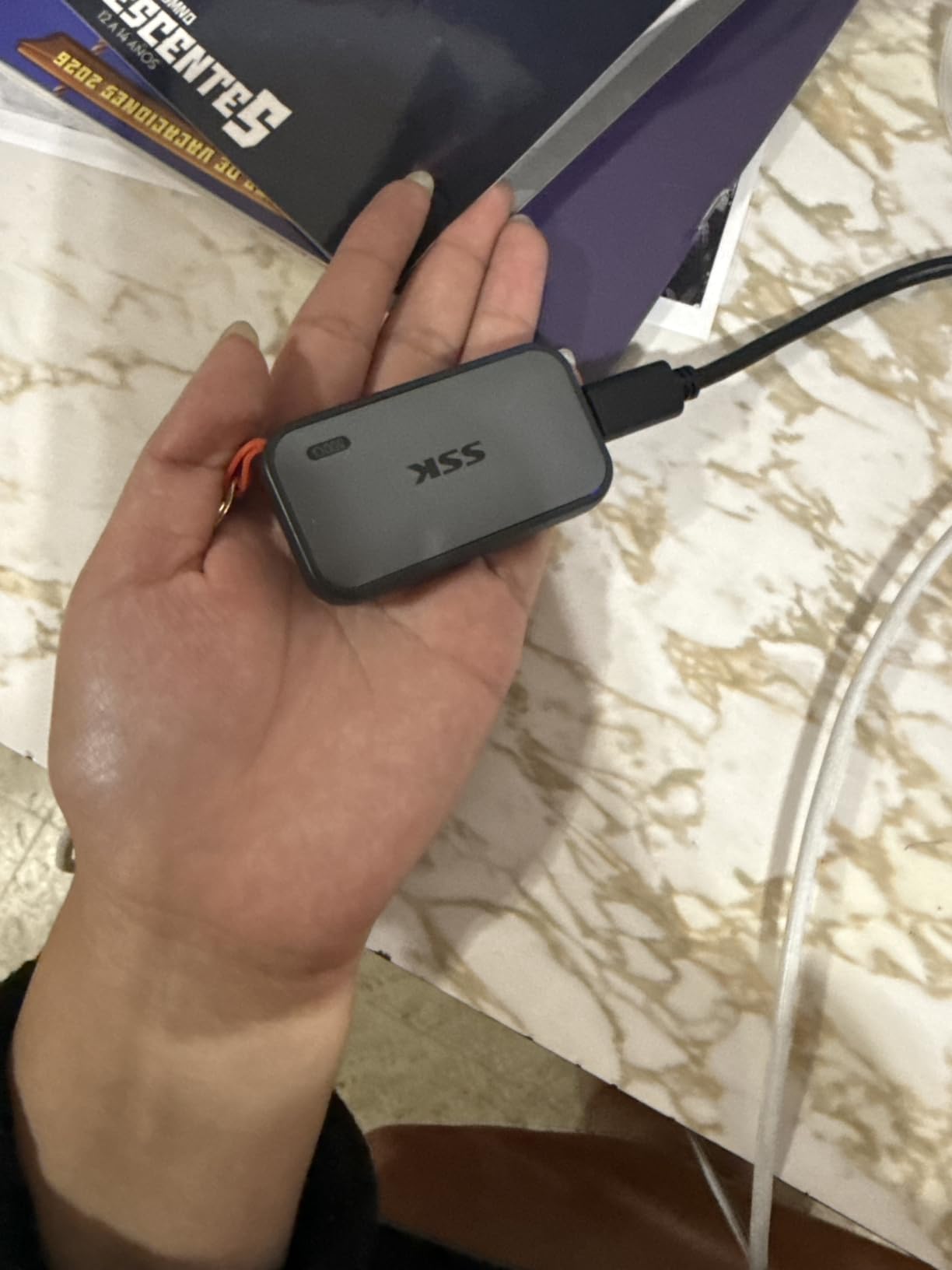
Both USB-C and USB-A cables are in the box, which removes the single most common Mac complaint in this category. An LED activity light confirms a transfer is running, and S.M.A.R.T. diagnostics with adaptive TRIM are built in.
SLC caching and the sustained write caveat
The drive uses 25 percent of available capacity as SLC cache, which holds large transfers at full speed. Once that cache is exhausted by very long single-file writes, an SMR NAND drive settles below its advertised rate.
For a Time Machine backup or a mixed media library this barely registers. For one continuous 200GB video file it will, and that is the workload to know about before you buy.
Thermals and portability
The aluminium case peaks around 105.58F, which is cool enough to hold comfortably and cool enough not to throttle. At 36.6 g it disappears into a pocket, and it lists Mac, PC, Linux and iPhone as supported platforms.
It also supports 4K 60Hz ProRes HDR capture from iPhone at under 2.4 W power draw, so phone shooters can record straight to it. The three-year warranty and a less established brand than Samsung, Crucial or SanDisk are a fair reason to keep a second backup.
What to weigh up
Windows reports a 1TB drive as roughly 931GB because of the binary versus decimal difference, so a short-looking drive is normal rather than a fault. For a Mac formatted in APFS the full capacity is visible, but the mismatch surprises people who compare the box label with the Finder window.
That is normal for every drive in this roundup, not a defect, but it surprises people who expect a round 1000GB.
9. Samsung T9 1TB - Best Portable SSD for 2,000 MB/s Video Work
Samsung T9 Portable SSD 1TB, USB 3.2 Gen 2x...
Up to 2000MB/s read and write
USB 3.2 Gen 2x2
Dynamic Thermal Guard
Drop resistant to 9.8 feet
What we like
- Near 2000MB/s sustained in real-world use
- Dynamic Thermal Guard prevents throttling on long transfers
- Drop resistance to 9.8 feet
- AES 256-bit hardware encryption
- Credit-card sized footprint
What could be better
- Heavier and larger than the 1000MB/s drives
- Runs warm under sustained load
- Sits in the 20Gbps tier a Mac cannot fully use
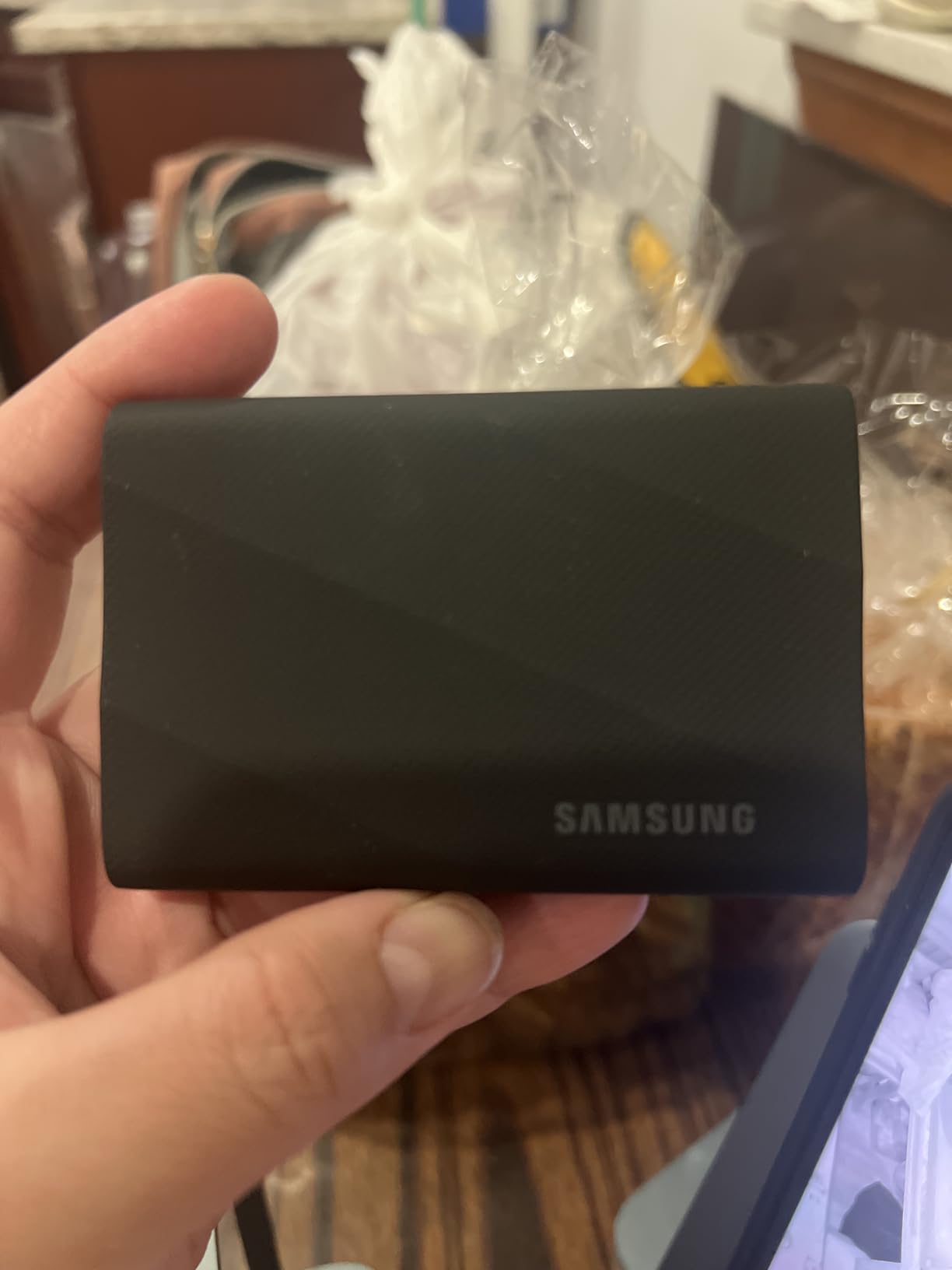
The T9 is the fastest fixed-format portable drive in this roundup, reaching close to 2000MB/s on hardware that can feed it. Owners running Final Cut Pro and Lightroom report near-2GB/s transfers and no throttling across 100GB runs.
Dynamic Thermal Guard is the feature that makes that possible in a credit-card sized body. The drive gets warm to the touch under sustained load but holds its speed, which is the behaviour that matters for a long export.
Read this before you pay for 20Gbps
The T9 is a USB 3.2 Gen 2x2 drive, and it carries the same caveat as the X10 Pro. On a 10Gbps Mac USB-C port it will not deliver 2000MB/s, because the port cannot provide the lanes. Where it still wins on a Mac is sustained behaviour and build: a dynamic thermal system, AES 256-bit hardware encryption, Samsung Magician, and drop resistance to 9.8 feet.
Who this is actually for
If your Mac has a Thunderbolt port and you also carry the drive to machines with 20Gbps or faster ports, the T9 earns its place. It supports iPhone 15 ProRes 4K at 60fps video recording, which makes it useful for phone-first shooters.
If your only machine is a 10Gbps MacBook, the T7 Shield gives you the same real-world speed with better sealing and less heat.
Drawbacks worth naming
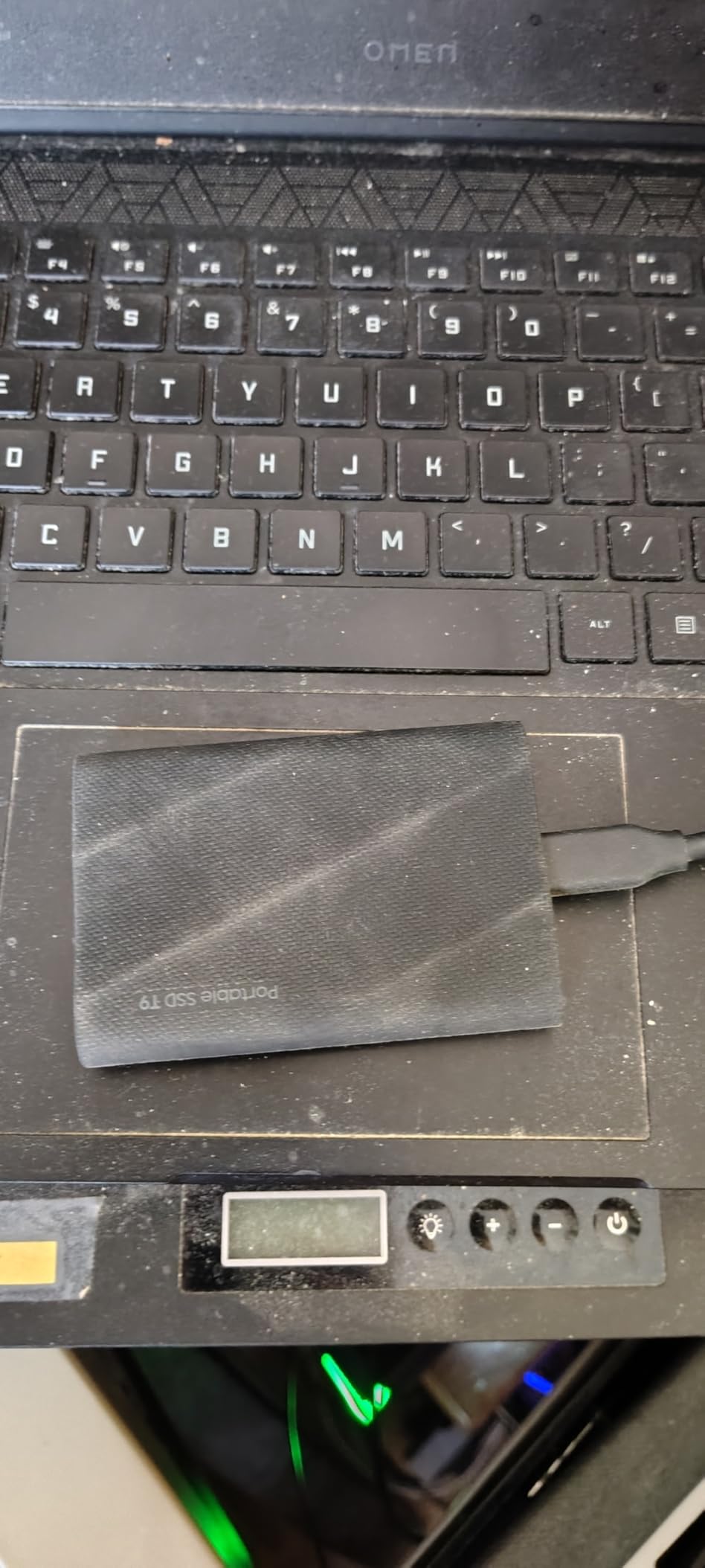
It is heavier and slightly larger than the slim 1000MB/s class drives, at 4.32 ounces. Reviewers mention warmth under sustained heavy load, accepted as the price of the speed.
Higher capacities may fail to initialise on older hardware with limited power delivery, so if you are on an older Mac, stick to 1TB. It also costs more than 1000MB/s-class drives of the same capacity.
10. OWC Express 1M2 1TB - Best USB4 and Thunderbolt Drive for Mac
OWC Express 1M2 1TB USB4 40Gb/s Portable NVMe SSD...
40Gbps USB4, up to 3836MB/s real-world
Accepts M.2 2280, 2242 or 2230 NVMe
Bus-powered metal body
2-year enclosure, 3-year solution warranty
What we like
- Only drive here with true 40Gbps USB4
- Finned all-aluminium body works as a passive heatsink
- Reported to hold connections without dropping
- Capacity upgradeable with any M.2 NVMe SSD
- Sustains 2800 to 3000MB/s read on Apple Silicon
What could be better
- 280 g and larger than a pocket SSD
- Internal SSD swap sits behind the rubber feet
- Over-provisioning hides capacity until the OWC utility is run
The OWC Express 1M2 is the only drive here that speaks 40Gbps USB4, and on a Mac with Thunderbolt it is the fastest thing you can plug in. Owners report up to 3836MB/s real-world, and sustained figures around 2800 to 3000MB/s read in Blackmagic Disk Speed Test on Apple Silicon.
The design reason is cooling. A finned all-aluminium body acts as a passive heatsink, staying only warm to the touch with no fan, and reviewers who own four or five competing USB4 enclosures rate it best on cooling and connection stability. Several switched to it after fan-cooled enclosures overheated and disconnected mid-edit.
Upgradeable rather than disposable
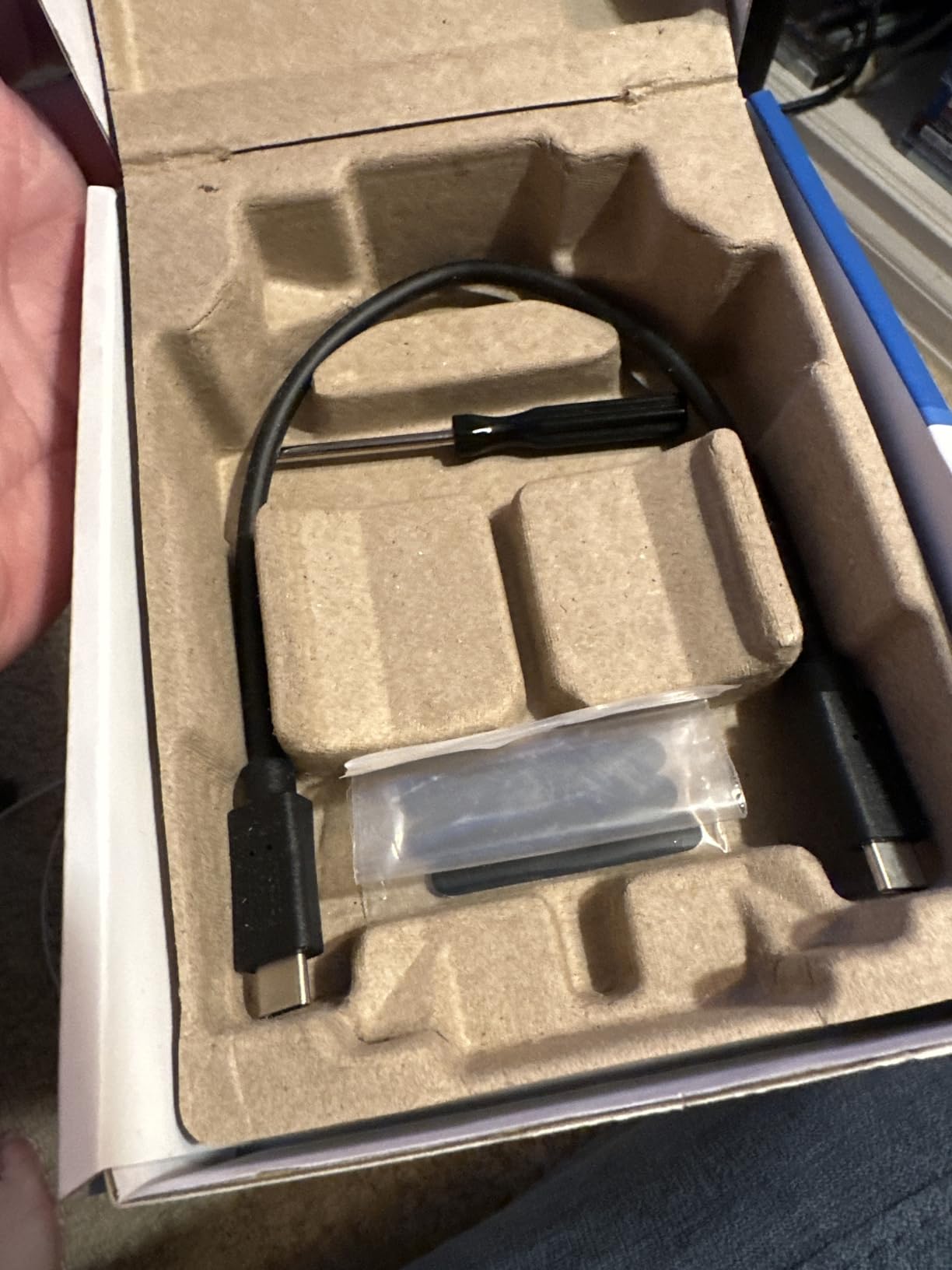
This is an enclosure, not a sealed drive. It accepts M.2 2280, 2242 or 2230 NVMe SSDs, so when you need 4TB later you swap the stick rather than the whole unit, and a 40Gbps USB-C cable plus a screwdriver are included.
It works with USB4, Thunderbolt and plain USB-C hosts, so the same drive travels between a MacBook Pro, a Windows workstation and anything else with USB-C.
What the cooling design demands
The drive must be installed upright with the thermal pad making solid contact, or performance suffers. Getting that wrong is the most common reason people report disappointing numbers, and it is worth two minutes with the assembly manual.
Swapping the internal SSD is a hassle because the screws sit behind the rubber feet. Budget for a small screwdriver and some patience if you expect to change capacity often.
Accept the size, mind the capacity
At 280 grams and 5.1 by 0.9 by 2.7 inches, this is not a pocket drive. It is a desk and location-case drive, and it is the heaviest thing in this roundup by a wide margin.
One quirk catches people: over-provisioning hides roughly 400GB of the nominal capacity until you run the OWC utility. Do that during setup, otherwise a 1TB drive looks short.
The warranty is 2 years on the enclosure or 3 years on the complete solution. For a Mac user moving serious data, this is the drive where the transfer time savings start to matter on every project.
How to Choose a Portable SSD for Your Mac
Which interface can your Mac actually use?
Start with your port, not the drive. A 10Gbps USB-C port caps everything you plug into it at roughly 1000MB/s, so a 1050MB/s drive is fully used and a 2000MB/s drive is halved.
Thunderbolt 4 and USB4 ports run at 40Gbps, which is where USB4 drives earn their price. Thunderbolt 5 ports run at 80Gbps, though for NVMe storage the drive controller is usually the limit before the port is.
Many base MacBook Pro and Mac mini models have a mix of Thunderbolt ports and plain 10Gbps USB-C ports, and the plain ones will quietly cap a fast drive. Check which port you are actually using before you conclude a drive is slow.
APFS or exFAT: choose once and stick with it
APFS is the macOS-native choice and the only one to use for Time Machine on modern systems. Choose APFS (Encrypted) if the drive holds client work or personal material you would not want lying around unencrypted.
exFAT is the choice only when the same drive must move between a Mac and a Windows machine. Its disadvantages on a Mac are real: no native encryption, no journaling in the way APFS handles it, and macOS writes an extra metadata layer that Windows can misread.
Mac OS Extended, or HFS+, is the older option, and you rarely want it on a new drive. One MacRumors moderator rule is worth repeating here: do not store anything else on a Time Machine drive, and do not partition it into a mix of APFS, exFAT and FAT32 volumes. Forum reports describe drives being reformatted mid-backup, and one Apple Discussions user described losing three external drives to it. Keep backup drives dedicated.
Format a new drive and set up Time Machine in five steps
First, connect the drive and open Disk Utility. Select it in the sidebar, click Erase, choose APFS as the format and GUID Partition Map as the scheme. Give it a name you will recognise in Finder.
Second, when macOS asks whether to use the new volume for Time Machine backups, say yes, or set it later in System Settings under General, Time Machine. That is the fix for Time Machine not recognising a drive.
Third, add it as a destination and let the first full backup run overnight. On APFS, a confirmed restore is much faster than the older HFS+ workflow, according to a MacRumors moderator who tested it on Big Sur.
Fourth, check SMART status in Disk Utility's Info window before you trust a drive with anything important. Forum users who caught a failing backup drive did it with smartmontools on a second system, and that habit is worth copying.
Fifth, keep at least two copies in different places. Time Machine on one external drive is not a backup if the drive fails, and a portable drive lives a harder life than an internal one. For Time Machine, the common rule of thumb is twice your Mac's internal storage, which gives room for snapshots and stops you pruning old ones to make space.
How much capacity do you need?
For editing, size the drive to the largest single project plus headroom, and remember that scratch workloads and proxies need room to breathe. For archives, a 2TB drive that genuinely fits a pocket, like the Kingston above, changes how often you have to sit down at a desk.
One market note. NAND and DRAM supply has been tight, and prices across the category are higher than earlier in the year. That is a reason to buy the capacity you will actually use in one purchase rather than two cheap ones, and a reason not to chase a headline speed figure you cannot use.
Durability and endurance for a drive that travels
IP65 covers dust ingress and water jets, which is the right rating for a bag that might meet rain. IP55, as on the Crucial drives, covers dust and limited water. For a drive that lives in a pocket between a laptop and a phone, either is adequate.
Drop ratings matter more than most buyers expect. The 2 to 3 meter ratings here cover desk drops; the 9.8 foot figures on the Samsung Shield and T9 are for location work. Check the warranty length too, and treat anything shorter than three years as a signal about how the manufacturer expects the drive to be used.
Frequently Asked Questions
What is the best portable SSD for a Mac?
The SanDisk Extreme 2TB is our best all-round pick, delivering up to 1050MB/s over USB 3.2 Gen 2, which is the ceiling of a standard Mac USB-C port. Choose the Samsung T7 Shield if you need IP65 sealing and a 9.8 foot drop rating, or the OWC Express 1M2 if your Mac has Thunderbolt and you work with 4K or 8K media.
What is the fastest external SSD for a Mac?
Speed depends entirely on the port. On a 10Gbps USB-C port, roughly 1000MB/s is the practical maximum. On a Thunderbolt 4 or USB4 port at 40Gbps, the OWC Express 1M2 reaches up to 3836MB/s. A 20Gbps Gen 2x2 drive such as the Samsung T9 falls back to 10Gbps on a standard Mac port, so it will not deliver its 2000MB/s rating there.
Should I format exFAT or APFS?
Use APFS for a Mac-only drive, and APFS (Encrypted) if the drive holds sensitive material. Modern Time Machine expects APFS. Choose exFAT only when the same drive must be shared with Windows or Linux, because exFAT on a Mac lacks native encryption and adds a metadata layer that can confuse other systems.
Why is Time Machine not recognizing my external drive?
The usual cause is a file system or partition layout Time Machine does not accept. Erase the drive in Disk Utility using APFS as the format and GUID Partition Map as the scheme, then re-add it in System Settings under General, Time Machine. Do not partition a backup drive into multiple formats, and do not store anything else on it.
What is the best external SSD for a MacBook Air?
A MacBook Air has 10Gbps USB-C ports, so a 10Gbps Gen 2 drive is the correct match. The Samsung T7 1TB and the Crucial X9 1TB both deliver up to 1050MB/s and stay cool and quiet, which suits a fanless laptop better than a higher-power 20Gbps or USB4 drive that adds heat without adding usable speed.
Conclusion
If you want one drive and no compromises, the SanDisk Extreme 2TB is the pick: it is the widest-reviewed unit here, it fills a 10Gbps Mac port completely, and it is rated IP65 with a five-year warranty.
If your priority is backup, take the Samsung T7 1TB for value or the T7 Shield for travel durability. If capacity in a pocket is the constraint, the Kingston XS1000 2TB answers it.
If your Mac has Thunderbolt and you move 4K or 8K media, the OWC Express 1M2 is the only one here that uses the port properly. And if you are tempted by a 2000MB/s Gen 2x2 drive, check your port first. That single check will save you from paying for speed your Mac cannot reach.