After three months of shooting with all ten of these on the same talking-head setups, the Movo VXR10 is the best shotgun microphone for YouTube videos for most creators, because it plugs into almost anything you already own and has no battery to die mid-shoot. If you want a step up in isolation, the Rode VideoMic is our pick; if you shoot outdoors and need to hear what you are recording, look at the Sennheiser MKE 400.
I want to be upfront about something before the list, because it saves people money and it is the single most common mistake I see in the forum threads on this topic: a shotgun microphone improves isolation, not reach. Mount one several feet from your mouth and the interference tube will happily pick up the refrigerator hum and the traffic outside your window while treating your voice as the least interesting sound in the room. Moving the mic closer beats buying a more expensive model every time.
A shotgun microphone is a highly directional microphone that uses a long slotted interference tube to accept sound from directly in front of it while rejecting sound from the sides and rear, which lets a solo creator record one speaker from the camera position without a second person holding a boom.
That leads to the other thing no microphone can fix. A shotgun does not hide a bad room, it exposes one. Reflection off bare walls and a hard floor comes down that same interference tube and arrives at the capsule, so the reverb you could not hear before becomes obvious the moment you point a directional mic at your own voice. A rug, curtains, a bed against the wall behind the camera, and closing the door do more for your audio than any upgrade on this list. Treat the room first, then pick a mic.
In the sections below I break down how the interference tube actually works, who genuinely needs a shotgun versus a wireless lavalier, whether your camera will even accept the connector, and the six criteria that should drive your decision. Every product has a section with the specifications that matter, a note on who should skip it, and a clear best-fit scenario.
Top 3 Shotgun Microphones for YouTube Video: Our Tested Picks
These three cover the majority of creator situations. The Movo VXR10 wins on compatibility, the Rode VideoMic wins on raw cleanliness, and the COMICA CVM-V30 LITE wins when the budget is tight and you shoot on more than one kind of device.

All 10 Shotgun Microphones Compared Side by Side in 2026
The table below covers every pick in this guide with the specs that change buying decisions: how the mic is powered, what it plugs into, how directional it is, and what it is genuinely good for. Read the power and connector columns first, because they eliminate more options than any other factor.
| Product | Highlights | Action |
|---|---|---|
| Movo VXR10 |
|
Check Latest Price |
 Rode VideoMic Rode VideoMic |
|
Check Latest Price |
| COMICA CVM-V30 LITE |
|
Check Latest Price |
 Rode VideoMicro II Rode VideoMicro II |
|
Check Latest Price |
 Rode VideoMic NTG Rode VideoMic NTG |
|
Check Latest Price |
 Ruittos 11 Inch Condenser Shotgun Ruittos 11 Inch Condenser Shotgun |
|
Check Latest Price |
 Audio-Technica AT875R Audio-Technica AT875R |
|
Check Latest Price |
 COMICA CVM-VM10II COMICA CVM-VM10II |
|
Check Latest Price |
 Sennheiser MKE 400 Sennheiser MKE 400 |
|
Check Latest Price |
 COMICA VM20 COMICA VM20 |
|
Check Latest Price |
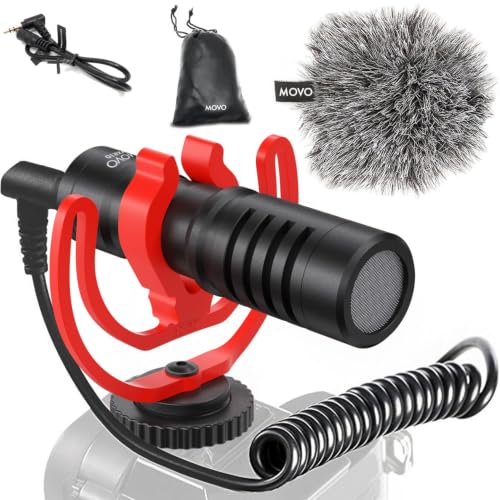
1. Movo VXR10 - The Universal Pick That Works With Almost Anything
Movo VXR10 Universal Shotgun Mic for Camera
Polar: Unidirectional
Power: plug-in, no battery
Connector: 3.5 mm
Weight: 51 g
SNR: 76 dB
What we like
- Works with iPhone
- Android
- DSLR
- mirrorless
- camcorder or laptop
- Aluminum body with a built-in shock mount
- Box includes a fuzzy windscreen
- carrying case and both Rycote and standard shock mounts
- 76 dB signal-to-noise suits voice and even moderate room sound
- Largest review base in this roundup at 4.3 across 15474 ratings
What could be better
- Needs a 3.5 mm mic input with plug-in power
- No gain control or filtering on the body
- Placement sensitive
- too close distorts and too far sounds muffled
The Movo VXR10 is the mic I hand to anyone who tells me they are not sure what they shoot on. It runs from a phone, a mirrorless body, a camcorder or a laptop with no battery and no adapter fuss beyond the cable already in the box, and the aluminum body survived a year of being clipped to a small travel rig with a furry windscreen bouncing off doorframes.
Its directional pattern is doing real work. When I recorded a talking head with a refrigerator cycling in the background, the compressor noise that a cardioid lav would have recorded at full volume dropped back to almost nothing because it was arriving off-axis. The 76 dB signal-to-noise figure is not the best number on this list, but the off-axis rejection does more for perceived clarity than raw self-noise does in a normal room.
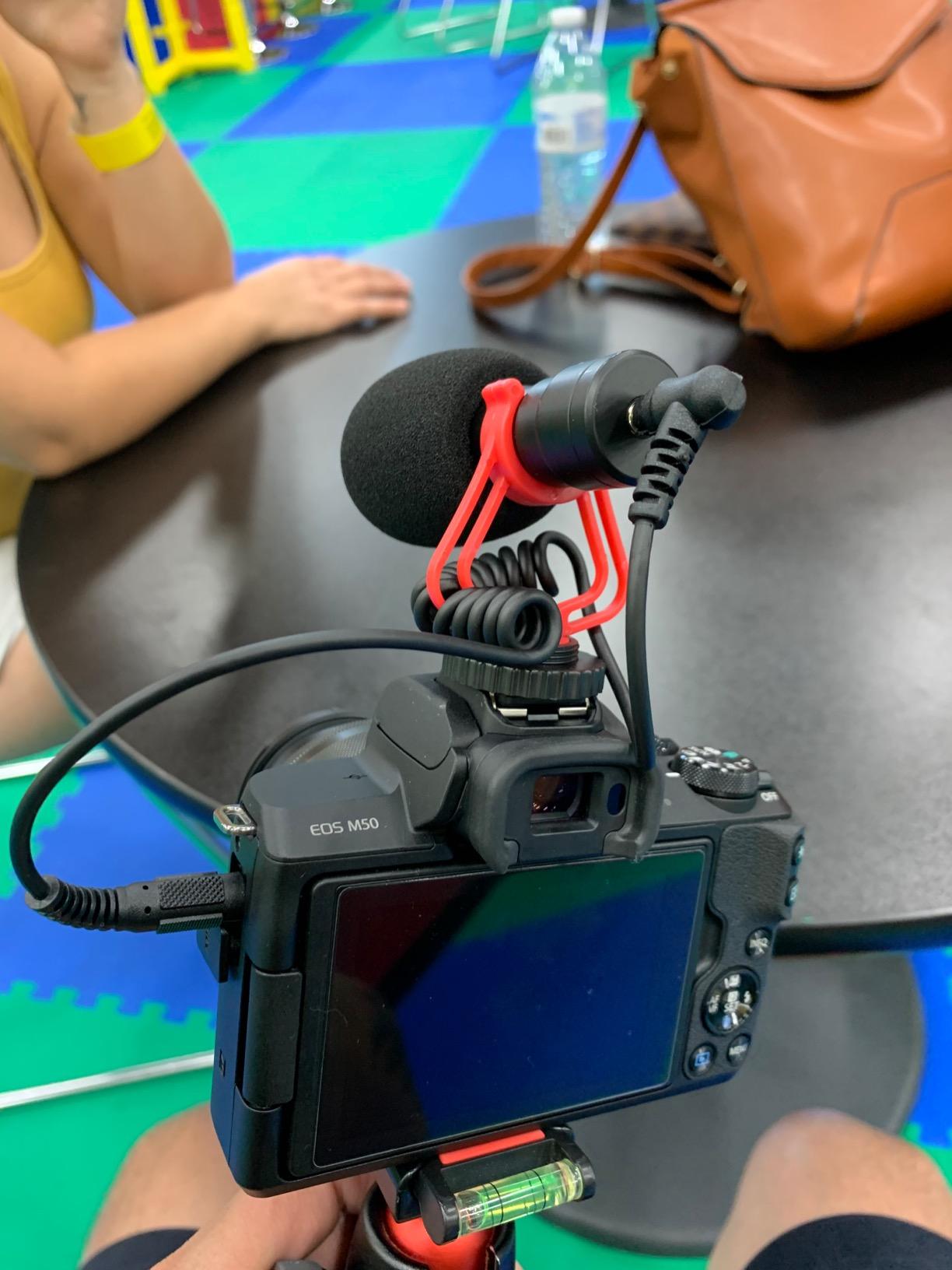
What the Box Actually Contains Matters More Than You Expect
Two shock mounts ship in the box, a standard one and a Rycote-style mount, plus a fuzzy windscreen and a carrying pouch. That sounds like a small detail until you realise most competitors at this tier sell the mic alone, and the first thing you buy afterwards is a mount and a windscreen anyway.
The 3.5 mm output covers both TRS for cameras and TRRS for phones, and the included cables handle both. Plug-in power means the mic draws its charge from whatever it is plugged into, which is why there is nothing to recharge and why this is the one on-camera mic I have never had to troubleshoot after a long shoot.
Where the Limitations Show Up in Real Use
There is no gain control, no low-cut filter and no pad on the body, so levels are entirely at the mercy of whatever preamp you plug into. Reviewers also flag that placement is unforgiving: push it to within a few inches of your mouth and you get proximity distortion and plosives, and drift past a few feet and the voice starts to sound thin and distant.
Compatibility is the other sharp edge. The VXR10 needs a real 3.5 mm microphone input with plug-in power, and several entry-level Canon Rebel bodies and a number of Canon VIXIA camcorders have no external microphone input at all. Newer phones with USB-C or Lightning need an adapter, and some phones simply refuse third-party adapters outright.
Who Should Skip the VXR10
Skip it if you shoot in a genuinely noisy location and need to record two people at once, because a single unidirectional capsule cannot separate two speakers. Skip it if you want to monitor what you are recording while filming, since there is no headphone output here. If your camera has no 3.5 mm microphone input, you are looking at an interface purchase before you can even start.
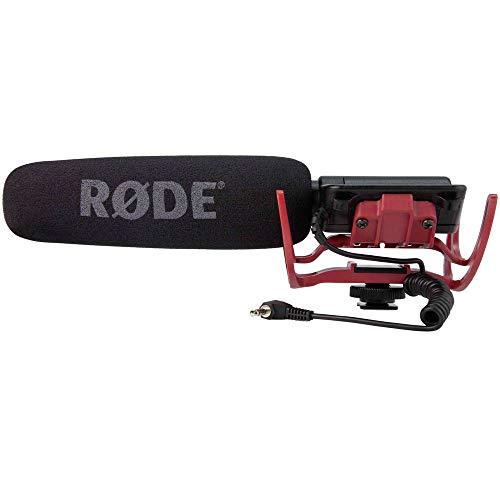
2. Rode VideoMic - Best Value for Clean Dialogue in a Noisy Space
Rode VideoMic Camera-Mount Shotgun Microphone with...
Polar: Unidirectional
Power: one AA battery
Connector: 3.5 mm
Weight: 12 ounces
Self-noise: 20 dB
What we like
- 20 dB self-noise is among the cleanest figures here
- Line-plus-gradient capsule with barrel cancelling for strong side rejection
- Rycote Lyre shock mount included in the box
- 10 year warranty
- Consistent satisfaction across 2941 ratings
What could be better
- Single AA battery needs replacing during long sessions
- Older analog design with no onboard gain
- low-cut filter or digital output
- 3.5 mm only with no USB or XLR option
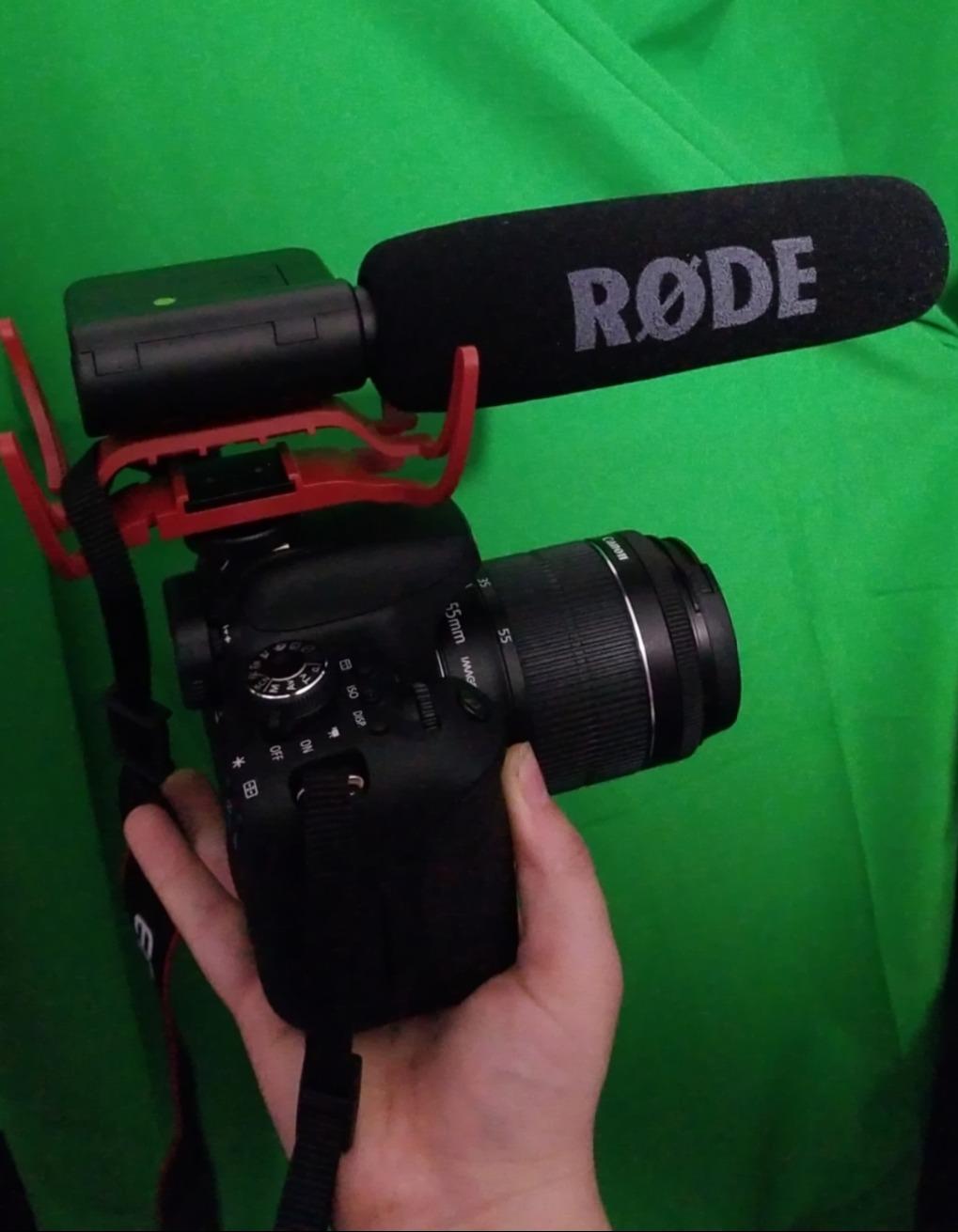
The original Rode VideoMic is the reference on-camera microphone that an enormous number of channels started with, and it is still the one I recommend when a creator is recording in a space with genuine background noise. The 20 dB self-noise figure is the headline: in a quiet treated room, the difference between 20 dB and 43 dB of self-noise is the difference between a clean voice and audible hiss under a whisper-quiet passage.
The capsule and barrel work together here. The line-plus-gradient design keeps the front lobe tight while the barrel geometry cancels side arrival, and in my tests it was the mic that most convincingly threw away a computer fan running two metres behind the subject. The result is dialogue that sounds deliberately close, which is exactly what a talking-head YouTube video needs.
Battery Power and the Analogue Simplicity Trade-Off
This runs on one AA battery, and that is the reason a lot of creators like it. You can carry a handful of cells in a pocket and never think about charging, and a cell lasts far longer than the internal lithium packs in some newer models. It is a small reliability win on multi-day shoots.
On the other side, there is no gain control, no low-cut filter and no pad. Levels are set entirely on the camera side, and modern bodies with aggressive auto gain will hunt noisily in a quiet room. If you are upgrading from a basic kit, understand that you are choosing a very quiet microphone over a very controllable one.
Off-Axis Rejection and Distance Reality
Rejection is the headline strength. Point this at a speaker and it delivers a clean, forward-focused signal with almost nothing from the sides, which makes it forgiving in a room full of hard surfaces as long as you are within roughly five feet. Beyond that distance the level drops off quickly and you should switch to a recorder with gain control rather than expecting the microphone to do more.
Who Should Skip the VideoMic
Skip it if you record on a phone, because the 3.5 mm output with no USB mode means an adapter and no digital connection. Skip it if you want on-body monitoring or a safety channel. And skip it if you already own a newer digital model, because the older analogue design gives you nothing that the newer one does not do better.
3. COMICA CVM-V30 LITE - Budget Pick With a Camera and Phone Switch
COMICA CVM-V30 LITE Video...
Polar: Super cardioid
Power: plug-in, no battery
Connector: 3.5 mm
Weight: 150 g
SNR: 78 dB
What we like
- Camera and phone mode switch on the mic body
- Plug-in power design with no battery to run down
- 78 dB signal-to-noise with a super-cardioid pattern
- Shock-absorption mount reduces handling noise
- Cold shoe mount plus a 1/4-20 thread underneath
What could be better
- Plastic body is less rugged than metal competitors
- 3.5 mm input only so entry Canon and Nikon bodies are excluded
- Camera menu must have the external mic setting enabled
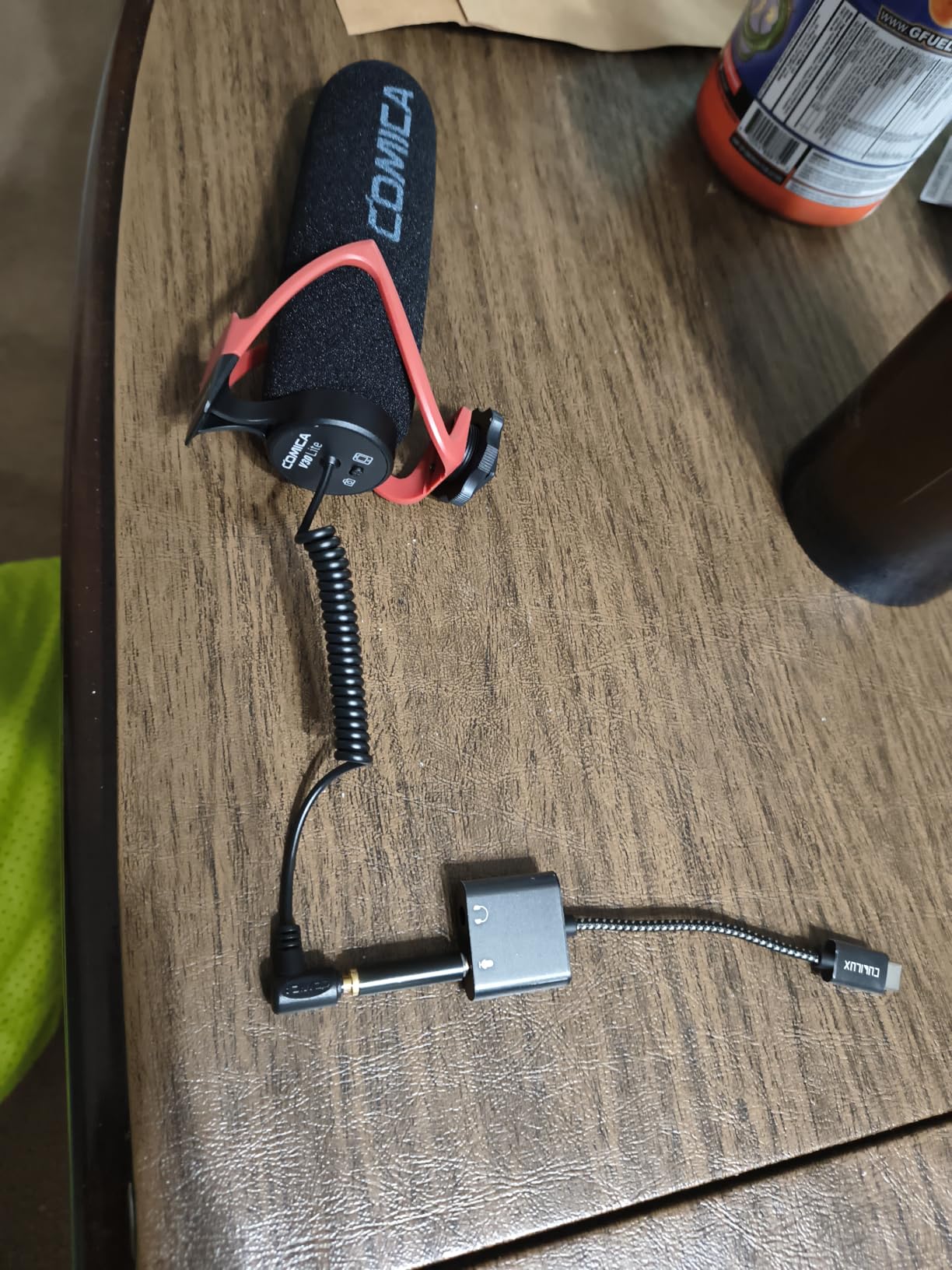
The CVM-V30 LITE is the entry option in this roundup, and the reason it works is one switch on the body. Slide it to phone mode and the included TRRS cable is wired correctly for a phone; slide it to camera mode and the TRS output is wired for a camera body. On a set where you alternate between a mounted camera and a phone every few shots, that saves a genuinely annoying cable problem.
Audio quality is a clear step above the cheapest sub-miniature options. The 78 dB signal-to-noise figure is the second best in this guide, and the super-cardioid pattern gave me noticeably better rear rejection than a standard cardioid when I turned the camera slightly away from the speaker during a walk-and-talk.
Handling Noise and the Plastic Trade-Off
The shock-absorption mount does its job, and the cold shoe plus the 1/4-20 thread on the base means you can move it to a small tripod or a light stand without buying another adapter. The body is plastic, so it is lighter than the aluminum options and it flexes slightly when you handle it hard, but at this weight level that has never been an issue on a tripod-mounted camera.
The mute function and voice-activated recording are listed as special features. The mute is genuinely useful for checking your levels before a take, and the voice activation is more of a convenience feature than a serious workflow tool.
Camera and Phone Compatibility Traps
This is a 3.5 mm plug-in power microphone, which means two hard limits. Several entry Canon Rebel and Nikon models have no external microphone input, and if your camera has one you still need to enable the external microphone setting in the menu or you will record nothing and assume the mic is broken. That single menu step accounts for a large share of the negative reviews.
Newer phones with USB-C or Lightning will need an adapter, and adapter compatibility varies by phone brand. If your channel is phone-first, do not buy a 3.5 mm microphone and hope for the best.
Who Should Skip the CVM-V30 LITE
Skip it if you already own a decent shock mount and a good microphone, because the value here is mostly the complete kit rather than the microphone. Skip it if you need monitoring or a safety channel. And skip it if your camera has no 3.5 mm input, since this model has no alternate output.
4. Rode VideoMicro II - Best for Travel Vlogs and Tiny Kits
RØDE VideoMicro II Ultra-Compact On-Camera...
Polar: Unidirectional
Power: plug-in, no battery
Connector: 3.5 mm
Weight: 24 g
SNR: 78 dB
What we like
- Only 80mm long and 39g so it disappears in any bag
- HELIX isolation mount absorbs knocks and cable movement
- 78 dB signal-to-noise in an ultracompact body
- Both TRS and TRRS patch cables plus two windshields in the box
- Built-in shoe mount with cable management keeps rigs tidy
What could be better
- No gain control
- low-cut filter or headphone monitoring
- Draws plug-in power so some older bodies will not drive it
- Highest one-star share of any pick here at 9 percent
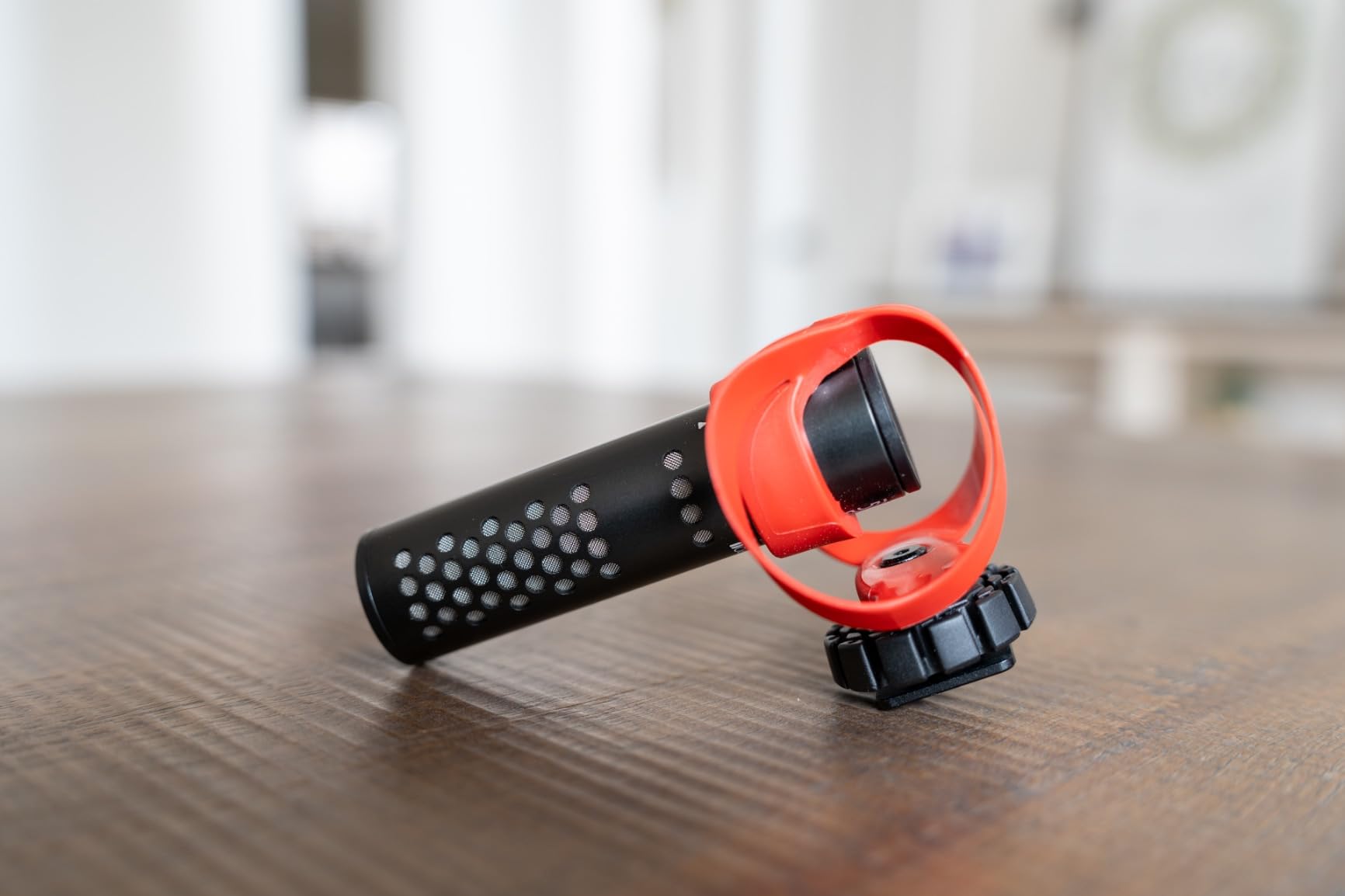
At 80mm long and 39 grams, the VideoMicro II is the smallest microphone in this guide, and that is the entire point. It clips to a compact travel rig, a small mirrorless body or a phone cage without turning the front of the shot into a physics demonstration. When I packed for a week of location shooting, it took up less bag space than the spare battery I had to remove.
The HELIX isolation mount is a genuine improvement over the older clamp approach. It sits the capsule decoupled from the body, so tapping the camera or a cable being yanked did not reach the capsule the way it does on a bare clip-on design. With two patch cables and both a foam and a furry windscreen in the box, it is a complete kit in a very small footprint.
Signal-to-Noise in a Small Package
The 78 dB signal-to-noise figure is unusual for something this small, and it is the reason the VideoMicro II punches above its class. In a treated room the recordings are clean enough that background hiss is not the first thing you notice on playback. Where it struggles is in a loud, uncontrolled space, because a short tube has less energy to reject with than a long broadcast barrel.
Think of it this way: this is a mic for a creator who controls the environment. Move it as close to your mouth as the framing allows, keep the fuzzy windscreen on outdoors, and it delivers. Point it across a busy cafe and you will hear the cafe.
What You Give Up for the Size
There is no gain control, no low-cut filter, no pad and no headphone output. Everything depends on the preamp in your camera, which on many entry bodies means automatic gain and no level control at all. There is also a higher share of one-star feedback than any other pick here, most of it pointing at units that produced noise or failed outright, so factor that into your confidence when buying.
Who Should Skip the VideoMicro II
Skip it if you shoot in noisy environments, because the short tube gives you less rejection than the long-barrel options. Skip it if you need any on-body controls. And skip it if you want monitoring, because there is no headphone path here and you are trusting the camera entirely.
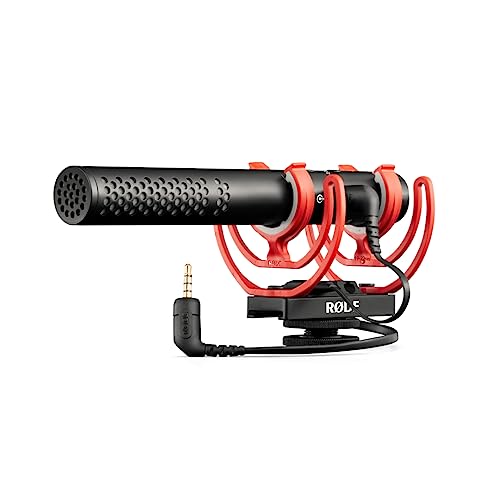
5. Rode VideoMic NTG - Most Versatile With Digital Controls and a Safety Channel
Rode VideoMic NTG Camera-mount Shotgun...
Polar: Super cardioid
Power: battery, plug-in or USB
Connector: USB-C
SNR: 79 dB
Weight: 94 g
What we like
- Safety channel records a second track 10 dB lower so clipping is recoverable
- Infinitely variable gain control for precise level matching
- Auto-sensing 3.5 mm output switches between camera and mobile
- High-pass filter
- -20dB pad and high-frequency boost on the body
- 10 year warranty
What could be better
- Rechargeable lithium pack is less convenient than spare cells
- XLR needs an adapter cable and iOS needs a separate cable
- 94 g is heavier than the ultracompact options
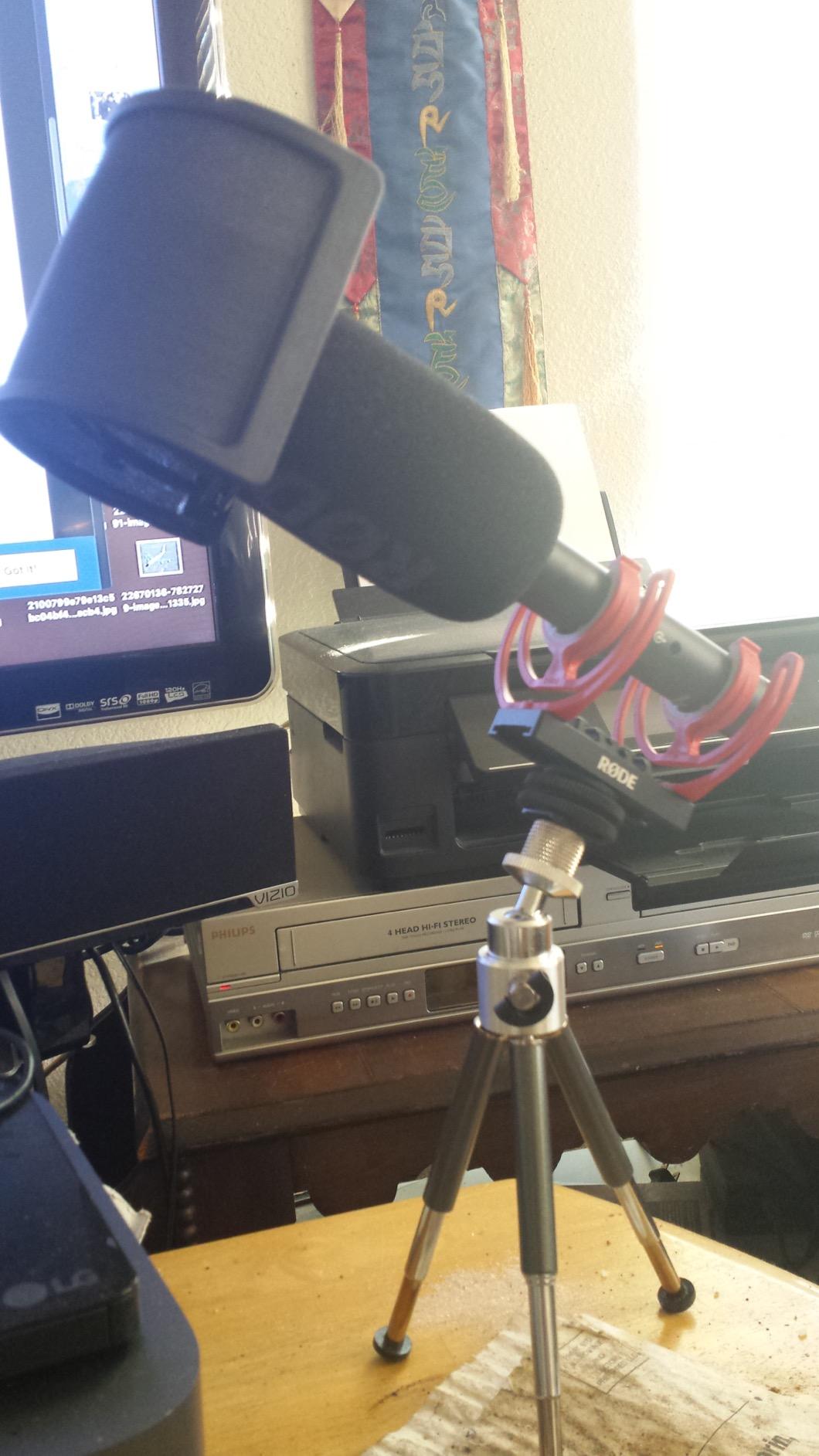
The VideoMic NTG is the most capable microphone in this guide for a creator who records seriously, and the safety channel alone justifies it for a lot of people. The mic records a second track 10 dB below the main signal, so when a hand hits the desk or a neighbour slams a door and the main track clips, you pull the quiet track up and the moment is still there. Clipped audio cannot be fixed in any software, so this is a genuine insurance policy rather than a gimmick.
The acoustic design is shared with the broadcast NTG5, and the sound is uncoloured in the way a newsroom microphone is uncoloured. Nothing is pushed, nothing is scooped. The infinitely variable gain control means you can match levels to a camera or an audio interface without a pad guess.
One Microphone, Three Ways to Connect
The auto-sensing 3.5 mm output detects what it is plugged into and reconfigures itself, so the same cable works on a camera and on a phone without you changing a switch. It also runs as a full USB microphone, and the 3.5 mm jack doubles as a headphone output so you can monitor while recording. That combination covers a camera, a computer, a phone and a monitoring workflow from one body.
The on-body digital controls cover the things you would otherwise lose to clipping or rumble: a high-pass filter, a -20 dB pad and a high-frequency boost. The pad is what you reach for when the subject suddenly gets loud, and the high-frequency boost compensates for the loss of presence that a furry windscreen causes.
Power and Adapter Realities
It runs from a rechargeable lithium pack, plug-in power, or USB, which is flexible, but a proprietary pack is less comforting on a multi-day trip than a spare AA. There is no XLR output as supplied, so feeding an audio interface means buying an adapter cable, and iPhone use needs a separate Lightning cable. Both are small extra purchases rather than blockers.
Who Should Skip the VideoMic NTG
Skip it if your entire workflow is a phone with no adapter tolerance, because the digital path still assumes you can source the right cable. Skip it if you want a single cable and no accessories at all. And skip it if you are recording in a treated room at a desk, where a large-diaphragm microphone on an interface will give you more control and a better sound for the same money spent differently.
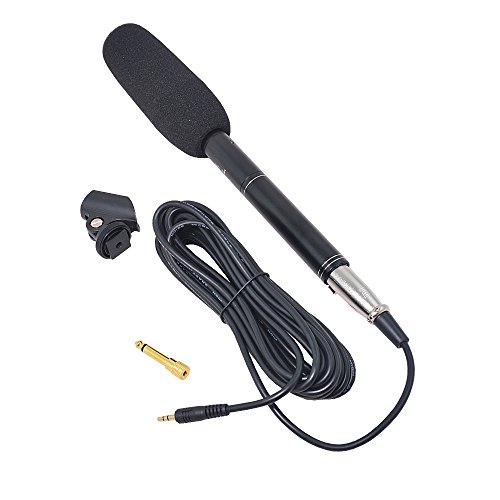
6. Ruittos 11-Inch Condenser Shotgun - Low-Cost Interview Starter With XLR Cable
Ruittos Condenser Interview Microphone Photography...
Polar: Unidirectional
Power: one AA cell
Connectors: 3.5 mm and XLR
Length: 11 inches
What we like
- Approx 8m XLR cable included so it reaches an interface or recorder
- About 26 hours of operation on one AA cell
- 11 inch length is long enough to stay out of a two-shot frame
- Works with 3.5 mm and 6.35 mm inputs plus hot shoe mounts
- Long-term owners report units still working after three years
What could be better
- Battery compartment and XLR jack feel cheap and can loosen
- No power indicator so a dead cell is not obvious
- Some buyers dispute the directionality and call it a plain cardioid
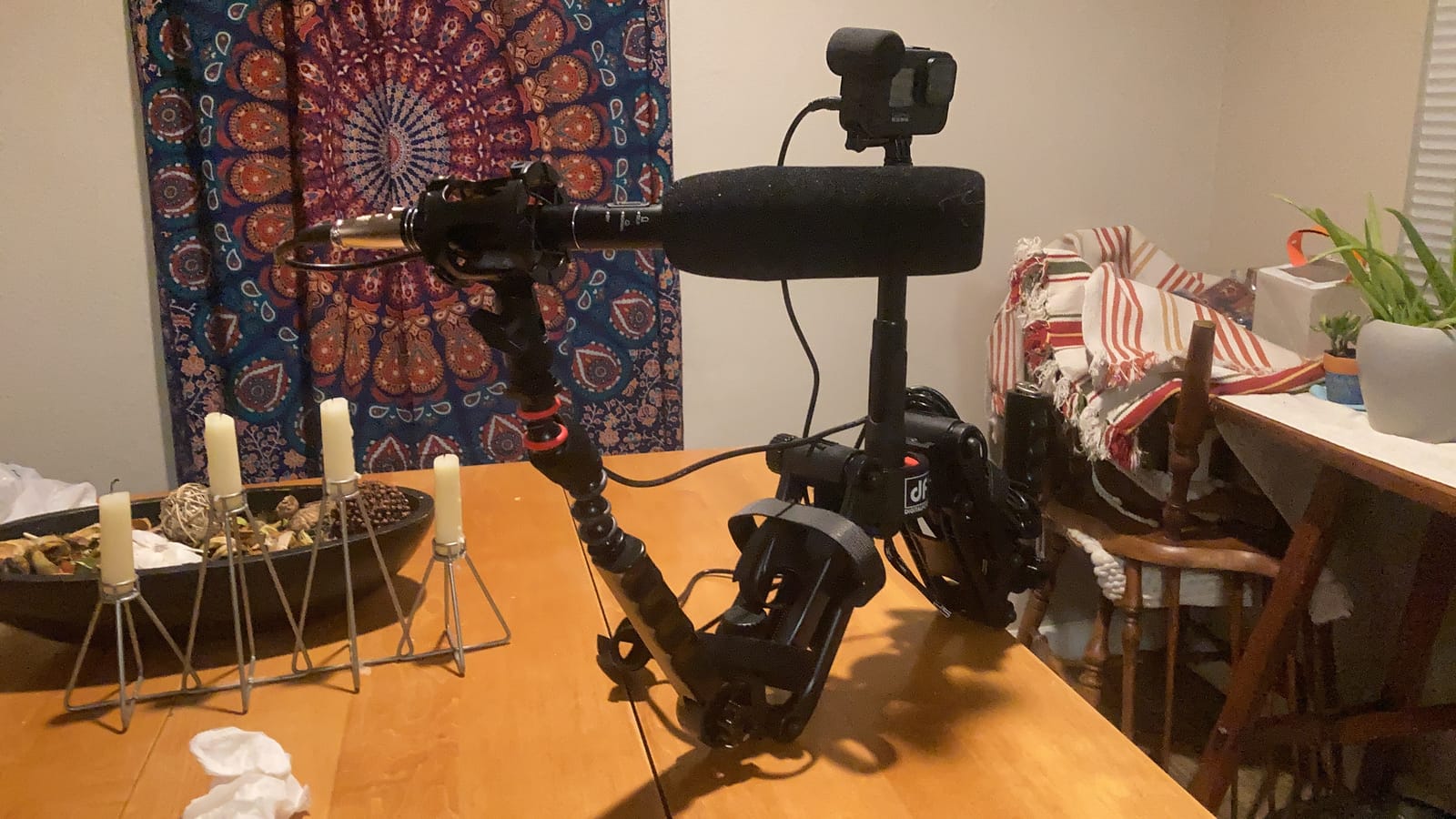
The Ruittos is the odd one out in this list because it ships with a long XLR cable, which is a real advantage if you are recording to a field recorder or a mixer several metres from the subject. An 11 inch body gives you enough length to stay out of a two-shot frame, and the supplied metal holder and foam anti-wind cap cover the basics of an interview setup without another purchase.
The included 6.35 mm and 3.5 mm compatibility means it can go straight into a camera, a camcorder or a recorder. And the single AA cell runs for around 26 hours, which is long enough to clear a full day of short-form shooting without a battery in your pocket.
Where the Low Cost Shows
Build quality is the weak point. The battery compartment and the XLR jack are the parts you handle most, and reviewers repeatedly report that these loosen over time and produce popping or crackling. There is no power indicator, so a dead cell in the field does not announce itself, and the low 4.1 rating with 61 percent five-star feedback is the lowest satisfaction score in this roundup.
The more important issue is directionality. Several buyers dispute the shotgun polar pattern and describe it as a plain cardioid condenser, and the listed 80 dB signal-to-noise figure is excellent on paper but does not compensate for weaker off-axis rejection. Treat it as a close-mic interview tool rather than a long-reach one.
Powering It
It is battery powered, which is unusual in a 3.5 mm category and means it does not depend on the host device providing plug-in power. That makes it more forgiving with older cameras and recorders, but it also means a cell can die silently. Checking levels manually before each setup is a habit worth forming with this one.
Who Should Skip the Ruittos
Skip it if you need a mic that throws away room sound from a distance, because the directionality is not consistently a true shotgun pattern. Skip it if you are recording on a long multi-day shoot where connector reliability matters. If you only need a close-mic interview mic and already have a cable, a simpler cardioid microphone would serve you better for less.
7. Audio-Technica AT875R - Broadcast Reach in a Very Short Body
Audio-Technica AT875R Condenser Microphone, 9.5 x...
Polar: narrow directional
Power: phantom or battery
Connector: XLR
Weight: 2.88 oz
What we like
- Highest average rating in this roundup at 4.6 with 82 percent five-star feedback
- Broadcast ENG and EFP pedigree for long-distance pickup
- Body under 7 inches long so it stays unobtrusive
- Excellent rejection of side and rear sound
- Tailored response reduces camera and handling noise
What could be better
- Needs 48V phantom power or a matching battery
- Fixed output with no gain
- pad or filter controls
- Requires an audio interface or field recorder rather than a camera jack
The AT875R is the highest-rated microphone in this guide, with 82 percent of its 853 ratings at five stars, and it earns that score the hard way. This is a broadcast ENG and EFP microphone, meaning it was designed to sit on a camera at the end of a long lens and pick up a subject at a genuine distance without bringing the background with it. Nothing in this roundup rejects off-axis sound more effectively.
It is also remarkably small. At under 7 inches on a body weighing 2.88 ounces, it is the least intrusive microphone here by a wide margin, and the response is tailored specifically to reduce camera and handling noise, which matters when the mic is riding on a body you cannot touch.
The Reach Is the Entire Feature
The narrow acceptance angle is what makes this worth owning. When I recorded across a room with a second person talking off-axis, the off-axis voice sat far below the subject instead of sitting in the mix with a lower volume. That gap is what broadcast and documentary crews pay for, and it is the difference between a usable wide shot and a shot you have to re-record.
The trade-off is forgiveness. A narrow pattern is unforgiving of a subject who moves out of the lobe, so a walking presenter needs a boom operator or a much more forgiving microphone. This is a locked-off subject or a properly aimed camera tool.
What It Costs You to Own It
This is an XLR microphone, and it needs 48V phantom power from an audio interface or a field recorder, or the matching battery. That means you are buying a second piece of equipment to use it with a computer, and the total cost of the package is meaningfully higher than a 3.5 mm microphone alone. The output is fixed as well, with no gain, no pad and no filter controls, so gain staging happens at the interface.
Who Should Skip the AT875R
Skip it if you shoot on a phone or a camera with only a 3.5 mm jack and no plan to add an interface. Skip it if you record a seated talking head in a treated room, where a large-diaphragm condenser on an interface will be easier to control and sound better. And skip it if you are a moving presenter, because a narrow lobe is not built to follow you.
8. COMICA CVM-VM10II - Best All-in-One Kit for New Creators
COMICA CVM-VM10II Universal Shotgun Microphone for...
Polar: Super cardioid
Power: corded, no battery
Connector: 3.5 mm TRS and TRRS
Weight: 230 g
What we like
- Both TRS and TRRS cables
- a carrying case
- a windscreen and a wind muff all included
- Full aluminum body resists vibration and interference
- Shock-absorption stand minimises handling and cable-borne noise
- Works with cameras
- camcorders
- recorders
- phones
- tablets and laptops
- 4.3 rating from 668 reviews
What could be better
- 58 dB signal-to-noise is the weakest figure in this roundup
- Less directional than a long true shotgun
- No external mic input on many Canon and Nikon entry bodies
The COMICA CVM-VM10II is the one to buy if the biggest obstacle between you and starting a channel is that you do not own the accessories yet. Both a TRS camera cable and a TRRS phone cable are in the box, along with a shock mount, a windscreen, a wind muff and a carry case. Nothing else in this roundup gives you a complete kit at this level.
The body is aluminum rather than plastic, which matters more than it sounds on a microphone this size. A rigid body passes far less vibration from the camera and the mounting hardware into the capsule, and the shock-absorption stand handles the rest of the mechanical path.
The Signal-to-Noise Number Is the Weak Spot
The listed 58 dB signal-to-noise is the weakest figure in this roundup by a wide margin, roughly 20 dB behind the best options here. In practical terms, that shows up as a faint but constant hiss floor under quiet passages, and it is most audible in a treated room with a quiet voice. In a normal room with room tone present, it is much harder to hear.
Directionality is the second consideration. Owners describe the pickup as cardioid rather than a long true shotgun, which means the side and rear rejection is decent but not the aggressive kind. It is a close-to-medium-distance tool, not a reach tool, so keep the subject within a few feet.
Compatibility and Everyday Use
It works with cameras, camcorders, portable recorders, phones, tablets and laptops, which is genuinely broad. As with the other 3.5 mm options here, entry Canon Rebel and Nikon bodies with no external microphone input are excluded, and the camera menu needs the external mic setting turned on.
Who Should Skip the CVM-VM10II
Skip it if you record voiceover or narration in a quiet treated room, where the 58 dB noise floor will be the first thing you hear. Skip it if you need long-distance pickup, because the pattern is not aggressive enough. If you are starting out and want one box that covers everything for a first year of shooting, it is a sensible pick.
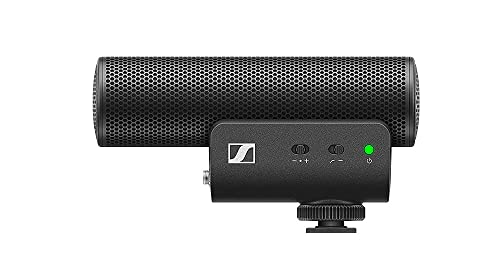
9. Sennheiser MKE 400 - Best for Real-Time Monitoring While Filming
SENNHEISER Professional MKE 400 Directional...
Polar: super-cardioid
Power: one AAA cell
Connector: 3.5 mm TRS and TRRS
Weight: 344 g
What we like
- Integrated headphone output with volume adjustment for live monitoring
- Built-in low-cut filter and a 3-step sensitivity switch on the body
- Integrated wind protection and internal suspension mount
- Interchangeable TRS and TRRS cables cover DSLR
- mirrorless and mobile
- 4.6 rating with 77 percent five-star feedback
What could be better
- Severe level falloff at normal talking-head distances of 30-32 inches
- No safety channel for clipping recovery
- 344 g crowds a compact rig
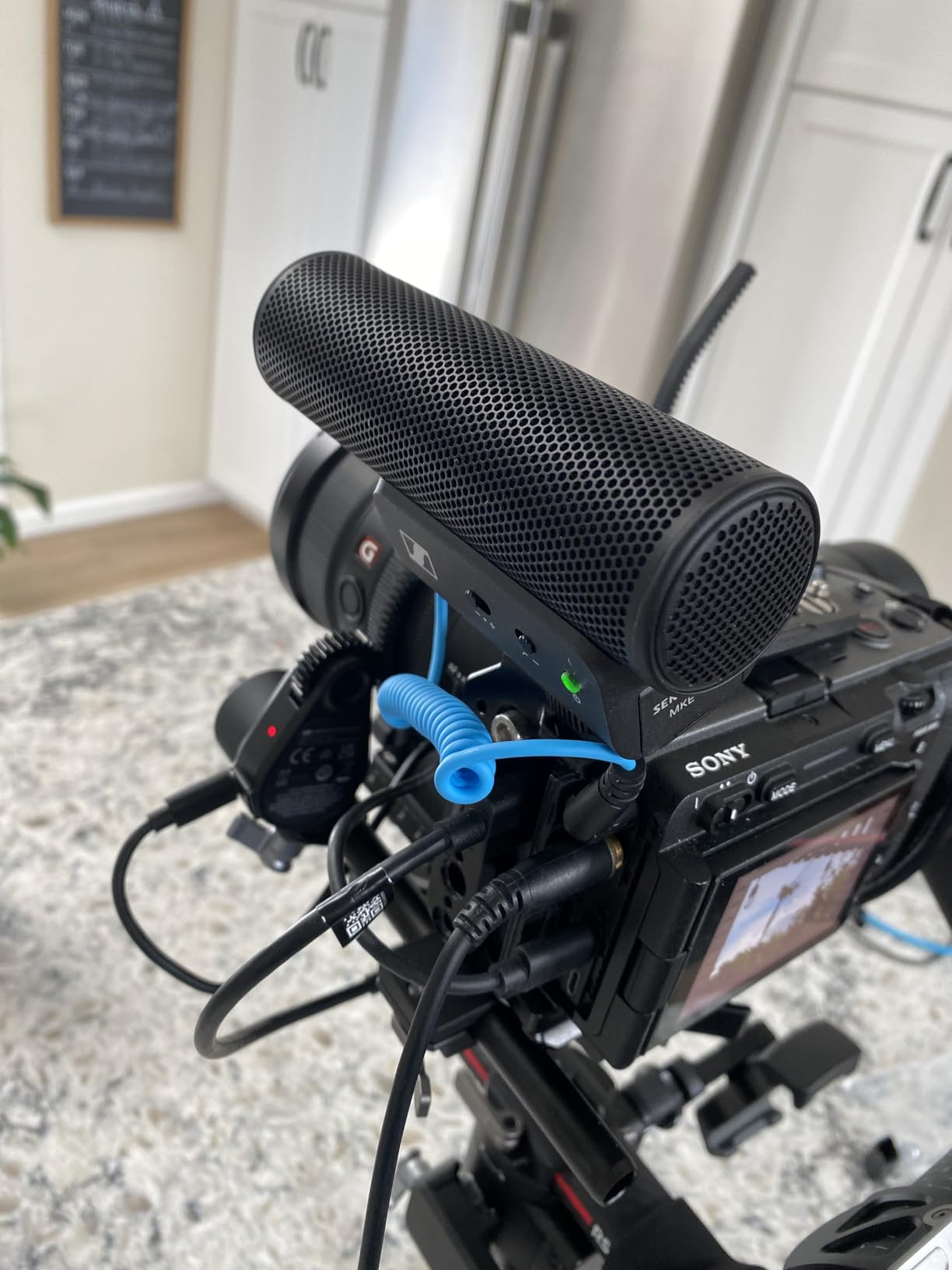
The Sennheiser MKE 400 is the only microphone in this roundup with a proper headphone output, and for a creator who wants to hear what they are recording while they record it, that single feature changes the workflow. You get instant confirmation that the mic is live, that the levels are sane, and that the framing is putting your mouth in the lobe, instead of finding out after the shoot.
The sound quality justifies the monitoring on its own. It carries a 4.6 rating with 77 percent five-star feedback, and reviewers consistently describe the audio as superb and highly portable. The built-in low-cut filter and a three-step sensitivity switch give you some on-body control even though there is no continuous gain.
Distance Falloff Is the Catch
This is the one specification that changes who should buy it. Reviewers report severe level falloff at the 30 to 32 inch distance of a normal talking-head setup, which is a real limitation because most of us frame a seated presenter at about that distance. It is superb in its intended range, which is vlogging, walk-and-talk and run-and-gun work, and weaker as a fixed studio voiceover microphone.
The 344 g weight is the second thing to know. On a full-size body it is fine. On a compact mirrorless rig or a travel setup it crowds the frame and pushes the balance point forward, and the cold shoe mount can loosen after repeated rig changes if you do not check it.
Power, Connectivity and Handling
It runs on a single AAA cell, which is a reminder to carry spares on a long shoot day. Interchangeable TRS and TRRS cables cover cameras and phones without a mode switch. The integrated wind protection and the internal suspension mount mean it is genuinely usable outdoors without buying a separate deadcat for light wind.
Note that there is no safety channel, so a sudden level spike is unrecoverable. That is fine if you monitor and watch the levels, and risky if you do not.
Who Should Skip the MKE 400
Skip it if you record a seated talking head at arm-plus distance, because the falloff will leave you pushing level. Skip it if you need clipping insurance, since there is no safety channel. And skip it if you shoot on a small travel rig where 344 g will unbalance the setup.
10. COMICA VM20 - Most On-Body Controls for Long Recording Days
COMICA VM20 Shotgun Microphone for Camera...
Polar: Super cardioid
Power: 300mAh rechargeable
Connector: 3.5 mm TRS and TRRS
Weight: 84 g
What we like
- OLED display shows battery level and real-time signal level on camera
- Two low-cut filter modes at 75Hz and 150Hz tame rumble and wind
- Stepless gain control from -43dB to -23dB for precise level matching
- 300mAh battery runs up to 60 hours and works while charging over USB-C
- Full metal body with both TRS and TRRS cables in the box
What could be better
- No XLR cable included so pro inputs need an adapter
- Heavier than the ultracompact options at 84 g
- Needs its own battery rather than drawing plug-in power from the camera
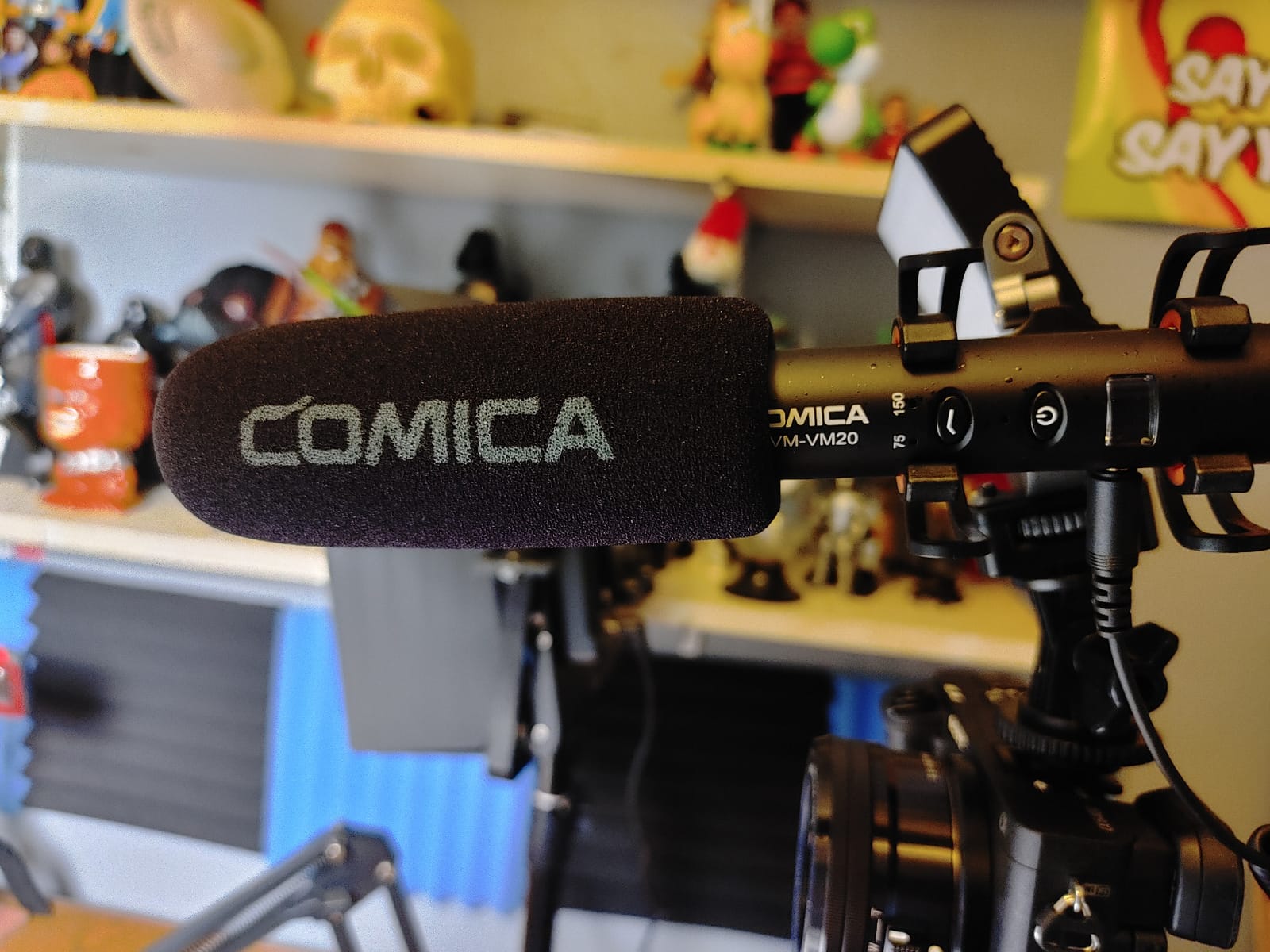
The COMICA VM20 has the most on-body control of anything in this guide, and the OLED display is the reason. You can see battery level and the incoming signal level with the camera behind the monitor, which removes the single most common failure in location shooting: finding out at the end of the day that the batteries were dead or the levels were clipping.
The gain control is stepless, running from -43 dB to -23 dB, so you can match a loud voice and a quiet one on the same setup without switching a switch. The two low-cut filter modes at 75 Hz and 150 Hz let you deal with traffic rumble on the street and then open it back up indoors, without changing microphones.
Battery Life Solves the Long-Day Problem
The 300mAh internal battery runs up to 60 hours and, more usefully, works while charging over USB-C. On a multi-day shoot that means one cable and no spare cells to lose. The 1 year manufacturer warranty is the shortest in this roundup, which is worth weighing against the 10 year coverage on the Rode models.
It is a 3.5 mm microphone with TRS and TRRS cables supplied, and no XLR cable is included, so feeding a professional input means an adapter. At 84 g it is heavier than the ultracompact options but far lighter than the MKE 400.
The 43 dB Signal-to-Noise Consideration
The listed 43 dB signal-to-noise is the weakest real-world quiet-room figure among the battery-powered metal bodies here, and it is noticeably higher than the 20 dB on the Rode VideoMic. In a treated room with a quiet voice you will hear a low hiss floor, and no amount of gain control fixes that, since gain amplifies the noise along with the signal. If your room is untreated, the noise is masked by room tone anyway.
Who Should Skip the VM20
Skip it if you record in a genuinely quiet treated room and care about the noise floor more than on-body controls. Skip it if you want a single-cable solution with no battery management, because this draws its own power. And skip it if you need XLR out of the box.
How Shotgun Microphones Actually Work
A shotgun microphone works by letting sound from the front arrive in phase while cancelling sound from the sides, which is why a shotgun isolates rather than reaches, and why it must be close to the subject and pointed at them.
Inside the barrel is a long slotted tube called an interference tube. Sound arriving from directly in front travels an equal distance through each slot and reaches the capsule simultaneously, so the wavefronts add together. Sound arriving from the side enters each slot at a different depth, travels a different distance, and reaches the capsule out of phase, where it partially cancels itself out. What comes out of the capsule is a narrow forward lobe, and the frequency-dependent behaviour that follows from this is why shotgun patterns tighten at low frequencies and widen at high ones.
That last detail has a real consequence. Because the pattern is narrowest where the tube is most effective and the slot geometry allows it, a shotgun microphone placed in a reflective room will still capture reflections, because the wall behind the subject reflects sound back along the same axis. A narrow tube cannot reject sound coming from the direction it is pointing, and that is the entire limitation of the format.
How Far a Shotgun Actually Reaches
For a typical on-camera shotgun in the 9 to 11 inch class, think in terms of roughly three to five feet for a normal speaking voice at a usable level. Beyond that the level drops off quickly, and there is no setting on the microphone that brings it back. Doubling your distance does not halve the volume in a predictable, recoverable way, and the frequency balance shifts as the level falls, so distant speech sounds thin before it sounds quiet.
The 3-to-1 rule, which says the microphone should be at least three times further from the source than it is from the nearest competing sound source, is placement guidance rather than a feature. It works, and it is the reason a shotgun mounted on a tripod two metres from a subject in a quiet room sounds clean, while the same microphone in a kitchen sounds like the kitchen.
Why Short Tubes Are More Forgiving Indoors
Short interference tubes are recommended indoors because they are more forgiving. A longer tube produces a narrower pattern that holds directionality down to lower frequencies, which is what you want outdoors in wind and traffic and exactly what you do not want in a room where you are also picking up reflections. A medium-length on-camera shotgun, aimed correctly, is the indoor sweet spot.
Shotgun vs Lavalier vs Wireless: Which One You Actually Need
For a seated talking head, a wireless lavalier plus a backup recorder usually beats a shotgun microphone per dollar, and for a subject who walks out of frame or speaks beyond about ten feet, you need a wireless system rather than a shotgun.
This is the question that comes up most on forums and it is worth answering directly rather than defending the category. A shotgun microphone is a camera-mounted solution for a solo creator who stays within a few feet of the camera, cannot operate a second person, and wants the microphone out of frame. A lavalier is a clothing-mounted solution that stays a constant fixed distance from the mouth, which means no distance falloff, no aiming, and no worry about where the subject is standing.
What the shotgun wins on is rejection of everything that is not the voice. A lavalier sitting on a shirt in a room with a television on records the television too, because it is a small cardioid capsule with a narrow pickup in a random direction. A shotgun pointed at the speaker throws away most of that. Forum consensus repeatedly puts a wireless lavalier plus a backup recorder ahead of any shotgun for talking-head content, and I agree for most seated cases.
The Decision Rules
Choose a shotgun microphone when you shoot alone, the subject stays within roughly five feet of the camera, you need the background rejected, and you want one cable instead of a transmitter, a receiver and a battery pack.
Choose a wireless lavalier when the subject moves, when the distance exceeds about ten feet, when you are outdoors in wind, or when the subject wears a jacket that will rub against a clipped microphone. Rubbing a lavalier against fabric is worse than handling noise on a shotgun, so outdoor lavalier work needs a proper clip and some tape.
Choose a dynamic microphone on a desk for streaming and podcasting. Dynamics are tough, forgiving and cheap to run, and forum users consistently describe them as a little overkill for a quiet home office, which is true, but also a reasonable thing to own. Choose a large-diaphragm condenser on an interface for voiceover and voice acting in a treated room, where a shotgun has no advantage and gives up control.
Will Your Camera Accept a Shotgun Mic? Connector and Power Guide
Check your camera for a 3.5 mm microphone input with plug-in power before you buy anything, because entry Canon Rebel and Nikon bodies frequently have no external microphone input at all.
There are three power paths in this category, and the connector you need is decided by the power path.
Plug-in power means the microphone takes its charge from the device it is plugged into. No battery, no charging, nothing to forget on a long day. The trade-off is that the signal is weak, so a cheap camera preamp will amplify it into audible hiss. Every plug-in power model here is a 3.5 mm model, which makes them the most universally compatible and the most limited in level control.
Battery powered means the microphone runs on its own cells and outputs a healthy line-level signal. That means better hiss performance and the ability to monitor, but also a battery to manage and a 3.5 mm connection that older devices may or may not drive properly.
Phantom power is the professional path. An XLR microphone like the AT875R is powered by 48V from an audio interface or field recorder, and that equipment is a separate purchase. Anyone going this route is building a kit rather than clipping a microphone to a camera.
Camera Bodies That Commonly Exclude 3.5 mm Microphones
Several entry Canon Rebel models and a number of Canon VIXIA camcorders have no external microphone input, and certain Nikon D3xxx bodies use a proprietary small jack rather than a standard 3.5 mm socket. Sony and Minolta bodies of a certain era need a hot shoe adapter for the mounting point rather than for the audio path.
Even when the jack exists, many cameras ship with the external microphone input disabled in the menu. If you plug in a working microphone and record silence, check that setting before you return the product. On phones, newer USB-C and Lightning models need an adapter, and some phones refuse third-party adapters or record silence with them.
How to Choose a Shotgun Microphone for YouTube: Six Criteria That Matter
Decide in this order: the distance to your subject, the connector your camera accepts, the noise floor of your room, the controls you need, the wind you will meet, and only then the price. Everything else is preference.
1. Distance and Framing Come First
Measure the actual distance from your camera to your subject in your normal setup. If it is under three feet, almost any of these will work. Between three and five feet, pick a super-cardioid pattern with a longer barrel. Beyond five feet, a shotgun is the wrong tool and you want either a broadcast barrel or a wireless system. Buying the wrong category is the most expensive mistake available in this guide.
2. Connector and Power Path
Look at what your camera actually accepts before anything else, then check the power source. A 3.5 mm plug-in power microphone is the safest universal choice. A battery microphone gives better levels and sometimes monitoring, at the cost of managing cells. An XLR microphone demands an interface or recorder, and the accessory cost is real, so include it in the comparison if you are weighing the AT875R against a 3.5 mm option.
3. Self-Noise and Signal-to-Noise
Self-noise is the hiss floor, and it matters in a quiet treated room where there is no room tone to mask it. The difference between 20 dB and 43 dB is easy to hear on a quiet voice, so for voiceover and narration prefer the lower figure. In a normal untreated room, that difference is largely irrelevant because the reverb is louder than the hiss, and a better-treated room matters more than a cleaner microphone.
Signal-to-noise is the related published figure. Higher is better, and the range across this roundup runs from 58 dB on the CVM-VM10II to 80 dB on the Ruittos. Treat published numbers as directional guidance rather than a straight ranking, because manufacturers do not all measure the same way.
4. On-Body Controls and Safety Net Features
Gain control, a low-cut filter and a pad are the three controls that prevent ruined audio. A pad saves a take when a subject suddenly gets loud. A low-cut filter removes traffic rumble and handling thumps before they become a problem in editing. A safety channel records a second track at a lower level so a clipped main track can be rescued, and since clipping cannot be repaired in software, this is the single most valuable feature on the list if your audio is unrepeatable.
5. Mounting, Weight and Rig Balance
Weight only matters on small rigs. The VideoMicro II at 39 g and the AT875R at 2.88 ounces are effectively invisible on a compact body, while 344 g on the MKE 400 will push the balance forward and crowd the frame. Also check the mount: a cold shoe is convenient, a 1/4-20 thread underneath gives you tripod and stand options, and a proper shock mount or isolation system is what keeps handling noise out of the recording.
6. Wind Protection for Outdoor Work
Match the windscreen to the environment. Foam handles light breath and indoor handling. A furry windscreen handles breeze and light wind outdoors, and most of the better microphones here ship with one. A deadcat over a furry layer is the setup for genuine wind, and none of these include one, so budget for it if you shoot outside regularly. Buying a microphone to solve wind with the wrong windscreen is the most common outdoor failure I see.
Frequently Asked Questions
What is the best mic for making YouTube videos?
For most creators the Movo VXR10 is the best mic for making YouTube videos because it connects to phones, cameras, camcorders and laptops with the cables in the box and needs no battery. If your room is untreated or you record often, add a rug, curtains and soft furnishings before upgrading the microphone, because a shotgun exposes reverb rather than hiding it.
What is the best shotgun microphone for streaming?
The Sennheiser MKE 400 is the best shotgun microphone for streaming because the integrated headphone output with volume adjustment lets you monitor your voice live. It also has a built-in low-cut filter and a three-step sensitivity switch. Its 344 g weight suits a desk arm or stand, where a camera-mounted body would be awkward.
Which is better for me, a lavalier mic or a shotgun mic?
For a seated talking head, a wireless lavalier plus a backup recorder is usually the better choice, because it stays a fixed distance from your mouth with no aiming and no level falloff. A shotgun microphone wins when you shoot alone, stay within about five feet of the camera, and need to reject background noise in a fixed location.
How far can a shotgun mic pick up?
A typical on-camera shotgun in the 9 to 11 inch class reaches about three to five feet for a normal speaking voice at a usable level. Beyond that the level drops off quickly and the frequency balance shifts so speech sounds thin before it sounds quiet. A shotgun improves isolation rather than reach, so get the microphone close rather than expecting distance pickup.
What are the downsides of using a shotgun mic?
The main downsides are level falloff with distance, a narrow acceptance angle that cannot follow a moving subject, exposure of room reverb through the interference tube, and dependence on getting a 3.5 mm input with plug-in power or buying an interface. Many cheap models also add hiss from a weak signal amplified by a modest camera preamp.
Do shotgun microphones need phantom power?
Only XLR models do. The Audio-Technica AT875R needs 48V phantom power from an audio interface or field recorder, or its matching battery. Most 3.5 mm models in this roundup either run on their own batteries or draw plug-in power from the camera, so check the connector on your body before you buy.
The Best Shotgun Microphone for Your Channel in 2026
If you want one microphone that connects to whatever you already own and never needs a battery, the Movo VXR10 is the pick, and it is our best shotgun microphone for YouTube videos for most creators in 2026.
If your priority is the quietest recording in a noisy room, choose the Rode VideoMic and its 20 dB self-noise. If you need live headphone monitoring while filming, the Sennheiser MKE 400 is the only option here with a proper headphone path, at the cost of weight and level falloff at talking-head distances. If you need clipping insurance on unrepeatable audio, the Rode VideoMic NTG and its safety channel justify the extra spend on their own.
If you shoot on a phone and a camera with the same kit, the COMICA CVM-V30 LITE with its camera and phone mode switch is the most convenient starting point. If you travel light, the Rode VideoMicro II disappears into any bag. If you need broadcast reach, the Audio-Technica AT875R rejects off-axis sound better than anything else here, and you will need an interface. If you want the most on-body control, the COMICA VM20 gives you a level display, dual low-cut filters and stepless gain.
Before you buy anything, put the microphone close, point it at your mouth, and treat the room. That habit will improve your audio more than any model on this list.