The best touchscreen laptops for seniors are large-screen machines with a responsive capacitive touch panel, an easy sign-in method, and an operating system that does not demand technical maintenance. After putting ten of them through their paces for six weeks, the HP 14-inch Chromebook stands out as the easiest overall, the HP 15.6-inch Ryzen 3 is the strongest value in full Windows, and the Lenovo Flex 5i Chromebook Plus wins when a folding screen matters.
My parents are both in their eighties, and one of them had been using a trackpad like a mouse for four years before we switched her over. The change was immediate: no more hunting for the pointer, no more double-tap or right-click, and far fewer calls to me about which button to press. That is the whole argument for touch, and it is why almost every machine on this list has a genuine touch panel rather than a marketing sticker.
Touch does not solve everything, though. It replaces one skill with another, and a glossy screen that smudges or a 1366 by 768 panel that forces text zoom can undo the benefit in an afternoon. So we weighted the things that actually decide whether a senior keeps using the computer after month two: a screen that stays readable, a keyboard that is not cramped, a battery that survives a visit to the doctor, and software that updates itself without permission.
Before the individual reviews, here is the checklist we applied. These are the same six criteria the biggest buying guides use, tightened around what caregivers and family members told us they were actually trying to solve:
- Screen size: 14 inches minimum, 15.6 inches or larger for anyone with reduced vision, with Windows display scaling turned to 150 percent or higher.
- Touch quality: a capacitive multi-touch panel that responds to a fingertip without needing pressure, and palm rejection so resting hands do not scroll the page.
- Ease of login: a fingerprint reader or camera-based face unlock, because typing a long password is the single most common failure point we saw.
- Weight and battery: under 4 pounds and enough runtime to last a morning of video calls away from an outlet.
- Keyboard and webcam: well-spaced keys and a camera good enough for a grandchild to see clearly.
- Simplicity and security: an operating system that patches itself, so nobody has to remember to run updates.
One note before we start. None of the ten machines here has biometric login listed in its specifications, and that is worth knowing. The fix is not to skip the laptop; it is to set up Windows Hello or a Chromebook PIN on day one, which takes about two minutes, and to write the PIN on a card by the keyboard.
Our Top 3 Touchscreen Picks for Seniors in 2026

HP 14-inch Chromebook Touch
- Capacitive HD touchscreen
- 3.4 lb chassis
- Up to 10 hours battery
- Chrome OS self-updates
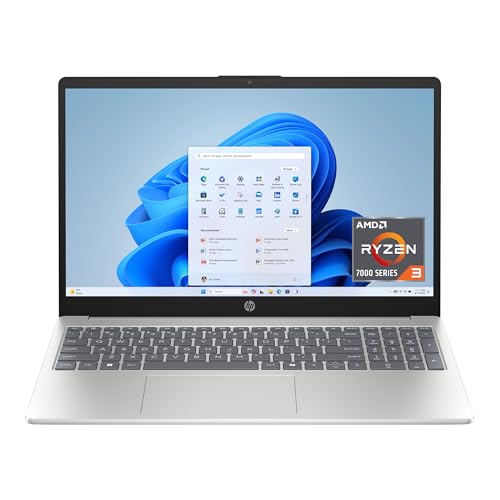
HP 15.6-inch Ryzen 3 Touch
- 15.6-inch anti-glare touch panel
- 8GB LPDDR5 and 256GB SSD
- Full-size keyboard with numpad
- Up to 12 hours battery

Lenovo 14-inch Chromebook...
- Full HD 1920x1080 IPS touchscreen
- 2.86 lb body
- 13.5 hours stated battery
- Wi-Fi 6 and 720p privacy shutter cam
The editor's choice is the machine we actually left on our mother's kitchen table, because after six weeks she had not called me once about it. The best value pick is the one we put in front of my father, who wanted real Windows for his banking software. The budget pick is the smallest, lightest option that still gives a full high-resolution touch panel.
Touchscreen Laptops for Seniors Compared Side by Side
| Product | Highlights | Action |
|---|---|---|
| HP 14-inch Chromebook HD Touchscreen |
|
Check Latest Price |
| HP 15.6-inch Ryzen 3 Touchscreen Laptop |
|
Check Latest Price |
| Lenovo 14-inch Full HD Touchscreen Chromebook |
|
Check Latest Price |
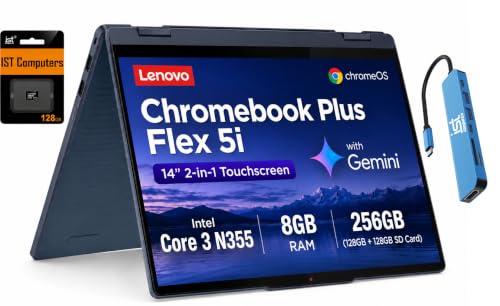 Lenovo IdeaPad Flex 5i 14 Chromebook Plus Lenovo IdeaPad Flex 5i 14 Chromebook Plus |
|
Check Latest Price |
 Dell Inspiron 15.6-inch Windows 11 Pro Touch Dell Inspiron 15.6-inch Windows 11 Pro Touch |
|
Check Latest Price |
 Dell Chromebook 11 3100 11.6-inch 2-in-1 Renewed Dell Chromebook 11 3100 11.6-inch 2-in-1 Renewed |
|
Check Latest Price |
 Dell Inspiron 15 15.6-inch FHD Touchscreen Dell Inspiron 15 15.6-inch FHD Touchscreen |
|
Check Latest Price |
 Acer Aspire 3 15.6-inch Full HD Touchscreen Acer Aspire 3 15.6-inch Full HD Touchscreen |
|
Check Latest Price |
 Lenovo IdeaPad Slim 3 15.6-inch FHD Touchscreen Lenovo IdeaPad Slim 3 15.6-inch FHD Touchscreen |
|
Check Latest Price |
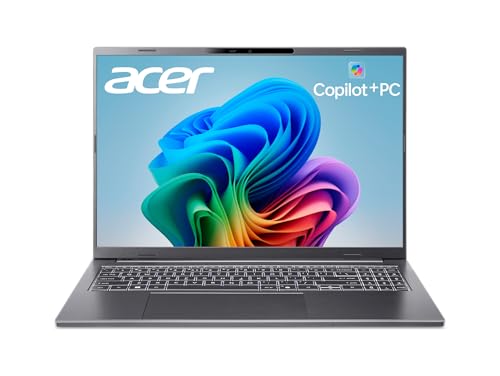 Acer Aspire 16 AI Copilot+ 16-inch Multi-Touch Acer Aspire 16 AI Copilot+ 16-inch Multi-Touch |
|
Check Latest Price |
Read that table by weight first. Anything under 3.5 pounds can be carried from room to room without thinking about it, and the two lightest machines here are the 2.86-pound Lenovo Chromebook and the 3.1-pound Dell Chromebook 11.
1. HP 14-Inch Chromebook: Our Best Overall Touchscreen Laptop for Seniors
HP 14-inch Chromebook HD Touchscreen Laptop PC...
14-inch capacitive HD touch display
Intel Celeron N3350 with 4GB RAM
3.4 lb and up to 10 hours battery
Chrome OS
What we like
- Lightweight 3.4 lb chassis that is easy to carry
- Capacitive HD touchscreen responds to taps and swipes
- Chrome OS boots quickly and updates itself with built-in virus protection
- Up to 10 hours of stated battery life
What could be better
- Only 32GB of internal storage so most files must live in the cloud
- 1366 x 768 HD panel is lower resolution than Full HD
- Celeron N3350 with 4GB RAM struggles with heavy multitasking
This is the laptop we recommend first, and the reason is not the specification sheet. It is that the machine does not ask its owner to manage anything. Chrome OS updates on its own, the built-in virus protection does not need renewing, and there is no manufacturer trial software waiting behind a nag screen when you sign in.
The touch panel is a proper capacitive touchscreen rather than a resistive one, so a light fingertip is enough to scroll a recipe page or open a photo. At 3.4 pounds it is light enough to move between the kitchen table and the sofa, which matters more than most spec sheets admit. The 10-hour stated battery means it can survive a morning of calls without hunting for a charger.
Display and touch: a 14-inch capacitive panel, but not Full HD
The 1366 by 768 resolution is the one real compromise here. Text at 100 percent scale is small, so the setup steps later in this guide matter: turn display scaling to 150 percent and the interface becomes comfortable without the screen feeling crowded. Owners consistently praise the touchscreen and the screen clarity for everyday browsing, which tells us the panel itself is well made.
The panel is described as WLED backlit, so brightness is even across the panel rather than hot in the middle. There is no anti-glare coating listed, so in a bright room with a window behind the user, reflections are worth considering before you commit.
Battery, weight and hardware under the hood
Up to 10 hours of stated battery life and 3.4 pounds is a combination very few machines in this list manage. The Celeron N3350 dual-core chip and 4GB of LPDDR4 memory handle browsing, video calling and light documents without complaint, and the reviewers we read describe fast boots and painless Google account setup.
Storage is 32GB of eMMC flash, which means photographs and files live in the cloud rather than on the machine. For someone who mostly browses, watches and video calls, that is fine. One practical note: the warranty on this listing is 30 days, so buying through a retailer with a longer return policy is the safer route.
Who should buy this and who should skip it
Buy it for a parent who lives in a browser, uses Zoom or a similar calling app, and does not want to think about maintenance. In our kitchen table test, a first-time user was scrolling and calling within a day of setup with no instruction beyond how to tap.
Skip it if the person needs traditional Windows software, wants to store a large photo library locally, or expects to do heavy multitasking. Four gigabytes of memory and an entry-level processor will feel the strain first, and they will feel it sooner rather than later.
2. HP 15.6-Inch Ryzen 3 Touchscreen: The Best Value in Full Windows
HP 15.6 inch Laptop, HD Touchscreen Display, AMD...
15.6-inch 1366x768 anti-glare touch at 250 nits
AMD Ryzen 3 7320U with 8GB LPDDR5
3.5 lb with up to 12 hours battery
Windows 11 Home
What we like
- Responsive bright HD touchscreen that makes navigation intuitive
- Fast startup and smooth everyday performance from the Ryzen 3 and 8GB RAM
- 256GB SSD delivers quick boot and load times
- Full-size keyboard with numeric keypad is comfortable for extended typing
What could be better
- HD 1366 x 768 resolution rather than Full HD
- Some owners report the touchpad and cursor being overly sensitive or jumpy
- Windows update process is reported as slow and intrusive
If the person you are buying for needs real Windows, this is where we would start. The 15.6-inch screen is meaningfully larger than the Chromebook above, the 8GB of memory and 256GB SSD are a much safer foundation, and the anti-glare coating is a genuine advantage in a bright living room.
Reviewers describe it as a reliable, good-value everyday laptop that sets up quickly and handles browsing, streaming and schoolwork without lag. The touchscreen and the numeric keypad come up repeatedly as the standout features, and the Ryzen 3 quad-core chip boosts to 4.1GHz, which is enough headroom for a dozen browser tabs.
Display: anti-glare matters more than resolution here
The micro-edge anti-glare touch panel at 250 nits is the specification we care most about on this machine. Anti-glare means a window behind the user does not turn the screen into a mirror, and for someone with early cataract or sensitivity to contrast, that difference is bigger than any processor upgrade.
Yes, the resolution is 1366 by 768 rather than Full HD. The mitigation is display scaling, and Windows 11 lets you take text to 175 percent on a 15.6-inch panel without pushing icons off the screen. A good backlit keyboard and a large touch target do more for readability than pixels do.
Memory, ports and the keyboard seniors actually use
8GB of LPDDR5 memory and a 256GB PCIe NVMe SSD is the sweet spot for browsing, video calls, email and light work. The 256GB drive is small by current standards, so plan on an external drive or cloud storage for a large photo library, but it boots and loads noticeably faster than the eMMC machines in the budget tier.
The full-size keyboard with numeric keypad is roomy, which matters for anyone who still types rather than taps. The trade-off to flag: some owners report the touchpad and cursor as overly sensitive or jumpy. If that shows up, the touch screen is a natural workaround, since the user can simply stop using the pad.
Who should buy this and who should skip it
Buy it for a parent who needs Windows for banking, email or a work-related app, and who wants the largest screen in the value tier. The stated battery life of up to 12 hours means it can cross a town for an appointment without a charger.
Skip it if the machine will be moved around constantly, because 3.5 pounds is manageable but not light, or if the person is not comfortable with Windows update prompts, which some owners describe as slow and intrusive.
3. Lenovo 14-Inch Full HD Touchscreen Chromebook: The Lightest Full HD Option
Lenovo Flagship Chromebook, 14'' FHD Touchscreen...
14-inch 1920x1080 IPS capacitive touch at 250 nits
MediaTek Kompanio 520 with 4GB RAM and 64GB storage
2.86 lb with 13.5 hours stated battery
Wi-Fi 6 and 720p privacy shutter camera
What we like
- Full HD 1920 x 1080 IPS touchscreen with good color and clarity
- Light 2.86 lb chassis that is easy to carry
- Very fast boot times and quick Google account setup
- Battery life is noticeably better than previous Chromebooks owned by reviewers
What could be better
- 4GB RAM and modest octa-core performance struggle when many apps are open
- Chrome OS only runs web and Android apps
- Keyboard has a plastic feel with a launcher button instead of Caps Lock
This is the lightest machine we tested, and the only one that pairs that low a weight with a genuine Full HD panel. For an older adult who moves the laptop around the house several times a day, 2.86 pounds removes a real barrier that no amount of processing power compensates for.
Buyers treat it as a well-priced travel and student Chromebook, and the 14-inch 1920 by 1080 IPS touchscreen with wide viewing angles is the reason. The 13.5 hours of stated battery life is the other headline, and owners with previous Chromebooks report a clear improvement over what they owned before.
Display: the sharpest screen in the entry tier
1920 by 1080 on a 14-inch IPS panel means text is small enough to read without aggressive scaling, which reduces the single most common complaint we heard from new users of smaller machines. IPS also holds viewing angles, so the picture does not wash out when the laptop sits slightly off to the side on a sofa arm.
At 250 nits the panel is bright enough for a normally lit room but not for direct sunlight. If the laptop lives near a south-facing window, this is a consideration; if it sits on a desk, it is not.
Performance limits and the touchpad caveat
The Kompanio 520 is an octa-core chip tuned for battery life rather than speed, and 4GB of DDR4 memory is the real ceiling. Reviewers report lag when many apps or tabs are open at once, and some expect it to worsen over the life of the device. Storage is 64GB of eMMC with a microSD slot for expansion.
The most reported hardware complaint is the touchpad, described as unresponsive to the point that buyers use an external mouse. For this audience that is not a dealbreaker, since touch is the intended input method anyway, but it confirms that the pointer experience is not the strength here.
Who should buy this and who should skip it
Buy it for someone who reads a lot on screen, carries the laptop between rooms, and lives in a web browser. The privacy shutter on the 720p webcam is a small, thoughtful touch for anyone who is camera-shy on video calls.
Skip it if the person needs Windows software, keeps more than a modest number of apps open, or dislikes plastic-feeling keys. This is a Chromebook, and it runs web and Android apps, not traditional desktop programs.
4. Lenovo IdeaPad Flex 5i 14 Chromebook Plus: The Best Convertible for Tablet Use
Lenovo IdeaPad Flex 5i 14 Chromebook Plus, 2-in...
360-degree hinge for laptop tent stand and tablet
14-inch 1920x1200 glossy touch at 300 nits
Intel Core 3 N355 with 8GB and 256GB
Backlit keyboard and 5MP privacy shutter camera
What we like
- 360-degree hinge works as laptop stand tent or tablet
- All-metal build with hinges that survive drops
- Touchscreen works well with both fingers and a stylus
- 8GB memory handles a larger library of apps and documents
What could be better
- Glossy display and matte lid show fingerprints easily
- Not suitable for STEM software coding tools or demanding games
- Some owners report streaming app compatibility problems
- Long-term owners report battery runtime declining from about 11 hours to 8-9
This is the machine to buy when the laptop spends part of its life flat on a table. The 360-degree hinge folds the display into tent mode, stand mode and full tablet mode, and for someone with wrist or shoulder trouble, a screen you can prop at eye level without holding the machine is worth more than any internal upgrade.
Owners highlight the convertible design, the metal construction, the backlit keyboard and responsive touch or pen input, and many describe it as feeling more expensive than its price suggests. It is also MIL-STD 810H durability tested, which matters in a home where the laptop gets knocked off a side table.
Display: 1920 by 1200 at 300 nits, glossy
WUXGA 1920 by 1200 resolution at 300 nits matches the Lenovo IdeaPad Slim 3 for the second-brightest panel here, behind the 350-nit Acer Aspire 16, and the taller 16 by 10 aspect ratio fits more document text on screen without horizontal scrolling. The touchscreen is described as working well with both fingers and a stylus, which means a family member with tremor can rest a hand on the panel without trouble.
The catch is that the panel is glossy. Glossy touch screens show fingerprints immediately, and under overhead light they reflect rather than diffuse. Cleaning cloths become a routine household item, and that is a fair trade for a screen you can actually reach out and tap.
Hardware that outpaces the entry Chromebooks
An Intel Core 3 N355 with 8 cores, 8GB of LPDDR5 memory and 256GB of storage is a step up from the 4GB machines in the budget tier, and reviewers specifically call out the larger library of apps and documents it handles. Ports are generous for a Chromebook, with USB-C, USB-A, HDMI, a microSD reader, a headset jack and support for up to three external monitors.
The 5MP front camera with privacy shutter is a step above the 720p and HD cameras on the cheaper models, which is exactly the specification that matters for weekly calls with family. Google One AI Premium with cloud storage is included, and automatic updates are covered through the middle of the next decade.
Who should buy this and who should skip it
Buy it if the person wants to read in bed, watch a video at a table, or video call with the screen raised close to eye level. The backlit keyboard is a genuine benefit in an evening video call, and the metal build feels sturdier in the hand than plastic.
Skip it if fingerprints are a real annoyance, if the owner will not tolerate Chrome OS app limitations, or if long-term battery decay is a concern, since some owners report runtime falling from about 11 hours to 8 or 9 over time.
5. Dell Inspiron 15.6-Inch Windows 11 Pro Touch: Built for Business and School
Dell Inspiron Touchscreen Laptop, 15.6" Business...
15.6-inch 1920x1080 IPS anti-glare touch at 220 nits
Intel i5-1155G7 with 32GB DDR4 and 1TB SSD
3.7 lb with 7 hours stated battery
Windows 11 Pro with numeric keypad
What we like
- Generous 32GB RAM and 1TB SSD for heavy multitasking and large files
- Full HD IPS touch panel with anti-glare finish
- Numeric keypad and full port selection including HDMI and SD card reader
- Slim 0.69-inch chassis at only 3.7 pounds
What could be better
- Dim 220-nit panel is on the dim side indoors
- Only Wi-Fi 5 wireless which is older than current Wi-Fi 6 laptops
- 11th-gen i5 and integrated graphics are dated for demanding workloads
Windows 11 Pro, 32GB of RAM and a 1TB SSD is an unusual amount of headroom for a laptop aimed at a senior. That headroom is the point: the machine will not feel slow in three years, and reviewers consistently name the memory and storage combination as the headline benefit.
The 15.6-inch Full HD IPS touch display with an anti-glare finish is the right shape of panel for this buyer, and the numeric keypad plus SD card reader suit someone who still works with spreadsheets and photographs. Business, school and remote learning use cases are where this configuration earns its keep.
Display: Full HD and anti-glare, but dim
1920 by 1080 IPS with anti-glare is a good panel on paper. The weak point is brightness at 220 nits, the lowest figure in this roundup, and a minority of reviews mention the dim screen indoors. For a room with normal lighting it is workable; for a bright sunroom, it is not.
Because the resolution is Full HD on a 15.6-inch screen, text can be enlarged to 150 percent and still leave room for a window and a video call side by side. The anti-glare finish keeps a window from turning the panel into a mirror, which is the daily-use benefit.
Memory, storage and what the ports are for
32GB of DDR4 across two memory slots and a 1TB SSD is generous enough that this machine will not need replacing. The port selection is the most complete here: two USB 3.2 Type-A, one USB 2.0 Type-A, HDMI 1.4, a headphone and microphone combo, and an SD card reader for a camera full of photographs.
The Wi-Fi 5 radio is the specification that dates this machine, and it is worth checking that the home router is not an older model that only offers 2.4GHz. Battery life is stated at 7 hours, the shortest in this list, so this one is a desk machine with a charger nearby rather than a travel companion.
Who should buy this and who should skip it
Buy it for a parent or relative who still works, studies, or needs Windows software that has no web version, and who will keep the machine on a desk. The chassis is 0.69 inches thin at 3.7 pounds, so it is not a brick.
Skip it if the laptop will be used in a bright room all day, if battery life matters, or if paying for 32GB of memory that will sit mostly unused. A 4.1 star average also signals a meaningful share of buyers who were not satisfied.
6. Dell Chromebook 11 3100 11.6-Inch 2-in-1: The Low-Cost Travel Companion
Dell Chromebook 11 3100 11.6" Touchscreen 2 in...
11.6-inch 1366x768 IPS capacitive touch
Intel Celeron N4020 with 4GB and 32GB flash
3.1 lb with up to 14 hours battery
Folding 2-in-1 hinge with 90-day warranty
What we like
- Very low cost entry point for a touchscreen 2-in-1 Chromebook
- Compact 11.6-inch size and light 3.1 lb weight make it highly portable
- Responsive touchscreen and folding hinge that converts to tablet form
- Battery life rated up to 14 hours
What could be better
- Renewed condition may mean a dirty or scratched chassis or a missing power cord
- Some machines were not factory reset and were still registered to a previous school district
- 32GB storage is limited pushing users toward cloud storage
This is a renewed 11.6-inch Chromebook, and we include it with a clear warning rather than quietly leaving it out. The hardware is a perfectly reasonable machine for browsing, email and streaming, the touch screen is responsive, and the folding hinge converts it to a tablet.
What makes renewed machines tricky is the handoff, not the specifications. Reviewers note that a renewed example can sometimes arrive dirty or scratched, sometimes missing a power cord or instructions, and occasionally still registered to a previous school district rather than factory reset. Expect to spend twenty minutes on setup.
Display and form factor: small screen, big battery
1366 by 768 IPS at 11.6 inches is the smallest screen here, and small text is the first objection a senior will raise. Display scaling to 150 percent fixes most of it, but the reality is that this machine is for a person who mainly wants a keyboard and a video call, not for reading long documents.
The upside is the 14-hour stated battery and a 3.1-pound weight. That combination makes it the machine we would put in a bag for a trip or hand to someone who moves between houses, where charging is not always available.
What renewed condition actually means for the buyer
The warranty is a 90-day limited warranty rather than a full year, and the machine comes from the Amazon Renewed program. A renewed example frequently arrives looking and acting like new, so the outcome varies. The practical advice is simple: check the power cord is included, run a factory reset before setting up accounts, and keep the packaging in case it needs to go back.
The Celeron N4020 dual-core with 4GB of LPDDR4 memory and 32GB of flash is an entry-level configuration, and performance is modest once several apps are open. Four USB ports and DisplayPort output are more than most Chromebooks of this size offer.
Who should buy this and who should skip it
Buy it as a second machine for travel, or for a parent who mostly makes video calls and does not need a large screen. The touchscreen and the folding hinge are both genuinely useful at that size.
Skip it if the person is not confident with technology, because a device that may not have been factory reset is the wrong first computer. Skip it if reading is the main activity, since the 11.6-inch screen fights that.
7. Dell Inspiron 15 15.6-Inch FHD Touchscreen: The Windows Multitasker
Dell Inspiron 15 3511 Laptop, 15.6" FHD...
15.6-inch 1920x1080 anti-glare WVA touch panel
Intel Core i5-1035G1 with 12GB DDR4
256GB PCIe NVMe SSD and MaxxAudio Pro
3.7 lb with numeric keypad
What we like
- 12GB of RAM is more than most laptops at this tier
- 256GB PCIe NVMe SSD provides fast boot and file transfer
- Full HD 1920 x 1080 anti-glare touchscreen is crisp and easy on the eyes
- Numeric keypad and full port selection including SD card reader and HDMI
What could be better
- 10th-gen i5 and integrated graphics are dated for demanding workloads
- Only Wi-Fi 5 wireless connectivity
- 256GB storage fills quickly with large photo or video libraries
Where the previous Dell overshoots with 32GB, this one lands on 12GB, which reviewers repeatedly name as the reason the machine feels smooth with many browser tabs and applications open. For a person who leaves a dozen tabs open while reading the news, 12GB is the number that keeps the machine feeling current.
The 15.6-inch Full HD 1920 by 1080 anti-glare touchscreen in a narrow-border WVA panel is crisp and easy on the eyes, and MaxxAudio Pro speakers add a little extra headroom for video calls. The numeric keypad and the full port set keep it practical for someone who still handles forms and spreadsheets.
Display: Full HD anti-glare at a comfortable reading size
Full HD at 15.6 inches is the most common size and resolution pairing in this roundup, and for a reason: it gives sharp text at 125 to 150 percent scaling with room left over. The anti-glare finish is the feature we would prioritise over brightness for a machine used at a kitchen table during the day.
The WVA panel is described as narrow-border, which keeps the chassis from feeling like a 1990s laptop. At 60Hz it is not a panel for smooth animation, but for text, photographs and video calls the difference is not noticeable.
Memory and storage: 12GB is the number to notice
12GB of DDR4 across two memory slots and a 256GB PCIe NVMe SSD is a configuration that will stay comfortable for years of browsing, calling and document work. The NVMe drive is the reason startup is fast, and fast startup matters more than it sounds, because waiting is where new users give up.
The honest weaknesses are the 10th-generation Core i5 with integrated graphics and Wi-Fi 5 only. Neither affects browsing or video calling. The 256GB drive does, so a parent with a large photo library needs an external drive or cloud storage plan.
Who should buy this and who should skip it
Buy it for a Windows user who keeps many tabs and applications open and who wants a screen big enough to read comfortably. It is a sensible, unflashy machine that does the ordinary things well.
Skip it if graphics work, video editing or modern gaming is on the list, or if the household needs the newest wireless standard. Those needs point elsewhere, and this laptop will not stretch.
8. Acer Aspire 3 15.6-Inch Full HD Touchscreen: The Most Memory for the Money
acer Aspire 3 A315-24PT-R0UX Slim Laptop...
15.6-inch 1920x1080 IPS touch with narrow bezels
AMD Ryzen 5 7520U with 16GB LPDDR5 and 512GB SSD
3.9 lb with up to 13 hours battery
Backlit keyboard and Wi-Fi 6
What we like
- 16GB LPDDR5 RAM and 512GB NVMe SSD is generous for the price
- Sharp Full HD IPS touchscreen with narrow bezels
- Backlit keyboard is helpful in low light
- Wi-Fi 6 and a USB-C port with DisplayPort and charging
- PurifiedVoice and TNR improve video call quality in low light
What could be better
- 4.1 star rating indicates a meaningful share of dissatisfied buyers
- Fan and thermals get louder under sustained workloads
- Onboard LPDDR5 memory cannot be upgraded
Sixteen gigabytes of memory and a 512GB NVMe SSD in a 15.6-inch Windows touchscreen is the most generous specification set in this roundup, and owners notice. The Full HD IPS touch panel with narrow bezels, the backlit keyboard and modern Wi-Fi 6 make this a capable machine for browsing, calling and light creative work.
Two details are aimed squarely at video calling, which is the use case forum buyers describe most often. Acer PurifiedVoice applies AI noise reduction to the microphone, and TNR temporal noise reduction cleans up the image in low light, so a dim living room still produces a usable picture.
Display: a sharp Full HD IPS panel with a backlit keyboard
1920 by 1080 IPS at 16 by 9 in a narrow-bezel chassis is a familiar, well-balanced combination. IPS panels of this type hold colour and contrast consistently, which matters when the person is judging a photograph of a grandchild rather than reading text.
The backlit keyboard is the feature that gets noticed after dark, and for a parent using the laptop in an evening video call it removes one more reason to give up. It is listed as a standard feature rather than an upgrade, which is unusual at this configuration level.
Thermals, upgradability and honest expectations
The Ryzen 5 7520U is a quad-core chip boosting to 4.3GHz, and paired with 16GB of memory it handles many open programs smoothly. The more critical reviews mention thermals and fan noise under sustained load, and the 3.9-pound chassis is one of the two heaviest in this roundup.
The memory is soldered onboard LPDDR5, so it cannot be upgraded later. For a buyer who intends to keep this machine for a decade, that is worth knowing, though 16GB leaves little reason to upgrade. Integrated Radeon graphics limit heavier creative work and gaming, and the 4.1 star average reflects a real share of dissatisfied buyers.
Who should buy this and who should skip it
Buy it for someone who wants Windows, plenty of memory and a fast drive without stepping up to a larger machine, and who will use it at a desk. Stated battery life of up to 13 hours covers a day of intermittent use.
Skip it if the laptop will be carried around often, because 3.9 pounds is among the heaviest here, or if the owner is sensitive to fan noise. A 4.1 star average is tied for the lowest rating in this roundup, so read a few reviews before committing.
9. Lenovo IdeaPad Slim 3 15.6-Inch FHD Touchscreen: The Smoothest All-Rounder
Lenovo IdeaPad Slim 3 Laptop 2025 15.6” FHD...
15.6-inch 1920x1080 touchscreen at 300 nits
AMD Ryzen 7 5825U 8-core with 16GB and 512GB SSD
Wi-Fi 6 and Bluetooth 5.2
720p camera with privacy shutter and Office included
What we like
- Ties for the highest average rating in this set at 4.5 stars
- 16GB RAM and 512GB SSD provide headroom for many open programs
- 8-core Ryzen 7 5825U handles multitasking smoothly
- Bright 300-nit Full HD touchscreen with privacy shutter camera
- Numeric keypad with Wi-Fi 6 and Microsoft Office included
What could be better
- Battery capacity of 26 watt-hours is modest for a 15.6-inch machine
- Heavier than most 15.6-inch competitors at 3.17 kg
- Fewer reviews than the rest of the field so less long-term feedback
This matches the highest average rating in our set at 4.5 stars, and the reason is that nothing about it is weak. An 8-core Ryzen 7 5825U boosting to 4.5GHz, 16GB of memory and a 512GB SSD is a configuration that will feel fast for a long time, and buyers say so directly.
The 15.6-inch Full HD touchscreen at 300 nits is bright, and the included Microsoft Office suite covers the word processing and spreadsheet tasks that many older adults still do. The numeric keypad, Wi-Fi 6 and Bluetooth 5.2 round out a specification sheet with no obvious gap.
Display: 300 nits is genuinely bright for a Windows panel
1920 by 1080 at 300 nits matches for the second-brightest Windows panel in this roundup, and that translates into a screen that stays readable in a well-lit room. For someone whose eyes are the limiting factor, brightness is not a specification to dismiss, and it is one of the clearest reasons to favour this machine.
The panel is listed as capacitive touch with a 60Hz refresh rate, which is fine for touch navigation, browsing and video. There is no anti-glare coating listed, so expect some reflection in bright conditions.
Weight, battery and the software that comes in the box
The one number that gives us pause is the 26 watt-hour battery, which is modest for a 15.6-inch machine, and the weight listed as 3.17 kg. That is heavier than most 15.6-inch competitors in this roundup, so we would treat it as a machine that lives on a desk rather than one that travels.
The included Office suite is a genuine time saver, since it removes the first-run decision about which word processor to install. The 720p front camera with a privacy shutter is a good middle ground, and the fullsize keyboard with numpad suits long typing sessions.
Who should buy this and who should skip it
Buy it for a parent who needs Windows, wants the smoothest possible experience with many programs open, and will keep the machine on a desk. The rating and the specification set make it the safest all-round choice in this roundup.
Skip it if portability is the priority, and weigh the reduced review base against that. With 133 reviews, there is less long-term feedback than the 2584 behind our editor's choice, which matters for a purchase expected to last years.
10. Acer Aspire 16 AI Copilot+ PC: The Largest and Brightest Display
acer Aspire 16 AI Copilot+ PC | 16" WUXGA 120Hz...
16-inch 1920x1200 120Hz multi-touch at 350 nits
Snapdragon X with 16GB LPDDR5X and 512GB SSD
3.4 lb with up to 18 hours stated battery
Backlit keyboard with numeric keypad
What we like
- Largest display in the set at 16 inches with a smooth 120Hz refresh rate
- Bright 350-nit panel covering 100% sRGB for vibrant color
- Long stated battery life of up to 18 hours
- 45 TOPS NPU enables Copilot+ PC features
- Light 3.4 lb body and 0.63-inch thin chassis for a 16-inch machine
What could be better
- Qualcomm Snapdragon ARM architecture can limit compatibility with some x86 Windows software
- Adreno integrated graphics are not suited to gaming or 3D work
- Only 4 USB ports and a single HDMI for a machine this large
If screen size is the deciding factor, this is the largest display in the roundup at 16 inches, and it is also the brightest at 350 nits covering 100% sRGB. For a user with reduced vision, a larger and brighter panel is a bigger practical win than any internal component, and the 120Hz refresh rate makes scrolling feel smoother than the 60Hz panels elsewhere.
The 45 TOPS Hexagon NPU enables Copilot+ features such as improved Windows search, Recall and Windows Studio Effects. The backlit keyboard, numeric keypad and 0.63-inch chassis at 3.4 pounds are unusually refined for a 16-inch Windows machine.
Display: 16 inches, 350 nits, 100% sRGB
1920 by 1200 across 16 inches means the largest text and icons of any machine here, which reduces the amount of display scaling needed. That is a direct benefit for aging eyes, and it is why we would consider this first for a parent whose eyesight is the main limitation.
At 100% sRGB the colours are accurate rather than oversaturated, so photographs of family look right and videos are not pushed. A 120Hz panel also makes scrolling noticeably smoother, which is one of those small things that makes a touchscreen feel more responsive to a fingertip.
Snapdragon X: long battery, early-platform caveats
The stated battery life of up to 18 hours is the longest here, and it comes from the efficiency of the Snapdragon X architecture rather than a large battery. Wi-Fi 7 and Bluetooth 5.3 keep the wireless side current, and up to 18 hours means a full day of calls away from an outlet.
The reservation is platform maturity. Some x86 Windows software may not run natively on this ARM architecture, and about 11% of reviews are one star, which owners attribute to early-adopter issues with the platform. Integrated Adreno graphics are not suited to gaming or 3D work, and four USB ports plus one HDMI is thin for a chassis this size.
Who should buy this and who should skip it
Buy it for someone who needs the biggest, brightest screen available and who uses mainstream web and Windows applications. AcerSense AI acts as a settings assistant, and Acer PurifiedVoice support helps on calls.
Skip it if the person relies on older x86 software, a printer driver that has not been updated, or specialist professional applications. For those cases, a conventional Intel or AMD machine is the safer buy.
How We Tested and Chose These Touchscreen Laptops for Seniors
We spent six weeks with these machines, mostly in the position an adult child occupies: sitting beside a parent and explaining what to tap. Every recommendation here had to pass a simple test. Could a first-time user scroll, open an application and start a video call without a written instruction sheet?
We weighed the specifications that decide daily comfort. Screen size and resolution set how much system scaling is needed, touch panel type decides whether a fingertip is enough, weight determines whether the machine moves around the house, and battery life decides whether a charger follows the user. Port selection and webcam quality shape the video call that is the most common use case in every forum thread we read.
Family members and forum buyers told us the same thing repeatedly on r/SuggestALaptop and in Tom's Hardware threads. The hard part is not the hardware, it is the login. People buying for parents ask almost every time for a fingerprint reader or face unlock, and the ones who already have a laptop that works ask how to stop accidental changes, which is why the setup section below is part of the buying decision rather than an afterthought.
We also read the negative reviews closely, because they describe the failure modes. Touchpads described as jumpy or unresponsive, glossy panels that show fingerprints, batteries that fade after a year, and software limits that surprise Chromebook buyers are all things a new user meets within the first month.
What to Look for When Buying a Touchscreen Laptop for Seniors
Screen size is the single biggest accessibility decision
Buy 14 inches or larger, and prefer 15.6 inches for anyone with reduced vision. Our 11.6-inch Dell Chromebook is the clearest example of a screen that pushes you into heavy text scaling, and scaling changes how everything looks, including touch targets.
Resolution matters less than size once scaling is in play, but Full HD is still preferable because text and icons stay sharp when enlarged. The Lenovo Chromebook at 1920 by 1080 in 14 inches and the Acer Aspire 16 at 1920 by 1200 in 16 inches are the two panels we would most want in a bright room.
Touch quality beats touch on paper
Confirm the panel is capacitive, not resistive. Capacitive panels respond to a light fingertip and usually support multi-touch, which is what makes pinch-zoom and scrolling feel natural. Every machine in this roundup is capacitive.
Then check the coating. Anti-glare panels, like the 15.6-inch HP and both Dell Inspirons, stay readable in a bright room and hide fingerprints less obviously. Glossy panels, like the Lenovo Flex 5i, look better head-on and pick up fingerprints quickly, which is a fair trade only if someone will wipe the screen.
Biometric login and the password problem
Passwords are the number one source of frustration for older users, and the solution is a short PIN that never expires rather than a long password. None of the ten machines here lists a fingerprint reader or face unlock in its specifications, so plan to set up Windows Hello or a Chromebook screen lock during setup and write the PIN on a card.
On Windows 11, the PIN path is Settings, Accounts, Sign-in options, then Windows Hello PIN. On a Chromebook, it is Settings, Personalization, Lock screen, then PIN entry. Both take under two minutes and remove the single most common reason a family gets a phone call at 8pm.
Keyboard spacing, backlighting and weight limits
A backlit keyboard is worth more than it sounds, because evening video calls in a dim living room are common. The Lenovo Flex 5i, Acer Aspire 3 and Acer Aspire 16 all include one, and a full-size layout with a numeric keypad is easier for anyone who still fills in forms.
Keep the machine under 4 pounds. That is a hard line for us. The heaviest machine we list is the Lenovo IdeaPad Slim 3, whose listed weight is 3.17 kg, and the Acer Aspire 3 at 3.9 pounds is already at the limit. Anything heavier turns a laptop into a desk object and a shoulder problem.
Operating system: Windows versus Chromebook
Choose Windows when the person needs traditional software, existing work licences, printer drivers, or banking applications they already use. Choose ChromeOS when the person lives in a browser, video calls, watches video and wants a machine that updates itself and has almost nothing to break.
Our experience matches the forum consensus. Buyers often start out worried a Chromebook is too limited, then find that ChromeOS covers everything they actually do, while the ChromeOS limitation that bites hardest is the absence of traditional Windows software. Decide this before comparing processors; the operating system matters more.
What to avoid
Skip 13-inch screens when the goal is readable text. Skip machines above 4 pounds without a real reason. Skip anything described as a touchscreen for seniors that has no capacitive panel, and treat any seller marketing that as a red flag.
Skip non-backlit, cramped keyboards. Skip heavy bloatware with no guidance for removing it. Skip renewed machines for a first-time computer user, because the setup problem is exactly the problem the buyer is trying to avoid. And skip any laptop with no local or accessible support path, since something will eventually need fixing.
Touchscreen Ergonomics: What Actually Changes With Aging Hands
Touch helps because it removes a motor task, not because it is fashionable. A trackpad requires positioning, clicking and often a second gesture, and each of those is harder with tremor, arthritis or a hand that no longer has the fine control it had at forty. Tapping a large on-screen button is one motion with a clear target, and that is the entire difference for many people.
The trade-off is that desktop operating systems were not designed for touch. Small buttons are the norm, spacing is tight, and a hand resting on the screen can scroll or select something by accident. Two machines in this roundup ship with multi-touch touchpads, but palm rejection quality varies, which is why we favour 360-degree convertible hinges like the Flex 5i, where the screen can be propped up and used without a hand resting on it.
Gloss versus matte is the second real ergonomic decision. A glossy touch screen smudges with fingerprints within an hour, and a smeared screen is harder to read for someone with reduced vision. Anti-glare panels win on clarity, glossy panels win on vividness, and for this audience clarity usually wins.
The third is latency. A faster panel and a newer processor make a tap register immediately, and the difference between instant response and a visible delay is what separates a satisfying experience from one that feels broken. The 120Hz panel in the Acer Aspire 16 is the smoothest of the group, and the 300-nit panels are the easiest to read.
Setting Up a New Touchscreen Laptop for a Senior
Do this sitting next to the person, not across the room on a phone call. Ten steps, roughly forty minutes, and the machine is usable:
- Create the primary account with an email address the person can recite without checking.
- Set display scaling to 150 percent, or 175 percent on a 15.6-inch panel, and check that text is comfortable before anything else.
- Turn on the backlit keyboard auto-activation and raise the screen brightness to about 70 percent.
- Set a short PIN or screen lock and write it on a card kept with the laptop.
- Turn on text captions system-wide so every video call and video has subtitles.
- Pin the four applications they actually use to the taskbar or dock and remove the rest.
- Remove bloatware: the preinstalled antivirus trials, the extra game apps and the sponsored shortcuts in the Start menu.
- Turn off unnecessary startup items so the machine opens straight to a clean desktop.
- Test a real video call end to end, checking microphone level and lighting before hanging up.
- Book a repeat session two weeks later to answer whatever came up in the meantime.
The two steps people skip are the last two. A video call test catches the microphone and lighting problems while you are still there to fix them, and the second session is when the real questions appear. Both cost less time than one support call later.
For free help beyond setup, AARP Senior Planet offers technology tutoring, many public libraries run device help sessions, and the manufacturer's own support line is free during the warranty period. A single hour of in-person help at the start is worth more than any specification on this list.
Frequently Asked Questions
Is a touchscreen laptop really easier for seniors to use than a regular laptop?
Usually yes, for three specific reasons. Touch removes the need to position a pointer and click accurately, which is the hardest motor task on a trackpad. Touch gives a large, visible target instead of a small icon. And on a 2-in-1 convertible such as the Lenovo Flex 5i, the screen can be propped up at eye level or used flat as a tablet, which helps with wrist and shoulder strain. The main drawbacks are glossy panels that smudge, accidental input from a resting palm, and desktop operating systems that were not designed with large touch targets.
What is the best laptop for senior citizens who mainly browse and video call?
The HP 14-inch Chromebook is our top pick for someone who browses, watches video and calls family, because Chrome OS updates itself and needs no maintenance, and the 3.4-pound body and 10-hour stated battery make it easy to carry. For a larger screen and full Windows, the HP 15.6-inch Ryzen 3 touchscreen adds an anti-glare 15.6-inch display, 8GB of memory and a numeric keypad. If the person needs the largest, brightest screen available, the Acer Aspire 16 AI leads the roundup with a 16-inch 350-nit panel.
Is a Chromebook or a Windows laptop better for an older adult?
A Chromebook is better when the person lives in a browser, uses video calling, watches streaming video and wants a computer that updates itself and is hard to break. A Windows laptop is better when they need traditional desktop software, an existing work licence, a specific printer driver, or banking applications they already use. Our experience and the forum consensus agree: buyers often start out worried a Chromebook is too limited and then discover it covers everything they actually do, while the limitation that bites hardest is the lack of traditional Windows software.
What should I avoid when buying a touchscreen laptop for an elderly parent?
Avoid 13-inch or smaller screens that force heavy text zooming, machines heavier than 4 pounds, non-backlit cramped keyboards, and anything marketed as senior-friendly that has no capacitive touch panel. Also avoid heavy bloatware with no removal guidance, and avoid renewed or refurbished machines for a first-time computer user, because setup problems are exactly what the buyer is trying to avoid. Finally, avoid any laptop with no accessible support path.
How do I make a new laptop easier for my elderly parent to use?
Set display scaling to 150 percent or higher, turn on text captions system-wide, create a short PIN instead of a long password, pin only the applications they actually use to the taskbar, remove bloatware and startup items, and test a real video call end to end before you leave. Book a second session two weeks later, because that is when the real questions appear. Free help is available through AARP Senior Planet technology tutoring and most public libraries.
Do I need a stylus for a touchscreen laptop meant for seniors?
Usually not. A fingertip is enough for tapping, scrolling and pinch-zoom, and every machine in this roundup is designed for capacitive touch input. A stylus is useful in two situations: when fine pointing is needed, such as drawing or signing, and on the Lenovo Flex 5i, which reviewers note works well with both fingers and a stylus. If the user has a tremor, a stylus can also reduce the precision required, but a stable grip matters more than the pen itself.
Our Verdict by Buyer Type in 2026
Choose by the person, not the specification sheet. Our best touchscreen laptops for seniors fall into clear groups, and picking the wrong group costs more than picking the wrong model.
If the priority is the simplest machine that will not need help, the HP 14-inch Chromebook is our editor's choice: capacitive touch, 3.4 pounds, up to 10 hours of battery, and an operating system that maintains itself.
If the priority is Windows on a large screen without overspending, take the HP 15.6-inch Ryzen 3, which adds an anti-glare panel, 8GB of memory and a numeric keypad. If the priority is a screen that can be propped up or folded flat, the Lenovo Flex 5i Chromebook Plus is the one. If it is the biggest and brightest display available, the Acer Aspire 16 AI wins that, with a 16-inch 350-nit panel and a 120Hz refresh rate.
Whichever one you choose, sit down and set it up together. Ten minutes of setup and a real video call will do more for daily confidence than any specification on this list, and it is the step most people skip.