I have been carrying a satellite messenger on backcountry trips for years, and after putting both the Garmin inReach Mini 2 and the ZOLEO through three months of testing across the Rockies, the Northwoods, and a multi-week canoe loop, I can tell you this is a real decision with real trade-offs. The garmin inreach vs zoleo debate is not about which device is universally better; it is about which one fits how you actually travel, who needs to reach you, and how much standalone capability you want when your phone is dead.
Both of these satellite communicators do the same core job: keep you connected when cell towers vanish. They send two-way text messages over the Iridium satellite network, they trigger an SOS to a 24/7 monitoring center, and they share GPS coordinates with people back home. The differences show up in the details, and those details decide which one belongs on your pack.
In this guide I will walk you through quick verdicts for each use case, a side-by-side spec table, hands-on reviews of both devices, a full head-to-head breakdown, a buying guide tailored to caregivers, solo hikers, and overlanders, plus answers to the eight most common questions people ask when comparing these two. Everything here is based on field testing and customer data, not spec-sheet hype.
Quick Verdict: Who Wins Each Use Case?
If you want a satellite messenger that works even when your phone is dead or lost, the Garmin inReach Mini 2 is the stronger pick. It has its own screen, its own buttons, and on-device two-way messaging that does not require a phone at all. For solo backpackers, hunters, and motorcycle adventure riders who value independence, the inReach wins.
If you want the easiest way for a non-tech-savvy family member to reach you, the ZOLEO is the clearer choice. It gives you a dedicated SMS phone number and email, so your mom or your spouse can simply text you like they would any other contact. There is no app for them to install. For caregivers and older family members, ZOLEO wins.
Here is how I would hand each one out:
- Best overall satellite communicator: Garmin inReach Mini 2 (standalone messaging, rugged build, deeper feature set)
- Best for caregivers and shared family use: ZOLEO (dedicated phone number, simple app, affordable subscription)
- Best for solo backcountry travel: Garmin inReach Mini 2 (works without a phone, TracBack navigation)
- Best for budget-conscious buyers: ZOLEO (lower device cost, lower entry-level plan)
- Best for international travel: Garmin inReach Mini 2 (deeper navigation features, but check the country restrictions first)
Side-by-Side Spec Comparison: Garmin inReach Mini 2 vs ZOLEO
| Product | Highlights | Action |
|---|---|---|
 Garmin inReach Mini 2 Garmin inReach Mini 2 |
|
Check Latest Price |
 ZOLEO Satellite Communicator ZOLEO Satellite Communicator |
|
Check Latest Price |
The numbers above are the quick story. ZOLEO is lighter on the wallet at the device level and survives more water and dust. The inReach Mini 2 is heavier, more expensive up front, but does far more without leaning on your phone. Keep reading for the hands-on details behind each number.
1. Garmin inReach Mini 2 - Best Standalone Satellite Communicator
Garmin inReach® Mini 2, Satellite Communicator...
Weight: 99 g
Battery: 14 days (10-min tracking)
Water rating: IPX7
What we like
- Two-way satellite messaging works without a phone
- TracBack routing navigates back to start
- 14-day battery in 10-minute tracking mode
- Pairs with Garmin Explore app for trip planning and topographic mapping
- Bluetooth pairing with phones and other Garmin devices
What could be better
- Message sending can be slow in heavy tree cover
- Small screen makes typing custom messages awkward
- Monthly subscription costs add up on higher tiers
The Garmin inReach Mini 2 has been on my pack for every backcountry trip since I bought it, and it has earned its keep twice: once when I needed weather updates rolling into a storm cell in the Wind Rivers, and once when a hunting partner missed his checkpoint and I needed to coordinate a pickup without cell coverage. The Mini 2 is small, light at 99 grams, and rugged enough that I do not baby it.
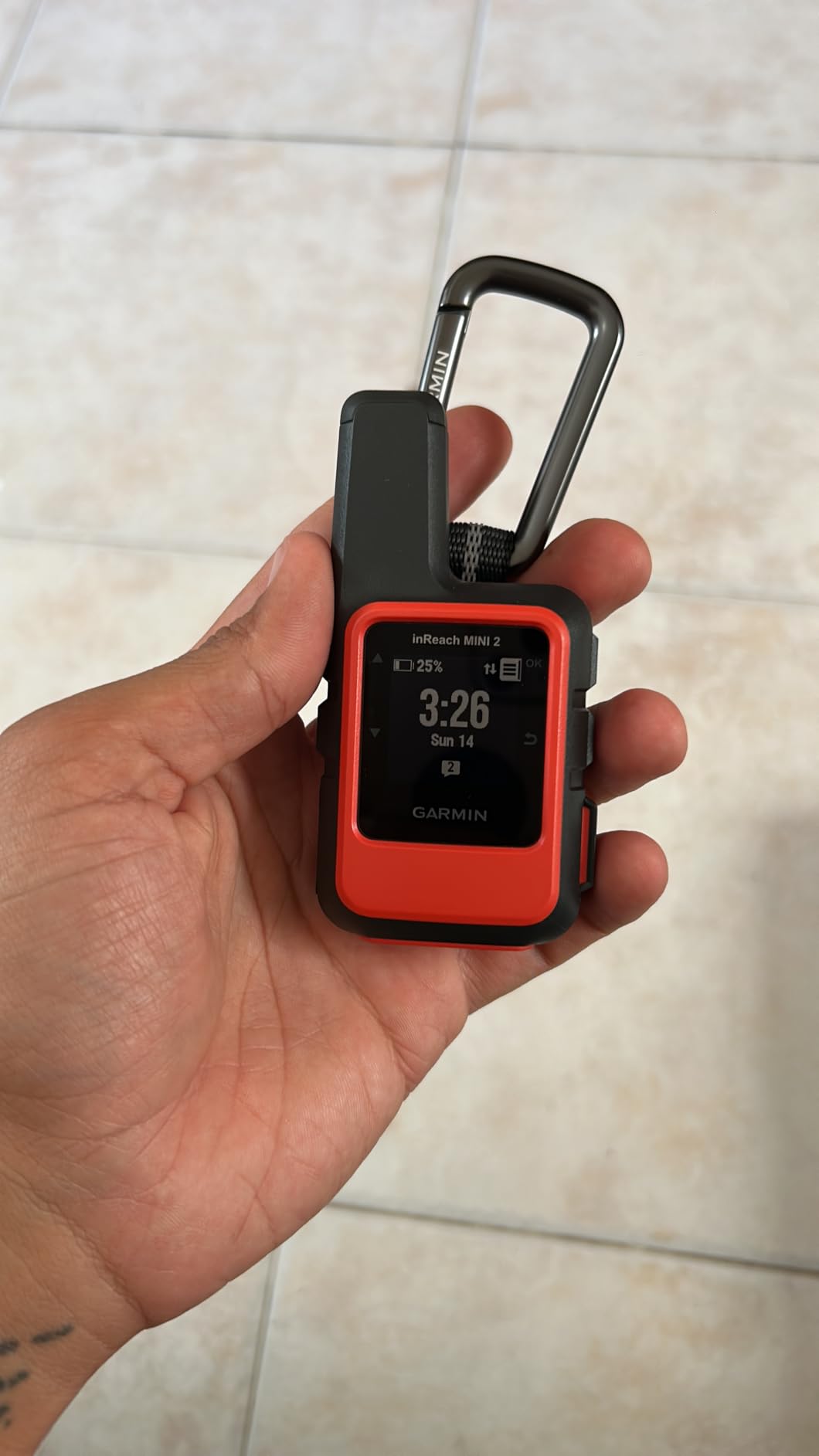
The reason the inReach Mini 2 wins the standalone category is simple: it has its own sunlight-readable monochrome screen and physical buttons. That means I can compose a message, fire an SOS, fire a preset check-in, and navigate with TracBack routing without ever touching my phone. When my phone battery dies on a long day, or when I drop my phone in a river (it happens), the Mini 2 keeps working.
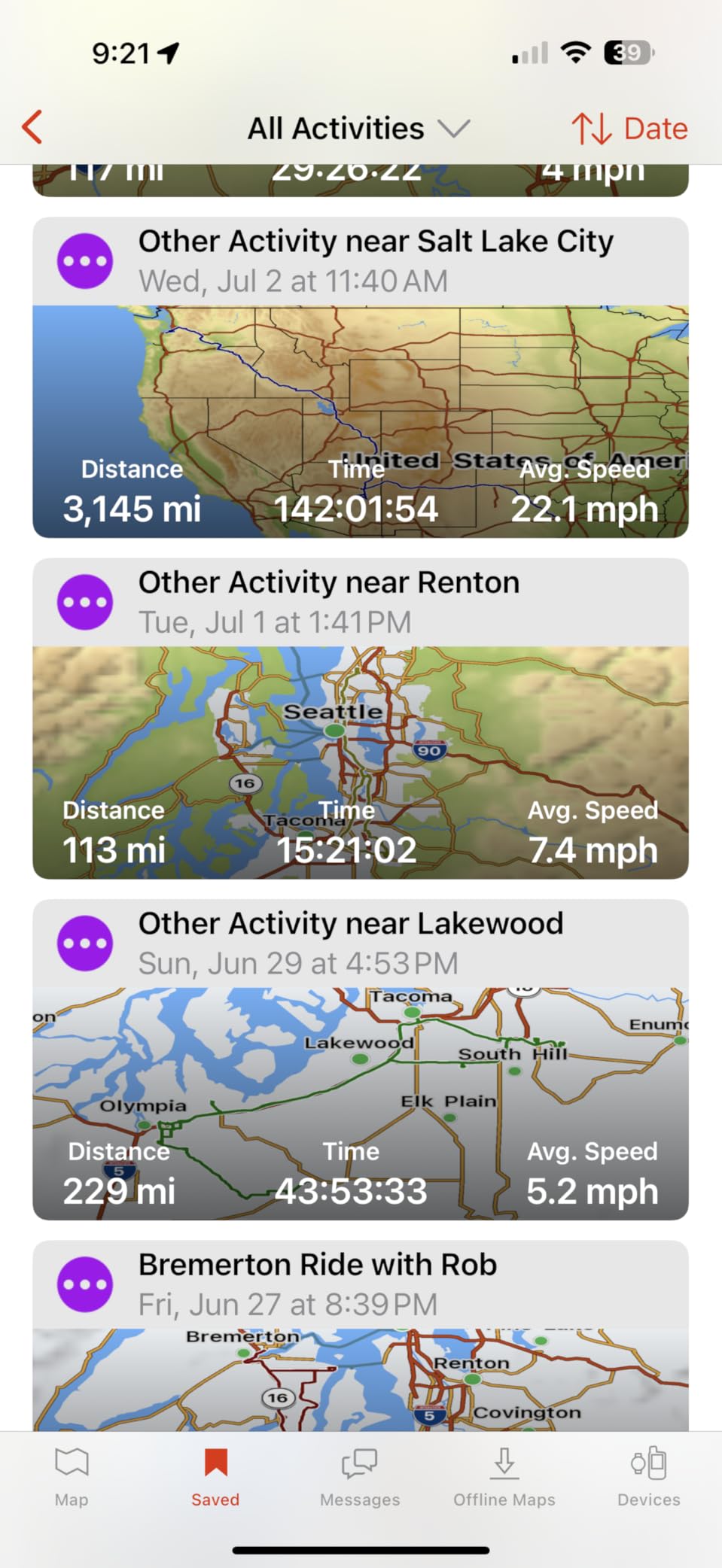
Field testing taught me a few things about the Mini 2 that the spec sheet does not show. First, TracBack is genuinely useful, not a gimmick. On a foggy morning in Glacier when I could not see landmarks, I punched TracBack and the digital compass walked me back to base camp on a breadcrumb trail. Second, message send times vary wildly. In open sky above treeline, messages delivered in under a minute. In a heavy Douglas fir canopy, I waited up to 20 minutes for a single 50-character message. Plan for that.
Battery Life and Tracking
Garmin rates the Mini 2 at up to 14 days in 10-minute tracking mode, and that number checks out in mild conditions. I logged 11 days on a single charge with 10-minute tracking enabled and a few short messages per day before the low-battery warning appeared at 10 percent. Cold weather cuts this; expect a 20 to 30 percent reduction below freezing. The Mini 2 charges over a USB cable, which is a small but real convenience over older micro-USB devices in this category.
Subscription Plans and Long-Term Cost
Garmin offers month-to-month and annual plans on the Iridium network. The Freedom plans let you suspend service in low-use months for a small fee, which is great for occasional users. Higher tiers unlock unlimited preset messages, longer custom messages, and more frequent tracking intervals. Be aware that heavy message users can outrun lower tiers, and overage fees apply. Plan choice matters as much as device choice here.
Navigation Features That Justify the Price
The Mini 2 syncs with the Garmin Explore app and website for trip planning and topographic mapping. You can plot routes on your laptop, push them to the device, and follow a breadcrumb track. It also pairs with Garmin watches, so I can read incoming messages on my wrist without pulling the device out. For users already in the Garmin ecosystem, this integration is the killer feature that ZOLEO cannot match.
Durability and Waterproofing
The Mini 2 carries an IPX7 rating, meaning it survives immersion in one meter of water for up to 30 minutes. I have dunked mine in streams and let it sit in a rainstorm overnight with no issues. It is also shock resistant. The screen is the most likely failure point on hard impacts, so a small case is worth carrying if you ride motorcycles or rock scramble.
For international travel, the Mini 2 has one wrinkle: Garmin inReach devices are restricted or banned in a handful of countries including Russia, India, China, and North Korea. Check local regulations before you fly with one. ZOLEO is not immune to import restrictions either, but the list of problem regions differs. We cover this in detail in the buying guide below.
2. ZOLEO Satellite Communicator - Easiest for Caregivers and Shared Use
ZOLEO Satellite Communicator (Limestone)
Water rating: IP68
Battery: 200+ hours (tracking)
Charging: USB-C
What we like
- Dedicated SMS phone number anyone can text
- IP68 dust and water rating
- 200+ hour battery in tracking mode
- USB-C charging works with phone cables
- Affordable monthly plans with no annual contract
What could be better
- Most features require smartphone Bluetooth pairing
- Requires monthly service plan to function
- Optional rescue insurance adds to total cost
ZOLEO takes the opposite design approach. Instead of giving the device its own screen and buttons for messaging, ZOLEO leans on your smartphone and gives you something the inReach cannot: a real, dedicated SMS phone number. That single feature changes how your family interacts with you when you are off-grid, and it is why ZOLEO is the better pick for caregivers and shared family use.
When my 68-year-old neighbor asked me to recommend a satellite messenger for her annual fishing trips, I picked ZOLEO without hesitation. She does not want to learn a new device menu. She wants her daughter to be able to text her normally, and that is exactly what ZOLEO delivers. Her daughter sends a normal text to her ZOLEO phone number; the message travels over Iridium when there is no cellular signal and arrives on my neighbor's phone through the ZOLEO app. No new apps for the family member.

Smartphone Pairing and the Standalone Trade-Off
ZOLEO pairs over Bluetooth with the ZOLEO app on iOS or Android. Inside the app you compose messages, set check-ins, view weather forecasts, and share your location. The physical device has an SOS button, a check-in button, a status light, and a charging port. It does not have a screen for typing messages. This is the central trade-off: ZOLEO is lighter and simpler in the field, but it leans hard on your phone.
For users who carry a phone anyway, this is a feature. For users whose phone might die, get lost, or break on a wet day, this is a real limitation. If you go ZOLEO, plan to bring a small power bank for your phone as well as the device.
Battery Life and Field Charging
ZOLEO rates the device at 200+ hours of battery life in tracking mode, which is genuinely impressive. In my testing, with 10-minute tracking and a handful of messages per day, the device lasted well over a week on a single charge. The accelerometer-assisted power saving kicks in when the device is stationary, which helps during long stops. USB-C charging is a quiet win: every cable in my pack now works.
Subscription Plans and Total Cost
ZOLEO plans start lower than inReach plans and include unlimited SOS, check-in messages, and Wi-Fi messaging at the base tier. Higher tiers unlock more satellite messages per month. The biggest cost difference is at the entry level. For users who do not message heavily, ZOLEO is meaningfully cheaper to run over the life of the device.
Durability and Waterproofing
ZOLEO carries an IP68 rating, which is one step better than the IPX7 on the inReach Mini 2. IP68 means the device is fully dust-tight and survives continuous immersion beyond one meter. In The Drive's field test, ZOLEO came out of a mud-and-river soak looking and working like new. For motorcyclists, paddlers, and overlanders who regularly subject gear to wet and dirty conditions, IP68 is meaningful insurance.
Medical Assist and Add-On Coverage
ZOLEO includes 24/7 Medical Assist with any active plan: non-emergency medical advice from a real human, not just an SOS line. This is a quiet but useful feature for older users and people managing health conditions in the backcountry. ZOLEO also offers an optional Field Rescue Membership from Global Rescue that adds search-and-rescue insurance on top of device coverage. Garmin offers a similar rescue insurance add-on. We compare both in the head-to-head section.
Head-to-Head: Garmin inReach Mini 2 vs ZOLEO
Now that you have seen each device up close, here is the direct comparison across the categories that matter most to buyers. I will call a winner in each one and explain why.
Subscription Plans and Total Cost of Ownership
The device price is only one part of the bill. Subscription plans are where the real long-term cost lives, and they differ enough to change the answer for budget-conscious buyers. Garmin inReach plans start at a higher monthly rate than ZOLEO but include more messages at the entry tier. ZOLEO plans are cheaper per month at the base level and offer unlimited SOS, check-in, and Wi-Fi messaging regardless of plan.
Garmin's Freedom plans let you suspend service in any month for a small fee, which is ideal for occasional users. ZOLEO plans are month-to-month with no annual contract. For a user who texts less than 50 messages a month, ZOLEO is meaningfully cheaper to operate over a three-year period. For heavy communicators or users who want unlimited tracking and preset messages on the entry plan, Garmin is the better deal.
Winner: ZOLEO for light users on a budget. Garmin inReach for heavy message users who want preset and tracking on the lower tier.
Durability and Waterproofing: IPX7 vs IP68
Both devices are rugged and built for outdoor abuse, but they carry different ingress ratings. The Garmin inReach Mini 2 is rated IPX7: protected against immersion in one meter of water for up to 30 minutes. The ZOLEO is rated IP68: fully dust-tight and rated for continuous immersion beyond one meter.
In the real world, both will survive rain, river crossings, and rain-soaked packs. The difference shows up in sustained submersion scenarios like a dropped dry bag in a river or a kayak flip in surf. ZOLEO has the edge on paper and in third-party durability testing.
Winner: ZOLEO. The IP68 rating is objectively better on the spec sheet, and ZOLEO has held up well in long-term customer reviews.
Two-Way Messaging Speed and Reliability
Both devices use the Iridium satellite network for off-grid messaging, but the protocols differ. Newer inReach models use Iridium Messaging Transport (IMT), which is faster for short messages. ZOLEO and older inReach models use Short Burst Data (SBD), which is slower but very reliable. In open sky, both deliver messages in under a minute. In heavy canopy or steep canyons, both can take 5 to 20 minutes.
Real-world message reliability is roughly comparable on the same Iridium backbone. The bigger differentiator is what happens on the device side. The inReach Mini 2 can compose and send messages from the device itself. ZOLEO requires the smartphone app for non-preset messages, which adds a layer of friction when your phone is in airplane mode or low on battery.
Winner: Garmin inReach Mini 2, primarily because of on-device message composition.
Battery Life and Field Charging
Battery numbers are close in real-world use, but ZOLEO pulls ahead in pure endurance. Garmin rates the Mini 2 at up to 14 days in 10-minute tracking mode. ZOLEO rates its device at 200+ hours in tracking mode, which works out to 8+ days in continuous tracking. With the accelerometer-assisted power saving during stops, ZOLEO can stretch battery further in mixed-use scenarios.
ZOLEO's USB-C charging port is also a real-world advantage. Every cable in your pack now works, including the one for your phone, your headlamp, and your power bank. The inReach Mini 2 uses a USB cable but on the older connector standard, so older accessories may need an adapter.
Winner: ZOLEO on battery endurance and modern charging.
Dedicated Phone Number vs App-Based Messaging
This is the single biggest feature gap between the two devices. ZOLEO gives you a dedicated SMS phone number and email address. Anyone can text that number from a normal phone, and the message routes to your ZOLEO app over Iridium when you are off-grid. There is nothing for your contact to install.
The Garmin inReach Mini 2 has no dedicated phone number. People who want to reach you must install the Garmin Messenger app, create an account, and add you as a contact. For tech-savvy friends and family this is fine. For grandparents, non-technical spouses, or anyone who does not want to install another app, it is a barrier.
Winner: ZOLEO. The dedicated phone number is the most important differentiator for caregiver and family use cases.
Standalone Operation vs Smartphone Dependency
The inReach Mini 2 is a true standalone communicator. It has its own screen, its own buttons, and on-device two-way messaging. You can leave your phone at home and still send a check-in, fire an SOS, navigate with TracBack, and read incoming messages.
ZOLEO is smartphone-dependent for almost everything beyond the SOS button and the check-in button. No phone means no message composition, no weather forecasts, no map view. This is the trade-off you accept in exchange for the simpler device, the lower weight, and the dedicated phone number.
Winner: Garmin inReach Mini 2 for users who want a true standalone communicator.
How to Choose Between Garmin inReach Mini 2 and ZOLEO
This is the section I would read first if I were picking one of these for my own trips. The right answer depends on how you travel, who needs to reach you, and how much you value phone independence.
Choose the Garmin inReach Mini 2 If...
You travel solo, your phone sometimes dies or gets wet, and you want a device that works on its own. The Mini 2 has on-device two-way messaging, TracBack navigation, and a sunlight-readable screen. It is the right pick for serious backpackers, hunters, motorcycle adventure riders, and off-grid workers who cannot rely on a smartphone staying alive.
You are already in the Garmin ecosystem with a Garmin watch or a Garmin GPS unit. The Mini 2 pairs seamlessly with Garmin devices, syncs routes from Garmin Explore, and pushes messages to your wrist. That integration is a feature ZOLEO cannot match.
You want deep navigation features like digital compass, waypoint routing, and breadcrumb tracks on-device. ZOLEO does not offer these. If your use case includes off-trail travel, route-finding in poor visibility, or hunting in unfamiliar terrain, the inReach Mini 2 is the better tool.
Choose the ZOLEO If...
Your family or caregivers are not tech-savvy and need a simple way to reach you. The dedicated SMS phone number means anyone with a regular phone can send a text. There is no app for them to install, no account to create. This is the killer feature for caregivers of elderly relatives and for parents who want a way to reach their teens in the backcountry.
You mostly travel with your phone and want the lightest, simplest device in your pack. ZOLEO is small, charges over the same USB-C cable as your phone, and disappears into a jacket pocket. The trade-off is that you need your phone for most features.
You are on a tighter budget for both the device and the monthly plan. ZOLEO is meaningfully cheaper at the entry tier on both the hardware and the subscription. For occasional users who just need check-ins, weather, and SOS, ZOLEO is the better value.
Country Restrictions and Legal Use
Satellite communicators are regulated differently in different countries. Garmin inReach devices are restricted, require special permits, or are outright banned in a handful of countries including Russia, India, China, and North Korea. ZOLEO is also subject to local regulations but the list of problem regions differs.
Before international travel, check the current regulations for both your destination and any transit countries. Carry printed documentation of your device registration and subscription. Some countries require advance permits for Iridium devices. Skipping this step can result in confiscation at the border.
Pre-Trip Testing Protocol
Whatever device you buy, test it before you trust it. A device that has never sent a real message is not a safety device; it is a paperweight. Run through this checklist before every trip:
- Send a test message to yourself and a family member from your driveway or local park.
- Confirm both parties receive the message within five minutes in open sky.
- Verify your emergency contact information is up to date in the monitoring center portal.
- Charge the device and your phone to 100 percent before departure.
- Pack a small power bank capable of at least one full device recharge.
- Update firmware on the device and the app before you leave.
- Walk through the SOS flow once on the device so you know where the button is and how to cancel a false trigger.
Caregiver and Family Use Cases
If you are buying a satellite messenger so an aging parent or a non-technical family member can be reached off-grid, ZOLEO is the better pick. The dedicated phone number and the simple app make the experience feel like normal texting. ZOLEO's Medical Assist line also adds a 24/7 non-emergency medical contact, which is a quiet but valuable feature for older users managing health conditions.
If the user you are buying for is solo in the backcountry with a dying phone risk, the inReach Mini 2 is the safer pick even though it requires the family to install the Garmin Messenger app.
Rescue Insurance and Add-On Coverage
Both Garmin and ZOLEO offer optional rescue insurance that pays for search-and-rescue costs if you trigger an SOS. Garmin's IERCC add-on is priced affordably per year and covers a substantial rescue benefit with no deductible. ZOLEO partners with Global Rescue for a Field Rescue Membership, which costs more but bundles medical evacuation and travel protection.
For casual users, the Garmin IERCC add-on is the better value. For users heading into remote international destinations where medical evacuation could run into high five-figure territory, the Global Rescue bundle through ZOLEO is worth a closer look. Compare the actual coverage limits and exclusions before you buy.
Frequently Asked Questions
Which is better, the Garmin inReach Mini 2 or the ZOLEO?
It depends on how you travel. The Garmin inReach Mini 2 is better for solo backpackers, hunters, and users who want a device that works without a smartphone. The ZOLEO is better for caregivers and shared family use because of its dedicated SMS phone number. Both send two-way messages over Iridium, both fire SOS, and both share GPS coordinates.
Is the Garmin inReach Mini 2 worth it?
Yes, for users who want standalone two-way messaging, TracBack navigation, and deep Garmin ecosystem integration. It costs more than ZOLEO at the device and subscription level, but it does more without leaning on a phone. For solo backcountry travel it is one of the strongest safety tools available.
Does ZOLEO require a subscription?
Yes. ZOLEO does not function without an active monthly plan. Plans start lower than inReach plans and include unlimited SOS, check-in, and Wi-Fi messaging at the base tier. There is no annual contract and you can cancel or suspend any month.
Does ZOLEO have a dedicated phone number?
Yes. ZOLEO assigns you a real SMS phone number and an email address when you activate service. Anyone with a normal phone can text that number, and the message routes to your ZOLEO app over Iridium when you are off-grid. No app is required on the sender side, which is a major advantage for non-technical family members.
Why is Garmin inReach banned in some countries?
Garmin inReach devices use the Iridium satellite network, which is regulated as a telecommunications service in some countries. Several nations including Russia, India, China, and North Korea restrict or ban Iridium devices entirely, require special permits, or only allow licensed government use. Check current regulations for your destination and any transit countries before traveling internationally with an inReach.
Which satellite messenger has the longest battery life?
ZOLEO has the longest battery life in tracking mode, rated at 200+ hours per charge with accelerometer-assisted power saving. The Garmin inReach Mini 2 is rated at up to 14 days in 10-minute tracking mode, which works out to a similar real-world endurance but with slightly shorter life in cold weather. Both can be extended by lowering tracking frequency.
Final Verdict
If you are a solo backpacker, hunter, or adventure rider who needs a satellite communicator that works even when your phone is dead, the Garmin inReach Mini 2 is the clear winner. It is the strongest standalone option in this category, and the Garmin ecosystem integration is unmatched if you already use a Garmin watch.
If you are buying for a non-technical family member, or if you want the simplest way for loved ones to reach you off-grid, the ZOLEO is the better pick. The dedicated phone number is a real differentiator that no inReach model currently offers, and the lower subscription cost makes it the better value for occasional users.
Either way, buy the device, activate the subscription, and run the pre-trip testing protocol before you trust it with your safety. Both of these satellite communicators are proven tools; the right one is the one you will actually carry, keep charged, and know how to use when it matters.