You walk into your living room and notice tiny red specks crawling along the windowsill. At first glance, they look like moving dust. Then you realize there are hundreds of them.
I've seen this scene dozens of times helping homeowners deal with clover mite infestations. These microscopic invaders can appear overnight in numbers that make your skin crawl, even though they're completely harmless.
How to Get Rid of Clover Mites?
To get rid of clover mites: seal entry points with caulk, remove vegetation touching your home, apply insecticidal soap or diatomaceous earth along foundation walls, use residual sprays for heavy infestations, and vacuum existing mites indoors without crushing them.
Quick Summary: Clover mites are tiny red arachnids that invade homes in large numbers during spring and fall. They don't bite or cause damage but leave red stains when crushed. Effective treatment requires sealing entry points, removing bridge vegetation, and applying appropriate chemical or natural treatments.
- Identify the problem: Confirm clover mites by their tiny red appearance and location near windows and foundations
- Seal entry points: Caulk cracks around windows, doors, and foundation to prevent new mites from entering
- Remove vegetation: Trim back plants and grasses touching the structure to eliminate food sources and bridges
- Apply treatment: Use appropriate chemical or natural treatments to eliminate existing mites
- Clean and monitor: Remove dead mites, clean stains, and monitor for reinfestation
This guide covers everything you need to know about clover mites and how to eliminate them from your home.
What Are Clover Mites?
Clover mites are tiny red arachnids related to spiders and ticks that measure about 0.75mm in length. They feed on plants and grasses and commonly invade homes in large numbers during spring and fall.
Clover Mites (Bryobia praetiosa): Microscopic red arachnids that feed on lawn grasses and ornamental plants. They invade structures seeking shelter during extreme weather but don't breed indoors or cause structural damage.
These pests get their name from their preferred food source - clover and other well-fertilized grasses. I've found them most concentrated around homes with lush, fertilized lawns extending right up to the foundation.
Clover mites are often mistaken for chiggers, but they're different creatures. Chiggers bite and cause itching, while clover mites don't bite humans or pets at all.
| Characteristic | Clover Mites | Chiggers |
|---|---|---|
| Size | Smaller than pinhead (0.75mm) | Microscopic larvae (0.4mm) |
| Color | Bright red | Red to orange |
| Bites | No | Yes (causes itching) |
| Habitat | Lawns, foundations, windows | Tall grass, vegetation |
Identifying Clover Mites
You can identify clover mites by several key characteristics:
- Bright red color: Intense red that leaves a stain when crushed
- Eight legs: They're arachnids, not insects
- Oval shape: Rounded body with front legs longer than the body
- Tiny size: About the size of a pinhead
- Cluster behavior: Usually found in large groups
I've seen infestations range from a few dozen mites on a windowsill to thousands covering entire walls. The sheer number is what alarms most homeowners.
Why Clover Mites Invade Homes?
Clover mites seek shelter indoors when outdoor conditions become unfavorable. Hot dry summers and cold winters drive them toward the comfortable temperatures inside your home.
They don't want to be inside your house. They can't reproduce indoors and will eventually die without access to plants. They're accidental invaders searching for escape from weather extremes.
Several factors make your home attractive to clover mites:
- Well-fertilized lawns: Clover mites thrive in nutrient-rich grass
- Vegetation touching the structure: Plants provide direct access routes
- Sunny foundation walls: Warm surfaces attract them in cool weather
- Foundation cracks: Tiny openings are all they need to enter
- Light-colored siding: They're attracted to bright surfaces
Seasonal Pattern: Clover mites invade most heavily in spring (March-May) and fall (September-November). Spring infestations are typically larger as mites emerge from winter dormancy.
How to Prevent Clover Mites?
Prevention is the most effective clover mite control strategy. Once inside, they're a nuisance to eliminate. Keeping them out requires creating physical and chemical barriers.
Sealing Entry Points
Clover mites can pass through incredibly small openings. I've found them entering through cracks you can barely see with the naked eye.
- Inspect foundation walls: Look for cracks in concrete, brick mortar, or siding joints
- Check window frames: Examine both interior and exterior window casings
- Examine door frames: Pay special attention to thresholds and weatherstripping
- Review utility penetrations: Check where pipes, wires, or vents enter the home
- Apply caulk or sealant: Use silicone caulk for small cracks, expanding foam for larger gaps
- Install door sweeps: Add sweeps to exterior doors that gap at the bottom
- Repair window screens: Replace torn or damaged screens
I've sealed hundreds of homes against clover mites. The investment in quality caulk pays dividends for years. Focus on the south and west sides of your home first - these sunny walls attract the most mites.
Vegetation Management
Removing vegetation that touches your home eliminates the bridges clover mites use to access upper levels.
- Trim foundation plantings: Keep shrubs at least 18-24 inches from the structure
- Mow lawn edges: Maintain a 2-foot grass-free zone around the foundation
- Remove ground cover: Ivy, pachysandra and other spreading plants provide mite highways
- Prune tree branches: Keep limbs from touching siding or rooflines
- Consider gravel borders: Replace grass near foundations with decorative stone
I've seen homes reduce clover mite problems by 80% just by creating a vegetation-free zone around the perimeter. It's one of the simplest and most effective prevention methods.
Chemical Barrier Treatments
Preventive pesticide applications create a death zone for clover mites before they can enter.
Apply residual insecticides in a 2-3 foot band around the foundation and up the exterior wall 1-2 feet. Timing matters - apply in early spring before peak emergence and again in fall.
Important: Always read and follow pesticide label instructions. Some products require watering after application. Keep children and pets away from treated areas until dry.
Natural Ways to Get Rid of Clover Mites
Natural treatments work well for minor infestations and households concerned about chemical exposure. I've helped many families eliminate clover mites using only organic methods.
Insecticidal Soap
Insecticidal soap kills clover mites on contact through desiccation. It penetrates their soft outer shell and causes rapid dehydration.
Mix according to label directions and spray directly on mites. You must hit them directly for it to work. Once dry, the residue has no effect.
Best Organic Option
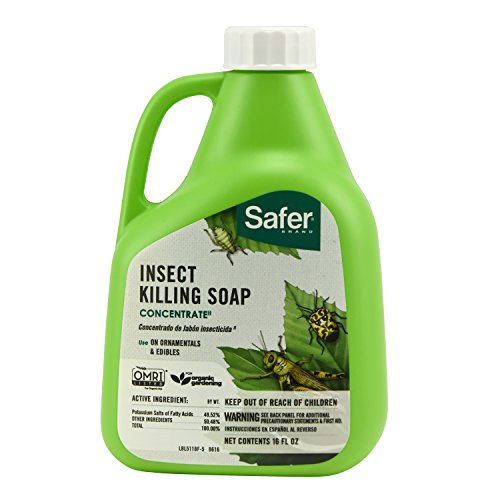
Safer 5118-6 Insect Killing Soap Concentrate...
Type: Insecticidal Soap
Form: 16 oz Concentrate
Coverage: Makes 3 gallons
OMRI Listed: Yes
Safe For: Edible crops, children, pets
What we like
- OMRI listed for organic gardening
- Kills soft-bodied insects on contact
- Safe for use up to day of harvest
- No harsh chemical odor
- Makes 3 gallons of spray
What could be better
- Must contact insects directly to be effective
- Requires frequent reapplication
- Not effective against hard-bodied insects
- Needs to be mixed before use
Safer Brand Insect Killing Soap uses potassium salts of fatty acids to disrupt mite cell membranes. It's OMRI listed for organic use and safe around children and pets when dry.
I recommend this product for homes with vegetable gardens near the foundation where chemical drift could be a concern. The concentrate makes 3 gallons of spray, providing excellent value.
Diatomaceous Earth
Diatomaceous earth (DE) kills clover mites mechanically rather than chemically. The microscopic fossilized shells abrade the mites' exoskeleton and absorb their protective oils, causing death by dehydration.
DE works best in dry conditions. Rain or irrigation will wash it away and require reapplication.
Best Chemical-Free Solution
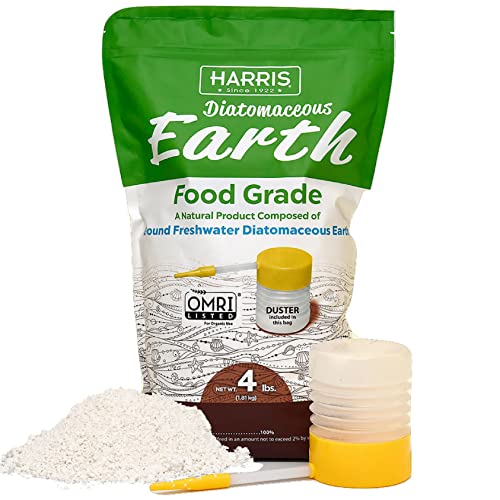
HARRIS Diatomaceous Earth Food Grade
Type: Diatomaceous Earth
Weight: 4 pounds
Includes: Powder duster
Indoor Use: Yes
Outdoor Use: Yes
What we like
- 100% food grade diatomaceous earth
- Chemical-free mechanical action
- Safe around children and pets
- Long-lasting effectiveness
- Includes convenient powder duster
- Can be used indoors and outdoors
What could be better
- Requires dry conditions to work effectively
- Can be messy to apply
- May irritate lungs if inhaled during application
- Takes time to show results
- Must be reapplied after rain or moisture
HARRIS Diatomaceous Earth is 100% food grade and includes a powder duster for easy application. The mechanical action means mites can't develop resistance.
I use DE along indoor baseboards and exterior foundation walls. It provides long-lasting protection as long as it stays dry. The included duster makes application much easier than shaking powder from the bag.
Home Remedies
Several household items can help control minor clover mite problems:
- Soapy water spray: Mix 2 tablespoons dish soap with 1 gallon water
- Wiping: Use damp paper towels to wipe up mites without crushing
- Vacuuming: Use vacuum cleaner with hose attachment to suck up mites
- Essential oil sprays: Peppermint or neem oil mixed with water may repel mites
These methods work for spot treatments but won't solve larger infestations. I've seen homeowners spend weeks with home remedies when a proper treatment would solve the problem in days.
Chemical Treatments for Clover Mites
Chemical treatments provide the fastest and most complete clover mite control. When I work with clients dealing with heavy infestations, I typically recommend a comprehensive chemical approach.
Residual Sprays
Residual insecticides continue killing for weeks or months after application. They create an invisible barrier that eliminates mites as they attempt to cross.
Pyrethroids like bifenthrin and permethrin work exceptionally well against clover mites. These synthetic chemicals mimic natural pyrethrins but offer longer residual activity.
Best Outdoor Barrier Treatment

BioAdvanced Complete Brand Insect Killer...
Type: Systemic Insecticide
Size: 32 oz ready-to-spray
Coverage: Up to 5,300 sq ft
Active: Beta-cyfluthrin, Imidacloprid
Protection: Up to 3 months
What we like
- Systemic action kills insects above and below ground
- Long-lasting protection up to 3 months
- Covers large area up to 5
- 300 sq ft
- Easy-to-use hose-end sprayer
- Rainproof within 1 hour
- Dual action contact and systemic kill
What could be better
- For outdoor use only
- May require watering after application
- Not for immediate use on edible crops
- Chemical-based not organic
BioAdvanced Complete Insect Killer combines contact and systemic action for comprehensive control. The ready-to-spray bottle attaches directly to your hose and treats up to 5,300 square feet.
I recommend this product for homeowners with large lawn areas adjacent to the foundation. The dual-action formula kills on contact and keeps working for up to 3 months. Rainproofing within 1 hour means you don't need to worry about weather washing away your application.
Indoor Treatments
When clover mites make it inside, you need products safe for interior use. Avoid broad-spectrum sprays that leave toxic residues on surfaces you touch daily.
Focus treatments along baseboards, window frames, and door thresholds where mites enter. Avoid spraying food preparation surfaces or areas where children play.
Best for Indoor Use

Ortho Home Defense Insect Killer for Indoor and...
Type: Indoor/Perimeter Spray
Size: 24 oz ready-to-use
Features: Extended comfort wand
Active: Bifenthrin
Use: Indoor and perimeter
What we like
- Ready-to-use no mixing required
- Extended comfort wand for easy application
- Creates indoor and perimeter bug barrier
- Odor-free formula
- Non-staining on surfaces
- Fast-acting with residual control
- Can be used indoors and along home perimeter
What could be better
- Chemical-based formula
- Should not be used on food surfaces
- Keep away from children and pets until dry
- May require occasional reapplication
- Not for outdoor lawn coverage
Ortho Home Defense creates an invisible bug barrier with an odor-free, non-staining formula. The extended comfort wand helps you treat baseboards and corners without bending or straining.
This is my go-to recommendation for indoor clover mite problems. The bifenthrin provides fast knockdown and weeks of residual protection. I've used it in my own home when mites found their way past the exterior defenses.
Professional-Grade Concentrates
For serious infestations or large properties, concentrated formulas offer the best value. A single bottle makes dozens of gallons of spray solution.
Best Professional-Grade Formula

Hi-Yield 38 Plus Permethrin Turf Termite and...
Type: Permethrin Concentrate
Strength: 38% Permethrin
Size: 16 oz
Coverage: Up to 5,000+ sq ft
Use: Outdoor turf and ornamentals
What we like
- Concentrated formula provides excellent value
- 38% permethrin offers strong control
- Versatile treats many different lawn and ornamental pests
- Long-lasting residual effect
- Economical 16 oz makes many gallons of spray
- Works on turf ornamentals and around building foundations
What could be better
- Requires mixing and proper safety equipment
- Concentrated form requires careful handling
- May require repeat applications for heavy infestations
- Not for indoor use
Hi-Yield 38 Plus Permethrin contains professional-strength 38% permethrin for serious pest control needs. The 16 oz concentrate dilutes to make multiple gallons of spray solution.
This is the product I recommend for homeowners dealing with recurring clover mite problems year after year. One bottle treats an entire property perimeter multiple times. The water-based formula is safer for plants than oil-based alternatives.
Application Tips
Proper application makes the difference between success and failure:
- Time applications: Treat in early morning or late evening when mites are active
- Check weather: Avoid applying before rain or during high winds
- Clean surfaces: Remove debris from foundation walls before spraying
- Follow label: Use the recommended dilution rate - more isn't better
- Wear protection: Gloves, long sleeves, and eye protection are essential
- Water when directed: Some products require watering after application
Product Comparison
Choosing the right product depends on your specific situation and preferences.
| Product | Type | Coverage | Best For |
|---|---|---|---|
| BioAdvanced Complete | Systemic Spray | 5,300 sq ft | Large outdoor areas |
| Safer Brand Soap | Organic Spray | 3 gallons | Organic gardens |
| HARRIS DE | Powder | Varies | Chemical-free homes |
| Ortho Home Defense | Indoor Spray | Interior/perimeter | Indoor infestations |
| Hi-Yield Permethrin | Concentrate | 5,000+ sq ft | Recurring problems |
Cleaning Up Clover Mite Stains
One of the most frustrating aspects of clover mites is the red stain they leave when crushed. The pigmentation can persist on walls, curtains, and carpet.
Never crush clover mites when cleaning them up. Vacuum or wipe them gently with a damp cloth. Crushing releases the red pigment that creates stubborn stains.
Stain Removal Methods
- Fresh stains: Blot with cold water and mild detergent immediately
- Wall surfaces: Use magic eraser or mild abrasive cleaner
- Fabric stains: Apply stain remover or hydrogen peroxide, then launder
- Carpet stains: Use carpet cleaner specifically designed for red stains
- Old stains: May require professional cleaning for complete removal
I've found that treating stains quickly prevents permanent discoloration. The red pigment is surprisingly persistent once it sets.
When to Call a Professional?
Most clover mite problems can be handled DIY. However, certain situations warrant professional help:
- Recurring infestations: Multiple years of heavy infestations despite treatment
- Difficult access: Multi-story homes or hard-to-reach application areas
- Health concerns: Household members sensitive to pesticides
- Time constraints: Lack of time for proper preparation and application
Professional treatments typically cost $150-400 depending on home size and severity. This includes inspection, treatment, and usually a warranty or follow-up service.
Pro Tip: When hiring a professional, ask specifically about their clover mite experience and what products they use. Some companies treat clover mites as general pests rather than targeting their specific behavior patterns.
Long-Term Prevention Strategy
Effective clover mite control requires year-round attention. The homeowners I've helped who never see recurring problems follow this annual schedule:
Spring Protocol (February-March)
- Inspect foundation for winter damage
- Reapply caulk where needed
- Apply preventive pesticide barrier
- Trim vegetation before spring growth surge
Fall Protocol (August-September)
- Reinspect and repair any new cracks
- Apply second pesticide barrier treatment
- Clear fallen leaves from foundation
- Ensure door sweeps are intact
Winter Maintenance
- Monitor south-facing walls for winter sun activity
- Keep snow from piling against foundation
- Check indoor entry points during warm spells
Summer Maintenance
- Maintain vegetation-free zone
- Monitor irrigation - avoid overwatering near foundation
- Watch for mid-summer mite activity during hot, dry periods
Frequently Asked Questions
What are clover mites?
Clover mites are tiny red arachnids related to spiders that feed on lawn grasses and plants. They measure about 0.75mm and invade homes in large numbers during spring and fall seeking shelter from extreme weather.
Are clover mites harmful?
No, clover mites are not harmful to humans or pets. They do not bite, sting, spread disease, or cause structural damage. Their only negative impact is leaving red stains when crushed, which can be difficult to clean from surfaces.
Do clover mites bite?
No, clover mites do not bite humans or animals. They feed exclusively on plants and grasses. Despite their alarming appearance and numbers, they are completely harmless physically.
What kills clover mites instantly?
Insecticidal soap kills clover mites on contact through desiccation. Residual insecticides containing bifenthrin or permethrin provide quick knockdown and lasting protection. Diatomaceous earth kills mechanically within 24-48 hours.
How do I prevent clover mites from entering my house?
Prevent clover mites by sealing all cracks in your foundation and around windows with caulk. Maintain a 2-foot vegetation-free zone around your home. Apply residual pesticide barriers in spring and fall. Install door sweeps and repair window screens.
How do you clean clover mite stains?
Clean fresh clover mite stains by blotting with cold water and mild detergent immediately. For wall surfaces, use a magic eraser or mild abrasive cleaner. Fabric stains may require commercial stain remover or hydrogen peroxide followed by laundering. Never crush mites when cleaning - vacuum or wipe gently.
Final Recommendations
After helping dozens of homeowners deal with clover mite infestations, I've learned that successful control requires a multi-pronged approach. Seal entry points, remove bridge vegetation, and apply appropriate treatments before infestation peaks.
Most clover mite problems can be resolved DIY in 1-2 weeks with proper products and techniques. The key is treating both the immediate infestation and preventing future access. Invest time in sealing your home - it's more effective than repeatedly treating the same entry points year after year.