Walking into your garage and walking face-first into a spider web is one of life's most unpleasant surprises. I've been there, and I know the feeling of immediately wondering what else is lurking in those dark corners.
Getting rid of spiders in your garage requires a combination of immediate removal, chemical or natural repellents, and long-term prevention through sealing entry points. The most effective approach is to eliminate current spiders, remove webs and egg sacs, apply a residual spray or natural deterrent, and seal cracks where spiders enter.
After dealing with spider problems in three different garages over the past 15 years, I've learned what actually works and what's just marketing hype. One garage had such a bad brown recluse problem that I spent $300 on professional treatment, while another just needed some peppermint oil and better weatherstripping.
In this guide, I'll walk you through everything from identifying dangerous spiders to choosing the right products for your situation. Whether you have a detached workshop or an attached garage full of stored items, you'll find a solution that fits your needs and safety concerns.
Why Spiders Love Your Garage?
Spiders enter garages seeking three things: shelter, food, and mating opportunities. Your garage provides perfect hiding spots among cluttered storage boxes, tools, and stored items.
Most garage spiders are harmless species like wolf spiders, orb weavers, and cellar spiders that actually help control other insect populations. However, depending on your region, you might encounter venomous species like black widows, brown recluses, or hobo spiders that require more careful handling.
Harborage Areas: Hidden spots where spiders rest, build webs, and lay egg sacs. Common garage harborage includes corners, ceiling rafters, behind stored items, and inside storage boxes.
Spiders are most active in garages during late summer and fall when mating season drives them to seek shelter before winter. This is when most homeowners notice increased spider activity and webs appearing overnight.
According to the National Pest Management Association, spiders can enter through cracks and gaps as small as 1/16 of an inch. Your garage door seal alone often provides enough space for spiders to waltz right in.
Quick Steps: Get Rid of Spiders Fast
- Remove all visible webs and egg sacs using a broom or vacuum with extension attachment. This takes 15-30 minutes depending on garage size. Focus on corners, ceiling rafters, around light fixtures, and behind stored items.
- Declutter harborage areas by moving stored items away from walls and elevating boxes off the floor. Spiders love dark, undisturbed spaces, so eliminating hiding spots forces them into more visible areas where they're easier to control.
- Apply residual spider spray around door frames, windows, corners, and along baseboards. Products containing bifenthrin or deltamethrin provide up to 12 months of protection on non-porous surfaces. Allow 2-3 hours for drying before re-entry.
- Place glue traps along walls and in corners where you've noticed spider activity. These non-toxic traps catch wandering spiders and help monitor the effectiveness of your treatment program. Check and replace every 4-6 weeks.
- Seal entry points using silicone caulk for cracks smaller than 1/4 inch and expanding foam for larger gaps. Pay special attention to where utility pipes enter the garage, around garage door trim, and any vents or exhaust fans.
- Install or replace weatherstripping on your garage door sides and bottom. Worn rubber seals create easy entry points not just for spiders but for the insects they eat. This simple fix costs under $20 and takes 10 minutes to install.
- Reduce outdoor lighting near the garage or switch to yellow "bug lights" that attract fewer insects. Since spiders follow their food source, fewer insects near your garage means fewer spiders coming inside to hunt.
- Apply natural deterrents like peppermint oil spray, cedar chips, or vinegar solution in areas where chemical sprays aren't appropriate. These work best as repellents rather than exterminators and need reapplication every 2-3 weeks.
Pro Tip: The best time to treat for spiders is September or early October, before they seek winter shelter. One fall treatment can prevent winter spider invasions that last through spring.
Best Spider Control Products for Garages
The right products make spider control much more effective. After testing various options over multiple years, here are the products that consistently deliver results.
1. Wet & Forget Miss Muffet's Revenge - Best Long-Lasting Barrier Spray

Wet & Forget Miss Muffet's Revenge Spider Killer...
Protection: Up to 12 months
Spray Range: 10 feet
Active Ingredient: Bifenthrin
Coverage: 64 oz treats large areas
Indoor and Outdoor Use
What we like
- Creates 12 month barrier
- 10 ft sprayer reaches high spots
- Ready to use no mixing
- Kills spiders on contact
- Residual protection continues working
What could be better
- Not Prime eligible
- 4-5 day shipping
- Strong chemical odor during application
- Not for black widow or brown recluse
Miss Muffet's Revenge stands out for its extended 10-foot sprayer that reaches garage ceiling corners without dragging out a ladder. I used this product in my previous home's garage and saw immediate results—webs were gone within days and didn't return for nearly a year.
The bifenthrin formula creates a residual barrier that keeps working for up to 12 months on non-porous surfaces. One 64-ounce bottle covers a typical two-car garage with plenty left over for perimeter treatment around doors and windows.
Customer photos confirm the spray coverage and effectiveness. Many users show before-and-after pictures of treated corners where spiders completely abandoned their established web-building areas within a week of application.
This ready-to-use formula requires no mixing—just attach the sprayer and start treating. The trigger handle provides good control, and the spray pattern reaches those annoying high corners where most garage spiders prefer to build webs.
For best results, apply in calm weather when rain isn't expected for 24 hours. Allow the spray to dry completely before re-entering the garage, typically 2-3 hours. The residual protection continues killing spiders that contact treated surfaces for months.
Who Should Buy?
Homeowners dealing with recurring spider problems who want long-term protection without frequent reapplication. Ideal for garages with high ceilings where reaching cobwebs is difficult.
Who Should Avoid?
Those with black widow or brown recluse infestations (this product isn't formulated for those species), or anyone seeking a completely natural solution.
2. RESCUE! Spider Traps - Best Non-Toxic Trapping Solution
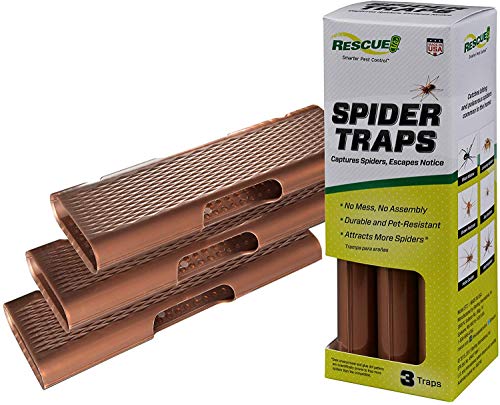
RESCUE! Spider Traps
Type: Glue traps
Quantity: 3 traps per pack
Double-Sided: Yes
Species Covered: Black widow,brown recluse,wolf spiders
Made in USA
What we like
- Chemical free and safe
- Double-sided flip design
- Decorative shell blends in
- Catches venomous species
- Ready to use no assembly
What could be better
- Not Prime eligible
- Passive only requires placement
- Requires regular checking
- Needs proper placement for results
RESCUE! traps offer a chemical-free monitoring solution that's especially useful for identifying what spider species are present in your garage. I place these along walls and in corners before committing to chemical sprays, which helps me understand the scope of any infestation.
The double-sided design doubles the life of each trap. When one side fills up, simply flip it over to continue catching spiders. The decorative plastic shell makes these less noticeable than bare glue boards.
These traps specifically target dangerous species including black widows, brown recluses, wolf spiders, and hobo spiders. Customer images show the traps effectively catching multiple spiders, providing peace of mind about what's actually lurking in your garage.
The adhesive is strong enough to hold even large spiders, and the 7.5-inch length provides plenty of surface area for catching multiple pests. Each pack includes three traps, enough to monitor most garages effectively.
Placement matters—place traps along walls where spiders travel, near corners, and behind stored items. Check traps weekly to monitor spider activity levels and determine if additional treatment methods are needed.
Who Should Buy?
Families with pets or children who want chemical-free spider control, homeowners who want to identify spider species before choosing treatment methods, or anyone seeking a monitoring solution alongside other treatments.
Who Should Avoid?
Those dealing with heavy infestations needing immediate knockdown, or anyone looking for a standalone solution without combining other control methods.
3. Ortho Home Defense Insect Killer - Best All-Around Protection

Ortho Home Defense Insect Killer for Indoor and...
Protection: Up to 12 months
Size: 1 gallon
Coverage: Indoor and outdoor
Target: Ants,roaches,spiders and more
Technology: Invisi-Shield
What we like
- 12 month bug barrier
- Kills multiple pest types
- No fumes dries clear
- Convenient trigger sprayer
- Works on porous and non-porous surfaces
What could be better
- Heavy container at 9 lbs
- Requires careful application
- Strong chemical smell initially
Ortho Home Defense provides comprehensive protection against spiders and the insects they eat, making it an excellent choice for garages that connect to living spaces. The Invisi-Shield technology dries clear without fumes, which I appreciate when treating attached garages.
This 1-gallon container creates a bug barrier lasting up to 12 months on non-porous surfaces. The formula kills ants, roaches, spiders, fleas, ticks, scorpions, earwigs, silverfish, and more—making it a versatile choice for general garage pest control.
With over 20,000 reviews averaging 4.5 stars, this is one of the most tested and trusted home pest control products available. Customer images show successful application along baseboards, corners, and entry points throughout garages and homes.
The built-in trigger sprayer makes application straightforward, though the full gallon weight (over 9 pounds) can be tiring during extended use. I recommend taking breaks or transferring some to a smaller spray bottle for easier handling.
Use this product indoors along garage walls, around door frames, and near windows. For outdoor application, treat the garage perimeter, foundation, and around doors to create a barrier that stops pests before entering.
Who Should Buy?
Homeowners wanting comprehensive pest control that addresses spiders AND their food sources, those with attached garages needing family-safe options, or anyone seeking a proven product with extensive user validation.
Who Should Avoid?
Those wanting a spider-specific product, or anyone preferring natural alternatives to chemical insecticides.
| Product | Best For | Protection Duration | Chemical-Free | Coverage |
|---|---|---|---|---|
| Miss Muffet's Revenge | Long-lasting barrier | Up to 12 months | No | 64 oz spray |
| RESCUE! Traps | Monitoring and identification | 4-6 weeks per side | Yes | 3 traps |
| Ortho Home Defense | Multi-pest protection | Up to 12 months | No | 1 gallon |
Natural Spider Repellents That Work
Not everyone wants to spray chemicals in their garage, especially if it's attached to living space or used as a workshop. Natural repellents can be effective when used correctly and consistently.
Quick Summary: Natural repellents work best as deterrents rather than exterminators. Peppermint oil, vinegar, and cedar show the most consistent results, but require reapplication every 2-3 weeks for continued effectiveness.
Peppermint oil is the most researched natural spider repellent. Mix 15-20 drops of peppermint essential oil with water in a spray bottle and apply around entry points, corners, and suspected harborage areas. University studies show peppermint demonstrates repellent properties against various arthropod species.
White vinegar works as a contact killer and repellent. Mix equal parts vinegar and water in a spray bottle and apply directly to spiders or areas where they're present. The acidity repels spiders and also cleans away the pheromone trails that attract them back to the same locations.
Cedar chips or cedar oil create a natural barrier spiders avoid. Place cedar chips in corners, behind stored items, and along walls. Replace every 2-3 months as the scent fades. Cedar sachets work well in storage boxes to prevent spiders from nesting inside.
Chestnuts placed around the garage perimeter is an old remedy that some users swear by. While scientific evidence is limited, enough homeowners report success that it's worth trying as a supplemental method—especially since it costs almost nothing if you have access to chestnut trees.
- Peppermint Oil: Most proven natural option, needs reapplication every 2-3 weeks
- White Vinegar: Contact killer plus repellent, also cleans spider pheromone trails
- Cedar: Long-lasting barrier when chips are replaced every 2-3 months
- Eucalyptus: Similar to peppermint, strong scent that spiders dislike
- Citrus: Lemon or orange peels placed in corners provide mild deterrent effect
Time Saver: For best results with natural repellents, apply in the evening when spiders are most active. This ensures fresh scent when they're hunting and exploring new territory.
Spider-Proof Your Garage: Prevention Guide
The most effective spider control happens before spiders become a problem. Prevention costs far less than treatment and saves you from dealing with recurring infestations year after year.
Solving for Entry Points: Seal Every Gap
Spiders enter garages through incredibly small openings. Walk around your garage perimeter and note every crack, gap, and opening—you'll find more than you expect. In my experience, a typical garage has 15-20 entry points that most homeowners never notice.
Use silicone caulk for cracks smaller than 1/4 inch. It's flexible, paintable, and lasts for years. Apply around window frames, door trim, utility pipe entrances, and any visible cracks in the foundation or walls.
Expanding foam works well for larger gaps around pipes, vents, and where walls meet. The foam expands to fill irregular spaces and can be trimmed and painted once cured. Just wear gloves—this stuff is messy before it dries.
Garage door seals are often the biggest culprit. Replace worn rubber weatherstripping on door sides and install a new bottom seal if there's a gap when closed. This $20 fix prevents spiders, insects, and even mice from entering.
Solving for Clutter: Eliminate Hiding Spots
Spiders need undisturbed hiding spots to thrive. Cluttered garages with boxes, tools, and stored items stacked against walls create perfect harborage. I've seen garages so cluttered that treating for spiders was nearly impossible—there were simply too many hiding spots.
Store items in sealed plastic bins instead of cardboard boxes. Cardboard provides ideal spider habitat, while plastic bins create smooth surfaces spiders dislike and can't easily grip.
Elevate storage off the floor using shelving units. This makes cleaning underneath possible and reduces the dark, protected areas spiders seek. Wire shelving works better than solid wood or metal because it provides fewer resting surfaces.
Keep items at least 6 inches away from walls. This spacing creates a visible gap that makes spiders feel exposed and vulnerable while allowing you to see and clean behind stored items easily.
Solving for Food Sources: Reduce Insect Attractants
Spiders follow their food source. If your garage has lots of insects, spiders will follow. Reducing other pests indirectly controls spider populations by removing their reason to be there.
Replace white outdoor lights near the garage with yellow "bug lights" that attract significantly fewer insects. I made this switch at my last home and saw a noticeable reduction in both insects and spiders within two weeks.
Keep garage drains clean and covered. Standing water and organic debris in drains attract flies and other insects that spiders hunt. Simple drain covers cost under $10 and make a big difference.
Seal pet food in airtight containers. Open pet food attracts insects which in turn attract spiders. This simple change eliminates a major food source that many homeowners overlook.
| Prevention Method | Time Required | Cost Range | Effectiveness |
|---|---|---|---|
| Seal cracks and gaps | 2-4 hours | $15-50 | High |
| Replace weatherstripping | 30 minutes | $15-25 | High |
| Declutter storage | 2-6 hours | $0-100 (bins) | High |
| Install yellow bug lights | 10 minutes | $10-20 per bulb | Medium |
| Install wire shelving | 1-2 hours | $50-150 | Medium |
Frequently Asked Questions
What smells keep spiders away?
Spiders dislike strong scents including peppermint, eucalyptus, cedar, vinegar, and citrus. Peppermint oil is the most researched and effective natural repellent. Mix 15-20 drops with water and spray around entry points, corners, and suspected harborage areas for best results. Reapply every 2-3 weeks.
What is the best spider repellent for garage?
For chemical options, Miss Muffet's Revenge provides up to 12 months of protection with its bifenthrin formula and 10-foot sprayer reach. For natural options, peppermint oil spray works well but requires more frequent application. Traps like RESCUE! Spider Traps are excellent for monitoring and capturing spiders without chemicals.
Why do I have so many spiders in my garage?
Spiders are attracted to garages because they offer shelter, food (insects), and quiet hiding spots. Clutter creates harborage areas, gaps around doors and windows provide entry points, and outdoor lighting near the garage attracts the insects spiders hunt. Garages connected to living spaces often have more spiders due to warmth and insect activity.
Does vinegar keep spiders away?
Yes, vinegar works as both a contact killer and repellent. Mix equal parts white vinegar and water in a spray bottle and apply directly to spiders or around entry points. The acidity repels spiders and removes pheromone trails that attract them back. However, vinegar requires frequent reapplication and works best as part of a broader control strategy.
What do spiders hate most?
Spiders most strongly dislike peppermint oil, which has been shown in university studies to repel various arthropod species. Other scents spiders avoid include eucalyptus, cedar, vinegar, and citrus essential oils. These natural repellents work by overwhelming spiders' sensitive sensory organs, making treated areas undesirable for web-building and hunting.
How do I spider proof my garage?
Spider-proofing involves sealing all entry points with caulk or foam, replacing worn garage door weatherstripping, decluttering to eliminate hiding spots, storing items in sealed plastic bins, elevating storage off floors, keeping items 6 inches from walls, and reducing outdoor lighting or switching to yellow bug lights. Treating with residual spray in fall prevents winter spider invasions.
What attracts spiders in garage?
Spiders are attracted to garages by available shelter (clutter, dark corners, stored items), food sources (insects attracted by lights or pet food), entry points (cracks, gaps, worn seals), and climate control (garages are often warmer than outside in fall and cooler in summer). Reducing these attractors makes your garage less appealing to spiders.
Final Recommendations
After 15 years of dealing with garage spiders in three different homes, I've learned that the most effective approach combines immediate treatment with long-term prevention. Start with a thorough cleaning to remove webs, egg sacs, and clutter that provides shelter.
For most homeowners, I recommend starting with Miss Muffet's Revenge for immediate results and long-lasting protection. The 10-foot sprayer reach makes treating high corners easy without a ladder, and the 12-month residual protection means you only need to treat once a year.
Pair chemical treatment with RESCUE! traps in corners to monitor effectiveness and catch any wandering spiders. This combination provides both immediate knockdown and ongoing monitoring to ensure your treatment is working.
Finally, commit to prevention by sealing entry points and decluttering storage areas. The time spent on these tasks pays off for years to come. I treated one garage five years ago and haven't seen a spider inside since—all because I took the time to seal it properly.
Remember that fall is the critical season for spider control. Treating in September or early October prevents winter spider invasions and saves you from dealing with established infestations come spring.