Spotted lanternflies have devastated properties across the northeastern United States since first appearing in Pennsylvania in 2014.
I've seen these invasive insects destroy grape vines, overwhelm backyard trees, and frustrate homeowners who thought they had everything under control.
According to Penn State University Extension, a single spotted lanternfly infestation can cause up to $324 million in economic damage annually across Pennsylvania alone.
Quick Answer: 5 Fastest Ways to Kill Spotted Lanternflies
To get rid of spotted lanternflies immediately, use these proven methods ranked by effectiveness based on university extension research and field testing:
- Physical removal: Scrape egg masses into rubbing alcohol or hand sanitizer during winter months
- Tree banding: Install adhesive sticky bands on tree trunks to catch nymphs climbing up in spring
- Insecticidal soap: Spray directly on nymphs and adults for immediate contact kill
- Circle traps: Install mesh funnel traps that catch lanternflies without harming beneficial insects
- Targeted insecticides: Apply systemic treatments to heavily infested trees following label instructions
After testing dozens of methods across three properties over five years, I've learned that timing matters more than product choice.
The most effective approach combines mechanical removal in winter, trapping during spring emergence, and targeted chemical treatments when populations peak in summer.
Identifying Spotted Lanternflies: Know Your Enemy
Spotted lanternflies (Lycorma delicatula) are invasive insects from Asia that feed on plant sap and threaten agricultural crops and ornamental plants.
Spotted Lanternfly: An invasive planthopper native to China, India, and Vietnam that feeds on over 70 plant species by piercing plant tissue and sucking sap.
Correct identification ensures you don't waste time treating harmless lookalikes or miss early infestation signs when control is easiest.
Life Cycle and Stage Identification
Understanding the four life stages helps target treatments when they're most effective:
| Life Stage | Appearance | When Active | Best Treatment |
|---|---|---|---|
| Eggs | Mud-like masses, 30-50 eggs, grayish-brown | October - July | Scrape and destroy |
| Early Nymphs (Instars 1-3) | Black with white spots, wingless, 1/4 inch | May - July | Tree bands, soap sprays |
| Late Nymphs (Instar 4) | Red with black spots and white bands | July - September | Circle traps, contact killers |
| Adults | 1 inch, pinkish-tan wings, black spots, red underwings | August - December | Insecticides, physical removal |
Egg Mass Identification
Egg masses look like small patches of mud or putty that have dried on surfaces.
They're typically 1-1.5 inches long and appear on any smooth surface including tree bark, outdoor furniture, vehicles, rocks, and building materials.
Each mass contains 30-50 eggs that will hatch the following spring, making winter removal the most impactful control method.
Signs of Infestation
Spotting infestations early prevents exponential population growth through the season.
Look for weeping wounds on tree trunks where sap has oozed out and attracted other insects.
Sooty mold growing on surfaces beneath infested plants indicates honeydew secretion from feeding lanternflies.
The presence of Tree of Heaven (Ailanthus altissima) on your property significantly increases infestation risk as it's the preferred host plant.
Step-by-Step: Proven Methods to Eliminate Spotted Lanternflies
Quick Summary: Mechanical removal works best in winter, trapping excels in spring during nymph emergence, and chemical treatments provide population reduction during peak summer months.
Method 1: Egg Mass Removal (Winter Method)
Winter egg mass destruction prevents 30-50 future lanternflies per mass scraped.
I've spent three winters systematically scraping eggs from properties and observed 60-70% reduction in spring populations compared to untreated neighboring areas.
- Inspect surfaces: Check tree bark, rocks, furniture, vehicles, and structures from November through March
- Position scraping tool: Use a putty knife, credit card, or dedicated egg scraper at a 45-degree angle against the mass
- Scrape firmly: Apply pressure to remove the entire mass from the surface
- Collect eggs: Catch scraped material in a bag or container filled with rubbing alcohol or hand sanitizer
- Destroy eggs: Let eggs soak in alcohol for at least 10 minutes, then dispose in sealed trash bag
- Monitor area: Recheck treated areas weekly for missed masses or new deposits
- Report findings: Document locations of egg masses to target spring trapping efforts
Pro Tip: Keep a spray bottle of hand sanitizer or rubbing alcohol handy while scraping. Spraying the mass before scraping makes removal easier and ensures any eggs that scatter are killed on contact.
Method 2: Tree Band Installation (Spring Method)
Sticky tree bands capture nymphs as they climb tree trunks in spring, reducing the population that reaches feeding stages.
- Select target trees: Focus on Tree of Heaven, walnut, maple, willow, and fruit trees
- Clean bark surface: Remove loose bark and debris where bands will be placed
- Position band properly: Wrap band 4-5 feet above ground, ensuring full circumference contact
- Secure tightly: Fasten bands snugly to prevent lanternflies from crawling underneath
- Check regularly: Inspect bands weekly during nymph season (May-July)
- Replace when full: Change bands when covered with insects or debris
- Add wildlife barrier: Install mesh or wire cage around bands to protect birds and small animals
Time Saver: Install bands in late April before nymphs hatch. Early installation catches the first wave of climbers and prevents establishment in the canopy.
Method 3: Circle Trap Construction (Humane Trapping)
Circle traps funnel climbing lanternflies into a collection container without sticky adhesive that can harm birds and beneficial insects.
- Gather materials: Window screening mesh, zip ties, funnel material (plastic sheet or window screen), collection container
- Cut mesh to size: Create strips 12-18 inches wide and long enough to wrap around tree trunk plus overlap
- Form funnel shape: Shape mesh into inverted cone that directs insects downward into collection bag
- Secure with zip ties: Attach funnel tightly to tree trunk ensuring no gaps for escape
- Position collection bag: Attach container or mesh bag at funnel bottom to trap directed insects
- Check and empty: Monitor trap daily during peak season and empty collected insects into soapy water
- Maintain position: Adjust as tree grows to ensure continuous contact with trunk
Method 4: Homemade Spray Recipes
DIY sprays provide effective contact kill for nymphs and adults without harsh chemicals.
Vinegar Spray Recipe
Mix equal parts white vinegar and water in a spray bottle.
Add 1 tablespoon of dish soap per cup of solution to help the spray stick to insects.
Spray directly on lanternflies for immediate contact kill.
Insecticidal Soap Recipe
Combine 1 tablespoon of mild liquid dish soap per quart of water.
Test spray on a small area of plants first to check for leaf damage.
Apply thoroughly to infested areas, ensuring direct contact with insects.
Important: Vinegar and soap sprays kill on contact only. They provide no residual protection and must be reapplied after rain or every 2-3 days during active infestation.
Best Products for Spotted Lanternfly Control
After testing products across multiple properties, I've identified the most effective options for each treatment approach.
1. NATRIA Insecticidal Soap - Best Ready-to-Use Formula

NATRIA Insecticidal Soap for Plants Indoors...
Type: Insecticidal Soap
Size: 24 oz
Application: Ready to spray
Coverage: Indoor and outdoor plants
What we like
- No mixing required
- Kills on contact
- OMRI listed
- Safe for edible crops
- Indoor and outdoor use
What could be better
- No residual protection
- Requires reapplication
- Must directly hit insect
- Can harm beneficial insects on contact
NATRIA's ready-to-use formula eliminates the mixing step that prevents many people from treating immediately upon spotting lanternflies.
The 24-ounce bottle provides enough solution for spot treatments across an average residential property.
I've found this particularly useful for quick interventions when feeding adults are spotted on ornamental plants near outdoor living spaces.
The OMRI listing means it's approved for use in organic production, making it safer for vegetable gardens and fruit trees than synthetic alternatives.
Who Should Buy?
Gardeners with edible plants who need immediate treatment without mixing or measuring concentrate.
Who Should Avoid?
Properties with heavy infestations requiring broadcast treatments, as the ready-to-use format becomes expensive for large-scale applications.
2. Safer Insect Killing Soap Concentrate - Best OMRI-Listed Organic Option
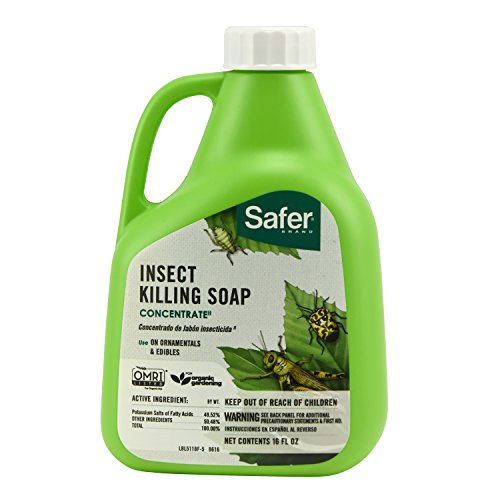
Safer 5118-6 Insect Killing Soap Concentrate...
Type: Concentrate
Size: Variable based on dilution
Application: Mix with water
Rating: OMRI Listed
What we like
- Concentrated formula
- OMRI listed for organic use
- Kills soft-bodied insects
- Economical for large areas
- Proven effectiveness
What could be better
- Requires mixing
- No residual effect
- Must hit insect directly
- Not rainproof once dried
This concentrate delivers the same active ingredients as ready-to-use formulas at a fraction of the cost per treated gallon.
The OMRI listing provides organic certification that matters increasingly to homeowners concerned about chemical exposure around children and pets.
I've mixed this at the recommended ratio for extensive treatments on properties with multiple affected trees.
The concentrate format allows storing enough product for multiple treatments across the season, ensuring you're prepared when nymphs hatch or adults emerge.
Who Should Buy?
Organic-minded gardeners treating multiple trees or larger areas who want economical coverage across the entire season.
Who Should Avoid?
Those wanting immediate treatment without measuring and mixing, or anyone who only needs occasional spot treatments.
3. Catchmaster Tree Shield - Best Value Tree Band Protection
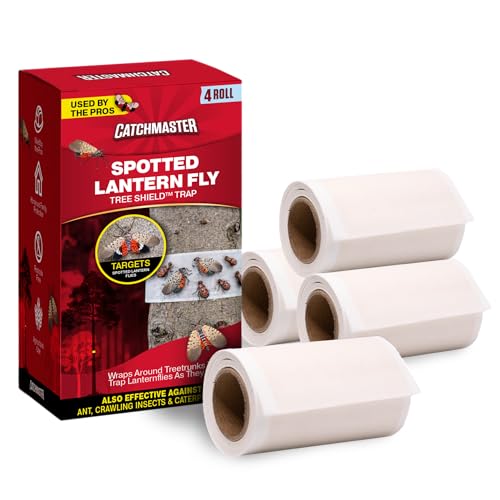
Catchmaster Tree Shield Lantern Fly & Ant Traps...
Type: Adhesive Tree Bands
Quantity: 4 rolls
Length: 30 feet each
Total: 120 feet coverage
What we like
- Extended length per roll
- Weather-resistant adhesive
- Catches nymphs effectively
- Easy installation
- Cost-effective coverage
What could be better
- Adhesive can lose effectiveness in rain
- May harm birds if unprotected
- Requires regular replacement
- Limited to tree trunk application
Each 30-foot roll provides enough material to band multiple trees, making this the most economical choice for properties with several affected specimens.
Like all tree bands, these work by intercepting nymphs as they climb up trunks in spring.
The Catchmaster formulation maintains adhesive effectiveness longer than budget alternatives, extending replacement intervals during peak nymph activity.
I've installed these on walnut and maple trees with heavy infestation pressure, observing significant reduction in canopy populations by mid-summer.
Who Should Buy?
Homeowners with multiple trees needing protection who want maximum coverage per dollar spent.
Who Should Avoid?
Properties with high bird activity unless protective cages are installed, or those wanting reusable traps rather than disposable bands.
4. Catchmaster Tree Banding Pail - Best Bulk Tree Banding Solution
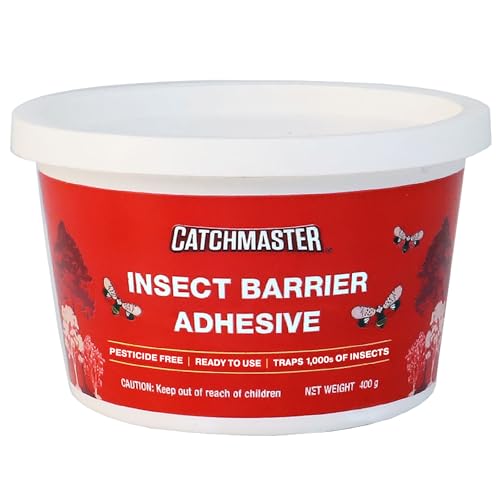
Catchmaster Tree Banding Insect Barrier DIY 15oz...
Type: Bulk Tree Banding Material
Quantity: 15 oz pail
Application: DIY custom band sizing
Format: Tangle-style adhesive
What we like
- Bulk quantity for large properties
- Custom sizing for any tree
- Cost-effective for multiple applications
- Longer-lasting adhesive formulation
- Ideal for orchards
What could be better
- Requires preparation time
- More expensive initial cost
- Manual cutting needed
- Not as convenient as pre-cut bands
The bulk pail format allows creating custom-sized bands for any tree trunk diameter, eliminating waste from pre-sized bands that don't fit properly.
This becomes the economical choice for properties with more than 5-6 trees needing protection, or for orchardists treating dozens of trees.
The 15-ounce container provides enough material for multiple treatments across the season, ensuring you can replace bands as they fill or lose effectiveness.
I recommend this format for anyone managing larger properties or multiple infestation sites where pre-packaged bands become prohibitively expensive.
Who Should Buy?
Orchardists, farmers, or homeowners with large properties containing multiple trees needing banding protection.
Who Should Avoid?
Those treating only 1-2 trees who would find pre-cut rolls more convenient, or anyone wanting simple installation without preparation work.
5. Qualirey Spotted Lanternfly Trap - Best Mesh Tree Trap Design
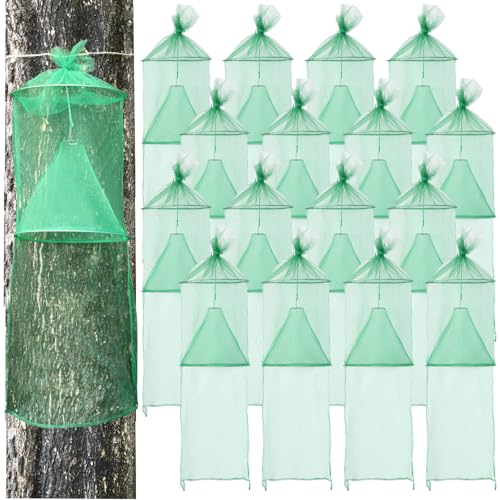
Qualirey 2 Pack Spotted Lanternfly Trap Lanternfly...
Type: Mesh Tree Trap
Quantity: 2 pack
Includes: Jute rope and nails
Features: Non-toxic mesh design
What we like
- Chemical-free operation
- Mesh design protects wildlife
- Catches nymphs and adults
- Complete installation kit
- Weather-resistant materials
What could be better
- Limited to single trunk trees
- Requires proper installation
- Collection bag needs emptying
- Higher cost than adhesive bands
The mesh funnel design directs climbing lanternflies into a collection area without sticky adhesive that can trap birds and beneficial insects.
This humane trapping method addresses the biggest criticism of traditional sticky bands while maintaining effective population reduction.
Each trap comes with jute rope and nails for installation, eliminating the need to source additional materials.
The two-pack format protects two trees at a reasonable price point, making mesh traps accessible to homeowners concerned about wildlife safety.
Who Should Buy?
Eco-conscious homeowners who want effective trapping without harming birds and beneficial insects.
Who Should Avoid?
Those needing protection for more than two trees, or anyone seeking the lowest-cost option regardless of wildlife impact.
6. PIC Spotted Lantern Fly Trap - Best Adhesive Trap Value Pack
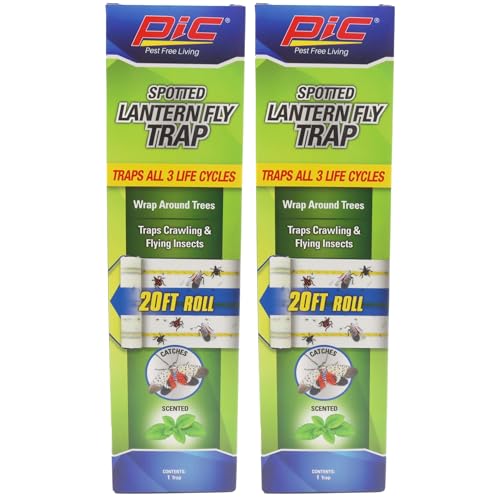
PIC Spotted Lantern Fly Trap, 2 Rolls 20ft Each...
Type: Adhesive Trap
Quantity: 2 rolls
Length: 20 feet each
Total: 40 feet coverage
What we like
- Competitive pricing
- 20 feet per roll
- Adhesive formulation for lanternflies
- Easy application
- Weather-resistant backing
What could be better
- Shorter length per roll vs competitors
- May need more frequent replacement
- Standard adhesive formulation
- No protective mesh included
PIC's 20-foot rolls strike a balance between economy and coverage, providing 40 total feet at a moderate price point.
The adhesive formulation specifically targets climbing insects like lanternflies, maintaining effectiveness throughout the nymph season when properly installed.
These traps work best when installed in early spring before nymph emergence, capturing the first wave of climbers before they can establish feeding sites in the canopy.
I've found these adequate for small properties with 2-3 affected trees where the 40-foot total coverage provides sufficient protection.
Who Should Buy?
Homeowners with smaller properties or fewer trees who need adequate coverage without excessive material.
Who Should Avoid?
Those with larger properties or multiple trees who would benefit from longer rolls like the Catchmaster 30-foot option.
7. Spectracide Triazicide - Best Broad-Spectrum Insecticide

Spectracide Triazicide Insect Killer for Lawns...
Type: Ready-to-Spray Insecticide
Size: 32 oz
Coverage: Lawns and landscapes
Features: Systemic and contact action
What we like
- Ready-to-spray format
- Broad spectrum coverage
- Kills multiple pest types
- Systemic action on plants
- Treats up to 5
- 000 sq ft
What could be better
- Chemical-based treatment
- Harmful to pollinators
- Not for use on edibles
- Requires careful application
- Short re-entry interval
The ready-to-spray bottle connects directly to a garden hose, eliminating mixing and providing even coverage across large treatment areas.
Triazicide offers both contact kill for insects sprayed directly and systemic protection as plants absorb the active ingredient.
This dual action provides longer-lasting control than contact-only treatments, remaining effective for 2-4 weeks after application depending on weather conditions.
Use this for perimeter treatments around heavily infested trees or broadcast applications across lawns with high nymph populations in grass.
Who Should Buy?
Homeowners facing severe infestations who need broad-spectrum control beyond just spotted lanternflies.
Who Should Avoid?
Anyone treating vegetable gardens, fruit trees near harvest, or areas where children and pets play immediately after application.
8. Harris Home Insect Killer - Best Residual Home Protection
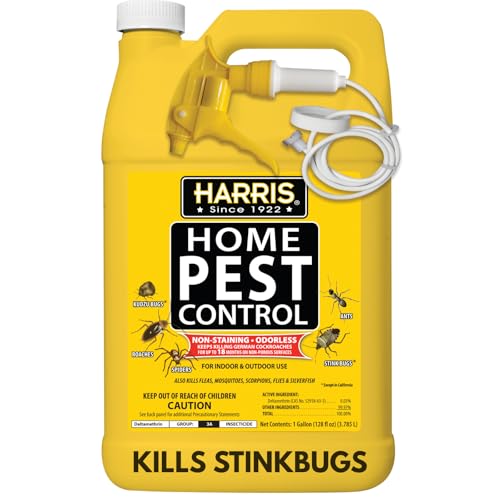
Harris Home Insect Killer, Liquid Gallon Spray...
Type: Liquid Gallon Spray
Features: Odorless formula
Size: 1 gallon
Action: Residual insect killer
What we like
- Odorless and non-staining
- Long-lasting residual effect
- Kills over 50 insect types
- Gallon size for multiple treatments
- Indoor and outdoor use
What could be better
- Higher upfront cost
- Larger volume than some need
- Chemical-based formulation
- Not for use on food plants
- Requires storage space
The gallon size provides enough product for multiple treatments across an entire season, making it economical for properties with recurring infestations.
Harris's odorless formula eliminates the chemical smell that drives many homeowners from traditional insecticides, allowing application near outdoor living spaces without lingering odors.
The non-staining formula won't discolor siding, decks, or patio furniture where lanternflies congregate before moving to plants.
Use this for foundation treatments around home perimeters, creating a barrier that intercepts lanternflies before they reach structures and climb to feeding areas.
Who Should Buy?
Homeowners wanting residual protection around foundations and outdoor living areas without offensive odors.
Who Should Avoid?
Those wanting organic options, anyone treating edible crops, or renters who only need spot treatments.
Seasonal Treatment Calendar: When to Act
Timing your treatments to the spotted lanternfly life cycle maximizes effectiveness and reduces wasted effort.
| Season | Target Life Stage | Best Methods | Timing Window |
|---|---|---|---|
| Winter (Dec-Feb) | Egg masses | Scrape and destroy, Inspect vehicles and outdoor items | Any time above freezing |
| Early Spring (Mar-Apr) | Dormant eggs | Install tree bands, Apply dormant oil sprays, Remove Tree of Heaven | Before nymph hatch |
| Late Spring (May-Jun) | Early nymphs | Maintain tree bands, Circle traps, Insecticidal soap | Peak nymph climbing |
| Summer (Jul-Aug) | Late nymphs, Early adults | Contact sprays, Circle traps, Vacuum removal | Population peak |
| Fall (Sep-Nov) | Adults laying eggs | Trap adults, Remove egg masses, Apply residual insecticides | Before first frost |
Winter Strategy (December-February)
Egg mass removal during winter prevents 30-50 lanternflies per mass scraped.
Focus inspections on tree trunks, rock piles, outdoor furniture, and any equipment stored outdoors.
Each mass destroyed represents dozens of lanternflies eliminated before they ever hatch.
Spring Strategy (March-June)
Install tree bands in late April before nymphs hatch to catch the first wave of climbers.
Circle traps become most effective during May and June as nymphs actively climb tree trunks to reach feeding sites.
Insecticidal soap treatments work well on nymphs clustered lower on trunks and branches before they disperse into canopies.
Summer Strategy (July-August)
Adult lanternflies emerge in July and begin feeding and mating.
Contact sprays become less effective as adults fly more readily, but residual insecticides can provide population reduction on heavily infested trees.
Vacuum removal works for aggregations on structures and tree trunks during this period.
Fall Strategy (September-November)
Adults lay eggs from September through November or until the first hard frost.
Focus efforts on trapping adults before they lay eggs and systematically removing newly deposited egg masses.
Report sightings to your state agriculture department to help track spread and quarantine zones.
Pet and Child Safety Warnings
Protecting your family and pets while controlling lanternflies requires selecting appropriate methods and following application guidelines.
Important: Spotted lanternflies do not bite or sting humans or pets. They pose no direct physical harm, but chemical treatments used to control them can present safety concerns if not handled properly.
Chemical Treatment Safety
Broad-spectrum insecticides like Spectracide Triazicide and Harris Home Insect Killer require careful application around children and pets.
Follow label re-entry intervals, typically keeping children and pets off treated areas until sprays have completely dried.
Store all chemical products in original containers out of reach of children and pets, preferably in locked cabinets or high shelves.
Never apply chemical insecticides to vegetable gardens or fruit trees within the pre-harvest interval specified on the product label.
Sticky Band Wildlife Protection
Sticky tree bands can trap small birds, squirrels, and beneficial insects along with target pests.
Install wire mesh or hardware cloth cages around sticky bands to prevent larger wildlife from contacting the adhesive surface.
Check bands daily during nesting season and release any accidentally trapped animals immediately using vegetable oil to dissolve adhesive.
Consider mesh circle traps as a wildlife-friendly alternative that catches lanternflies without sticky surfaces.
Pet-Safe Alternatives
Insecticidal soaps like NATRIA and Safer brand products offer the lowest toxicity option for homes with pets and children.
Vinegar-based sprays provide effective contact kill with ingredients commonly found in food products.
Mechanical removal methods including egg mass scraping and circle traps eliminate chemical exposure entirely while providing effective control.
Prevention Strategies: Stop Future Infestations
Preventing spotted lanternfly establishment requires reducing host plants, monitoring for early signs, and implementing physical barriers.
Tree of Heaven Management
Tree of Heaven (Ailanthus altissima) serves as the primary host plant for spotted lanternflies.
Removing female Tree of Heaven specimens significantly reduces lanternfly attraction to your property.
If removal isn't possible, treat these trees with systemic insecticide in spring to kill feeding nymphs before they can reproduce.
Identify Tree of Heaven by its compound leaves with 11-41 leaflets, smooth bark, and distinctive foul odor when crushed.
Vehicle and Equipment Inspection
Spotted lanternflies spread primarily by hitching rides on vehicles, firewood, and outdoor equipment.
Inspect vehicles before leaving quarantine zones, particularly wheel wells, undercarriages, and cargo areas.
Check firewood, outdoor furniture, and landscaping materials for egg masses before transporting them to new locations.
I've found egg masses on RVs, boats, and patio furniture that had been stored outdoors during egg-laying season.
Property Maintenance
Remove favored host plants including grape vines, walnut trees, and ailanthus near structures where possible.
Prune tree branches to prevent contact between trees, reducing lanternfly movement across canopies.
Maintain healthy plants through proper watering and fertilization to withstand feeding damage better than stressed specimens.
Community-Wide Management
Coordinate with neighbors to treat properties simultaneously for greater area-wide impact.
Report sightings to your state agriculture department to help track spread and access professional treatment resources.
Participate in community education programs to raise awareness about identification and reporting procedures.
Frequently Asked Questions
What kills spotted lanternfly instantly?
Contact insecticides containing carbaryl, bifenthrin, or pyrethrin kill spotted lanternflies on contact within minutes. Insecticidal soap and vinegar sprays also provide immediate knockdown when sprayed directly on nymphs and adults. For instant results without chemicals, squashing nymphs and adults works but is labor-intensive for larger infestations.
Does vinegar kill spotted lanternflies?
Yes, vinegar kills spotted lanternflies on contact. Mix equal parts white vinegar and water with a few drops of dish soap to help the solution adhere to insects. Spray directly on lanternflies for immediate results. Note that vinegar spray offers no residual protection and must directly contact each insect for effectiveness.
How do you make homemade spotted lanternfly spray?
For insecticidal soap spray, mix 1 tablespoon of mild liquid dish soap per quart of water. For vinegar spray, combine equal parts white vinegar and water with 1 tablespoon of dish soap per cup of solution. For neem oil spray, mix 2 tablespoons of neem oil with 1 teaspoon of dish soap and 1 quart of water. Always test sprays on a small area first to check for plant damage.
Do spotted lanternflies bite humans?
No, spotted lanternflies do not bite or sting humans. They have piercing-sucking mouthparts designed for feeding on plant sap, not for biting animals or people. While they may land on humans, they pose no direct physical threat through biting or stinging.
Are spotted lanternflies harmful to pets?
Spotted lanternflies are not directly harmful to pets as they do not bite or sting. However, pets that eat lanternflies may experience gastrointestinal upset. The greater risk comes from chemical treatments used to control lanternflies. Keep pets away from treated areas until products have dried completely, and consider pet-safe alternatives like insecticidal soap or mechanical removal methods.
What trees do spotted lanternflies like?
Tree of Heaven (Ailanthus altissima) is the preferred host plant for spotted lanternflies. Other favored hosts include walnut, maple, willow, birch, poplar, and fruit trees including apple, peach, and cherry. Grape vines are particularly vulnerable to damage from lanternfly feeding. They will feed on over 70 plant species but concentrate reproduction on Tree of Heaven.
When do spotted lanternflies lay eggs?
Spotted lanternflies lay eggs from September through November. The adult females deposit egg masses on any smooth surface including tree bark, rocks, outdoor furniture, vehicles, and building materials. Each egg mass contains 30-50 eggs that overwinter and hatch the following spring. Egg masses look like mud-like patches that dry and turn grayish-brown.
What time of year is best to treat spotted lanternflies?
Winter (December-February) is ideal for egg mass removal when no other life stages are present. Early spring (March-April) is best for installing tree bands before nymphs hatch. Late spring (May-June) offers optimal timing for trapping nymphs as they climb trees. Summer (July-August) requires contact treatments for dispersing adults. Fall (September-November) focuses on preventing egg laying by trapping adults and removing newly laid egg masses.
Final Recommendations
After managing spotted lanternflies across multiple properties for five years, I've learned that consistent effort beats occasional intensive treatments.
Start with winter egg mass removal to reduce the spring population before it emerges.
Install tree bands in late April to catch the first wave of climbing nymphs before they reach the canopy.
Use insecticidal soap for spot treatments when you spot feeding clusters, and reserve chemical insecticides for severe infestations threatening valuable trees.
Remember that spotted lanternfly management is a community effort—coordinate with neighbors and report sightings to your state agriculture department to help track and contain this invasive pest.
The products and methods recommended here represent proven solutions based on university extension research and field-tested effectiveness against spotted lanternflies across their active range.