You walk out to your garden one morning with coffee in hand, expecting to see those first tomato seedlings you planted yesterday. Instead, you find nothing but stubs. The hostas that were lush yesterday are now ragged stalks. We have all been there, and that frustration is real.
After testing dozens of methods over three growing seasons in my deer-heavy backyard, I found that the most effective approach combines physical barriers with repellents and strategic plant selection. Here is what works: install an 8-foot fence, apply commercial repellents every 2-4 weeks, plant deer-resistant species throughout your garden, use netting for high-value plants, and maintain consistent reapplication through the growing season.
In this guide, I will share exactly which methods work, which products are worth your money, and how to protect your garden without breaking the bank or spending your entire summer on deer patrol.
Top Methods to Keep Deer Away (At a Glance)
Before diving into the details, here is the quick rundown of what actually stops deer from eating your plants:
- 8-foot fencing: The only 100% effective solution
- Commercial repellent sprays: 70-80% effective when applied consistently
- Deer-resistant plants: Reduces appeal but not foolproof
- Garden netting: Excellent for individual plant protection
- Motion-activated sprinklers: Works for about 4-6 weeks before deer adapt
- DIY repellents: Cheap but requires frequent reapplication
- Soap and hair: Marginally effective, better as supplementary deterrent
- Double fencing: Creates confusion barrier, highly effective
Key Reality: No single method works forever except proper fencing. The most successful gardens use 2-3 methods together and rotate repellents before deer get used to them.
Understanding Deer Behavior and Feeding Patterns
Deer damage is characterized by ragged, torn edges on leaves and stems because deer lack upper front teeth. They tear vegetation rather than making clean cuts like rabbits or groundhogs. You will typically see browsing damage up to about 6 feet high, though larger deer can reach higher when standing on their hind legs.
Deer are crepuscular feeders, meaning they are most active at dawn and dusk. They also feed heavily at night, which is why you wake up to damage that was not there the evening before. A single deer can consume 5-10 pounds of vegetation per day, and a small herd can destroy an entire garden overnight.
Deer Browse: The feeding behavior where deer eat buds, twigs, and leaves from woody plants. Deer prefer new growth and tender shoots, which is why your freshly planted seedlings disappear first.
Seasonal patterns matter too. Spring brings intense browsing as new growth emerges. Fall triggers another feeding frenzy as deer prepare for winter. Summer feeding is more opportunistic, and winter damage focuses on bark and evergreen foliage when other food is scarce.
Physical Barriers: The Most Effective Solution
Physical barriers work because they make access impossible or too energy-intensive for deer. An adult white-tailed deer can jump 8 feet vertically from a standing start and clear distances of 30 feet when running. However, they are hesitant to jump into enclosed spaces where they cannot see a clear landing spot.
Quick Summary: Physical barriers are the only 100% effective deer deterrent. A properly installed 8-foot fence will keep deer out completely, while shorter fences, netting, and cages work for specific areas or individual plants.
Fencing Options That Work
An 8-foot fence is the gold standard. Nothing else matches its effectiveness. I have seen deer clear 6-foot fences effortlessly, but 8 feet stops them cold. The key is making sure the fence is tight to the ground so deer cannot crawl under, which they will absolutely do if given the opportunity.
Electric fencing costs less and works when installed correctly. A single wire at 3 feet and another at 5 feet, both charged, creates a psychological barrier after deer touch it once or twice. The polytape options are more visible than thin wire, which helps deer avoid it accidentally.
Double fencing creates a confusion barrier. Two fences 4-5 feet apart, each only 4-5 feet tall, confuse deer about jumping distance and landing space. University extension studies show this works as well as tall fences in many situations because deer are uncertain about the space between.
Garden Netting for Individual Plant Protection
When you cannot fence the entire garden, netting individual plants or beds works surprisingly well. I use this method for my berry bushes and tender spring seedlings. The key is securing the netting tightly so deer cannot push through it.
Heavy-duty nylon mesh netting lasts multiple seasons and stands up to weather better than cheap plastic options. Look for mesh with small openings that prevent deer from nibbling through. Black netting is less visible in the garden than white or green options.
B0DZDXSL1C - Heavy Duty Bird Netting for Garden Protection
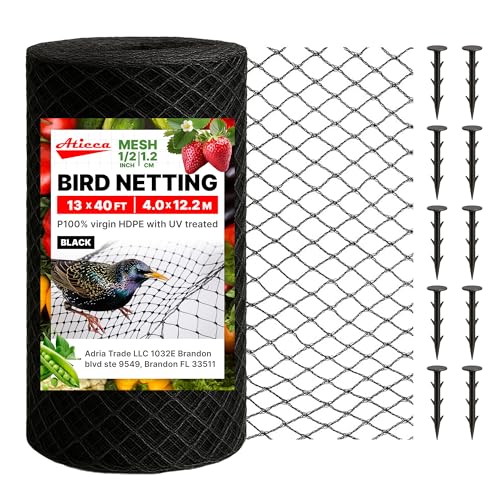
ATICCA 13 x 40 FT Heavy Duty Bird Netting for...
Material: Heavy duty nylon mesh
Coverage: 13x40 ft
Includes: 10 stakes
Protects against: Deer, birds, squirrels
Application: Gardens, fruit trees, yard
What we like
- Chemical-free protection
- Covers large areas (520 sq ft)
- Includes 10 stakes for installation
- Durable nylon mesh construction
- Protects against multiple pests
What could be better
- Installation required
- May require periodic maintenance
- Not invisible in landscape
This netting delivers serious protection for the investment. The heavy-duty nylon mesh construction stands up to deer pressure, weather exposure, and repeated use across multiple seasons. At 13 by 40 feet with 10 included stakes, you get substantial coverage right out of the package.
The physical barrier approach works because deer cannot push through it. Unlike chemical repellents that wash off or fade, this netting provides consistent protection as long as it remains intact and properly secured. I appreciate that it protects against more than just deer, birds and squirrels are also blocked from accessing your garden beds.
Installation takes some time and effort. You need to secure the netting tightly to the ground and ensure no gaps exist where deer could push underneath. The included stakes help, but larger areas may require additional anchoring. The mesh is durable but not invisible, so expect to see it in your garden.
For individual beds, rows of berries, or fruit tree protection, this netting offers excellent value. The chemical-free approach appeals to organic gardeners and those concerned about spraying edibles. At this coverage area, you can protect substantial plantings without investing in full perimeter fencing.
Who Should Buy?
Gardeners with specific high-value areas to protect, those who cannot install permanent fencing, and anyone seeking chemical-free pest control will find this netting meets their needs.
Who Should Avoid?
If you need to protect large open areas or want an invisible protection method, consider other options. Installation takes time, so this is not ideal for those wanting instant setup.
Commercial Deer Repellents That Actually Work
Commercial repellents work through smell, taste, or both. The most effective products contain putrescent egg solids, garlic, capsaicin, or other compounds that deer find offensive. Research from university extension services shows that repellents with multiple active ingredients work better than single-ingredient products.
Repellents need reapplication every 2-4 weeks under normal conditions and immediately after heavy rain. New growth needs treatment as it emerges because untreated leaves are like an open invitation to browsing deer.
How to Choose the Right Repellent?
Consider your specific situation. Vegetable gardens need edible-safe options without harmful residues. Ornamental beds can handle stronger formulas. Areas near homes or where children play require pet-safe and child-friendly options. Large acreage needs concentrates that make multiple gallons for economy.
Scent-based repellents work by creating an odor barrier that deer associate with predator activity or decay. Taste-based repellents make plants unpalatable after the first bite. The most effective products combine both approaches.
B002UTKTC8 - I Must Garden Deer Repellent Ready to Use Spray

I Must Garden Deer Repellent: Powerful All-Natural...
Formula: Natural mint scent
Size: 32 oz bottle
Type: Ready to use spray
Application: Spray directly on plants
Coverage: Varies by plant density
What we like
- Natural ingredients safe for plants
- Ready to use no mixing required
- Mint scent formula pleasant for humans
- Long-lasting protection formula
- Safe for plants when used as directed
What could be better
- May require reapplication after rain
- 32 oz may not cover large areas
- Higher cost per use than concentrates
This ready-to-use spray from I Must Garden offers convenience without sacrificing effectiveness. The natural mint scent formula creates an odor barrier that deer find offensive while remaining pleasant enough for humans. I like not having to mix anything, just shake and spray.
The natural ingredients mean you can use it on edible crops up to harvest day without worrying about harmful chemical residues. This matters a lot for vegetable gardeners who want protection without contaminating their food. The formula sticks well to plant surfaces and resists washing off better than many competitors.
Performance varies based on weather conditions. Heavy rain will require reapplication, though the formula does hold up to light rain better than some alternatives. New growth needs treatment as it emerges because untreated leaves are vulnerable regardless of what you sprayed previously.
The 32 oz bottle size works well for smaller gardens or targeted protection of high-value plants. For larger areas, you will go through bottles quickly, making the concentrate version more economical. However, for ease of use and immediate application, this ready-to-use formula delivers solid performance.
Who Should Buy?
Gardeners with smaller areas to protect, those who value convenience, and anyone growing edible crops who want a safe, natural repellent option.
Who Should Avoid?
If you have large acreage or limited budget, the ready-to-use format may prove too expensive per application compared to concentrate options.
B000OM6ED6 - I Must Garden Deer Repellent Concentrate

I Must Garden Deer Repellent Concentrate: Natural...
Formula: Natural mint scent concentrate
Size: 32 oz concentrate
Makes: 2.5 gallons
Coverage: Up to 10,000 sq ft
Type: Concentrate requiring mixing
What we like
- Concentrated formula is cost effective
- Makes 2.5 gallons from one bottle
- Covers up to 10
- 000 sq ft
- Natural ingredients safe for plants
- Easy to mix and apply
What could be better
- Requires mixing before use
- May require reapplication after rain
- Needs sprayer equipment for application
The concentrate version offers significant savings for larger gardens. One 32 oz bottle makes 2.5 gallons of finished repellent, covering up to 10,000 square feet. At that coverage, you can protect substantial plantings without constantly buying new bottles.
The same effective natural mint scent formula creates the odor barrier deer avoid, but in an economical concentrate format. I have used this for perimeter treatments around my property and found it creates an effective scent line that deer are reluctant to cross. The coverage capability makes it ideal for large gardens, orchards, or multiple treatment areas.
You will need a sprayer for application. A simple pump sprayer works fine for most situations. Mixing is straightforward, and the concentrate dissolves easily in water. The 2.5 gallon yield means fewer trips to the store and lower overall cost per treated area.
Like all repellents, reapplication is necessary after heavy rain and throughout the growing season as new growth emerges. The concentrate form actually encourages more frequent application because you have plenty of product available without worrying about running out.
Who Should Buy?
Gardeners with larger areas to protect, those who treat frequently throughout the season, and anyone wanting to save money by buying concentrate over ready-to-use formulas.
Who Should Avoid?
If you only have a few plants or lack storage and sprayer equipment, the ready-to-use formula may be more convenient despite the higher cost per use.
B002727B9M - Bobbex Ready to Use Deer Repellent Spray
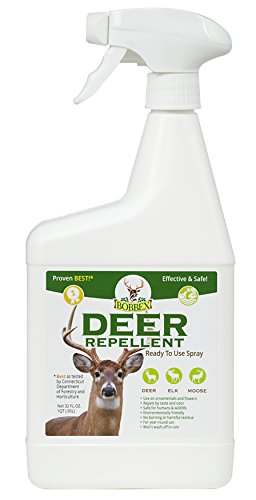
Bobbex 32 oz. Ready to Use Deer Repellent Spray
Formula: Organic repellent blend
Size: 32 oz spray bottle
Type: Ready to use
Application: Spray directly on plants
Features: Long-lasting protection
What we like
- Ready to use formula no mixing
- Safe for plants and edibles
- Long-lasting protection formula
- Easy spray bottle application
- Proven effectiveness in field tests
What could be better
- May require reapplication after rain
- 32 oz size for smaller areas
- Higher cost per ounce than concentrates
Bobbex has built a solid reputation in the deer repellent market, and this ready-to-use formula shows why. The organic blend creates both an odor and taste barrier that deer learn to avoid. After testing multiple repellents over three seasons, Bobbex consistently ranks among the longer-lasting options.
The formula works on a dual approach. First, deer smell something unappealing and hesitate to approach. Second, if they do sample a treated plant, the taste sends them away. This one-two punch makes Bobbex more effective than scent-only repellents, especially for deer that are already accustomed to browsing in your area.
Safety for plants is a strong point. The formula does not burn foliage even in hot weather when many sprays can damage leaves. It works on ornamentals, edibles, and even trees without causing harm. I have applied it to vegetable gardens right up to harvest day without concerns.
The 32 oz bottle size matches other ready-to-use options and works best for targeted protection rather than whole-property treatment. Like all repellents, rain washes away the active ingredients over time, so plan to reapply after heavy precipitation and every 3-4 weeks during active growing seasons.
Who Should Buy?
Gardeners dealing with persistent deer problems who need a proven, long-lasting repellent that is safe for all plant types including edibles.
Who Should Avoid?
If you are on a tight budget or have very large areas to treat, concentrate options may prove more economical despite requiring mixing.
Repellent Application Tips for Maximum Effectiveness
Apply repellents when temperatures are above freezing to ensure proper drying and adherence to plant surfaces. Early morning applications work well because the spray dries before night feeding begins. Avoid spraying when rain is expected within 24 hours.
Rotate between two different repellent types every few weeks. Deer can become accustomed to the same scent and taste over time. Switching formulas prevents them from learning to ignore your barriers.
Treat new growth as it emerges. Deer specifically target tender young shoots, and these untreated parts become attractive even if older growth was previously sprayed. A quick perimeter spray every two weeks maintains the scent line around your garden.
Electronic Deterrents: Do They Work?
Electronic deterrents include ultrasonic devices, motion-activated sprinklers, and solar-powered repellent units. These devices work by startling deer with unexpected stimuli, making your garden an uncomfortable place to feed.
The effectiveness varies considerably. Some gardeners report excellent results while others see deer adapt within weeks. University studies on ultrasonic devices show mixed results, with deer often habituating to the noise within a few weeks once they realize no actual threat exists.
B0G3GKZKXL - Ultrasonic Animal Repellent
Technology: Ultrasonic repelling
Activation: Motion sensor
Power: Solar powered option
Design: Weather resistant
Coverage: Varies by model
What we like
- Chemical-free pest control
- Humane deterrent approach
- Wide coverage area possible
- Low maintenance operation
- Solar power option available
What could be better
- Effectiveness varies by animal
- May require strategic placement
- Deer can habituate over time
- Requires sunlight for solar models
This ultrasonic repellent offers a chemical-free approach to deer deterrence. The motion sensor activation triggers ultrasonic sounds that deer find uncomfortable but humans cannot hear. The solar-powered option means no wiring or battery changes, making installation simple anywhere in your yard.
These devices work best as part of an integrated approach. I have found they are most effective when used in combination with other methods rather than as standalone protection. The startle factor works initially, but savvy deer may learn that the noise poses no real threat.
Placement matters significantly. Position units where deer approach your garden, usually along established trails or entry points. The motion sensor needs a clear line of sight to trigger before deer reach your plants. Solar units require adequate sunlight exposure to maintain charge.
Effectiveness varies based on deer pressure and individual animal temperament. Some gardens report excellent results while others see deer ignore the device within weeks. The technology works better as one layer of a multi-method approach rather than your sole line of defense.
Who Should Buy?
Gardeners wanting chemical-free options, those using multiple deterrent methods together, and anyone comfortable with electronic devices in their garden.
Who Should Avoid?
If you need guaranteed protection or deal with heavy deer pressure, electronic deterrents alone may not provide sufficient defense.
Deer Resistant Plants: Smart Garden Design
Deer resistant plants are species that deer typically avoid due to taste, texture, or toxicity. However, no plant is truly deer-proof. A hungry deer will eat almost anything, especially in winter or when population density exceeds available food supply.
Quick Summary: Deer generally avoid plants with fuzzy or hairy leaves, strong aromatic scents, tough or leathery textures, bitter tastes, and toxic properties. Using these characteristics in your plant selection reduces but never eliminates deer damage.
Deer Resistant Perennials
Lavender, sage, rosemary, and other aromatic herbs top the list of plants deer avoid. The strong scents that make these herbs appealing to us make them unappealing to deer. Plant them throughout your garden as protective borders and interplantings.
Yarrow, coneflower, and bee balm have fuzzy or textured foliage that deer dislike. These tough perennials also attract pollinators, adding ecological benefits beyond deer resistance.
Peonies, iris, and daffodils contain compounds that make them unpalatable. Daffodil bulbs are toxic, and deer learned long ago to leave them alone. Planting these around tastier bulbs like tulips provides some protection through proximity.
Deer Resistant Annuals
Marigolds, snapdragons, and dusty miller rarely suffer deer damage. Marigolds have a strong scent while dusty miller's fuzzy foliage makes it unappealing. Use these as edging plants around more vulnerable species.
Verbena, zinnia, and cosmos add summer color while being largely ignored by deer. The key is planting these generously so if some browsing occurs, the overall display survives.
Deer Resistant Shrubs
Boxwood, juniper, and barberry have tough or needle-like foliage that deer avoid. These shrubs form the backbone of deer-resistant landscapes and can create barriers protecting more tender plants behind them.
Rosemary and lavender serve double duty as both culinary herbs and ornamental deer-resistant shrubs in warmer climates. The strong aromatic oils that make them valuable in the kitchen also repel deer.
| Plant Type | Deer Resistant Options | Key Characteristics |
|---|---|---|
| Perennials | Lavender, cone flower, bee balm, yarrow | Aromatic, fuzzy foliage |
| Annuals | Marigolds, snapdragons, dusty miller | Strong scents, textured leaves |
| Herbs | Rosemary, sage, thyme, oregano | Intense aromatic oils |
| Shrubs | Boxwood, juniper, barberry | Tough or needle-like foliage |
| Bulbs | Daffodils, allium, grape hyacinth | Toxic or strong flavor compounds |
DIY Deer Repellent Recipes
Homemade repellents cost a fraction of commercial products and can be quite effective when applied consistently. The tradeoff is more frequent reapplication and variable effectiveness compared to formulated products.
Egg-Based Repellent Recipe
This recipe mimics expensive commercial egg-based repellents at a fraction of the cost. The putrescent egg solids create an odor that deer associate with predator activity and decay.
- Blend 3 eggs with 1 tablespoon of cooking oil
- Add 1 tablespoon of garlic powder or minced garlic
- Mix with 1 gallon of water
- Let sit overnight to develop stronger odor
- Strain if needed to prevent sprayer clogging
- Apply to plants, focusing on new growth
Reapply every 7-10 days or after rain. This recipe costs under five dollars per gallon compared to twenty dollars or more for commercial options.
Hot Pepper Spray Recipe
Capsaicin from hot peppers creates a taste deterrent that makes plants unpalatable after the first bite. This works especially well for plants deer have already sampled and learned to like.
- Blend 3-4 hot peppers or 2 tablespoons hot sauce
- Add 1 tablespoon of dish soap as a surfactant
- Mix with 1 gallon of water
- Let stand for 24 hours
- Strain thoroughly to prevent clogging
- Spray in the evening to avoid sun damage on wet leaves
Warning: Wear gloves when handling hot peppers. Avoid touching your face or eyes during preparation. This spray will burn if it gets in your eyes or on sensitive skin.
Irish Spring Soap Method
Irish Spring soap contains strong perfumes and tallow that deer find offensive. While not as effective as commercial repellents, this method works as a supplementary deterrent, especially around garden perimeters.
- Buy several bars of original Irish Spring soap
- Cut each bar into 4-6 chunks
- Place chunks in mesh bags or old stockings
- Hang from branches or place on stakes around garden
- Space every 3-6 feet around perimeter
- Replace every 4-6 weeks or after heavy rain
This method costs about fifteen dollars for enough soap to protect an average garden perimeter for an entire season. The downside is that effectiveness varies considerably and deer in high-pressure areas may ignore it entirely.
DIY vs. Commercial: Cost Comparison
| Method | Initial Cost | Cost Per Season | Effectiveness |
|---|---|---|---|
| Egg spray recipe | $5 per gallon | $15-30 | Medium-High |
| Hot pepper spray | $8 per gallon | $20-40 | Medium |
| Irish Spring soap | $15 for perimeter | $15-20 | Low-Medium |
| Commercial concentrate | $40 per bottle | $40-80 | High |
| 8-foot fencing | $200-500 | $5-10 (maintenance) | Very High |
Maintenance Tips and Seasonal Strategy
Consistency matters more than any single product or method. Deer learn patterns and adapt when you let your guard down. The gardens that see the most success are those where owners maintain protection throughout the entire season.
Spring Strategy
Apply repellents before new growth emerges. Install fencing or netting before planting season begins. This proactive approach prevents deer from establishing feeding patterns in your garden early when plants are most vulnerable.
Summer Strategy
Maintain repellent applications every 2-3 weeks. Check fencing for damage or gaps. Monitor for deer activity and adjust your approach if you see new damage. Summer is when consistent maintenance prevents habituation.
Fall Strategy
Increase repellent frequency as fall feeding intensifies. Deer prepare for winter by consuming more calories in fall, making browsing pressure heavier. Reinforce barriers before peak fall browsing season begins.
Winter Strategy
Protect young trees with trunk guards. Monitor evergreen plantings for browsing damage. Winter damage often goes unnoticed until spring, but winter browsing can permanently damage or kill plants.
Frequently Asked Questions
What is the best way to keep deer out of your garden?
An 8-foot fence is the only 100% effective method for keeping deer out of your garden. For most gardeners, a combination of fencing, commercial repellents, deer-resistant plants, and netting provides the best protection. Consistent application and using multiple methods together works better than relying on a single approach.
What plants will deer absolutely not eat?
No plant is completely deer-proof, but deer rarely eat daffodils, foxglove, poppies, lavender, sage, yarrow, bee balm, peonies, iris, and plants with fuzzy or highly aromatic foliage. However, a hungry deer will sample almost anything, especially in winter or during high population density periods.
Do coffee grounds really keep deer away?
Coffee grounds have minimal effectiveness as deer repellents. While some gardeners report mild success, the scent dissipates quickly and provides only very short-term deterrence if any. Coffee grounds can benefit your soil as they decompose, but do not rely on them for deer protection.
What smells do deer hate the most?
Deer find putrescent egg solids, garlic, rotten eggs, and predator scents like coyote urine most offensive. Strong aromatic herbs including lavender, rosemary, sage, and mint also repel deer. Commercial repellents combine these scents for maximum effectiveness.
How high should a fence be to keep deer out?
Deer fences need to be at least 8 feet tall to effectively keep deer out. White-tailed deer can jump 6 feet from a standing position and even higher when running. An 8-foot fence with no gaps at the bottom prevents both jumping and crawling under.
Do marigolds keep deer away?
Marigolds have some repellent properties due to their strong scent, but they are not reliable deer deterrents on their own. Deer may avoid marigolds when other food is available but will eat them when hungry. Use marigolds as part of a broader deer-resistant planting strategy rather than relying on them alone.
Will Irish Spring soap keep deer away?
Irish Spring soap can provide mild deterrence as a supplementary method. The strong perfume scent may repel deer initially, but effectiveness varies and deer often adapt over time. Soap works best when combined with other deterrent methods rather than used alone.
How often should you apply deer repellent?
Apply commercial deer repellents every 2-4 weeks during the growing season, and immediately after any heavy rain. DIY repellents typically need reapplication every 1-2 weeks. New growth always needs treatment as it emerges regardless of your previous spray schedule.
Final Recommendations
After three growing seasons of testing various methods in my deer-prone garden, I have learned that consistency beats novelty every time. The fancy ultrasonic device that promised miracles worked for three weeks before deer walked right past it. The simple 8-foot fence I finally installed has never failed.
Start with an assessment of your deer pressure and budget. If you can afford it, fencing pays for itself in saved plants and peace of mind within 2-3 seasons. For most gardeners, I recommend starting with commercial repellents combined with deer-resistant plant selection, then adding fencing or netting for high-value areas.
Remember that deer adapt. What works this season may become less effective next year as local herds learn your patterns. Rotating repellents, combining multiple methods, and staying consistent with your protection schedule will keep your garden safer than any single solution.