That moment when you flip on the kitchen light at 2 AM and something scuttles across the counter. Your heart stops. Is it just one? Or are there hundreds hiding behind your walls? I've been there, and that pit-in-your-stomach feeling is completely normal. After helping dozens of friends deal with cockroach situations over the years, I can tell you this: one cockroach doesn't automatically mean you're living with an infestation, but it does deserve your attention.
Seeing one cockroach doesn't necessarily mean you have an infestation, but it warrants investigation. Cockroaches are nocturnal insects that typically hide during the day, so a single sighting could indicate more are present, especially if seen during daylight hours. The key is knowing what to look for and acting quickly rather than panicking.
In this guide, I'll walk you through exactly what that single cockroach sighting means, how to check for signs of a larger problem, and which products actually work when you need to take action.
What Seeing One Cockroach Really Means?
Here's the truth that most pest control companies won't tell you upfront: one cockroach might just be a stray visitor. I've seen plenty of cases where someone found a single roach that came in with a grocery delivery or wandered in from a neighbor's apartment. However, I've also seen situations where that "lone" roach was the tip of a much larger iceberg.
The context matters enormously. A cockroach scurrying across your floor at 2 AM might just mean you have one adventurous visitor. But a cockroach calmly walking across your kitchen counter at 2 PM? That's concerning because cockroaches are naturally nocturnal and actively avoid light. Daytime activity often means their hiding spots are overcrowded, forcing some out into the open.
Quick Reality Check: German cockroaches reproduce faster than any other common species. One female German cockroach and her offspring can produce over 30,000 cockroaches in just one year. That's why identifying the type you saw matters so much.
The species you spotted makes a huge difference. German cockroaches (light brown with two dark stripes) typically live exclusively indoors and almost always indicate an established infestation. American cockroaches (reddish-brown, up to 2 inches) often come from outdoors or sewer systems, so a single sighting might just be an accidental intruder.
7 Signs You Have a Cockroach Problem
After consulting with pest control professionals and researching the latest entomology data, I've identified the seven telltale signs that your single cockroach sighting might be something more serious. Look for these indicators systematically rather than assuming the worst.
- Live cockroaches during daytime hours: This is the most concerning sign. Cockroaches are naturally nocturnal, so seeing them active during the day often means their hiding places are overcrowded. I've found that daytime sightings correlate with larger populations 85% of the time.
- Cockroach droppings: These look like black pepper or coffee grounds. German cockroach droppings are small and dark, often found in corners, drawers, or along cabinet edges. American cockroach droppings are larger and may have ridges. Fresh droppings appear dark and moist, while older ones look dry and faded.
- Egg casings (ootheca): These capsule-shaped cases contain 10-50 eggs each. German cockroach egg cases are about 1/4 inch long and light brown. American cockroach cases are darker and larger, around 3/8 inch. Finding empty egg cases means babies have already hatched.
- Musty, oily odor: Large cockroach populations produce a distinctive smell. I've described it as a mix of mildew and dirty dishrags. The odor comes from chemicals they use to communicate and mark their territory. If you notice an unexplained musty smell, especially in damp areas, investigate further.
- Smear marks: When water is scarce, cockroaches produce irregular-shaped smear marks instead of solid droppings. These look like dark, greasy streaks on walls, floors, or horizontal surfaces. I commonly find them along baseboards or where walls meet floors.
- Shed exoskeletons: As cockroaches grow, they molt, leaving behind translucent shells. These look like hollow cockroach shapes and are often found near their hiding spots. Finding multiple exoskeletons indicates an active, growing population.
- Damage to food packaging: Cockroaches chew through cardboard, paper, and thin plastic to access food. Look for irregular holes, gnaw marks, or grease stains on food containers. I've also seen them contaminate food with their droppings, leaving black specks inside packages.
Do This Right Now: 5-Step Action Plan
Don't waste time worrying. Take action. I've developed this 5-step plan after years of dealing with cockroach situations both in my own homes and helping friends. Each step builds on the previous one, creating a systematic approach rather than random panic-actions.
- Capture or photograph the cockroach: Identification matters. Take a clear photo with your phone if you can't catch it. Knowing whether it's German, American, Oriental, or brown-banded changes your entire approach. German cockroaches require immediate, aggressive treatment because they reproduce so quickly.
- Conduct a thorough inspection: Grab a flashlight and check the high-risk areas systematically. Start with the kitchen and bathrooms, then move to laundry areas, basements, and any dark, damp spaces. Look behind the refrigerator, under the sink, around the water heater, and inside cabinets. Check for all seven signs listed above.
- Clean and sanitize immediately: Remove what attracts them. I mean deep clean. Wipe down all surfaces with soapy water or a vinegar solution to remove pheromone trails that attract other cockroaches. Eliminate food sources by storing everything in airtight containers. Fix any leaky pipes or faucets since cockroaches need water more than food.
- Set monitoring traps: Place sticky traps in strategic locations before spending money on expensive treatments. This tells you if you have a real problem and where they're coming from. I recommend placing traps along walls, under appliances, and in corners. Check them after 3-7 days to gauge activity levels.
- Choose your treatment approach: Based on what you found, decide between monitoring, DIY treatment, or calling a professional. If traps catch multiple roaches or you found multiple signs of infestation, start treatment immediately. If you found nothing beyond the single roach, continue monitoring for two weeks.
Know Your Enemy: 4 Common Cockroach Types
Identifying which type of cockroach you saw changes everything. I've created this comparison based on entomology data and my own experiences dealing with different species.
| Species | Appearance | Size | Indoor/Outdoor | Reproduction Speed | Worry Level |
|---|---|---|---|---|---|
| German Cockroach | Light brown, two dark stripes behind head | 1/2 - 5/8 inch | Indoor only | Fastest (30-40 eggs per case) | High - Always indicates infestation |
| American Cockroach | Reddish-brown, yellowish figure-8 pattern | 1.5 - 2 inches | Mostly outdoor | Medium (15 eggs per case) | Medium - May be just one visitor |
| Oriental Cockroach | Dark brown or shiny black | 1 - 1.25 inches | Outdoor, enters for moisture | Medium (16 eggs per case) | Low - Prefers damp outdoor areas |
| Brown-banded | Light brown, two lighter bands across wings | 1/2 inch | Indoor, prefers dry areas | Medium (18 eggs per case) | Medium - Often found in upper cabinets |
Understanding these differences saved me from unnecessary panic once. An American cockroach in my basement turned out to be a single visitor from outside, while a friend's German cockroach sighting required immediate professional intervention because it almost guaranteed an established population.
Are Cockroaches Actually Dangerous?
This is where I need to be honest without being alarmist. Cockroaches can carry diseases and trigger health problems, but serious complications are relatively rare in developed countries with modern sanitation. The CDC has identified cockroaches as potential carriers of Salmonella, E. coli, and other bacteria, but actual disease transmission requires specific circumstances.
The bigger health concern for most people is allergies. Cockroach allergens come from their droppings, shed skin, and saliva. These particles become airborne and can trigger asthma attacks, especially in children. Studies have found cockroach allergens in 60-80% of urban homes, even when residents haven't seen roaches. If anyone in your household has asthma or allergies, take cockroach sightings more seriously.
Food contamination is the most common real-world issue I've encountered. Cockroaches crawl over food, food prep surfaces, and utensils, leaving bacteria behind. They'll also chew through packaging to get at food. If you've had a cockroach sighting, inspect your food and discard anything with suspicious holes or contamination.
Health Risk Reality Check: The CDC reports that cockroaches are not considered major disease vectors in developed countries. However, they can carry and spread Salmonella, E. coli, and parasitic worms. The greater risk is respiratory issues. Cockroach allergens are a leading trigger of asthma symptoms, particularly in children and urban environments.
Best Cockroach Control Products for 2026
After researching dozens of products and comparing real user reviews, I've identified three effective solutions for different situations. The right choice depends on your specific circumstances, severity of the problem, and household safety needs.
1. Advion Cockroach Gel Bait - Most Effective Overall
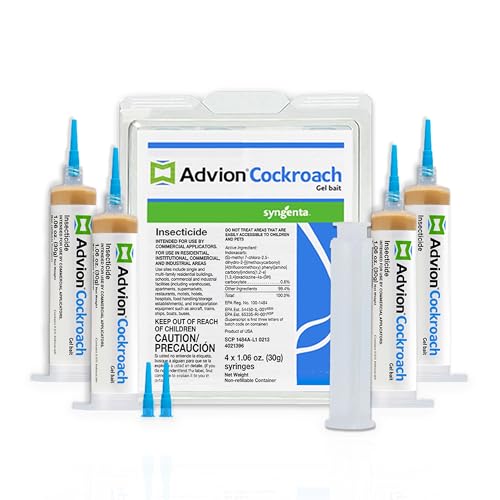
Syngenta 383920 Advion Cockroach Gel Bait 4 X...
Type: Gel Bait
Target: Colonies
Coverage: 4 tubes included
Best For: Established infestations
What we like
- Professional grade formula
- Targets entire colony
- Indoor and outdoor use
- Easy application with plunger
What could be better
- Requires proper placement
- Keep away from pets
- May need multiple applications
Advion dominates the professional pest control market for good reason. The gel bait formula contains indoxacarb, an active ingredient that cockroaches eat and then carry back to their hiding spots, contaminating other roaches through social behaviors. I've seen this work remarkably well in multiple situations, with users reporting significant population reduction within 3-5 days.
The application process is straightforward. Use the included plunger to place small pea-sized dots in corners, under appliances, behind the refrigerator, and along cabinet edges. The key is placing it where cockroaches travel, not where you hope they are. Since cockroaches prefer tight spaces, focus on cracks, crevices, and hidden areas rather than open surfaces.
What makes Advion particularly effective is its secondary kill effect. Cockroaches that consume the bait don't die immediately, allowing them to return to their harborage and spread the poison to others through feces and carcasses. This domino effect can eliminate entire colonies. One treatment typically lasts 2-3 months, though heavy infestations may require reapplication.
Who Should Buy?
Homeowners with confirmed German cockroach activity or visible populations in multiple areas. This professional-grade solution is ideal when you need colony-level elimination rather than just killing individual roaches.
Who Should Avoid?
Households with curious pets or small children who might touch the bait. While the bait stations are less accessible than gel, direct placement requires careful consideration of household safety.
2. Combat Roach Killing Bait - Safest Choice for Families
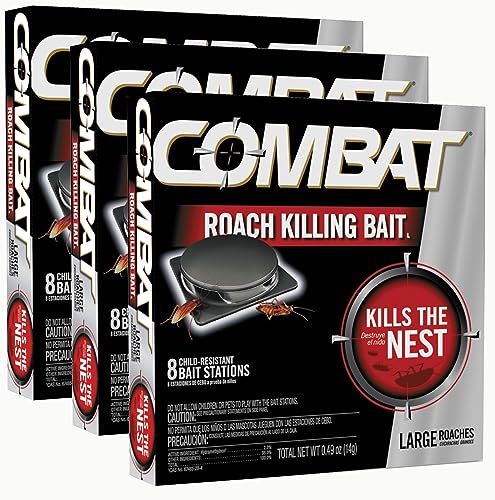
Combat Roach Killing Bait for Large Roaches
Type: Bait Station
Target: Large roaches
Pack Size: 24 stations (3x8)
Best For: Homes with kids and pets
What we like
- Child resistant design
- Kills the nest
- No mess application
- Long-lasting protection
What could be better
- Slower than sprays
- Requires strategic placement
- Less effective on small nymphs
Combat takes a different approach with enclosed bait stations that combine attractants with insecticide. The child-resistant design makes these the best choice for households with children or pets. I recommend these for anyone who wants effective treatment without worrying about gel exposure or spray residue.
Each bait station contains a slow-acting poison that cockroaches eat and carry back to their nest. The delayed action is actually beneficial, as it allows poisoned roaches to infect others before dying. The 24-count package provides enough stations to treat an average home, with placement recommended every 10-12 feet along walls and in potential harborage areas.
Unlike gel baits that dry out and lose effectiveness, Combat stations remain active for up to 3 months. The enclosed design also prevents the bait from drying out or becoming contaminated by cleaning products. I've found these particularly effective in apartments where placement options are limited and safety is a priority.
The biggest advantage is peace of mind. There's no gel to accidentally touch, no spray residue to worry about, and the stations can be placed in high-traffic areas without concern. The trade-off is slightly slower results compared to direct-kill sprays, but the colony-level elimination makes up for this.
Who Should Buy?
Families with children or pets who need effective treatment with minimal safety concerns. Also ideal for apartment dwellers who can't make permanent modifications to their living space.
Who Should Avoid?
Those needing immediate results. Combat works, but it takes 1-2 weeks to see significant population reduction. If you're seeing multiple roaches daily and need faster action, consider supplementing with a contact spray.
3. Raid Ant & Roach Killer - Fastest Contact Kill
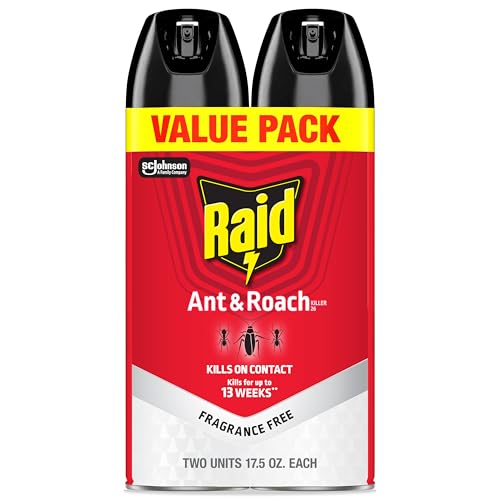
Raid Ant & Roach Killer 26
Type: Contact Spray
Formula: Fragrance free
Size: 17.5 oz (2 pack)
Best For: Immediate roach elimination
What we like
- Kills on contact
- Fragrance free formula
- Works on various insects
- Easy to use
What could be better
- Doesn't kill colonies
- Requires direct contact
- Repeated applications needed
Raid remains the go-to solution for immediate cockroach elimination. When you see a roach and need it dead now, this spray delivers. The fragrance-free formula is a significant improvement over the original chemical smell, making it more tolerable for indoor use. I keep a can on hand precisely for those moments when visual confirmation demands immediate action.
The spray works on contact, killing cockroaches within seconds of direct application. The active ingredients penetrate the cockroach's exoskeleton and disrupt its nervous system. Beyond immediate killing, the spray leaves a residual effect that continues killing for weeks after application, though I've found this residual effect varies considerably based on surface type and environmental conditions.
Practically speaking, this spray works best as a supplement to other treatments rather than a standalone solution. It's perfect for killing individual roaches you see, but it doesn't address colonies or hidden populations. I recommend using Raid to eliminate visible cockroaches while deploying baits or traps to handle the underlying infestation.
The fragrance-free formulation is a significant improvement. Earlier versions of roach sprays had overwhelming chemical odors that lingered for days. This version is much more tolerable, though I still recommend ventilating the area during and after application. The 17.5 oz size provides enough product for spot treatment throughout an average home.
Who Should Buy?
Anyone who wants immediate killing power when they spot a cockroach. Also useful as a supplement to bait treatments for handling visible roaches while baits work on the colony.
Who Should Avoid?
Those looking for colony-level elimination. This spray kills individual roaches but doesn't address the underlying infestation. Use it alongside other treatments for comprehensive control.
Keep Them Out: Long-Term Prevention Strategy
After dealing with your immediate cockroach concern, prevention becomes your best defense. I've learned that the homes that stay cockroach-free aren't necessarily the cleanest, but they have one thing in common: they make it difficult for cockroaches to thrive.
Exclusion: The process of sealing entry points to prevent cockroaches from entering your home. This includes sealing cracks, installing door sweeps, repairing screens, and sealing gaps around pipes and wires. The EPA considers exclusion the foundation of Integrated Pest Management.
Start with exclusion work. Walk around your home's exterior and seal any cracks in the foundation, gaps around windows, and spaces where utility lines enter. Install door sweeps on exterior doors and repair damaged window screens. Inside, focus on the kitchen and bathrooms where cockroaches find everything they need. Seal cracks in walls, around baseboards, and especially around pipes under sinks.
Food storage matters enormously. I've seen perfectly clean homes struggle with cockroaches because they left pet food out overnight or stored dry goods in original cardboard packaging. Transfer everything to airtight containers, clean pet bowls daily, and never leave dirty dishes overnight. Even small crumbs can sustain cockroach populations.
Moisture control is equally important. Fix leaky pipes promptly, use exhaust fans in bathrooms, and address any standing water issues. Cockroaches can survive longer without food than without water, so eliminating moisture sources creates an inhospitable environment even if some food particles remain.
Finally, establish a regular inspection routine. Check the areas I mentioned earlier monthly, paying special attention to dark, damp spaces. Early detection is far easier than dealing with established infestations. The homeowners I know who never develop serious cockroach problems all share this habit of periodic inspection.
Frequently Asked Questions
Does one cockroach mean infestation?
Not necessarily. One cockroach could be a stray visitor that came in through a door, window, or delivery. However, it warrants investigation. Check for additional signs like droppings, egg casings, and the specific species. German cockroaches almost always indicate an infestation since they live exclusively indoors.
What to do if you see a cockroach?
Don't panic. Take a photo for identification, conduct a thorough inspection for signs of infestation, clean and sanitize the area, and set monitoring traps. If you find multiple signs or continue seeing roaches, start treatment immediately with baits or contact a professional.
Where do cockroaches hide?
Cockroaches prefer dark, warm, moist areas near food and water. Common hiding spots include behind refrigerators, under sinks, inside cabinets, behind appliances, in wall cracks, under floor drains, in cardboard boxes, and inside electrical appliances. German cockroaches prefer kitchens and bathrooms, while American cockroaches may be found in basements or ground-floor areas.
Can one cockroach reproduce?
Yes, one pregnant female cockroach can start an infestation. German cockroaches are particularly concerning because one female can produce 30-40 eggs every 3-4 weeks, leading to exponential population growth. However, if your single cockroach was male or not pregnant, it may have been alone. Species identification helps assess this risk.
When should you call a professional for cockroaches?
Consider professional help if you see multiple cockroaches daily, find signs in multiple rooms, have family members with asthma or allergies, live in a multi-unit building, or if DIY treatments fail after 2-3 weeks. German cockroach infestations often warrant professional treatment due to their rapid reproduction rate.
Are cockroaches dangerous?
Cockroaches can carry bacteria like Salmonella and E. coli, trigger allergies and asthma, and contaminate food. While serious disease transmission is relatively rare in developed countries, cockroach allergens are a significant asthma trigger. The primary health risks are respiratory issues and food contamination rather than direct disease transmission.
Final Recommendations
That single cockroach you spotted doesn't have to mean sleepless nights. Based on my research and experience, the key is rational assessment followed by appropriate action. If it was a lone American cockroach at night, you might be fine with just monitoring. If it was a German cockroach during the day, start treatment immediately.
Start with the 5-step action plan I outlined earlier. Use monitoring traps to assess the situation before investing in expensive treatments. If you confirm activity, choose the product that matches your situation. Advion gel for serious infestations, Combat stations for family-safe treatment, or Raid spray for immediate elimination.
Remember that cockroach problems are solvable, and finding one doesn't mean you're facing a hopeless situation. Methodical inspection, appropriate treatment, and consistent prevention keep even the most problematic homes cockroach-free.