The water erupts as a brilliantly colored predator launches itself completely clear of the surface, its tail slapping the water with ferocious intensity. This is the peacock bass – a freshwater gamefish that has captivated anglers worldwide with its explosive strikes and stunning appearance. Known as "freshwater bullies" for their relentless aggression, these cichlids deliver some of the most exciting fishing experiences imaginable, from the urban canals of South Florida to the remote blackwater rivers of the Amazon basin.
Peacock bass are large freshwater cichlids of the genus Cichla, native to the Amazon and Orinoco basins of tropical South America. Despite their common name, they share no relation with North American bass species. Instead, they belong to the family Cichlidae, making them cousins to popular aquarium fish like oscars and angelfish. Their aggressive predatory behavior and sporting qualities earned them the "bass" designation, but their biology and habits are distinctly cichlid in nature.
This comprehensive guide explores everything you need to know about peacock bass – from identifying the 15 recognized species to understanding their global distribution and the world records that make them legendary targets. Whether you're planning a once-in-a-lifetime fishing trip to Brazil or simply curious about these remarkable predators, this guide covers their unique characteristics, fascinating behavior, and the techniques needed to catch them. We'll also examine their ecological impact as introduced species and their growing popularity in the aquarium trade.
What Are Peacock Bass?
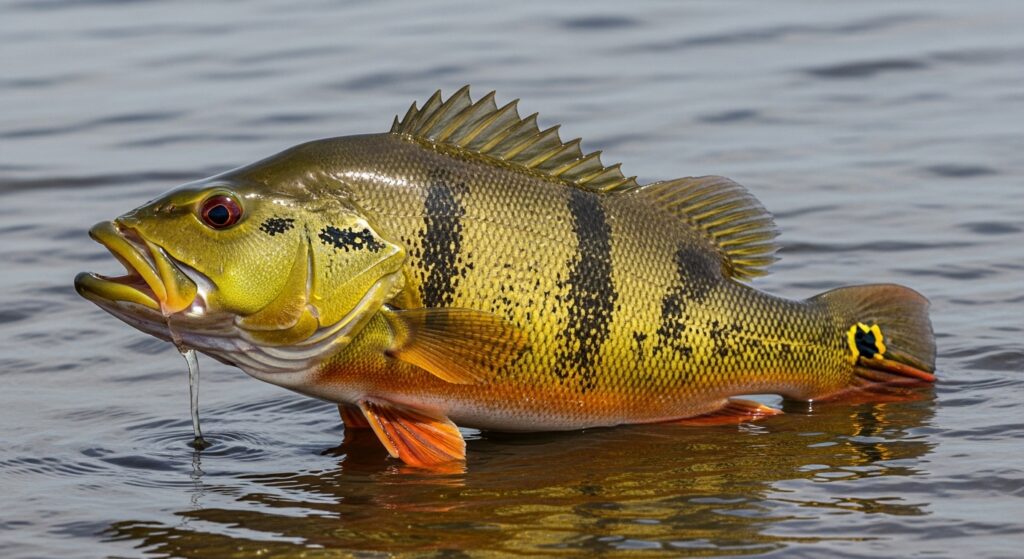
Scientific Classification and Family
Peacock bass belong to the family Cichlidae, a diverse group of freshwater fish known for their intelligence, complex behaviors, and often-striking coloration. The genus Cichla contains 15 recognized species following a major taxonomic revision in 2006, though genetic studies continue to refine our understanding of these fish. A 2012 genetic study raised questions about some species classifications, suggesting that what were once considered distinct species may actually be species complexes rather than separate taxonomic units.
Scientifically, peacock bass fall far from the North American largemouth bass (Micropterus salmoides), which belongs to the sunfish family Centrarchidae. This distinction matters because it explains fundamental differences in behavior, habitat preferences, and why traditional bass fishing techniques often fail when targeting peacocks. As cichlids, peacock bass exhibit sophisticated parental care, distinct spawning behaviors, and social structures absent in true bass species.
Why They're Called "Bass" (But Aren't)?
The "bass" name originated from early explorers and anglers who noticed striking behavioral similarities between these South American predators and the familiar largemouth bass of North America. Both species are ambush predators that attack lures with explosive force, provide spectacular aerial acrobatics when hooked, and inhabit similar structural elements in their respective environments. The name stuck because it effectively communicated the sporting qualities to English-speaking anglers.
However, peacock bass display classic cichlid traits that distinguish them from true bass. They practice biparental care of their young, with both parents actively guarding eggs and fry for extended periods. Male peacocks develop the characteristic nuchal hump during spawning season – a fatty forehead deposit common among large cichlids but absent in bass species. These behavioral differences stem from their separate evolutionary paths and require different fishing approaches for consistent success.
Origin of Common Names (Tucunaré, Pavón)
Throughout their native range, peacock bass go by various local names that reflect regional languages and cultural observations. In Brazil, their largest native range, they're called "tucunaré" – derived from a Tupi indigenous word meaning "friend of the tree." This name references their tendency to ambush prey near submerged timber, fallen branches, and protective cover along riverbanks. Anglers familiar with peacock bass behavior recognize how often these fish hold tight to structure, making the name remarkably accurate.
Spanish-speaking regions use "pavón," translating to "peacock" – a direct reference to the distinctive eye spot or ocellus on their tail fin. This marking resembles the colorful eyespot on a peacock's tail feather and serves a practical purpose in their native habitat. The false eye deflects attacks away from the head toward the more expendable tail region, protecting these predators from fin-nipping piranhas that share their waters. Both common names capture essential aspects of peacock bass biology and behavior.
Where Are Peacock Bass Found? Distribution & Maps
Native Range in South America
Peacock bass evolved within the vast river systems of tropical South America, where they occupy diverse habitats across multiple major watersheds. Their native range encompasses extensive river networks spanning several countries and ecosystems. Different species have adapted to specific environmental conditions within this range, from blackwater rivers with tannin-stained waters to whitewater systems carrying heavy sediment loads from Andean runoff.
- Amazon Basin: Brazil, Peru, Colombia, Ecuador – The primary range with the highest species diversity
- Orinoco Basin: Venezuela, Colombia – Home to several unique species adapted to whitewater environments
- Guianas Rivers: Guyana, Suriname, French Guiana – Coastal drainages with distinct peacock populations
- Southern Range: Rio Negro, Paraguay River, Paraná River – The southern limits of their natural distribution
Geographic isolation over millions of years led to speciation and the development of distinct peacock bass types adapted to local conditions. Some species like C. temensis prefer the acidic, tannin-stained blackwater rivers, while others thrive in the sediment-rich whitewater systems. Research indicates these distribution patterns evolved through natural barriers and adaptation to specific ecological niches within the vast South American river network.
Florida's Peacock Bass Population and Canal System Map
Florida's butterfly peacock bass population represents one of the most successful sportfish introductions in history. The Florida Fish and Wildlife Commission deliberately released butterfly peacock bass (C. ocellaris) in 1984, specifically targeting invasive species like spotted tilapia and oscar fish that had colonized Southeast Florida's canal systems. Unlike many problematic introductions, peacock bass filled an empty niche in Florida's subtropical waters while controlling nuisance species without significantly harming native fish populations.
The species has established thriving populations across South Florida's interconnected canal network, creating a world-class urban fishery accessible to bank anglers and boaters alike. Key distribution areas include Miami-Dade County's extensive canal system (C-100 to C-111 canals, Tamiami Canal), Broward County waterways (C-14, C-13, New River system), and Palm Beach County (L-40, Hillsboro Canal, C-51). For anglers interested in exploring other best bass fishing lakes in America, Florida's peacock bass fisheries offer a unique tropical experience within the United States.
Temperature constraints naturally limit peacock bass range expansion. They cannot survive in water below 60°F, creating a thermal barrier at the Palm Beach County line. This cold sensitivity prevents northward expansion and keeps the population contained within South Florida's subtropical zone. During occasional cold snaps, peacock bass seek the deepest available water, but extended cold periods cause significant mortality in shallow canals.
International Populations (Panama, Hawaii, Puerto Rico, Singapore)
Beyond their native South American range and Florida's introduction, peacock bass populations exist in several international locations – some intentionally introduced, others accidental. These established populations demonstrate the species' adaptability while also highlighting the ecological risks of moving species outside their native habitats. Each location tells a different story of how peacock bass arrived and established themselves.
Panama's Lake Gatun hosts a self-sustaining population that originated from an accidental introduction in the 1950s. An aquarist's flooded backyard pond released fish into the Rio Chagres drainage, which flows into the lake. Within decades, peacock bass colonized the entire 164-square-mile reservoir system. This introduction had catastrophic ecological consequences – seven of eleven native fish species disappeared, and remaining populations were severely depleted. The elimination of mosquito-eating fish species contributed to increased malaria rates in surrounding communities, demonstrating how invasive species can create cascading ecosystem effects with human consequences.
Hawaii supports peacock bass populations on Oahu and Kauai, where they inhabit reservoirs and irrigation systems. These populations provide local fishing opportunities but remain confined to specific water bodies, limiting broader ecological impact. Puerto Rico maintains peacock populations in several lakes, offering Caribbean fishing opportunities for anglers visiting the island. Singapore harbors trophy-sized fish in restricted-access reservoirs, creating an exclusive urban fishery where limited access helps control fishing pressure.
Temperature and Habitat Requirements
Peacock bass demand specific environmental conditions that limit their potential range and influence their behavior patterns. These tropical fish evolved in stable warm-water ecosystems and lack the physiological adaptations that allow temperate species to survive seasonal temperature fluctuations. Understanding these requirements explains their current distribution and helps anglers predict where to find them within acceptable habitats.
Critical environmental requirements include:
- Water temperature: 75-86°F (optimal range 77-82°F for maximum activity and feeding)
- Lethal cold limit: Cannot survive extended exposure below 60°F
- Maximum salinity tolerance: Approximately 18 parts per thousand (brackish water capable)
- Preferred habitat: Slow-moving water with abundant structure and cover
Within acceptable habitats, peacock bass favor shaded areas around bridges, culverts, canal intersections, and fallen trees. These locations provide ambush points for attacking prey and protection from bright tropical sun. During spawning periods, peacocks move to shallow shorelines with overhanging vegetation and hard flat surfaces for nest building. This predictable seasonal movement creates patterns anglers can exploit for consistent success throughout the year.
Different Types of Peacock Bass Species
The 15 Recognized Species Overview
The 2006 taxonomic revision expanded recognized peacock bass species from five to fifteen, reflecting improved understanding of genetic diversity across the genus Cichla. Each species exhibits unique color patterns, size potential, geographic distribution, and habitat preferences. However, ongoing genetic studies continue to debate whether all fifteen represent distinct species or if some are variants of species complexes. This scientific uncertainty doesn't diminish their importance to anglers, who target different types based on location and size potential.
The fifteen recognized species include C. temensis, C. ocellaris, C. monoculus, C. orinocensis, C. pinima, C. kelberi, C. piquiti, C. intermedia, C. jariina, C. melaniae, C. mirianae, C. nigromaculata, C. pleiozona, C. thyrorus, C. vazzoleri, and C. cataractae. Anglers typically focus on a handful of species that reach trophy sizes and inhabit accessible fishing destinations. Size potential varies dramatically, from the giant C. temensis capable of exceeding 25 pounds to smaller species that max out around 8 pounds.
Species distribution patterns show clear geographic separation:
- Amazon Basin species (temensis, ocellaris, monoculus, pinima) – Typically largest due to optimal growing conditions
- Orinoco Basin species (orinocensis, intermedia) – Adapted to whitewater environments with different coloration
- Brazilian shield species (jariina, melaniae, mirianae) – River systems with clear water and rocky substrate
- Southern species (piquiti, vazzoleri) – Adapted to more temperate conditions at range extremes
Speckled Peacock Bass (C. temensis) – The Giant
The speckled peacock bass reigns as the largest species in the genus, producing fish exceeding 25 pounds in the remote blackwater rivers of Brazil, Colombia, and Venezuela. These apex predators display remarkable color variation between breeding and non-breeding phases, a phenomenon known as dichromatism that makes them particularly fascinating to anglers and biologists alike. The world record peacock bass, a 25.7-pound specimen caught by Brent van Niekerk in February 2024, belongs to this species.
Non-breeding "paca" phase fish display speckled patterns resembling the spotted rodent of the same name. Their coloration provides camouflage in the tannin-stained blackwater rivers they prefer. During spawning season, they transform into "açu" phase (meaning "big" in Tupi-Guarani) with three distinct vertical bars and intensified coloration. This dramatic change can occur within days, transforming a subtly colored fish into a brilliantly colored monster with vibrant oranges, reds, and yellows accenting the dark bars.
Trophy C. temensis inhabit remote blackwater rivers like Brazil's Rio Negro, where the combination of abundant forage, year-round warm temperatures, and limited fishing pressure creates optimal conditions for exceptional growth. These fish prefer deep pools, current breaks at river bends, and lagoon mouths where baitfish concentrate during low water periods. Targeting trophy specimens requires accessing remote areas, often via float plane or extended boat trips through the Amazon wilderness.
Butterfly Peacock Bass (C. ocellaris) – Florida's Fighter
Florida's butterfly peacock represents the most accessible peacock bass fishing in the United States. While smaller than their Amazonian cousins, these fish compensate with aggressive behavior, stunning appearance, and year-round availability in urban settings. The Florida Fish and Wildlife Commission selected this species specifically because it fills an empty niche in South Florida's subtropical ecosystem while controlling invasive spotted tilapia and oscar populations.
Butterfly peacocks rarely exceed 10 pounds in Florida, with the official state record standing at 9.11 pounds. However, unofficial catches of fish approaching 12 pounds demonstrate their growth potential in optimal conditions. Their smaller size compared to Amazonian specimens reflects Florida's seasonal temperature variations and different forage base, but pound-for-pound, Florida peacocks fight just as hard as their tropical relatives. Many anglers actually prefer them because they're more consistently caught on artificial lures.
The adaptability of butterfly peacocks to canal systems makes them perfect for bank fishing without boats. Productive locations include canal bends where current creates eddies, spillways that concentrate baitfish, and anywhere water movement creates ambush points for these opportunistic predators. Florida's urban setting means anglers can catch peacock bass surrounded by skyscrapers and shopping centers – a uniquely fishing experience that doesn't require expensive travel or remote wilderness access.
Other Notable Species and Their Ranges
Beyond the two most famous species, several other peacock bass types interest anglers seeking variety or species-specific accomplishments. C. pinima inhabits Brazil's shield region rivers, growing to 15+ pounds in fast-water environments with rocky substrates. These peacocks share habitat with other aggressive Amazonian species like payara and giant black piranha, making them part of a diverse predator ecosystem. Their fighting characteristics and size potential make them attractive targets for anglers venturing beyond the standard Amazon destinations.
C. piquiti, the blue peacock or "azul," represents a holy grail for species collectors targeting all fifteen types. Their restricted range in specific Brazilian river systems and stunning blue-gray coloration create intense interest among specialized anglers. The blue peacock's rarity and limited distribution make catches particularly memorable for those dedicated enough to seek them out. C. kelberi (yellow peacock) and C. orinocensis (Orinoco peacock) thrive in reservoir systems and river sections with adapted to human-altered environments better than other species, making them more accessible to anglers without extensive wilderness travel.
World Record Peacock Bass – The Ultimate Catches
The 2024 IGFA World Record – 25.7 lbs from South Africa
In February 2024, South African angler Brent van Niekerk made headlines by landing the new IGFA All-Tackle World Record peacock bass weighing 25.7 pounds and measuring 94 centimeters. This extraordinary catch occurred during a guided fishing trip to the Amazon region, though the exact location wasn't publicly disclosed to protect the fishery. The record-breaking C. temensis surpassed the previous record and established a new benchmark that anglers will chase for years to come.
The significance of this catch extends beyond just the numbers. Peacock bass in this size range represent fish that have survived 10-15 years in challenging environments, avoiding natural predation and avoiding angling pressure. These ancient predators have reached their maximum growth potential and typically exhibit the exaggerated features – pronounced nuchal hump, intense coloration, massive depth – that make them true trophies. Catching a fish of this magnitude requires not just skill and proper equipment, but also access to remote areas where such fish still exist.
Before van Niekerk's record, the IGFA listed a 28-pound, 8-ounce fish caught in Brazil as the all-tackle world record. Record categories exist for different line classes, fly fishing, and junior anglers, with various records held by catches from both Florida and South America. Most trophy peacocks exceeding 20 pounds come from remote Brazilian, Colombian, or Venezuelan watersheds where the combination of abundant forage, year-round growing seasons, and limited fishing pressure creates optimal conditions for fish to reach exceptional sizes.
Florida State Records and Notable Catches
Florida's butterfly peacock bass records may not rival Amazonian giants, but they remain impressive for the species and represent exceptional catches in the subtropical canal systems. The official Florida state record stands at 9.11 pounds, a fish that would be considered trophy-sized anywhere in the species' range. Unofficial catches exceeding 12 pounds have been documented, including a 25.5-inch specimen that demonstrates the growth potential possible in Florida's year-round warm climate.
What makes Florida records particularly interesting is the concentration of documented catches from urban environments. Thousands of anglers pursue peacocks daily in Miami-Dade canals, creating more opportunities for official documentation and record verification. The Florida Fish and Wildlife Commission maintains separate record categories for butterfly peacock bass, with 13 of 16 IGFA line-class records originating from Florida waters. This accessibility means dedicated anglers can pursue record-class fish without traveling to remote international destinations.
The concentration of records from Florida reflects fishing pressure and documentation rather than size potential. While Amazonian waters grow larger fish, Florida's accessibility means more anglers catch, weigh, and document their peacocks officially. The urban fishery's popularity also means record fish are quickly reported and verified, unlike remote Amazon catches where documentation may not occur. For anglers seeking record recognition without international travel, Florida offers the best opportunity to catch a documented trophy peacock bass.
IGFA Record Categories and Requirements
The International Game Fish Association maintains multiple peacock bass record categories recognizing different fishing methods and angler classifications. The All-Tackle World Record represents the largest fish caught regardless of line strength, but numerous other categories allow anglers to pursue records in specific disciplines. Understanding these categories helps anglers target record-class fish appropriately and ensure catches meet documentation requirements.
IGFA record categories include:
- All-Tackle World Record: 25.7 lbs (C. temensis – 2024 record)
- Line Class Records: From 2-pound test through 80-pound test categories
- Fly Fishing Records: Multiple tippet classes from 2-pound to 20-pound test
- Junior Angler Records: Separate categories for anglers under 16 years old
- Women's Records: Separate recognition for female anglers in all categories
Most line-class records under 20 pounds come from Florida's accessible fishery, where consistent action and manageable fish sizes make record attempts practical. Records exceeding 20 pounds originate exclusively from South American destinations where the larger C. temensis species reaches maximum size. Documenting a potential record requires following specific IGFA procedures – proper scale certification, accurate measurements, photographs, and witness statements. Anglers pursuing records should familiarize themselves with current requirements before fishing.
Peacock Bass Characteristics and Identification
Physical Features and Body Structure
Peacock bass possess a distinctive body shape optimized for explosive predatory attacks and maneuverability through dense cover. Their laterally compressed form allows rapid acceleration in tight spaces while maintaining the ability to make sharp turns when chasing prey. This body plan differs from the more torpedo-shaped largemouth bass, reflecting the different evolutionary pressures and hunting strategies these cichlids developed in their native Amazonian environment.
Key physical characteristics include:
- Elongated body: More streamlined and compressed than typical cichlids, built for speed
- Large terminal mouth: Lower jaw extends beyond upper jaw, enabling them to engulf large prey
- Powerful caudal peduncle: Thick tail section supporting a broad fin for explosive propulsion
- Strong pectoral fins: Allow precise positioning and rapid direction changes
- Dorsal fin arrangement: Spiny anterior section with soft-rayed posterior section typical of cichlids
Their muscular build contains a higher percentage of white muscle fiber than most freshwater fish, an adaptation that enables the lightning-fast strikes peacock bass are famous for. This muscle composition provides incredible burst speed but limits sustained swimming endurance, explaining why peacocks prefer ambush hunting rather than long-distance pursuit. The body shape and muscle arrangement work together to create the explosive fighting style that makes these fish so memorable to catch.
Color Patterns and Variations
Peacock bass display remarkable color variation both between and within species, making them among the most visually striking freshwater fish in the world. Base colors range from olive-green through golden-yellow to blue-gray, with some species exhibiting silver or even reddish hues. This color variation reflects genetic diversity, environmental factors, and seasonal changes, making identification challenging for inexperienced anglers but fascinating for dedicated students of the genus.
Common color pattern elements include:
- Three vertical black bars (may fade with age or disappear in non-breeding phase)
- Horizontal stripes in juveniles (transition to vertical barring as fish mature)
- Speckled or spotted patterns (most prominent in C. temensis paca phase)
- Intense orange, red, or yellow on fins (especially during spawning)
- Black spot with yellow halo on caudal fin (the distinctive "eye spot")
Multiple factors influence coloration intensity in peacock bass. Stress, breeding condition, water clarity, and substrate type all affect how colors appear. Fish in tannin-stained blackwater rivers often display darker, more intense colors, while those in clear water show brighter, more vibrant hues. Spawning males exhibit the most dramatic coloration, with intensified blacks, vivid oranges and reds on fins, and sharply contrasting vertical bars. This seasonal color change signals reproductive readiness and helps establish dominance hierarchies among males competing for spawning territories.
The Signature "Eye Spot" on the Tail
The distinctive ocellus or "eye spot" on the caudal fin defines peacock bass identity and inspired their common name. This false eye consists of a black spot surrounded by a bright yellow or gold halo, creating a convincing imitation of a real eye. The marking resembles the eyespot on a peacock's tail feather, which is why early naturalists and anglers adopted the name. All fifteen Cichla species feature this marking to some degree, though size and intensity vary between species and individuals.
This distinctive adaptation serves multiple functions in the piranha-infested native waters of peacock bass. The eye spot likely deflects predator attacks away from the vulnerable head region toward the more expendable tail. When a piranha or other predator strikes at the false eye, the peacock bass can escape with relatively minor damage compared to a head wound that might prove fatal. Some researchers also suggest the eyespot confuses prey during ambush attacks, perhaps making the fish appear larger or creating a momentary distraction that allows the peacock to close the distance for a strike.
The eyespot's protective function becomes most apparent in waters with high piranha populations, where peacock bass with damaged or missing tail sections aren't uncommon. These survivors demonstrate how effectively the false eye diverts attacks away from critical areas. Anglers familiar with peacock bass note that the eyespot remains visible throughout all color phases, from the subdued paca phase to the brilliantly colored açu spawning phase, suggesting its constant importance for survival regardless of seasonal color changes.
Male vs Female Differences
Sexual dimorphism in peacock bass becomes most apparent during breeding season, though experienced observers can distinguish males from females year-round based on subtle characteristics. These differences relate directly to their reproductive roles – males establish and defend territories while females invest energy in egg production. Understanding these distinctions helps anglers identify breeding fish and practice selective harvest that protects spawning populations.
Male characteristics include:
- Larger overall size (typically 15-20% bigger than females of same age)
- Pronounced nuchal hump when breeding (fatty forehead deposit)
- More intense coloration during spawning season
- Longer, more pointed dorsal and anal fins
- Deeper body profile with broader shoulders
Female characteristics include:
- Smaller, more streamlined body shape
- Rounder belly when carrying eggs (gravid)
- Subdued colors year-round (less dramatic seasonal changes)
- Shorter, more rounded fins
- Less pronounced vertical bars
The most reliable external identifier remains the nuchal hump, which develops almost exclusively in mature males during breeding season. However, this feature only appears seasonally, making sex determination difficult outside spawning periods. For anglers practicing catch and release, understanding these characteristics helps identify breeding males that deserve special protection to maintain healthy populations.
The Nuchal Hump Phenomenon
The nuchal hump represents one of peacock bass' most dramatic physical transformations and a defining characteristic of mature males. This pronounced forehead bulge develops as spawning season approaches, transforming the fish's profile from streamlined to hump-headed within weeks. The hump consists primarily of fatty tissue deposits that accumulate on the dorsal surface of the skull, creating the distinctive appearance that anglers associate with trophy peacock bass.
Scientists believe the nuchal hump serves multiple functions related to reproduction. The enlarged forehead signals sexual maturity and reproductive fitness to females, with larger humps typically indicating healthier, more dominant males. Among competing males, hump size influences territorial interactions, with larger-humped fish generally winning disputes over prime spawning locations. The hump may also provide energy reserves that males utilize during the intensive parental care period when they eat little while guarding eggs and fry.
This trait isn't unique to peacock bass – many large cichlid species develop similar forehead humps during breeding. Flowerhorn cichlids, red devils, and other big cichlids all exhibit this characteristic to varying degrees. In peacock bass, the hump can become remarkably large, accounting for a significant portion of the fish's head profile in mature males. After spawning season concludes, the hump gradually diminishes as the male metabolizes the stored energy reserves, returning to a more normal head shape by the following season.
Peacock Bass Behavior and Lifecycle
Feeding Habits and Prey Preferences
Peacock bass are opportunistic predators with diverse diets that reflect the abundant food sources in their tropical habitats. Their feeding strategy combines calculated ambush tactics with aggressive pursuit when necessary, making them remarkably effective hunters across varied conditions. Unlike many freshwater predators that specialize in specific prey types, peacocks demonstrate catholic feeding habits, consuming virtually anything they can capture and swallow.
Primary prey includes:
- Small fish (the primary diet component, especially schooling species)
- Freshwater shrimp and crayfish (important in canal systems)
- Large aquatic insects and larvae (especially during hatches)
- Frogs, tadpoles, and small reptiles (opportunistic prey items)
- Even small birds or mammals that venture near the water's edge
In Florida, butterfly peacocks significantly reduced populations of invasive spotted tilapia and African cichlids through predation, demonstrating the effectiveness of their feeding behavior. Studies show peacock bass consume any fish up to 40% of their body length, with a clear preference for slow-moving species that don't escape quickly. This predatory adaptability explains their success as both native predators in South America and introduced species in Florida's canal systems.
Unlike largemouth bass that feed throughout the day and night, peacock bass feed exclusively during daylight hours with peak activity at dawn and dusk. This diurnal pattern reflects their evolutionary history alongside visual hunters and the absence of significant nocturnal prey in their native ecosystems. For anglers, this means peacock fishing effectively shuts down after dark regardless of moon phase or conditions – another key difference from traditional bass species that continue feeding at night.
Spawning Behavior and Reproduction
Peacock bass spawning follows predictable seasonal patterns tied to water levels and temperature, creating opportunities for anglers to target concentrated fish during breeding periods. Unlike many temperate fish that spawn once annually, peacock bass in tropical environments may spawn multiple times per year when conditions allow. Florida's seasonal climate creates a more defined spawning window, while Amazonian populations spawn opportunistically whenever favorable conditions occur.
In Florida, peak spawning occurs from April through September, with May and June showing highest activity as water temperatures consistently exceed 78°F – the threshold required for successful reproduction. The spawning sequence follows a predictable pattern that experienced anglers can recognize and target. Males establish territories in shallow water with hard flat surfaces suitable for nest building, aggressively defending these areas from other males.
The spawning sequence proceeds through distinct phases:
- Males establish and defend spawning territories in shallow water
- Both parents clean flat, hard surfaces to create nest sites
- Females lay 4,000-10,000 eggs depending on female size
- Both parents guard eggs continuously (48-72 hours to hatch)
- Fry protection continues for 30-60 days until young become independent
Water temperature must exceed 78°F for successful spawning, with optimal temperatures between 82-86°F. Males develop their characteristic nuchal hump and intensified colors as spawning approaches, using these displays to attract females and warn off competing males. The biparental care system – where both parents actively participate in brood protection – represents a significant investment in offspring survival uncommon among freshwater gamefish species.
Parental Care and Fry Protection
Peacock bass exhibit exceptional parental care rare among freshwater gamefish, with both parents actively defending eggs and fry from numerous predators. This biparental investment significantly increases offspring survival compared to species with no parental care, but it creates vulnerabilities that anglers can exploit. Understanding parental behavior helps anglers target "fry guarders" while also practicing responsible fishing that protects spawning populations.
The most remarkable parental behavior occurs when threats approach the fry school. The male temporarily sucks the entire brood into his mouth, holding them safely until danger passes. This mouthbrooding behavior can be triggered repeatedly by approaching threats, with the male spitting the fry out when safe and sucking them back in when danger returns. Anglers who accidentally stumble across a fry-guarding male often experience aggressive strikes as the parent attacks anything approaching its vulnerable young.
Parents shepherd their young for up to two months, teaching them to hunt and avoid predators while gradually reducing protection as the fry grow more independent. During this period, both parents become aggressive toward anything approaching their brood, making them susceptible to angling. However, catching fry-guarding fish raises ethical considerations – removing a parent often results in complete fry loss to predation. Many experienced anglers avoid targeting obvious fry guarders or release them quickly to minimize disruption of parental care.
Growth Rate and Lifespan
Peacock bass exhibit remarkably fast growth rates in optimal conditions, reaching harvestable size within 18 months and trophy proportions in 4-6 years. This rapid growth reflects the year-round warm temperatures and abundant forage in their tropical habitats, which allow continuous feeding and growth without the seasonal interruptions that temperate fish experience. Growth rates vary significantly between species and locations based on forage availability, population density, and environmental conditions.
Typical growth benchmarks include:
- Year 1: 8-10 inches (rapid initial growth phase)
- Year 2: 12-14 inches (approaching sexual maturity)
- Year 3: 15-17 inches (full maturity, beginning bulk phase)
- Year 4+: Weight gain exceeds length gain as fish add bulk
After reaching sexual maturity around 12 inches, peacocks shift energy allocation from length growth to weight gain. A 17-inch fish typically weighs around 3 pounds, while a 19-inch specimen approaches 5 pounds. This shift toward bulk production explains why trophy peacocks are exceptionally deep-bodied – they're carrying significant weight relative to their length. Lifespan data remains limited, but preliminary studies suggest 6-10 years average in wild populations. Trophy fish exceeding 20 pounds likely represent individuals aged 12-15 years that have avoided natural mortality and fishing pressure.
Catching Peacock Bass – Techniques and Tips
Best Lures and Baits for Peacock Bass
Peacock bass respond to lures that trigger their aggressive predatory instincts rather than precisely imitating specific prey items. Motion, noise, and surface disturbance prove more important than exact imitation, which explains why flashy, moving lures outperform subtle presentations. Understanding this preference helps anglers select effective lures and avoid wasting time with presentations that peacocks typically ignore. For comprehensive coverage of effective bass lures, check out our guide to the best bass fishing lures, which details topwater prop baits and jerkbaits that work exceptionally well for peacock bass.
Top producing lures include:
- Topwater prop baits (Woodchopper style – the classic peacock lure)
- Large walking baits (Super Spook size – walk-the-dog action)
- Bucktail jigs (1/2 to 1 oz, red/yellow combinations work best)
- Suspending jerkbaits (aggressive jerking motion triggers strikes)
- Spoons (gold or silver – cast and retrieve rapidly)
- Streamers and poppers (for fly fishing – large, bulky patterns)
Live bait fishing typically uses golden shiners, which Florida anglers call "peacock candy" due to their effectiveness. Shiners trigger strikes when artificial lures fail, especially in heavily pressured waters or when fish are inactive. Rig shiners under a weighted bobber and fish them near structure for consistent action. The live bait advantage explains why many anglers starting peacock fishing opt for shiners first – they virtually guarantee action when fishing unfamiliar waters.
Forum discussions consistently confirm that traditional bass plastics like worms, creature baits, and finesse presentations rarely work for peacocks. Anglers repeatedly report frustrating days where largemouth bass and other cichlids hammer soft plastics while peacocks completely ignore them. Switching to moving baits with aggressive action typically solves this problem immediately, often resulting in multiple fish catches within minutes of the change.
Tackle Requirements for Peacock Bass
Peacock bass demand significantly upgraded tackle compared to typical largemouth bass fishing. Their explosive strikes, powerful runs, and tendency to dive into structure quickly overwhelm standard bass equipment. Anglers using traditional largemouth gear frequently suffer broken lines, straightened hooks, and lost fish. Proper tackle selection prevents heartbreak and ensures more peacocks are landed rather than lost due to equipment failure.
Rod specifications should include:
- Length: 6'6" to 7' (longer rods improve hook sets and control)
- Power: Medium-heavy to heavy (standard bass rods are too light)
- Action: Fast to extra-fast (improves sensitivity and hook sets)
- Quality guides essential (stand up to braided line pressure)
Reel requirements include:
- Size: 150-200 (300 series for giant Amazon peacocks)
- Gear ratio: 7.1:1 or higher (necessary for fast retrieves)
- Smooth, powerful drag (peacocks make long, powerful runs)
- Corrosion resistance important (especially for Florida canal fishing)
Line choices should be:
- Braided mainline: 50-80 lb test (no-stretch for solid hook sets)
- Fluorocarbon leader: 40-60 lb test (abrasion resistance near structure)
- Avoid monofilament mainline (excessive stretch causes lost fish)
For more detailed tackle recommendations, check out our guide to bass fishing rod and reel combos, which covers heavy-duty options suitable for peacock bass fishing.
Fighting Characteristics and Landing Peacocks
No freshwater fish matches the peacock bass's initial strike violence and sustained fighting power. Their attacks often resemble explosions rather than bites, with fish completely launching themselves airborne to destroy topwater lures. This spectacular surface strike creates addiction among anglers, who return repeatedly seeking that heart-stopping moment when a peacock destroys a topwater bait. The fight continues with powerful runs, aerial acrobatics, and structure-hiding maneuvers that test both angler skill and equipment strength.
Typical fight sequence includes:
- Explosive surface strike (often misses first attempt – be ready!)
- Immediate powerful run toward structure or deep water
- Multiple jumps with violent head shakes attempting to dislodge the hook
- Dive toward structure once airborne acrobatics end
- Last-second surge at boatside (many fish are lost here!)
Their broad caudal fins generate incredible thrust, while dense muscle composition provides sustained power uncommon in freshwater fish. Many anglers compare peacock bass fights to saltwater species like snook or small jacks rather than freshwater fish. Forum participants frequently describe them as "tropical smallmouth bass on steroids," referencing the similarity to smallmouth fighting style but with significantly more power and attitude. If you're interested in how this compares to other species, read our comparison of spotted bass vs largemouth bass to understand the key differences between bass species.
Proper fish handling is crucial due to peacock bass jaw structure and the presence of sharp gill rakers that can injure careless anglers. Unlike largemouth bass with robust jaws that support lip-gripping tools, peacock bass jaws require special care. Forum experts recommend two-handed holding techniques – either vertical holds supporting the body, or horizontal holds with one hand under the belly and one at the lip. Never hold peacocks horizontally by the lip alone, as their jaw structure cannot support their weight and injury may result.
Ecological and Economic Impact of Peacock Bass
Florida's Successful Introduction and Economic Benefits
Florida's butterfly peacock bass introduction represents one of the few success stories in the often-problematic history of nonnative fish introductions. Deliberately released in 1984 to control invasive spotted tilapia and oscar populations, peacocks filled an empty niche in South Florida's subtropical ecosystem without significantly harming native fish species. The introduction succeeded because peacocks require warm water that limits their range, they control problematic species rather than native ones, and they provide exceptional recreational fishing opportunities.
Economic impact in Florida includes:
- Direct spending: Over $8 million annually on tackle, guides, and travel
- Fishing effort: Millions of fishing hours targeting peacocks annually
- Angler participation: Thousands of residents and tourists targeting peacocks
- Guide services: 100+ specialized guides operating full-time businesses
- Tackle retail: Significant sales impact at local South Florida shops
The fishery's urban location creates unique economic benefits by making world-class fishing accessible to diverse demographics who might not otherwise participate in sport fishing. Bank fishing opportunities provide recreation for those without boats, creating inclusive economic benefits throughout South Florida communities. The urban setting also means anglers combine peacock fishing with other activities, increasing overall tourism spending in the region.
Devastating Impacts of Other Introductions
While Florida's peacock bass introduction succeeded, other introductions demonstrate the catastrophic ecological damage these predators can cause when released outside their native range. Scientific studies document severe impacts from unauthorized introductions, providing cautionary tales about moving species between ecosystems. These examples explain why fisheries biologists approach peacock bass introductions with extreme caution and why unauthorized releases are illegal virtually everywhere.
Documented ecological impacts include:
- Panama's Lake Gatun: 7 of 11 native species eliminated, complete ecosystem restructuring
- Brazil's Paraná River: 95% decline in native fish biomass following peacock introduction
- Species richness reduction: Up to 80% decrease in fish species diversity in some locations
- Cascading ecosystem effects: Altered zooplankton communities and changed food webs
Panama's Lake Gatun experience illustrates the most severe documented impacts. Following accidental introduction in the 1950s, peacock bass eliminated seven of eleven native fish species through predation. The elimination of mosquito-eating fish species contributed to increased malaria rates in surrounding communities – a shocking example of how invasive species can create human health impacts beyond ecological damage. Scientific studies documented complete ecosystem restructuring, with peacock bass becoming the dominant predator while native species disappeared or were reduced to remnant populations.
In Brazil's Paraná River, scientific surveys documented a 95% decline in native fish biomass following peacock bass introduction. Species richness dropped by approximately 80% as peacocks eliminated native fish through predation and competition. The cascading effects extended throughout the ecosystem, with zooplankton communities changing and food web structure completely altered. These documented impacts demonstrate why fisheries managers prohibit peacock bass introductions in most locations outside Florida.
The Invasive Species Paradox
The peacock bass paradox highlights the complex tradeoffs inherent in invasive species management – the same fish that benefits Florida's ecosystem and economy destroys native ecosystems elsewhere. This contradiction challenges simple categorization of peacocks as "good" or "bad" introduced species. Instead, outcomes depend entirely on location, environmental conditions, native species composition, and introduction methods.
Potential benefits when properly managed include:
- Exceptional recreational fishing creating economic value
- Control of other problematic invasive species
- Tourism draw for specific locations
- Urban fishery opportunities increasing fishing participation
Potential concerns include:
- Native species impacts through predation and competition
- Ecosystem disruption altering food webs
- Limited control options once established
- Potential range expansion under climate change scenarios
Success depends on careful site selection and natural temperature barriers. Florida's introduction succeeded because peacocks filled an empty niche while controlling problematic species, and cold temperatures prevent northward expansion. Similar introductions elsewhere typically prove catastrophic when peacocks eliminate native species through predation and competitive exclusion. This example illustrates why invasive species management requires case-by-case evaluation rather than blanket approvals or prohibitions.
Peacock Bass as Aquarium Fish – Monster Fish Keeping
The Appeal and Challenges of Peacock Bass in Aquariums
Peacock bass have gained popularity in the aquarium trade as "monster fish" – spectacular predators that appeal to advanced hobbyists with very large tanks. Their stunning coloration, impressive size, and fascinating behaviors make them desirable display fish for dedicated enthusiasts willing to provide appropriate housing. However, peacock bass require enormous aquariums, specialized care, and significant resources that place them beyond the capabilities of most hobbyists.
The aquarium trade primarily deals with juvenile peacock bass, which display attractive colors and patterns but eventually grow into imposing adults requiring hundreds of gallons. Many hobbyists purchase cute juveniles without understanding their eventual size requirements, creating animal welfare issues when fish outgrow their tanks. Responsible fish stores educate potential buyers about adult size requirements, but impulse purchases still lead to problems when fish exceed housing capacity.
Minimum Requirements for Peacock Bass Aquariums
Peacock bass demand exceptionally large aquariums that most hobbyists cannot accommodate. Their active swimming behavior, territorial nature, and substantial adult size create housing challenges that eliminate them as candidates for typical home aquariums. Only dedicated monster fish keepers with specialized setups should consider maintaining peacock bass, and even then, only specific species are appropriate.
Minimum requirements include:
- Tank size: 180 gallons minimum for single juvenile, 500+ gallons for adults
- Filtration: Heavy-duty commercial filtration essential
- Temperature control: Heater and chiller required to maintain 78-82°F
- Water maintenance: Frequent large water changes to manage waste
- Décor: Minimal – open swimming space preferred over decorations
Different species require different accommodations. Butterfly peacocks (C. ocellaris) and royal peacocks (C. intermedia) top out around 12 pounds, making them the most feasible for home aquariums. Giant species like C. temensis and C. pinima exceed 20 pounds and require public aquarium-sized facilities that few private hobbyists can provide. Responsible hobbyists choose species matching their tank capacity rather than acquiring impressive juveniles that will outgrow available space.
Feeding and Care Considerations
Captive peacock bass require appropriate diets that maintain health without causing water quality problems. While they accept various foods in captivity, their predatory nature demands meaty items that can pollute water quickly if overfed. Juveniles grow rapidly on high-protein diets, while adults need controlled feeding to prevent obesity and maintain water quality. Most successful keepers feed high-quality pellets supplemented with fresh fish, shrimp, and occasional live foods.
Aggression presents another challenge – peacock bass typically cannot be kept with smaller tankmates that become prey. Successful community tanks require fish too large to eat but not so aggressive they injure peacocks. Even then, territorial behavior increases during spawning periods, potentially causing conflict. Many keepers maintain peacock bass in species-only tanks to avoid compatibility issues and focus on the fishes' fascinating natural behaviors.
Planning a Peacock Bass Fishing Trip to Brazil
Manaus – The Gateway to Peacock Bass Fishing
For anglers seeking trophy peacock bass, Brazil's Amazon region represents the ultimate destination. The city of Manaus serves as the primary gateway for accessing remote fishing locations throughout the Amazon basin. Located at the confluence of the Rio Negro and Amazon River, Manaus offers flight connections, lodging, guide services, and all logistics necessary for peacock bass expeditions. Most international flights arrive via São Paulo or Brasília, with connecting service to Manaus.
Manaus provides everything anglers need before heading into the wilderness – fishing tackle shops specializing in peacock bass gear, hotels for overnight stays, and numerous guide operations organizing trips throughout the region. The city's location makes it an ideal starting point for float plane access to remote rivers, boat trips up the Rio Negro, or journeys to specialized fishing lodges scattered throughout the Amazon. Most anglers spend at least one night in Manaus before and after their fishing adventure to handle logistics and ensure smooth travel arrangements.
Float Plane Access and Remote Lodges
Accessing the best trophy peacock bass fishing typically requires float plane travel from Manaus to remote locations untouched by regular fishing pressure. These wilderness areas host the largest C. temensis specimens because they see minimal angling pressure and contain abundant forage. Float planes carry anglers, gear, and supplies to remote rivers and lagoons where trophy fish remain common despite heavy fishing in more accessible areas.
Lodge options range from rustic float-house accommodations to comfortable permanent facilities with air conditioning and private cabins. Most lodges operate on a week-long schedule, with anglers arriving Sunday and departing Saturday after six full fishing days. Packages typically include all meals, guided fishing, boats, fuel, and sometimes airport transfers in Manaus. Some lodges specialize in specific areas like the Rio Negro's upper reaches, while others access multiple river systems depending on water conditions and fishing quality.
Advanced booking is essential – the best lodges and peak seasons often sell out 12-18 months in advance. Trophy peacock fishing requires significant planning and investment, but dedicated anglers consistently rate it among freshwater fishing's most rewarding experiences. The combination of trophy fish potential, remote wilderness adventure, and the unique Amazon environment creates unforgettable fishing trips that justify the considerable expense and effort required.
Other Amazon Species You'll Encounter
While peacock bass are the primary target for most Amazon fishing trips, anglers commonly encounter numerous other species that add variety and excitement to the adventure. The Amazon basin contains incredible fish diversity, with many species offering excellent sport and unique challenges. These incidental catches enhance the overall experience and provide backup targets when peacock bass fishing slows.
Common bycatch species include:
- Payara – "Vampire fish" with impressive fangs, explosive fighters
- Arapaima – Massive air-breathing giants reaching 200+ pounds
- Piranha – Various species, some exceeding 5 pounds
- Arowana – Surface-dwelling predators that take flies and topwaters
- Jacundá – Smaller peacock relatives that readily attack lures
- Wolf fish – Prehistoric-looking fighters with powerful jaws
Many Amazon lodges specifically target multiple species rather than focusing exclusively on peacock bass. Payara fishing, particularly for trophy specimens, has gained popularity among anglers seeking diversity. Arapaima catch-and-release fishing has also developed a following, with several lodges offering opportunities for these prehistoric giants that grow larger than any peacock bass. Encountering these species adds depth to Amazon fishing trips and creates broader appreciation for the incredible aquatic diversity of the world's largest river system.
Frequently Asked Questions About Peacock Bass
Are there peacock bass in the United States?
Yes, peacock bass are established in South Florida's canal systems, specifically in Miami-Dade, Broward, and Palm Beach counties. They were intentionally introduced in 1984 and have thrived in the warm subtropical waters. Florida remains the only state with a sustainable peacock bass population due to temperature requirements.
Are peacock bass good to eat?
Yes, peacock bass offer excellent table fare with white, flaky meat similar to snapper or grouper. The flesh has a mild, sweet flavor with very little oil content. However, most specialized peacock anglers practice catch and release, especially for larger breeding-size fish that took years to grow and represent valuable breeding stock for maintaining populations.
Why are peacock bass only in Florida?
Peacock bass cannot survive in water temperatures below 60°F, creating a thermal barrier that prevents their expansion beyond South Florida's subtropical zone. This temperature sensitivity confines them to areas where winter water temperatures remain above this lethal threshold. Florida's tropical climate meets these requirements, while the rest of the continental United States experiences winter cold that would kill peacock bass populations.
Can peacock bass survive in cold water?
No, peacock bass cannot tolerate cold water. Temperatures below 60°F prove fatal, with stress beginning around 65°F. This thermal requirement limits their natural range to tropical and subtropical regions. Florida's occasional cold snaps cause peacock mortality in shallow canals, with fish seeking the deepest, warmest water during these events. This cold sensitivity provides natural control against range expansion.
What's the difference between peacock bass and largemouth bass?
Despite similar names, they're not closely related. Peacock bass are cichlids from South America, while largemouth bass are sunfish from North America. Key differences include: temperature requirements (peacocks need 75°F+, largemouth tolerate 35°F), feeding patterns (peacocks are diurnal, largemouth feed day/night), parental care (peacocks guard fry for months, largemouth abandon after spawning), and family classification (Cichlidae vs Centrarchidae).
Conclusion – The Peacock Bass Experience
Peacock bass represent freshwater fishing's most exciting combination of spectacular appearance, explosive fighting ability, and accessible trophy opportunities. From the monster C. temensis of remote Amazonian rivers to the urban butterfly peacocks inhabiting Florida's canal systems, these remarkable fish create unforgettable fishing experiences for anglers worldwide. Their aggressive strikes, aerial acrobatics, and stunning coloration establish peacocks as bucket-list species for serious anglers seeking exceptional fishing adventures.
Understanding their unique characteristics – from the distinctive male nuchal hump to specific temperature requirements that limit their distribution – improves success rates and helps anglers target peacocks effectively. Knowing where peacock bass are found opens opportunities from South American expeditions targeting world records to convenient Florida fishing within major metropolitan areas. Recognizing different species types helps anglers understand size potential, behavior patterns, and fishing techniques appropriate for each variety.
As peacock bass populations face increasing pressure from development, climate change, and fishing pressure, responsible angling becomes crucial for maintaining sustainable fisheries. Practice catch and release for breeding-size fish, respect local regulations and bag limits, and support conservation efforts that protect essential habitat. These magnificent predators deserve our protection to ensure future generations can experience the incomparable thrill of a peacock bass destroying a topwater lure.
Whether you're viewing stunning peacock bass pictures online, planning an Amazon expedition for trophy specimens, or simply enjoying a day chasing Florida's urban peacocks, their appeal remains undeniable. Equip yourself with proper tackle, choose the right location and timing for your trip, and prepare for freshwater fishing's most explosive encounter. The peacock bass awaits – brilliant, powerful, and ready to test every angler's skill and equipment with heart-stopping strikes and battles you'll remember forever.