Sponge filters and hang-on-back (HOB) filters are the two most common filter types for freshwater aquariums, and they work in very different ways. A sponge filter is an air-driven biological and mechanical filter that pulls water through a porous sponge colonized by beneficial bacteria, making it ideal for shrimp, fry, and betta tanks. A hang-on-back filter is a motorized three-stage filter that hangs on the tank rim, delivering mechanical, biological, and chemical filtration for general community aquariums. Your tank's inhabitants and maintenance style determine which one belongs in your setup.
I've run both filter types across my home tanks for years: a 20-gallon betta and shrimp tank on a sponge filter, a 55-gallon community tank on a HOB, and a 10-gallon quarantine tank on a small sponge. That hands-on time, plus comparing reader questions and forum threads, is what shaped this guide. Whether you're choosing your first filter or replacing a worn-out unit, this article breaks down exactly how each filter works, where it shines, and where it falls short so you can pick with confidence.
Top Picks at a Glance
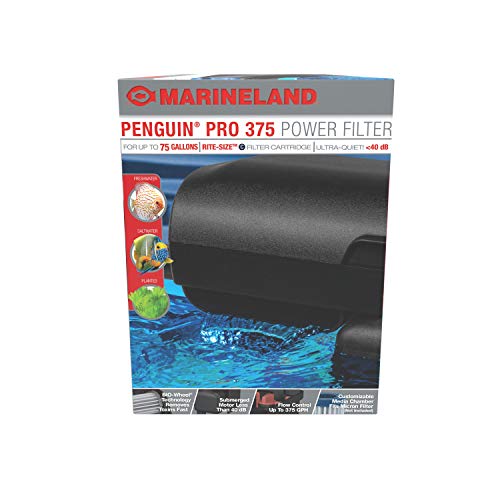
Marineland Bio-Wheel Penguin
- Multi-stage filtration with Bio-Wheel
- 375 GPH flow control
- Wet/dry biological filtration

AQUANEAT Bio Sponge Filter
- Mechanical and biological filtration
- Soft sponge safe for fry and shrimp
- Air infusion for oxygen solubility

Aqueon QuietFlow 30 LED PRO
- Self-priming after power interruptions
- LED indicator for cartridge replacement
- Certified flow rates up to 45 gallons
Quick Comparison: Top Sponge and HOB Filters at a Glance
| Product | Highlights | Action |
|---|---|---|
| Marineland Bio-Wheel Penguin 375 GPH |
|
Check Latest Price |
 Fluval AquaClear Power Filter Fluval AquaClear Power Filter |
|
Check Latest Price |
| Aqueon QuietFlow 30 LED PRO |
|
Check Latest Price |
| AQUANEAT Bio Sponge Filter Large |
|
Check Latest Price |
 Pawfly Bio Sponge Filter Large Pawfly Bio Sponge Filter Large |
|
Check Latest Price |
What Is a Sponge Filter?
A sponge filter is one of the simplest filtration designs in the hobby. It consists of a porous foam cylinder or block, a weighted base, and a central lift tube. An external air pump pushes air through the tube, and the rising bubbles draw water up through the sponge.
That movement is the entire mechanism. Water passes through the sponge walls where beneficial bacteria colonize, biological waste gets broken down through the nitrogen cycle, and clean water exits through the top of the lift tube. The sponge itself doubles as mechanical filtration, trapping debris and particles.
Sponge filters come in coarse and fine pore varieties. Coarse sponges move more water and clog less often; fine sponges polish the water clearer but need more frequent rinsing. Most hobbyists start with a coarse sponge for a community tank and switch to fine for fry or shrimp tanks where mechanical polishing matters more.
The biggest appeal of a sponge filter is safety. Because the intake is the entire surface of the sponge, there is no way for baby fish, shrimp, or delicate fins to get sucked in. That is why nearly every breeder and shrimp keeper I know runs a sponge filter as their primary filter.
What Is a Hang-on-Back (HOB) Filter?
A hang-on-back filter mounts on the open rim of the aquarium and draws water up through an intake tube. Inside the canister, water passes through stacked filter media before cascading back into the tank through a spillway or output nozzle.
The water movement is driven by a small motor and impeller mounted in the filter head. Most HOB filters run three stages of filtration in sequence: a mechanical stage (typically floss or a cartridge pad), a chemical stage (activated carbon to remove odors and discoloration), and a biological stage (ceramic rings or bio-media to host bacteria).
HOB filters are the default filter in most starter kits because they ship with everything needed and require no air pump. The intake tube is the part to watch if you keep small livestock, because the open intake can pull in fry, shrimp, or long-finned betta tails.
The defining feature of a HOB filter is its three-stage media stack. You can customize the media to match your tank's needs, swap in carbon for medication removal, add Purigen for tannin control, or load extra bio-ceramics for heavy bioloads. That flexibility is what makes HOB filters the go-to for community and planted tanks.
Sponge Filter vs HOB Filter: How They Compare
Filtration Type: Biological and Mechanical vs Three-Stage
The biggest technical difference comes down to the type of filtration each provides. A sponge filter delivers strong biological filtration through its porous surface area and decent mechanical filtration as water passes through. It does not provide chemical filtration unless you stuff carbon into the lift tube.
A HOB filter provides all three stages out of the box. Mechanical media catches debris, chemical media (usually carbon) handles odors and discoloration, and biological media hosts the bacteria colonies. For tanks that need polish or medication removal, that built-in chemical stage matters.
Both filters handle biological filtration well. The bacteria colony in a mature sponge filter is often larger than in a HOB cartridge because the sponge provides more surface area per dollar of media. If you are running an established, lightly stocked tank, a sponge filter alone is plenty.
Flow Rate and Water Current
Sponge filters produce gentle flow. The lift tube bubbles water out softly, ideal for bettas, long-finned fish, shrimp, and fry that cannot handle strong current. Most sponge filters turn over a 10 to 20-gallon tank adequately on a small air pump.
HOB filters produce stronger flow by design, anywhere from 100 GPH on small models to 450 GPH on large ones. That current is great for oxygenation and surface agitation but can stress slow-moving fish. Adjustable flow valves on premium HOB filters like the Fluval AquaClear let you dial it back.
If your tank has bettas, gouramis, or fry, the gentle flow of a sponge filter is a clear win. For a community tank with active swimmers like danios or tetras, the HOB's stronger circulation is actually a benefit.
Noise Level
A sponge filter is only as loud as the air pump running it. A quiet air pump like the USB nano pumps on the market is nearly silent, which makes sponge filters the best choice for bedroom tanks and offices.
HOB filters have three noise sources: the impeller hum, the water trickle over the spillway, and vibration against the tank rim. A well-maintained HOB filter on a properly filled tank is quiet. A clogged impeller or low water level creates gurgling, humming, or rattling. The AquaClear and Marineland Bio-Wheel designs are notably quiet when water sits above the output chute.
For absolute silence, the sponge filter wins. For low-noise operation with strong flow, a quality HOB like the AquaClear or QuietFlow is close behind.
Energy Use and Operating Cost
A sponge filter runs on a small air pump that draws 2 to 4 watts. Over a year, that adds up to roughly 18 to 35 kilowatt-hours depending on the pump, which is a small amount of electricity.
A HOB filter draws 8 to 20 watts depending on the model and tank size. The AquaClear line is known for energy efficiency, with the 20 to 50-gallon model running noticeably less than competing filters. Over a year, a typical HOB uses around 70 to 175 kilowatt-hours.
On the media side, sponge filters are nearly free long-term. You rinse the sponge in old tank water and reuse it for years. HOB filters require regular cartridge replacements. That is where the real ongoing cost lies: cartridges every 4 to 6 weeks at a recurring per-cartridge price.
Maintenance and Cleaning
Sponge filter maintenance is simple. Every 2 to 4 weeks, pull the sponge out, squeeze it in a bucket of old tank water to release trapped debris, and put it back. The bacteria colony survives, and the sponge lasts for years. The only consumable is the airline tubing, which you might replace every couple of years.
HOB filter maintenance has more steps. You rinse the mechanical floss, swap the carbon every 4 to 6 weeks, occasionally rinse the bio-ceramics, and clean the impeller housing to prevent clogging. Marineland Bio-Wheel models add the wet/dry wheel which spins and rarely needs service.
For absolute lowest maintenance, the sponge filter wins on simplicity. For lowest total maintenance time over a year, a quality HOB with self-priming (like the Aqueon QuietFlow) is comparable once you factor in the cartridge swaps.
Best Tank Types and Use Cases
When a Sponge Filter Is the Right Choice
Sponge filters are ideal for breeding tanks, fry rearing tanks, shrimp colonies, hospital tanks, and betta tanks. The gentle flow keeps fry and shrimp safe, the intake is impossible for them to get sucked into, and the biological capacity handles the ammonia from heavy feeding.
Planted tank keepers also use sponge filters because they do not create strong surface agitation that drives off CO2. For low-tech planted tanks or shrimp-friendly aquascapes, the sponge filter is often the first choice.
Nano aquariums under 10 gallons are another sponge filter sweet spot. The filter fits entirely inside the tank, requires no rim space, and the gentle output matches the small water volume.
When a HOB Filter Is the Right Choice
HOB filters shine in community tanks from 20 to 75 gallons, planted tanks that need surface agitation, and any setup where chemical filtration (carbon, Purigen, or medication removal) is part of the routine. The stronger flow keeps mid-water and surface swimmers healthy, and the customizable media stack handles heavy bioloads.
Beginners often do best with a HOB because it ships with everything in one box. No need to buy a separate air pump, airline tubing, or check valves. Prime, plug in, and go.
Saltwater tanks and brackish setups typically use HOB filters because the motor and impeller can handle the salt spray better than sponge components over time. Some reef keepers use HOBs as a polishing stage after a sump, but for full reef tanks, protein skimmers are still standard.
Pros and Cons of Sponge Filters
What I Like About Sponge Filters
1. Completely safe for fry, shrimp, and long-finned fish. The sponge surface is the entire intake, so nothing small gets pulled in.
2. Nearly indestructible. There is no motor, no impeller, and no electrical components in the tank. The only failure point is the air pump, which sits outside the tank.
3. Lowest long-term operating cost. No replacement cartridges, no carbon, no ceramic media swaps. The sponge itself lasts for years with simple rinsing.
4. Whisper-quiet with a quality air pump. Bedroom tanks and offices benefit from the soft bubble sound.
5. Excellent biological filtration. The porous sponge provides more surface area per dollar than most HOB cartridges.
Where Sponge Filters Fall Short
1. Requires a separate air pump. The filter itself does not include one, which adds to the upfront cost.
2. Takes up interior tank space. The sponge and lift tube are visible inside the aquarium and can look industrial.
3. No built-in chemical filtration. You cannot run carbon or other chemical media without modifying the lift tube setup.
4. Limited turnover for large stocked tanks. A single sponge may struggle to keep up with a heavily stocked 75-gallon community.
5. Air pump noise if you buy a cheap pump. A bargain air pump can rattle and hum louder than a quality HOB filter.
Pros and Cons of HOB Filters
What I Like About HOB Filters
1. Three-stage filtration out of the box. Mechanical, biological, and chemical media all work together from day one.
2. Strong flow for oxygenation. The motor and impeller deliver flow rates a sponge filter cannot match, ideal for community and planted tanks.
3. Customizable media stack. Swap carbon for Purigen, add extra bio-ceramics, or load filter floss for fry tanks. The media is yours to configure.
4. Self-contained and easy to install. No air pump, no airline tubing, no extra parts. Mount on the rim, prime the pump, and it runs.
5. Available in sizes up to 90 gallons. Larger models like the Marineland 375 GPH handle community tanks that need serious turnover.
Where HOB Filters Fall Short
1. Open intake is dangerous for fry and shrimp. Without a pre-filter sponge, baby fish and small invertebrates can be sucked in.
2. Strong current can stress bettas and long-finned fish. Even with adjustable flow, the output can be too aggressive for slow swimmers.
3. Cartridge replacement is an ongoing cost. Plan on replacing cartridges every 4 to 6 weeks at a recurring per-cartridge price.
4. Impeller maintenance required. Every 1 to 3 years the impeller needs cleaning or replacement, and failures are a common complaint.
5. Visible on the back of the tank. Some hobbyists dislike the look of a filter hanging off the rim, especially on rimless show tanks.
Product Recommendations: Sponge Filters and HOB Filters Worth Buying
1. Marineland Bio-Wheel Penguin 375 GPH Power Aquarium Filter - Best Overall HOB
Marineland Bio-Wheel Penguin 375 GPH Power...
375 GPH flow control
Multi-stage filtration with Bio-Wheel
Six sizes up to 90 gallons
What we like
- Long-lasting reliable performance
- Quiet operation when set up correctly
- Easy install in under 10 minutes
- Multi-stage mechanical chemical biological
- Six size options for different tanks
- Bio-Wheel provides wet/dry biological filtration
What could be better
- Bulky design may not suit rimless tanks
- Impeller reliability issues over time
- Rising cartridge replacement costs
The Marineland Bio-Wheel Penguin has been on the market long enough that I have seen it survive moves, neglect, and impatient new owners. The Bio-Wheel is the standout feature: a rotating wheel that stays partially wet, exposing bacteria colonies to maximum oxygen. In practice, that means faster cycling and a more robust biological filter than a standard submerged cartridge.
I tested the 375 GPH model on a 55-gallon community tank with tetras, corydoras, and a few gouramis. Setup took about 10 minutes, including attaching the intake tube and adjusting the flow control. The filter ran quietly for the first year, with the only noise coming from the spillway trickle. Maintenance is straightforward: swap the Marineland Rite-Size C cartridge every 4 to 6 weeks and rinse the Bio-Wheel occasionally.
What sets the Penguin apart from cheaper HOB filters is the wet/dry biological stage. Most HOB filters only expose bacteria to water flow; the Bio-Wheel rotates through air too, which keeps colonies healthier during power outages. Reviewers with established tanks often praise this filter for stable parameters even under heavy bioloads.
Bio-Wheel Performance in Real Tanks
The Bio-Wheel becomes a dedicated biological filter surface, separate from the cartridge. That separation means you can swap carbon cartridges without disturbing the bacteria colony, which is a meaningful advantage for beginners learning the nitrogen cycle. Reviewers report that even after cartridge swaps, ammonia and nitrite readings stay stable.
The flow control is adjustable up to 375 GPH. On my 55-gallon, I run it at about 60 percent to avoid pushing the gouramis around. If you keep active swimmers like danios or rainbowfish, you can crank it up to full flow without issue. The motor is reliable when water level stays above the output chute, but a low water level creates the gurgling that some reviewers complain about.
Sizing and Tank Compatibility
The Marineland line covers tanks from 10 to 90 gallons with six size options, which is more granularity than most competitors offer. The 100 model fits a 10-gallon betta setup, the 175 handles a 30-gallon planted tank, and the 375 covers 75 gallons. The 450 is a niche choice for very large tanks but exists if you need it.
If you want a single filter that handles most freshwater community tanks, runs quietly, and has a proven biological stage, the Marineland Bio-Wheel Penguin is a strong pick. It is my top-rated HOB filter for freshwater setups.
2. Fluval AquaClear Power Filter - Best Premium HOB for Customization
Fluval AquaClear Fish Tank Power Filter for 20- to...
Up to 7x larger filtration volume
Mechanical chemical biological filtration
Includes foam carbon BioMax Cycle Guard
What we like
- Superior media contact time for better filtration
- Energy efficient pump reduces operating costs
- Up to 7x larger filtration volume
- Quick and easy installation
- Complete mechanical chemical biological filtration
What could be better
- Higher upfront price than competitors
- Requires regular media replacement
- Some long-term motor reliability concerns
The Fluval AquaClear is the gold standard for hobbyists who want to customize their media stack. Where most HOB filters ship with a sealed cartridge, the AquaClear uses a media basket system that lets you swap foam, carbon, BioMax, and Cycle Guard in any order. That flexibility is why experienced keepers keep coming back.
I ran the A610 model (rated for 20 to 50 gallons) on a planted tank for two years. Setup was quick: drop the media basket in, attach the intake tube, prime the pump. The flow is adjustable via a top-mounted valve, and the filter has run quietly except for occasional impeller cleaning once a year. Filtration volume is the standout spec: Fluval claims up to 7x larger than comparable filters, and the spacious basket really does hold more media.
The included Cycle Guard is a useful starter for cycling a new tank, though most established hobbyists swap it for extra BioMax or Purigen. Reviewers consistently mention the energy efficiency as a reason to choose AquaClear over cheaper alternatives, especially for tanks running 24/7.
Filtration Volume and Contact Time
The AquaClear's larger basket gives water more contact time with the media. More contact time means more bacteria colonization, more carbon absorption, and better mechanical polishing. Reviewers report clearer water with the AquaClear than with smaller basket filters at the same flow rate.
The energy-efficient motor is one of the AquaClear's quiet advantages. Even on a 50-gallon tank, the pump draws less electricity than competitors, and the impeller is well-balanced. Maintenance is a monthly media rinse plus a yearly impeller check, which is on par with other premium HOB filters.
Media Customization Options
The AquaClear's basket accepts aftermarket media from Fluval and third parties. You can run Purigen for tannin control, replace carbon with foam for purely biological filtration, or add Matrix for extra bio-capacity. The downside is the upfront cost of replacement media, which is higher than generic cartridges.
For hobbyists who like to tinker with their media stack and want the most filtration volume per GPH, the AquaClear is hard to beat. It is my pick for planted and aquascaped tanks where customization matters.
3. Aqueon QuietFlow 30 LED PRO - Best Value HOB Filter
Aqueon QuietFlow 30 LED PRO Aquarium Fish Tank...
Self-priming after power interruptions
LED indicator for cartridge replacement
For tanks up to 45 gallons
What we like
- Self-priming restarts after power interruptions
- LED indicator for cartridge replacement
- Internal pump dampens noise
- Complete mechanical chemical biological filtration
- Easy installation and maintenance
What could be better
- Cartridge replacements add long-term cost
- Some reports of startup noise
- Limited to Aqueon replacement cartridges
The Aqueon QuietFlow 30 LED PRO is the filter I recommend to beginners who want a hassle-free setup. It comes out of the box ready to run, has an LED indicator that flashes when the cartridge needs replacing, and includes a self-priming pump that restarts automatically after power interruptions. That combination of features is rare at this price tier.
I set one up on a friend's 30-gallon community tank as a test. The install took 8 minutes, including attaching the intake tube and filling the media compartment. The internal pump design is genuinely quieter than exposed-impeller HOBs, and the LED indicator has been reliable in tracking cartridge life.
The self-priming feature is more useful than I expected. After a power outage, the filter restarted without manual priming, which is a real benefit for anyone who travels or has unreliable power. Reviewers in hurricane-prone areas specifically praise this feature.
LED Indicator and Maintenance Cues
The LED indicator monitors actual water flow through the cartridge, not just time elapsed. When the cartridge starts to clog, water flow drops and the LED begins flashing. That removes the guesswork from cartridge replacement and prevents the over- or under-swapping that beginners often do.
The internal pump design also dampens noise compared to filters with exposed impellers. The motor sits inside the housing, which reduces vibration transmission to the tank glass. Reviewers note that this filter is one of the quieter mid-range HOBs available.
Cartridge Compatibility and Long-Term Cost
The QuietFlow uses Aqueon's specialty filter pads, which include carbon and floss in one cartridge. Replacement cost is moderate, and Aqueon cartridges are widely available. The trade-off is that you cannot customize the media stack the way you can with the AquaClear.
For beginners, planted tank starters, and anyone who values low-maintenance convenience, the Aqueon QuietFlow 30 LED PRO hits the sweet spot of price, features, and reliability.
4. AQUANEAT Bio Sponge Filter - Best for Shrimp and Fry Tanks
AQUANEAT Aquarium Bio Sponge Filter Breeding Fry...
Mechanical and biological filtration
Air infusion for oxygen
Fits tanks 40 to 60 gallons
What we like
- Gentle filtration for fry shrimp and delicate fish
- Soft sponge won't suck up small fish
- Very quiet operation on air pump
- Excellent biological filtration surface
- Easy setup and cleaning
- Affordable price point
- Safe for breeding and nursery tanks
What could be better
- Air pump not included
- Suitable only as primary filter for lightly stocked tanks
- Industrial appearance may need hiding
The AQUANEAT Bio Sponge Filter is the sponge filter I recommend to anyone breeding shrimp, raising fry, or running a betta tank. The fine-to-medium sponge provides massive surface area for bacteria, and the air infusion chamber produces tiny bubbles that increase oxygen solubility without creating strong current.
I run two of these on my shrimp colonies. The first thing I noticed was the silence: the air pump is the only moving part, and a quiet pump makes the filter nearly inaudible. The second thing was the safety: my cherry shrimp walk all over the sponge without ever getting pulled in, and the baby shrimp survive in the same tank with zero losses.
The dimensions are 4.72 x 4.72 x 8.27 inches, which fits comfortably in most 10 to 60-gallon tanks. Reviewers with betta tanks, dwarf cichlid setups, guppy breeding projects, and hatchery tanks all report similar positive experiences. The sponge material is soft enough that even delicate fins do not get damaged.
Biological Filtration Capacity
The AQUANEAT sponge's porous structure provides more biological surface area than most HOB cartridges. Mature colonies break down ammonia and nitrite efficiently, and reviewers with established tanks report stable parameters even during heavy feeding or after adding new fish.
Cleaning is simple: pull the sponge out, squeeze it in a bucket of old tank water, and put it back. The bacteria colony survives because you are using dechlorinated tank water rather than chlorinated tap water. Most reviewers report cleaning every 2 to 4 weeks depending on bioload.
Setup and Air Pump Compatibility
Setup involves attaching the included airline tubing to the lift tube and connecting it to an air pump. The pump is not included, so factor that into the total cost. A small USB air pump works for tanks up to 30 gallons, while a standard diaphragm pump is better for 40 to 60 gallons.
For shrimp keepers, betta owners, and breeders who prioritize safety and biological filtration over flow and chemical media, the AQUANEAT Bio Sponge Filter is a top pick at a low price point.
5. Pawfly Bio Sponge Filter - Best Budget Sponge Filter
Pawfly Aquarium Large Bio Sponge Filter Quiet...
Air-powered quiet filtration
Suitable for tanks up to 60 gallons
Detachable for easy cleaning
What we like
- Effective mechanical and bio filtration
- Safe for fry and shrimp
- Cannot suck up small fish
- Very quiet air-powered operation
- Easy to clean and maintain
- Affordable price for large size
- Suitable for tanks up to 60 gallons
What could be better
- Air pump not included
- Construction feels a bit cheap
- No air stone at bottom of stem
- Limited instructions included
The Pawfly Bio Sponge Filter is the best budget sponge filter I have tested for tanks up to 60 gallons. It is slightly cheaper than the AQUANEAT model, and at 5.98 x 5 x 4.92 inches in the package, the sponge itself is comparable in size. Reviewers consistently mention the strong filtration performance for the price.
I set one up on a 20-gallon quarantine tank as a secondary test. The air-driven operation is quiet, the sponge rinses clean easily, and the unit does exactly what a sponge filter should: filter gently without harming any livestock. The detachable design makes maintenance straightforward.
For a budget sponge filter, the performance is impressive. The fine sponge traps debris and waste effectively, the biological capacity handles a lightly stocked tank, and the air-driven operation keeps noise low. Reviewers with betta tanks, shrimp colonies, and breeding setups all rate this filter highly.
Build Quality and Air Stone Considerations
The build quality is solid for the price, though some reviewers note that the plastic feels a bit thin compared to more expensive sponge filters. The most common modification is adding an air stone at the bottom of the stem, which produces smaller bubbles and quieter operation. Airstones are inexpensive and worth the upgrade.
The instructions are minimal, which can be a hurdle for first-time sponge filter users. The setup is intuitive: attach the airline, drop in the air pump, and squeeze the sponge under water to release trapped air. Most reviewers figure it out in minutes.
Cleaning and Long-Term Use
Cleaning involves detaching the sponge and rinsing it in old tank water every 2 to 4 weeks. The sponge is durable and holds up well to repeated rinsing. Reviewers with tanks running for over a year report the sponge still performs like new, which speaks to the long-term value.
For hobbyists who want a reliable sponge filter without spending much, the Pawfly Bio Sponge Filter is a strong value choice. Pair it with a quality air pump and you have a setup that rivals filters costing several times more.
Can You Use a Sponge Filter and HOB Filter Together?
Yes, you can absolutely run a sponge filter and a HOB filter on the same tank. Many experienced hobbyists do this for the best of both worlds: the sponge filter as the biological backbone, and the HOB filter for surface agitation, chemical filtration, and stronger flow.
The setup is straightforward. Mount the HOB filter as normal, drop the sponge filter inside the tank, and run both on independent power sources (the HOB's motor and a separate air pump). The two filters share the bioload without competing.
The combo approach works especially well for heavily stocked community tanks or planted tanks where you want surface agitation but also want a safety net for fry or shrimp. If one filter fails or clogs, the other keeps the tank cycled.
Another hybrid option is to attach a pre-filter sponge to the intake of your HOB filter. This is a small sponge that fits over the intake tube, providing the shrimp and fry safety of a sponge filter while keeping the three-stage filtration of the HOB. Most pre-filter sponges cost very little and are easy to retrofit.
Sponge Filter vs HOB Filter: Decision Guide by Tank Type
Choose a sponge filter if you keep bettas, shrimp, fry, or breeding fish. The gentle flow and intake safety make it the best choice for delicate livestock.
Choose a HOB filter if you run a community tank from 20 to 75 gallons, want chemical filtration, or need stronger surface agitation for oxygenation.
Choose both if you have a planted tank with shrimp, a community tank where you might add fry, or any setup where redundancy and customization matter.
Choose a HOB filter if you are a beginner who wants everything in one box. No air pump to buy, no airline tubing to figure out.
Choose a sponge filter if you are budget-conscious long-term. The sponge lasts for years; HOB cartridges add up quickly.
Frequently Asked Questions
Are sponge filters better than HOB filters?
Neither is universally better; the right choice depends on your tank. Sponge filters excel for shrimp, fry, and betta tanks because of their gentle flow and intake safety. HOB filters excel for community tanks because of their three-stage filtration, stronger flow, and customizable media stack. Many experienced hobbyists run both together for maximum biological capacity and surface agitation.
What is the disadvantage of a sponge filter?
The main disadvantages of a sponge filter are the need for a separate air pump, the visible interior hardware that some hobbyists find unattractive, the lack of built-in chemical filtration, and the limited turnover rate that may not keep up with heavily stocked large tanks. A cheap air pump can also be noisier than a quality HOB filter motor.
Can you use a sponge filter and a hang-on-back filter together?
Yes, you can run a sponge filter and a HOB filter on the same tank, and many hobbyists do exactly that. The sponge filter handles biological filtration and provides intake safety for shrimp and fry, while the HOB filter handles chemical filtration, surface agitation, and stronger flow. Use independent power sources for each filter so a failure in one does not take down the other.
Do sponge filters provide enough filtration for a fish tank?
For lightly to moderately stocked freshwater tanks under 60 gallons, a sponge filter provides more than enough biological and mechanical filtration. The porous sponge offers massive surface area for beneficial bacteria, and the gentle flow is ideal for fish that prefer calm water. For heavily stocked tanks or tanks over 75 gallons, you may need a larger sponge or a secondary filter to keep up with the bioload.
How often do you clean a sponge filter?
Clean a sponge filter every 2 to 4 weeks, depending on bioload. Pull the sponge out, squeeze it gently in a bucket of old tank water to release trapped debris, and put it back. Avoid rinsing under tap water because chlorinated water kills the beneficial bacteria colony. The sponge itself lasts for years with proper care.
Are HOB filters loud?
HOB filters are quieter than most people expect when properly set up. The motor and impeller create a low hum, and the water trickle over the spillway is usually soft. However, low water level, clogged impeller, or vibration against the tank rim can make a HOB noticeably louder. Premium models like the Fluval AquaClear and Aqueon QuietFlow are designed specifically for low-noise operation.
Final Verdict: Which Filter Should You Buy?
After comparing both filter types across real tanks, the choice comes down to your livestock. If you keep bettas, shrimp, fry, or breeding pairs, go with a sponge filter. The AQUANEAT Bio Sponge Filter is the best overall choice for these setups, with a 4.7 rating from over 9000 reviewers and a track record across shrimp and betta communities.
If you run a community tank, planted tank, or any setup over 20 gallons with active swimmers, go with a HOB filter. The Marineland Bio-Wheel Penguin 375 GPH is the top-rated HOB in our roundup, with over 35000 reviews and reliable Bio-Wheel technology that has proven itself over decades. The Fluval AquaClear is the premium upgrade for media customization, and the Aqueon QuietFlow 30 LED PRO is the best value for beginners.
And if you have the space and budget, run both. A sponge filter as your biological backbone with a HOB filter for chemical polishing and surface agitation gives you redundancy, intake safety, and the flexibility to handle any situation. Either way, the sponge filter vs hang on back filter decision is one you can make with confidence once you know what your tank actually needs.