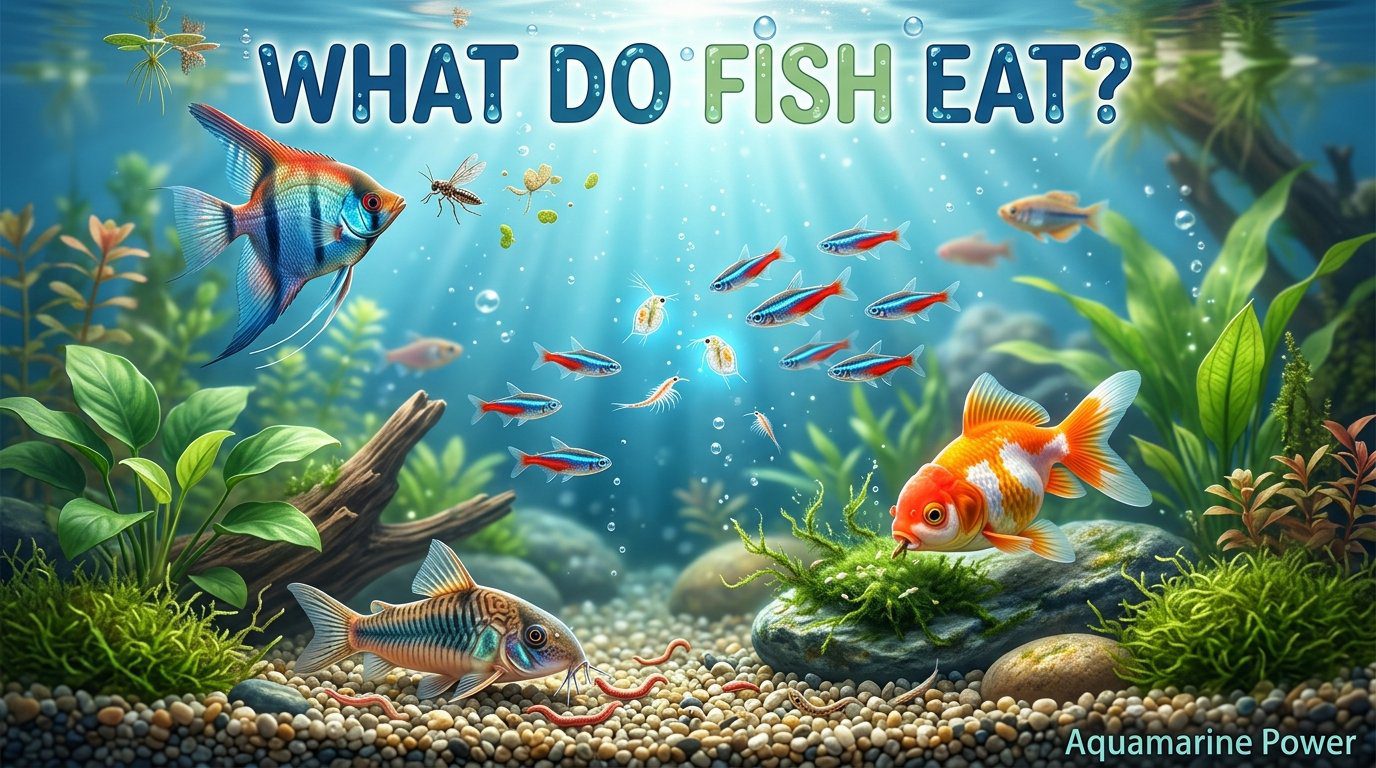
What do fish eat? This question opens the door to understanding one of the most diverse nutritional worlds in the animal kingdom. With over 37,000 known fish species inhabiting our planet’s waters, fish diets range from microscopic plankton to large prey, shaped by millions of years of evolution and environmental adaptation.
Fish eat a remarkably diverse range of foods including insects, crustaceans, algae, smaller fish, plankton, worms, copepods, and mollusks in their natural habitats. In captivity, they thrive on specially formulated commercial foods designed to meet their specific nutritional needs. Understanding these dietary requirements is crucial for maintaining healthy fish, whether you are observing them in the wild or caring for them in an aquarium.
According to the Merck Veterinary Manual, proper fish nutrition directly impacts immune function, growth rate, coloration, and reproductive success. Poor aquarium diet choices can lead to weakened immune systems, stunted growth, and shortened lifespans. This comprehensive guide explores fish diets from multiple angles: what fish eat in the wild, essential nutrients for pet fish, species-specific feeding requirements, and proven feeding strategies for optimal health.
Key Takeaways
- Fish fall into three main diet categories: herbivorous (plant-eaters), carnivorous (meat-eaters), and omnivorous (both plant and animal matter).
- Protein requirements vary by species: carnivores need 40-55%, herbivores need 35-45%, and omnivores fall in between.
- Feed adult fish 1-2 times daily, offering only what they consume within 2-5 minutes to prevent overfeeding.
- Frozen and freeze-dried foods like bloodworms and brine shrimp offer excellent nutrition as supplements to staple diets.
- Healthy adult fish can survive 7-14 days without food, making vacation feeding simpler than most aquarists think.
Jump to Section: What Fish Eat in the Wild | Three Main Diet Types | Essential Nutrients | Types of Fish Food | Popular Aquarium Fish | Proper Feeding | Freshwater vs Saltwater | FAQ
What Do Fish Eat in the Wild?
Wild fish diets vary dramatically based on habitat, species, and available food sources. Understanding natural feeding patterns helps aquarists better appreciate these creatures and provides insights for proper aquarium care. In their native environments, fish rely on chemoreception – the ability to detect chemical cues in water – to locate food sources and avoid predators.
What Do Fish Eat in the Sea?
Marine environments offer an abundance of food options that vary by depth and location. Ocean fish primarily feed on plankton, small crustaceans, and other fish, creating complex food webs that support entire ecosystems.
In coastal areas, fish feast on abundant prey including shrimp, crabs, mollusks, and various types of seaweed. Reef fish often graze on algae and biofilm growing on coral surfaces while also hunting small invertebrates hiding in crevices. The diversity of food sources in these environments supports the incredible variety of species found in coral reefs.
Deep-sea fish face unique challenges, adapting to feed on whatever drifts down from above or hunting other deep-dwelling creatures. Many have developed specialized features like bioluminescent lures or expandable jaws to capture scarce prey in the darkness.
Pelagic (open ocean) species like tuna and mackerel follow massive schools of smaller fish, while filter feeders like whale sharks consume enormous quantities of plankton and small organisms. These saltwater fish diet patterns emphasize high-protein, energy-dense foods to support active marine lifestyles.
What Do River Fish Eat?
Freshwater environments present different feeding opportunities compared to marine habitats. River fish are opportunistic feeders, adapting their diets to seasonal changes and local food availability. The freshwater fish diet typically includes more plant matter and insects than marine diets.
Insects form a major component of freshwater fish diets, with mayflies, caddisflies, and midges being particularly important. Fish eagerly consume both adult insects that fall onto the water surface and aquatic larvae developing underwater. This is why fly fishing mimics these natural food sources so effectively.
River fish also feed extensively on crustaceans, worms, and smaller fish. Bottom-dwelling species search through sediment for invertebrates, while predatory fish like pike ambush prey from hiding spots among aquatic vegetation.
Seasonal variations significantly impact food availability. Spring brings insect hatches and increased invertebrate activity, while fall may see fish feeding heavily on seeds and fruits falling from overhanging trees.
Natural Feeding Behaviors
Fish exhibit fascinating feeding behaviors adapted to their environments and prey types. Some species are active daytime hunters using keen eyesight, while others rely on lateral line systems to detect vibrations in murky water or darkness. The lateral line acts as a sensory organ that picks up water displacement caused by nearby prey.
Many fish feed continuously throughout daylight hours, taking small meals as opportunities arise. Predatory species may feed less frequently but consume larger meals when successful. Some species can go weeks between substantial meals without ill effects.
Schooling behaviors often relate to feeding strategies. Small fish form schools for protection while feeding on plankton, while predators may hunt cooperatively to herd prey into vulnerable positions. Understanding these natural patterns helps aquarists create better feeding routines in captivity.
The Three Main Fish Diet Types
Understanding the three primary diet categories helps aquarists provide appropriate nutrition for their fish. Each type has specific nutritional requirements and feeding behaviors that must be respected for optimal health.
| Diet Type | Protein Needs | Primary Foods | Examples |
|---|---|---|---|
| Herbivorous | 35-45% | Algae, plants, vegetables | Plecos, some cichlids, tangs |
| Carnivorous | 40-55% | Live prey, frozen foods, pellets | Bettas, oscars, arowanas |
| Omnivorous | 35-45% | Combination of plant and animal | Goldfish, guppies, tetras |
Herbivorous Fish
Herbivorous fish have evolved specialized digestive systems to extract nutrients from plant matter. These peaceful grazers require diets containing 35-45% protein, lower than their carnivorous cousins. Their longer digestive tracts allow proper breakdown of plant cellulose, which is why they need to graze continuously throughout the day.
Common herbivorous species include many types of plecos, certain cichlids, and marine tangs. In the wild, they spend much of their day grazing on algae, aquatic plants, and biofilm. Biofilm – the thin layer of microorganisms that develops on surfaces – provides essential nutrients and digestive enzymes for these fish.
Natural food sources for herbivores include various algae types, aquatic plants, fallen fruits, and even terrestrial vegetation in flooded areas. Many herbivorous fish also consume small amounts of protein from tiny invertebrates living on plant surfaces, making them technically opportunistic omnivores in practice.
Carnivorous Fish
Carnivorous fish are the predators of aquatic ecosystems, requiring high-protein diets of 40-55% to maintain their active hunting lifestyles. These meat-eaters have shorter digestive tracts optimized for processing protein-rich foods efficiently. Popular carnivorous aquarium species include bettas, oscars, and many cichlids.
According to research from UC Davis School of Veterinary Medicine, carnivorous fish require complete proteins containing all essential amino acids for proper growth and tissue repair. Their strong jaws and sharp teeth are perfectly adapted for capturing and consuming prey, and they often show stronger feeding responses to live or frozen foods than to dry preparations.
Hunting behaviors vary widely among carnivores. Some are ambush predators lying in wait, while others actively chase down prey. Many can be trained to accept frozen or prepared foods in captivity, though live foods often trigger stronger feeding responses. If you’re caring for carnivorous species, check our best betta fish food guide for species-specific recommendations.
Omnivorous Fish
The majority of aquarium fish fall into the omnivorous category, enjoying the dietary flexibility to consume both plant and animal matter. This adaptability explains what fish eat most commonly – a varied diet that changes with availability and season.
Omnivores thrive on diverse diets, typically requiring moderate protein levels between those of herbivores and carnivores. This flexibility makes them excellent choices for community aquariums, as they accept a wide range of commercial foods. For example, guppies are classic omnivores that readily accept flakes, pellets, and live foods.
In nature, omnivorous fish opportunistically feed on insects, crustaceans, algae, plant matter, and smaller fish. This varied diet provides complete nutrition and allows them to adapt to changing food availability throughout seasons. Their digestive systems handle both plant and animal matter reasonably well, though not as efficiently as specialized feeders.
Essential Nutrients Fish Need
Proper fish nutrition extends beyond simply providing food. Understanding specific nutrient requirements ensures optimal health, growth, and coloration in aquarium fish. Each nutrient plays a distinct role in maintaining bodily functions.
Protein Requirements
Protein serves as the building block for growth, tissue repair, and immune function in fish. Quality matters as much as quantity – fish require complete proteins containing all essential amino acids that their bodies cannot synthesize.
Animal-based proteins like fish meal provide the most complete amino acid profiles. While plant proteins like soy can supplement diets, they lack certain essential amino acids fish need for optimal health. This is why most quality fish foods list fish meal as a primary ingredient rather than relying solely on plant proteins.
Species variations in protein needs reflect natural diets. Predatory fish processing large prey meals require higher protein percentages than grazers nibbling continuously on plant matter. Young, growing fish also need higher protein levels than mature adults. A juvenile cichlid might need 45% protein, while the same species as an adult thrives on 35%.
Fats, Carbohydrates and Fiber
Fats provide concentrated energy for fish, comprising 15-25% of a balanced diet. Fish oils are ideal fat sources, supplying essential fatty acids crucial for hormone production and cellular health. Unlike mammals, fish utilize fats rather than carbohydrates as their primary energy source.
Carbohydrate requirements vary significantly between fish types. Omnivores tolerate 25-40% carbohydrates, while carnivores should receive less than 20%. Excess carbohydrates can lead to fatty liver disease and other health issues in predatory species whose digestive systems are not adapted to process starches efficiently.
Fiber aids digestive health but should remain below 5% in most fish diets. Too much fiber reduces nutrient absorption and can cause digestive problems. Natural sources include algae and plant matter consumed by herbivorous species. The “ash content” listed on fish food labels represents mineral content and should typically be under 10%.
Vitamins and Minerals
Fish require vitamins A, C, D, E, and K for various metabolic functions. Vitamin C boosts immune function, while vitamin D aids calcium absorption for bone and scale health. B-complex vitamins support nervous system function and energy metabolism.
Minerals appear as “ash content” on fish food labels, derived from ground bones, scales, and shells. Calcium and phosphorus maintain skeletal structure, while trace minerals like iron and zinc support various enzymatic processes. These minerals are particularly important for breeding fish and growing juveniles.
Vitamin degradation poses a significant challenge in fish nutrition. According to the Merck Veterinary Manual, water-soluble vitamins can lose 90% of their potency within 30 seconds of entering water, making feeding technique crucial for nutrient delivery. This is why overfeeding creates a double problem: wasted nutrients and water pollution.
Types of Fish Food for Aquarium Fish
Modern aquarium foods come in various forms, each with distinct advantages. Understanding these options helps aquarists make informed choices for their fish’s nutritional needs and create a varied aquarium diet.
How to Choose the Best Fish Food
Selecting the right food for your fish requires considering several factors. First, identify your fish’s natural diet type – herbivore, carnivore, or omnivore. This determines the protein percentage you should look for on the label. Carnivores need foods with 40%+ protein, while herbivores do better with plant-forward formulas.
Next, consider your fish’s size and mouth shape. Small fish like tetras need micro-pellets or finely ground flakes, while large cichlids can handle substantial pellets. Surface feeders need floating foods, bottom dwellers require sinking options, and mid-water swimmers prefer slow-sinking varieties. Matching food to feeding zone reduces waste and ensures all fish get adequate nutrition.
Check ingredient quality when choosing fish food. Look for fish meal, krill, or whole fish as primary protein sources rather than generic “fish protein.” Avoid foods with excessive fillers like wheat or corn as main ingredients. Quality foods list specific ingredients like “salmon meal” or “krill” rather than vague terms. Store food in cool, dry places and use within six months of opening to prevent vitamin degradation.
Dry Foods: Flakes, Pellets and Wafers
Flakes remain the most popular fish food due to convenience and wide availability. However, they lose nutritional value rapidly once hitting water. Best suited for small surface-feeding fish, flakes should be used quickly to maintain vitamin content. Their floating nature makes them ideal for top-feeders like guppies and hatchetfish.
Pellets offer superior nutritional stability, maintaining vitamins longer than flakes. Available in floating and sinking varieties, pellets suit various fish sizes and feeding zones. Larger species benefit from appropriately sized pellets that reduce waste and water pollution. Slow-sinking pellets work well for mid-water feeders like tetras and barbs.
Wafers cater specifically to bottom-dwelling fish, slowly dissolving to allow extended grazing. Algae wafers provide plant-based nutrition for herbivores, while protein-rich wafers satisfy carnivorous catfish. Their dense composition maintains nutrition during the slower feeding process of bottom dwellers. Vegetables can also be offered as supplements, with blanching vegetables like zucchini and cucumber making them softer and more palatable.
Frozen and Freeze-Dried Options
Frozen foods offer excellent nutrition, often surpassing live foods in consistency and safety. Common options include bloodworms, brine shrimp, mysis shrimp, and krill. Proper thawing in tank water prevents temperature shock and nutrient loss. For more details on one of the most popular frozen foods, see our complete bloodworms guide.
Freeze-dried foods provide convenience without refrigeration needs. While slightly less nutritious than frozen alternatives, they’re ideal for treats and dietary variety. Popular choices include tubifex worms, daphnia, bloodworms, brine shrimp, and krill.
These foods work best as supplements rather than staple diets. Their concentrated nature can cause digestive issues if overfed, so moderation is key. A varied feeding schedule incorporating frozen foods 2-3 times weekly provides nutritional benefits while maintaining convenience.
Live Foods and Natural Treats
Live foods trigger natural hunting instincts and provide excellent nutrition. However, they carry disease risks if not properly sourced. Quarantine live foods for two weeks before feeding to prevent introducing parasites or pathogens. Culturing your own brine shrimp or blackworms eliminates many of these concerns.
Vegetables offer healthy treats for omnivorous and herbivorous fish. Blanched options work best: zucchini slices, cucumber rounds, shelled peas, spinach leaves, and romaine lettuce. The blanching process softens vegetables and makes nutrients more accessible while removing potential contaminants.
Remove uneaten vegetables within 24 hours to prevent water quality degradation. Many fish enjoy occasional fruit treats like melon or berries, though these should remain occasional supplements due to sugar content. Garlic-soaked foods can stimulate appetite in finicky fish while providing immune benefits.
What Do Popular Aquarium Fish Eat?
Different species have evolved specific dietary preferences. Understanding these needs ensures proper nutrition for common aquarium inhabitants and helps you plan your aquarium diet accordingly.
What Do Clownfish Eat?
Clownfish are omnivores with diverse appetites, consuming both meaty foods and plant matter in nature. In reef environments, they feed on algae, zooplankton, and leftover food from their host anemones. Their symbiotic relationship influences their natural feeding patterns significantly.
Captive clownfish readily accept varied diets including high-quality marine flakes, pellets, and frozen foods. Mysis shrimp, brine shrimp, and finely chopped seafood provide essential proteins. Supplement with spirulina-based foods for plant matter nutrition and overall health.
In tanks with anemones, clownfish often steal food from their host’s tentacles, mimicking natural feeding patterns. This behavior enriches their captive experience beyond simple nutrition. Feed small amounts 2-3 times daily for optimal health and coloration.
Goldfish and Koi Diets
Goldfish and koi share similar omnivorous diets but require temperature-based feeding adjustments. For a complete feeding breakdown, see our detailed goldfish feeding guide. These popular pond fish need careful nutritional management for optimal health and coloration.
Below 65°F, provide maintenance diets with reduced protein content. Fish cannot properly digest rich foods in cold water, risking serious health issues including swim bladder disorders. Above 65°F, higher protein foods support growth and breeding condition.
Color-enhancing foods containing carotenoids intensify red and orange pigmentation. Natural sources include spirulina, krill, and specialized color-enhancing pellets. Avoid overfeeding these rich foods, as excess can cause digestive problems.
Common mistakes include overfeeding and providing inappropriate foods like bread. Goldfish lack stomachs, requiring small, frequent meals rather than large portions. Their slower metabolism means they need less food than many aquarists assume.
Tropical Fish Feeding Guide
Tropical community tanks present unique feeding challenges with multiple species occupying different water levels. Success requires understanding each species’ preferences and ensuring all fish receive adequate nutrition through varied feeding zones.
Surface feeders like hatchetfish and gouramis need floating foods. Mid-water species including tetras and rasboras prefer slowly sinking options. Bottom dwellers such as corydoras require sinking pellets or wafers reaching substrate level.
| Zone | Fish Examples | Best Food Types |
|---|---|---|
| Surface | Hatchetfish, Gouramis | Floating flakes, pellets |
| Middle | Tetras, Barbs, Angelfish | Slow-sinking pellets, flakes |
| Bottom | Corydoras, Loaches, Plecos | Sinking wafers, tablets |
Species-specific needs vary within community tanks. Ensure shy or slow feeders aren’t outcompeted by aggressive eaters. Multiple feeding points help distribute food effectively and reduce stress on subordinate fish.
How to Feed Your Fish Properly
Proper feeding technique matters as much as food quality. Following established guidelines prevents common problems while ensuring optimal nutrition and maintaining water quality.
Feeding Frequency and Amounts
The golden rule of fish feeding: offer only what fish can consume within 2-5 minutes. This prevents overfeeding while ensuring adequate nutrition. Remove uneaten food promptly to maintain water quality and prevent ammonia spikes.
Most fish thrive on once or twice daily feeding schedules. Young, growing fish benefit from multiple small meals, while adult fish often do well with single daily feedings. Establish consistent timing to regulate fish metabolism and reduce stress from irregular feeding.
Signs of overfeeding include cloudy water, algae blooms, and lethargic fish with bulging bellies. Uneaten food decomposes rapidly, producing harmful ammonia. Regular water testing helps monitor the impact of feeding practices on tank parameters.
Water Temperature and Feeding
Temperature dramatically affects fish metabolism and digestion. Never feed pond fish when water temperatures drop below 55°F, as they cannot properly process food in cold conditions. Fish metabolism slows significantly at lower temperatures.
In heated aquariums, maintain stable temperatures for consistent metabolism. Tropical fish experiencing temperature fluctuations may refuse food or suffer digestive issues. Monitor heating systems regularly to ensure proper function and stable temperatures.
Seasonal adjustments apply even to indoor aquariums. Many fish naturally eat less during winter months, responding to shortened daylight hours. Respect these natural rhythms rather than forcing normal feeding schedules during seasonal transitions.
Common Feeding Mistakes to Avoid
Overfeeding ranks as the most common error among aquarists. Excess food doesn’t create healthier fish – it pollutes water and stresses inhabitants. When in doubt, feed less rather than more. A slightly hungry fish is healthier than an overfed one.
Poor storage degrades food quality rapidly. Once opened, use fish food within six months regardless of expiration dates. Store in cool, dry locations away from humidity and direct sunlight. Consider splitting large containers into smaller portions to maintain freshness.
Wrong food sizes frustrate fish and increase waste. Match food particle size to fish mouth size. Large fish struggle with tiny flakes, while small fish can’t consume oversized pellets. Appropriate sizing improves nutrition and reduces tank pollution.
Freshwater vs Saltwater Fish Diets
Understanding the differences between freshwater fish diet and saltwater fish diet helps aquarists provide appropriate nutrition for their specific setup. While the basic nutritional building blocks are similar, there are important distinctions in feeding approaches.
| Aspect | Freshwater Fish | Saltwater Fish |
|---|---|---|
| Protein Needs | 35-45% (varies by species) | 40-50% (generally higher) |
| Natural Foods | Insects, worms, plants, smaller fish | Plankton, copepods, crustaceans, coral polyps |
| Feeding Behavior | More adaptable to prepared foods | Often need live or frozen foods initially |
| Grazing Opportunities | Algae on decorations, plants | Live rock with copepods, biofilm |
| Special Requirements | Less supplementation needed | Often need marine vitamins, garlic additives |
Freshwater fish generally adapt more readily to prepared foods like flakes and pellets. Their natural diets in rivers and lakes often include more plant matter and detritus than marine species. Many freshwater community fish thrive on quality commercial foods with minimal supplementation.
Saltwater fish often require more specialized nutrition, with many species initially refusing prepared foods when transitioning from wild to captive environments. Marine tanks benefit from established copepod populations and live rock that provides natural grazing opportunities. Tangs and angelfish particularly need continuous access to algae and plant matter.
According to the Merck Veterinary Manual, marine fish often require higher levels of certain unsaturated fatty acids that freshwater fish synthesis pathways provide more readily. This makes quality marine-specific foods important for saltwater aquariums rather than using generic freshwater formulations.
Special Feeding Considerations
Certain situations require modified feeding approaches. Understanding these special cases helps maintain fish health in challenging circumstances beyond standard aquarium diet management.
What Do Ocean Fish Eat in Aquariums?
Marine fish transitioning from wild to captive environments often struggle with dietary changes. What ocean fish eat naturally differs significantly from available aquarium foods, requiring careful adaptation strategies and patience from the aquarist.
Live rock plays a crucial role in marine aquariums, providing natural grazing opportunities. Beneficial organisms growing on rock surfaces supplement prepared foods, mimicking natural feeding behaviors. This particularly benefits grazing species like tangs and angelfish that constantly need plant matter.
Reef tanks with established copepod populations offer continuous food sources for small fish. Mandarins and wrasses hunt these tiny crustaceans throughout the day. Refugiums help maintain stable pod populations for sustained feeding without depleting the display tank.
Feeding Sick or New Fish
Stressed or ill fish often refuse food, requiring special techniques to stimulate appetite. New arrivals need time to adjust before expecting normal feeding responses. Patience during this period prevents additional stress.
Live or frozen foods often entice reluctant eaters better than dry options. Garlic-soaked foods can stimulate appetite in finicky fish. Some species respond better to foods matching their natural prey in size and movement patterns.
Medicated fish food requires veterinary prescriptions for serious health issues. These specialized feeds deliver medication through the fish’s natural eating behavior. Follow dosing instructions carefully, as overmedication causes additional stress. Quarantine tanks allow targeted treatment without affecting healthy tank inhabitants.
Fish Vacation Feeding Solutions
Planning for time away requires different approaches depending on trip duration. For weekend trips (2-3 days), healthy adult fish require no special arrangements. Simply feed normally before leaving and upon return.
For longer absences (7-14 days), automatic feeders provide reliable portion control and timing. Set them up and test for several days before departure to ensure proper operation. Feeding blocks work for some community tanks but can dissolve too quickly or pollute water in smaller setups.
Having a trusted friend or neighbor feed your fish requires clear instructions. Pre-portion daily amounts in labeled containers to prevent overfeeding. Most fish vacation feeding disasters result from well-meaning helpers overfeeding rather than underfeeding.
Creating a Balanced Feeding Plan
Successful fish keeping requires organized feeding approaches tailored to specific tank inhabitants. Structured plans ensure all fish receive appropriate nutrition while maintaining water quality.
Weekly Feeding Schedule Template
A structured weekly schedule ensures nutritional variety while maintaining consistency. This template provides a framework that can be adapted to your specific fish species and needs.
| Day | Primary Food | Supplement/Treat | Notes |
|---|---|---|---|
| Monday | High-quality pellets | – | Regular feeding |
| Tuesday | Pellets or flakes | Frozen bloodworms | Protein boost |
| Wednesday | Staple diet | – | Regular feeding |
| Thursday | Pellets or flakes | Frozen brine shrimp | Variety day |
| Friday | Staple diet | – | Regular feeding |
| Saturday | Staple diet | Blanched vegetables | For herbivores/omnivores |
| Sunday | Light feeding or fast | – | Digestive rest day |
This template provides structure while allowing flexibility for specific needs. Adjust based on fish species, age, and activity levels. Fry and juveniles need more frequent feeding, while adults thrive on this schedule.
Pro Tips for Optimal Fish Nutrition
Pro Tip #1: Rotating food types prevents nutritional deficiencies while maintaining fish interest. Stock 2-3 different staple foods plus supplements. This variety mimics natural dietary diversity and ensures no single nutrient gap develops from relying on one food source.
Pro Tip #2: Consider vitamin supplements for fish on limited diets. Liquid vitamins added to food before feeding help replace those lost in water. Garlic supplements boost immune function and appetite, particularly useful for new or finicky fish.
Pro Tip #3: Monitor fish body condition regularly. Healthy fish display vibrant colors, active behavior, and appropriate body weight. Adjust feeding amounts based on these observations rather than rigid schedules. A fish with a slightly concave belly is healthier than one with a bulging stomach.
Frequently Asked Questions
What do fish eat for food?
How often should you feed your community tank?
Can fish survive 7 days without food?
Can fish eat human food?
How long can fish go without eating?
Why won’t my fish eat?
What vegetables can fish eat?
How do I know if I’m overfeeding?
Conclusion
Understanding what fish eat in the wild and captivity forms the foundation of successful fishkeeping. From the diverse diets of ocean dwellers to the specific needs of popular aquarium species, proper nutrition directly impacts fish health, longevity, and quality of life in [cy].
Remember that fish dietary needs vary dramatically between species. What works for hardy omnivores may not suit specialized feeders. Research your specific fish species thoroughly before establishing feeding routines, and consult veterinary resources like the Merck Veterinary Manual when health issues arise.
Quality nutrition extends beyond simply providing food. Consider feeding frequency, food variety, water temperature, and individual fish needs. Monitor your fish regularly and adjust feeding practices based on their condition and behavior. With proper nutrition and care, your aquatic pets will thrive, displaying vibrant colors and engaging behaviors that make fishkeeping such a rewarding hobby.