A crab ring is a flat circular wire snare, usually two concentric hoops with mesh netting between them, that rests on the bottom with bait pinned in the center. It sits open so crabs walk onto it freely, then snaps upward into a basket the moment you pull the line, scooping up whatever was feeding on that bait. Pull them every 10 to 20 minutes, and lift straight up and fast.
I have been putting rings in the water for years, mostly off public docks and from a sit-on-top kayak, and the failure pattern is consistent across every brand I have used. Cheap cotton-mesh rings shred on rocks in a season. Light-gauge rings skid sideways in a running tide instead of anchoring. Rings with no bait clip come up empty because the bait washed away ten minutes into the soak. The gear is not complicated, so the differences between a good ring and a disappointing one come down to wire gauge, mesh opening, netting depth and whether the thing actually sinks bottom-first.
Below I compare 12 crab rings side by side, with the hoop diameter, frame material, mesh opening and net depth for each, plus the accessories you actually get in the box. Every pick works well for somebody, so the honest answer to "best crab rings" depends on whether you crab from a pier, a kayak or the beach, and whether you are chasing Dungeness, blue or rock crab.
What Is a Crab Ring and How Does It Actually Work?
The whole design exists to solve one problem: a crab will happily walk across an open flat net, but it will not walk into a hole. A ring net exploits that. The bait goes in the middle of a flat disc, the mesh spans the distance between a heavier bottom ring and a lighter top ring, and the trap is left lying on the bottom like a doormat.
When you pull, the top ring rises and the mesh between the two hoops collapses downward into a bowl. Anything sitting on that mesh when it lifts is now inside a basket with no way out. This is why pull speed matters so much. A slow, lazy lift lets a crab walk off the net before it ever closes, which is the single most common reason a ring comes up empty.
Rings also differ from pots in one structural way. A pot is a rigid cage that sits there and accumulates catch for hours. A ring is an active tool, and its performance depends on how cleanly you set it and how crisply you pull it. That makes rings a natural fit for piers, kayaks and shoreline, and a less natural fit for deep water off a boat where you would rather drop a pot and leave it.
Our Top 3 Crab Ring Picks for 2026
These three cover the widest range of real situations. The first is the most proven ring in the group, the second is the strongest two-pack for anyone running more than one string, and the third is the one to buy if you have never pulled a ring before.

Palmyth Two-Ring Wire Grid Crab Kit
- 24 in upper ring
- 20 in wire grid bottom
- 12 in deep
- Hot galvanized wire frame
- Includes 50 ft rope
- float
- harness and bait clip
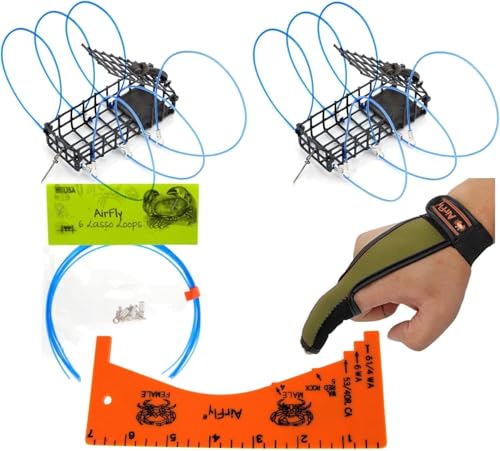
AirFly 6-Loop Castable Crab Trap 2-Pack
- Two traps per pack
- Lead-free vinyl-coated 16-gauge wire
- 5oz total weight each
- Folds to tackle-box size
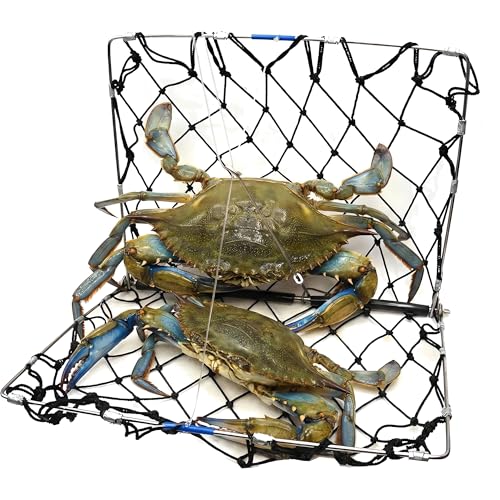
AirFly Crab Hawk Foldable Net
- 304 stainless steel frame
- Folds completely flat
- Built-in bait clip
- Works with rod or hand rope
All 12 Crab Rings Compared Side by Side
Diameter and mesh opening matter more than anything else here. A ring with a wide opening will leak undersized crabs, and a short net depth means anything with long legs is halfway out before the basket forms.
| Product | Highlights | Action |
|---|---|---|
| Palmyth Two-Ring Wire Grid Crab Kit |
|
Check Latest Price |
| AirFly Crab Hawk Foldable Net |
|
Check Latest Price |
| AirFly 6-Loop Castable Trap 2-Pack |
|
Check Latest Price |
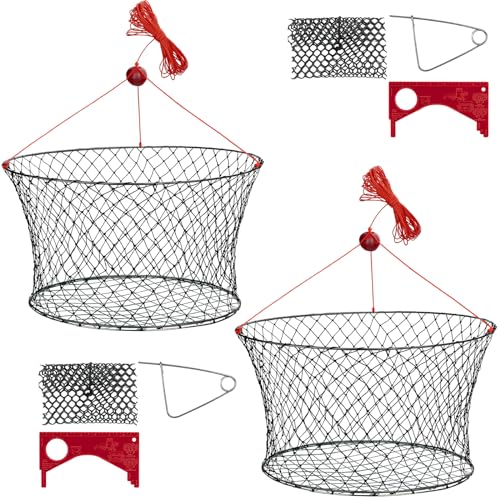 QualyQualy 24 x 20 x 12 Crab Ring 2-Pack QualyQualy 24 x 20 x 12 Crab Ring 2-Pack |
|
Check Latest Price |
 KUFA Rubber Wrapped Steel Ring Trap 30 Inch KUFA Rubber Wrapped Steel Ring Trap 30 Inch |
|
Check Latest Price |
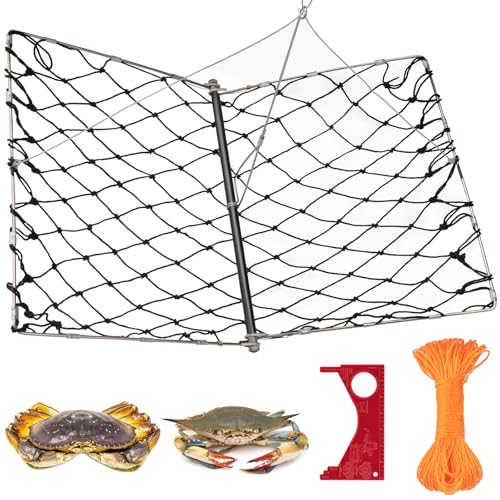 QualyQualy Foldable Castable Crab Trap QualyQualy Foldable Castable Crab Trap |
|
Check Latest Price |
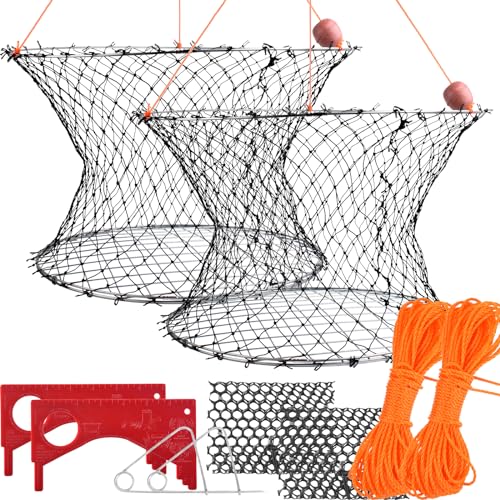 A1FISHER Double Ring Crab Trap 2-Pack A1FISHER Double Ring Crab Trap 2-Pack |
|
Check Latest Price |
 Kraken Supply Hoop Net Crab Trap 2-Pack Kraken Supply Hoop Net Crab Trap 2-Pack |
|
Check Latest Price |
 Drasry Crab Ring Two-Ring Kit Drasry Crab Ring Two-Ring Kit |
|
Check Latest Price |
 Sea Striker Two Ring Wire Crab Net Sea Striker Two Ring Wire Crab Net |
|
Check Latest Price |
 LUPUSH Stainless Steel Crab Ring Kit LUPUSH Stainless Steel Crab Ring Kit |
|
Check Latest Price |
 AQWXC Double Ring Crab Trap Kit AQWXC Double Ring Crab Trap Kit |
|
Check Latest Price |
1. Palmyth Two-Ring Wire Grid Crab Kit - The Most Reviewed Ring in the Group
Palmyth Wire Grid Bottom Crab Nets Two Ring Crab...
24 in upper ring with 20 in wire grid bottom,12 in deep
Hot galvanized wire frame
1.1 in blue polyethylene mesh
50 ft rope, float, harness and bait clip
What we like
- Wire grid bottom makes bait attachment and crab removal easy
- Hot galvanizing-coated wire resists corrosion in saltwater
- 1.1 in polyethylene mesh holds crabs securely
- Bright orange 50 ft rope and float stay visible in poor weather
- Harness and extra bait clip included in the kit
What could be better
- 12 in netting depth can let smaller crabs slip out
- Bulky 24 x 20 in frame is harder to pack than foldable nets
- 1.1 in mesh openings pass undersized crabs
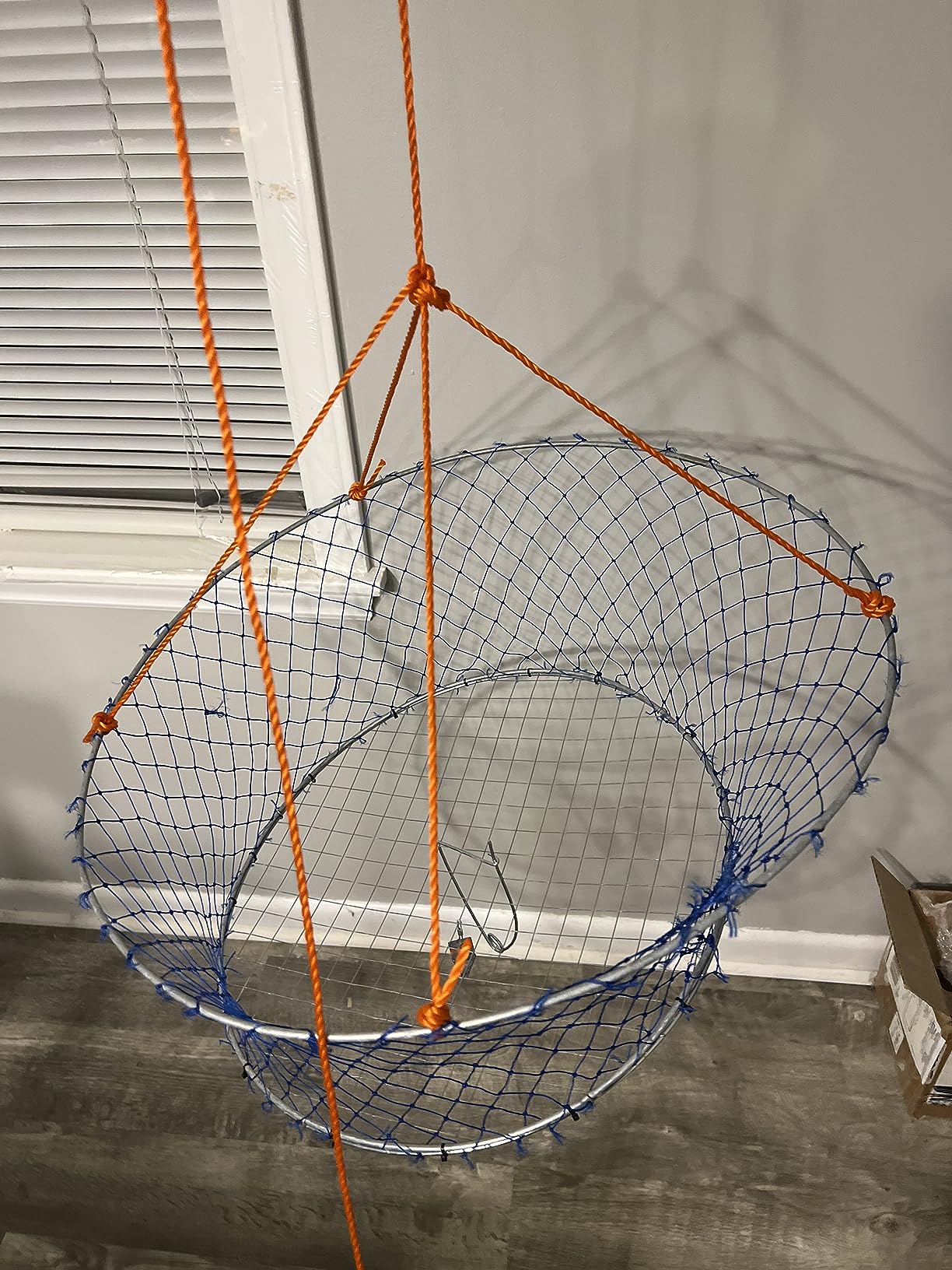
This is the ring I hand to friends who ask me to just pick something. The 24 inch upper hoop sits on a 20 inch wire grid bottom rather than a simple hoop, and that grid is the quiet hero of the design. Bait clips straight onto the grid, the grid holds bait in the dead center of the net, and when you pull the ring the grid makes it easy to scrape a crab off the bait instead of picking at tangled netting.
With 762 logged reviews and a 4.4 average, this is also the pick with the deepest feedback record in the group, and owners consistently point at the same two things: the hot galvanizing coating on the wire, and the 1.1 inch blue polyethylene netting. That coating is what keeps a ring intact through repeated salt water immersion rather than developing the surface rust that eats through untreated steel in a single season.
Wire Grid Bottom vs Plain Hoop Bottom
A wire grid bottom does three things at once. It gives the bait a flat surface to sit on rather than letting it drop through into mud, it stops a full crab from shimmying underneath the net, and it gives you somewhere to push a thumb when you are pulling a crab off the bait. On a conventional hoop net the bait is clipped to a line and the net can sag around it, which is one of the main reasons rings come up with bait but no crab.
What 12 Inches of Net Depth Really Buys You
Twelve inches is the shallowest common depth and it is a real trade-off. Bigger crabs are held fine, but a slender crab with long legs can start climbing the mesh wall during a slow lift and get back over the top ring. If you are working smaller legal-sized crabs, pay attention to this number more than the hoop diameter.
The frame is also bulky at 24 by 20 inches. It will not fold into a kayak hatch or a small tackle box, so plan on strapping it to a deck or tucking it under a stern seat. The bright orange 50 ft rope and float are genuinely useful in poor weather, where a dark ring on a grey bottom is a trap you will never find again.
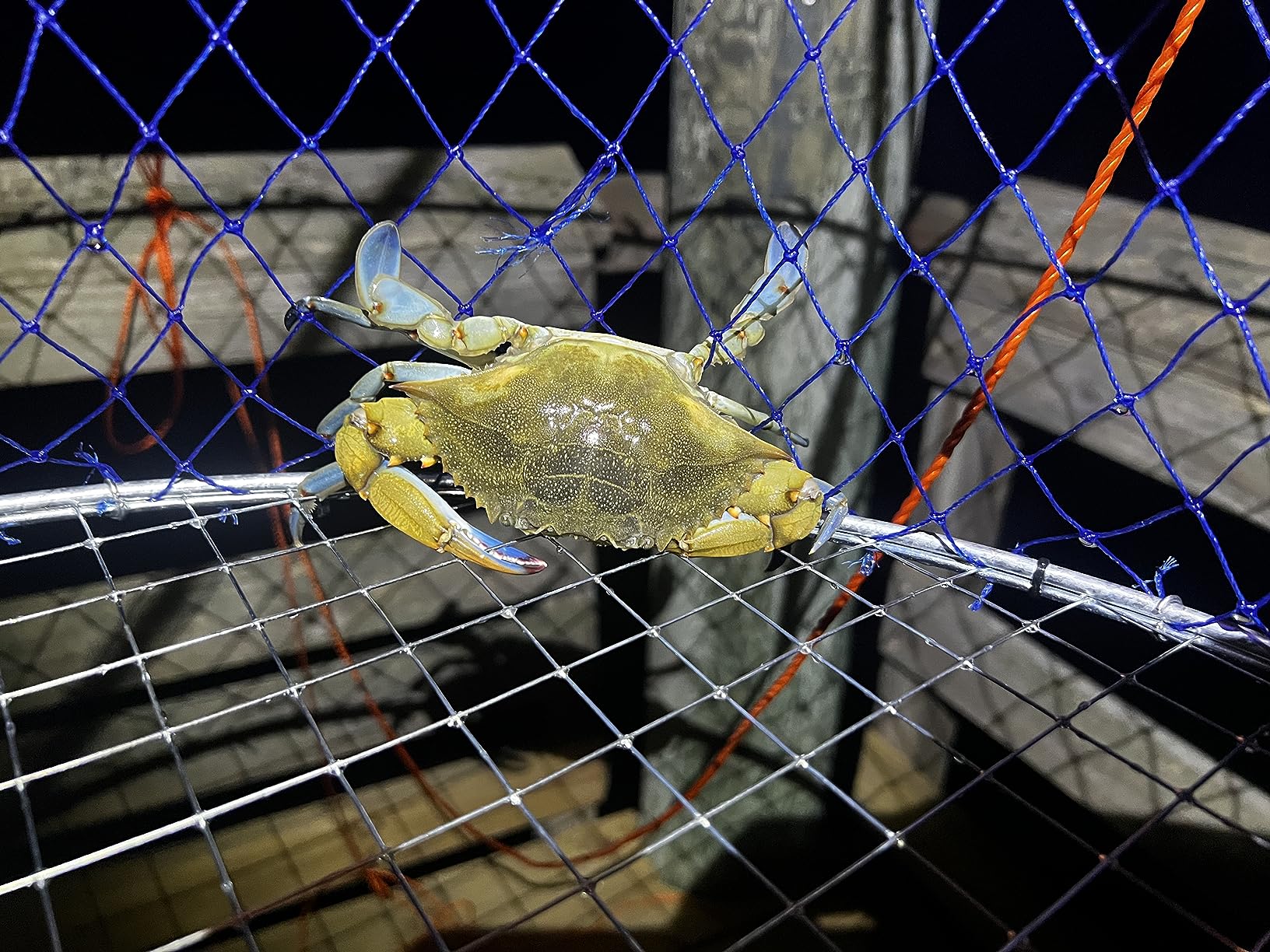
Two things would make this ring better. A deeper net would solve the escape problem that owners mention most, and a foldable frame would make it a far easier travel companion. Neither is a dealbreaker for pier and boat use, which is where this kit is most at home.
2. AirFly Crab Hawk Foldable Net - Most Versatile Who Want to Carry One
AirFly Foldable Castable Crab Trap - Crab Hawk...
304 stainless steel frame with marine-grade netting
Collapsible foldable design
Built-in bait clip
Weighs 0.22 kg
What we like
- Folds completely flat for a kayak hatch or tackle box
- 304 stainless steel resists rust in surf and salt water
- Works cast from a rod as well as from a hand rope
- Built-in bait clip keeps bait centered
- Light enough for younger crabbers to handle
What could be better
- Inconsistent closure line tension on some traps so the net does not fully close
- Bait clip does not always hold in choppy water
- Mixed results on blue crab compared with Dungeness and rock crab
This is the ring I recommend to anyone who says they do not own a boat and never plan to. The Crab Hawk folds flat enough to live in a backpack, which sounds like a gimmick until you have tried to fit a rigid 24 inch hoop into a kayak. The 304 stainless steel frame and marine-grade netting also mean it is the one I am least worried about leaving on a rocky shoreline for a season.
The design is a gravity-action castable net. You can throw it with a surf rod or a hand rope and it works on contact, which is a much easier learning curve than threading line through a harness or watching a ring land cockeyed. The rectangular Crabjaw geometry gives you a wider landing zone than a traditional round net, so it drops flatter more often.
Stainless Steel Versus Galvanized Wire in Surf
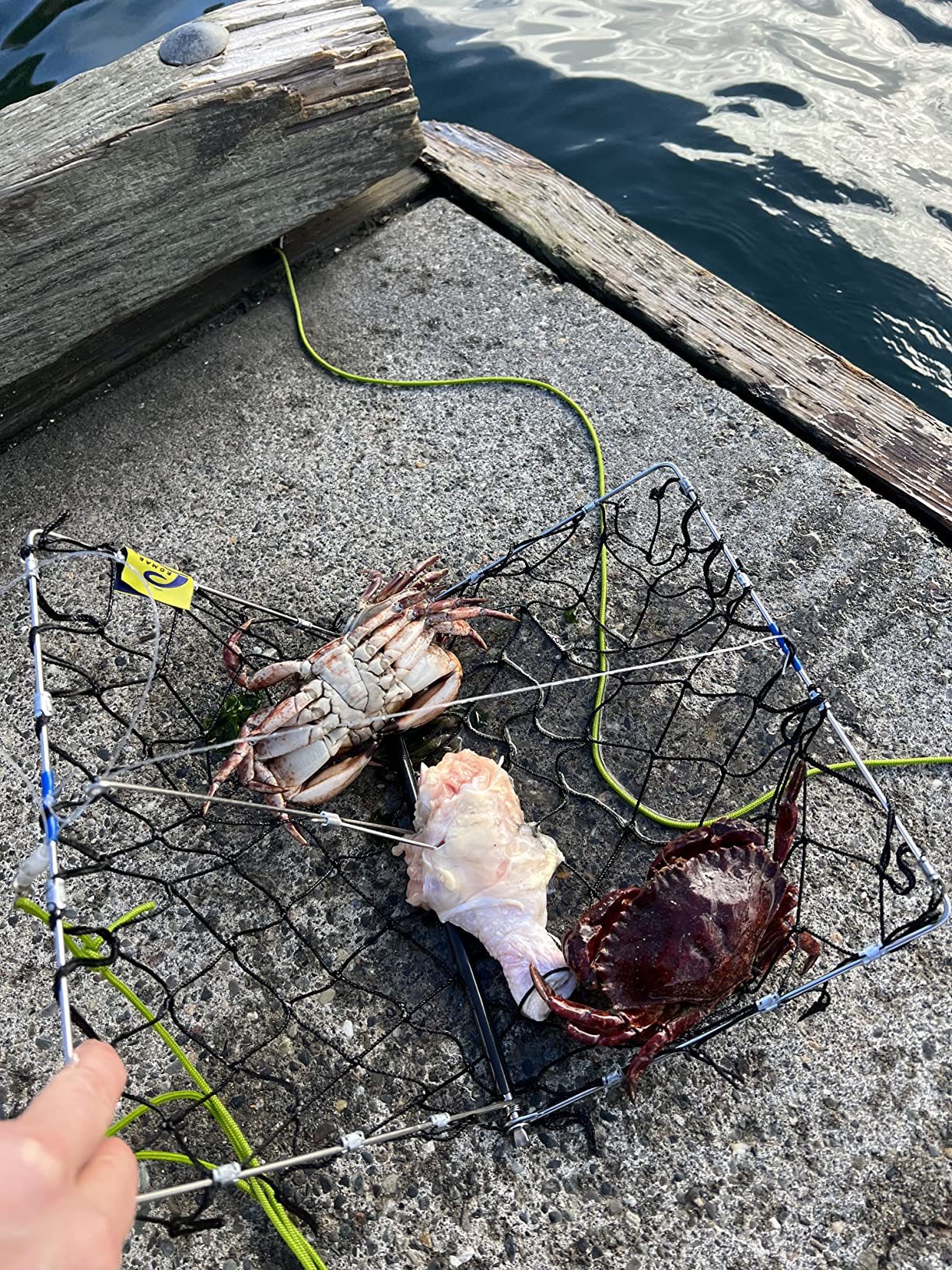
Salt spray and sand are a harsher combination than open water. Galvanizing coating protects steel, but it is still a coating that can be scratched through, and once a scratch goes down to bare metal the rust starts there. Solid 304 stainless does not have that failure mode at all, which is why this frame ages better than coated wire in a wet, abrasive environment.
The Closure Line Is the Weak Point
The most consistent complaint across reviews is not performance but build consistency. Owners report a spread in how tight the closing line comes out of the box, and a trap that does not cinch all the way closed is a trap that leaks crabs back into the water. Check the closure the first time you use it, before you are standing on a dock with a full net of crabs and a loose line.
This is also where species matters. Feedback is stronger for Dungeness and rock crab than for blue crab, and blue crab enthusiasts should look at a ring with a deeper net. For a first crabbing trip with a rod and a bucket, though, the foldability and the built-in bait clip are worth the trade.
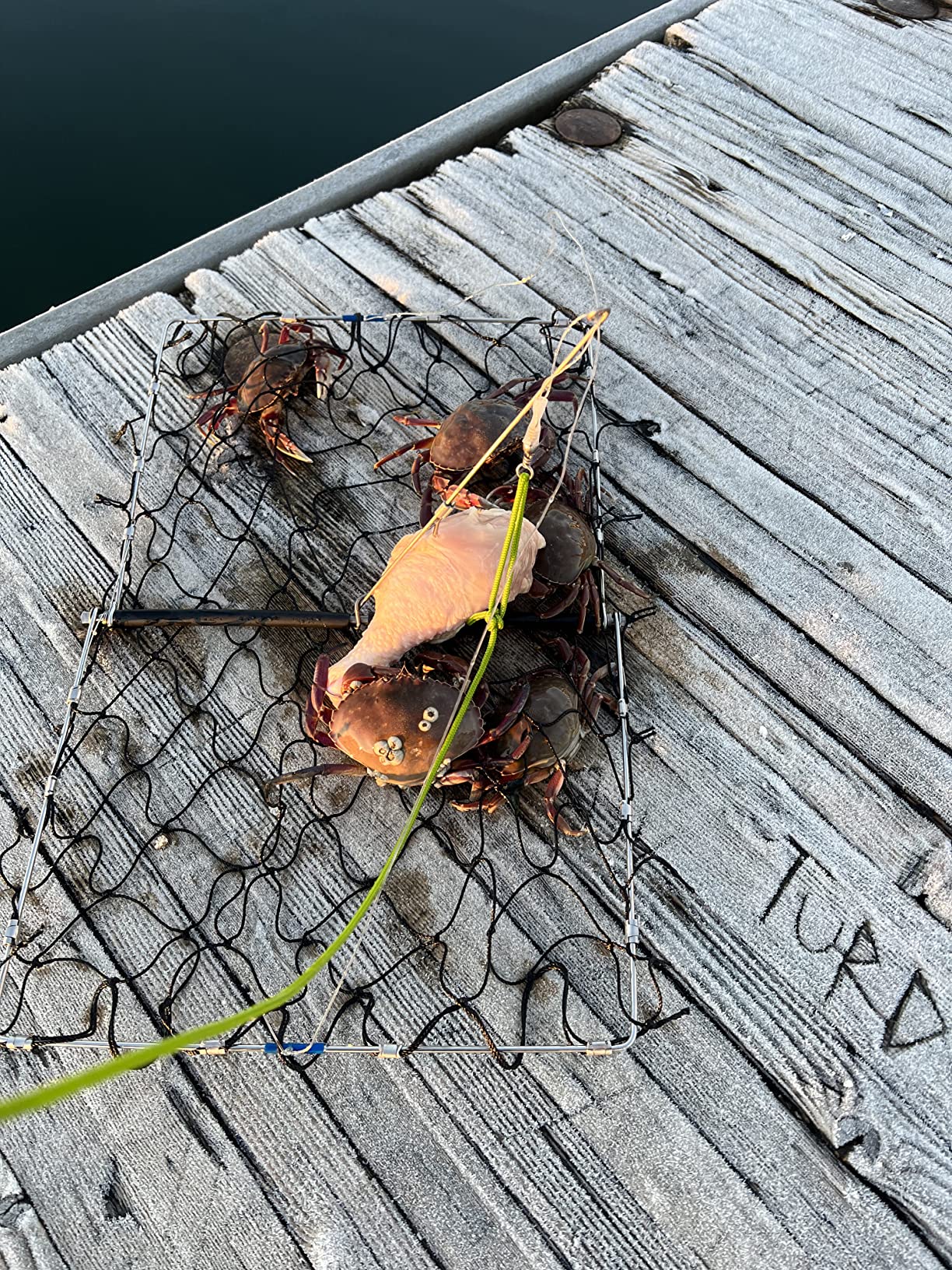
3. AirFly 6-Loop Castable Crab Trap Two-Pack - Best Value for Running Multiple Rings
AirFly Castable Crab Trap for Pier, Jetty & Surf...
Two traps per pack with six self-opening loops
Lead-free vinyl-coated 16-gauge wire
2oz lead-free weight, 5oz each
Folds to about 4 by 2 by 1 inches
What we like
- Self-opening six-loop design needs no setup after the cast
- Lead-free build suits family use
- Extremely light at 5oz so it casts without arm fatigue
- Packs down to tackle-box size
- Crab gauge and casting glove included
What could be better
- Loops can be too stiff to snare quickly and let crabs walk
- Reportedly ineffective for blue crab
- Some users added extra weight for tide pull
Almost everyone who runs more than one ring runs them at the same time rather than one after another, and this two-pack is built for exactly that. Six rings deployed at once covers ground far faster than working a single string, because you are giving each bait its own patch of bottom instead of fishing the same patch repeatedly.
The patented six-loop design self-opens on contact with water and stays upright on the seafloor, which removes the fiddly step of setting a ring by hand. At 5oz per trap, you can lob these with a surf rod without noticing the weight in your shoulder, and the whole thing folds to roughly 4 by 2 by 1 inches between trips.
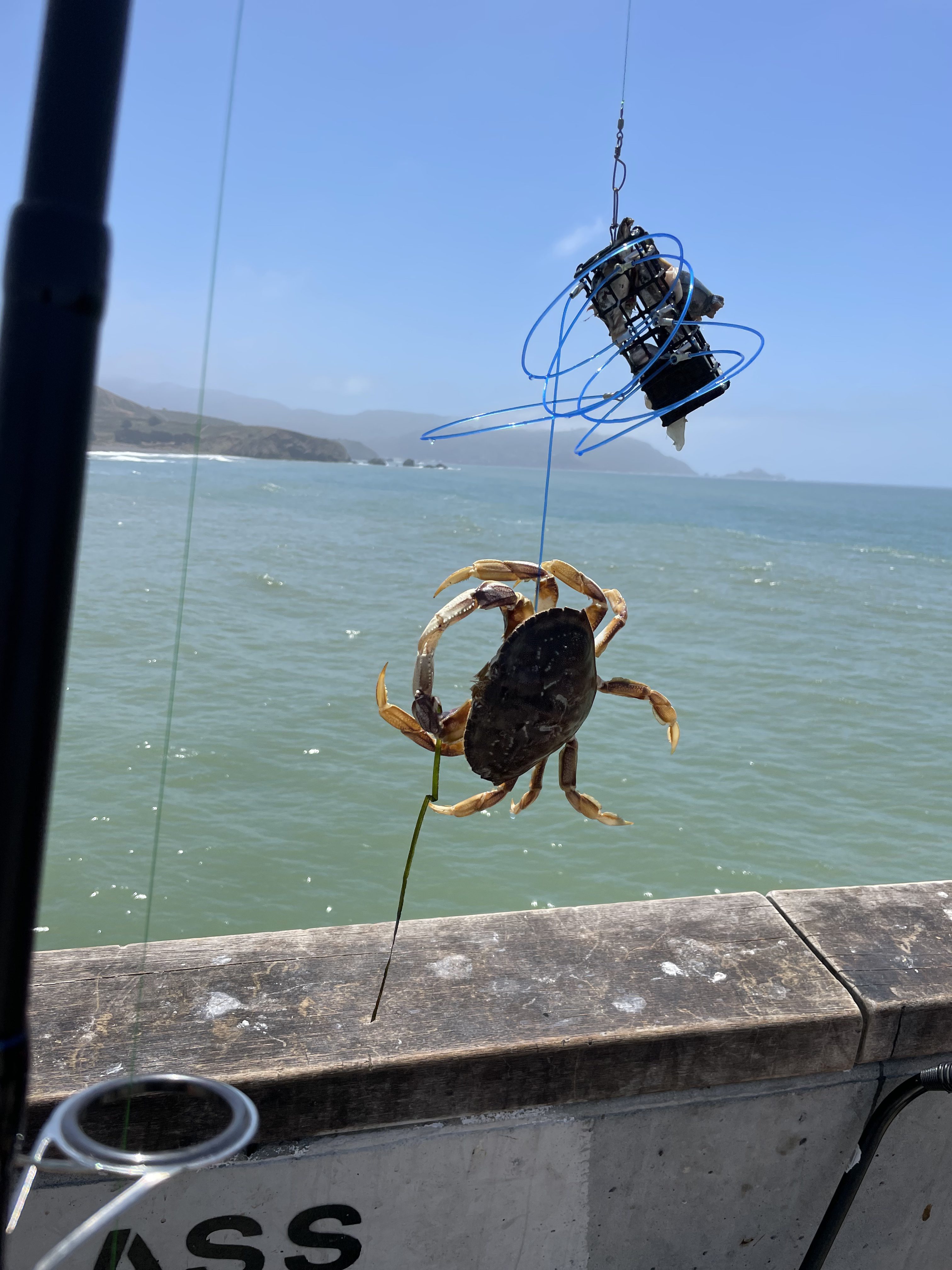
Why Loop Stiffness Matters on a Snare
A six-loop design works by falling over and forming a cage rather than by a spring snapping shut. The tradeoff is that loops have to be flexible enough to collapse around a crab quickly. Owners report the loops on some units being too stiff, so instead of closing around a crab they push it aside and it walks off before the loops settle. If you snared crabs successfully, you are not bothered by this. If you are new to it, check one loop carefully before you rely on the trap.
Lead-Free Construction and Family Use
The vinyl-coated 16-gauge steel with a 2oz lead-free weight is a meaningful detail for anyone crabbing with kids or sharing a boat with them. No lead means fewer concerns about handling baited traps, and coated wire has the double benefit of resisting corrosion and not leaving bare metal exposed when it is knocked against a dock.
The one real gap is species. Feedback on this trap is strong for Dungeness and larger crabs and weak for blue crab. Bay crabbers should treat this as a secondary option and pick one of the deeper-net rings instead.
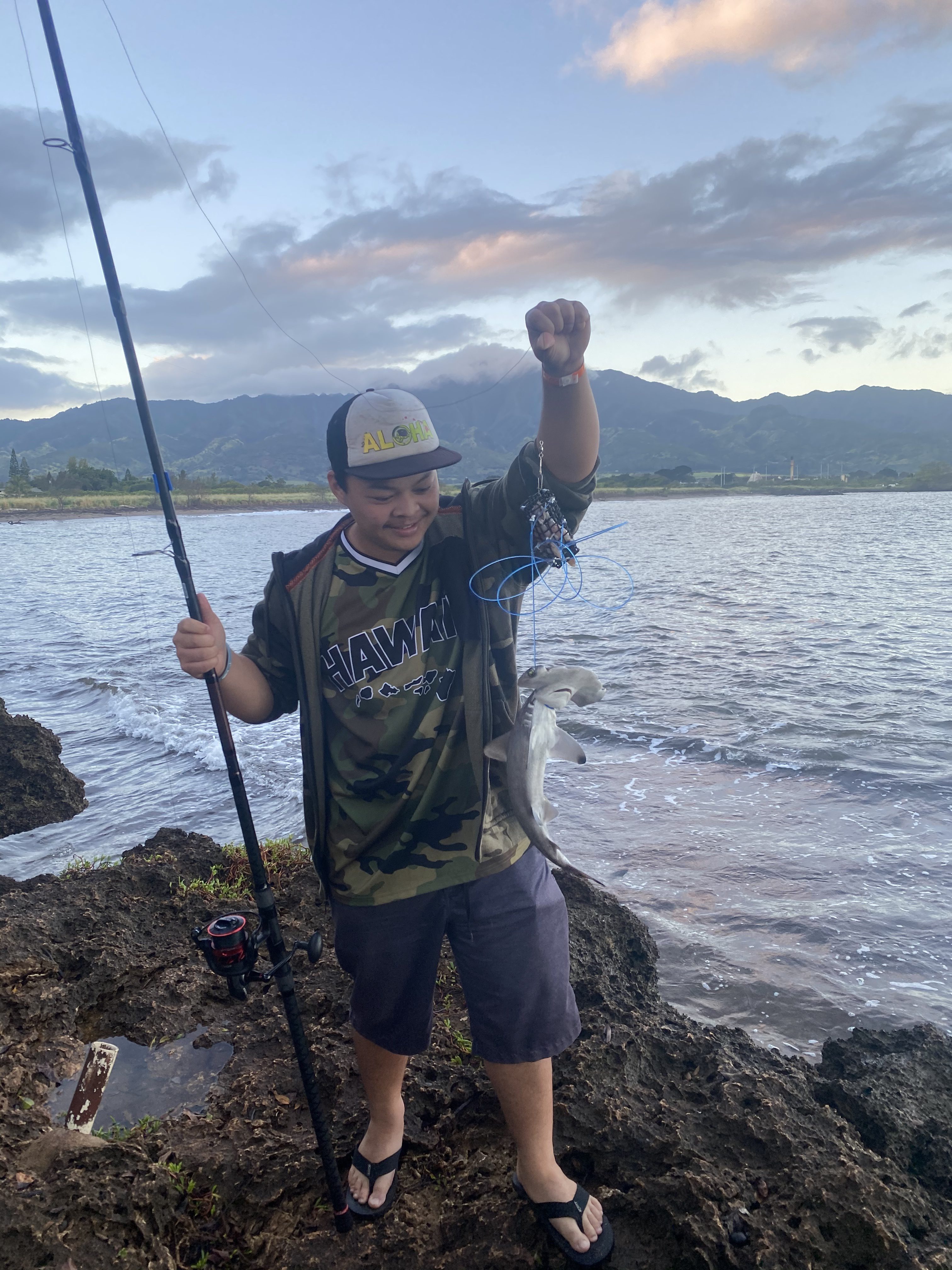
The included crab gauge is a nice touch that most cheaper kits leave out, and the replacement loops mean a broken loop is not the end of the trap. It is the best starting package here if your plan is to run a spread of rings rather than a single heavy one.
4. QualyQualy 24 x 20 x 12 Crab Ring Two-Pack - Best for Kayak Crabbers
QualyQualy 2Pcs Collapsible Crab Net Kit with Crab...
Two 24 x 20 x 12 in collapsible ring traps
0.2 in hot galvanizing-coated frame
24-strand braided rope netting
Bait bags, clips and crab gauges included
What we like
- Two full traps with two gauges and two bait bags in one pack
- Hot galvanized coating resists corrosion in salt water
- 24-strand braided rope netting is tear resistant
- Orange harness and float make the trap easy to spot
What could be better
- Heavier bulk than a single foldable castable trap
- Some buyers want sturdier clip and rope hardware
Two complete traps in one pack is the format kayak crabbers actually want, because the constraint in a kayak is gear volume, not gear count. Each trap folds down, but two of them in a kayak still eat a lot of space, so measure your hatch before committing. In a sit-on-top with a gear deck behind the seat, this is a comfortable load.
What stands out is the accessory completeness. Each pack includes two bait bags, two bait clips and two crab gauges, which is everything you need to run two strings without a second shopping trip. The 24-strand braided rope netting is noticeably tougher than plain polyethylene netting, and owners single that out as the reason the mesh has held up on rocks and shells.
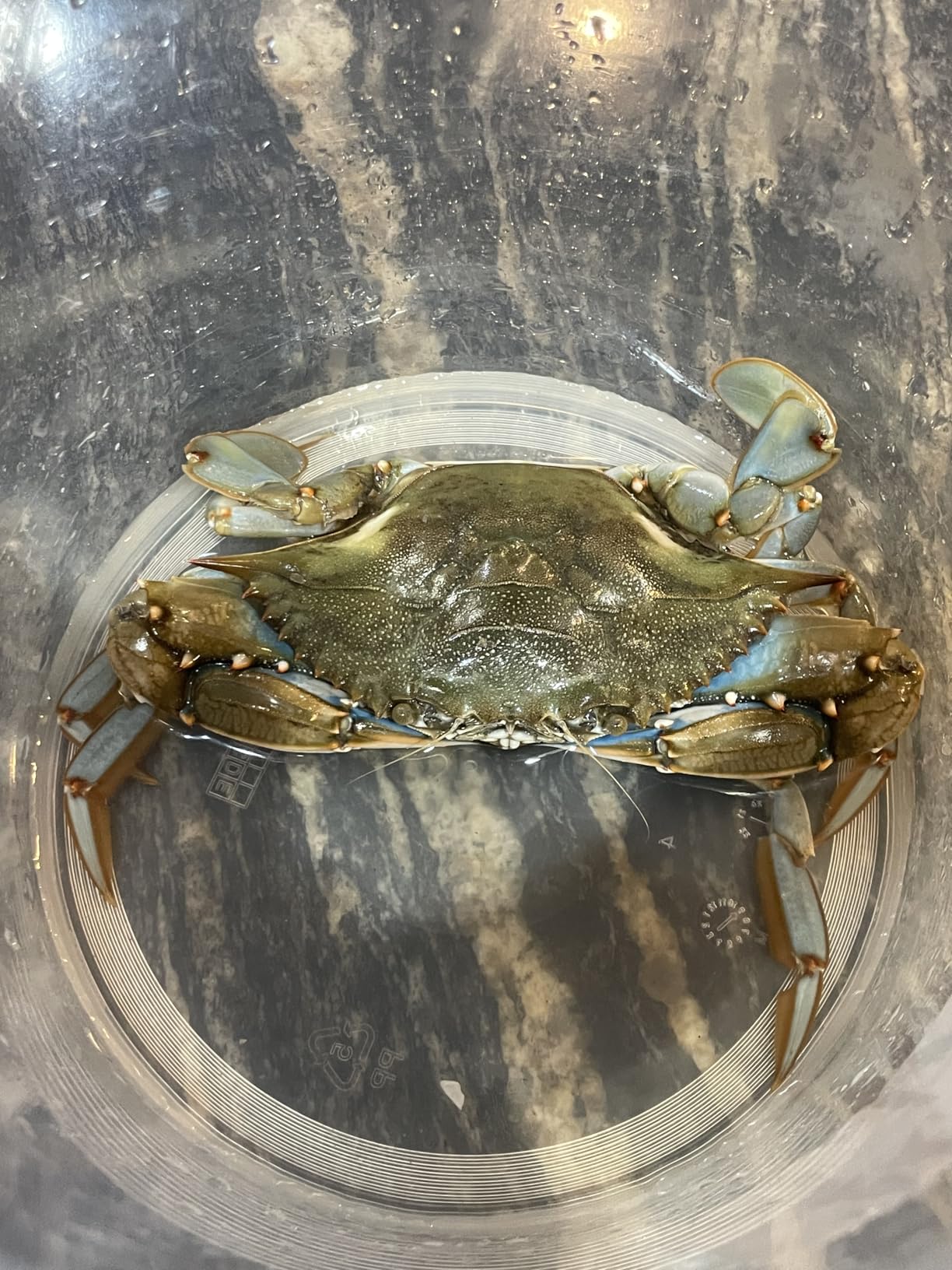
0.2 Inch Hot Galvanized Wire
Wire diameter is the number that most determines whether a ring anchors or drifts, and 0.2 inch galvanized wire sits comfortably in the durable range. A heavier bottom ring is what stops a ring from skidding across an eelgrass flat or tumbling in current, and reviewers do not report that problem with these traps the way they do with lighter rings.
Braided Rope Netting Versus Plain Mesh
Braided construction gives the net more abrasion resistance, which matters if you are working a rocky shoreline or a shell bottom. It also resists the fraying that turns a polyethylene net into a tangle after a few trips. The trade-off is bulk and stiffness, and that is what makes this pack heavier than the small foldable traps in this list.
The same net also works for lobster, crayfish and shrimp, which gives it a little extra range beyond crabbing. Buyers who want a second trap to alternate while the first one dries get a spare in the box.

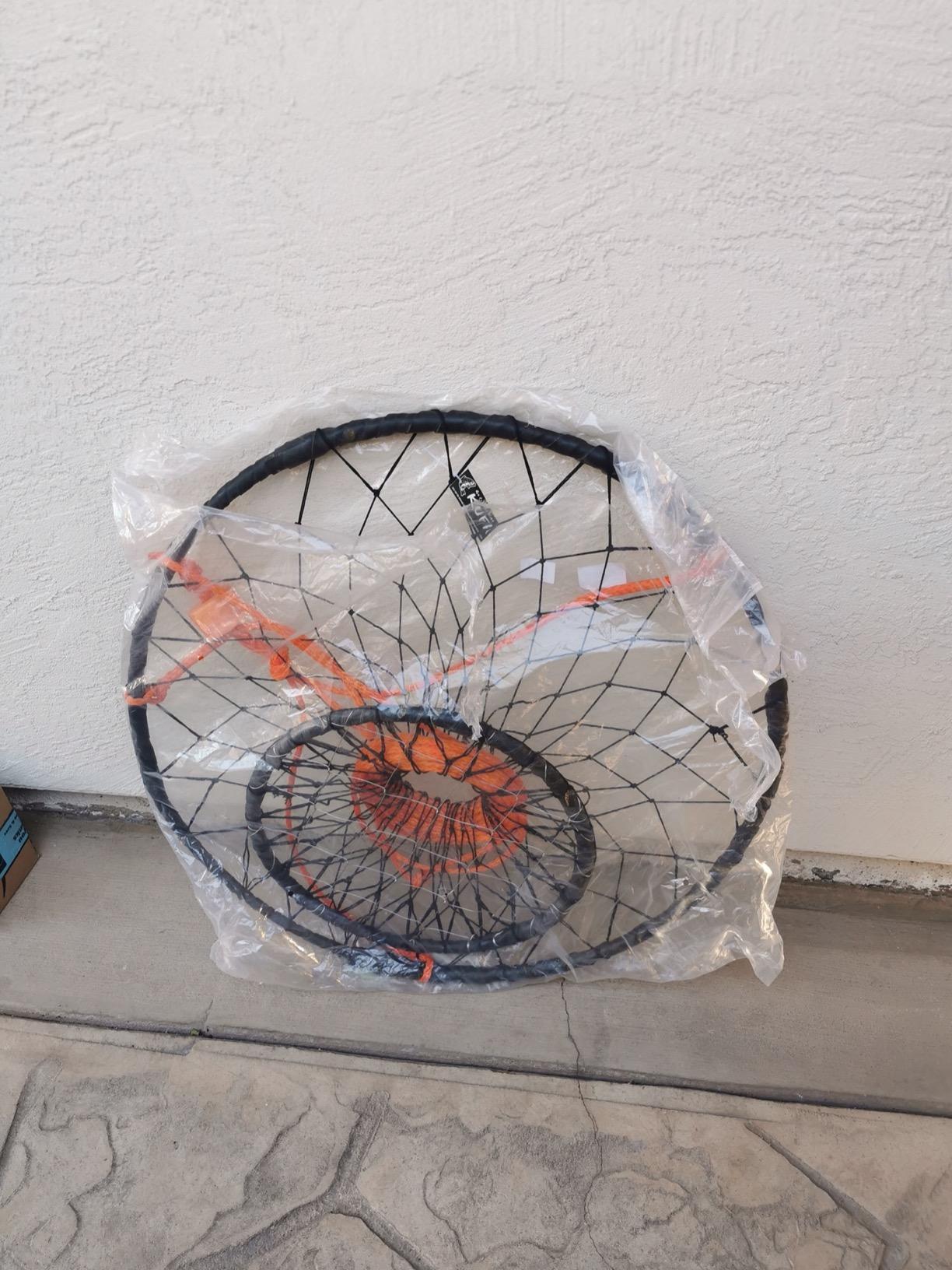
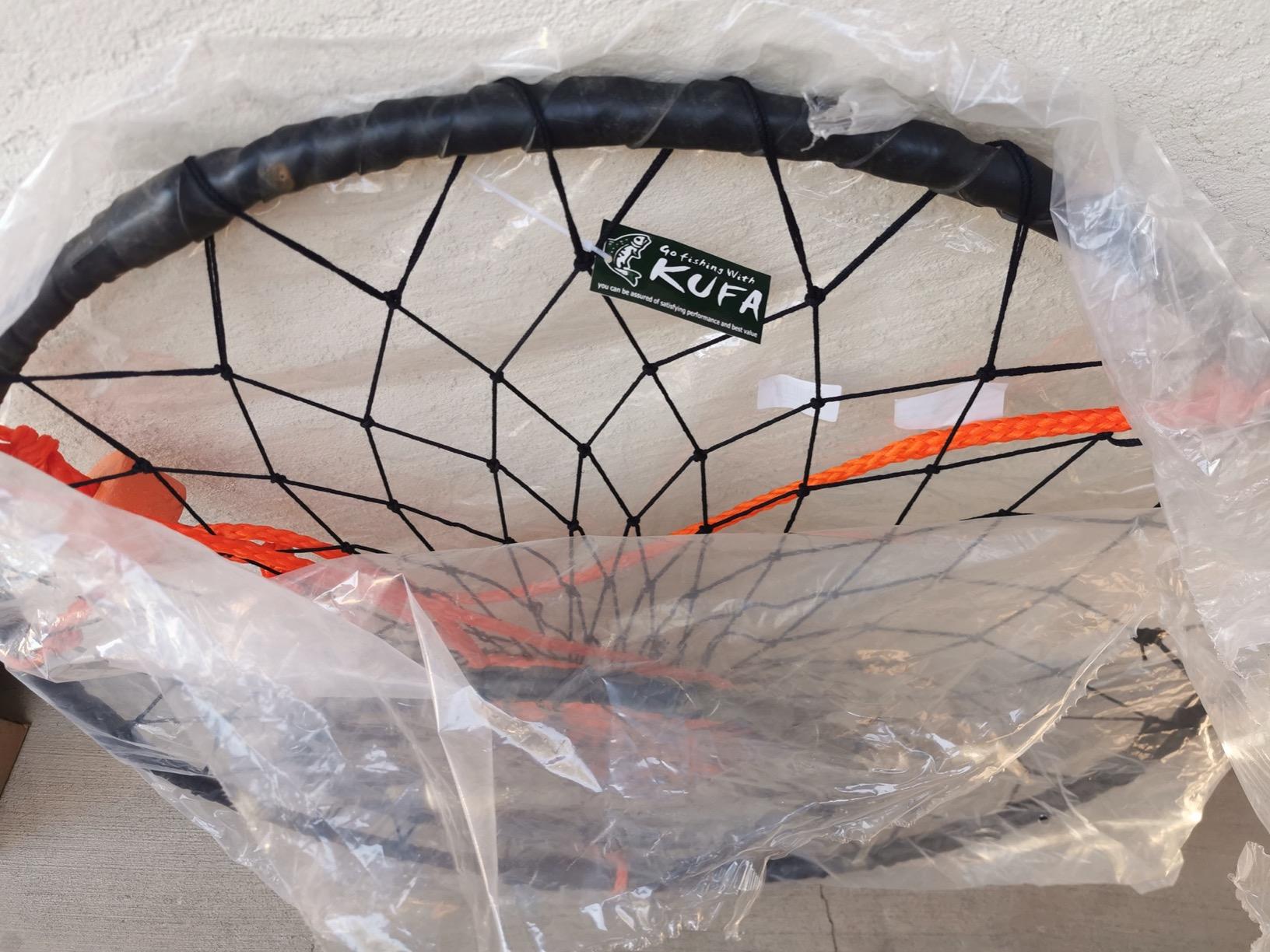
5. KUFA Rubber Wrapped Steel Ring Trap 30 Inch - Best for Big Crabs and Heavy Use
KUFA Rubber Wrapped Steel Ring Crab Trap...
30 in diameter with 18 in deep polyethylene netting
Rubber wrapped steel ring construction
16 in bottom ring for large crabs
50 ft orange rope and 7 by 7 in bait cage
What we like
- Rubber wrapped steel is sturdy and highly corrosion resistant
- 18 in depth and a 16 in bottom ring hold large crabs
- Thick orange rope spreads evenly on cast and retrieve
- Reportedly out-catches traditional crab pots
- Comes preassembled with rope
What could be better
- No bait bag included so a separate cage is often needed
- Mesh openings can be large enough for small crabs to slip
- Too heavy to cast comfortably and better lowered by hand
This is the ring for a person who fishes hard, in moving water, and does not want to think about whether the frame will hold. At 30 inches across with 18 inches of netting, it is a big basket, and the rubber wrapped steel frame is among the most corrosion-resistant constructions in this group. Members of r/Fishing and bluecrab.info repeatedly single out heavier-gauge frames like this one for exactly that reason, and for anchoring to the bottom rather than skidding with the tide.
The 16 inch bottom ring is sized to accommodate large crabs, and the 18 inch depth means a heavy catch is contained rather than climbing out. That combination is why owners report it out-catching traditional pots in their own backyards, which is not a claim most ring nets can make.
Rubber Wrapped Steel and Salt Water Life
Galvanizing is a coating. Rubber wrapping is a layer of material around the steel, so when it is scuffed by a shell or a dock edge the steel underneath is still covered. Over a multi-season lifespan in salt water, that is the difference between a ring that needs replacing annually and one that keeps working, and it is the main reason this is the heaviest-duty option here.
Sizing 30 Inches Against Crab Size
Large hoops are not automatically better. A 30 inch ring with a large bottom opening works well for big Dungeness and similar crabs, but a wide bottom ring and generous mesh openings mean smaller crabs can work their way out. If you are after varied sizes or undersized escape is a problem, note that the mesh on this ring is more open than the tightest options in this list.
Two practical notes. First, no bait bag is included, so budget for the included plastic bait cage or bring your own bag. Second, at this size it is better lowered off a dock or a gunwale than cast, because a 30 inch frame is a lot of wind resistance to throw with one arm. The thick orange rope is easy to grip wet, which matters when you are hauling a full basket.
6. QualyQualy Foldable Castable Crab Trap - Best Packable Ring for Small Boats
QualyQualy Castable Crab Trap Kit, Foldable...
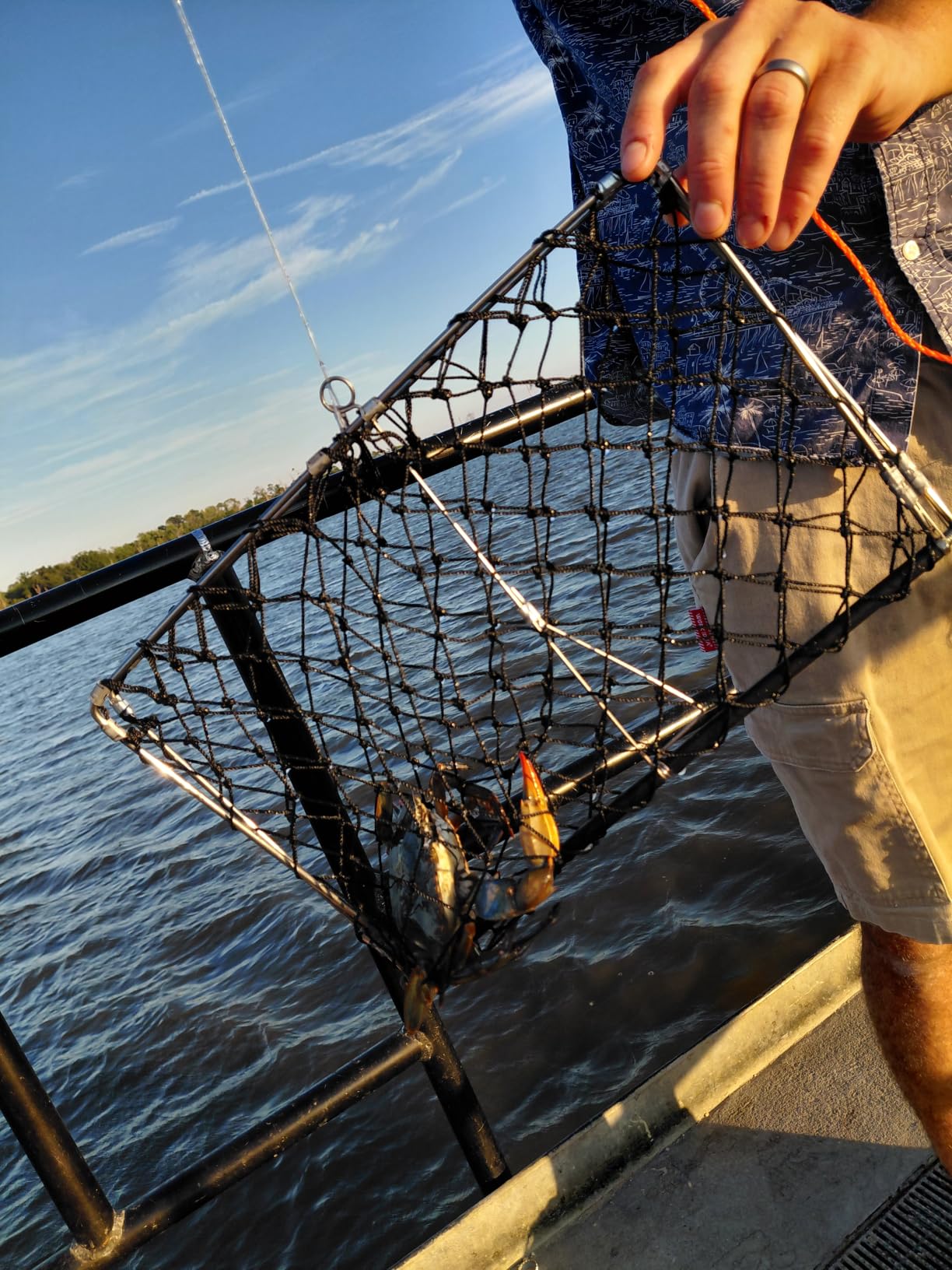
17.7 x 11 in foldable stainless frame
1.37 in poly mesh
0.53 lb trap weight
33 ft PE rope and crab gauge included
What we like
- Best sellers rank in the group at number 6 in Fishing Bait Traps
- Folds flat and casts smoothly from a kayak or pier
- Auto opening and closing spring needs no assembly
- Light enough for kayak and paddle board use
- Included crab gauge matches Washington requirements
What could be better
- Small chamber limits number and size of crabs caught
- Retention springs reported too loose and prone to breaking
- Crabs can tangle in the mesh and take time to remove
This is the ring I suggest to anyone whose entire gear system has to fit in a daypack, which is a very common situation for shore and pier crabbers who walk in from a parking lot. At 0.53 lb and 17.7 by 11 inches, it is the smallest chamber here, and it is the easiest of the foldable designs to carry by hand.
The auto opening and closing spring removes assembly entirely, and the included 33 ft PE rope and crab gauge make it a genuinely complete kit. The gauge matching Washington requirements is the sort of detail that saves you a trip to the tackle shop, and the frame has been improved over earlier versions to use stainless steel rather than plain coated wire.
Small Chamber, Small Catch
A 17.7 by 11 inch trap with 1.37 inch mesh openings holds a limited number of crabs, and the mesh is the widest in this group. That is a sensible trade for anyone who wants to crab rather than collect, and it is a poor choice if you are trying to bring up a limit of larger crabs. The mesh is also the kind that lets a crab tangle its legs, so expect to spend a moment freeing it.
Springs Are the Component to Inspect
The most common mechanical complaint is retention springs reported as too loose, because the whole design depends on the spring snapping the frame shut, and this is worth testing on dry land before you soak it. A trap that fails to close quietly is the version that costs you a trip without telling you.
What it does well is stay out of the way. It is light enough not to upset the trim of a paddle board, and a cast rod handle works fine.
7. A1FISHER Double Ring Crab Trap Two-Pack - Best for Working Two Baited Strings
A1FISHER 2 Packs Double Ring Crab Trap Steel Ring...
Two 24 x 20 x 15 in galvanized double ring traps
Hot galvanizing-coated alloy steel
Polyethylene netting
Includes bait bags, clips, gauges and 50 ft ropes
What we like
- Tall 15 in netting keeps crabs from swimming out
- Lightweight and easy to pack so it suits kayaks
- Two-pack gives a spare trap to alternate
- Hot galvanized coating resists rust
- Full accessory set included with both traps
What could be better
- Rope is thin and rough and cuts into wet palms
- Top ring may not drop parallel with the bottom ring if thrown at an angle
- Rope could be longer and stronger
The 15 inch netting depth is among the deepest in this group, and that is the stat that matters most here. A deeper net means a slower-forming basket still has walls tall enough to keep a crab from simply stepping out over the rim, which is the difference between a reliable trip and an empty string.
Everything you need is in the box for two traps: two bait bags, two bait clips, two crab gauges and two 50 ft ropes with floats. The hot galvanizing-coated alloy steel frame is a proven saltwater construction, and the tall light net still packs down well enough for a kayak.
How to Set a Ring So It Lands Flat
The complaint about the top ring not dropping parallel to the bottom ring when thrown at an angle is a real technique issue rather than purely a defect. A ring lands flat when it is dropped rather than thrown, with the rope fed out to control the descent. Practise the drop before you are loaded with bait, and you will rarely see the problem at all.
The Rope Is the Weakest Part of the Kit
The supplied line is thin enough to bite into a wet palm, and it is the most consistent complaint across reviews. Hauling a 15 inch net with crabs in it puts real tension on that rope, so either wear gloves while you work or plan to swap in a heavier line with a barrel swivel at the top. The 50 ft length is fine for a pier and short for a beach.
Two traps let you work one and let one soak, which keeps bait fresh and cuts your idle time. At 2 inch mesh openings, though, this is a ring for larger crabs rather than for holding small ones.
8. Kraken Supply Hoop Net Crab Trap Two-Pack - Best for Southern California Pier Crabbing
2 Pack Crab Trap Hoop Net Crab Pot 2 Ring Trap for...
Two 24 x 20 x 14 in hoop nets
Weighted bottom ring for bottom-first landing
CA, OR and WA compliant sizing
Designed in San Diego, California
What we like
- Two traps per pack with float line
- bait bag
- clip and gauge
- Bottom ring is heavy enough that no added weight is needed
- Generous line length and easy storage
- Well-made mesh that catches a good number of crabs
What could be better
- Rope has been reported snapping while hauling
- Float is described as very thin
- Ring can land at an angle instead of bottom first
This is the most regionally specific pick here. It was designed in San Diego with CA, OR and WA compliant sizing in mind, so if you crab those waters and want a trap built around the local rules, that is a real reason to pick it. The 24 by 20 by 14 inch hoop nets are a solid general-purpose size for Dungeness, rock and blue crab.
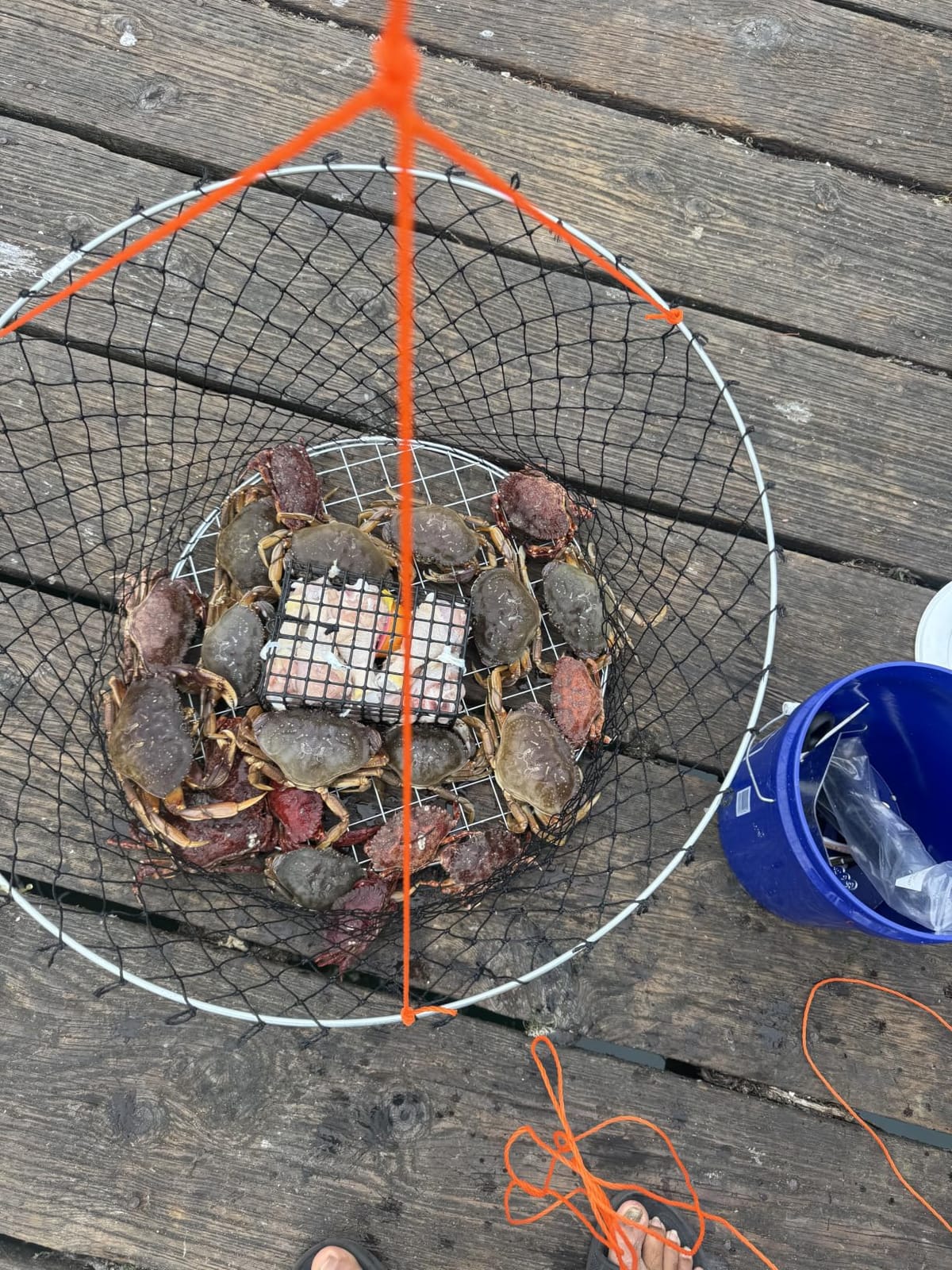
The feature I care about most is the weighted bottom ring. It is heavy enough that you do not need to add your own weight to make the ring settle bottom-first, which removes the step where people tie on lead or cement and never remove it. Owners confirm it does not need extra ballast, and that also cuts the tangle risk of a rig with extra hardware hanging off it.
Bottom-Weighting Solves a Classic Ring Problem
Light rings are the reason so many people give up. A ring that lands on its edge or drifts a few feet downcurrent is a ring that never sits flat where you baited it, so crabs walk past it. A pre-weighted bottom ring fixes the landing without a ballast line, and it stays stable once it is down there in a current.
Check the Float and Rope Before You Rely on Them
The two recurring complaints are durability of the supplied hardware. Owners report the rope snapping during a haul and describe the float as very thin, and a failed float in a tide means the ring is somewhere below you with a full catch in it. Inspect both before you set up, and carry a spare float in your bag.
Angled landings can still happen if you throw rather than drop, but with a pre-weighted bottom ring it takes a bad cast to cause one. The two-pack format suits anyone who wants to cover more bottom per trip.
9. Drasry Crab Ring Two-Ring Kit - Best for Holding Smaller Crabs
Drasry Crab Ring Trap Two Ring Crab Kit with...
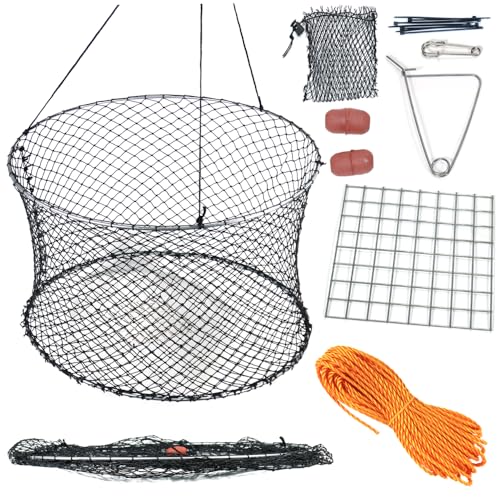
24 x 24 x 13.78 in two-ring net
0.79 in mesh, the tightest in this group
0.24 in stainless steel brackets
Stainless wire mesh reinforced bottom
What we like
- 0.79 in mesh is the tightest here and better for smaller crabs
- Low fold height means crabs reach the trap faster
- Stainless reinforced bottom holds bait central and resists crab damage
- Equal-size top and bottom rings sink faster and stay stable
What could be better
- Only one crab ring in the pack
- No warranty offered
Mesh opening is the number that separates this ring from everything else here. At 0.79 inch, it is the tightest in the group, and if you have ever watched a small crab squeeze through a one inch opening and swim away, that difference is the whole argument. The 72 percent five-star share reflects owners who noticed the same thing.
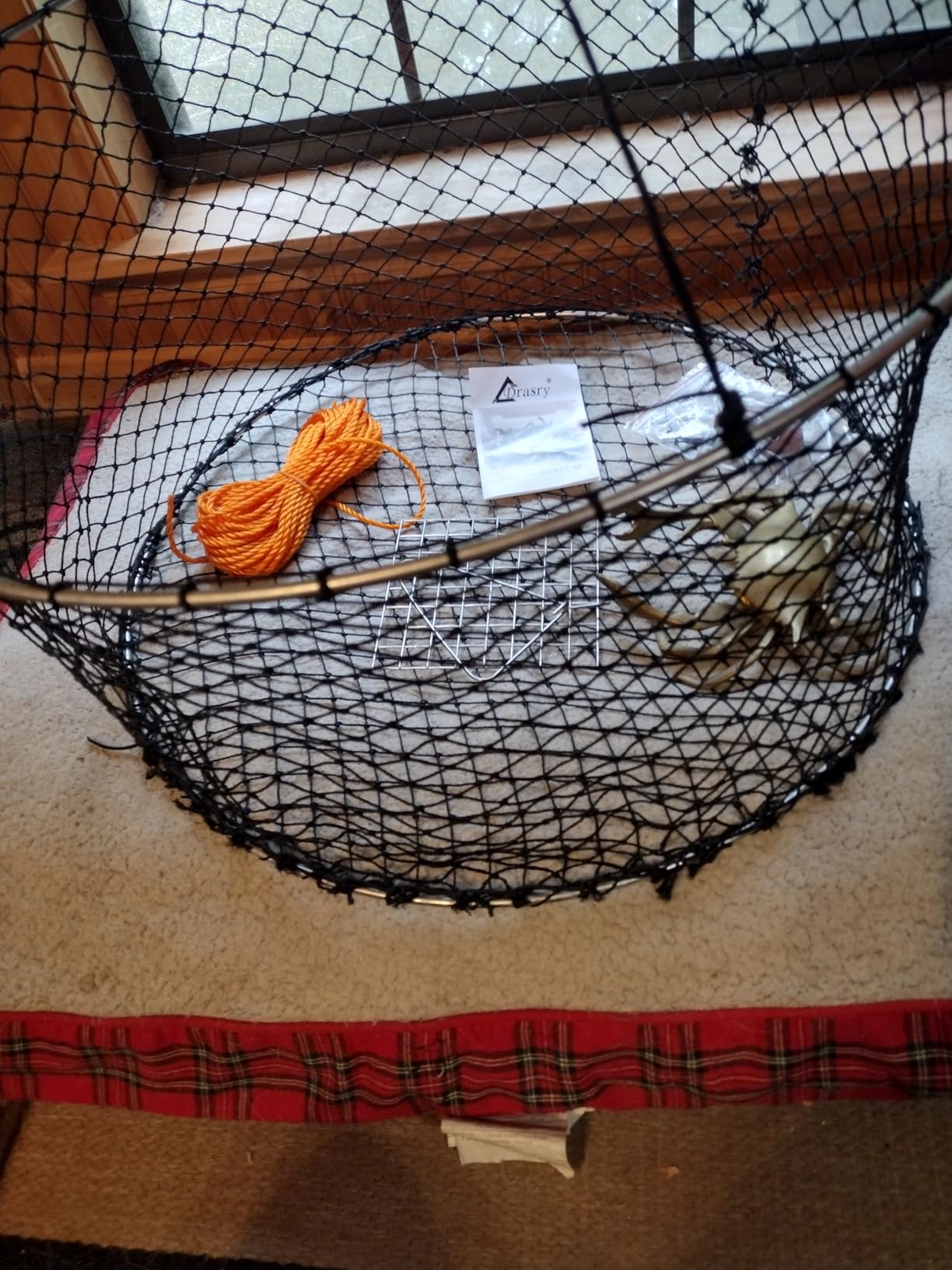
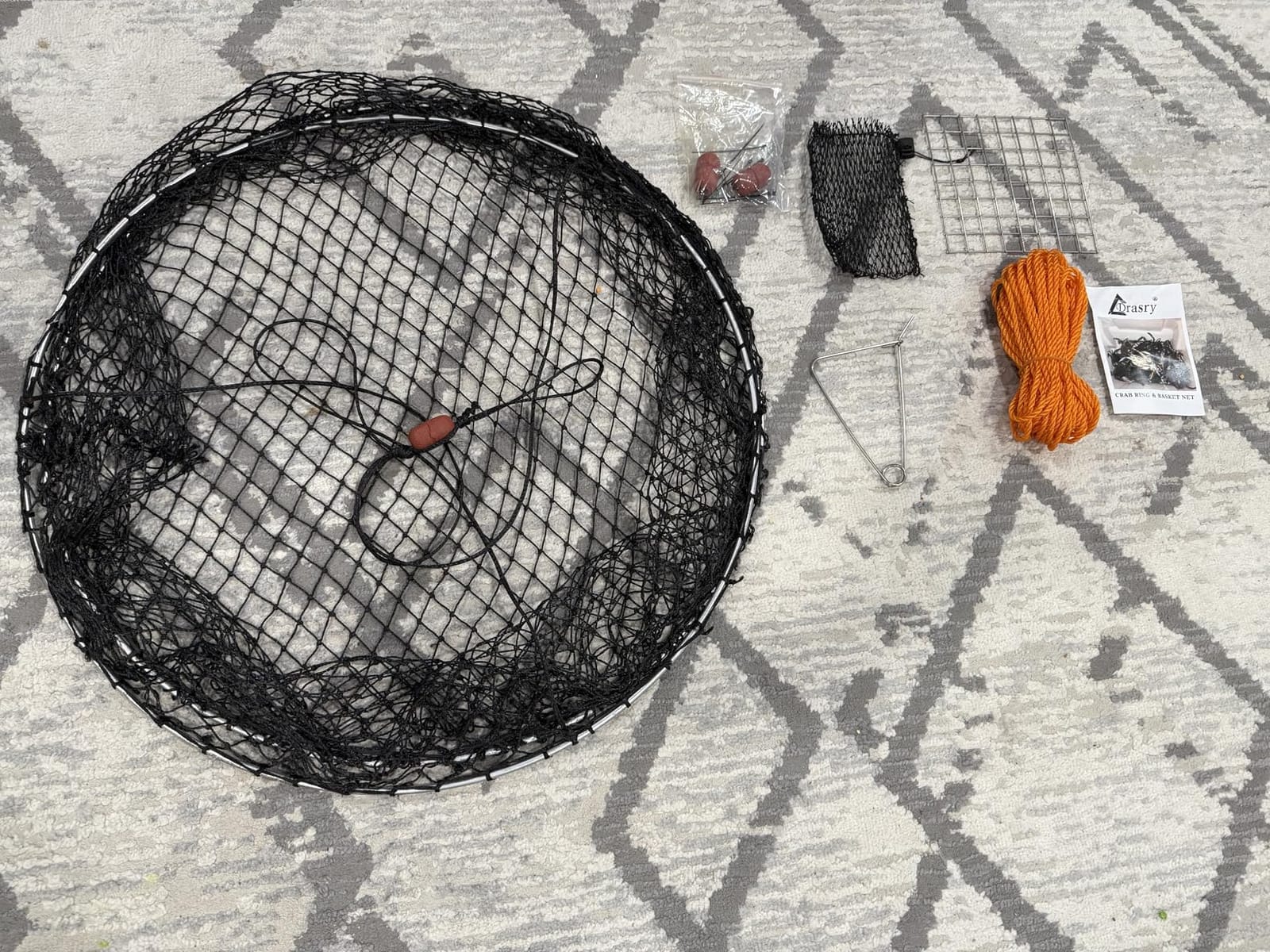
The design also solves the low-profile problem cleverly. Softer polyethylene netting folds to a lower height, which means the bait is closer to the bottom and a crab reaches the trap sooner. The 6.3 by 6.3 inch stainless steel wire mesh reinforcement on the bottom holds bait in the center and takes the punishment from claws.
Why 0.24 Inch Stainless Brackets and Equal Rings
Using the same diameter for the top and bottom rings means both halves displace the same amount of water, so the ring does not want to roll. Combined with 0.24 inch stainless brackets, that gives a trap that sinks fast and settles flat, which is the first requirement for a snaring device that relies on a crab stepping onto it.
What the Kit Includes and What It Does Not
You get two floats, a bait pack, a small carabiner, a bait carabiner and 15 m of hand rope, which is a solid hand-line setup. What you do not get is a second ring, despite the two-ring design describing the construction rather than the count. Plan on running it as a single line, or buy a second kit if you want to work two baits at once.
There is no warranty listed, so treat it as a single-season tool until you have seen how the netting holds up. The tightest mesh in this group and the reinforced bottom make it a good candidate for shallow water where smaller crabs are common.
10. Sea Striker Two Ring Wire Crab Net - Best Lightweight Hand Line
Sea Striker SSTRWCN Two Ring Wire Crab Net
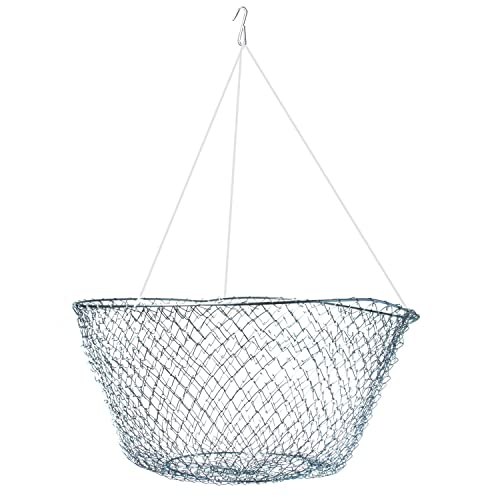
Two-ring wire mesh crab net
Alloy steel frame with aluminum hardware
Weighs 11.84 ounces
Designed for salt water use
What we like
- Lightweight and easy to carry for pier and shore use
- Tough wire mesh and alloy steel frame for salt water
- Simple one-size design approachable for all skill levels
- Lowest weight in this group at under 12 ounces
What could be better
- Least-reviewed option here at 62 reviews
- Aluminum frame and wire mesh are lighter duty than galvanized or solid stainless
- Light frame and mesh make it a step below coated and solid frames for heavy use
At under 12 ounces, this is the ring I would pick if the whole trip is a walk down a beach with a hand line and a bucket. There is no folding frame to deal with and nothing heavy to carry, and an established fishing brand behind it means it is not a nameless listing with an unproven design.
The wire mesh netting and alloy steel frame are built for salt water and the simple one-size layout is genuinely easy to understand, which matters if this is your first ring. You are throwing a flat disc, clipping bait to the center and pulling straight up.
When Lightweight Is a Feature and When It Is Not
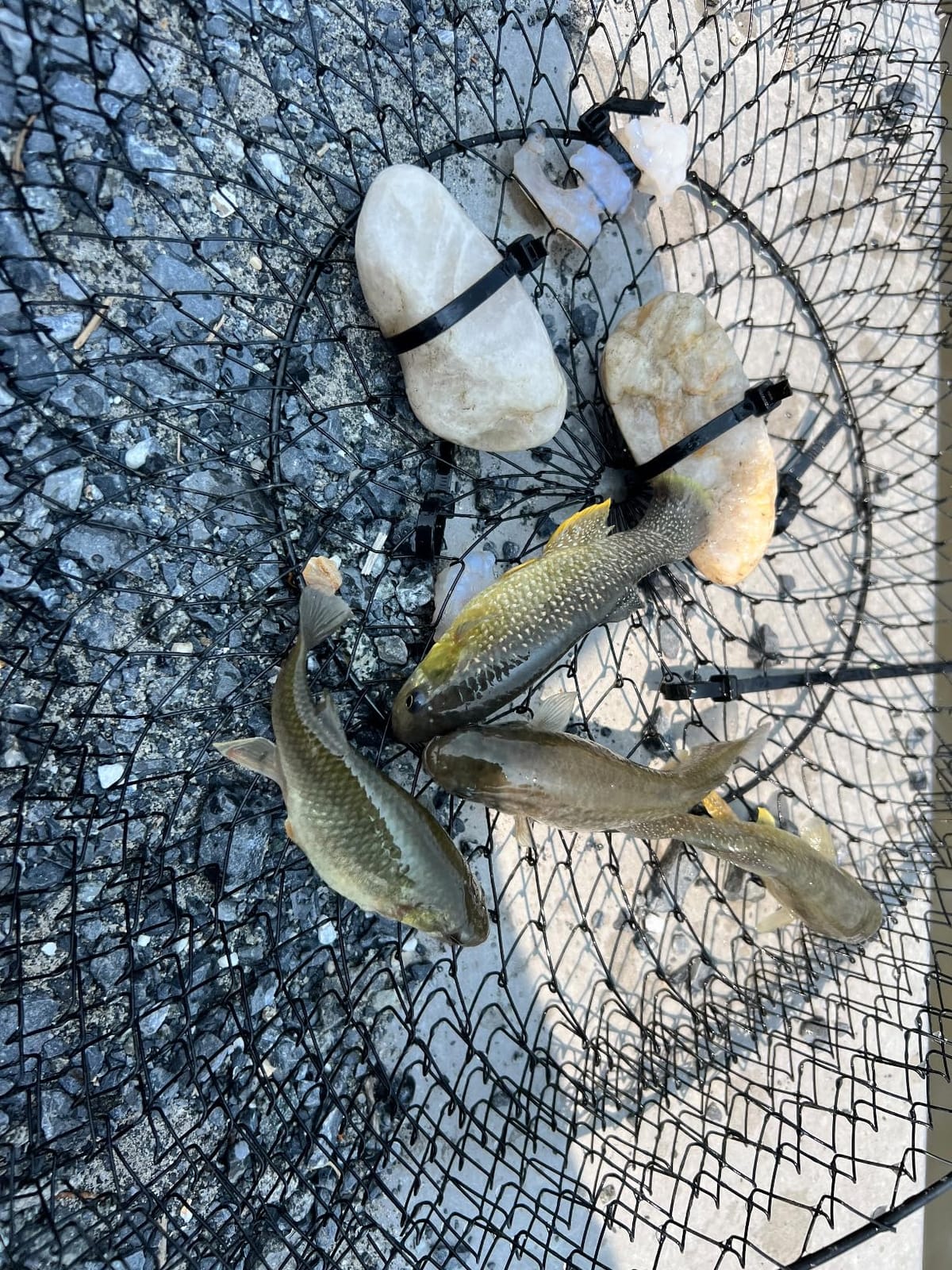
Low weight is a genuine advantage on shore, in a small skiff, or on a pier where you are walking a long way between drops. It becomes a liability in current, because a light frame is a frame that can be moved by moving water and a light ring that flips over. If you are working a strong tidal flow, a heavier galvanized or stainless frame will hold its position better.
What the Smaller Review Base Tells You
With 62 reviews this has the thinnest feedback base in the group, and that is worth weighing. Less owner history means fewer known failure reports, but it also means less evidence that the frame survives heavy seasons. For a casual shoreline occasional, that is an acceptable risk. For a pier regular who plans to fish all year, a heavier frame with more reviews is the safer purchase.
Cleaning is straightforward, since mild soap and water is all the care this net needs and harsh chemicals or high heat can degrade the coating. Dry it fully before storing, because trapped moisture in wire mesh is what starts corrosion.
11. LUPUSH Stainless Steel Crab Ring Kit - Best for Rust Resistance and Long Rope
Stainless Crab Ring Trap Kit – Stainless Crab...
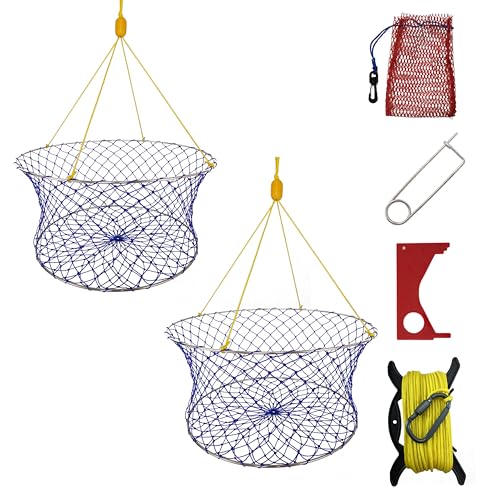
24 in stainless steel two-ring trap with wire grid bottom
100 ft thick rope with storage organizer
Bait bag, bait clip and measuring ruler
1-year satisfaction guarantee
What we like
- Stainless frame resists rust and warping better than galvanized wire
- 100 ft of thicker rope is easier to pull than standard kit rope
- Includes bait bag
- clip
- ruler and organizer in one package
- Backed by a 1-year satisfaction guarantee
What could be better
- Smallest review base here at 35 reviews
- Single trap per kit with no spare included
Stainless steel solves the problem that ends most ring nets. Galvanized wire is protected by a coating, and a single scratch through that coating starts the clock. A stainless frame has no coating to lose, so it resists both rust and warping, and owners of this kit point to that specifically when they compare it to galvanized rings they have used before.
The other thing that stands out is the rope. 100 feet of thicker line with a storage organizer is the longest and heaviest line in this group, and the organizer is a small detail that prevents the tangled mess you get when rope is thrown in a bag wet. The included measuring ruler also means you can check your catch against the legal minimum on the dock.
A Full Kit With Nothing Left to Buy
Between the wire grid bottom, bait bag, bait clip, ruler, rope and organizer, this is a complete single-trap package. A wire grid bottom is worth calling out again, because it is the design that most reliably holds bait in the center and makes crab removal quick.
Solid Construction, Thin Review History
With 35 reviews this carries the least owner history here, so treat the strong 4.3 average as encouraging rather than conclusive. The 1-year satisfaction guarantee partly offsets that, and the construction is straightforward enough that there is little to go wrong. If you want stainless and you are fussy about rope diameter, this is the ring to look at.
One trap per kit, so buy two if you intend to run a spread. At 24 inches the basket is a standard size that suits a range of crabs.
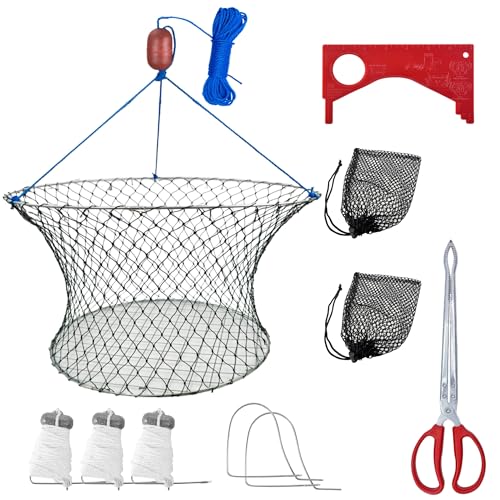
12. AQWXC Double Ring Crab Trap Kit - Best Deep Net with the Most Accessories
Aqwxc 1 Pack Double Ring Crab Trap - Steel Ring...
24 in top ring with 20 in wire grid bottom
18 in deep polyethylene netting
Hot galvanizing-coated steel
50 ft blue braided rope with float
What we like
- Deepest netting here at 18 in
- which keeps crabs contained
- 4.4 average rating with 80 percent five-star reviews
- Hot galvanized rings resist corrosion
- Largest accessory set with 3 throw lines
- 2 bait bags
- 2 clips
- clamp and gauge
What could be better
- Smallest review base here at 22 reviews
- 1.1 in mesh lets smaller crabs escape
- Throw lines are not pre-tied to the bait clips
- One owner reported rapid rusting after two weeks despite the galvanized claim
Eighteen inches of netting is the deepest we found in this group, and depth is what turns a good pull into a guaranteed one. When a 24 inch hoop with 18 inches of wall rises, a crab feeding on the bait is a long way from the rim even if it starts moving the instant the net lifts. That is a big part of why this ring carries a 4.4 average.
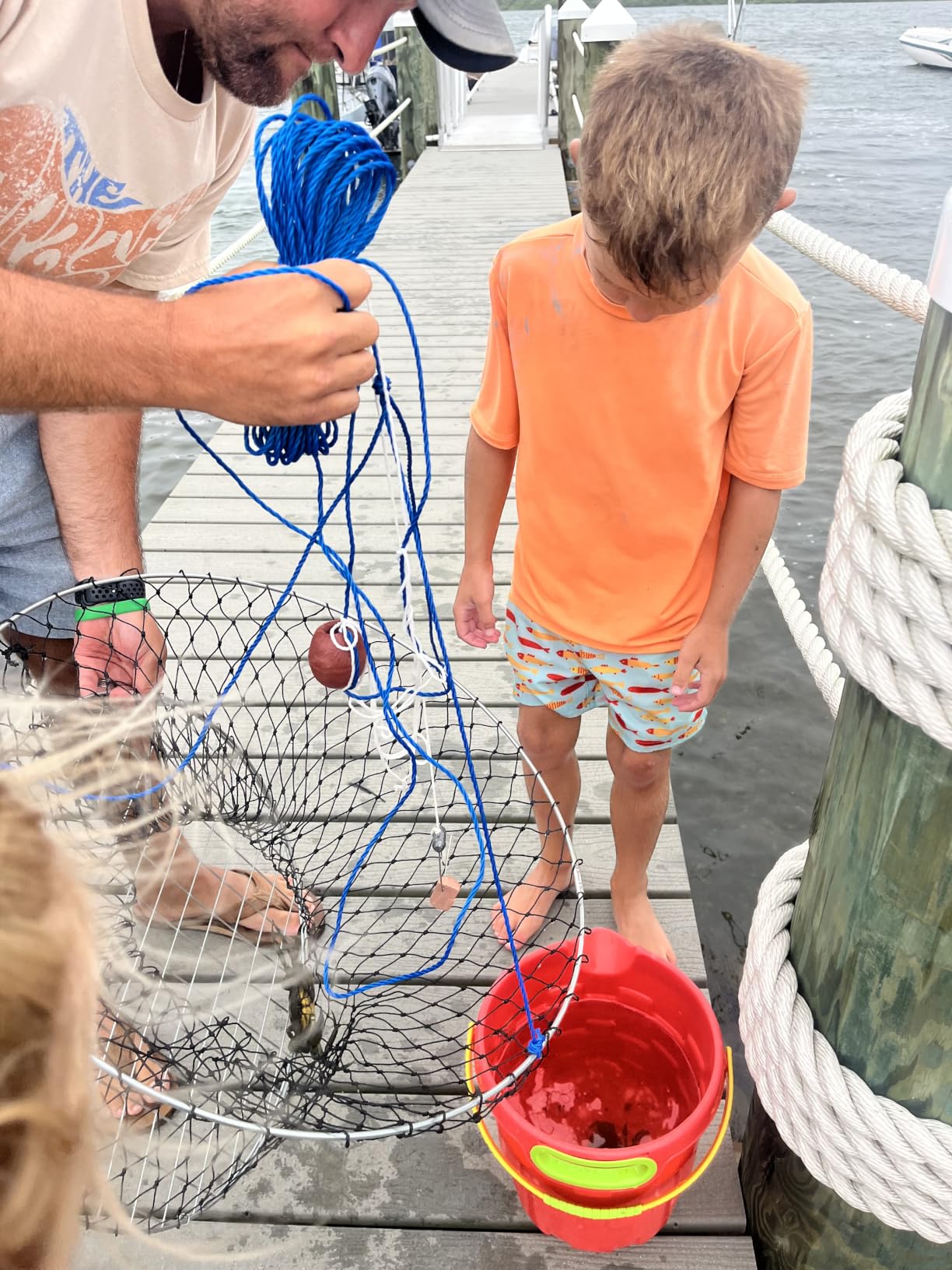
The accessory bundle here is among the most generous: a stainless steel crab clamp, a crab gauge, two bait clips, two bait bags and three throw lines, plus 50 ft of blue braided rope with a float. The wire grid bottom makes bait attachment and removal easy, and quick-drying polyethylene is a sensible choice for gear that lives in a wet locker.
Deep Netting and the 1.1 Inch Mesh Trade-Off
The 1.1 inch mesh is mid-pack, and it is why the 18 inch depth matters so much. With shallow netting you would worry about smaller crabs finding the rim. With 18 inches of wall, an undersized crab is more likely to be contained than lost, though it will still be out of legal size and should be returned.
Verify the Coating Before You Rely on It
One owner reported rapid rusting after two weeks of Florida use despite the hot galvanizing claim, and that is worth taking seriously in a subtropical salt water environment. Rinse the frame in fresh water after every trip and dry it before storing, and inspect the welds and coating at the start of each season.
Also note that the three throw lines are not pre-tied to the bait clips, which is a two-minute job that catches people on the dock. With only 22 reviews, the 4.4 average is the least certain of the high ratings here, so watch it closely in its first season.
How to Choose a Crab Ring That Survives a Season
Most disappointing rings fail on the same four variables, and every one of them is visible before you buy. Here is how I weigh them.
Wire Gauge and Frame Material
Wire diameter decides whether a ring anchors or skids, and frame material decides whether it lasts a season or two. Hot galvanized wire around 0.2 inch is the common durable standard for ring nets. Rubber wrapped steel goes further because the wrapping is a material layer rather than a coating that can be scratched through. Solid stainless is the most corrosion-resistant option and the heaviest.
Aluminum hardware and plain wire mesh are the lightest and the least durable. That is a reasonable choice for occasional shore trips and a poor choice for someone who fishes every week and expects the ring to still be there next season.
Ring Diameter and Water Depth
Most recreational ring nets fall between 18 and 30 inches, and the 24 inch hoop with a 20 inch bottom is the most common pairing here. Match that to your water rather than your ambition. A smaller ring settles faster and holds better in shallow water and current, and a larger ring catches more per pull but needs more room and more weight to stay put.
Bigger rings also suit bigger crabs. If you are after Dungeness or large rock crab, a 30 inch hoop with a 16 inch bottom ring gives you the space to land a full-sized animal. If you are after blue crab in shallower bay water, an 18 to 24 inch ring is more manageable and easier to pull cleanly.
Mesh Opening Size
Mesh opening is the number most shoppers ignore and most regret. Anything under 1 inch holds small crabs. Between 1 and 1.4 inch is the common range and works for crabs over minimum legal size. Above 1.4 inch you will see legal crabs escape through the wall during a slow lift.
Deeper netting partly compensates for wider mesh, because a crab has further to climb. That is why an 18 inch deep net with 1.1 inch mesh can be more reliable than a shallow net with tighter mesh.
Bait Clip and Bait Bag
Rings with no bait clip draw heavy criticism from owners for a simple reason. Bait washes away in current, the ring soaks empty, and you have wasted a trip. A built-in clip or a separate bait bag is close to mandatory, and a wire grid bottom gives you the best attachment point of anything in this list.
Carry a spare clip. They are small, they are cheap and they are the part most likely to be lost in a wet pocket.
Netting Depth and Foldability
These two pull against each other. Deep netting holds crabs and resists escape, while a foldable frame stores in a kayak hatch or a tackle box. Twelve to 15 inch rings are common, 18 inch is the deep end, and the smallest foldable castable traps here run 11 to 12 inches of depth and hold fewer crabs.
Decide which constraint binds harder in your situation. If you crab from a kayak with limited storage, foldability wins. If you crab from a pier and want to bring a limit of crabs home, depth wins.
Rings vs Crab Pots vs Box Traps vs Hand Lines
The right gear depends on where you are standing, and rings lose to nothing when you are standing on a pier.
Crab rings are the lightest, most portable and most hands-on option. They store in a backpack, cast from a rod, and reward a clean vertical pull. Their limits are depth and quantity, since one ring holds only a handful of crabs at a time. This is the standard tool for pier, kayak and shore crabbing.
Crab pots are rigid cages that sit on the bottom and accumulate catch over an extended soak. They handle deeper water and rough conditions far better, and they are the right answer off a boat. Their drawback is weight and volume, plus the fact that a pot left soaking is a pot that can hold live crabs for a long time.
Box traps are wire cages that fold flat and are usually baited, dropped and left. They are more forgiving than a ring because they do not depend on pull technique, and many crabbers consider them the better buy for beginners who will not be pulling rings every trip.
Hand lines are the simplest option, a baited line with no rigid frame at all. They are cheap, they need no rings, and experienced Chesapeake crabbers rely on them heavily. If your real complaint about crab rings is that the S-ring keeps snagging, a hand line removes that problem entirely.
One recurring frustration deserves naming. On bluecrab.info the most common complaint is ring crossover, where a crab approaches the ring, steps inside the hoop instead of onto the mesh, and leaves without ever being caught. It is a placement problem more than a gear problem, and it is fixed by placing bait dead center and giving a crab a clear flat approach.
How to Rig and Pull Crab Rings
Start with the ring lying flat on the bottom. The whole design depends on a crab walking onto flat mesh, so anything that makes the ring land on its edge wastes the trip.
Rigging Steps
1. Bait the center. Clip bait to the center of the net or place it in a bait bag hung at the middle. Bait placed off-center leaves a crab walking on bare mesh with no reason to stop.
2. Attach the line to the top ring only. The top ring is what lifts and forms the basket. A line connected to both rings can drag the bottom ring up with it and flatten the net.
3. Add a float you can see from shore. A thin float is hard to find at a distance, and a lost float means a full ring sitting on the bottom somewhere you cannot reach.
4. Lower the ring rather than throwing it when you can. Feed the line out and let it settle for a flat landing. A controlled drop beats a cast every time on a big hoop.
5. Soak 10 to 20 minutes. Crabs are not accumulating catch the way a pot is. Past 20 minutes the bait is washed down and the catch rate falls off.
6. Pull straight up and fast. A smooth, fast vertical lift is what closes the basket. A slow pull gives a crab time to walk off, and a sideways tug can let the top ring fall out of parallel.
7. Keep the S-ring clear of the mesh. A harness S-ring that catches in the netting can stop the basket forming at all, which is the failure mode that causes an empty ring despite a full bait. Keep the connection at the top ring and clear of the mesh wall.
8. Return undersized crabs promptly. Measure with a gauge, keep only legal crabs, and get them into a cool shaded bucket rather than a livewell in the sun.
Bait and Attractants That Pull Crabs In
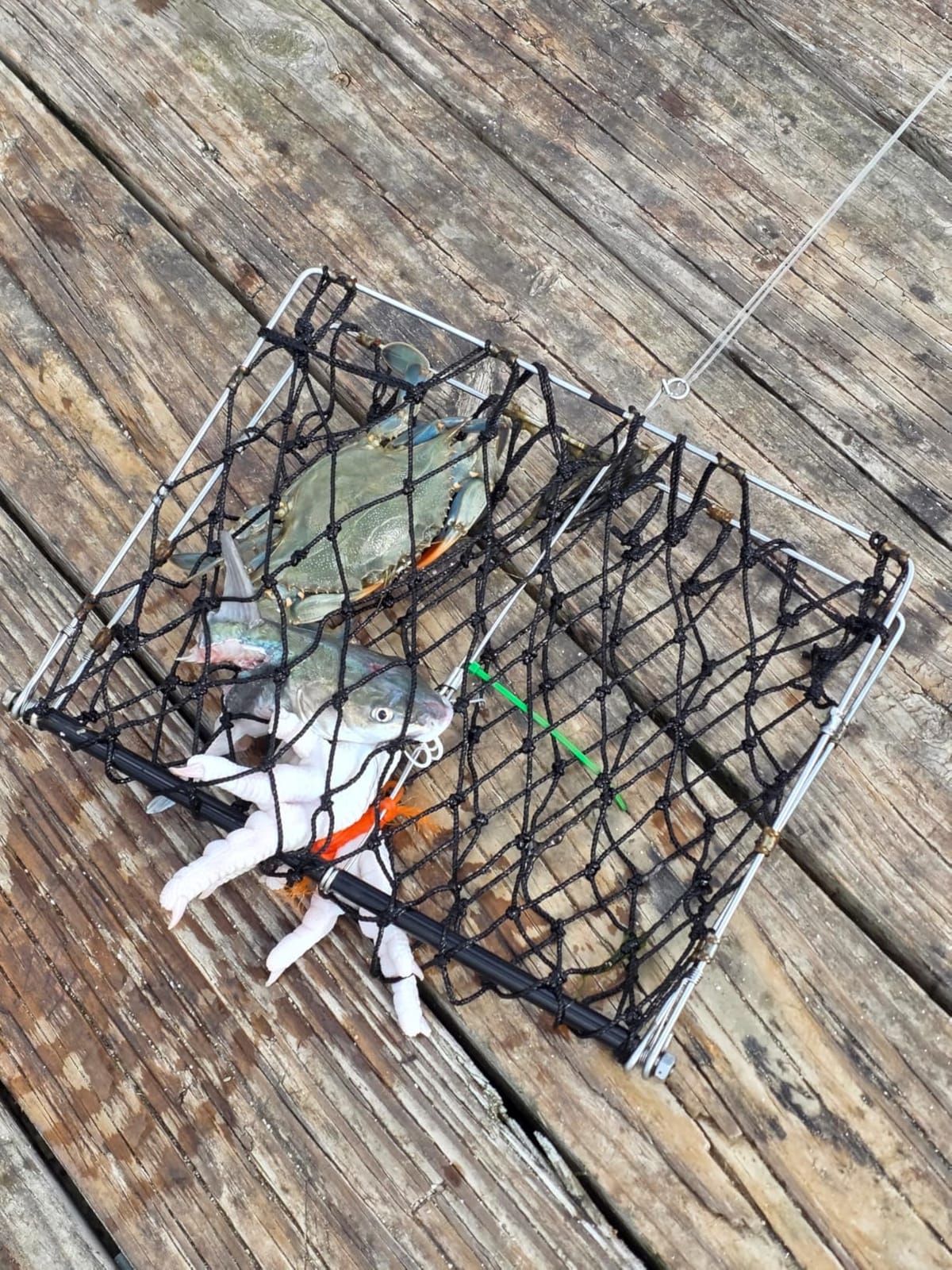
The smell question comes up constantly, and the answer is that crabs are drawn to a strong protein odor more than to any single ingredient. Oily fish, which includes mackerel and herring, carries that scent well and comes in both fresh and frozen form. Chicken necks and wings are a cheap, effective alternative that many pier crabbers use year round because the pieces survive current without washing away.
Frozen bait and fresh bait perform similarly in cold water, and a piece of oily fish left out overnight is better than a fresh cut that rinses clean in the first ten minutes. Soaking bait in a commercially sold crab attractant concentrate can extend the window, and using it is what makes the difference between a premium bait soak and plain bait on a ring that sits in moving water.
Where bait really matters is the clip and the bag. A properly clipped chunk stays put for a full soak, while loose bait becomes a trail of particles that attracts crabs past the ring instead of onto it.
Crab Ring Sizing and Licensing Notes
Ring and snare rules vary by state, and the specific numbers are what regulators enforce, so check the agency for the water you are actually fishing before you set out.
Common elements across the states that permit ring and snare gear include a minimum escape ring diameter of 4 1/4 inches for any entrapping gear, and a cull ring that lets undersized crabs leave. Washington, Oregon and California specify minimum size limits and required measurement methods for Dungeness, and many western states require a crab gauge in the field. Several states also require a licence or a licence exemption card before you can take any crab, regardless of gear type.
Ghost fishing is the other rule that shapes how you handle a ring. Leaving gear soaked with live crabs in it is both a legal problem in many places and simply poor practice, so pull your rings on the 10 to 20 minute cadence rather than leaving a string out. Measure with a gauge, cull what is undersized, and check the size requirement for the species you are targeting before you keep a catch.
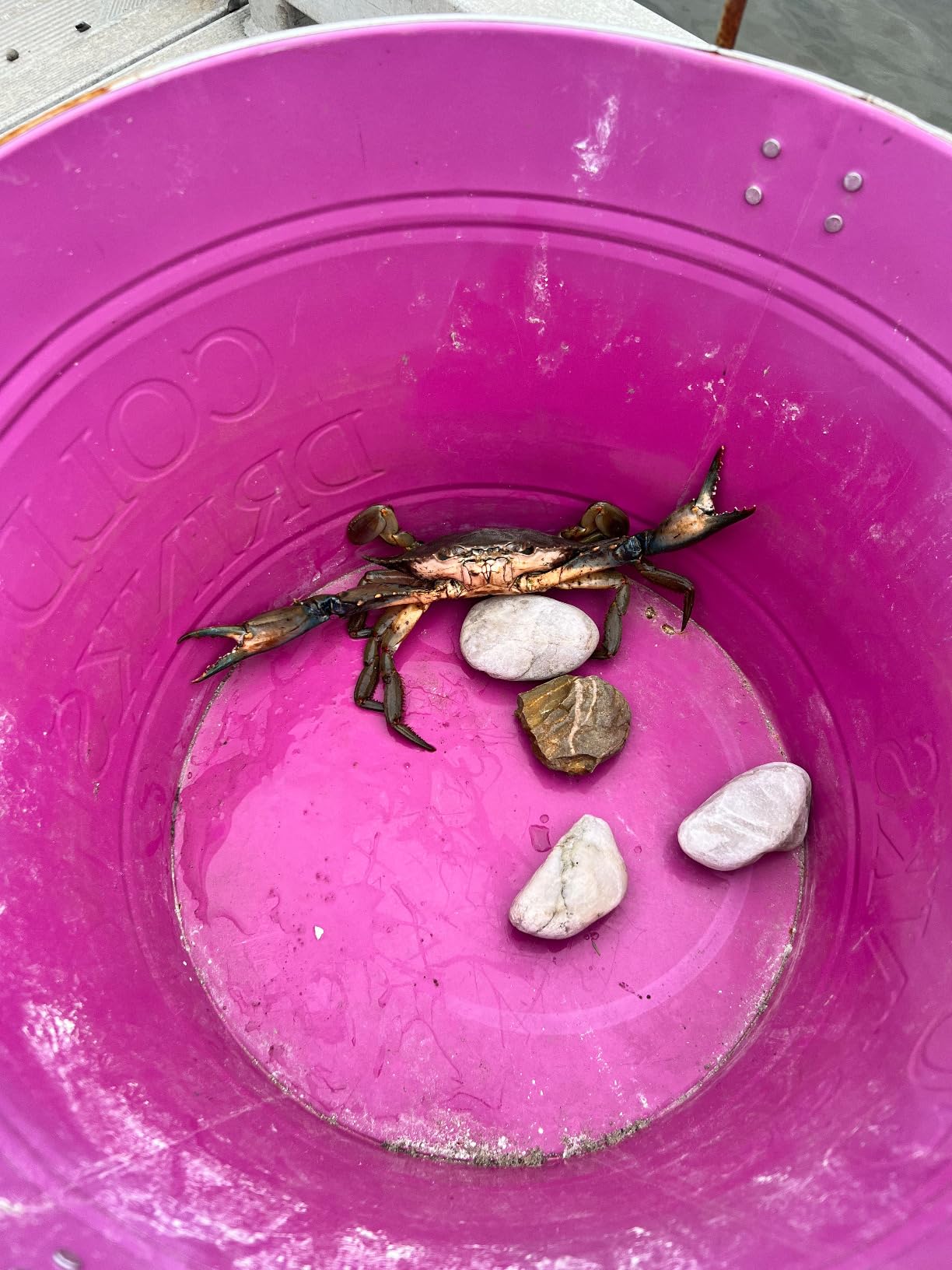
One safety note that matters for family crabbers. Crabs should be handled at the back of the shell, kept cool and shaded, and cooked alive, because a crab that dies in the bucket releases a toxin that is not safe to eat. Keep a lid on the bucket and do not have children handle the claws directly.
Frequently Asked Questions
How often should you pull up crab rings?
Pull crab rings every 10 to 20 minutes. A ring is an active tool, not a soak pot, so crabbing past 20 minutes means the bait has washed down and the catch rate drops. Lift straight up and fast, because a slow pull lets crabs walk off the mesh before the basket forms.
What is the best thing to use for crabbing?
It depends on where you fish. A ring is best from a pier, kayak or shore. A pot is best in deeper water off a boat. A box trap is the most forgiving option for beginners. A hand line is the simplest and needs no rigid frame at all.
In what states are crab snares legal?
Ring and snare gear is legal in a number of states, but rules differ and several require a licence or exemption card. Common requirements include a minimum escape ring diameter of 4 1/4 inches, a cull ring, species size limits and a field crab gauge. Check the agency for the state where you will fish.
What size crab ring do I need?
Most recreational crabbers use a 24 inch top hoop with a 20 inch bottom ring. Go larger, around 30 inches, for big Dungeness and rock crab. Go smaller or more compact for kayak and shore work where current and storage dictate the choice. Match mesh opening to crab size and netting depth to how well you want it to hold.
What smell attracts crabs?
Crabs are drawn to a strong protein odor. Oily fish such as mackerel or herring works well, and chicken necks and wings are a cheap alternative that holds together in current. Soaking bait in a crab attractant concentrate extends the window where the scent is strong enough to hold a crab on the net.
Why does my crab ring come up empty?
The usual reasons are a slow pull, a ring that did not land flat, bait that washed away because there was no clip, or ring crossover where a crab stepped inside the hoop instead of onto the mesh. Pull faster, drop the ring instead of throwing it, clip the bait, and keep bait dead center.
The Best Crab Rings: Which One Should You Buy?
If you want one ring and you crab from a pier or a boat, the Palmyth Two-Ring Wire Grid Crab Kit is the pick. The wire grid bottom holds bait in the center and makes removal simple, the hot galvanized frame resists salt water, and it has by far the deepest review history in this group at 762 ratings.
If you plan to run several rings at once, the AirFly 6-Loop two-pack gives you a working spread in a foldable package, and the QualyQualy 24 x 20 x 12 two-pack is the better choice if your baits need to sit in a bag rather than on a grid. For big crabs and hard water, the KUFA 30 inch rubber wrapped ring is the toughest frame here. For small crabs, the Drasry ring has the tightest mesh at 0.79 inch. For a kayak hatch, the QualyQualy foldable trap or the AirFly Crab Hawk is the most practical. And if rust is what has ended your rings early, the LUPUSH stainless steel kit removes the coating problem entirely.
Whichever one you choose, the pull is what makes it work. Drop it flat, bait the center, and lift straight up fast every 10 to 20 minutes.