Are you ready to take your aquarium game to the next level? Then you need to get to know the Buenos Aires Tetra! Native to Argentina, these vibrant freshwater fish add a shimmering spectrum of colors to your tank.
With their easy-to-care-for requirements, Buenos Aires Tetras makes the perfect addition to any aquarium, whether you're a beginner or a seasoned aquarist. Get ready to learn all about these feisty fish and get your tank ready for a Buenos Aires Tetra takeover!
Table of Contents
Buenos Aires Tetra: Species Summary
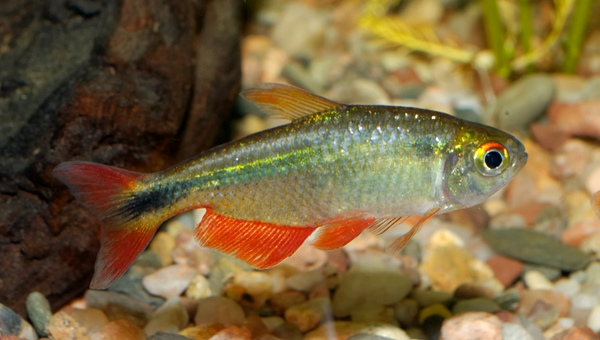
The Buenos Aires Tetra is a feisty and energetic freshwater fish that is native to Argentina and was discovered in 1907. Perfect for both newer and seasoned aquarists, these fish are very adaptable to captivity with minor fluctuations. They have a predominantly silver body with a blue stripe and a shimmering spectrum of colors in the right lighting.
| Scientific Name: | Hyphessobrycon anisitsi |
| Common Name(s): | Buenos Aires Tetra, Red-eyed Tetra |
| Family: | Characidae |
| Care Level: | Easy |
| Size: | Up to 2.8 inches |
| Lifespan: | 3 to 5 years |
| Diet: | Omnivore |
| Minimum Tank Size: | 30 gallons |
| Temperament: | Peaceful |
| Aquarium Hardiness: | Hardy |
| Temperature range: | 64°-82°Fahrenheit |
| Water pH: | 5.5-8.5 |
| Water Hardness: | 12 - 35 dGH |
| Breeding: | Easy |
| Egg count: | 100-200 |
| Spawning method: | Egg layer |
| Fry Survival Rate: | High |
Buenos Aires Tetra Appearance
You'll love the Buenos Aires Tetra's unique diamond-shaped black mark and reddish-orange hue on its fins! Its shimmering spectrum of colors is brought to life in the right lighting, and males have more vivid coloration than females.
Here are some things to love about them:
- Predominantly silver body with a blue stripe
- Distinct diamond-shaped black mark on the tail fin
- Reddish-orange hue on caudal, pectoral, and anal fins
- The average size is around 2.8 inches.
These aggressive and energetic freshwater fish are easy to care for and adapt well to captivity. They're perfect for both newer and seasoned aquarists and make for a great addition to any tank!
Buenos Aires Tetra Lifespan
With proper care, Buenos Aires Tetras can live up to 5 years or longer. They're hardy fish that will thrive in the right environment. To ensure longevity, provide them with plenty of space, a balanced diet, and clean water.
Make sure their tank is at least 30 gallons with a neutral pH, and keep the temperature between 64°F and 82°F. Feed them a variety of nutritious foods, like flakes, pellets, and live or frozen meals.
Frequent water changes are also important for maintaining good water quality. With the right care, these beautiful fish will be a staple in your tank for years to come.
Also Read: Pristella Tetra (X-Ray) 101: Care, Diet, Size & More
Buenos Aires Tetra Average Size
On average, Buenos Aires Tetras grow to around 2.8 inches, and with proper care, they can reach their full-size potential. You'll be rewarded with a dazzling display of shimmering colors if you give your tetras the environment they need to thrive.
When buying your fish, make sure to get them from a trusted source to maximize their size and growth. Ensure your tank is big enough for them to swim around; a minimum of 30 gallons is recommended.
Buenos Aires Tetra Behaviour & Temperament
Regarding their temperament, Buenos Aires Tetras are peaceful fish that get along well with other species. On the whole, Buenos Aires Tetras are easy-going and hardy fish that make a great addition to any community tank.
They are usually shy and will stay near the bottom of the tank. However, they can be quite playful when they get used to their surroundings. Buenos Aires Tetra is a small, colorful fish found in the wild in Argentina and Paraguay. They are schooling fish and do best when kept in groups of six or more.
Buenos Aires Tetra Care Guide
Taking care of Buenos Aires Tetras is easy, but there are some important things to keep in mind.
Tank size, what to put in their tank, and water parameters all have a significant impact on their health.

Let's discuss the best way to care for these vibrant and colorful fish.
Buenos Aires Tetra Food & Diet
As omnivores, Buenos Aires Tetras will eat both plant and meaty foods. In the wild, they mainly feed on small insects and other invertebrates. However, in the aquarium, they can be given a diet that includes both types of food. Buenos Aires Tetras should be fed 2-3 times a day.
Some good meaty options include brine shrimp, bloodworms, and daphnia. For plant matter, you can give them things like spirulina flakes, blanched spinach, or chopped zucchini. It is also a good idea to supplement their diet with vitamin-rich foods such as live or frozen foods.
Also Read: Bucktooth Tetra 101: Care, Diet, Habitat, Look & More
Tank Size
For the Buenos Aires Tetra, an active schooling fish, a tank size of at least 30 gallons is recommended to provide ample room to swim. This is necessary for their optimal health and to ensure they don't become bored or stressed. Having a larger tank size also allows for multiple species and decorations, adding plenty of variety to any aquarium.
A multi-species community tank requires an even larger aquarium. If you're looking for a larger tank, you should consider a 40-gallon or larger, as this will give your Tetras the space they need to thrive.
Whatever size tank you choose, make sure you monitor the water parameters regularly and provide adequate filtration. Buenos Aires Tetras are relatively easy to care for and will bring plenty of life to any tank.
What To Put In Their Tank?
When creating a home for your Buenos Aires Tetras, it's important to consider the tank decorations and substrates to provide the best environment.
Artificial plants are the best choice since they won't be eaten, plus they add a pop of color to the tank. Gravel or sand are good substrates with the right pH balance.
You can also add driftwood, rocks, or plastic decorations to create a natural feel. The tank should be at least 30 gallons, but more for a multi-species tank.
Buenos Aires Tetras need ample room to swim, so larger is better. Make sure the temperature is between 64-82°F, pH levels of 5.5-8.5, and hardness of 12-35 dGH.
Water Parameters
You'll need to keep a close eye on the water parameters in order to keep your Buenos Aires Tetras healthy. They prefer warm and soft water with a pH of 5.5 to 8.5 and hardness of 12 to 35 dGH. Here's what you can do to ensure their well-being:
- Regularly test water quality and check filtration system.
- Replicate their natural habitat with a temperature of 64°F to 82°F.
- Keep pH levels neutral for best results.
- Perform frequent water changes to avoid ammonia and nitrate issues.
Common Possible Diseases & Prevention
Buenos Aires Tetra is susceptible to many diseases that affect other fish.
Some of these diseases include:
- Mouth rot: Mouth rot is a bacterial infection that affects the mouth and gills of fish. It is caused by poor water quality and low oxygen levels. Symptoms include redness, swelling, and ulcers in the mouth and gills.
- Swollen belly: Swollen belly is a condition that causes the fish's belly to swell. It is usually caused by overfeeding or overeating fat. Symptoms include a bloated stomach and difficulty swimming.
- Dropsy: Dropsy is a condition that causes the fish's body to swell. A bacterial infection usually causes it. Symptoms include a bloated stomach, loss of appetite, and protruding scales.
- Hexamita: Hexamita is a protozoan parasite that affects fish's digestive system. It is caused by poor water quality and low oxygen levels. Symptoms include weight loss, loss of color, and lesions on the body.
- Septicemia: Septicemia is a bacterial infection that affects the fish's blood. It is caused by poor water quality and low oxygen levels. Symptoms include redness, swelling, and discoloration of the skin.
- Anchor worm: Anchor worm is a parasitic infection that affects the fish's body. It is caused by poor water quality and low oxygen levels. Symptoms include redness, swelling, and lesions on the body.
You can help prevent common diseases in Buenos Aires Tetras by regularly testing the water and performing frequent water changes. Here are some tips to help keep your Tetra healthy:
- Monitor water parameters closely.
- Replace up to 50% of the tank water every other week.
- Provide a varied diet to ensure proper nutrition.
- Implement a filtration system to keep the water clean.
Taking the time to care for your Tetra will ensure they live a long and healthy life in your aquarium. With proper care and maintenance, you can create a safe and happy environment for your Tetra and its tank mates.
Also Read: Serpae Tetra Species Profile: Look, Care, Size & All
Tank Mates & Breeding
When selecting tank mates for Buenos Aires Tetras, choose larger or similarly-sized fish and avoid smaller species that may be bullied. Active and energetic, these fish need ample room to swim and large groups of 6 or more to thrive.
Here are a few compatible tank mates:
- Large Tetras
- Cichlids
- Congo Tetra
- Apistogramma
Breeding
You can easily breed Buenos Aires Tetras by setting up a separate tank and providing them with a varied diet and sturdy plants for their eggs to stick to. To condition them for spawning, feed them with high-quality live foods. The eggs are deposited on the plants, so it's best to remove the adult fish to prevent predation.

Buenos Aires Tetras are prolific egg scatterers and can lay up to 2,000 eggs. To ensure success, keep the water slightly acidic and use a sponge filter. Make sure the tank is spacious enough to accommodate the adults and their potential offspring. Provide plenty of hiding spots and natural decorations, such as driftwood and rocks, to keep the fish stress-free.
Advantages Of Having Buenos Aires Tetra In Your Tank
- Active: Tetras are very active fish and always swim around. This makes them a lot of fun to watch.
- Colorful: Tetras are some of the most colorful fish in the world. They come in various colors, including red, blue, green, and yellow.
- Affordable: Tetras are one of the cheapest fish you can buy. They are often sold for just a few dollars each.
- Hardy: Tetras are one of the hardiest fish you can keep in your tank. They can tolerate many water conditions and are resistant to most diseases.
- Versatile: Tetras can be kept with other fish species, including cichlids, barbs, and danios.
- Easy to care for: Tetras are easy to care for and don't require much attention. They are the perfect fish for beginner aquarists.
- Peaceful: Tetras are generally very friendly fish and get along well with other tank mates.
- Fun: Tetras are fun fish to watch and add a lot of personality to your tank.
- Breeding: Tetras can be bred in captivity and often produce healthy offspring.
Also Read: Pregnant Guppy Fish
Disadvantages Of Having Buenos Aires Tetra In Your Tank
- Can be nippy: Tetras can be nippy towards smaller fish and inverts. They may also nip at the fins of larger fish.
- May eat plants: Tetras may eat live plants if they are not given enough food. This can be prevented by providing them with plenty of vegetables or pellets that contain plant matter.
- Susceptible to disease: Tetras are exposed to several conditions that can often be difficult to treat. It is essential to keep an eye on them and to treat any signs of illness immediately.
- May require special care: Some tetras, such as the neon tetra, require special care, and they may not be suitable for all tanks.
- May breed prolifically: Tetras may breed prolifically if not kept in a controlled environment. This can result in an overcrowded tank and a lot of unwanted babies.
- May be shy: Tetras may be nervous, and they may not come out to greet you when you visit your tank.
- May jump: Tetras may jump out of your tank if they are not adequately secured. This can be prevented using a tank lid fitted with a secure closure system.
- May die quickly: Tetras are delicate fish and may pass easily if not kept in ideal conditions. It is essential to monitor the water quality and temperature closely.
- Not easy to find: Tetras are not always easy to find in pet stores. You may need to order them online or from a specialty store.
- Can be expensive: Some tetras, such as the neon tetra, can be pretty expensive. They may cost several dollars each.
Also Read: Black Phantom Tetra Care Guide 101: Look, Diet, & All
Conclusion
Tetras are colorful, active fish that significantly add to the aquarium. They are hardy and versatile and can be kept with other fish species. They are also easy to care for and do not require much attention.
Tetras can be bred in captivity, and they often produce healthy offspring. However, they are susceptible to disease and may die quickly if not kept in ideal conditions.
Additionally, they can be nippy towards smaller fish and eat live plants if they are not given enough food.