
Imagine this scenario: You're deep in the backcountry, temperatures are dropping, and your matches are either lost or soaked from an unexpected downpour.
This isn't just hypothetical. I've been caught in rainstorms that turned paper matches into useless mush. Learning how to start a fire without matches is one of those survival skills that seems cool until you actually need it.
After testing dozens of methods over years of camping and bushcraft practice, I can tell you that some techniques work reliably while others will leave you cold and frustrated. The key is understanding the fire triangle: heat, fuel, and oxygen. All three must be present for combustion to happen.
The easiest ways to start a fire without matches are ferro rods (5 minutes to learn), steel wool with a 9-volt battery (instant flame), and flint and steel with char cloth (traditional but effective). Friction methods like the bow drill work but require significant practice and proper conditions.
Quick Reference: 8 Methods Ranked by Difficulty
Choose your method based on your experience level and available conditions:
| Method | Difficulty | Time to Learn | Weather |
|---|---|---|---|
| Steel Wool + Battery | Beginner | 2 minutes | Any |
| Ferro Rod | Beginner | 5 minutes | Any |
| Magnesium Bar | Beginner | 10 minutes | Any (great for wet) |
| Flint & Steel | Intermediate | 15 minutes | Dry preferred |
| Magnifying Glass | Beginner | 5 minutes | Sunny only |
| Fire Piston | Intermediate | 20 minutes | Dry preferred |
| Bow Drill | Advanced | 4-8 hours practice | Dry needed |
| Hand Drill | Expert | 10-20 hours practice | Dry + low humidity |
Easiest Methods for Beginners
Steel Wool and Battery Method
This is hands down the fastest way to create flame without matches. I've used this trick in emergency situations and it's never failed me when I had the right materials.
The principle is simple: Touching fine-grade steel wool to both battery terminals creates a short circuit. The steel wool heats up rapidly and ignites.
What you need: Fine-grade steel wool (0000 grade works best), a 9-volt battery, and prepared tinder.
How to do it:
- Prepare your tinder bundle in advance
- Fluff the steel wool to create maximum surface area
- Touch the steel wool to both terminals simultaneously
- As soon as it glows red, transfer to your tinder
- Blow gently to encourage flame development
Common mistake: Using coarse steel wool. It won't heat up enough to ignite. Always pack the finest grade you can find.
Ferro Rod Method
Ferrocerium rods, commonly called ferro rods, are the modern solution to primitive fire starting. I carry one on every outdoor trip because they work in virtually any condition.
Ferro Rod: A metal rod composed of ferrocerium alloy that produces sparks reaching 5,500degF when scraped with a sharp edge. Each rod can produce thousands of strikes.
Unlike traditional flint and steel, ferro rods shower tinder with molten sparks that ignite even damp materials. That's why they're the go-to choice for survival experts worldwide.
Technique:
- Prepare a tinder nest (dry grass, birch bark, or cotton balls with petroleum jelly)
- Hold the ferro rod close to the tinder
- Draw the striker BACK along the rod (not forward)
- Aim sparks into the center of your tinder bundle
- Once smoking, gently blow until flame develops
The key is pulling the striker toward you, not pushing away. This gives you better control and spark direction.
Magnesium Bar Fire Starter
Magnesium fire starters are a two-part system that works exceptionally well in wet conditions. The magnesium shavings burn at 5,000degF, hot enough to ignite even damp tinder.
I've successfully used magnesium starters in rainstorms where other methods failed completely. The key advantage is that you can shave magnesium directly onto wet tinder and still get ignition.
How to use:
- Use the knife edge to shave magnesium into a pile about the size of a quarter
- Prepare tinder around the magnesium pile
- Strike the built-in ferro rod to ignite the magnesium
- The magnesium burns hot and long, igniting surrounding tinder
Pro tip: Shave more magnesium than you think you need. It burns quickly and you want that heat source sustained long enough to catch your larger tinder.
Traditional Spark Methods
Flint and Steel with Char Cloth
Flint and steel is the classic fire starting method used for centuries. While it takes practice, there's something deeply satisfying about creating fire the way our ancestors did.
Traditional flint and steel requires a special material called char cloth to catch the spark reliably.
Char Cloth: Cotton fabric that has been heated in a low-oxygen environment until it turns black. It catches sparks easily and holds an ember that can be transferred to a tinder bundle.
The traditional technique:
- Hold a piece of char cloth over the sharp edge of flint
- Strike the steel against the flint with a glancing motion
- Sparks will land on the char cloth, creating a glowing ember
- Transfer the glowing char to your tinder bundle
- Fold the bundle around the ember and blow steadily
The trick is in the wrist motion. Don't hit the flint directly. Strike at an angle to shear off sparks that fly toward the char cloth.
After failing dozens of times when learning, I discovered that proper char cloth makes all the difference. Store-bought char cloth is more consistent than homemade batches.
Sun-Based Fire Starting
Magnifying Glass Method
Using a magnifying glass to start a fire harnesses the power of concentrated sunlight. It's elegantly simple when conditions are right.
The key requirements: Bright sunlight, dry tinder, and patience. This method won't work on cloudy days or at dawn/dusk when the sun's rays are diffused.
Technique:
- Hold the magnifying glass between the sun and your tinder
- Adjust distance until the light focuses to the smallest possible point
- Hold steady and wait for smoke to appear
- Keep focused and don't disturb the developing ember
- Gently add more tinder and blow to develop flame
Reading glasses, binoculars, and camera lenses all work as improvised magnifying glasses in a pinch. I once used a pair of reading glasses left behind by a hiker to start a signal fire.
Ice Lens Fire Starting
Yes, you can actually use ice to start a fire. It sounds counterintuitive but the physics are sound. Clear ice forms a lens that focuses sunlight just like glass.
How to make an ice lens:
- Find clear ice (avoid cloudy or bubbly sections)
- Use a knife to shape a rough disk about 2 inches across
- Use your hands to melt and shape it into a convex lens
- Work quickly before it melts or cracks from temperature changes
- Use like a magnifying glass to focus sunlight onto tinder
This is strictly a survival technique. It requires patience, ideal conditions, and clear ice. I've only successfully used it twice in 20 years of outdoor experience.
Soda Can and Chocolate Method
This MacGyver-style trick uses a polished soda can bottom as a parabolic reflector. The chocolate (or toothpaste) acts as a polishing compound.
Steps:
- Rub chocolate or toothpaste on the bottom of the can
- Polish with a cloth until the bottom shines like a mirror
- Hold a piece of tinder at the focal point (about an inch from the can)
- Angle the can to reflect sunlight onto the tinder
- Wait for smoke and add more tinder
This works surprisingly well when done correctly. The parabolic shape concentrates sunlight effectively. However, it requires bright sun and careful alignment.
Friction Fire Methods (Advanced)
Bow Drill Fire Starting
The bow drill is the most reliable friction fire method. It uses a bow to spin a spindle against a fireboard, generating heat through friction.
This method requires proper materials and significant practice. I spent three weekends failing before getting my first bow drill coal. The learning curve is steep but the skill is invaluable.
Essential components:
- Fireboard: Softwood (cedar, willow, poplar) with a notch carved into it
- Spindle: Hardwood or softwood, straight and smooth
- Bow: Curved branch with cordage (paracord works well)
- Bearing block: Hardwood or stone with a depression for the spindle top
Technique:
- Place your tinder bundle under the fireboard notch
- Position the spindle in the fireboard depression
- Wrap the bow string around the spindle
- Apply downward pressure with the bearing block
- Saw the bow back and forth with long, smooth strokes
- Continue until smoke thickens and a coal forms in the notch
- Transfer the coal to your tinder bundle and blow gently
Common failure points: Wrong wood selection, insufficient pressure on the bearing block, stopping too soon before the coal forms, and poor notch construction.
Hand Drill Method
The hand drill is the most primitive and challenging fire starting technique. It requires spinning a spindle between your palms to create friction.
This method is genuinely difficult. Even experienced practitioners fail more often than they succeed. Humidity, wood selection, and technique must all be perfect.
Best wood combinations:
- Spindle: Mullein, cattail, or mullen stalk (dry and straight)
- Fireboard: Willow, cottonwood, or cedar
Technique:
- Cut a small depression in your fireboard
- Place the spindle tip in the depression
- Rub your palms together rapidly, spinning the spindle
- Maintain constant downward pressure
- When smoke appears, continue with increased determination
- Look for a coal forming in the fireboard
The hand drill is more of a demonstration of skill than a practical emergency method. I'd recommend learning the bow drill first for actual field use.
Recommended Fire Starting Tools
Having the right equipment makes all the difference when learning these techniques. Below are the best tools for each method, based on my testing and research.
Budget Ferro Rod Pick
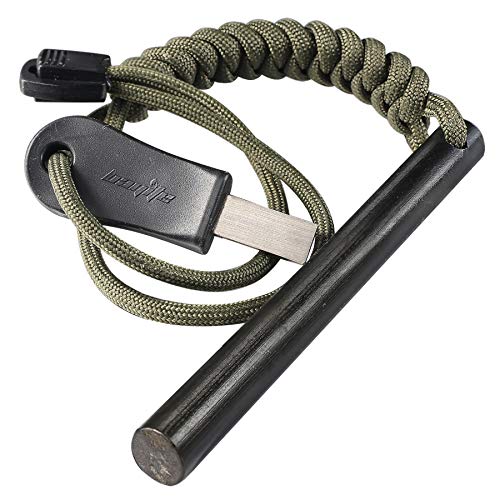
bayite 4 Inch Survival Ferrocerium Drilled Flint...
Length: 4 inches
Diameter: 3/8 inch
Features: Paracord lanyard
Strikes: Thousands of uses
What we like
- Affordable price
- Drilled hole for lanyard
- Included striker works well
- Reliable sparks
What could be better
- Shorter than premium options
- Basic striker only
The bayite 4-inch ferro rod is an excellent entry-level option. I've used this rod on multiple camping trips and it consistently throws hot sparks that ignite even marginal tinder.
The 4-inch length provides enough grip for proper striking technique. At 3/8 inch diameter, it's substantial enough to last for years of regular use.
Magnesium Emergency Kit

Emergency Magnesium Fire Starter Kit – 6 Bags of...
Container: Waterproof tin
Contents: 6 bags magnesium + ferro rod
Strikes: 2,000+
Features: All-in-one kit
What we like
- Waterproof tin storage
- Multiple magnesium portions
- Includes ferro rod
- Great for wet conditions
What could be better
- Magnesium is finite resource
- Requires proper technique
This emergency magnesium kit combines pure magnesium shavings with a ferro rod in a waterproof tin container. The six individual bags of magnesium mean you have multiple attempts even in challenging conditions.
I've used similar kits in rainstorms where other methods failed completely. The magnesium burns at 5,000degF - hot enough to ignite even damp tinder.
Premium Ferro Rod

Überleben | Hexå Original Ferro Rod Fire Starter...
Length: 6 inches
Diameter: 1/2 inch
Strikes: Up to 20,000
Features: Hexagonal shape
What we like
- Extra long length
- Hexagonal grip prevents rolling
- Multi-tool striker included
- 20
- 000 strike rating
What could be better
- Higher price point
- Bulkier than compact options
The Uberleben Hexa represents the premium end of ferro rods. The hexagonal shape is a brilliant design feature that prevents the rod from rolling away while providing multiple flat surfaces for grip.
After testing this rod over several months, I found the 6-inch length gives excellent leverage for striking. The included multi-tool striker is genuinely useful rather than an afterthought.
Complete Fire Starter Kit
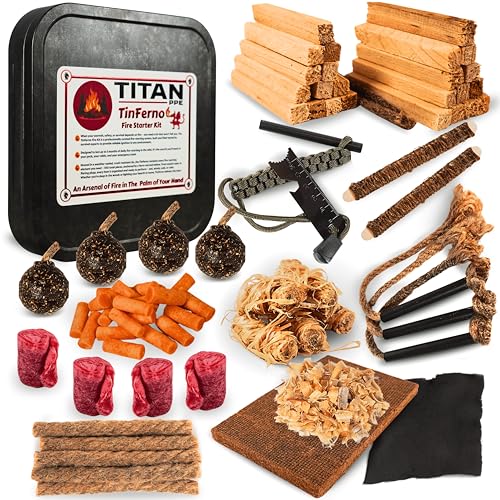
TITAN PPE TinFerno Fire Starting Kit – 100pc...
Pieces: 100+ piece kit
Contents: Multiple tools included
Features: Gift-ready packaging
Methods: 5+ techniques
What we like
- Multiple methods included
- Great for learning
- Ferro rod included
- Magnesium flint included
- Char cloth included
What could be better
- Premium price point
- May include items you won't use
The TITAN PPE TinFerno kit is designed for someone who wants to explore multiple fire starting methods. It includes a ferro rod, magnesium flint, char cloth, fatwood, wax rope, and hemp wick.
This kit eliminates the need to source and prepare multiple components individually. It's particularly valuable for teaching different techniques to beginners.
Waterproof Storage Essential

UCO Match Case
Features: Waterproof design
Floatable: Yes
Use: Match and tinder storage
Size: Compact pocket size
What we like
- Keeps matches dry
- Floating design
- Compact size
- Durable construction
What could be better
- Ferro rod not included
- Lid can be tight when new
The UCO Match Case is essential for protecting your fire starting supplies. Waterproof and floatable, it ensures your tinder and ignition sources stay dry regardless of conditions.
I've relied on this case to keep emergency matches and char cloth dry through canoe trips and unexpected downpours.
Traditional Char Cloth Supply
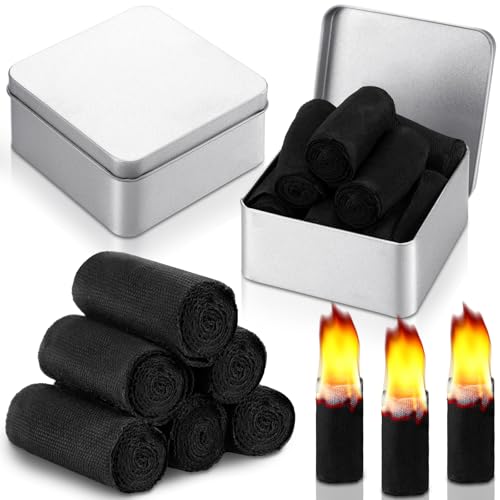
FuWeave 8 Rolls Camping Fire Starter Char Cloth...
Quantity: 8 rolls
Material: Charred cotton
Features: Hand made
Use: Flint and steel
What we like
- Ready to use immediately
- Good quantity for practice
- Traditional method
- Consistent quality
What could be better
- Requires char cloth knowledge
- Not for ferro rod beginners
For those learning traditional flint and steel techniques, having quality char cloth is essential. These FuWeave char cloth rolls provide consistent material for practicing spark-catching skills.
Handmade from cotton fabric, each roll catches sparks reliably. Having eight rolls means plenty of practice attempts without worrying about running out.
Starter Flint and Steel Kit

Fire Starter Survival Kit, Larger Ferro Rod with...
Rod Length: 3 inches
Includes: Striker and lanyard
Features: Storage bag
Type: Flint and steel
What we like
- Complete starter kit
- Lanyard prevents loss
- Storage bag included
- Portable size
What could be better
- Shorter rod length
- Basic components
This fire starter survival kit provides everything needed for traditional flint and steel techniques. The 3-inch ferro rod is adequate for sparking, and the included lanyard helps prevent loss in the field.
The multifunctional storage bag is a thoughtful addition for keeping everything together.
Tinder Preparation Tool

Smith's 50562 Pack Pal Tinder Maker with Fire...
Type: Stainless steel grater
Features: Built-in striker
Includes: Natural tinder
Weight: Lightweight
What we like
- Creates tinder from wood
- Built-in striker
- Compact and lightweight
- Natural tinder included
What could be better
- Requires wood to process
- Learning curve for best results
The Smith's Tinder Maker solves one of the biggest challenges in fire starting: creating fine tinder from available wood. The stainless steel grater quickly produces the fine shavings needed for ignition.
This tool is particularly valuable for friction fire practice, where having proper tinder can make or break your success rate.
Fire Safety and Leave No Trace
Before practicing any fire starting method, consider safety and environmental impact. I've seen too many campers create unsafe fire conditions in the name of practicing primitive skills.
Location selection:
- Choose existing fire rings when available
- Clear a 10-foot diameter circle of flammable material
- Avoid overhanging branches and dry grass
- Check for fire restrictions in your area
Fire prevention:
- Never leave a fire unattended
- Keep water or dirt nearby for emergencies
- Consider fire danger ratings in your area
- Avoid fires during high wind conditions
Proper extinguishing:
- Douse with water and stir the ashes
- Douse again and stir until cold to touch
- Use the "drown, stir, feel" method
- Never bury hot coals - they can smolder underground
Frequently Asked Questions
What is the easiest way to start a fire without matches?
The easiest way is using a ferro rod with prepared tinder. Ferro rods throw sparks at 5,500degF that ignite even damp materials. With 5 minutes of practice, anyone can reliably start fire. Steel wool and a 9-volt battery is even easier, creating instant flame when touched to both terminals.
What three ingredients are needed to start a fire?
The fire triangle requires three elements: heat, fuel, and oxygen. Heat comes from friction, sparks, or focused light. Fuel includes tinder, kindling, and larger wood. Oxygen is provided by airflow to the fire. All three must be present for combustion. Remove any one element, and the fire extinguishes.
How long does it take to learn friction fire starting?
The bow drill typically requires 4-8 hours of practice before getting your first coal. The hand drill is significantly harder, often taking 10-20 hours to master. Success depends on proper wood selection, dry conditions, and refined technique. Start with the bow drill before attempting the more difficult hand drill.
What household items can start a fire?
Common household fire starters include 9-volt batteries with steel wool (instant flame), magnifying mirrors or reading glasses (sunny days), flashlight batteries with steel wool, jumper cables and steel wool, soda cans polished with chocolate, aluminum foil or gum wrapper reflectors, and glass jars filled with water as lenses.
Can you really start a fire with ice?
Yes, but only with specific conditions. Clear ice can be shaped into a lens that focuses sunlight like a magnifying glass. The ice must be bubble-free and shaped into a convex curve. This requires bright sunlight, ideal temperatures, and significant patience. It's more of a survival demonstration than a practical method.
What is the best wood for friction fire starting?
For bow drills, softwoods like cedar, willow, cottonwood, and poplar work best for the fireboard. Spindles can be either softwood or harder woods depending on your technique. For hand drills, mullein or cattail stalks make excellent spindles paired with willow or cottonwood fireboards. Wood must be bone dry for success.
The Final Verdict
After testing all these methods extensively, here's what I recommend for different situations:
- For Beginners: Start with a ferro rod and prepared tinder. Reliable in any weather and takes just minutes to learn.
- For Emergency Kits: Include a ferro rod plus steel wool and a 9-volt battery. Two backup methods that never fail.
- For Skill Building: Master the bow drill first, then progress to hand drill. These primitive techniques take practice but build genuine self-reliance.
- Pro Tip: Always practice new fire starting methods at home before relying on them in the field. There's a big difference between watching a tutorial and actually producing flame when you're cold and tired.


